

For families in our service areas
For families in our service areas, this guide explains caregiver support and how non-medical in-home caregiving can support care planning in East Idaho, Treasure Valley & Magic Valley, Northern Wasatch, North Central West Virginia, and Northeast Ohio.
What You Need to Know About Self-Care Strategies
Caregiving is a noble yet demanding role, often leading individuals to neglect their own well-being in favor of others. This self-sacrifice can result in burnout, emotional distress, and a decrease in the quality of care provided.
The implications of this neglect are significant. Caregivers may find themselves overwhelmed, which not only affects their health but also the support they can offer to those in need.
To combat these challenges, caregivers can implement essential self-care strategies. Prioritizing health and resilience is crucial for enhancing their ability to provide care.
However, how can caregivers effectively balance their responsibilities while ensuring their own needs are met? Here are some actionable tips:
- Set aside time for personal activities.
- Seek support from peers or professionals.
- Practice mindfulness and relaxation techniques.
By integrating these strategies into their routines, caregivers can foster a healthier balance between their needs and those of the individuals they support.
Prioritize Your Well-Being: The Foundation of Caregiving
Caregivers often face a significant problem: they prioritize the needs of others at the expense of their own well-being. This tendency can lead to burnout and emotional distress, negatively impacting both their health and the quality of care they provide.
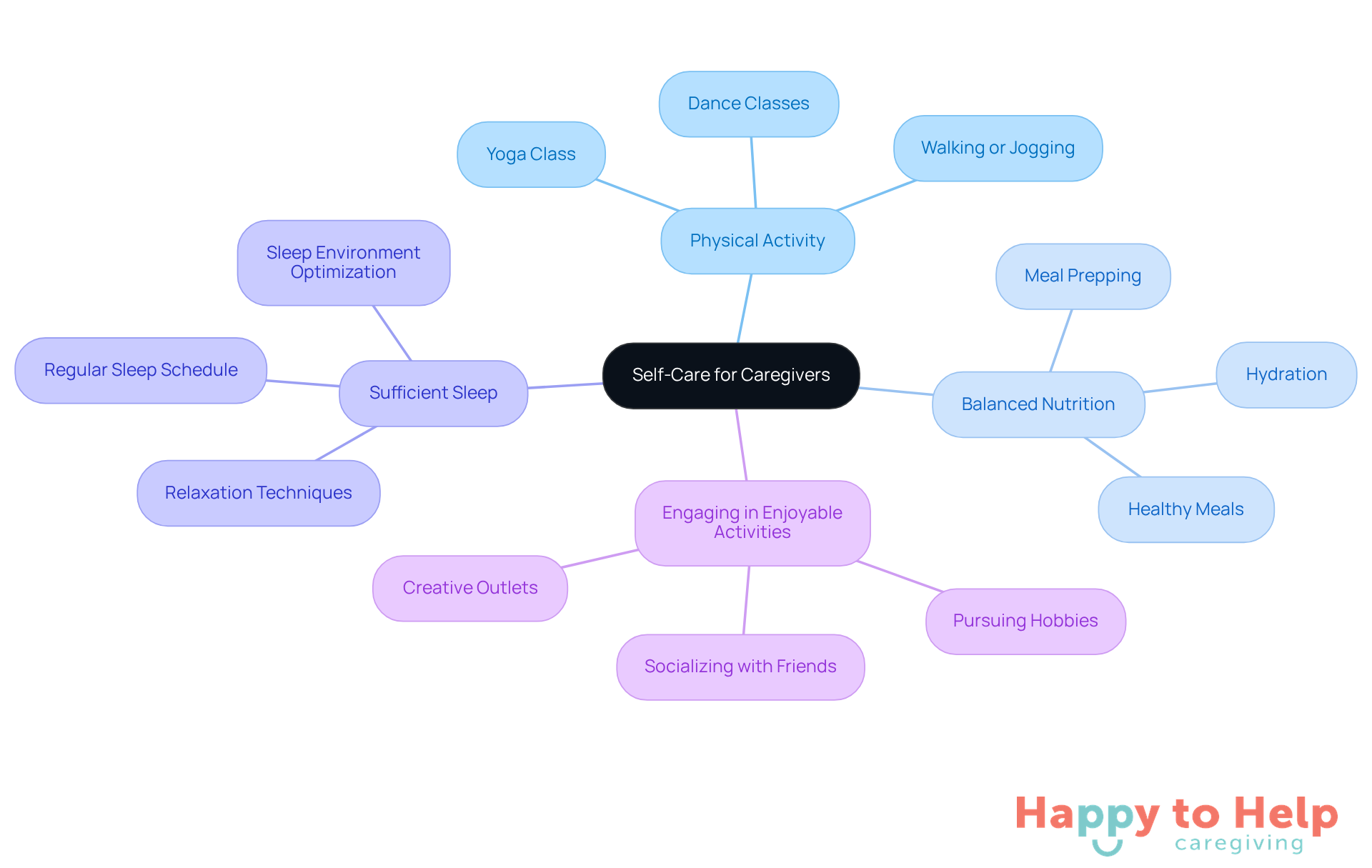
To address this issue, establishing self-care for caregivers is essential. This routine should include:
- Regular physical activity
- Balanced nutrition
- Sufficient sleep
Engaging in enjoyable activities, such as pursuing hobbies or socializing with friends, can greatly enhance mental health. For example, a support worker might commit to a weekly yoga class or organize monthly outings with friends to rejuvenate.
By prioritizing their own well-being, caregivers can maintain higher energy levels and emotional resilience. Research shows that individuals who actively engage in self-care for caregivers report lower levels of emotional distress and higher overall satisfaction in their caregiving responsibilities. Therefore, implementing effective self-care for caregivers is not just beneficial; it is vital for sustaining the demanding responsibilities of caregiving.
Implement Stress Management Techniques: Tools for Daily Resilience
Caregivers often face significant stress and anxiety, which can impact their ability to provide compassionate support. This stress can manifest in various ways, such as irritability and fatigue, making it crucial for caregivers to recognize these signs early on.
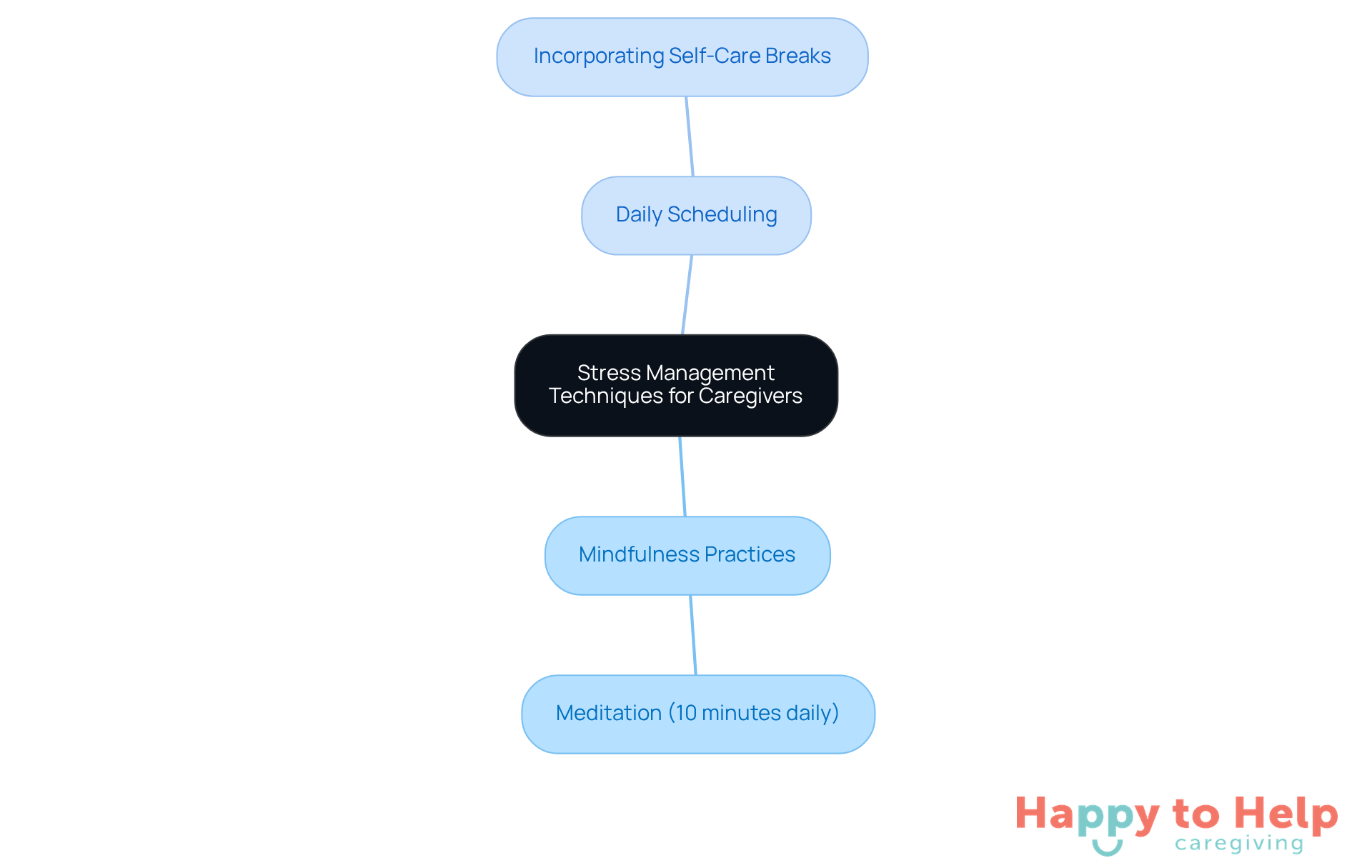
To effectively manage this pressure, caregivers can implement several practical techniques:
- Mindfulness practices, like meditation for just 10 minutes a day, can help center their thoughts and reduce anxiety.
- Creating a daily schedule that includes breaks for self-care activities can significantly alleviate stress levels.
By identifying indicators of tension and taking proactive measures, caregivers can enhance their mental well-being. These strategies not only improve their own health but also bolster their capacity to offer compassionate care to others.
Build a Support Network: Engaging Family and Professionals for Help
Caregivers often face significant challenges, which highlights the importance of self-care for caregivers to address feelings of isolation and stress. With 63 million Americans providing continuous assistance to individuals with medical conditions or disabilities, the need for a robust support network is more essential than ever. Research indicates that 30% of caregivers report needing help managing their emotional or physical stress, underscoring the urgency of promoting self-care for caregivers to address these issues.
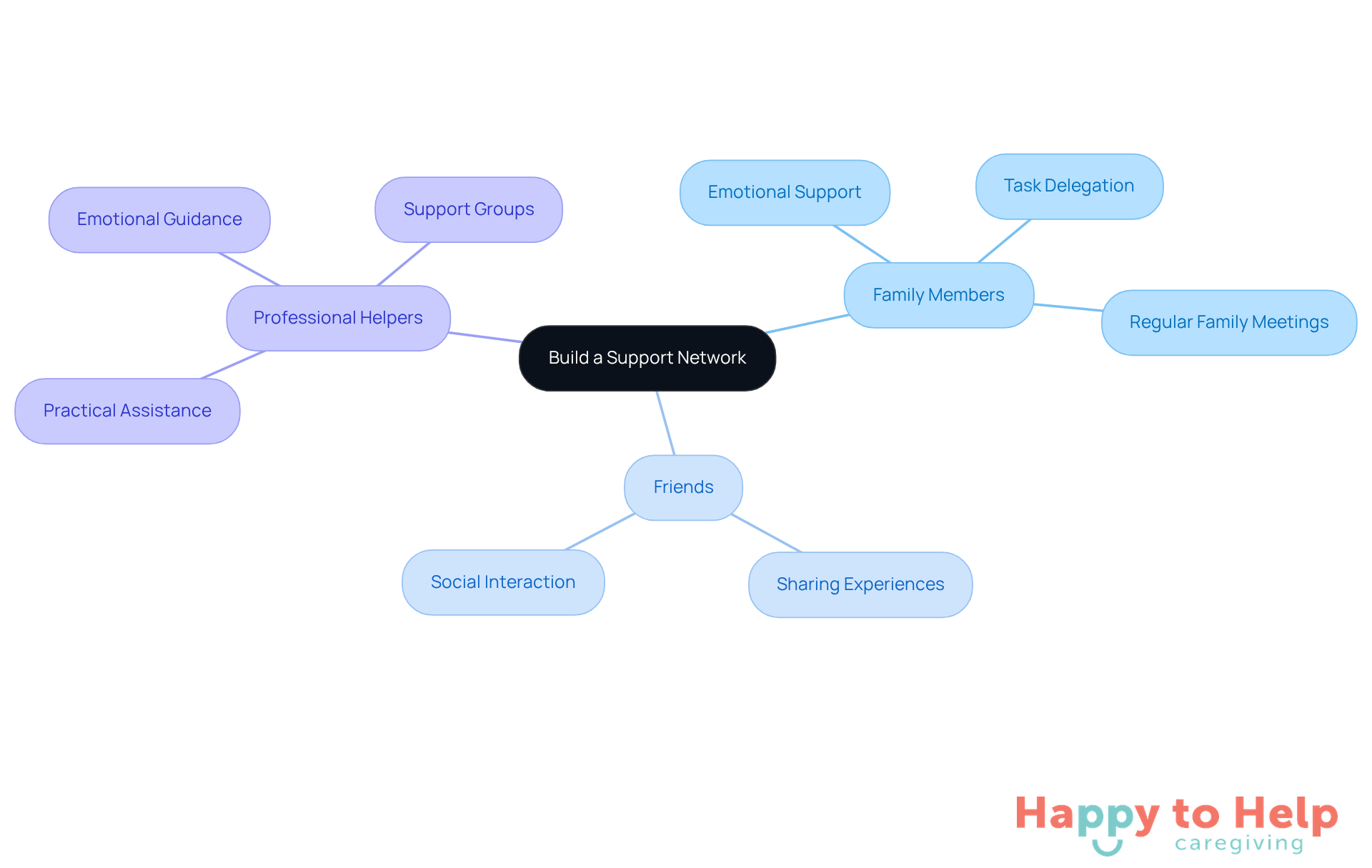
To combat these challenges, caregivers should prioritize creating a strong support network that includes:
- Family members
- Friends
- Professional helpers
This network is vital for providing emotional support, sharing caregiving responsibilities, and offering practical assistance. For instance, organizing regular family meetings can facilitate discussions about care needs and help delegate tasks, ensuring that everyone is aligned in their efforts.
Additionally, participating in local or online support groups allows caregivers to connect with others navigating similar challenges. This creates a valuable platform for sharing experiences and advice. By nurturing these relationships, caregivers can engage in self-care for caregivers, which helps alleviate feelings of isolation and significantly enhances their overall well-being.
Moreover, family participation not only enhances the quality of care but also promotes resilience among those providing support. As Shelton highlights, aiding caregivers is crucial not only for their personal well-being but also for fostering a stronger, more resilient community. By implementing these strategies, caregivers can enhance their emotional and physical health through self-care for caregivers while ensuring that they are not alone in their journey.
Establish Boundaries: Communicate Your Needs Effectively
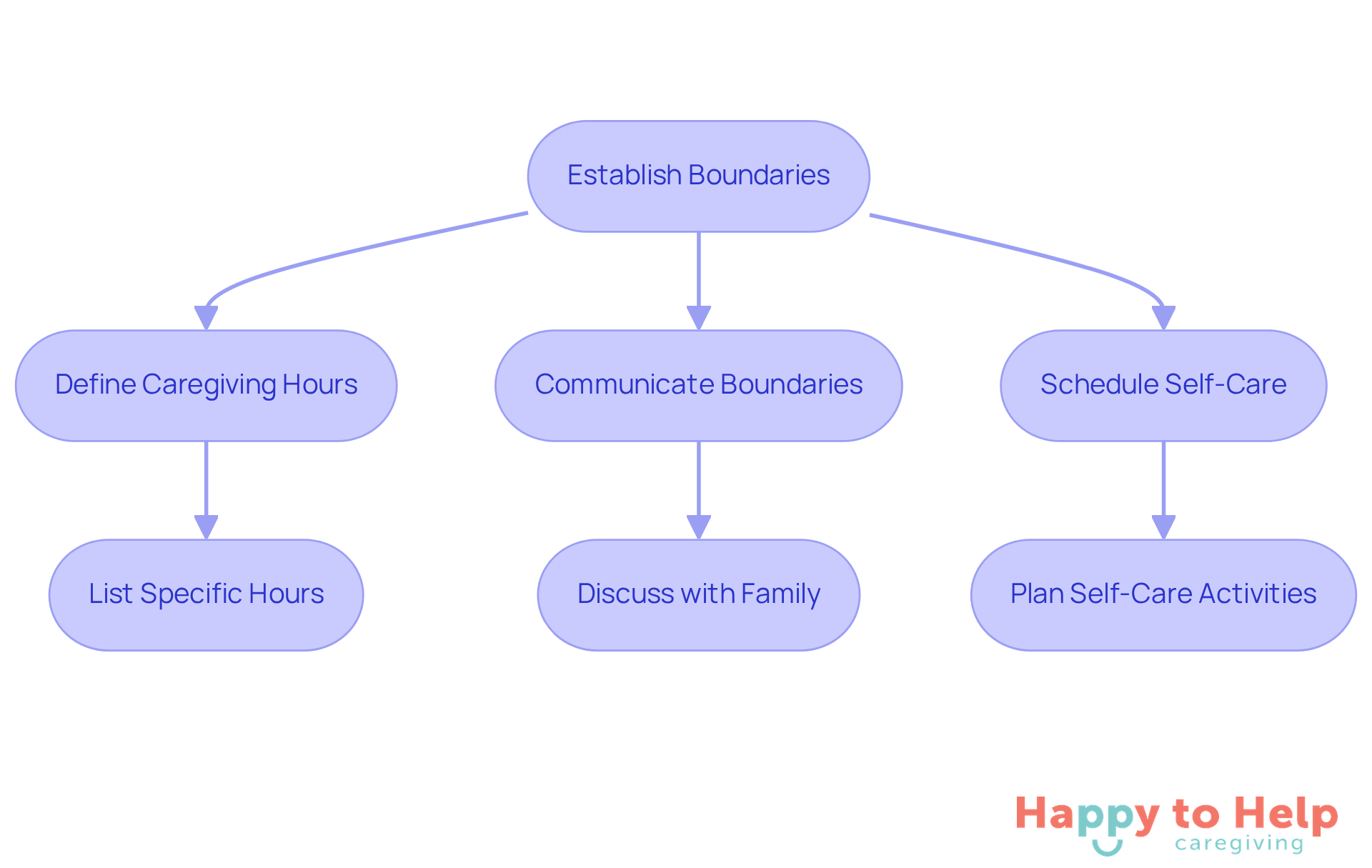
Setting and conveying limits is crucial for caregivers to maintain a healthy balance between their caregiving duties and personal life. Many caregivers struggle with defining what they can and cannot manage, which can lead to feelings of guilt when prioritizing their own needs. For instance, a caregiver might designate specific times for caregiving tasks and communicate these schedules to family members, ensuring they carve out time for self-care.
When caregivers are clear about their boundaries, they not only conserve their energy but also evade the pressure related to overcommitting. Learning to say no to extra responsibilities is essential in preventing overwhelm. By effectively establishing and upholding these boundaries, caregivers safeguard their mental well-being and improve the quality of service they deliver.
Studies show that individuals who implement boundary-setting experience decreased stress and enhanced concentration, allowing them to provide more attentive assistance. This proactive approach to communication is vital, as nearly 1 in 4 caregivers report feeling socially isolated, highlighting the need for clear dialogue about their limits and needs.
Furthermore, with 63 million caregivers dedicating significant time and resources while facing health and financial challenges, prioritizing self-care becomes even more critical. Here are some actionable tips for caregivers:
- Clearly define your caregiving hours and communicate them to family members.
- Practice saying no to additional responsibilities that may lead to burnout.
- Schedule regular self-care time to recharge and maintain your well-being.
Your Path Forward
For caregivers, prioritizing self-care isn't just an option; it's a necessity. Neglecting their own well-being can lead to burnout and emotional distress, ultimately compromising the quality of care they provide. By recognizing this critical need, caregivers can take proactive steps to enhance their resilience and effectiveness.
The implications of ignoring self-care are significant. Caregivers often face immense pressure, and without proper self-care routines, they risk their health and the well-being of those they care for. This is where effective self-care strategies come into play.
To combat these challenges, caregivers can implement four pivotal self-care strategies:
- Maintain physical health through regular exercise and balanced nutrition.
- Incorporate stress management techniques like mindfulness.
- Foster a robust support network to share experiences and seek help.
- Communicate boundaries effectively to protect their time and energy.
Each of these strategies plays a vital role in bolstering a caregiver's emotional well-being, allowing them to navigate the challenges of caregiving with greater ease and satisfaction.
In a landscape where millions dedicate themselves to caring for others, the importance of self-care cannot be overstated. Caregivers must take proactive steps to prioritize their health, not only for their own sake but also for the benefit of those they serve. By embracing these self-care strategies, caregivers can cultivate a healthier, more balanced approach to their responsibilities, ensuring they remain strong and capable in their essential roles.
https://iframe.tely.ai/cta/eyJhcnRpY2xlX2lkIjogIjY5MmY5MWFlZGM0MTVjZWNlZTQ2NmM4YyIsICJjb21wYW55X2lkIjogIjY4ZWU1ZGNhNzMxNzYyNTU3ZjNjOTVjMSIsICJpbmRleCI6IG51bGwsICJ0eXBlIjogImFydGljbGUifQ==Frequently Asked Questions
Why is it important for caregivers to prioritize their own well-being?
It is important for caregivers to prioritize their well-being because neglecting their own needs can lead to burnout and emotional distress, which negatively impacts both their health and the quality of care they provide.
What are some essential components of a self-care routine for caregivers?
Essential components of a self-care routine for caregivers include regular physical activity, balanced nutrition, and sufficient sleep.
How can engaging in enjoyable activities benefit caregivers?
Engaging in enjoyable activities, such as pursuing hobbies or socializing with friends, can greatly enhance mental health and help caregivers rejuvenate.
What are some examples of enjoyable activities caregivers might engage in?
Examples of enjoyable activities include committing to a weekly yoga class or organizing monthly outings with friends.
What are the benefits of prioritizing self-care for caregivers?
Prioritizing self-care helps caregivers maintain higher energy levels and emotional resilience, leading to lower levels of emotional distress and higher overall satisfaction in their caregiving responsibilities.
List of Sources
- Prioritize Your Well-Being: The Foundation of Caregiving
- Facebook (https://newsroom.clevelandclinic.org/2025/11/19/importance-of-self-care-for-family-caregivers)
- Caregivers carry an emotional weight. More and more shoulder that intimate responsibility (https://fortworthreport.org/2025/11/27/caregivers-carry-an-emotional-weight-more-and-more-shoulder-that-intimate-responsibility)
- Location, individual circumstances impact caregiver well-being, researchers find | Penn State University (https://psu.edu/news/research/story/location-individual-circumstances-impact-caregiver-well-being-researchers-find)
- Chinese Study Explores the Psychological Well-being and Health of Dementia Caregivers | AFTD (https://theaftd.org/posts/1ftd-in-the-news/b-caregiver-well-being-study)
- Caregiver Statistics: Demographics (https://caregiver.org/resource/caregiver-statistics-demographics)
- Implement Stress Management Techniques: Tools for Daily Resilience
- Stress and caregiving (https://apa.org/monitor/2020/11/numbers-stress-caregivers)
- Caregiver Burnout and Strategies to Help (https://health.usnews.com/senior-care/articles/caregiver-burnout-and-strategies-to-help)
- Caregiver Statistics: Health, Technology, and Caregiving Resources (https://caregiver.org/resource/caregiver-statistics-health-technology-and-caregiving-resources)
- Mindfulness Eases Anxiety, Improves Sleep for Caregivers (https://bioengineer.org/mindfulness-eases-anxiety-improves-sleep-for-caregivers)
- How to Thrive as a Caregiver: Tips for Managing Stress and Finding Balance - Advanced Nursing & Home Care (https://advancednursing.care/blog/how-to-thrive-as-a-caregiver-tips-for-managing-stress-and-finding-balance)
- Build a Support Network: Engaging Family and Professionals for Help
- Family Caregiver Support, Education Needs Growing (https://hospicenews.com/2025/11/11/family-caregiver-support-education-needs-growing)
- Establishing New Safety Nets for Caregivers | UNC Greensboro (https://uncg.edu/news/establishing-new-safety-nets-for-caregivers)
- Building a lifeline for family caregivers across the US (https://news.mit.edu/2025/ianacare-builds-lifeline-for-family-caregivers-across-us-0811)
- HHS Backs AI Innovation for America’s Caregivers | HHS.gov (https://hhs.gov/press-room/hhs-backs-ai-innovation-for-americas-caregivers.html)
- How The Health Care System Can Better Support Family Caregivers (https://forbes.com/sites/howardgleckman/2025/09/18/how-the-health-care-system-can-better-support-family-caregivers)
- Establish Boundaries: Communicate Your Needs Effectively
- Caregiver Wellness: Setting Boundaries for Self-Care (https://seniorhelpers.com/nj/fairfield-montville/resources/blogs/2025-01-10)
- Caregiving Statistics US 2025: Insights for Family Caregivers (https://zencaregiving.org/caregiving-statistics-us-2025)
- For millennials, being a caregiver for family can come with unique challenges (https://npr.org/2025/11/24/nx-s1-5566734/for-millennials-being-a-caregiver-for-family-can-come-with-unique-challenges)
- The Alarming Statistics About Caregiving Stress And Burnout (https://rightaccordhealth.com/blog/caregiving-stress-and-burnout-statistics)