

For families in our service areas
For families in our service areas, this guide explains caregiving and how non-medical in-home caregiving can support care planning in East Idaho, Treasure Valley & Magic Valley, Northern Wasatch, North Central West Virginia, and Northeast Ohio.
The Importance of Steps for Financial Literacy
Financial literacy is more than just numbers; it’s a crucial skill, especially for seniors navigating their later years. As older adults seek independence and financial security, understanding how to manage their resources effectively can truly enhance their quality of life. Yet, many seniors face a daunting reality: alarming statistics show a significant lack of basic financial knowledge among them. This raises an important question: how can they equip themselves to avoid pitfalls and make informed decisions?
This article outlines four essential steps to bolster financial literacy for seniors, empowering them to take control of their financial future. By embracing these steps, seniors can navigate their financial landscape with confidence, ensuring a more secure and fulfilling life.
Define Financial Literacy and Its Importance
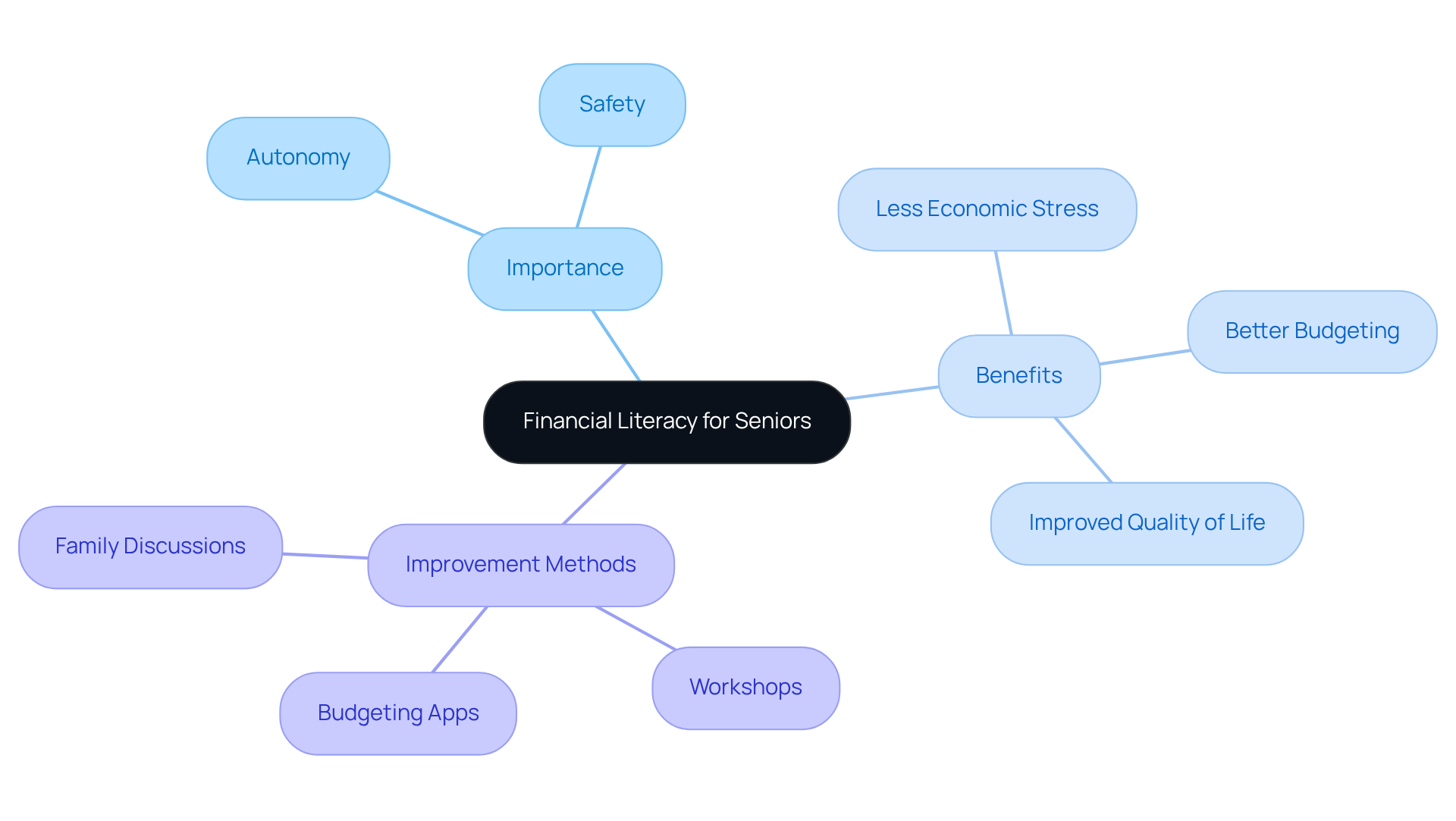
Financial literacy is more than just numbers; it’s about understanding and managing personal finances effectively. For older adults, financial literacy for seniors is a crucial skill for maintaining their autonomy and safety in financial decisions. When they enhance their money management skills, they can enjoy better budgeting practices, experience less economic stress, and ultimately improve their quality of life. Research shows that older adults who have financial literacy for seniors are more likely to make informed choices that support their independence, allowing them to handle expenses and savings with confidence. Yet, by 2025, U.S. adults are expected to accurately respond to only 49% of basic money-related questions, highlighting a significant gap in financial understanding that can hinder older adults' ability to manage their resources effectively.
Encouraging older adults to seek out resources and support for improving their financial literacy for seniors is essential. This might involve:
- Attending workshops
- Using budgeting apps
- Exploring online educational materials
Additionally, discussing money management with family members can foster a supportive environment, making it easier for older adults to engage with their financial situations and ask for help when needed. As John W. Rogers, Jr. wisely notes, "money management is equally crucial in life as the other essentials." This underscores the importance of financial literacy for seniors, encouraging older adults to prioritize their financial education. By empowering themselves with financial knowledge, they can pave the way for a more secure and fulfilling life.
Establish a Budget and Manage Cash Flow
-
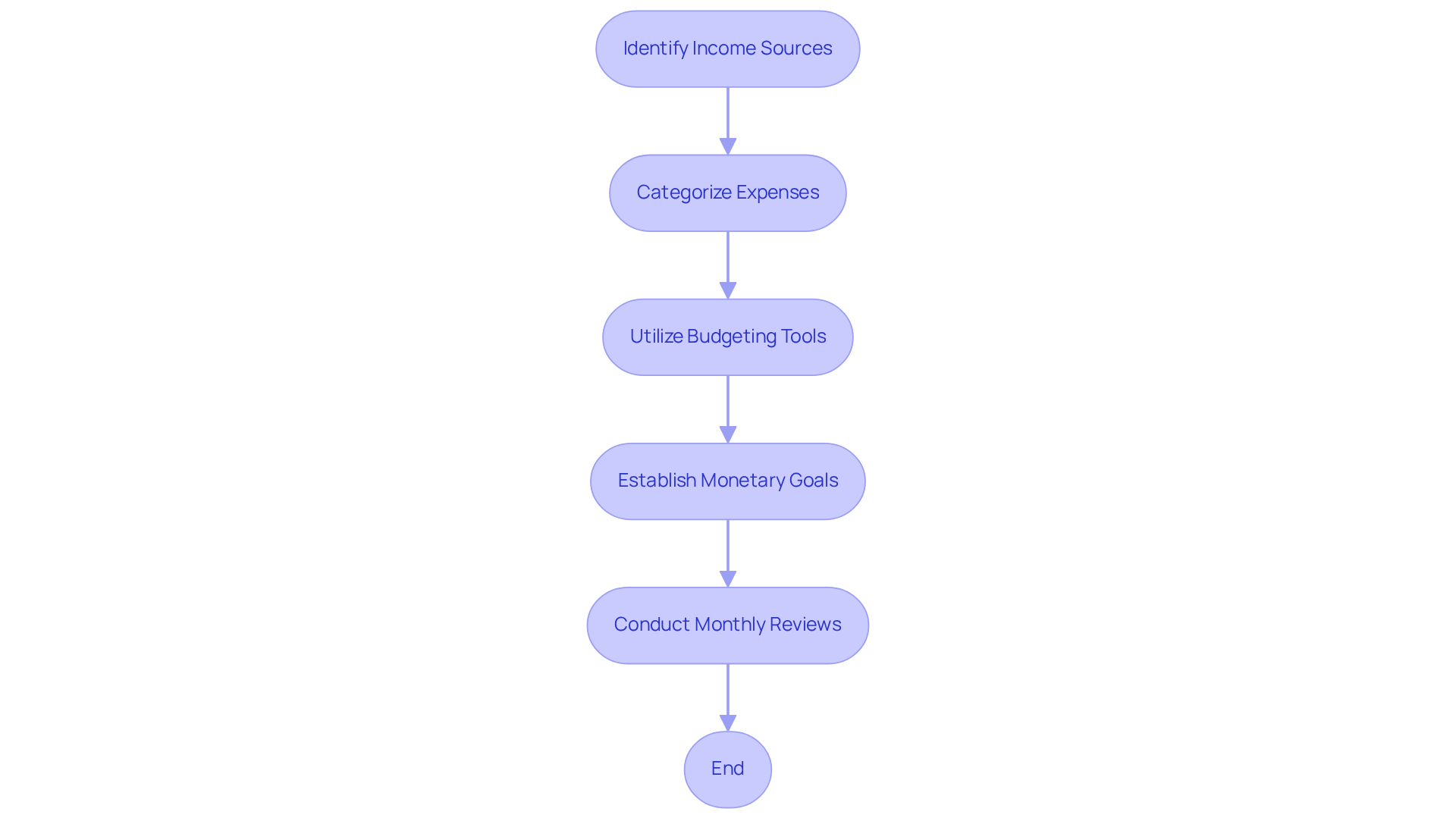
It's essential to identify all sources of income, such as Social Security benefits, pensions, and any part-time work. In 2025, the average total retirement income is around $54,000 per year. Understanding all income streams is crucial, especially since Social Security contributes about $24,000 to this average. This knowledge can help ease worries about financial stability by improving financial literacy for seniors.
-
Next, categorize your expenses into fixed (like housing and utilities) and variable (such as groceries and entertainment). This distinction helps clarify essential needs versus discretionary spending. It's important to note that 44% of retirees find it challenging to cover basic living expenses, which emphasizes the need for financial literacy for seniors to ensure careful budgeting, comfort, and security.
-
Consider utilizing budgeting tools or apps to keep an eye on your spending patterns. Regular monitoring can empower older adults by enhancing their financial literacy for seniors, helping them manage their finances effectively and avoid overspending, which provides peace of mind.
-
Establishing clear monetary goals, like saving for emergencies or upcoming expenses, is vital. Allocating resources for unexpected costs can relieve financial pressure, especially as many older adults face rising living expenses, which underscores the importance of financial literacy for seniors.
-
Lastly, conduct monthly reviews of your budget to adapt to any changes in income or expenses. This proactive approach is essential, particularly since 72% of individuals have reconsidered their retirement plans since the COVID-19 pandemic. Being adaptable in your planning can foster a sense of control and reassurance.
Recognize and Avoid Financial Scams
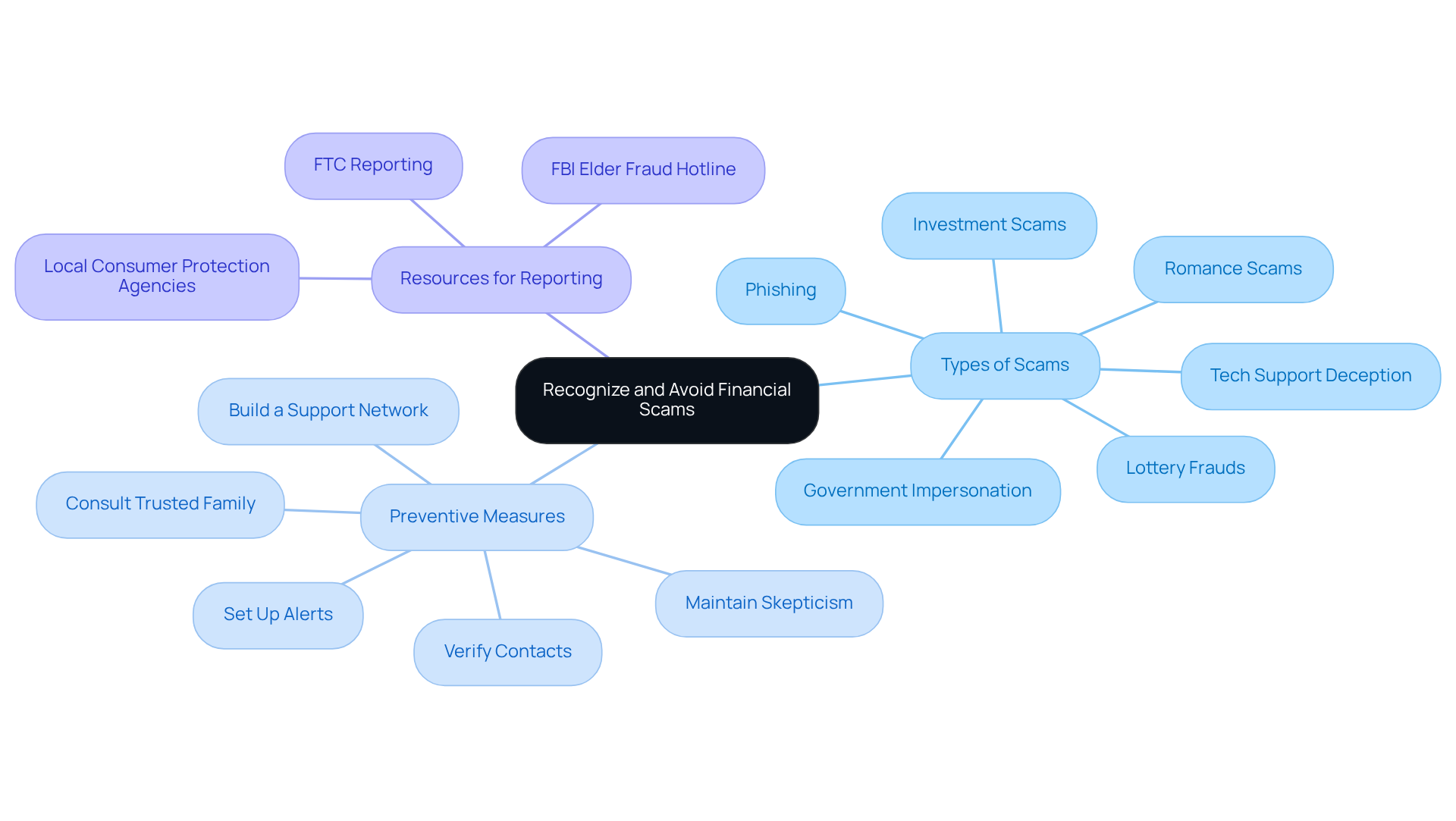
It's important to inform older adults about the common scams that target them, like phishing, lottery frauds, and tech support deception. These scams led to over $3 billion in losses in 2022, which is truly alarming.
Encouraging a healthy skepticism towards unsolicited calls or emails asking for personal information is crucial. These communications often use high-pressure tactics to manipulate victims. As Lois Greisman from the FTC wisely points out, it’s essential to verify who you’re dealing with before responding.
We recommend that older adults consult trusted family members before making any monetary decisions or sharing sensitive information. Building a support network can be incredibly helpful in verifying the authenticity of requests.
Setting up alerts on bank accounts is another wise step. This allows for monitoring unusual activity, enabling early detection of potential fraud. In 2023, the average victim of elder fraud lost $33,915, underscoring the importance of staying vigilant.
Lastly, it’s vital to offer resources for reporting scams. Local consumer protection agencies and the FBI's Elder Fraud hotline are great places for elderly individuals to turn for assistance. According to the FBI's Elder Fraud Report 2023, there were over 200 complaints from people aged 60 and above, leading to significant monetary losses. Knowing where to seek help can make all the difference.
Understand Social Security and Medicare Benefits
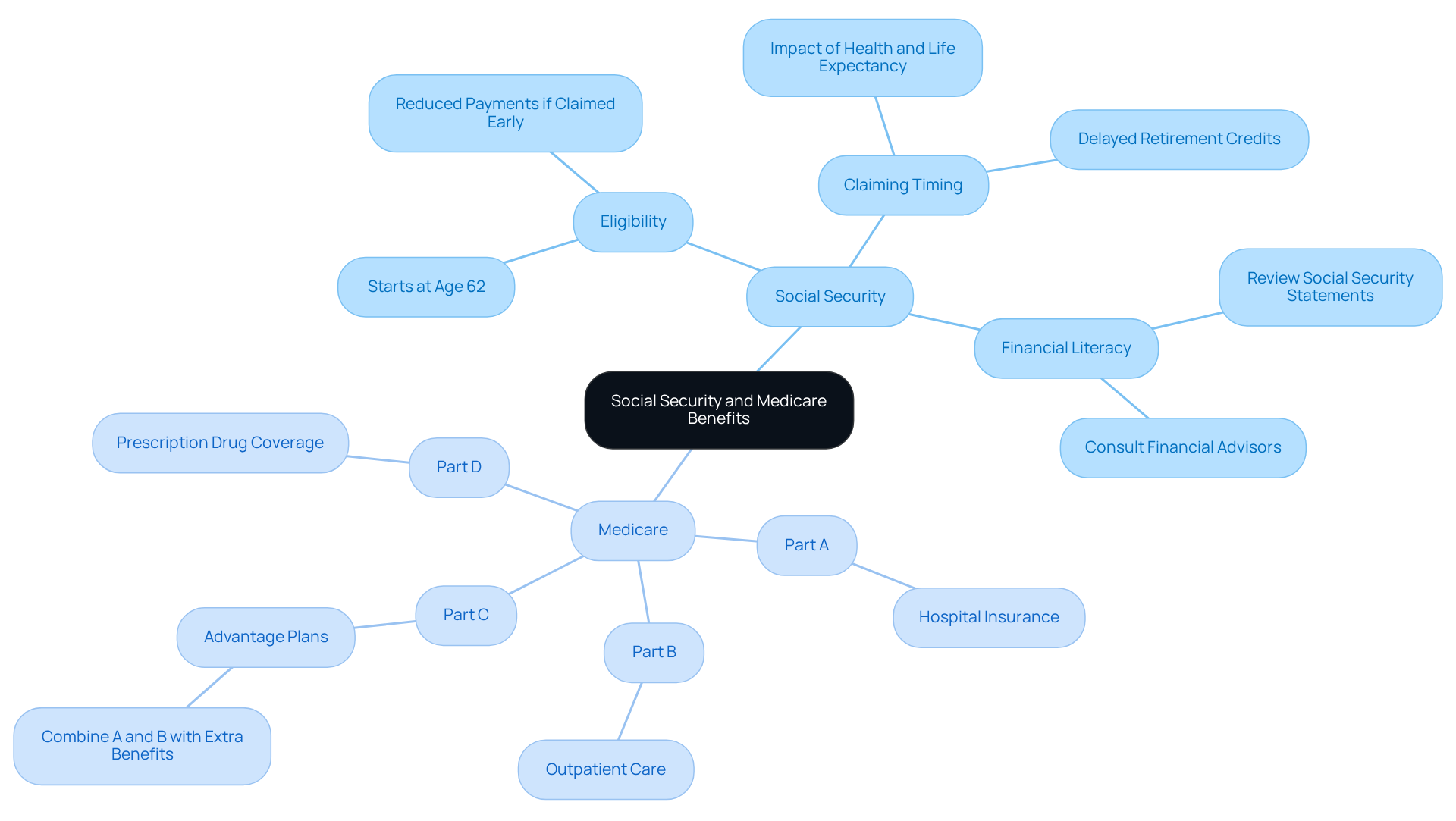
Understanding Social Security and Medicare benefits is vital for seniors to enhance their financial literacy and secure their financial future. Social Security provides essential income, with eligibility typically starting at age 62. However, claiming benefits early can lead to permanently reduced payments. As Taylor Shuman wisely notes, "To care for those who once cared for us is one of life’s highest honors." This highlights the importance of timing when claiming entitlements. It's important to think about factors like health and life expectancy when deciding when to file, as delaying payments can lead to higher monthly amounts through delayed retirement credits.
Medicare, a cornerstone of healthcare for seniors, consists of four parts:
- Part A covers hospital insurance
- Part B includes outpatient care
- Part C refers to Advantage plans that combine A and B with extra benefits
- Part D offers prescription drug coverage
By 2025, enrollment in this health insurance program is expected to reach 68.9 million, with 90.1 percent of participants aged 65 or older. This reflects the growing demand for these essential services. Moreover, Advantage enrollment is projected to rise to 64 percent by 2034, indicating a significant trend in coverage options.
To improve their financial literacy, it is important for seniors to regularly review their Social Security statements to stay informed about their benefits and understand their healthcare options. Utilizing online resources or consulting with a financial advisor can be incredibly helpful in navigating these complex systems and improving financial literacy. Additionally, protecting personal information is crucial when dealing with Social Security and Medicare to guard against identity theft and fraud. By remaining informed and proactive, seniors can maximize their benefits and improve their financial literacy.
Key Takeaways for Caregivers
Financial literacy is an essential skill for seniors, helping them navigate their financial landscape with confidence and security. By enhancing their understanding of personal finance, older adults can maintain their independence and improve their overall quality of life. The significance of financial literacy for seniors is profound; it equips them with the tools to make informed decisions, manage their resources effectively, and ultimately safeguard their financial future.
Key insights shared in the article highlight vital steps for seniors to boost their financial literacy:
- Establishing a budget
- Managing cash flow
- Recognizing and avoiding scams
- Understanding Social Security and Medicare benefits
These are crucial components of financial education. By actively engaging with these areas, older adults can alleviate financial stress, sidestep pitfalls, and make strategic choices that enhance their financial well-being.
The journey toward financial literacy isn’t just about crunching numbers; it’s about fostering a sense of empowerment and control. Seniors are encouraged to take proactive steps, like attending workshops, utilizing budgeting tools, and seeking guidance from trusted family members or financial advisors. By prioritizing financial education, older adults can create a secure and fulfilling life, ensuring they are not only informed but also equipped to thrive in their golden years.
https://iframe.tely.ai/cta/eyJhcnRpY2xlX2lkIjogIjY5MWQwODg4MGNhYjQxNDQ1YTVmOGU3OSIsICJjb21wYW55X2lkIjogIjY4ZWU1ZGNhNzMxNzYyNTU3ZjNjOTVjMSIsICJpbmRleCI6IG51bGwsICJ0eXBlIjogImFydGljbGUifQ==Frequently Asked Questions
What is financial literacy?
Financial literacy is the ability to understand and manage personal finances effectively, which includes skills such as budgeting, saving, and making informed financial decisions.
Why is financial literacy important for older adults?
Financial literacy is crucial for older adults as it helps them maintain their autonomy and safety in financial decisions, improves their budgeting practices, reduces economic stress, and enhances their overall quality of life.
What benefits do older adults gain from improving their financial literacy?
By enhancing their financial literacy, older adults can make informed choices that support their independence, manage expenses and savings with confidence, and ultimately lead a more secure and fulfilling life.
What is the expected level of financial literacy among U.S. adults by 2025?
By 2025, it is expected that U.S. adults will accurately respond to only 49% of basic money-related questions, indicating a significant gap in financial understanding.
How can older adults improve their financial literacy?
Older adults can improve their financial literacy by attending workshops, using budgeting apps, exploring online educational materials, and discussing money management with family members.
What role do family discussions play in financial literacy for seniors?
Discussing money management with family members can create a supportive environment, making it easier for older adults to engage with their financial situations and seek help when needed.