
Understanding Steps for Home Health Care in
Navigating the landscape of home health care in Chesapeake, VA, presents a significant challenge for families aiming to provide the best support for their loved ones. With numerous service options available, understanding the specific needs of each individual is essential for ensuring they receive optimal care.
This complexity can lead to confusion and uncertainty, leaving caregivers feeling overwhelmed. How can families ensure that their loved ones receive not just adequate, but exceptional care?
To address these challenges, this article outlines four essential steps that empower caregivers to make informed decisions:
- Selecting the right agency
- Clarifying costs
- Understanding payment options
- Implementing actionable solutions
By following these steps, caregivers can navigate the myriad of choices and potential pitfalls in home health care, ensuring their loved ones receive the quality care they deserve.
Understand Home Health Care Services Available
Navigating the world of home health care in Chesapeake VA can be overwhelming for caregivers. With so many options available, it’s crucial to understand the specific needs of your loved one to ensure they receive the best care possible.
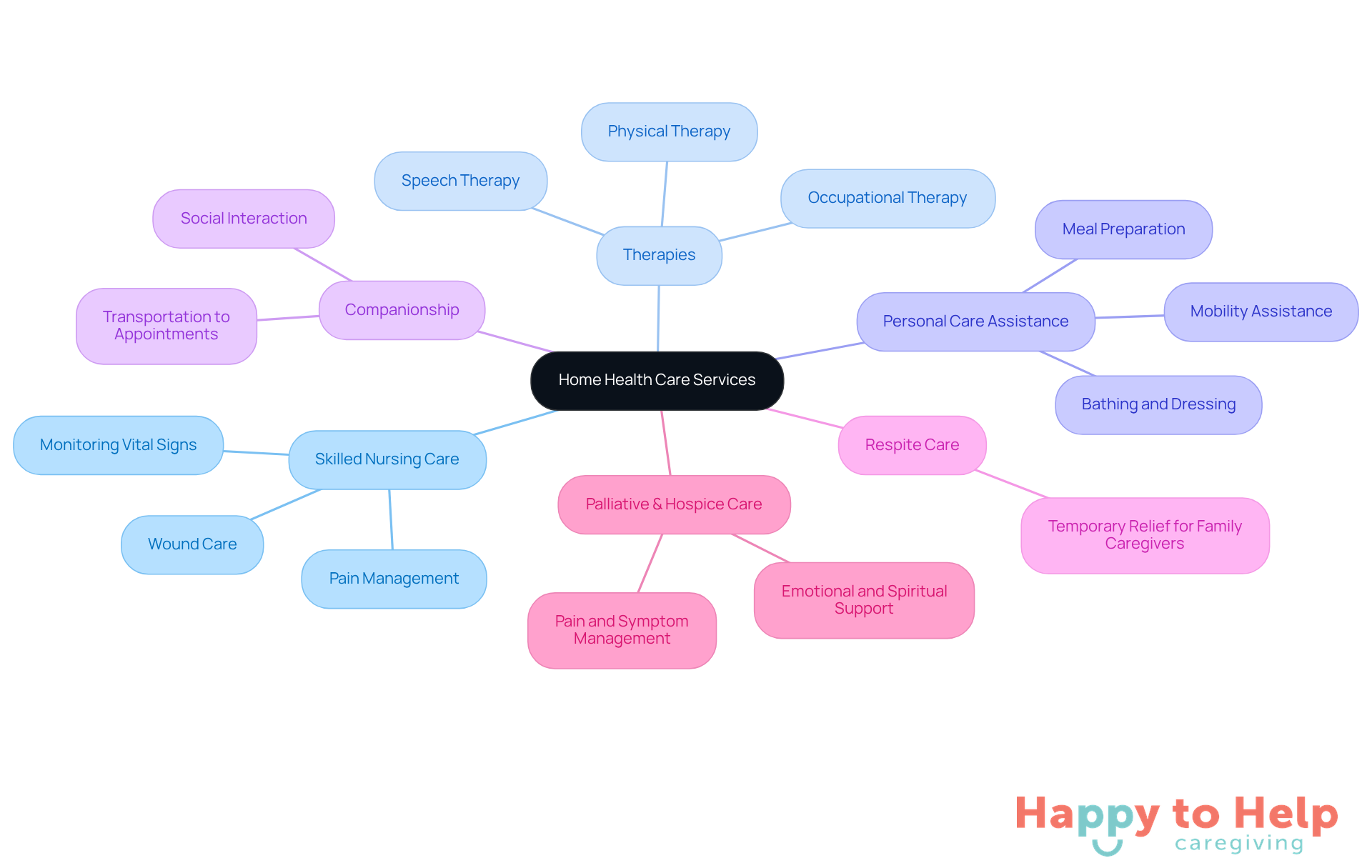
Consider the following types of home health care services:
- Skilled nursing care
- Physical, occupational, and speech therapy
- Personal care assistance (bathing, dressing, etc.)
- Companionship and emotional support
- Respite care for family caregivers
- Palliative and hospice care options
Identifying which services align with your loved one’s needs is essential. Take the time to research these options thoroughly. Consulting with healthcare professionals can provide valuable insights into the recommended services based on specific medical conditions or recovery needs. This proactive approach not only helps in making informed decisions but also alleviates some of the stress associated with caregiving.
Evaluate Key Criteria for Selecting an Agency
-
Problem: Ensuring compliance with state regulations is crucial for maintaining high service standards. Many organizations may lack proper accreditation, which can undermine trust in patient care.
Agitate: Without accreditation from respected bodies like the Joint Commission, patients may question the quality and safety of their treatment. The Joint Commission's rigorous evaluation process, conducted by skilled evaluators with at least five years of experience in home support, enhances the credibility of accredited organizations.
Solution: Confirm the organization's accreditation and licensing to ensure compliance with state regulations, which is essential for upholding high standards of service. -
Problem: Caregiver qualifications can vary significantly, impacting the quality of care provided.
Agitate: Caregivers lacking specialized training may not fully understand the unique needs of clients, which can lead to inadequate support.
Solution: Evaluate the qualifications and experience of caregivers, focusing on any specialized training they may have received. Support providers should hold relevant certifications and demonstrate a strong understanding of client requirements. Additionally, inquire about the organization's history and ownership to gauge its reliability and reputation. -
Problem: Many agencies struggle to create personalized support plans that cater to individual needs.
Agitate: Without tailored treatment plans, clients may not receive the appropriate assistance at the right time, negatively affecting their health outcomes.
Solution: Assess the agency's ability to develop customized support plans, created with input from medical professionals and family members. Research indicates that personalized care plans can lead to improved health results for clients. -
Problem: Availability and flexibility in service arrangements are often overlooked.
Agitate: Organizations that lack 24/7 support can leave clients vulnerable during emergencies or when needs change.
Solution: Inquire about the organization's availability and flexibility in arranging services. A dependable organization should provide round-the-clock support to ensure caregivers are accessible during emergencies and can adapt to evolving client needs. -
Problem: Communication practices between organizations, families, and healthcare providers can be inadequate.
Agitate: Poor communication can hinder care coordination and leave concerns unaddressed, affecting client well-being.
Solution: Consider the organization's communication practices. Effective communication is vital for coordinating care and fostering a collaborative environment. Additionally, ask about the organization's patient satisfaction scores; establishments with strong ratings are more likely to provide a positive caregiving experience.

Research Agency Reputation and Reviews
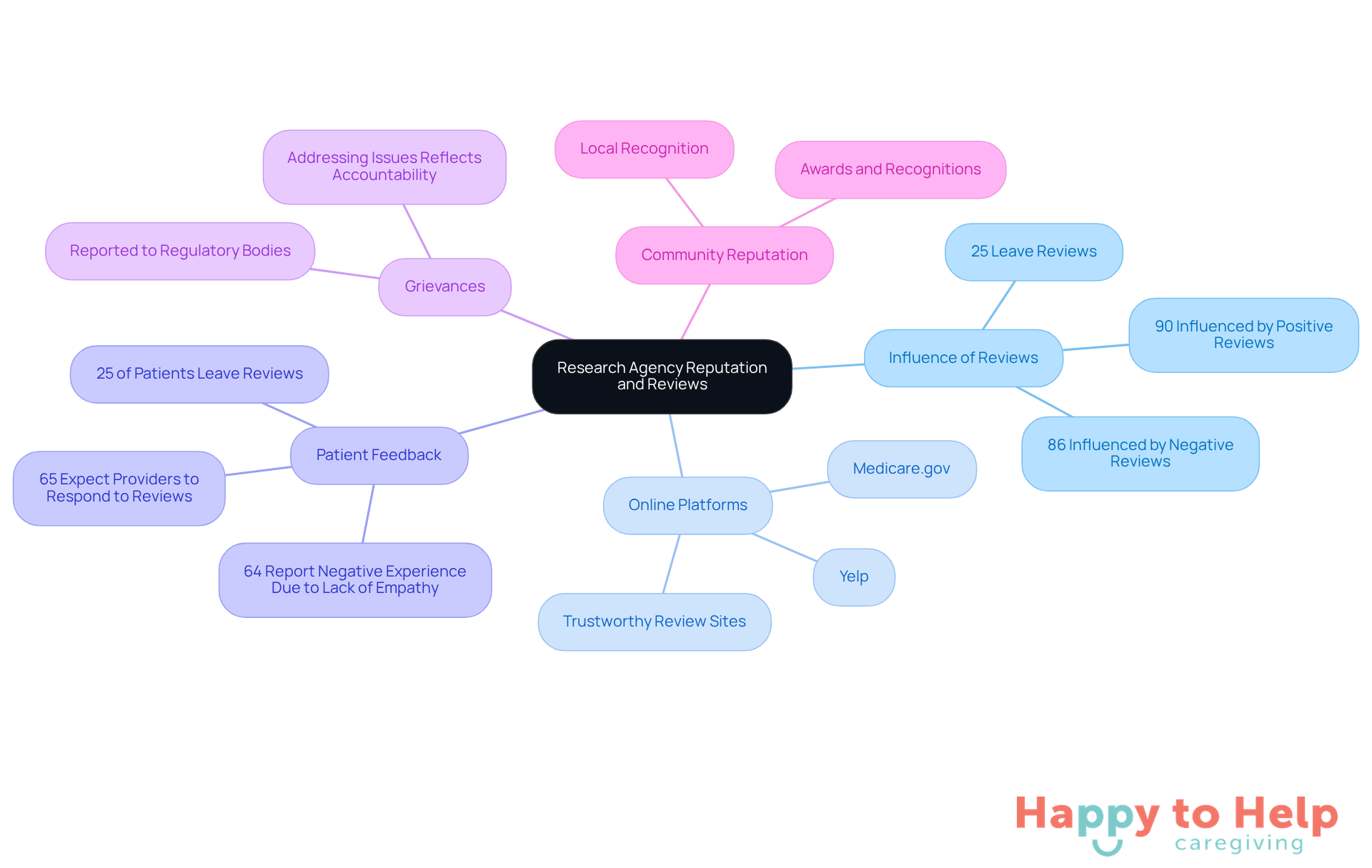
Choosing the right caregiving organization can be challenging. Many caregivers struggle with making informed decisions, which can lead to dissatisfaction and negative experiences. In fact, 90% of review readers say that positive reviews influence their buying decisions, highlighting the importance of gathering insights from various sources.
To navigate this process effectively, start by leveraging online platforms to explore reviews and testimonials from clients and their families. Check ratings on trustworthy sites like Medicare.gov and Yelp to compare organizations and evaluate their overall performance. Additionally, requesting references from the organization and engaging directly with previous clients can provide firsthand accounts of their experiences. Remember, 25% of patients leave reviews after a positive or negative experience, so encouraging feedback is crucial.
It's also essential to examine any grievances reported to regulatory bodies. Understanding how these issues were addressed can illustrate the organization's accountability and responsiveness. Notably, 64% of patients indicated a negative experience due to insufficient empathy, underscoring the need for compassionate support.
Finally, consider the organization's reputation within the community. Look for any awards or recognitions that highlight their dedication to quality service. Specific examples of awards can provide additional context to their reputation, helping you make a more informed choice.
Clarify Costs and Payment Options
When evaluating options for home health care in Chesapeake VA, families often face the challenge of understanding the associated costs. This lack of clarity can lead to financial strain, especially as the expenses for in-home support can vary significantly based on the type of care required.
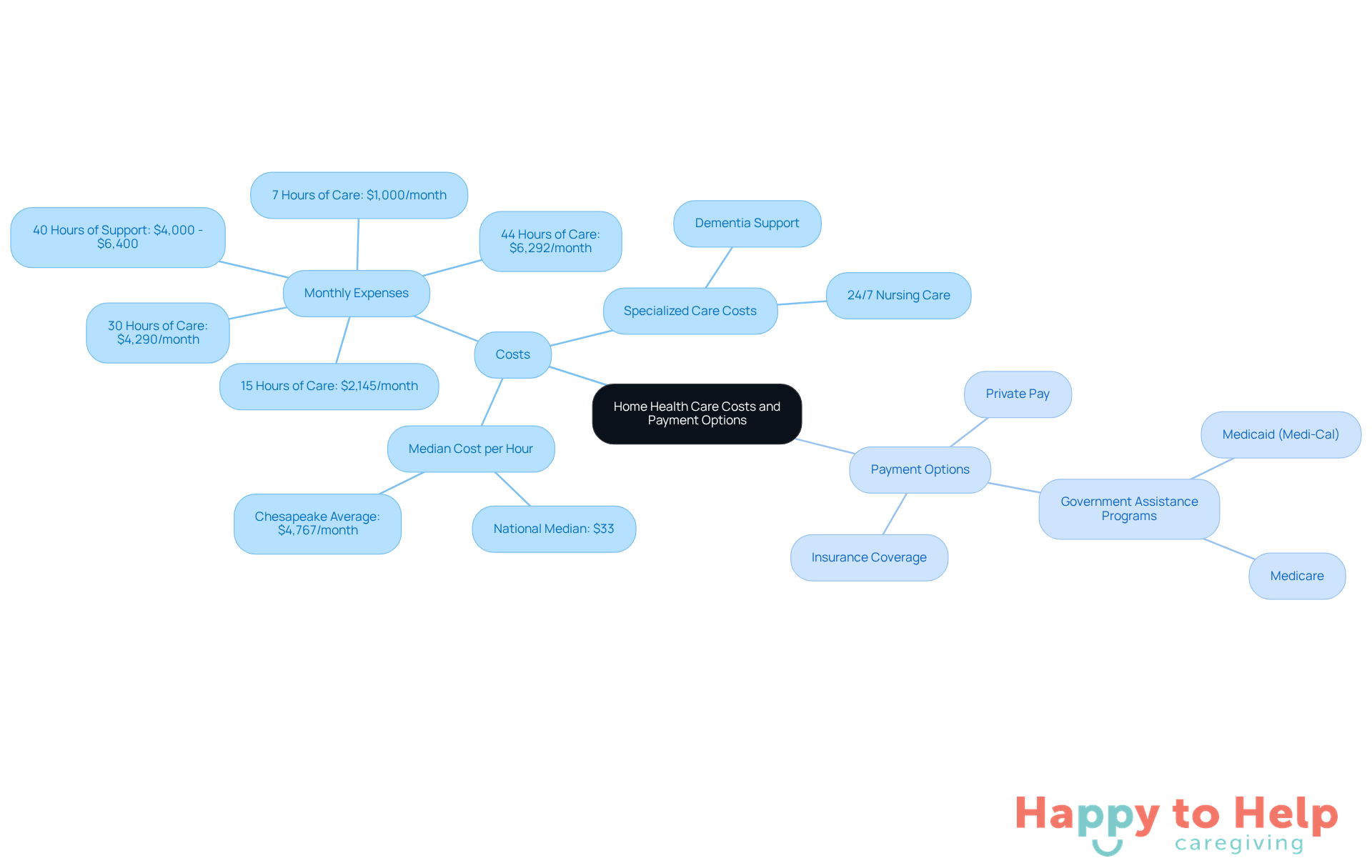
For instance, the national median cost for in-home assistance is about $33 per hour. Monthly expenses for 40 hours of support can range from $4,000 to $6,400, depending on the level of care and location. In Chesapeake, families might expect to pay around $4,767 each month for home health care in Chesapeake VA for similar services. Specialized care, such as dementia support or 24/7 nursing, typically incurs higher costs, making it essential to clarify any additional fees that may apply.
To navigate these financial complexities, it's crucial to ask for a detailed outline of expenses from the agency. Families should explore various payment options, including:
- Private pay
- Insurance coverage
- Government assistance programs like Medicare and Medicaid
Understanding these choices can significantly impact financial planning.
Discussing payment plans or financial assistance options that the organization may offer is also vital. Many agencies provide flexible payment arrangements tailored to different financial situations. Additionally, reviewing the agency's billing guidelines ensures clarity, empowering families to make informed decisions about their loved ones' care.
By grasping these financial aspects, families can better manage the intricacies of home health care in Chesapeake VA and secure the necessary support for their loved ones.
Key Takeaways for Caregivers
Navigating home health care in Chesapeake, VA, presents a significant challenge for caregivers. With a myriad of services available, selecting the right agency and understanding financial implications can be overwhelming. This complexity can lead to stress and uncertainty for families seeking the best care for their loved ones.
To tackle these challenges, caregivers must focus on four critical steps:
- Understand the types of home health care services available. Familiarizing oneself with the various options ensures that caregivers can choose the most suitable support.
- Evaluate key criteria for selecting a suitable agency. Consider factors such as staff qualifications, service offerings, and responsiveness to inquiries.
- Research agency reputation and reviews. Look for feedback from other families to gauge the quality of care provided.
- Clarify costs and payment options. Understanding financial aspects upfront can prevent unexpected expenses and help in budgeting for care.
By following these steps, caregivers can enhance the quality of care and overall experience for both clients and themselves. It’s not just about meeting immediate needs; it’s about creating a supportive environment that fosters well-being and peace of mind.
Ultimately, taking the time to explore these aspects allows caregivers to secure the best possible care for their loved ones. This ensures that they receive compassionate and competent support in the comfort of their own homes.
https://iframe.tely.ai/cta/eyJhcnRpY2xlX2lkIjogIjY5MjdhNWQ2YmFiNWFmMjdmNzJlMmQwNyIsICJjb21wYW55X2lkIjogIjY4ZWU1ZGNhNzMxNzYyNTU3ZjNjOTVjMSIsICJpbmRleCI6IG51bGwsICJ0eXBlIjogImFydGljbGUifQ==Frequently Asked Questions
What are home health care services available in Chesapeake VA?
Home health care services in Chesapeake VA include skilled nursing care, physical, occupational, and speech therapy, personal care assistance (such as bathing and dressing), companionship and emotional support, respite care for family caregivers, and palliative and hospice care options.
Why is it important to understand the specific needs of a loved one when choosing home health care services?
Understanding the specific needs of a loved one is crucial to ensure they receive the best care possible and to identify which home health care services align with those needs.
How can caregivers make informed decisions about home health care services?
Caregivers can make informed decisions by researching the available options thoroughly and consulting with healthcare professionals for insights based on specific medical conditions or recovery needs.
What is respite care in the context of home health care?
Respite care refers to temporary care provided to give family caregivers a break, allowing them to rest while ensuring that their loved one continues to receive necessary assistance.
What types of therapy are included in home health care services?
Home health care services include physical therapy, occupational therapy, and speech therapy.
List of Sources
- Understand Home Health Care Services Available
- Key Trends in Home Health Care 2025 - Karma Care (https://karmacare.com/key-trends-in-home-health-care-2025)
- Types of Home Care Services in 2025 (https://websterhc.com/breaking-down-the-different-types-of-home-care-services-in-2025)
- Home Health Care Trends for 2025 (https://carevoyant.com/home-health-blog/home-health-care-trends-2025)
- Home Health Therapy: Latest News and Trends - United Therapy Services (https://unitedtxs.com/home-health-therapy-latest-news-and-trends)
- Home Health Care Industry Trends 2025: What's Happening? - Home Care Agency | Global One Home Care Boston (https://globalonehomecare.com/home-health-care-industry-trends)
- Evaluate Key Criteria for Selecting an Agency
- FYI: Choosing a Home Health Care Agency (https://als.org/navigating-als/resources/fyi-choosing-home-health-care-agency)
- How to Choose a Home Health Agency (https://resources.amedisys.com/how-choose-home-health-agency)
- HomeCareConsulting.US and CarePolicy.US Revolutionize Licensing for Over 1,300 U.S. Home Care Agencies (https://fox59.com/business/press-releases/ein-presswire/835449423/homecareconsulting-us-and-carepolicy-us-revolutionize-licensing-for-over-1300-u-s-home-care-agencies)
- Home Care Accreditation Program | Joint Commission (https://jointcommission.org/en-us/accreditation/home-care)
- Research Agency Reputation and Reviews
- 45 Statistics on Patient Reviews for Healthcare Professionals (https://repugen.com/blog/statistics-on-patient-reviews-for-healthcare-professionals)
- 40+ Statistics Healthcare Marketers Need to Know in 2026 (https://invoca.com/blog/healthcare-marketing-statistics)
- Court orders Chesapeake healthcare company that retaliated against workers, obstructed investigation to pay $703K in overtime back wages, damages (https://dol.gov/newsroom/releases/whd/whd20221005)
- America’s Best Home Health Agencies 2026 (https://rankings.newsweek.com/americas-best-home-health-agencies-2026)
- How Patient Reviews Shape 73% of Healthcare Decisions 2025 (https://sprypt.com/blog/patient-reviews)
- Clarify Costs and Payment Options
- Medicaid cuts threaten California’s in-home caregivers - Stocktonia News (https://stocktonia.org/news/health/2025/05/17/medicaid-cuts-threaten-californias-in-home-caregivers)
- The 10 Best Home Care Agencies for Seniors in Chesapeake, VA for 2025 | Caring.com (https://caring.com/senior-care/in-home-care/virginia/chesapeake)
- Home Care Costs in 2025: A State-by-State Guide (https://aplaceformom.com/caregiver-resources/articles/in-home-care-costs)
- Cost of In-Home Care in California (2025) + 11 Ways to Pay (https://lovinghomecareinc.com/blog/cost-of-in-home-care-california)