
For families in our service areas
For families in our service areas, this guide explains caregiving and how non-medical in-home caregiving can support care planning in East Idaho, Treasure Valley & Magic Valley, Northern Wasatch, North Central West Virginia, and Northeast Ohio.
Why Steps for Meditation for Heart Health Matters
The heart, often seen as the engine of our body, is deeply intertwined with our mind. It’s truly remarkable how meditation can influence heart health. Research shows that simple mindfulness practices can lower blood pressure and reduce stress-two vital components of cardiovascular wellness. As we navigate our busy lives, many of us are searching for effective ways to boost our emotional resilience and overall well-being. This brings us to an important question: how can we weave meditation into our daily routines to fully embrace these heart-health benefits?
In this article, we’ll explore essential steps to harness the power of meditation. We aim to provide you with actionable insights that can help you cultivate a healthier heart through mindfulness. Together, let’s embark on this journey toward a more compassionate and caring approach to our heart health.
Understand the Heart-Health Benefits of Meditation
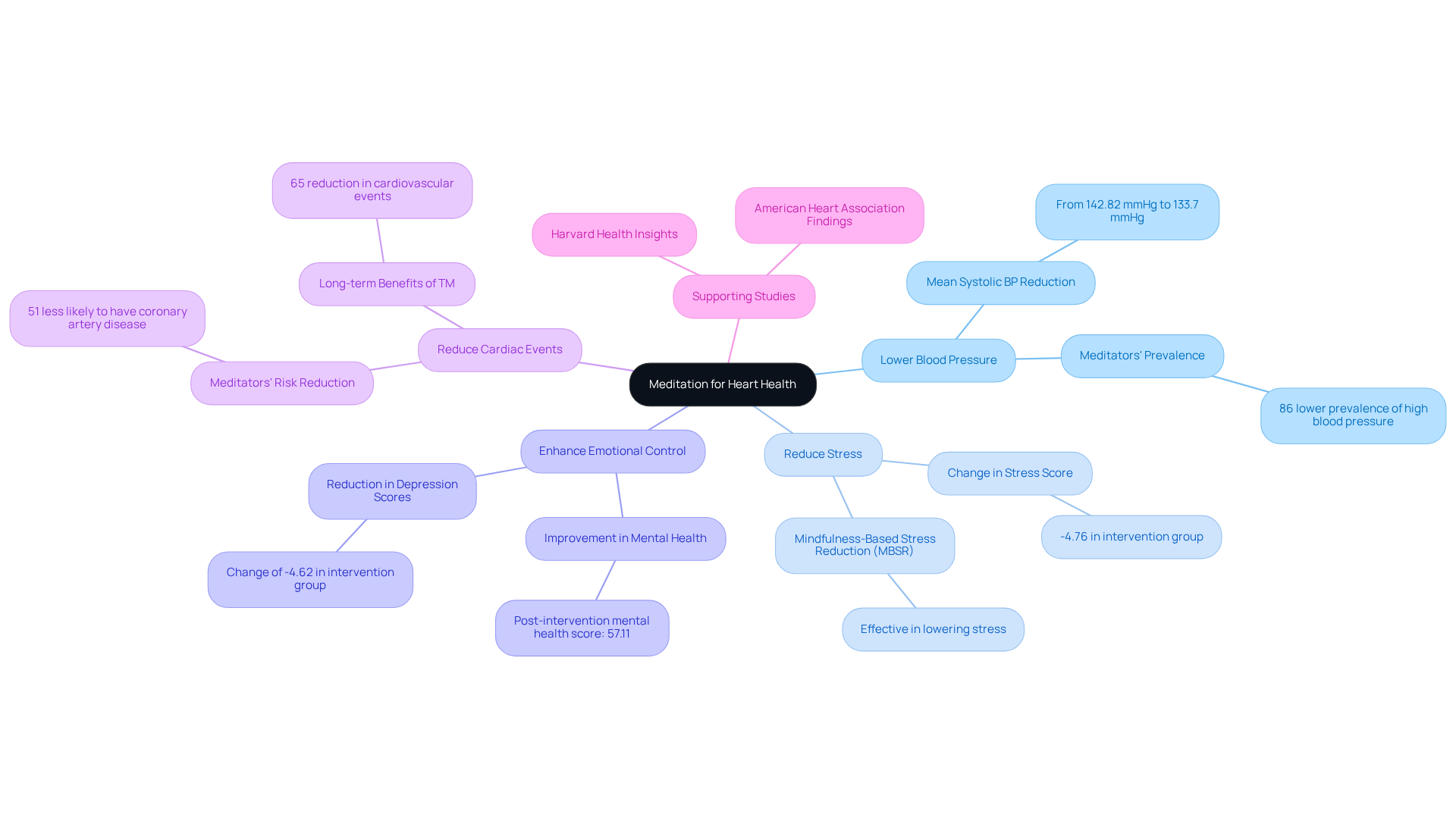
Mindfulness practices can truly make a difference in our lives. Studies show that meditation for heart health can help lower blood pressure and reduce stress, both vital for keeping our hearts healthy.
Engaging in consistent mindfulness exercises, such as meditation for heart health, may help reduce the likelihood of experiencing cardiac events or strokes. It’s comforting to know that something as simple as being present can have such a profound impact on our well-being.
Moreover, mindfulness and meditation can enhance our emotional control. This is especially important when we’re dealing with anxiety and depression, as meditation for heart health can contribute to better overall cardiovascular health.
If you’re curious about the science behind these benefits, consider exploring studies from trusted sources like Harvard Health and the American Heart Association. They provide valuable insights that can help you understand how mindfulness can support your journey to better health.
Explore Effective Meditation Techniques for Heart Health
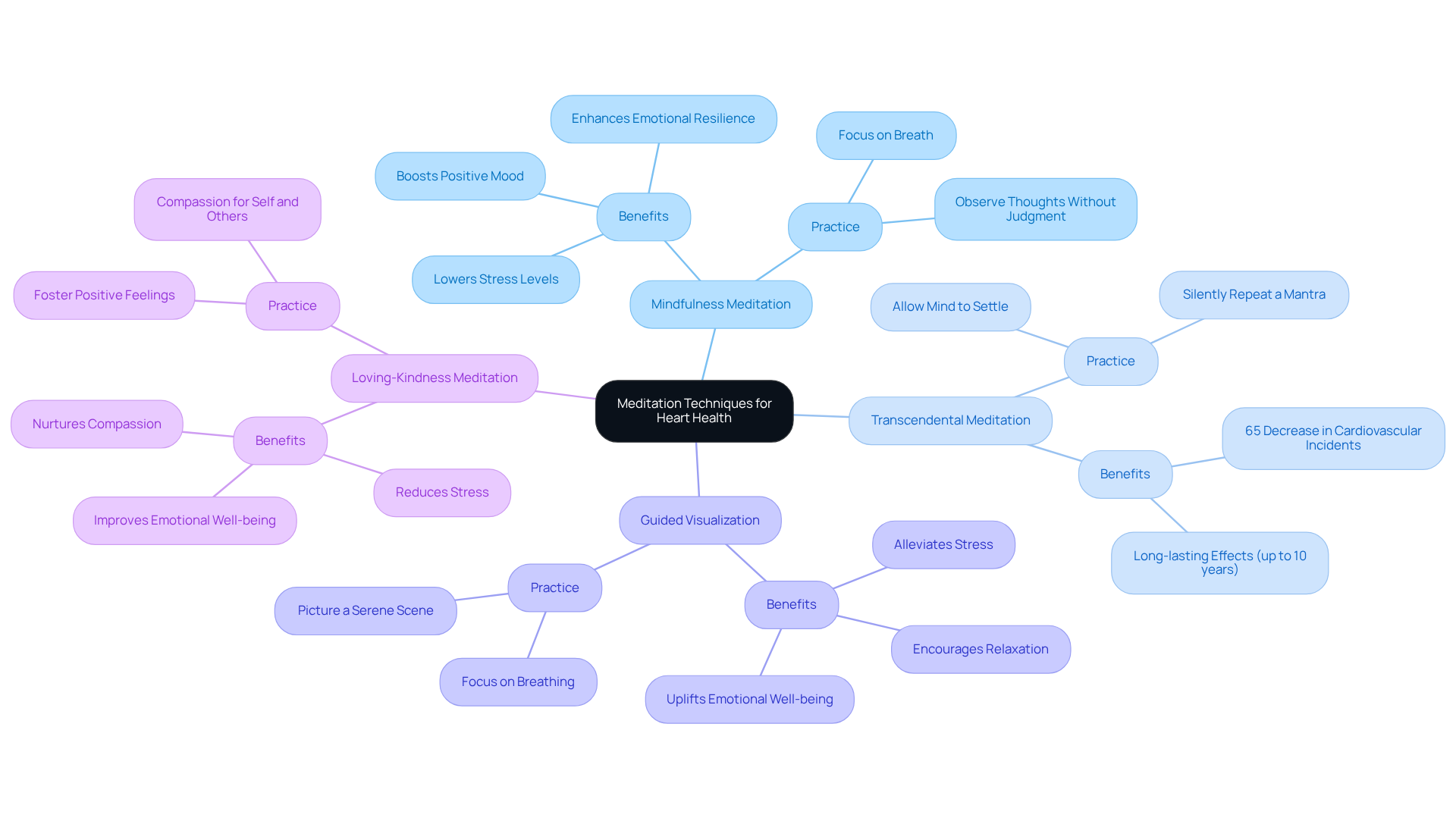
Mindfulness Meditation: Take a moment to engage in mindfulness by focusing on your breath and gently observing your thoughts without judgment. Just 10-15 minutes of meditation for heart health can significantly lower stress levels, which is so important for your overall well-being. Research shows that regular mindfulness can actually change your brain, boosting activity in areas linked to positive moods, enhancing emotional resilience, and promoting a healthier lifestyle.
Transcendental Meditation: Imagine silently repeating a mantra, allowing your mind to settle. Studies reveal that those who practice Transcendental Meditation experienced a remarkable 65% decrease in cardiovascular incidents over five years, including heart attacks and strokes. These benefits can last for up to ten years, making meditation for heart health a powerful ally for your cardiovascular wellness. Dr. Schneider emphasizes that this research reflects decades of collaboration across disciplines, highlighting the significant advantages of this approach.
Guided Visualization: Picture a serene scene while you focus on your breathing. This technique not only helps alleviate stress but also encourages relaxation, which is vital for maintaining good health. Visualization can uplift your emotional well-being and offer a mental escape from daily pressures, allowing you to be present and embrace your current experiences.
Loving-Kindness Meditation: This beautiful practice nurtures compassion for yourself and others, leading to improved emotional well-being and reduced stress. By fostering positive feelings, loving-kindness meditation for heart health supports your overall well-being.
Establish a Supportive Meditation Environment
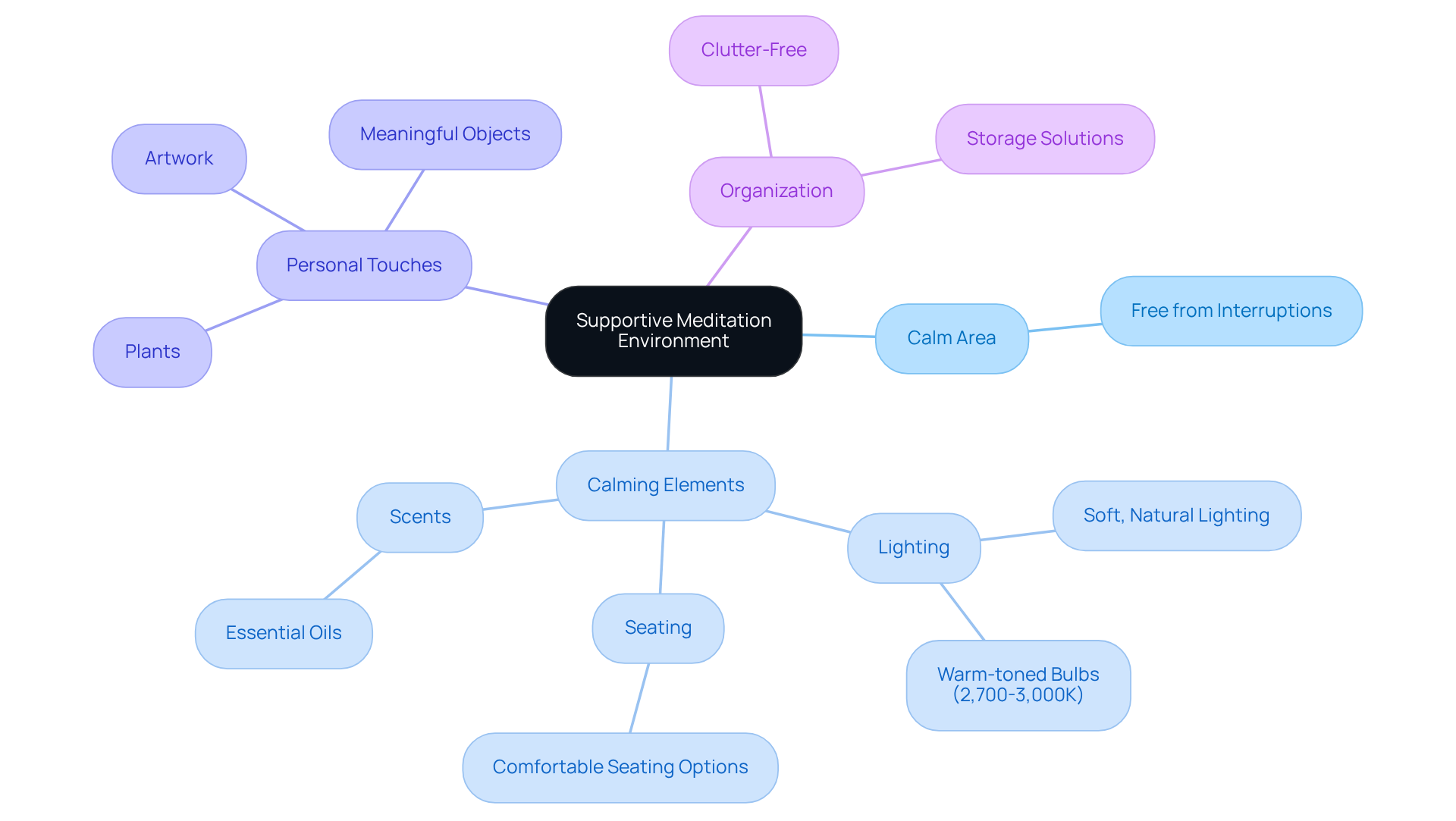
Select a calm, cozy area free from interruptions. This space can truly encourage a serene reflective experience. Having a dedicated mindfulness area can significantly improve your concentration and reduce disruptions, allowing you to engage more deeply in your practice.
Incorporate calming elements like soft, natural lighting - warm-toned bulbs (2,700-3,000K) work wonders for creating a soothing atmosphere. Comfortable seating and gentle scents, such as essential oils, can also enhance your experience. Research shows that these components can boost success in mindfulness practice. In fact, the percentage of adults practicing mindfulness in the U.S. rose from 4.1% in 2012 to 14.2% in 2017.
Make your relaxation area personal by adding items that inspire serenity. Consider including:
- Plants
- Soothing artwork
- Meaningful objects
Each piece should have a purpose, reinforcing your intention to cultivate peace and mindfulness.
It's essential to keep the area well-ventilated and clutter-free. A clean, organized space promotes relaxation and mental clarity, which is beneficial for meditation for heart health, making it easier to enter a meditative state. Regularly assess your area, removing items that don’t enhance your routine. Think about adopting storage solutions to maintain simplicity. Following the 'One In, One Out' rule can help keep your space minimal and focused.
Commit to a Regular Meditation Schedule
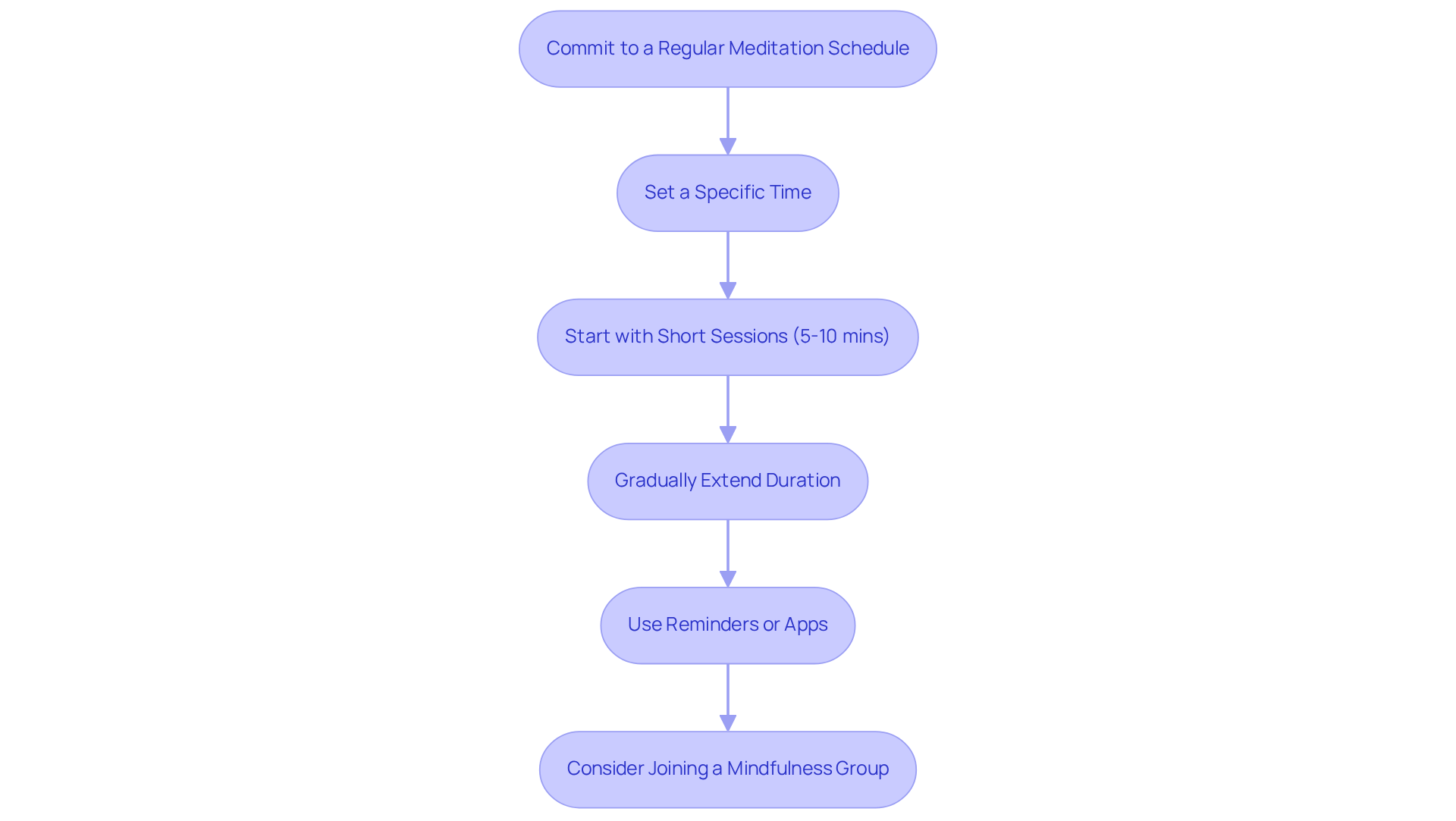
Set aside a specific time each day for reflection, whether in the morning or evening. This regular routine can be a nurturing practice for your emotional well-being. Research shows that a consistent mindfulness routine, including meditation for heart health, can significantly improve emotional health and lower blood pressure. As Gurudev Sri Sri Ravi Shankar wisely notes, "Twenty minutes to half an hour's contemplation per day has been demonstrated by hundreds of studies to provide a wealth of advantages."
Start with shorter sessions, around 5 to 10 minutes, and gradually extend the duration as you feel more comfortable. This gentle approach allows you to adapt over time, fostering deeper involvement. Remember, as Eckhart Tolle emphasizes, "Realize deeply that the present moment is all you ever have."
Consider using reminders or mindfulness apps to help you stay accountable and on track. Many of these apps offer features that can support your routine and provide guided sessions tailored to your needs. Statistics indicate that meditation for heart health can lower blood pressure and help alleviate chronic pain, emphasizing the importance of consistency in your practice.
Think about joining a mindfulness group or class for additional support and motivation. Engaging with others can enhance your commitment and create a sense of community, making your practice more enjoyable and effective. A case study on "Meditation as a Source of Peace" illustrates how community involvement can deepen your connection to meditation, amplifying its calming effects.
Your Path Forward
Meditation is a truly powerful ally for enhancing heart health, offering a wealth of benefits that can significantly uplift your overall well-being. By weaving mindfulness practices into your daily routine, you can lower blood pressure, ease stress, and nurture emotional resilience. These elements all play a vital role in fostering a healthier cardiovascular system. The beauty of meditation lies in its simplicity, making it accessible for anyone looking to improve their heart health.
Key techniques include:
- Mindfulness meditation
- Transcendental Meditation
- Guided visualization
- Loving-kindness meditation
Each technique offers unique paths to nurturing emotional well-being and alleviating stress. Creating a supportive meditation environment can amplify these benefits even further; a dedicated space encourages deeper engagement with your practice. Plus, committing to a regular meditation schedule helps solidify these gains, ensuring that the heart health benefits of meditation become a lasting part of your lifestyle.
Embracing meditation as a regular practice goes beyond just improving heart health; it’s about cultivating a more peaceful and balanced life. As research continues to reveal the extensive benefits of meditation on cardiovascular health, you’re encouraged to explore these techniques and establish your own routines. The journey toward better heart health through meditation is personal, yet it’s also a shared path that can lead to profound transformations in both physical and emotional well-being.
https://iframe.tely.ai/cta/eyJhcnRpY2xlX2lkIjogIjY5MWQwODg3MGNhYjQxNDQ1YTVmOGU3OCIsICJjb21wYW55X2lkIjogIjY4ZWU1ZGNhNzMxNzYyNTU3ZjNjOTVjMSIsICJpbmRleCI6IG51bGwsICJ0eXBlIjogImFydGljbGUifQ==Frequently Asked Questions
What are the heart-health benefits of meditation?
Meditation can help lower blood pressure and reduce stress, both of which are vital for maintaining heart health.
How does consistent mindfulness practice affect the likelihood of cardiac events?
Engaging in consistent mindfulness exercises, such as meditation, may reduce the likelihood of experiencing cardiac events or strokes.
In what way does meditation enhance emotional control?
Meditation can enhance emotional control, which is particularly important for managing anxiety and depression, contributing to better overall cardiovascular health.
Where can I find scientific studies on the benefits of meditation for heart health?
Trusted sources like Harvard Health and the American Heart Association provide valuable insights and studies on how mindfulness supports better health.