Why Benefits of In-Home Care in Boston, MA Matters
In the bustling city of Boston, families are increasingly facing the challenge of providing adequate care for their loved ones. The rising demand for in-home care services highlights a growing recognition of the unique benefits these services offer. However, navigating the complexities of caregiving can be daunting. Families often wonder how to ensure their loved ones receive the tailored support necessary for a fulfilling life at home.
In-home care not only enhances the quality of life for seniors but also fosters emotional well-being through companionship. This article will explore the four key benefits of in-home care, shedding light on how these services can transform the caregiving experience for families in Boston.
Personalized Support from Happy to Help Caregiving
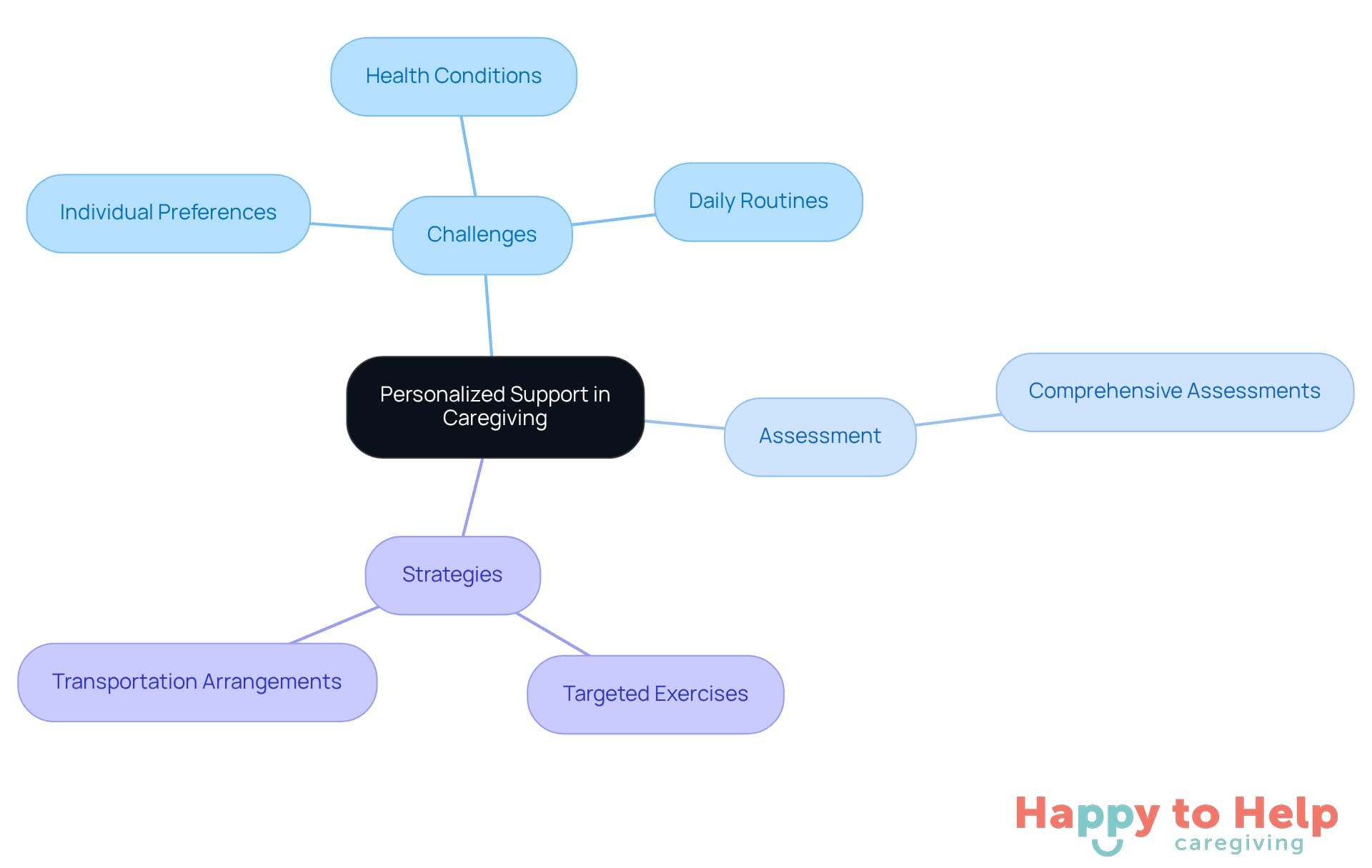
Caregiving often presents unique challenges, particularly when it comes to providing personalized support that meets the specific needs of each client. Without a tailored approach, caregivers may struggle to address individual preferences, health conditions, and daily routines effectively. This can lead to a lack of engagement and autonomy for clients, which is detrimental to their overall wellness.
To tackle these issues, Happy to Help Caregiving excels in conducting comprehensive assessments. By understanding each client's unique situation, caregivers can develop personalized care strategies that encourage autonomy and promote wellness. For example, a support provider might assist a senior facing mobility challenges by implementing targeted exercises and arranging transportation for errands. This not only helps the client stay active but also fosters their involvement in the community.
Companionship and Emotional Well-Being
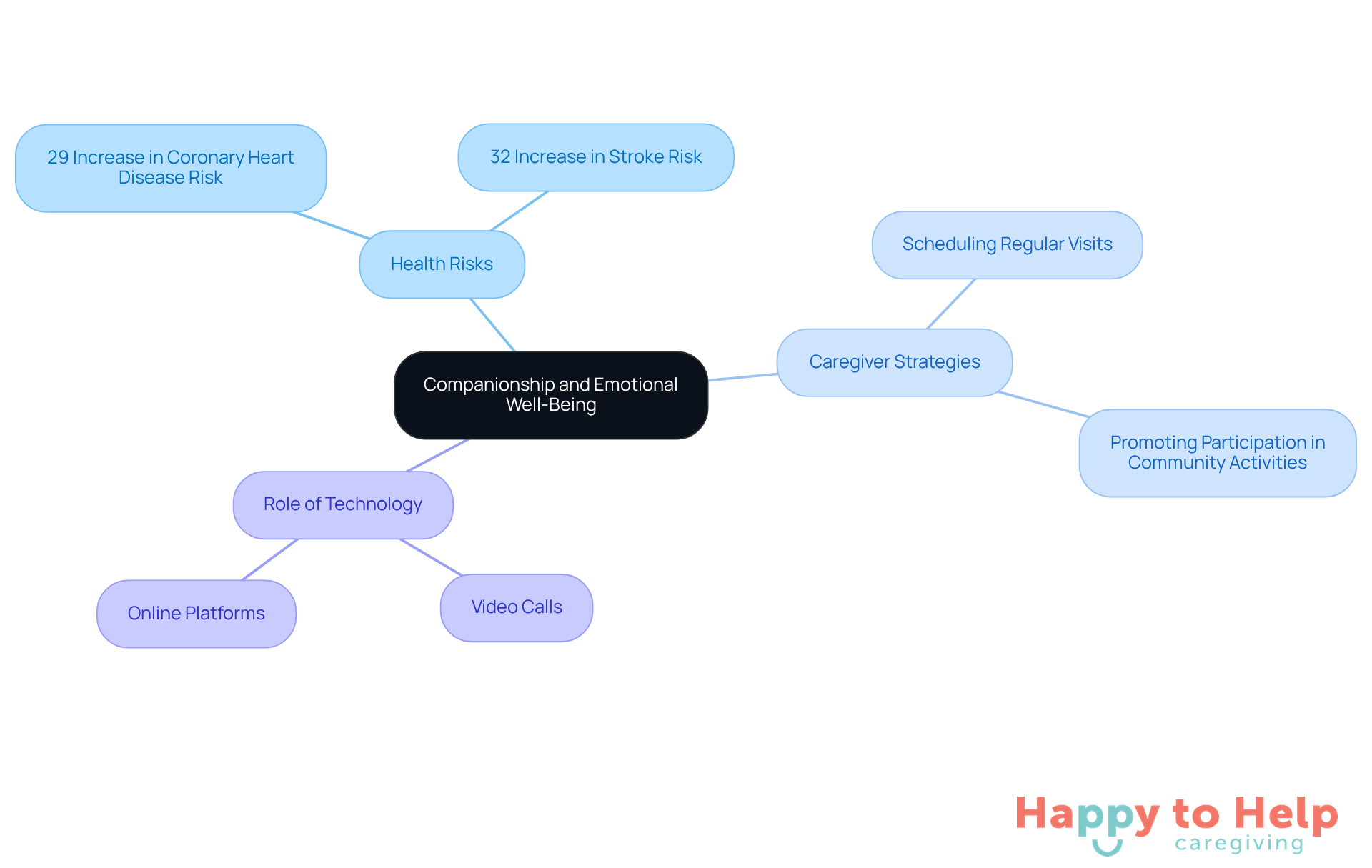
Companionship provided by caregivers is essential for enhancing the emotional well-being of seniors. Loneliness and isolation pose significant threats to the health of older adults, leading to a 29% increase in coronary heart disease risk and a 32% increase in stroke risk. Happy to Help Caregiving recognizes that interpersonal interaction is crucial in combating these feelings.
Caregivers can actively engage seniors in meaningful conversations, activities, and hobbies, fostering a sense of belonging and purpose. For example, organizing a weekly game night or accompanying a client on walks creates valuable opportunities for socialization and emotional connection. Patricia King emphasizes that "loneliness and isolation are significant concerns," highlighting the urgency of addressing these issues.
Technology also plays a vital role in maintaining connections, allowing seniors to interact with family and friends through video calls and online platforms. Family involvement is key in strengthening ties and providing emotional support. By prioritizing these interactions, caregivers not only meet the emotional needs of seniors but also enhance their overall health and happiness.
To foster social engagement, family caregivers are encouraged to implement strategies such as:
- Scheduling regular visits
- Promoting participation in community activities
Convenience and Comfort of Home Care
In-home care in Boston MA presents a significant challenge for many families who are seeking reliable support for their loved ones. Traditional care options often lack the personal touch and comfort that seniors need, leading to feelings of insecurity and isolation. This can hinder recovery and negatively impact overall health.
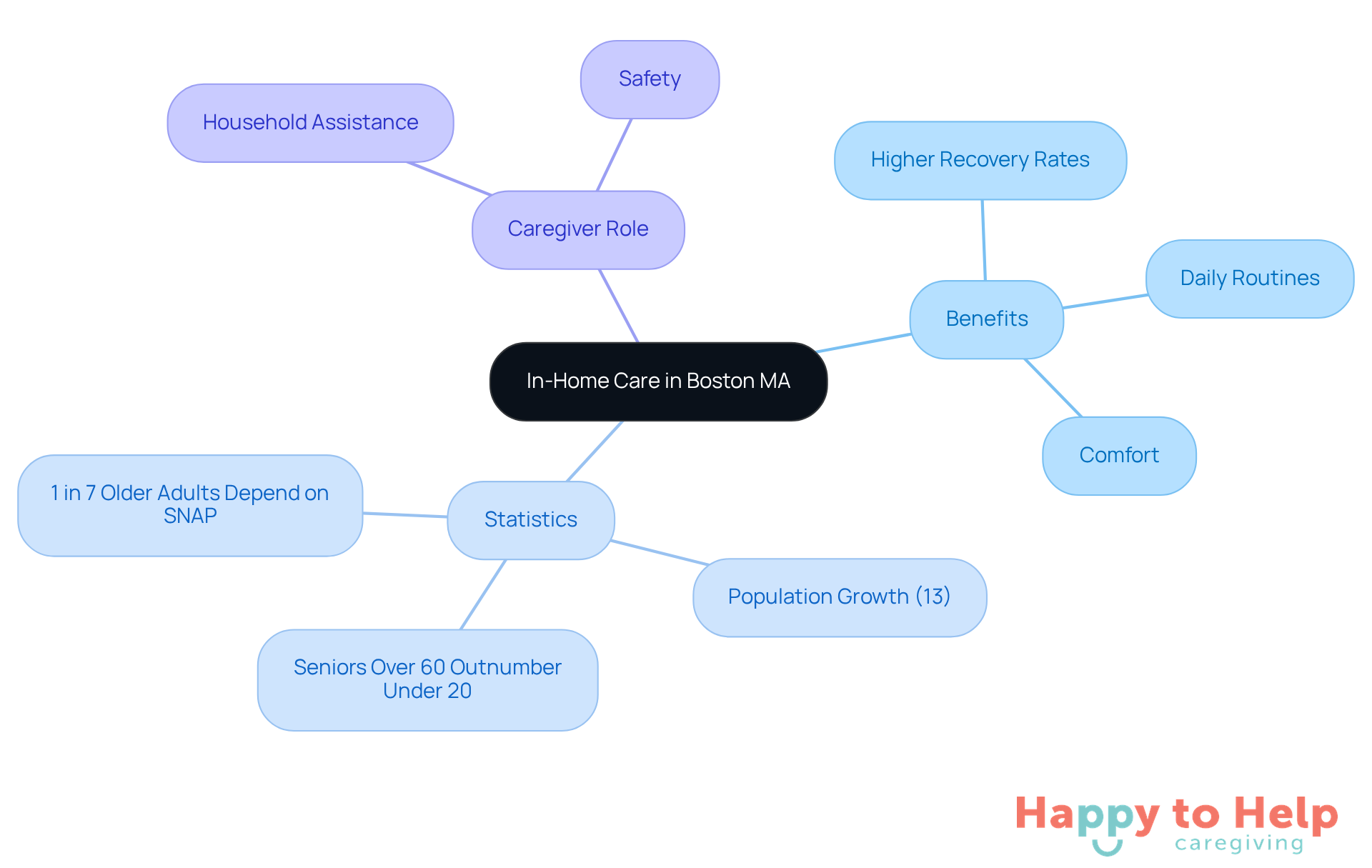
Research shows that seniors receiving in-home care experience higher recovery rates compared to those in institutional settings. They can maintain their daily routines, enjoy home-cooked meals, and access personal belongings that contribute to their well-being. For instance, the state’s population of residents aged 60 and older has grown by 13% over the last five years, highlighting the increasing demand for in-home care in Boston MA services.
Caregivers play a vital role in this solution by assisting with household tasks and ensuring that the home remains a safe and comfortable environment. As U.S. Representative Lori Trahan stated, "For millions of seniors, assisted living isn’t a luxury - it’s a lifeline." This tailored approach not only enhances the caregiving experience but also significantly improves the quality of life for individuals, making in-home care in Boston MA a preferred choice for many families.
Flexible Care Plans Tailored to Individual Needs
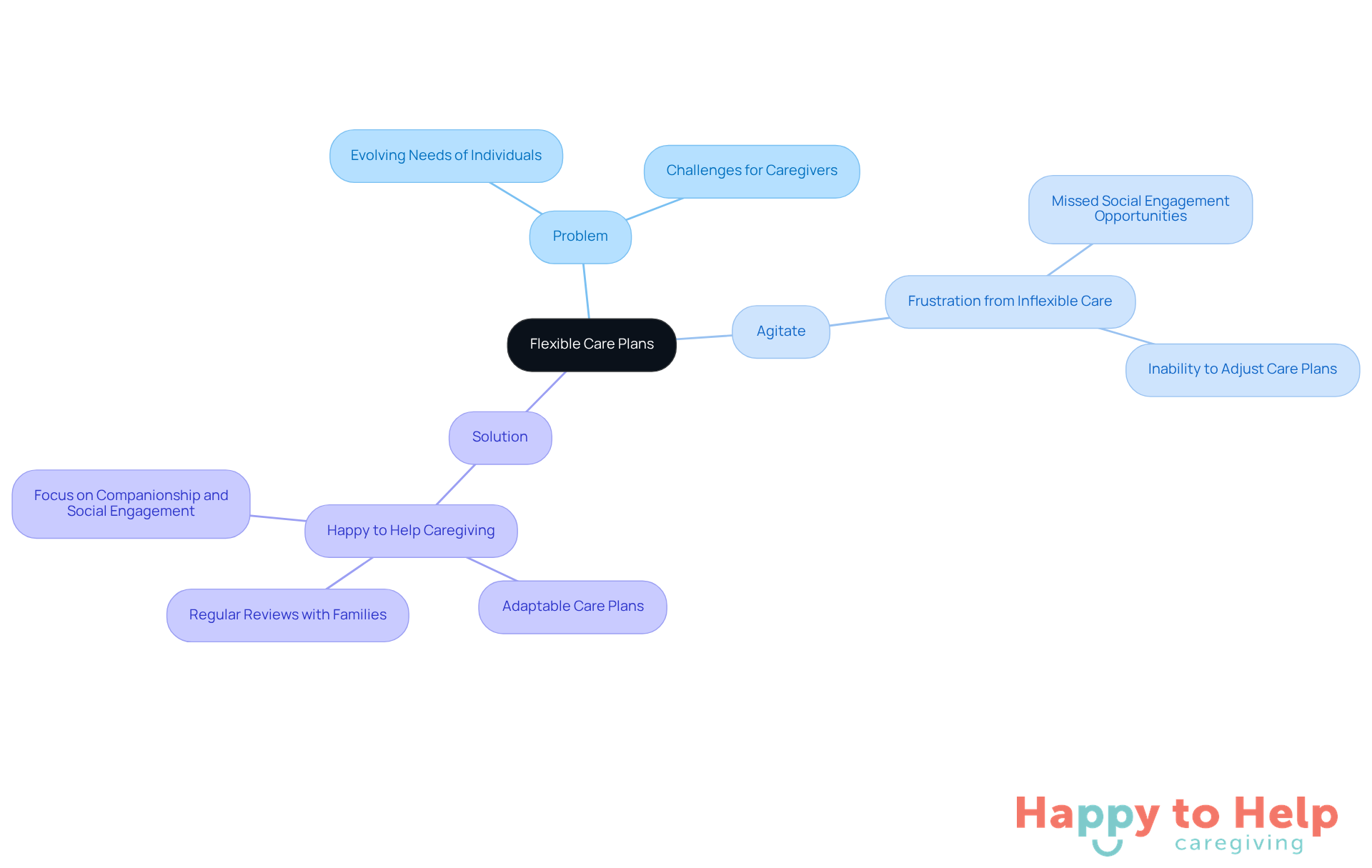
Problem: Caregiving often involves addressing the evolving needs of individuals, which can be challenging for caregivers. As health conditions change, so do the requirements for support.
Agitate: Without a flexible approach, caregivers may struggle to provide the right level of assistance, leading to frustration for both the caregiver and the individual receiving care. For instance, if a client’s mobility improves but their care plan remains focused on physical assistance, they may miss out on valuable social engagement opportunities.
Happy to Help Caregiving offers in-home care in Boston MA with adaptable care plans that can be modified as individuals' needs change over time. This adaptability is essential for delivering effective support, whether an individual requires more help during recovery or less as they regain independence. Caregivers consistently interact with families to review care plans, ensuring they align with the changing preferences and health conditions of individuals. For example, as a client’s mobility improves, the care plan can shift focus from physical assistance to companionship and social engagement.
Taking the Next Steps
In-home care services in Boston, MA, address a significant challenge for families: the complexities of caregiving. Many families struggle to provide the necessary support for their loved ones while balancing their own lives. This situation can lead to feelings of stress and isolation for both caregivers and seniors.
The implications of inadequate support can be profound. Seniors may experience a decline in their emotional and physical well-being, while families may feel overwhelmed and unsure of how to help. This is where in-home care services come into play, offering a solution that prioritizes personalized care, companionship, and flexibility.
Key Benefits of In-Home Care:
- Personalized Support: Tailored care that meets individual needs.
- Companionship: Essential for promoting emotional well-being.
- Convenience: Comfort of receiving care at home.
- Adaptability: Care plans that evolve with changing circumstances.
By recognizing the importance of in-home care, families can significantly enhance their loved ones' quality of life. These services not only reduce feelings of isolation but also ensure that care aligns with evolving needs. The impact extends beyond individual clients, fostering stronger family dynamics and community connections.
Taking action to explore in-home care options can lead to a healthier, happier future for seniors and their families alike. Embracing these services is a proactive step toward ensuring that loved ones receive the attention and assistance they need to thrive in their own homes.
https://iframe.tely.ai/cta/eyJhcnRpY2xlX2lkIjogIjY5NDBhMjE2OTc5ZjhiMGM0MmQzYjU2NyIsICJjb21wYW55X2lkIjogIjY4ZWU1ZGNhNzMxNzYyNTU3ZjNjOTVjMSIsICJpbmRleCI6IG51bGwsICJ0eXBlIjogImFydGljbGUifQ==Frequently Asked Questions
What challenges do caregivers face in providing personalized support?
Caregivers often struggle to address individual preferences, health conditions, and daily routines effectively without a tailored approach, which can lead to a lack of engagement and autonomy for clients.
How does Happy to Help Caregiving address the need for personalized support?
Happy to Help Caregiving conducts comprehensive assessments to understand each client's unique situation, enabling caregivers to develop personalized care strategies that encourage autonomy and promote wellness.
Can you provide an example of personalized support from Happy to Help Caregiving?
An example includes a support provider assisting a senior with mobility challenges by implementing targeted exercises and arranging transportation for errands, which helps the client stay active and fosters community involvement.
List of Sources
- Personalized Support from Happy to Help Caregiving
- Customized Care at Home: The Benefits of Personalized Care Plans - VNA Health Group (https://vnahg.org/customized-care-at-home-the-benefits-of-personalized-care-plans)
- How Personalized Support Plans Improve Quality of Life (https://heartwisesupport.org/post/how-personalized-support-plans-improve-quality-of-life)
- The Future of Home Health Care: Trends to Watch in 2025 (https://synchronyfl.com/the-future-of-home-health-care-trends-to-watch-in-2025)
- 2025: AI enhances personalized care; caregiver experience in the spotlight (https://healthcareitnews.com/news/2025-ai-enhances-personalized-care-caregiver-experience-spotlight)
- Benefits of Customized Care Plans in Senior Living (https://hbrhc.com/blogs/customized-care-plans-in-senior-living)
- Companionship and Emotional Well-Being
- Social Connections in Senior Care: Combatting Loneliness (https://sgmays.org/social-connections-in-senior-care)
- The Emotional Benefits of Companion Care for Seniors (https://comfortkeepers.com/offices/texas/round-rock/resources/news/the-emotional-benefits-of-companion-care-for-seniors)
- Connection, companionship crucial for seniors' mental health during holidays (https://paducahsun.com/news/connection-companionship-crucial-for-seniors-mental-health-during-holidays/article\_d1fadab3-3d8f-5f86-93d8-5ad0a81f1f0a.html)
- Why Companions for Seniors Matter - For the one you love (https://fortheoneyoulove.ca/2025/11/28/why-companionship-matters-for-senior-health)
- Convenience and Comfort of Home Care
- Elder Care Faces Squeeze As Population Expands - SeniorCare Inc. (https://seniorcareinc.org/elder-care-faces-squeeze-as-population-expands)
- HOME CARE NEWS (https://abchhp.com/abc-home-healthcare-professionals-home-care-agency-serving-private-pay-and-state-funded-clients/blog)
- Trahan, Fitzpatrick Unveil Bipartisan Caring for Our Seniors Act to Expand Affordable Assisted Living and Rebuild the Long-Term Care Workforce (https://trahan.house.gov/news/documentsingle.aspx?DocumentID=3569)
- House approves bill to enhance elder home care standards (https://wwlp.com/news/state-politics/house-approves-bill-to-enhance-elder-home-care-standards)
- Governor Healey Signs Executive Order, Releases Updated State Plan for Supporting Older Adults in Massachusetts (https://mass.gov/news/governor-healey-signs-executive-order-releases-updated-state-plan-for-supporting-older-adults-in-massachusetts)
- Flexible Care Plans Tailored to Individual Needs
- A Better Solution Home Care (https://abs.care/Flexible-Healthcare-Staffing-Solutions-for-Personalized-Home-Care)
- The Benefits of Flexible Scheduling in Home Care Plans (https://regencyhcs.com/blog/the-benefits-of-flexible-scheduling-in-home-care-plans)
- Flexible Care Models Give Home Care Clients ‘What They Want When They Want It’ (https://homehealthcarenews.com/2025/10/flexible-care-models-give-home-care-clients-what-they-want-when-they-want-it)
- Care planning model allows for more flexibility in the event of serious illness (https://mcknights.com/news/care-planning-model-allows-for-more-flexibility-in-the-event-of-serious-illness)
- The Importance of Personalized Care Plans (https://homecareadvisory.org/importance-personalized-care-plans)