
Quick Guide to Insights on Elder Care Service Providers
Elder care service providers play a vital role in supporting our beloved seniors. They offer personalized assistance that truly enhances quality of life and independence, especially as the number of individuals aged 65 and above is expected to rise significantly.
These providers deliver essential services such as:
- Companionship
- Post-hospital recovery assistance
- Respite care
These services not only help alleviate feelings of loneliness but also ensure that seniors receive tailored support that meets their unique needs. This fosters a profound sense of security for both seniors and their families.
Imagine the comfort of knowing that someone is there to provide companionship, easing the burden of isolation. The thoughtful care offered can make a world of difference, allowing seniors to thrive in their own homes while feeling connected and valued.
In moments of recovery, having a compassionate caregiver by one’s side can transform the experience. They provide not just physical assistance but emotional support, creating an environment where healing can flourish.
Ultimately, the compassionate services of elder care providers nurture the spirit and well-being of seniors, ensuring they feel cherished and secure. Their dedication reassures families, allowing them to rest easy knowing their loved ones are in caring hands.
Why Insights on Elder Care Service Providers Matters
As the population of seniors continues to rise, so too does the demand for specialized elder care service providers. This need is more critical than ever. These dedicated professionals and organizations not only enhance the quality of life for older adults but also provide invaluable support to family caregivers who are navigating the complexities of care.
However, with so many options available, families may feel overwhelmed. How can they ensure they are choosing the right provider to meet their loved ones' unique needs? This article delves into four key insights that illuminate the essential role of elder care service providers. It explores the diverse services they offer and the characteristics that define quality care, ultimately guiding families toward informed decisions in their caregiving journey.
In this journey, we understand the emotional weight that caregivers carry. The stress and burnout can be significant, but there is hope. By exploring the compassionate services available, families can find the support they need. Together, we will navigate this path, offering reassurance and encouragement along the way.
Define Elder Care Service Providers
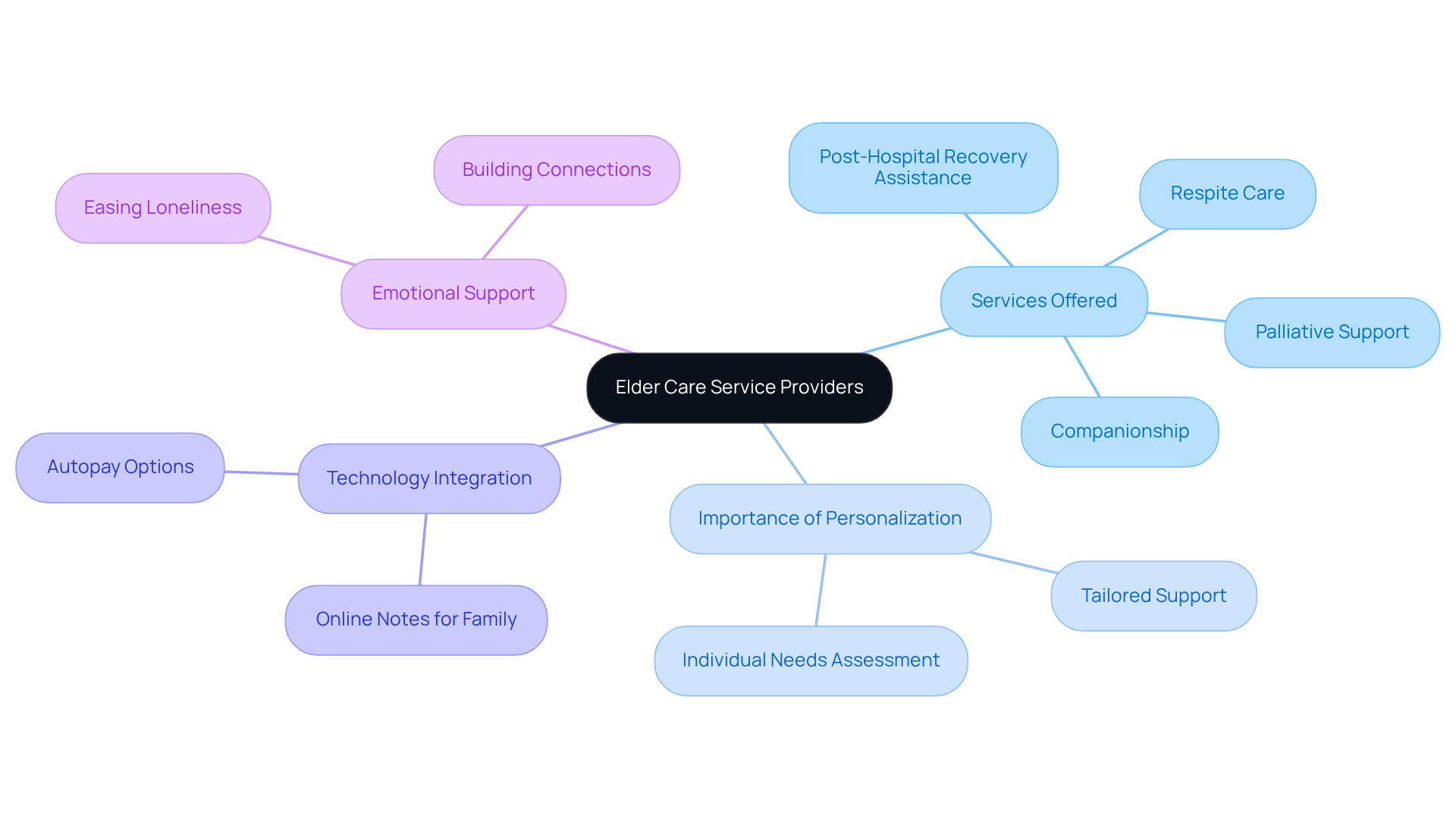
Elder care service providers are dedicated individuals or organizations that focus on offering specialized help to seniors and those with disabilities. Their services range from in-home assistance to facility-based support, all designed to enhance the quality of life for their clients. At the heart of their mission is the commitment to ensure that older adults receive the essential assistance and resources they need to maintain their independence and dignity, whether they reside in their own homes or within a community setting.
This broad definition includes vital services such as:
- Companionship
- Post-hospital recovery assistance
- Respite care
- Palliative support
Each service is tailored to meet the unique needs of individual clients. By prioritizing personalized support, elder care service providers play a crucial role in fostering a sense of security and well-being among those they serve.
Moreover, the integration of technology—like online notes for family members and autopay options—enhances the caregiving experience, making it more efficient and connected. Caregivers also provide essential emotional support, helping to ease feelings of loneliness and isolation, which are critical for the overall well-being of seniors.
In this journey of care, the compassion and dedication of elder care service providers shine through, creating a nurturing environment where seniors can thrive.
Contextualize the Role in Senior Care
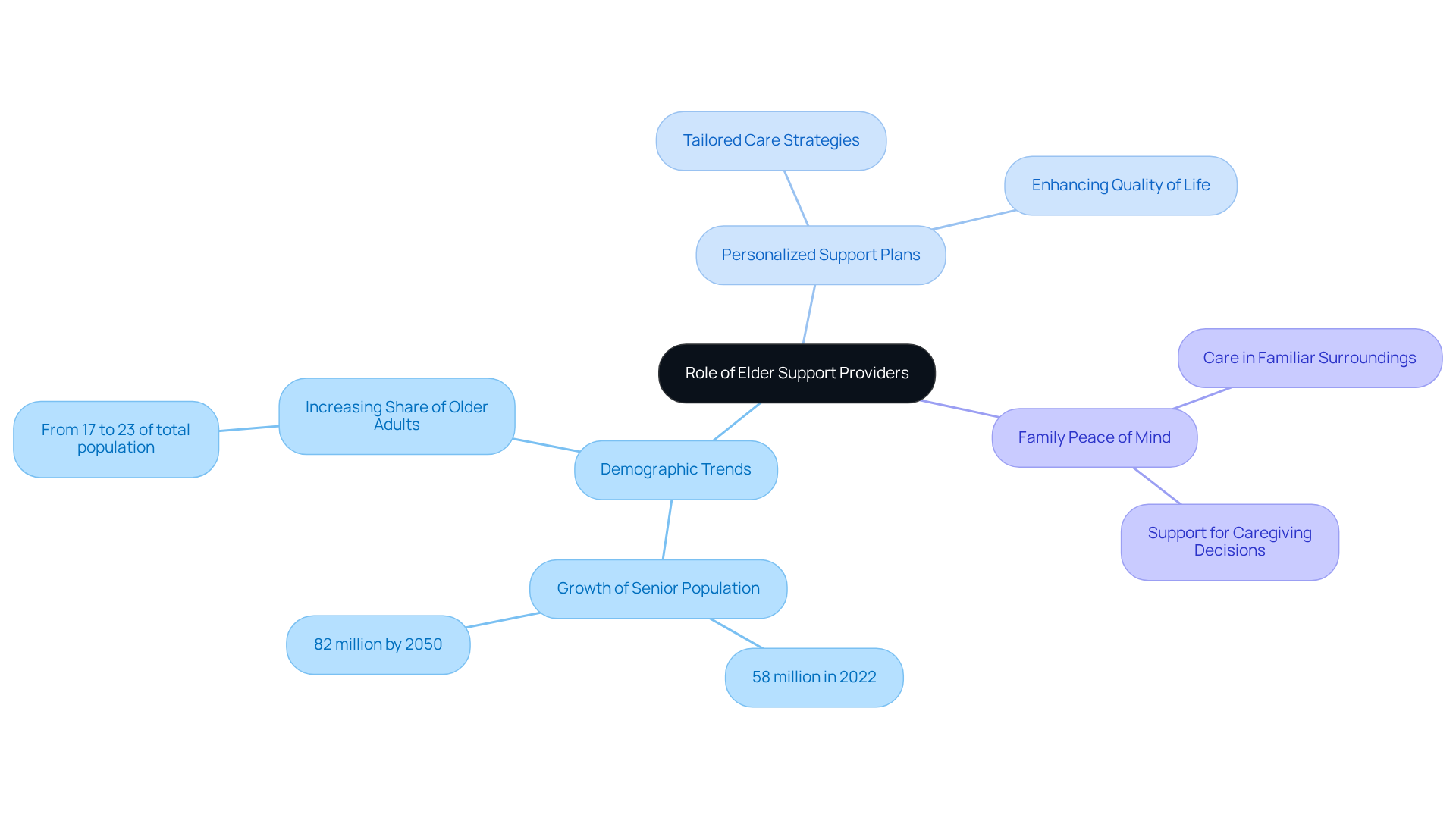
As our loved ones age, the role of elder support providers becomes increasingly vital. Many seniors now prefer to receive assistance in the comfort of their own homes rather than in institutional settings. This preference reflects a significant shift, as the population aged 65 and above is expected to grow from 58 million in 2022 to 82 million by 2050, underscoring the urgent need for in-home caregiving support.
Elder care service providers offer personalized support plans tailored to individual preferences and needs, which are essential for maintaining autonomy and enhancing quality of life. Elder care service providers, such as Happy to Help Caregiving, exemplify this compassionate approach by focusing on the well-being of seniors through customized support that truly makes a difference.
This method not only empowers seniors but also brings peace of mind to families as they navigate caregiving decisions. Knowing that their loved ones receive the best possible care in familiar surroundings fosters a sense of security and comfort, allowing families to feel assured in their choices.
Explore Types of Services Offered
Elder care service providers offer a diverse range of support tailored to meet the unique needs of seniors. These services are designed with compassion, understanding the emotional challenges faced by both seniors and their caregivers.
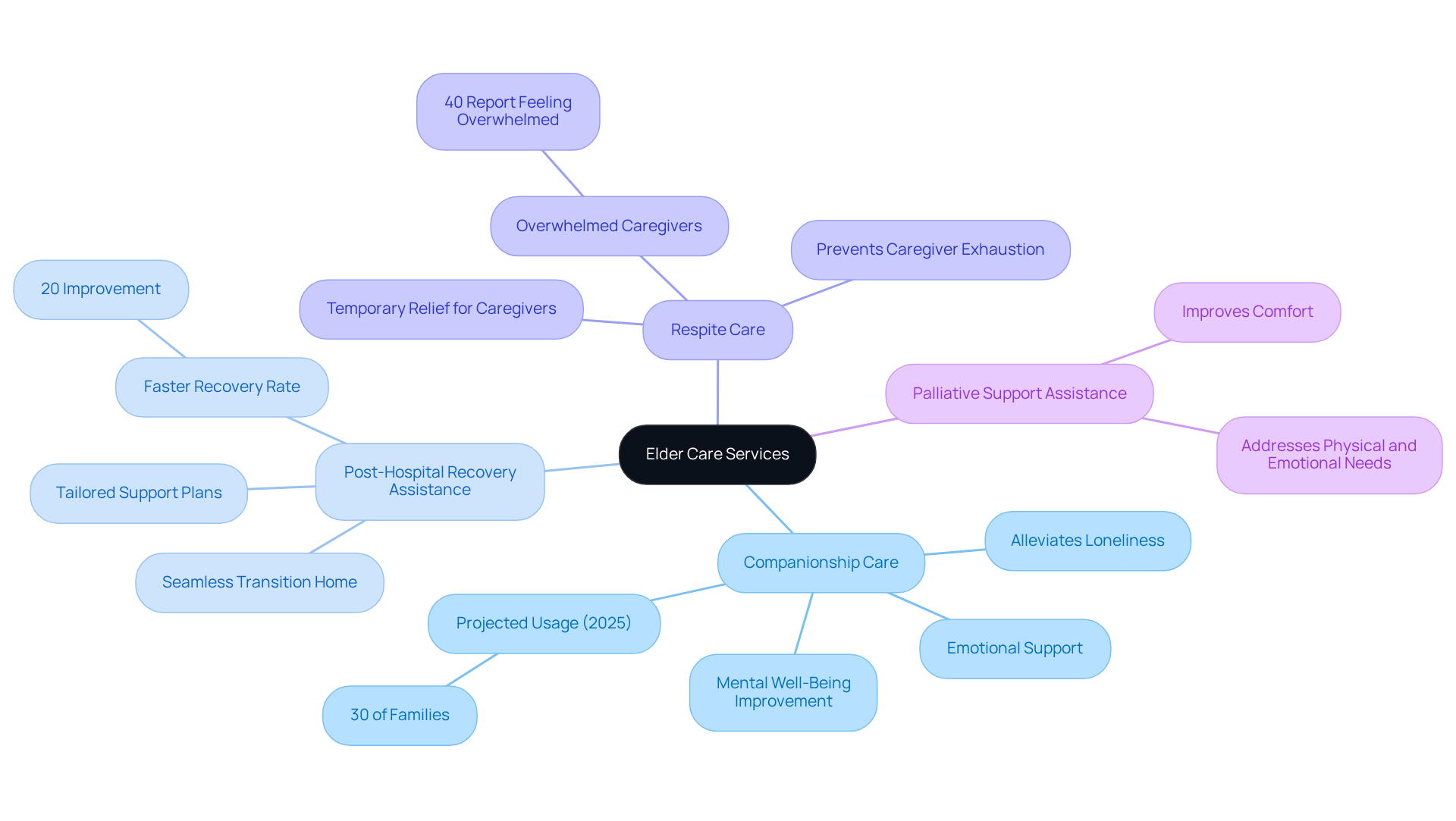
Companionship Care is one vital service that provides essential emotional support and social interaction. This service significantly alleviates feelings of loneliness among seniors. In 2025, around 30% of families are anticipated to employ companionship support options, emphasizing the increasing significance of elder care service providers in elder assistance. Specialists highlight that companionship support from elder care service providers not only fights loneliness but also improves mental well-being, making it an essential aspect of elder assistance.
Post-Hospital Recovery Assistance is another crucial offering. Crafted to enable a seamless return home following a hospital visit, this program guarantees that individuals obtain the essential support during their recovery. Effective programs frequently incorporate tailored support plans that address distinct recovery needs, improving the overall healing process. Studies show that tailored recovery plans can lead to a 20% faster recovery rate for patients—an encouraging statistic for families.
Elder care service providers offer Respite Care, which provides temporary relief for family caregivers, allowing them to take much-needed breaks while ensuring their loved ones are well cared for. This support is vital for preventing caregiver exhaustion, which impacts numerous families. In reality, almost 40% of caregivers indicate feeling overwhelmed, highlighting the necessity for such assistance.
Palliative Support Assistance focuses on improving comfort and quality of life for people with serious illnesses. This support addresses both physical and emotional needs, offering a comprehensive approach to treatment.
These offerings can be tailored according to personal preferences, ensuring that assistance is both effective and considerate of the client's independence. The incorporation of companionship support, in particular, has been shown to enhance mental well-being and overall satisfaction among seniors, making it a vital element of elder assistance. Furthermore, the economic value of informal caregiving is significant, with estimates suggesting it exceeds $470 billion, highlighting the critical role of caregivers in the healthcare system.
In this journey, the compassionate care provided by these services fosters a sense of security and comfort, reassuring families that their loved ones are in good hands.
Identify Key Characteristics of Providers
Key characteristics of reputable elder care service providers include:
-
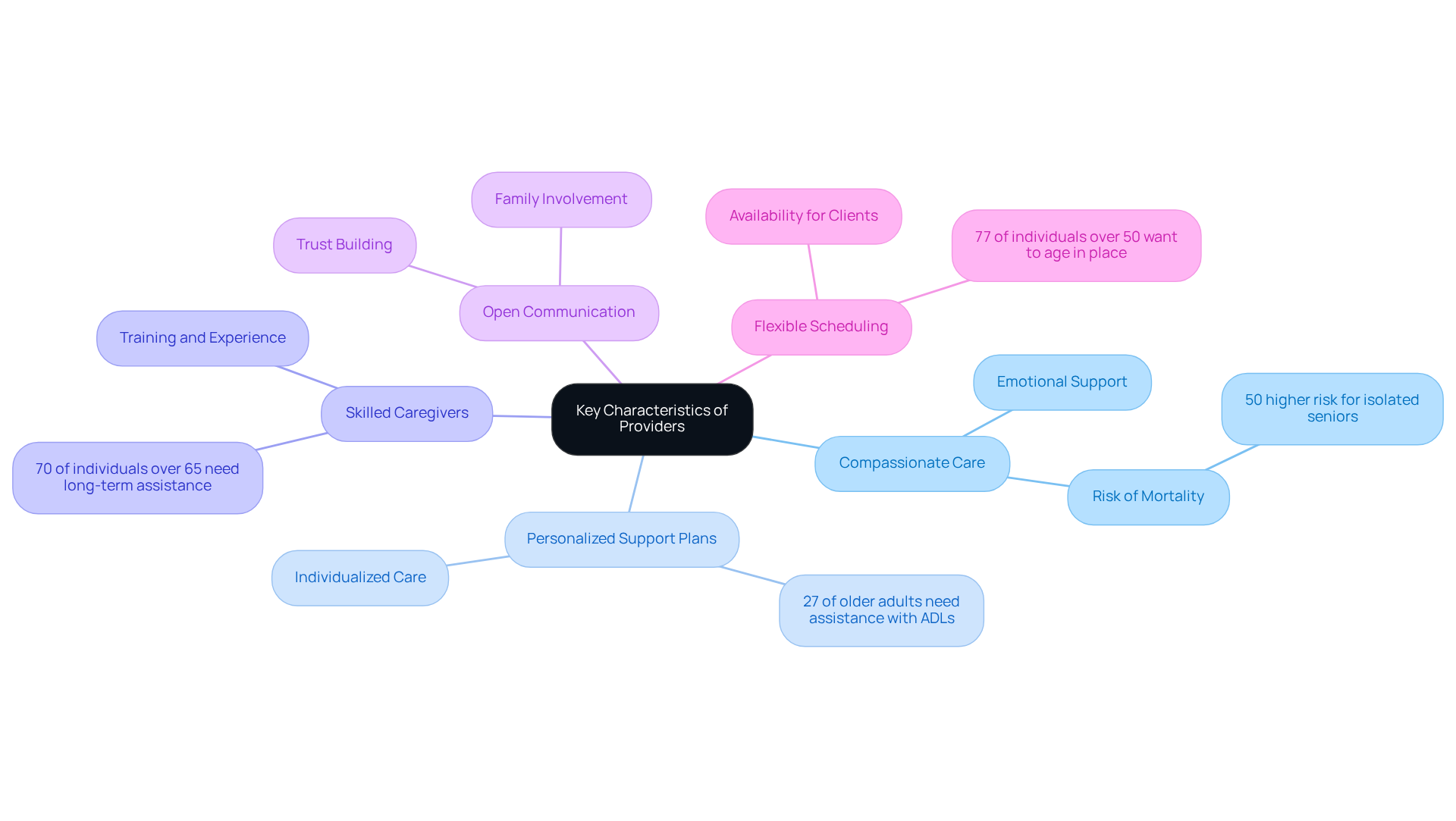
Compassionate Care: It is essential for providers to prioritize empathy and understanding, treating clients with the utmost respect and dignity. This approach is vital, as research shows that emotional support significantly impacts seniors' well-being, helping to alleviate feelings of loneliness and isolation. It's important to note that older adults facing isolation have a 50% higher risk of mortality compared to their socially connected peers.
-
Personalized Support Plans: Effective elder care service providers take the time to create personalized support plans that cater to the unique needs and preferences of each client. For example, about 27% of community-dwelling older adults aged 65 and older require assistance with one or more activities of daily living (ADLs), highlighting the necessity for individualized support that aligns with their specific circumstances.
-
Skilled Caregivers: Caregivers must possess the necessary training and experience to deliver high-quality support, particularly in understanding medical conditions and caregiving techniques. With approximately 70% of individuals over 65 expected to need long-term assistance, having skilled caregivers is crucial for effectively managing complex health needs.
-
Open Communication: Open communication is essential for elder care service providers, as it involves a commitment to transparent dialogue with families, ensuring they remain informed and actively involved in their loved ones' care. Effective communication fosters trust and allows families to feel confident in the support being provided, underscoring the importance of family involvement in the caregiving process.
-
Flexible Scheduling: Elder care service providers should offer flexible scheduling options and be readily available to meet the needs of clients at any time. This flexibility is particularly vital as many seniors wish to remain in their homes, with 77% of individuals over 50 expressing a desire to age in place.
These characteristics not only enrich the caregiving experience but also cultivate trust and confidence among families seeking support for their loved ones.
Making the Right Choice
Elder care service providers play a pivotal role in enhancing the lives of seniors and alleviating the burdens faced by family caregivers. By offering tailored support that prioritizes the dignity and independence of older adults, these providers ensure that seniors can thrive in their preferred environments, whether at home or in a community setting. The commitment to compassionate care and personalized assistance is at the heart of their mission, reinforcing the importance of these services in today’s aging society.
Throughout this article, we have highlighted key insights, including the diverse range of services offered by elder care providers such as:
- Companionship
- Post-hospital recovery assistance
- Respite care
- Palliative support
Each of these services is designed to address the unique needs of seniors, contributing not only to their physical well-being but also to their emotional health. The characteristics of reputable providers—compassionate care, skilled caregivers, open communication, and flexible scheduling—further emphasize the essential role these services play in fostering a supportive environment for both seniors and their families.
As the demand for elder care continues to grow, it is crucial for families to recognize the value of these services and the profound impact they can have on the quality of life for their loved ones. Engaging with elder care service providers not only enhances the well-being of seniors but also provides peace of mind for families navigating the complexities of caregiving. By prioritizing informed decisions and embracing the support available, families can ensure a nurturing and secure environment for their aging loved ones, ultimately enriching their lives and well-being.
https://iframe.tely.ai/cta/eyJhcnRpY2xlX2lkIjogIjY4Zjk3MTE5OTFlODJlNDU5ZjhjZTJlMiIsICJjb21wYW55X2lkIjogIjY4ZWU1ZGNhNzMxNzYyNTU3ZjNjOTVjMSIsICJpbmRleCI6IG51bGwsICJ0eXBlIjogImFydGljbGUifQ==Frequently Asked Questions
What are elder care service providers?
Elder care service providers are individuals or organizations that specialize in offering assistance to seniors and those with disabilities, focusing on enhancing their quality of life through various services.
What types of services do elder care service providers offer?
Services offered include companionship, post-hospital recovery assistance, respite care, and palliative support, all tailored to meet the unique needs of individual clients.
How do elder care service providers help maintain the independence and dignity of older adults?
They provide essential assistance and resources that enable older adults to live independently, whether at home or in a community setting, while ensuring they receive the care they need.
What role does technology play in elder care services?
Technology enhances the caregiving experience by offering features like online notes for family members and autopay options, making care more efficient and connected.
How do elder care service providers address emotional well-being?
Caregivers provide essential emotional support to seniors, helping to alleviate feelings of loneliness and isolation, which are critical for their overall well-being.
Why is personalized support important in elder care?
Personalized support is crucial as it allows elder care service providers to tailor their services to meet the specific needs of each client, fostering a sense of security and well-being.