

For families in our service areas
For families in our service areas, this guide explains caregiving and how non-medical in-home caregiving can support care planning in East Idaho, Treasure Valley & Magic Valley, Northern Wasatch, North Central West Virginia, and Northeast Ohio.
Understanding Your Options
Choosing an elderly care agency can be a daunting task, filled with emotional challenges. It's essential to evaluate key factors such as the organization's reputation, caregiver qualifications, and the range of services offered. This process can often feel overwhelming, especially when considering the well-being of a loved one.
Thorough research is vital. Ask critical questions about caregiver training and agency policies, ensuring that the agency aligns with your values and expectations. Prioritizing personalized care plans that address individual needs is crucial. This approach not only fosters high-quality support for seniors but also provides peace of mind for families.
Remember, you are not alone in this journey. Many families share similar concerns, and there are compassionate professionals ready to guide you. By taking the time to find the right agency, you are investing in the well-being of your loved one, ensuring they receive the care they deserve.
The Importance of Practices for Choosing an Elderly Care
Navigating the complex landscape of elderly care can feel overwhelming for families, particularly when the well-being of a loved one is involved. The right elderly care agency not only provides essential services but also nurtures an environment of compassion and respect. This allows seniors to thrive in the comfort of their own homes.
With so many options available, how can families ensure they choose an agency that truly meets their unique needs and expectations? This article explores four key practices that empower families to make informed decisions, highlighting the vital factors that contribute to effective and personalized care for seniors.
Understand Home Care Services and Their Importance
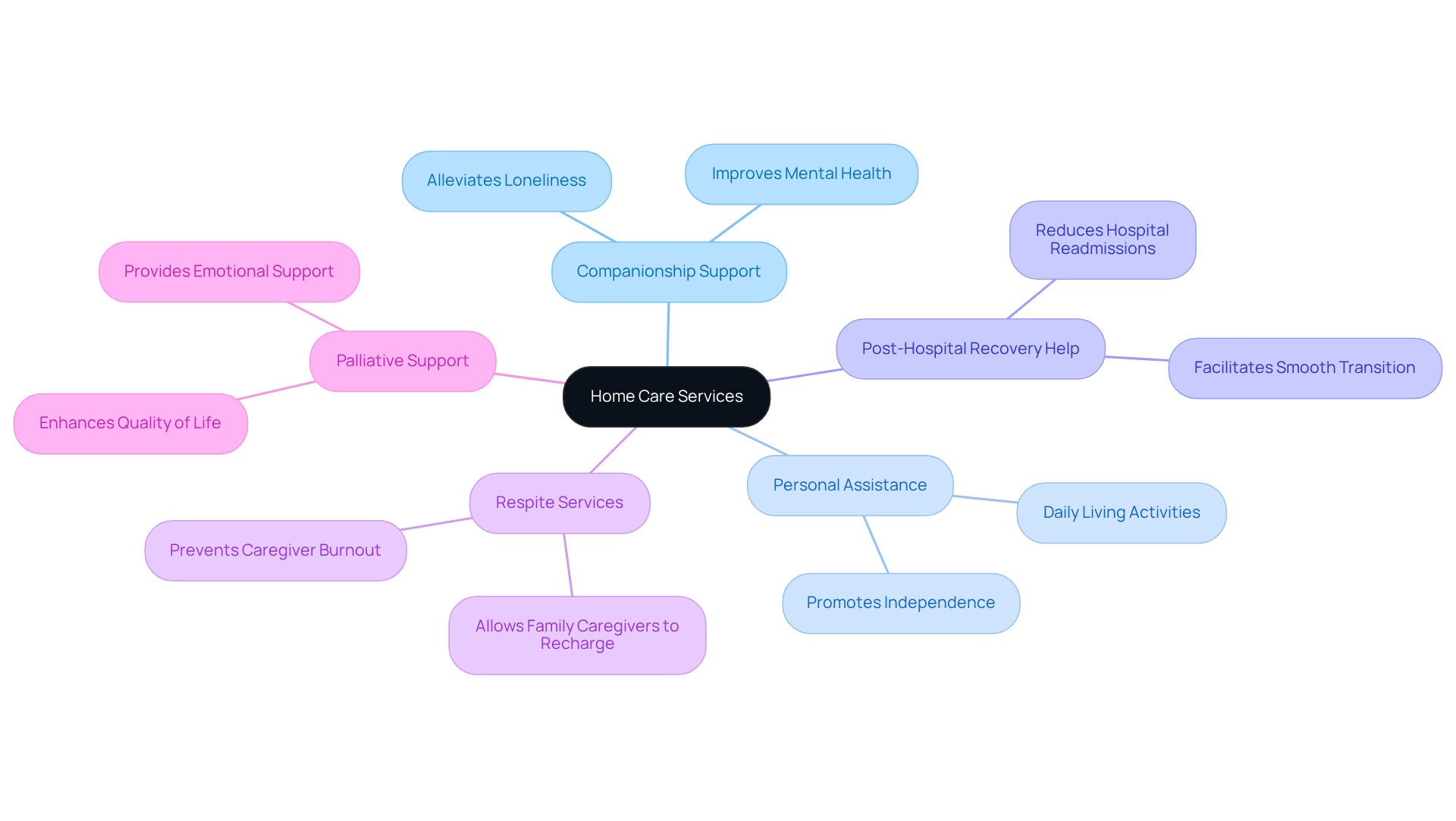
An elderly care agency provides home assistance options that offer a compassionate range of support designed to help seniors with their daily tasks, allowing them to remain in the comfort of their own homes. These services include:
- Companionship support
- Personal assistance
- Post-hospital recovery help
- Respite services
- Palliative support
Understanding these offerings is essential for families in an elderly care agency, as it enables them to recognize and address the specific needs of their loved ones effectively.
Companionship support, for instance, aims to alleviate feelings of loneliness and isolation—emotions that can significantly impact mental health. Research indicates that social isolation can exacerbate health issues in older adults. Similarly, post-hospital recovery assistance ensures that seniors receive the necessary support during their recovery phase, lessening the risk of hospital readmissions and facilitating a smoother transition back to daily life.
Moreover, home assistance programs play a crucial role in reducing the likelihood of falls and injuries, which is vital for maintaining safety and autonomy at home. By acknowledging the importance of the services provided by an elderly care agency, families can make informed choices that not only enhance their loved ones' quality of life but also foster a sense of independence and dignity.
Additionally, home assistance is often more economical than institutional settings, making it a sensible choice for families seeking quality support. Embracing these options can lead to a more fulfilling and secure life for seniors, allowing them to thrive in an environment that feels like home.
Evaluate Key Factors in Choosing a Home Care Agency
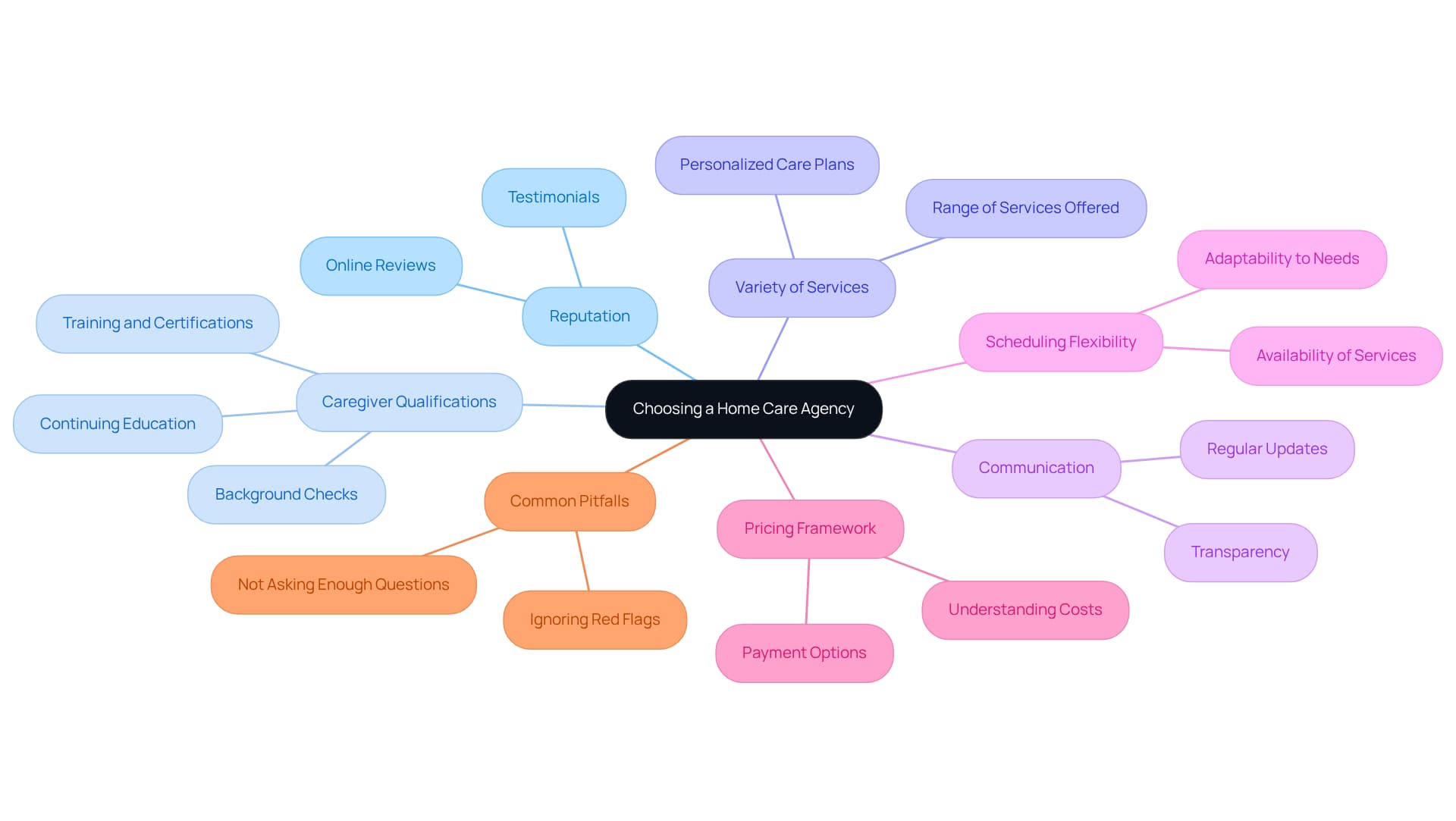
Choosing an elderly care agency can be a daunting task for families, filled with emotional challenges and concerns. When selecting an elderly care agency, it's essential to consider several important factors, such as:
- The organization's reputation
- The qualifications of its caregivers
- The variety of services offered
Taking the time to investigate online reviews and testimonials can provide valuable insights into the reliability and quality of care that the organization delivers.
In addition to this, families should feel empowered to ask about the caregivers' training, certifications, background checks, and continuing education. This ensures that they are capable of providing the essential support your loved ones need. Flexibility in scheduling and the availability of services are also crucial, as these factors can significantly influence the overall caregiving experience.
A trustworthy home support provider will prioritize transparent and regular communication, fostering a partnership between relatives and caregivers in their approach to assistance. It's equally important to discuss the organization's pricing framework and available payment methods, as financial considerations can weigh heavily on families.
By thoughtfully assessing these factors and being mindful of common pitfalls, families can make informed choices regarding an elderly care agency to ensure their loved ones receive the highest quality of care. Remember, you are not alone in this journey; support is available, and together, we can navigate these decisions with compassion and understanding.
Ask Essential Questions to Assess Agency Fit
When considering whether a home support service is the right choice, families often face emotional challenges. It’s essential to ask crucial questions that delve into the service's operations and commitment to quality assistance. Here are some key inquiries to consider:
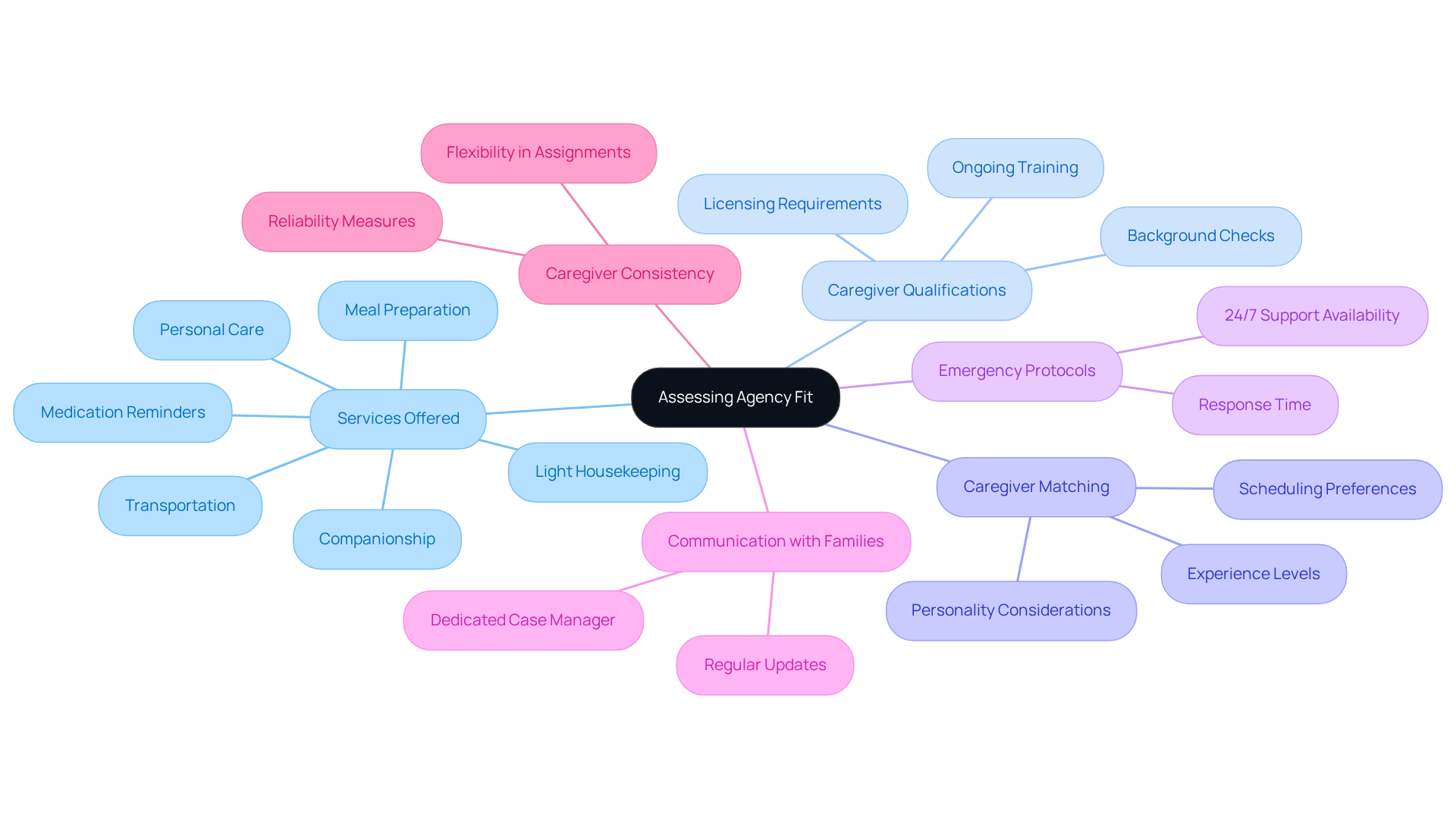
- What services do you offer, and how do they align with my loved one's needs?
- Are your caregivers licensed and trained? What ongoing training do they receive? Many states require elderly care agencies to obtain licenses, which is vital for ensuring quality support.
- How do you match caregivers with clients? What factors do you consider in this process? For instance, SAFE HOMECARE emphasizes that a good agency doesn’t just send anyone; they consider personality, experience, and scheduling preferences to make the right match.
- What is your protocol for handling emergencies? How quickly can you respond to urgent needs?
- How do you keep in touch with relatives regarding updates and changes related to support? Frequent updates on treatment plans and health status are crucial for establishing trust and keeping families informed.
- What measures do you have in place to ensure caregiver consistency and reliability?
These questions not only clarify the organization's offerings but also provide insight into their commitment to client satisfaction. Organizations that prioritize caregiver pairing based on personality and experience generally cultivate stronger connections, enhancing the overall support experience. Furthermore, understanding the organization's licensing and training procedures is vital, as many states mandate home support providers to be licensed. By posing these inquiries, families can feel more assured in their choice of an elderly care agency, ensuring that their loved ones receive the compassionate and individualized support they truly deserve.
Prioritize Personalized Care Plans for Individual Needs
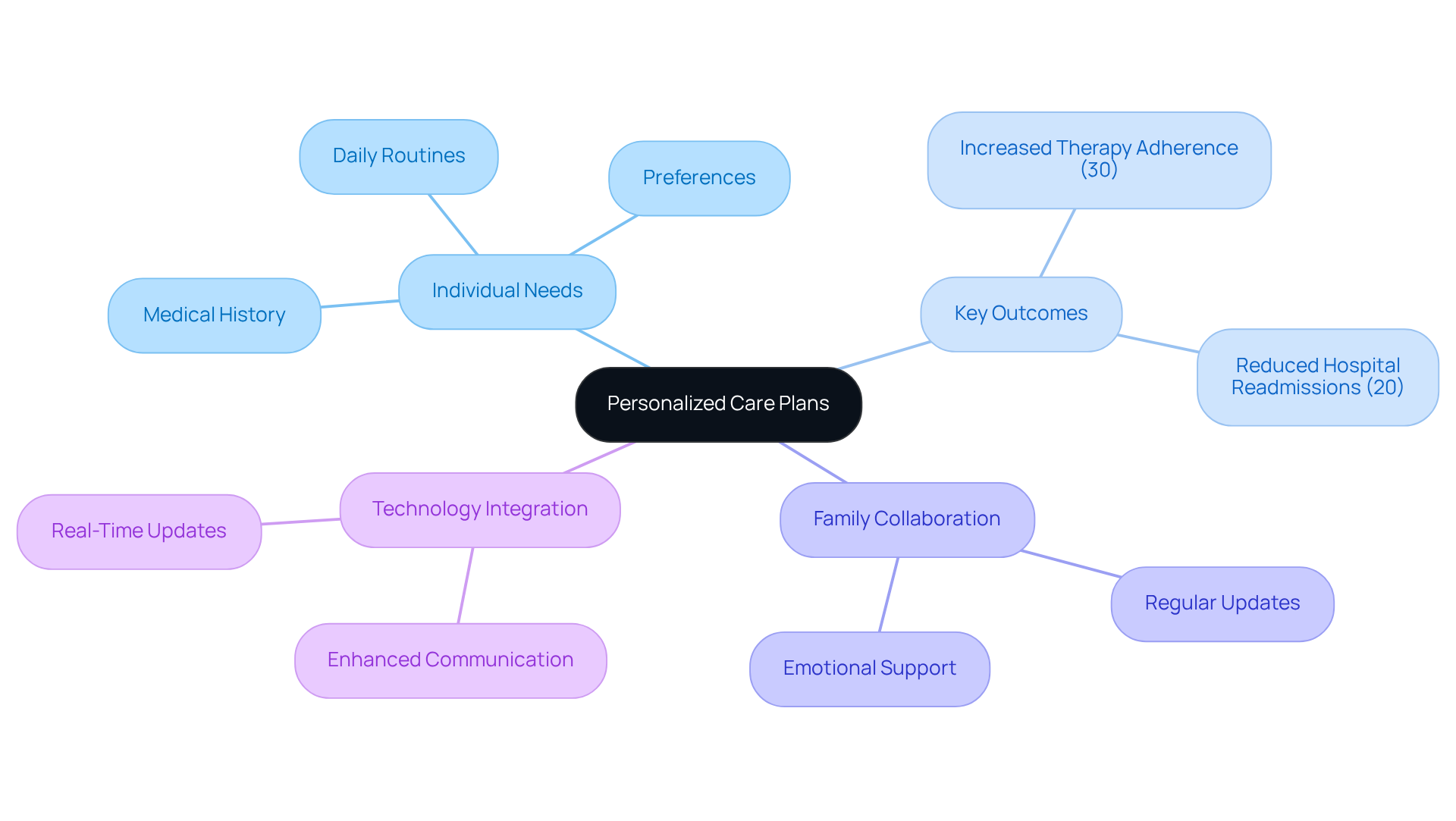
Focusing on individualized treatment plans is essential for addressing the unique needs of each client. These plans should encompass the individual's medical history, preferences, and daily routines, fostering a customized approach that not only enhances the quality of support but also respects the dignity and autonomy of the client. Research shows that personalized assistance significantly boosts client satisfaction.
Individuals receiving tailored support often experience improved health outcomes and greater involvement in their treatment. For instance, customized treatment plans have been shown to:
- Increase adherence to therapy by 30%
- Reduce hospital readmissions by 20%
Families are encouraged to collaborate with an elderly care agency to create and regularly update these plans, ensuring they reflect any changes in the client's condition or preferences. As specialists observe, "The transition from standardized treatment to personalized approaches has significant implications for improving patient outcomes and enhancing the quality of life."
By focusing on individualized support, families can empower their loved ones to maintain a higher quality of life and greater independence, ultimately leading to more positive caregiving experiences and nurturing an environment that honors individual identities. Additionally, the integration of technology supports real-time updates and communication among stakeholders, further enhancing the effectiveness of personalized care.
Taking the Next Steps
Choosing an elderly care agency is a significant decision that deeply affects the well-being and quality of life of our seniors. It’s essential to understand the various home care services available and to evaluate key factors in selecting the right agency. Asking the right questions helps in assessing fit, while prioritizing personalized care plans ensures that families can make informed choices. This way, the specific needs of loved ones are met, enhancing their overall care experience.
The discussion highlights crucial aspects, such as the importance of companionship support and the qualifications of caregivers. Transparent communication is vital. Moreover, the emphasis on individualized care plans underscores the value of tailoring services to respect the unique preferences and medical histories of seniors. This approach ultimately leads to improved health outcomes and greater satisfaction.
In conclusion, selecting the right elderly care agency is a journey that calls for careful consideration and compassion. By prioritizing these practices, families can ensure that their loved ones receive the highest quality of care in the comfort of their own homes. Embracing this approach not only fosters independence and dignity but also nurtures a supportive environment where seniors can truly thrive. Therefore, taking the time to thoughtfully evaluate options is essential in securing a brighter future for those who have given so much.
https://iframe.tely.ai/cta/eyJhcnRpY2xlX2lkIjogIjY4ZjE4ZGNjNzlmOTQ0M2RiMjhjOTUxYyIsICJjb21wYW55X2lkIjogIjY4ZWU1ZGNhNzMxNzYyNTU3ZjNjOTVjMSIsICJpbmRleCI6IG51bGwsICJ0eXBlIjogImFydGljbGUifQ==Frequently Asked Questions
What are home care services provided by elderly care agencies?
Home care services offered by elderly care agencies include companionship support, personal assistance, post-hospital recovery help, respite services, and palliative support.
Why is companionship support important for seniors?
Companionship support is important because it helps alleviate feelings of loneliness and isolation, which can significantly impact mental health and exacerbate health issues in older adults.
How does post-hospital recovery assistance benefit seniors?
Post-hospital recovery assistance benefits seniors by providing the necessary support during their recovery phase, reducing the risk of hospital readmissions, and facilitating a smoother transition back to daily life.
What role do home assistance programs play in senior safety?
Home assistance programs play a crucial role in reducing the likelihood of falls and injuries, which is vital for maintaining safety and autonomy at home for seniors.
How can families benefit from understanding the services of an elderly care agency?
Families can benefit by recognizing and addressing the specific needs of their loved ones, making informed choices that enhance their quality of life, and fostering a sense of independence and dignity.
Are home care services more economical than institutional settings?
Yes, home care services are often more economical than institutional settings, making them a sensible choice for families seeking quality support for their loved ones.
What overall impact do home care services have on seniors' lives?
Home care services can lead to a more fulfilling and secure life for seniors, allowing them to thrive in an environment that feels like home.