4 Nutritious Breakfast Ideas for Seniors: A Caregiver's
For families in our service areas
For families in our service areas, this guide explains caregiver support and how non-medical in-home caregiving can support care planning in East Idaho, Treasure Valley & Magic Valley, Northern Wasatch, North Central West Virginia, and Northeast Ohio.
Understanding 4 Nutritious Breakfast Ideas
As the aging population continues to grow, understanding the unique nutritional needs of seniors becomes increasingly vital - especially regarding breakfast, the meal that lays the foundation for the day. Caregivers face the challenge of ensuring that older adults receive meals that are not only nutritious but also appealing and easy to prepare. Balancing dietary requirements with preparation time can be daunting.
So, how can caregivers effectively navigate the world of breakfast options for seniors? This article explores four nutritious breakfast ideas, providing a comparative analysis that highlights their benefits and ease of preparation. By empowering caregivers with actionable solutions, we aim to enhance the health and well-being of those in their care.
Understanding the Nutritional Needs of Seniors at Breakfast
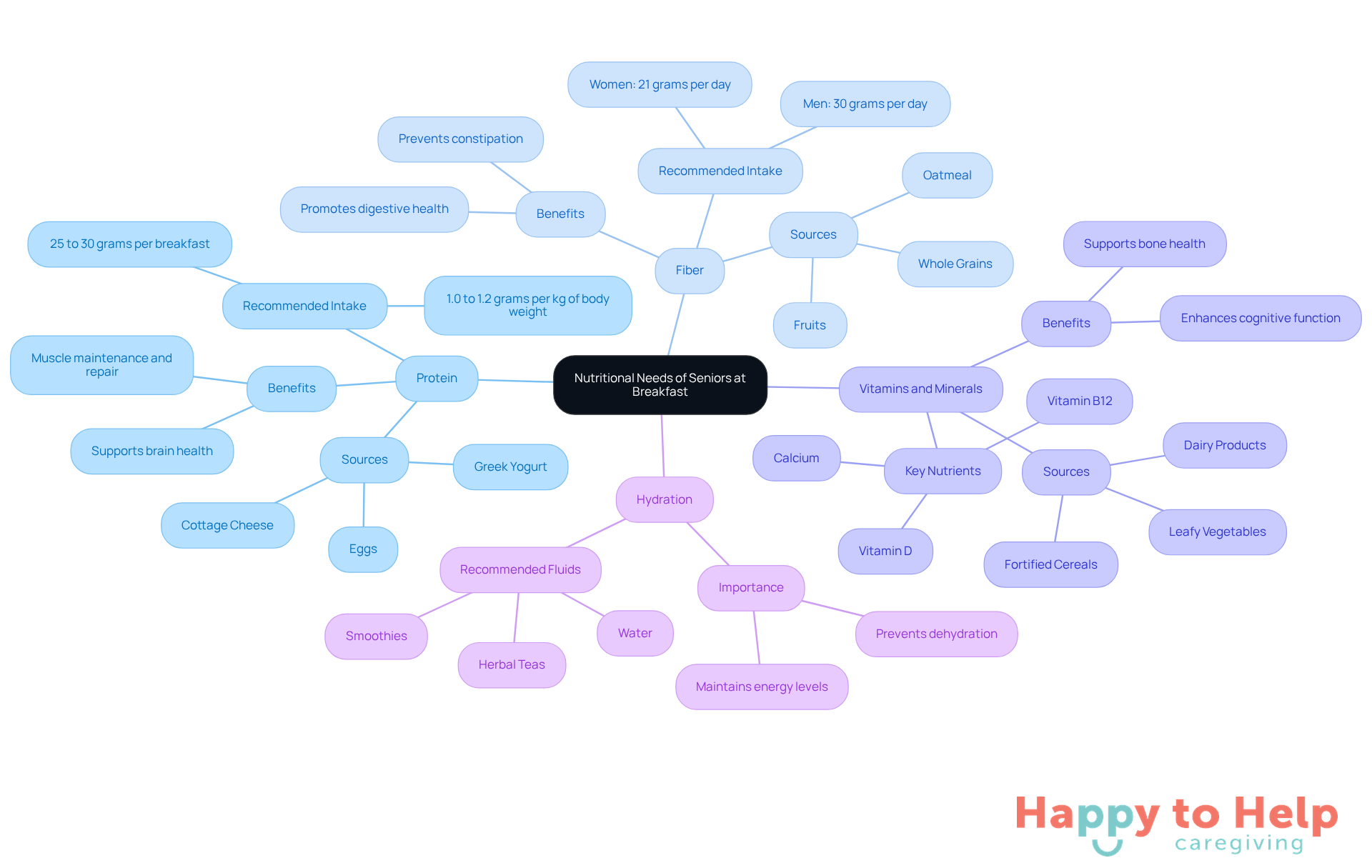
As older adults age, their dietary requirements change considerably, presenting a challenge for caregivers. The morning meal, including breakfast ideas for seniors, becomes vital as it sets the tone for the day. One of the best breakfast ideas for seniors is a well-balanced breakfast that provides essential nutrients to support overall health and well-being.
Problem: Many seniors struggle to meet their nutritional needs, which can affect their energy levels and overall health.
Agitate: Without adequate nutrition, older adults may experience fatigue, decreased muscle mass, and digestive issues, impacting their quality of life.
Solution: Caregivers can focus on key nutritional components to ensure seniors start their day right:
-
Protein: Vital for muscle maintenance and repair, seniors should aim for protein-rich breakfasts to sustain energy levels throughout the day. Research suggests that older individuals require about 1.0 to 1.2 grams of protein for each kilogram of body weight, emphasizing the importance of reaching 25 to 30 grams in the morning meal. Foods like eggs, Greek yogurt, and cottage cheese are excellent sources that can help meet these needs.
-
Fiber: Essential for digestive well-being, fiber helps prevent constipation and fosters a sensation of fullness. Incorporating oatmeal, whole grains, and fruits into breakfast can significantly enhance fiber intake, which is crucial for maintaining digestive regularity.
-
Vitamins and Minerals: Nutrients such as Vitamin D, calcium, and B12 are essential for bone health and cognitive function. Fortified cereals, dairy items, and leafy vegetables can assist older adults in meeting their vitamin and mineral needs, promoting overall well-being.
-
Hydration: Seniors often experience a reduced sense of thirst, making it essential to include fluids in their morning meal. Smoothies, herbal teas, or even water can help maintain hydration, which is vital for preventing dehydration-related issues such as headaches and fatigue.
By concentrating on these nutritional elements, caregivers can help ensure that seniors begin their day with a balanced meal by utilizing breakfast ideas for seniors that support their health and vitality.
Top Nutritious Breakfast Ideas for Seniors
Problem: Many seniors struggle to maintain a nutritious diet, which can lead to health issues such as muscle loss and cognitive decline.
Agitate: Inadequate nutrition can significantly impact their overall well-being, making it essential for caregivers to provide meals that are not only appealing but also packed with nutrients.
Solution: Here are some top nutritious breakfast ideas tailored for seniors:
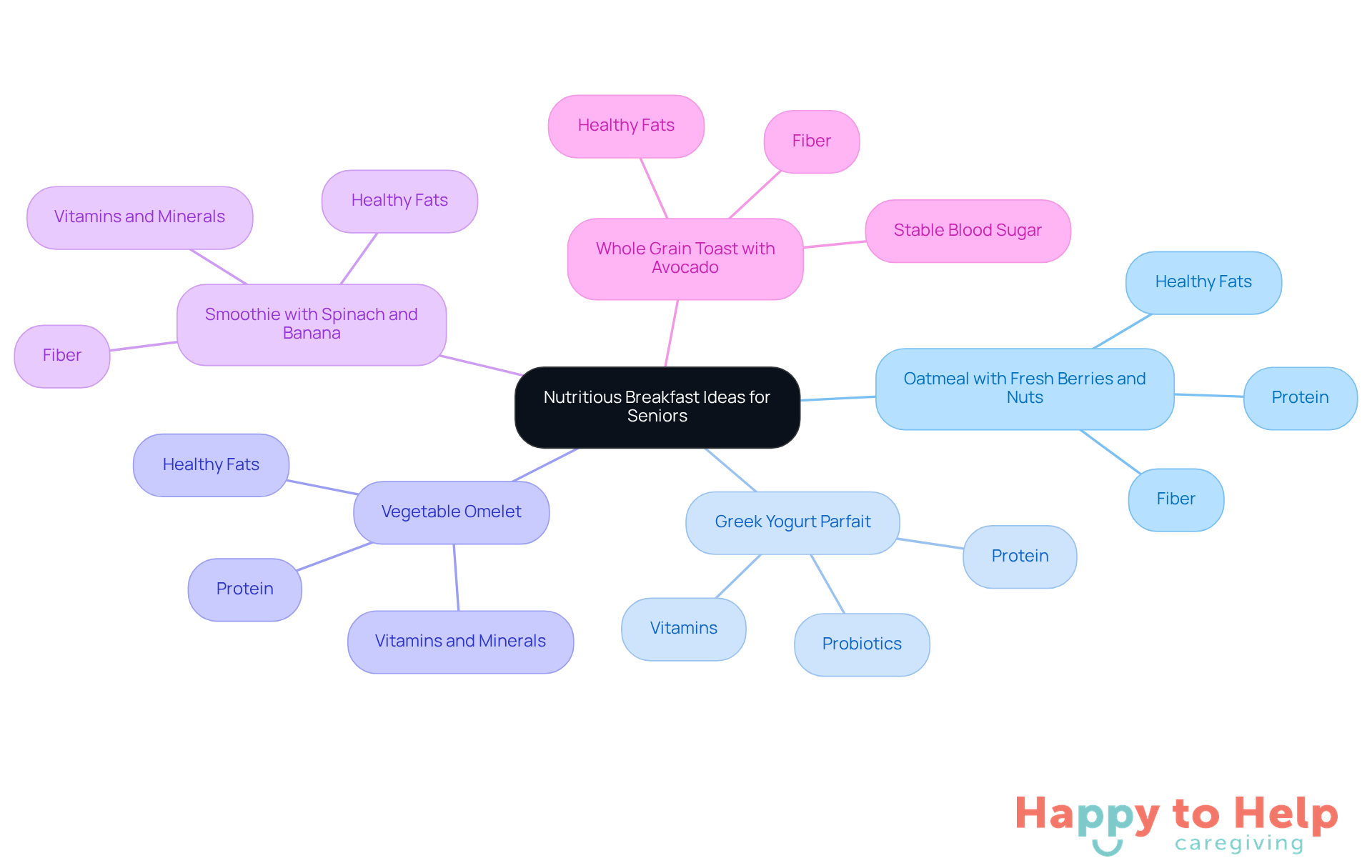
- Oatmeal with Fresh Berries and Nuts: A warm bowl of oatmeal topped with antioxidant-rich berries and a sprinkle of nuts provides essential fiber, healthy fats, and protein. This combination supports digestion and helps maintain muscle strength, making it an ideal choice for starting the day. Aim for 20 to 30 grams of protein at each meal to keep muscles strong.
One of the best breakfast ideas for seniors is a Greek yogurt parfait, which layers Greek yogurt with granola and sliced fruits, delivering a delicious, protein-rich meal that also provides probiotics for digestive wellness. This option enhances digestive function and contributes to overall well-being.
-
Vegetable Omelet: Eggs are a versatile source of protein and are excellent in various breakfast ideas for seniors. A vegetable omelet filled with spinach, tomatoes, and cheese can be both filling and nutritious. This dish is abundant in vitamins and minerals, promoting cognitive function and offering sustained energy throughout the morning.
-
Smoothie with Spinach and Banana: A smoothie made with spinach, banana, and yogurt is one of the best breakfast ideas for seniors, providing an easy way to pack in vitamins and minerals while being simple to consume. This nutrient-rich choice is ideal for older adults, as it combines beneficial fats and fiber, supporting cardiovascular well-being and cognitive abilities.
Whole grain toast with avocado is a nutritious option among breakfast ideas for seniors, offering healthy fats and fiber. Spread it on whole grain toast for a satisfying breakfast choice that promotes cardiovascular wellness and keeps you feeling full longer. Whole grains are crucial for sustaining stable blood sugar levels, making this a balanced option for older adults. Incorporating whole grains into meals is vital for overall health, as highlighted by the Mediterranean diet, which emphasizes their benefits.
Comparative Analysis of Breakfast Options: Nutritional Value and Preparation Ease
Caregivers often face the challenge of limited time for meal preparation, which can make it difficult to provide nutritious options for themselves and those they care for. This issue can lead to reliance on less healthy, quick-fix meals that may not meet dietary needs.
To address this, consider these nutritious breakfast options that are quick to prepare:
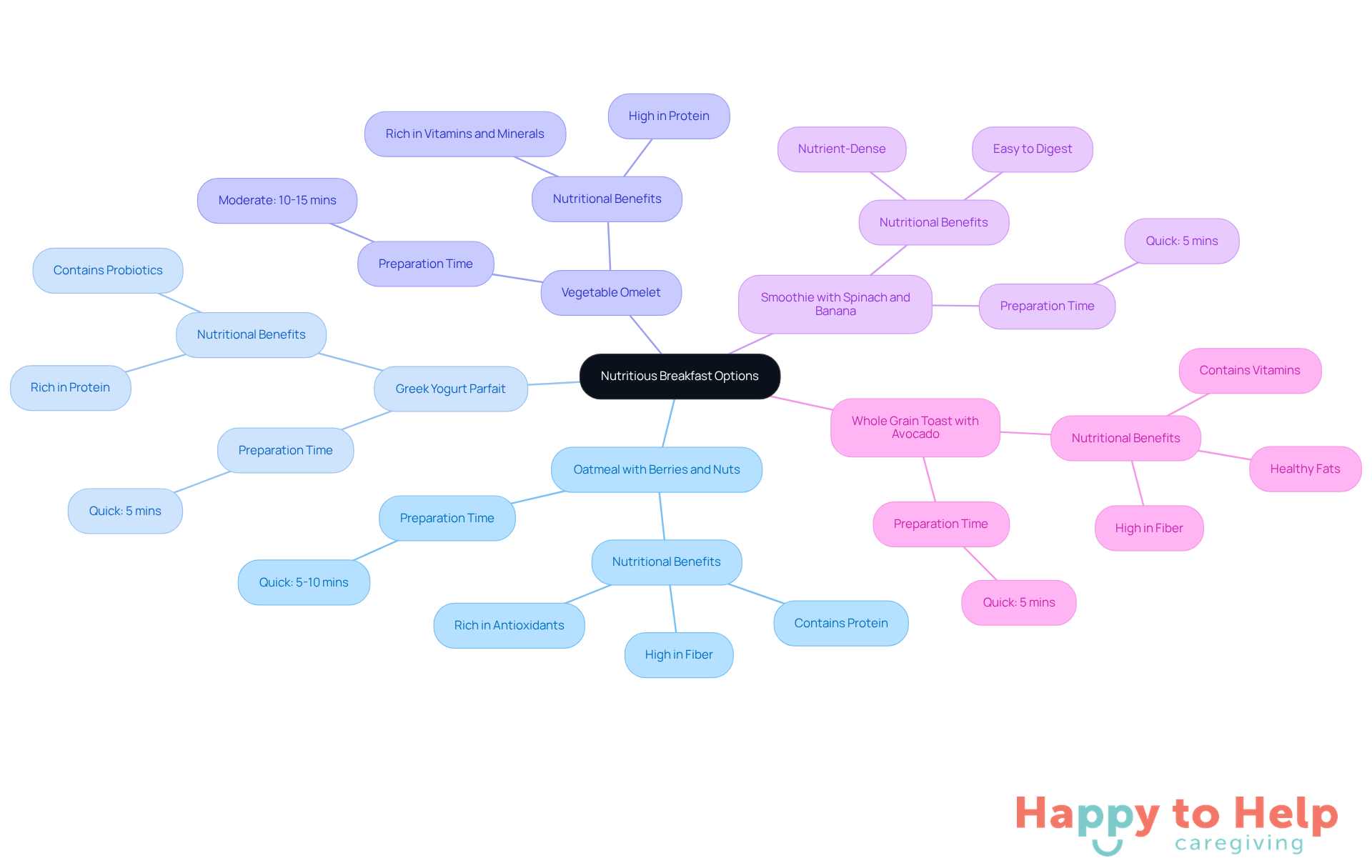
- Oatmeal with Berries and Nuts: High in fiber, antioxidants, and protein (Quick: 5-10 mins)
- Greek Yogurt Parfait: Rich in protein and probiotics (Quick: 5 mins)
- Vegetable Omelet: High in protein, vitamins, and minerals (Moderate: 10-15 mins)
- Smoothie with Spinach and Banana: Nutrient-dense, easy to digest (Quick: 5 mins)
- Whole Grain Toast with Avocado: Healthy fats, fiber, and vitamins (Quick: 5 mins)
These options not only provide essential nutrients but also require minimal preparation time. For caregivers with busy schedules, using breakfast ideas for seniors like smoothies and yogurt parfaits stands out as ideal choices, allowing for a healthy start to the day without the stress of lengthy cooking.
Practical Tips for Caregivers: Serving Nutritious Breakfasts to Seniors
To ensure seniors enjoy nutritious breakfasts, caregivers face the challenge of providing breakfast ideas for seniors that are both nutritious and appealing. This can be particularly difficult as many seniors may have specific dietary needs or preferences that must be considered.
-
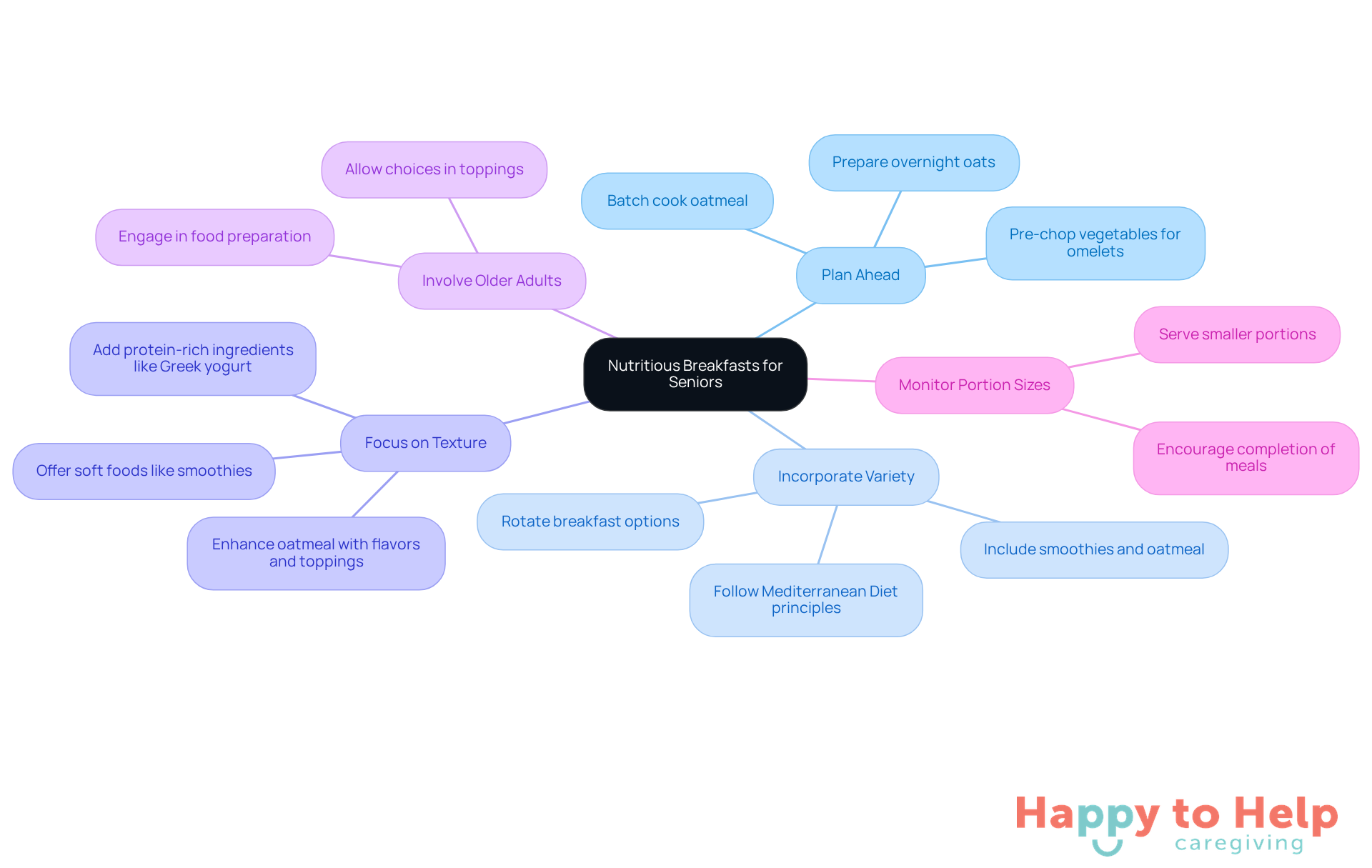
Plan Ahead: Preparing ingredients the night before can streamline the morning routine. For instance, pre-chopping vegetables for omelets or preparing overnight oats can save time and reduce stress. Batch cooking oatmeal can also offer a quick meal choice throughout the week.
-
Incorporate variety by using breakfast ideas for seniors: Rotating breakfast options keeps cuisine interesting and appealing, helping to prevent dining fatigue and encouraging better eating habits. Alternating options like smoothies, oatmeal, and egg dishes can serve as great breakfast ideas for seniors throughout the week. The Mediterranean Diet principles can guide nutritious choices, emphasizing whole grains, fruits, and healthy fats.
-
Focus on Texture: Consider the texture of foods, as some elderly individuals may have difficulty chewing. Soft foods such as smoothies or oatmeal are easier to consume and can be made more appealing with added flavors and toppings, serving as excellent breakfast ideas for seniors. Adding protein-rich ingredients like Greek yogurt can enhance the nutritional value.
-
Involve Older Adults in Food Preparation: Engaging older adults in the preparation process can enhance their enjoyment of dishes and promote a sense of independence. Simple tasks like stirring ingredients or choosing toppings can make a difference.
-
Monitor Portion Sizes: Serving smaller portions can prevent overwhelming seniors, especially those with reduced appetites. This method assists in guaranteeing they complete their food and obtain sufficient nutrition, aiding in their overall well-being. As Dr. James Betts notes, "Breakfast primes your metabolism to maintain stable blood sugar levels after subsequent meals," highlighting the importance of a balanced breakfast.
Taking the Next Steps
A nutritious breakfast is essential for seniors, as it sets the stage for their overall health and well-being. Unfortunately, many older adults struggle with meeting their unique dietary needs, which can lead to a decline in quality of life. Caregivers play a crucial role in addressing this issue by focusing on balanced meals rich in protein, fiber, vitamins, and hydration.
To tackle this problem, consider incorporating a variety of nutritious breakfast options:
- Oatmeal with berries
- Greek yogurt parfaits
- Vegetable omelets
- Smoothies
These meals not only provide essential nutrients but also take into account practical considerations like preparation time and ease of consumption. By emphasizing appealing textures and flavors, caregivers can keep seniors engaged and satisfied with their meals.
Ultimately, the importance of a well-rounded breakfast for seniors cannot be overstated. Caregivers are encouraged to implement these strategies and meal ideas to foster better eating habits and support the health of those they care for. By prioritizing nutrition at breakfast, caregivers can empower seniors to start their day with energy, vitality, and a sense of independence.
https://iframe.tely.ai/cta/eyJhcnRpY2xlX2lkIjogIjY5Mjc5NGRhMWE3YzlhYWNlNmI1NGZhMCIsICJjb21wYW55X2lkIjogIjY4ZWU1ZGNhNzMxNzYyNTU3ZjNjOTVjMSIsICJpbmRleCI6IG51bGwsICJ0eXBlIjogImFydGljbGUifQ==Frequently Asked Questions
Why is breakfast important for seniors?
Breakfast is vital for seniors as it sets the tone for the day and helps meet their changing dietary requirements, supporting overall health and well-being.
What nutritional challenges do seniors face regarding breakfast?
Many seniors struggle to meet their nutritional needs, which can lead to fatigue, decreased muscle mass, and digestive issues, negatively impacting their quality of life.
What are key nutritional components that caregivers should focus on for seniors' breakfasts?
Caregivers should focus on protein, fiber, vitamins and minerals, and hydration to ensure seniors start their day with a balanced meal.
How much protein do seniors need for breakfast?
Seniors should aim for about 25 to 30 grams of protein in their morning meal, which equates to approximately 1.0 to 1.2 grams of protein for each kilogram of body weight.
What are some good sources of protein for seniors' breakfasts?
Excellent sources of protein for seniors include eggs, Greek yogurt, and cottage cheese.
Why is fiber important in seniors' breakfasts?
Fiber is essential for digestive well-being, helping to prevent constipation and promoting a feeling of fullness.
How can seniors increase their fiber intake at breakfast?
Seniors can enhance their fiber intake by incorporating oatmeal, whole grains, and fruits into their breakfast.
What vitamins and minerals should seniors focus on for their breakfast?
Seniors should focus on nutrients such as Vitamin D, calcium, and B12, which are important for bone health and cognitive function.
What foods can help seniors meet their vitamin and mineral needs?
Fortified cereals, dairy items, and leafy vegetables can assist seniors in meeting their vitamin and mineral requirements.
How can caregivers help seniors maintain hydration during breakfast?
Caregivers can help seniors maintain hydration by including fluids such as smoothies, herbal teas, or water in their morning meal.
List of Sources
- Understanding the Nutritional Needs of Seniors at Breakfast
- Regularly Eating Breakfast Could Shield You Against Age-Related Brain Changes, Study Finds (https://healthcare.msu.edu/news/2025-01-13-dr-amit-sachdev-breakfast-improves-brain-health.html)
- What to Eat for Breakfast as an Older Adult (https://healthline.com/health/senior-health/breakfast-for-seniors)
- Protein for breakfast: Ideas for older adults (https://medicalnewstoday.com/articles/breakfast-for-seniors)
- Changing nutritional needs for older adults | Penn Medicine (https://pennmedicine.org/news/changing-nutritional-needs-for-older-adults)
- Top Nutritious Breakfast Ideas for Seniors
- Older Adults - Breakfast | Food Hero | Magazine (https://foodhero.org/magazines/older-adults-breakfast)
- Early breakfast could help you live longer — Harvard Gazette (https://news.harvard.edu/gazette/story/2025/09/early-breakfast-could-help-you-live-longer)
- Regularly Eating Breakfast Could Shield You Against Age-Related Brain Changes, Study Finds (https://healthcare.msu.edu/news/2025-01-13-dr-amit-sachdev-breakfast-improves-brain-health.html)
- 6 Best breakfast foods for seniors: Support heart health, brain function, and energy | - The Times of India (https://timesofindia.indiatimes.com/life-style/food-news/6-best-breakfast-foods-for-seniors-support-heart-health-brain-function-and-energy/articleshow/125253869.cms)
- Comparative Analysis of Breakfast Options: Nutritional Value and Preparation Ease
- Study identifies optimal breakfasts for older adults (https://mcknights.com/news/study-identifies-optimal-breakfasts-for-older-adults)
- Balanced breakfasts improve heart and metabolic health in older adults (https://news-medical.net/news/20241216/Balanced-breakfasts-improve-heart-and-metabolic-health-in-older-adults.aspx)
- What to Eat for Breakfast as an Older Adult (https://healthline.com/health/senior-health/breakfast-for-seniors)
- Nutritious Breakfast Options for Seniors: Fuelling Your Day for Better Health - Garneau Hall Seniors Community (https://garneauhall.com/nutritious-breakfast-options-for-seniors-fuelling-your-day-for-better-health)
- 6 Best breakfast foods for seniors: Support heart health, brain function, and energy | - The Times of India (https://timesofindia.indiatimes.com/life-style/food-news/6-best-breakfast-foods-for-seniors-support-heart-health-brain-function-and-energy/articleshow/125253869.cms)
- Practical Tips for Caregivers: Serving Nutritious Breakfasts to Seniors
- Nutrition Tips for Seniors: A Caregiver’s Guide (https://firstlighthomecare.com/blog/nutrition-tips-for-seniors)
- Guide to Nutritious Breakfast Ideas for Senior Care (https://seniorhelpers.com/tn/maryville/resources/blogs/2025-09-24)
- Effortless Eating - A Guide to Meal Prepping for Seniors (https://tanglewoodtraceseniorliving.com/effortless-eating)
- Tips to Making Meal Preparation Easy for your Aging Parent - Providence Healthcare Services (https://providencehhs.com/private-home-care/caregiver)
- Make-Ahead Breakfast for Seniors: Recipes They'll Surely Love (https://seniorhelpers.com/ut/wasatch/resources/blogs/2024-09-24)