

For families in our service areas
For families in our service areas, this guide explains dementia care and how non-medical in-home caregiving can support care planning in East Idaho, Treasure Valley & Magic Valley, Northern Wasatch, North Central West Virginia, and Northeast Ohio.
The Importance of Coping with a Parent with Dementia
Navigating the complexities of dementia presents a significant challenge for caregivers. They often face emotional and practical hurdles while caring for a parent affected by this condition. Understanding the nuances of dementia is essential, not just for providing effective support but also for safeguarding one’s own well-being.
Caregivers may feel overwhelmed by the emotional toll this journey takes. The stress of managing daily routines, coupled with the need to maintain a nurturing environment, can lead to burnout. How can caregivers equip themselves with the necessary knowledge and strategies to foster a supportive atmosphere while also caring for their own emotional health?
This article explores essential coping mechanisms that empower caregivers. By enhancing interactions, establishing routines, and prioritizing self-care, caregivers can transform their experience. Here are some actionable tips:
- Educate Yourself: Understanding dementia can help caregivers respond more effectively to their loved ones’ needs.
- Establish Routines: Consistent daily schedules can provide stability for both caregivers and those they care for.
- Prioritize Self-Care: Taking time for oneself is crucial in managing stress and preventing burnout.
Ultimately, these strategies not only improve the caregiving experience but also foster a healthier relationship between caregivers and their loved ones.
Understand Dementia and Its Impact on Behavior
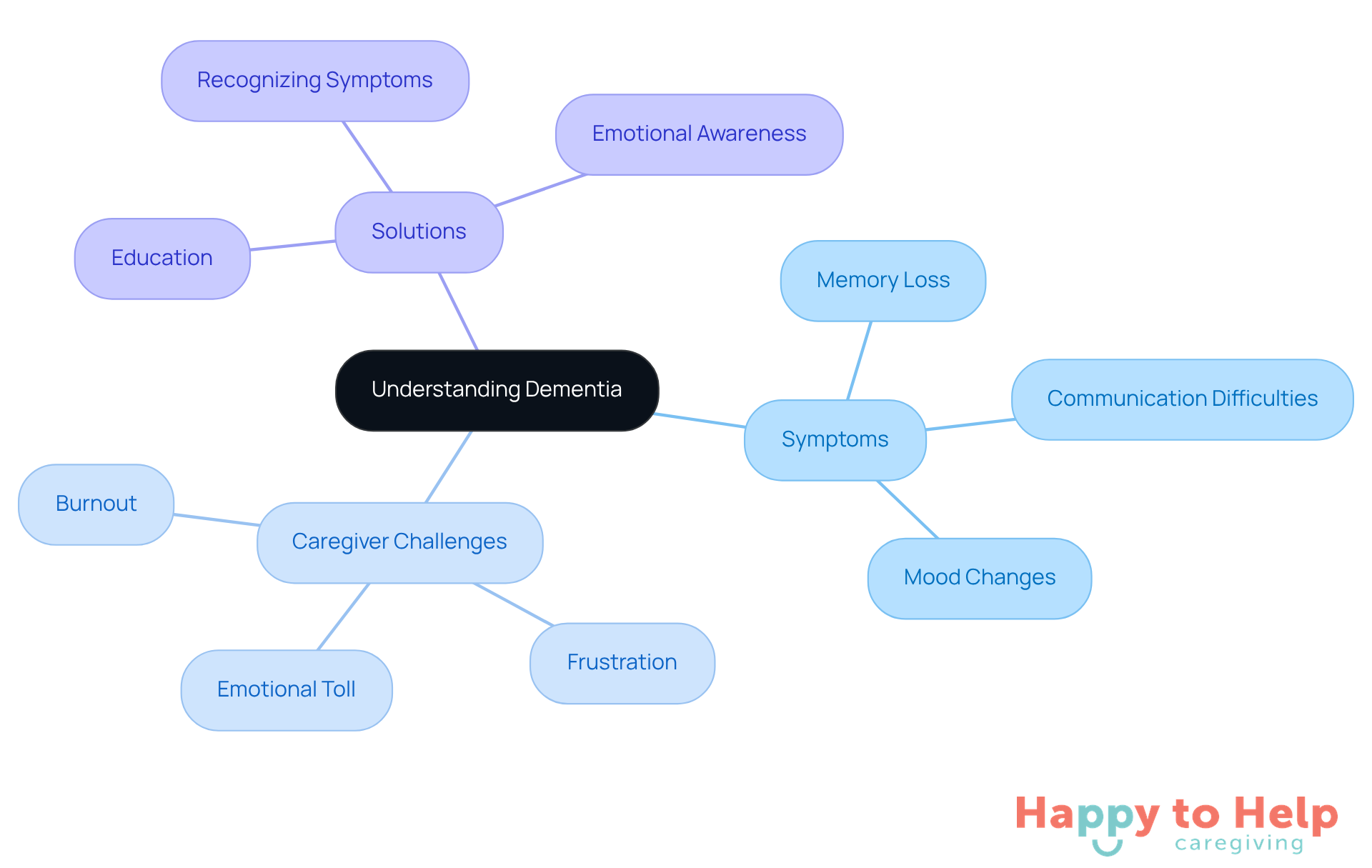
Dementia encompasses a range of symptoms that impact memory, thinking, and social abilities, leading to significant behavioral changes such as confusion, agitation, and withdrawal. Caregivers face the challenge of coping with a parent with dementia, which can be overwhelming and emotionally taxing.
The Problem: Many caregivers struggle with understanding the complexities of dementia. Approximately 60-70% of dementia cases are attributed to Alzheimer's disease, while others include vascular cognitive impairment and Lewy body syndrome. Alarmingly, about three-quarters of individuals with dementia globally remain undiagnosed, highlighting the urgent need for caregiver education and awareness.
The Agitation: Recognizing the symptoms is crucial. Common signs include memory loss, communication difficulties, and mood changes. For instance, nearly 90% of adults over 65 living at home report sleep complaints, which can worsen behavioral issues. Caregivers often feel frustrated and helpless while coping with a parent with dementia, grappling with the emotional toll of their loved one's condition.
The Solution: To navigate these challenges effectively, caregivers should take the following steps:
-
Educate Themselves: Familiarize yourself with the various forms of cognitive decline. Understanding the unique characteristics and progression patterns of each type can empower caregivers to provide better support.
-
Recognize Symptoms: Being aware of the common symptoms can help caregivers anticipate challenges and respond with empathy. This understanding fosters a supportive environment for both the caregiver and the individual with dementia.
-
Acknowledge Emotional Impact: Dementia can evoke feelings of frustration, fear, and sadness. Research shows that caregivers face significant emotional, financial, and physical challenges, often leading to stress and burnout. Recognizing these emotions is essential for effective communication and support, especially when coping with a parent with dementia. As Tanis J. Ferman, PhD, notes, individuals with cognitive decline may experience a spectrum of emotions, including grief and relief. Caregivers should also seek support from local resources, such as the Area Agency on Aging, to help manage their responsibilities.
By prioritizing education, symptom recognition, and emotional awareness, caregivers can navigate the complexities involved in coping with a parent with dementia more effectively. This approach not only enhances their quality of life but also improves the well-being of their loved ones. Furthermore, understanding the broader implications of cognitive impairment care, as outlined in the Global action plan on the public health response to cognitive decline, underscores the importance of addressing this issue as a public health priority.
Communicate Effectively with Your Parent
Effective communication is a significant challenge when coping with a parent with dementia. Caregivers often struggle with conveying messages clearly, leading to frustration for both parties. Coping with a parent with dementia can create a barrier to understanding and emotional connection, making it essential to find effective strategies to enhance interactions.
To address these challenges, here are some proven strategies:
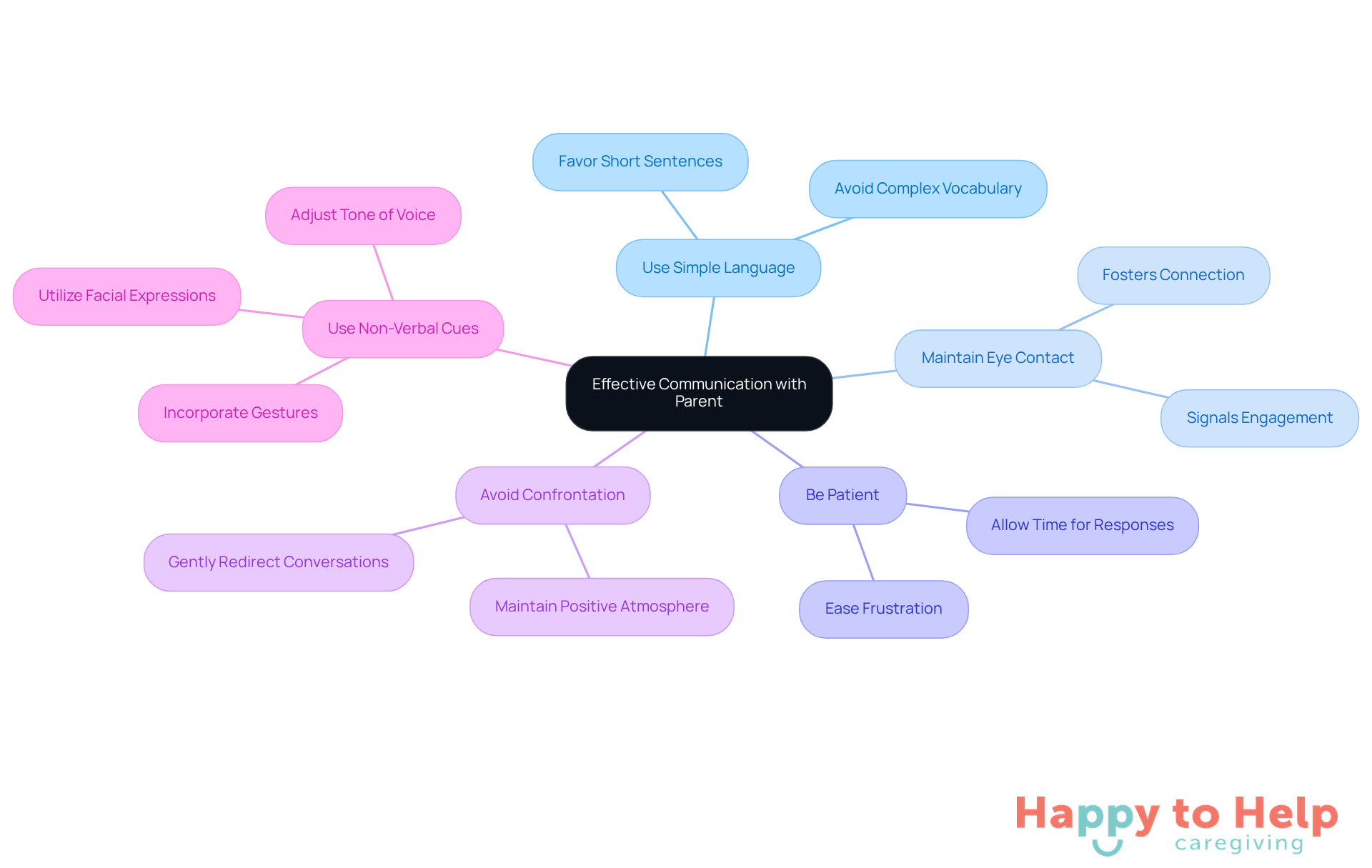
- Use Simple Language: Favor short, clear sentences and avoid complex vocabulary. This approach aids understanding, enabling your guardian to grasp the conversation more easily.
- Maintain Eye Contact: Establishing eye contact fosters a connection and signals your engagement in the dialogue, which can be reassuring for your guardian.
- Be Patient: Allow ample time for your guardian to respond. Cognitive processing may take longer, and your patience can significantly ease their frustration.
- Avoid Confrontation: If your parent appears confused or upset, gently redirect the conversation instead of arguing or correcting them. This technique helps maintain a positive atmosphere.
- Use Non-Verbal Cues: Incorporate gestures, facial expressions, and tone of voice to convey understanding and reassurance. Research indicates that body language accounts for 55 percent of communication, while words used account for only 7 percent, making it a vital component in dementia care.
Recent studies, including one published in the Journal of Family Communication in July 2025, emphasize the effectiveness of these techniques. Those who use simple language and non-verbal cues can significantly enhance their interactions. For instance, using yes-or-no questions rather than open-ended ones can lead to more successful communication outcomes. Additionally, experts suggest that caregivers cultivate relational connections through expressions of love and gratitude, enhancing emotional bonds and reducing anxiety for both parties. Amanda Cooper highlights the significance of observing how your guardian reacts and modifying your approach accordingly. By incorporating these strategies, caregivers can establish a supportive setting that promotes dignity and understanding for those coping with a parent with dementia.
Plan Daily Activities and Routines
Establishing an organized daily schedule can significantly enhance your parent's sense of safety and involvement. Caregivers often face the challenge of coping with a parent with dementia while managing their loved ones' routines, which can lead to confusion and anxiety. Coping with a parent with dementia can be particularly stressful for individuals, impacting their overall well-being.
Problem: Confusion and anxiety can arise from inconsistent routines, leading to increased stress for both caregivers and their loved ones.
Agitate: Without a structured schedule, caregivers may find it difficult to ensure their loved ones feel secure and engaged. This can result in agitation and a decline in mood, making daily interactions more challenging.
Solution: Here’s how to plan effectively:
-
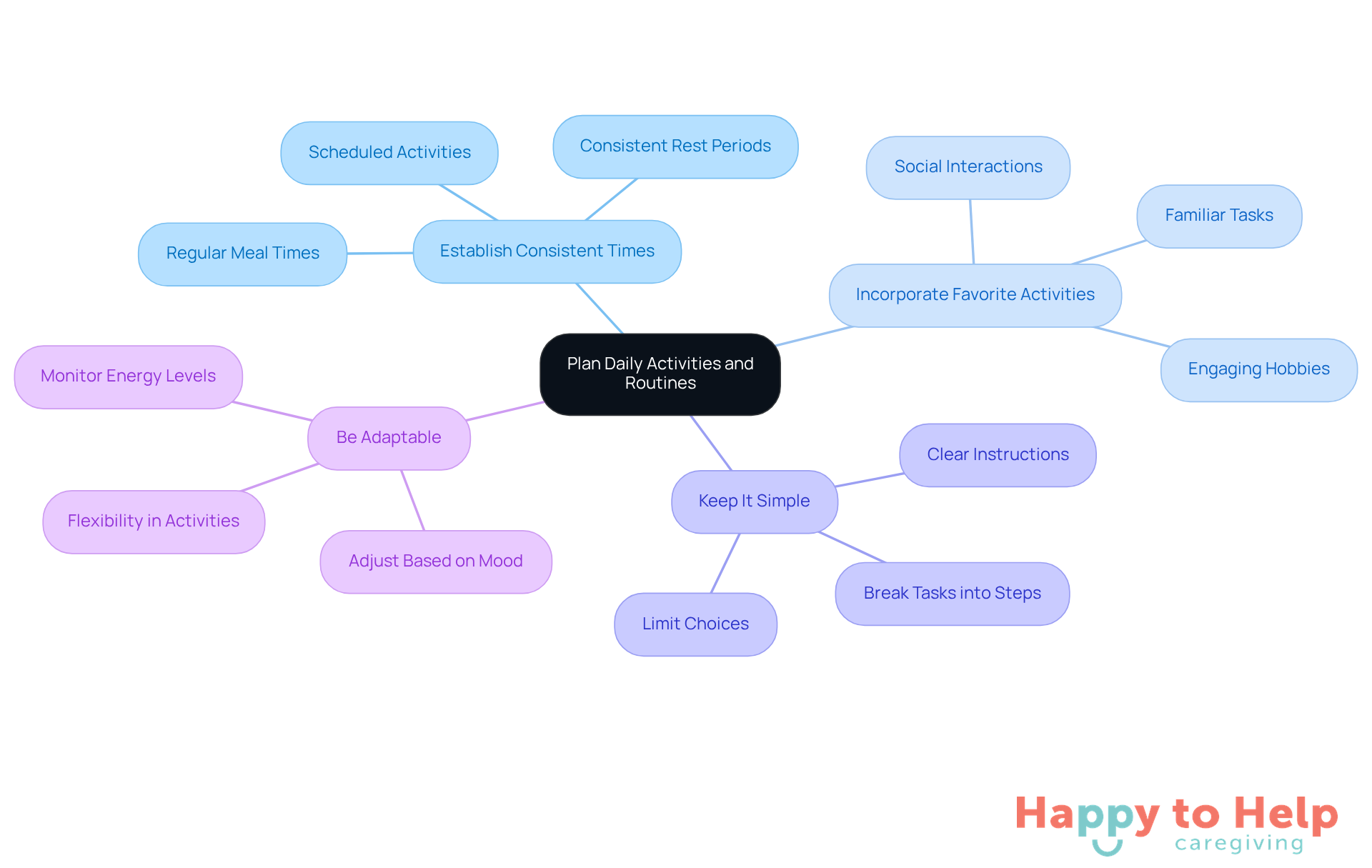
Establish Consistent Times: Set regular times for meals, activities, and rest. Consistency is crucial for those coping with a parent with dementia, as it helps reduce confusion and anxiety, promoting a calmer environment. Regular routines also support better sleep patterns and minimize nighttime wandering, contributing to overall well-being.
-
Incorporate Favorite Activities: Include activities that your caregiver enjoys, such as gardening, listening to music, or simple crafts. Engaging in familiar and enjoyable tasks can elevate their mood and encourage participation, fostering a sense of accomplishment and connection. Simple, enjoyable activities help reduce agitation and uplift the spirits of individuals with cognitive impairments.
-
Keep It Simple: Avoid overwhelming your guardian with too many choices. A straightforward, clear schedule can empower them, making daily tasks feel more manageable and less daunting. Simplifying activities into smaller, achievable steps can enhance their ability to participate. Organized practices diminish inconsistencies and anxiety, which can be beneficial for coping with a parent with dementia, fostering a serene atmosphere.
-
Be Adaptable: While schedules are important, be ready to adjust them according to your guardian's mood and energy levels. Flexibility is key to reducing stress for both of you, allowing for adjustments that accommodate their needs and preferences. This adaptability ensures that the routine remains beneficial and significant.
Prioritize Self-Care and Seek Support
Coping with a parent with dementia can be overwhelming. This challenge often leads to caregiver burnout, impacting both physical and mental health. It’s crucial to prioritize your own well-being while coping with a parent with dementia amidst these demands.
Here are some self-care strategies to help you navigate this journey:
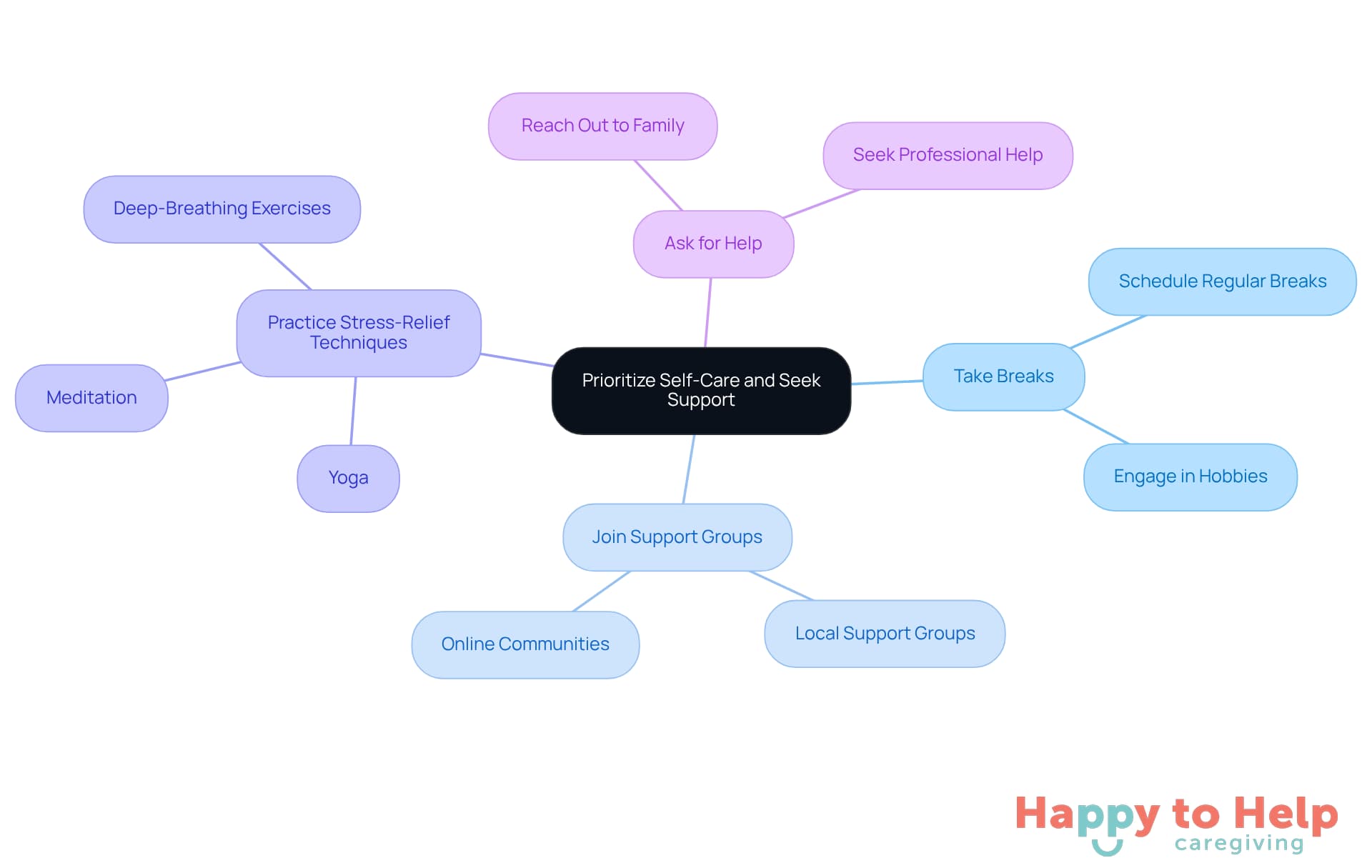
- Take Breaks: Schedule regular breaks to recharge. This could be as simple as a short walk or time spent on a hobby.
- Joining support groups can be a valuable resource for those coping with a parent with dementia, providing emotional support and practical advice from other caregivers. Look for local or online groups.
- Practice Stress-Relief Techniques: Engage in activities that help you relax, such as yoga, meditation, or deep-breathing exercises.
- Ask for Help: Don’t hesitate to reach out to family members or friends for assistance. Sharing responsibilities can lighten your load and provide much-needed support.
Your Path Forward
Caring for a parent with dementia presents significant challenges that require a thoughtful approach. Caregivers often face emotional strain and uncertainty, which can lead to feelings of isolation and frustration. Understanding these complexities is crucial for providing effective support.
To navigate these difficulties, education is key. Familiarizing oneself with the different types of dementia and recognizing symptoms can empower caregivers. Effective communication techniques can also make a substantial difference, fostering a more positive interaction with loved ones.
Establishing structured daily routines is another vital strategy. This not only helps reduce confusion and anxiety but also enhances emotional well-being for both the caregiver and the individual affected by dementia. Additionally, prioritizing self-care and seeking support from others are essential steps for maintaining resilience in the face of caregiving challenges.
Ultimately, the journey of caring for a parent with dementia is both demanding and rewarding. By implementing these strategies, caregivers can create a supportive atmosphere that promotes dignity and understanding. Embracing this approach not only improves the quality of life for those affected by dementia but also reinforces the vital role of caregiver support in managing this public health priority.
https://iframe.tely.ai/cta/eyJhcnRpY2xlX2lkIjogIjY5MjI0ZjYxNGZjYWRhOTUwOGRlNDNkZiIsICJjb21wYW55X2lkIjogIjY4ZWU1ZGNhNzMxNzYyNTU3ZjNjOTVjMSIsICJpbmRleCI6IG51bGwsICJ0eXBlIjogImFydGljbGUifQ==Frequently Asked Questions
What is dementia and how does it affect behavior?
Dementia encompasses a range of symptoms that impact memory, thinking, and social abilities, leading to significant behavioral changes such as confusion, agitation, and withdrawal.
What are the common types of dementia?
Approximately 60-70% of dementia cases are attributed to Alzheimer's disease, while other types include vascular cognitive impairment and Lewy body syndrome.
Why is caregiver education important in dementia care?
Many caregivers struggle to understand the complexities of dementia, and approximately three-quarters of individuals with dementia globally remain undiagnosed. Education and awareness are crucial for effective caregiving.
What are common symptoms of dementia that caregivers should recognize?
Common symptoms include memory loss, communication difficulties, mood changes, and sleep complaints, which can worsen behavioral issues.
How does dementia impact caregivers emotionally?
Caregivers often experience feelings of frustration, fear, and sadness, facing significant emotional, financial, and physical challenges that can lead to stress and burnout.
What steps can caregivers take to cope with a parent with dementia?
Caregivers should educate themselves about dementia, recognize symptoms, acknowledge their emotional impact, and seek support from local resources, such as the Area Agency on Aging.
How can understanding dementia improve the quality of life for caregivers and their loved ones?
By prioritizing education, symptom recognition, and emotional awareness, caregivers can navigate the complexities of dementia more effectively, enhancing their quality of life and improving the well-being of their loved ones.
List of Sources
- Understand Dementia and Its Impact on Behavior
- ADI - Dementia statistics (https://alzint.org/about/dementia-facts-figures/dementia-statistics)
- Understanding Behavioral Changes in Dementia - Lewy Body Dementia Association (https://lbda.org/understanding-behavioral-changes-in-dementia)
- Dementia (https://who.int/news-room/fact-sheets/detail/dementia)
- The psychological and emotional impact of dementia (https://alzheimers.org.uk/get-support/help-dementia-care/understanding-supporting-person-dementia-psychological-emotional-impact)
- Alzheimer's Disease Facts and Figures (https://alz.org/alzheimers-dementia/facts-figures)
- Communicate Effectively with Your Parent
- Dementia - communication (https://betterhealth.vic.gov.au/health/conditionsandtreatments/dementia-communication)
- Study offers guidance for communicating with loved ones living with dementia (https://news-medical.net/news/20250827/Study-offers-guidance-for-communicating-with-loved-ones-living-with-dementia.aspx)
- Bridging the gap: Dementia communication strategies - Harvard Health (https://health.harvard.edu/mind-and-mood/bridging-the-gap-dementia-communication-strategies)
- Communication and engagement with people living with dementia (https://dementia.org.au/news/communication-and-engagement-people-living-dementia)
- Improv training: A new approach to dementia care | Emory University | Atlanta GA (https://news.emory.edu/stories/2025/01/hs\_improving\_dementia\_care\_through\_improv\_15-01-2025/story.html)
- Plan Daily Activities and Routines
- The Benefits of Routine and Structure in Dementia Care: How Memory Care Services Can Help (https://brightstarcare.com/locations/boise/about-us/blog/the-benefits-of-routine-and-structure-in-dementia-care-how-memory-care-services-can-help)
- U.S. POINTER Study shows lifestyle program improves cognition in older adults (https://health.ucdavis.edu/news/headlines/us-pointer-study-shows-lifestyle-program-improves-cognition-in-older-adults/2025/07)
- The Power of Routine for Individuals in Memory Care Communities (https://harborchase.com/blogs/power-of-routine-memory-care-communities)
- The Benefits of Structured Routines in Memory Care (https://thehighpointresidence.com/blog/the-benefits-of-structured-routines-in-memory-care)
- Dementia: Why Routines Matter! (https://heritagesenior.com/elm-grove/blog/memory-care/dementia-why-routines-matter)
- Prioritize Self-Care and Seek Support
- Alzheimer’s Association Encourages Dementia Caregivers to Make Their Health and Well-Being an Equal Priority (https://alz.org/news/2024/november-national-family-caregivers-month)
- Caregiver Statistics: Demographics (https://caregiver.org/resource/caregiver-statistics-demographics)
- Family Caregivers: You Deserve Support, and Here’s Where to Find It | Shore Medical Center (https://shoremedicalcenter.org/news/family-caregivers-you-deserve-support-and-here-s-where-find-it)
- Self-Care is Vital for Dementia Caregivers - Pine Rest Newsroom (https://pinerest.org/newsroom/articles/alzheimers-self-care-blog)
- The Caregiving Landscape: Data & Insights on the Caregiver Experience in the U.S. (https://caregiveraction.org/caregiver-statistics)