
Active service-area notice
Happy to Help does not currently list MS as an active service area. This article is general educational information. For local care availability, browse our active service areas.
Browse active service areasFor families in our service areas
For families in our service areas, this guide explains home care and how non-medical in-home caregiving can support care planning in East Idaho, Treasure Valley & Magic Valley, Northern Wasatch, North Central West Virginia, and Northeast Ohio.
The Importance of Effective Home Care for MS Patients
Navigating the complexities of Multiple Sclerosis (MS) presents a significant challenge for caregivers. Each individual experiences the condition differently, making it essential to understand the diverse symptoms and types of MS. This knowledge is crucial for providing effective home care, which can greatly improve patients' quality of life.
With around 200 new cases diagnosed weekly in the U.S., caregivers often wonder how to adapt their approaches to meet the changing needs of those they care for. Balancing these demands while also managing their own well-being can feel overwhelming.
This guide offers essential strategies for effective home care that not only support MS patients but also empower caregivers to thrive amidst these challenges. By implementing practical solutions, caregivers can enhance their caregiving experience and improve the lives of those they support.
Understand Multiple Sclerosis: Key Facts and Symptoms
Multiple Sclerosis (MS) presents a significant challenge as a long-lasting autoimmune condition affecting the central nervous system. This condition leads to a wide variety of symptoms that can vary greatly among individuals, creating a complex landscape for caregivers involved in home care for MS patients to navigate.
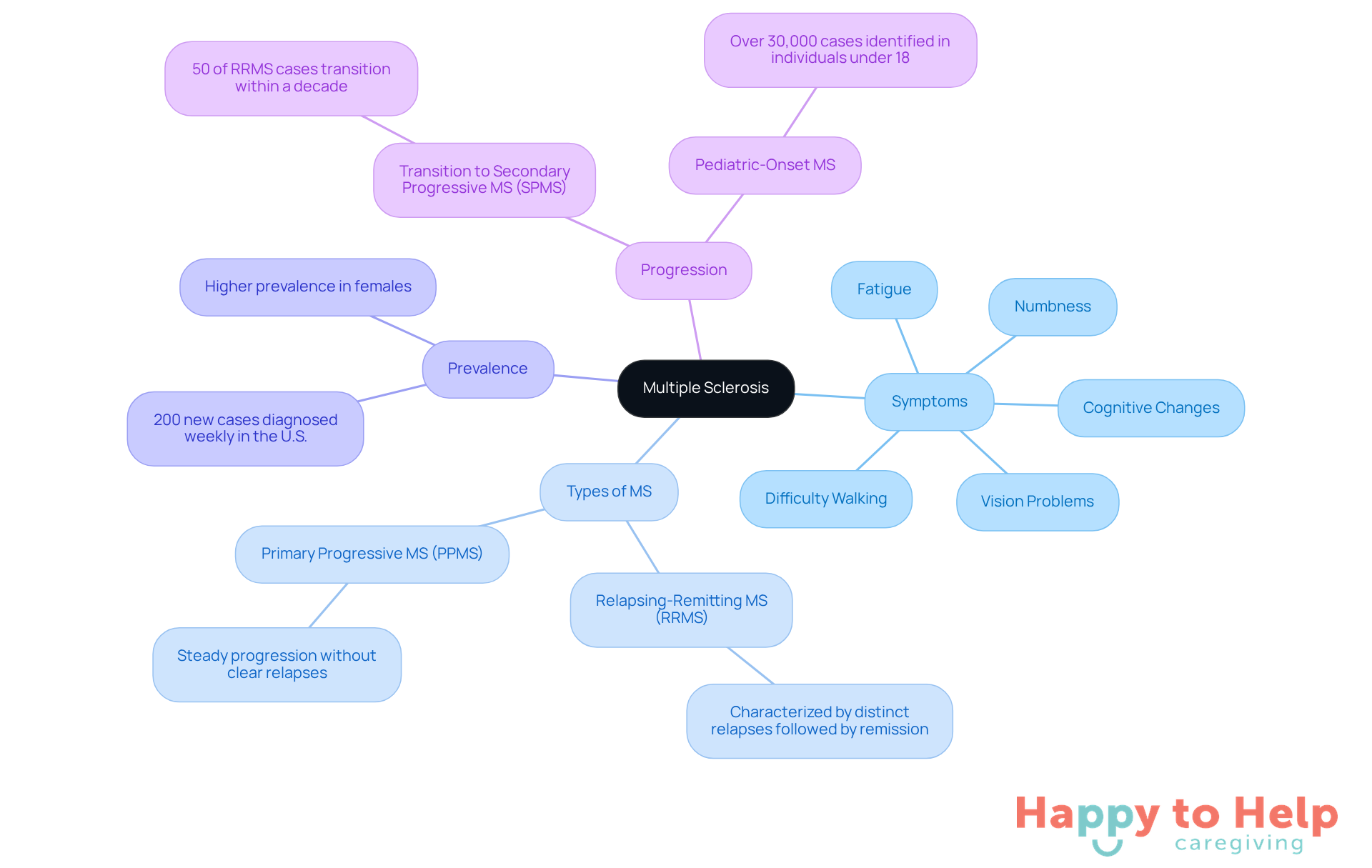
Symptoms: Common symptoms of MS include fatigue, numbness, difficulty walking, vision problems, and cognitive changes. Research shows that individuals with MS often report quality of life scores significantly lower than those of the general population, emphasizing the need for effective home care for MS patients to mitigate the profound impact of these symptoms. Alarmingly, around 200 new cases of MS are diagnosed each week in the United States, highlighting the urgency for caregivers to understand the challenges of home care for MS patients.
It's crucial for caregivers to grasp the different types of MS, such as Relapsing-Remitting MS (RRMS) and Primary Progressive MS (PPMS), as this knowledge is essential for providing appropriate home care for MS patients. Approximately 85% of MS patients are initially diagnosed with RRMS, which is characterized by distinct relapses followed by periods of remission. In contrast, PPMS involves a steady progression of issues without clear relapses, necessitating different caregiving strategies. Notably, MS is three times more prevalent in females than in males, an important demographic detail for caregivers to consider.
Progression: The unpredictable nature of MS means that symptoms can fluctuate, and the disease may progress over time. Without treatment, about 50% of RRMS cases transition to Secondary Progressive MS (SPMS) within a decade. Caregivers should be prepared for these changes and adjust home care for MS patients accordingly to meet the evolving needs of their loved ones. Additionally, the acknowledgment of pediatric-onset MS has risen, with over 30,000 cases identified in individuals under 18 years, which is significant for caregivers of younger individuals.
By educating yourself about MS and its complexities, you can provide better support and effectively advocate for your loved one's needs regarding home care for MS patients within healthcare settings.
Assess Individual Needs: Tailor Care Plans for MS Patients
Managing home care for MS patients can be challenging. Caregivers often face difficulties in understanding the complex needs of individuals with this condition, which can lead to inadequate support; thus, home care for MS patients is essential to prevent worsening symptoms.
To address these challenges, it’s crucial to create an effective care plan for home care for MS patients. Here are some actionable steps to consider:
-
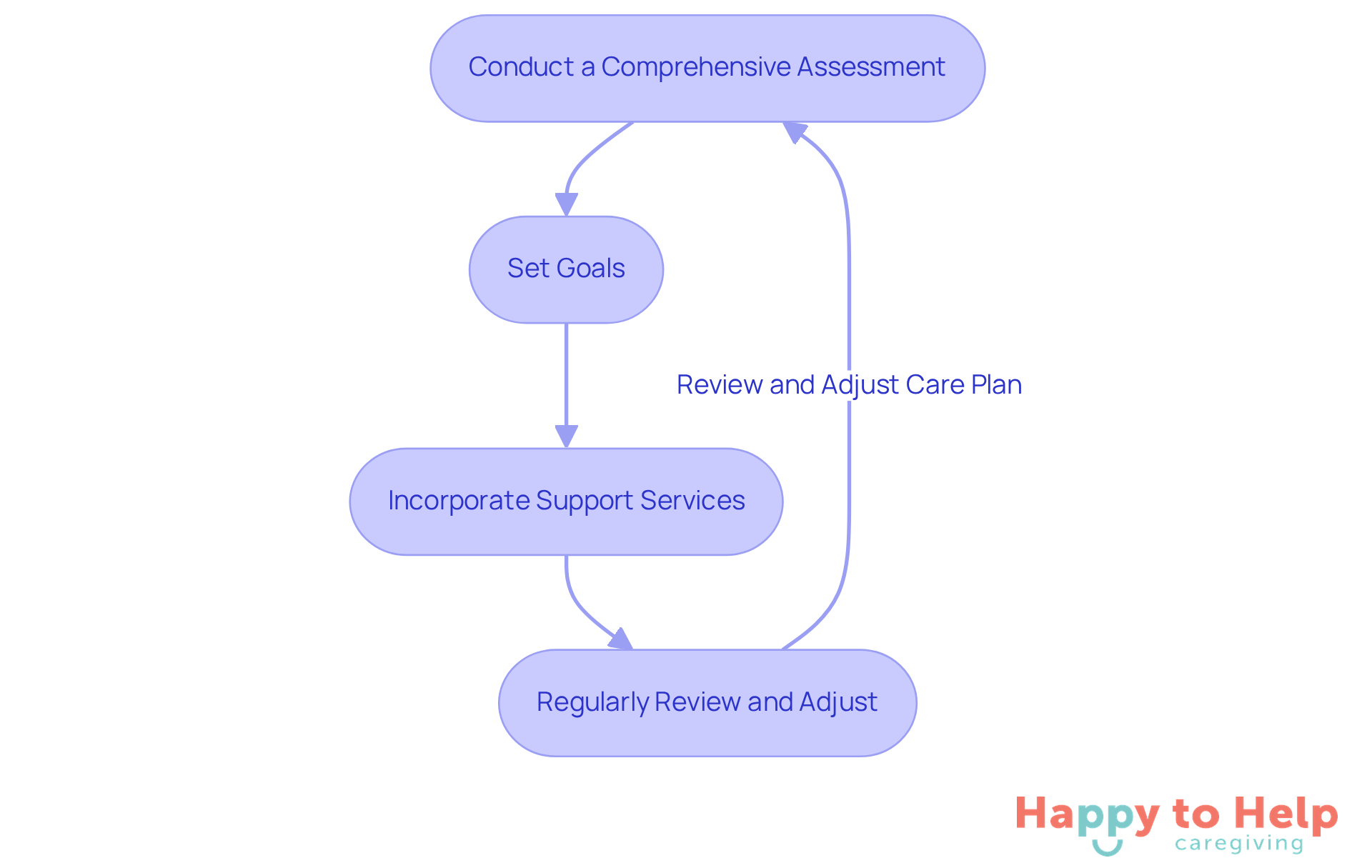
Conduct a Comprehensive Assessment: Evaluate the individual's physical abilities, cognitive function, emotional state, and daily living needs. This assessment should involve discussions with healthcare providers and the individual to ensure a holistic understanding of their situation.
-
Set Goals: Collaborate with the individual to establish realistic and achievable objectives. These goals, which are vital for quality of life, might include improving mobility, managing fatigue, or enhancing social interactions in the context of home care for MS patients.
-
Incorporate Support Services: Identify additional resources such as physical therapy, occupational therapy, or counseling services that can assist in achieving the set goals. These services can provide essential support and expertise.
-
Regularly Review and Adjust: MS symptoms can change over time, making it essential to regularly review the care plan. Adjustments should be made as needed to ensure the plan remains effective and responsive to the individual's evolving needs.
Implement Daily Care Strategies: Support Physical and Emotional Well-Being
Implementing Effective Daily Care Strategies
Caregivers often face the challenge of managing daily care routines for individuals who require assistance. This can lead to feelings of overwhelm and uncertainty about how to provide the best support. However, by establishing effective daily home care for MS patients, caregivers can significantly improve the well-being of those they care for.
-
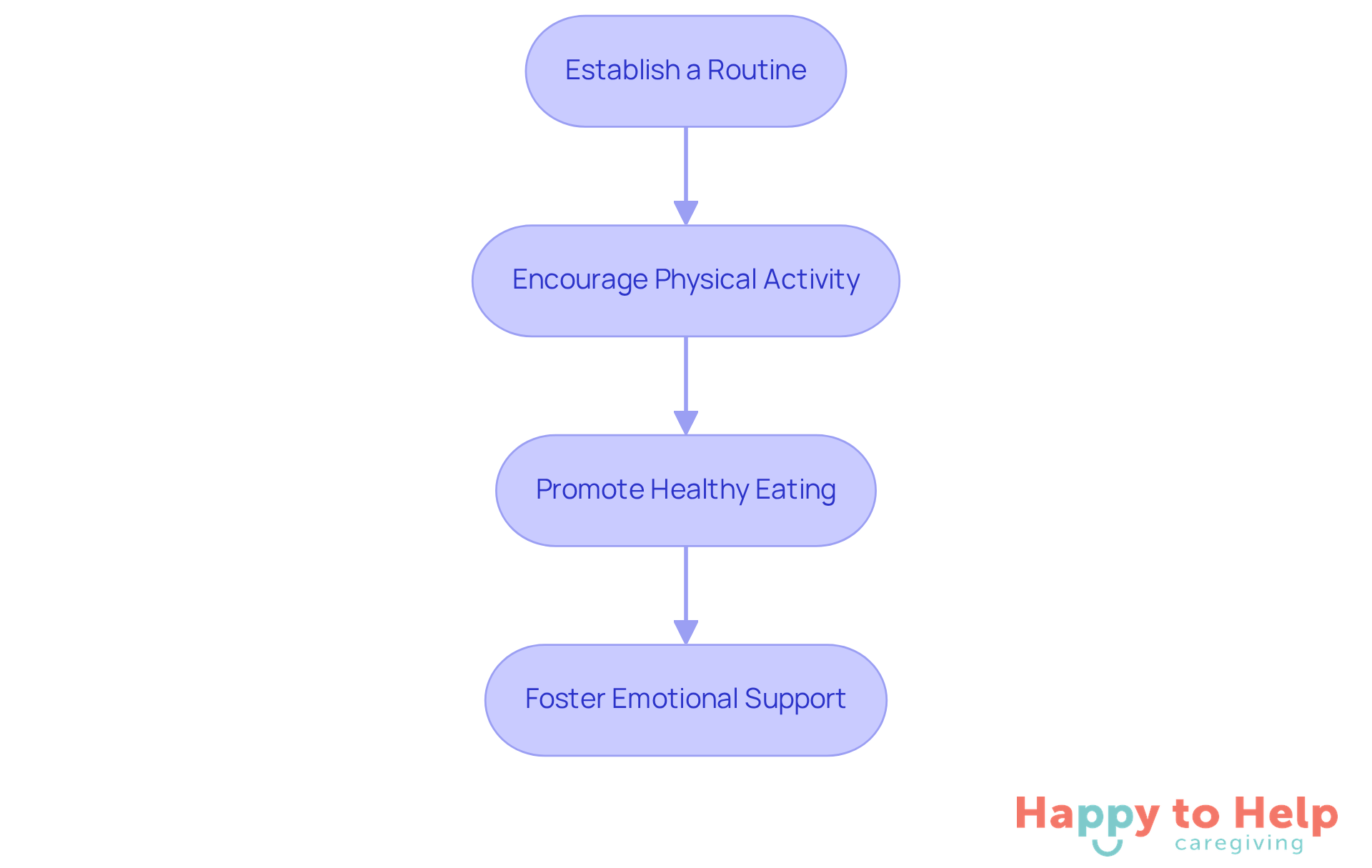
Establish a Routine
Creating a daily schedule that includes time for medication, meals, physical activity, and rest is essential. Consistency in these activities helps manage fatigue and enhances overall well-being. -
Encourage Physical Activity
Engaging the individual in light exercises tailored to their abilities - such as stretching, walking, or yoga - can be beneficial. Regular movement not only helps maintain mobility but also reduces stiffness, contributing to a better quality of life. -
Promote Healthy Eating
Assisting in meal planning and preparation is crucial. Focus on a balanced diet rich in fruits, vegetables, whole grains, and lean proteins. Proper nutrition plays a vital role in enhancing immune function and boosting energy levels. -
Foster Emotional Support
Encouraging social interactions and activities that the patient enjoys can alleviate feelings of isolation and depression. This might include hobbies, family visits, or participation in support groups, all of which can provide essential emotional support.
Prioritize Caregiver Self-Care: Manage Burnout and Stress
To effectively manage caregiver burnout and stress, it’s crucial to recognize the challenges faced by those providing care. Caregivers often experience overwhelming demands, leading to significant emotional and physical strain. This situation can result in burnout, which not only affects their well-being but also the quality of care they provide.
-
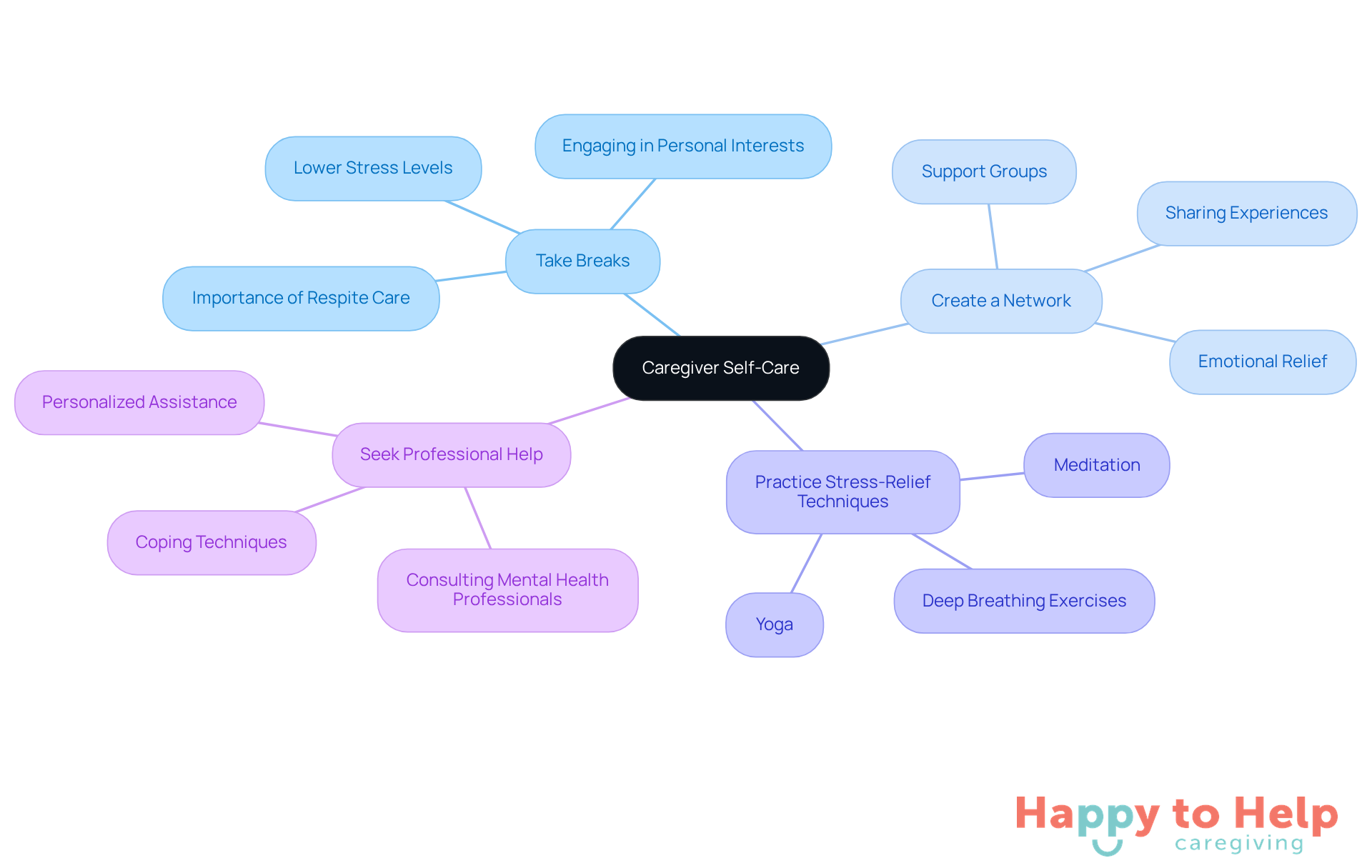
Take Breaks: Regular breaks are essential for recharging. Utilizing respite care services can provide caregivers with much-needed time off, allowing them to engage in personal interests or simply relax. Research shows that individuals who take breaks report lower stress levels and enhanced overall well-being. Considering that family supporters spend an average of 24.4 hours per week providing assistance, taking breaks is vital for preserving their health.
-
Creating a network of assistance through relationships with other caregivers or joining support groups can be beneficial for those providing home care for MS patients. Sharing experiences and advice offers emotional relief and practical tips. Research indicates that individuals involved in assistance networks feel less isolated and exhibit greater resilience. Support groups provide a venue for caregivers to discuss their challenges and exchange coping techniques.
-
Practice Stress-Relief Techniques: Incorporating relaxation methods such as meditation, deep breathing exercises, or yoga into daily routines can significantly lower stress levels and enhance emotional health. These practices are valuable tools for caregivers managing the demands of caring for someone with MS.
-
Seek Professional Help: If feelings of overwhelm persist, consulting a mental health professional can be a wise step. They can offer personalized assistance and coping techniques, helping caregivers manage the emotional difficulties linked to their responsibilities. Given that nearly 40% of caregivers report high levels of stress, professional guidance can be a crucial resource for maintaining mental health.
Your Path Forward
Understanding the complexities of Multiple Sclerosis (MS) poses significant challenges for caregivers, as the condition varies greatly from one individual to another. This variability can lead to confusion and stress for those providing care, making it essential to recognize the symptoms, types, and progression of MS. By doing so, caregivers can tailor their approach, ensuring that their support is both compassionate and effective.
To address these challenges, caregivers can follow four crucial steps:
- Understand the disease
- Assess individual needs
- Implement daily care strategies
- Prioritize self-care
Each step underscores the importance of a personalized approach. For instance, creating comprehensive care plans that address both physical and emotional needs can significantly enhance the quality of care. Establishing daily routines also plays a vital role in promoting overall well-being. Additionally, caregiver self-care is paramount; managing stress and preventing burnout is essential for sustaining the quality of care provided.
In conclusion, effective home care for MS patients transcends mere symptom management; it involves fostering a supportive environment that nurtures both physical and emotional health. Caregivers are encouraged to take proactive steps in their approach, utilizing available resources and support systems. By prioritizing both the needs of the patient and their own well-being, caregivers can create a balanced, fulfilling caregiving experience that significantly improves the quality of life for those affected by Multiple Sclerosis.
https://iframe.tely.ai/cta/eyJhcnRpY2xlX2lkIjogIjY5MjNhMGQwYzVlZWQyYmRiNTU3YmYzMyIsICJjb21wYW55X2lkIjogIjY4ZWU1ZGNhNzMxNzYyNTU3ZjNjOTVjMSIsICJpbmRleCI6IG51bGwsICJ0eXBlIjogImFydGljbGUifQ==Frequently Asked Questions
What is Multiple Sclerosis (MS)?
Multiple Sclerosis (MS) is a long-lasting autoimmune condition that affects the central nervous system, leading to a variety of symptoms that can differ greatly among individuals.
What are the common symptoms of MS?
Common symptoms of MS include fatigue, numbness, difficulty walking, vision problems, and cognitive changes.
How does MS impact quality of life?
Individuals with MS often report quality of life scores that are significantly lower than those of the general population, highlighting the need for effective home care to mitigate the impact of symptoms.
How many new cases of MS are diagnosed each week in the United States?
Approximately 200 new cases of MS are diagnosed each week in the United States.
What are the different types of MS?
The main types of MS include Relapsing-Remitting MS (RRMS), characterized by distinct relapses followed by periods of remission, and Primary Progressive MS (PPMS), which involves a steady progression of symptoms without clear relapses.
What percentage of MS patients are diagnosed with RRMS?
About 85% of MS patients are initially diagnosed with Relapsing-Remitting MS (RRMS).
How does the prevalence of MS differ by gender?
MS is three times more prevalent in females than in males.
What is the progression of MS and its implications for caregivers?
The progression of MS can be unpredictable, with symptoms fluctuating over time. Without treatment, around 50% of RRMS cases may transition to Secondary Progressive MS (SPMS) within a decade, necessitating adjustments in home care strategies.
Is there a pediatric-onset form of MS?
Yes, there has been an increase in the acknowledgment of pediatric-onset MS, with over 30,000 cases identified in individuals under 18 years.
How can caregivers better support individuals with MS?
Caregivers can provide better support by educating themselves about MS, its complexities, and advocating for their loved one's needs regarding home care within healthcare settings.
List of Sources
- Understand Multiple Sclerosis: Key Facts and Symptoms
- New study reveals hidden burden of multiple sclerosis on quality of life (https://medicalxpress.com/news/2025-10-reveals-hidden-burden-multiple-sclerosis.html)
- Multiple Sclerosis: Facts, Statistics, and You (https://healthline.com/health/multiple-sclerosis/facts-statistics-infographic)
- Rising prevalence of multiple sclerosis worldwide: Insights from the Atlas of MS, third edition - PMC (https://pmc.ncbi.nlm.nih.gov/articles/PMC7720355)
- Updated Multiple Sclerosis Incidence, 2015-2022 (https://jamanetwork.com/journals/jamaneurology/fullarticle/2823161)
- Empowering people affected by MS to live their best lives (https://nationalmssociety.org/news-and-magazine/news)
- Assess Individual Needs: Tailor Care Plans for MS Patients
- 10 Inspiring Patient Experience Quotes | Relias (https://relias.com/blog/patient-experience-quotes)
- Inspirational Healthcare Quotes: Uplifting Words for Caregivers - LifeHack Quotes (https://quotes.lifehack.org/collections/inspirational-healthcare-quotes)
- Experts call for better care, research tailored for aging MS patients (https://multiplesclerosisnewstoday.com/news-posts/2025/07/25/experts-call-better-care-research-tailored-aging-ms-patients)
- 5.1: Appendix A - Case Studies (https://med.libretexts.org/Bookshelves/Nutrition/Culinary\_Medicine\_2025e\_(Antonopoulos\_et\_al.)/05:\_Appendices/5.01:_Appendix\_A_\-\_Case\_Studies)
- 2025 Best Practices Update released for managing MS in a changing landscape (https://news-medical.net/news/20250417/2025-Best-Practices-Update-released-for-managing-MS-in-a-changing-landscape.aspx)
- Implement Daily Care Strategies: Support Physical and Emotional Well-Being
- Beneficial impact of physical activity on multiple sclerosis disability progression (https://jnnp.bmj.com/content/early/2025/09/23/jnnp-2025-336738)
- VA.gov | Veterans Affairs (https://va.gov/MS/TREATING\_MS/Whole\_Health/Staying\_Active\_while\_Living\_with\_Multiple\_Sclerosis.asp)
- 5.1: Appendix A - Case Studies (https://med.libretexts.org/Bookshelves/Nutrition/Culinary\_Medicine\_2025e\_(Antonopoulos\_et\_al.)/05:\_Appendices/5.01:_Appendix\_A_\-\_Case\_Studies)
- Heartfelt Advice for People with MS (https://healthline.com/health/multiple-sclerosis-advice-from-patients)
- Prioritize Caregiver Self-Care: Manage Burnout and Stress
- Caregiver Burnout and Strategies to Help (https://health.usnews.com/senior-care/articles/caregiver-burnout-and-strategies-to-help)
- Caregiver Statistics: Demographics (https://caregiver.org/resource/caregiver-statistics-demographics)
- Prevalence of depression, anxiety, burden, burnout, and stress in informal caregivers: An umbrella review of meta-analyses (https://sciencedirect.com/science/article/pii/S2950307825000785)
- The Caregiving Landscape: Data & Insights on the Caregiver Experience in the U.S. (https://caregiveraction.org/caregiver-statistics)
- Caregiving can be a tough, lonely mission. One daughter found ways to reconnect (https://npr.org/sections/shots-health-news/2024/10/31/nx-s1-5172517/caregiver-caregiving-isolation-burnout-resources)