

For families in our service areas
For families in our service areas, this guide explains dementia care and how non-medical in-home caregiving can support care planning in East Idaho, Treasure Valley & Magic Valley, Northern Wasatch, North Central West Virginia, and Northeast Ohio.
Why Address Dementia Refusing to Eat Matters
Addressing the challenge of appetite loss in individuals with dementia is a pressing concern for caregivers. This issue can significantly impact their health and well-being. Understanding the multifaceted reasons behind why dementia patients may refuse to eat - from cognitive impairments to emotional distress - can empower caregivers to implement effective strategies that promote better nutritional habits.
However, navigating these complexities raises an important question: how can caregivers create a supportive environment that encourages eating while also recognizing when professional help is necessary? By fostering a positive mealtime atmosphere, caregivers can help alleviate some of the stress associated with eating. This may include:
- Minimizing distractions
- Offering familiar foods
- Ensuring meals are served at consistent times
Ultimately, recognizing the signs that indicate a need for professional intervention is crucial. Caregivers should not hesitate to seek help when they notice significant changes in eating patterns or overall health. By understanding the problem, acknowledging its implications, and applying practical solutions, caregivers can better support their loved ones in maintaining healthy eating habits.
Understand the Reasons for Appetite Loss in Dementia
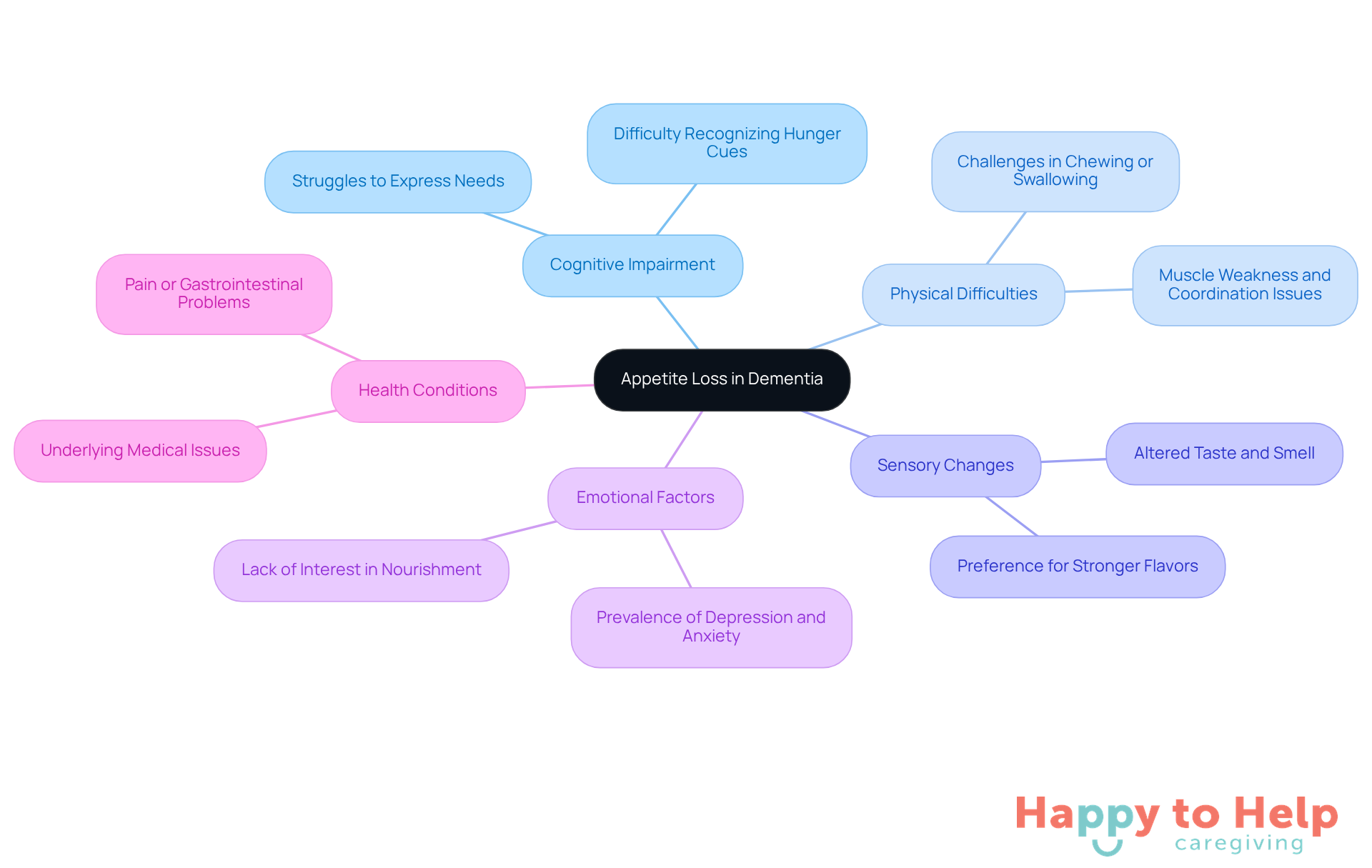
The challenge of appetite loss in individuals often manifests as dementia refusing to eat, creating significant difficulties for caregivers. This issue can stem from various factors, including cognitive impairment, physical difficulties, sensory changes, emotional factors, and underlying health conditions.
-
Cognitive Impairment: Dementia affects the brain's ability to recognize hunger cues, often leading to a significant decrease in appetite. As cognitive function declines, individuals may struggle to understand when they are hungry or how to express their needs.
-
Physical Difficulties: Many dementia patients face challenges such as difficulty chewing or swallowing, which can arise from muscle weakness or coordination issues. These physical barriers can discourage eating and lead to frustration during mealtimes.
-
Sensory Changes: Alterations in taste and smell are common in dementia, making meals less appealing. Research suggests that individuals may favor stronger flavors or sweeter dishes, as reduced sensory perception can influence their overall interest in meals.
-
Emotional Factors: Depression and anxiety are prevalent among those with dementia, significantly impacting appetite. Emotional distress can result in a lack of interest in nourishment, further complicating nutritional intake.
-
Health Conditions: Underlying medical issues, such as pain or gastrointestinal problems, can also contribute to a refusal to eat. Regular check-ins with healthcare providers can help identify and address these health concerns.
Understanding these factors enables caregivers to approach mealtime with compassion and apply customized strategies that address the issue of dementia refusing to eat, promoting improved dietary habits. For instance, establishing a serene dining environment, engaging participants in food preparation, and providing familiar dishes can enhance the dining experience and encourage nutritional consumption.
Implement Strategies to Encourage Eating
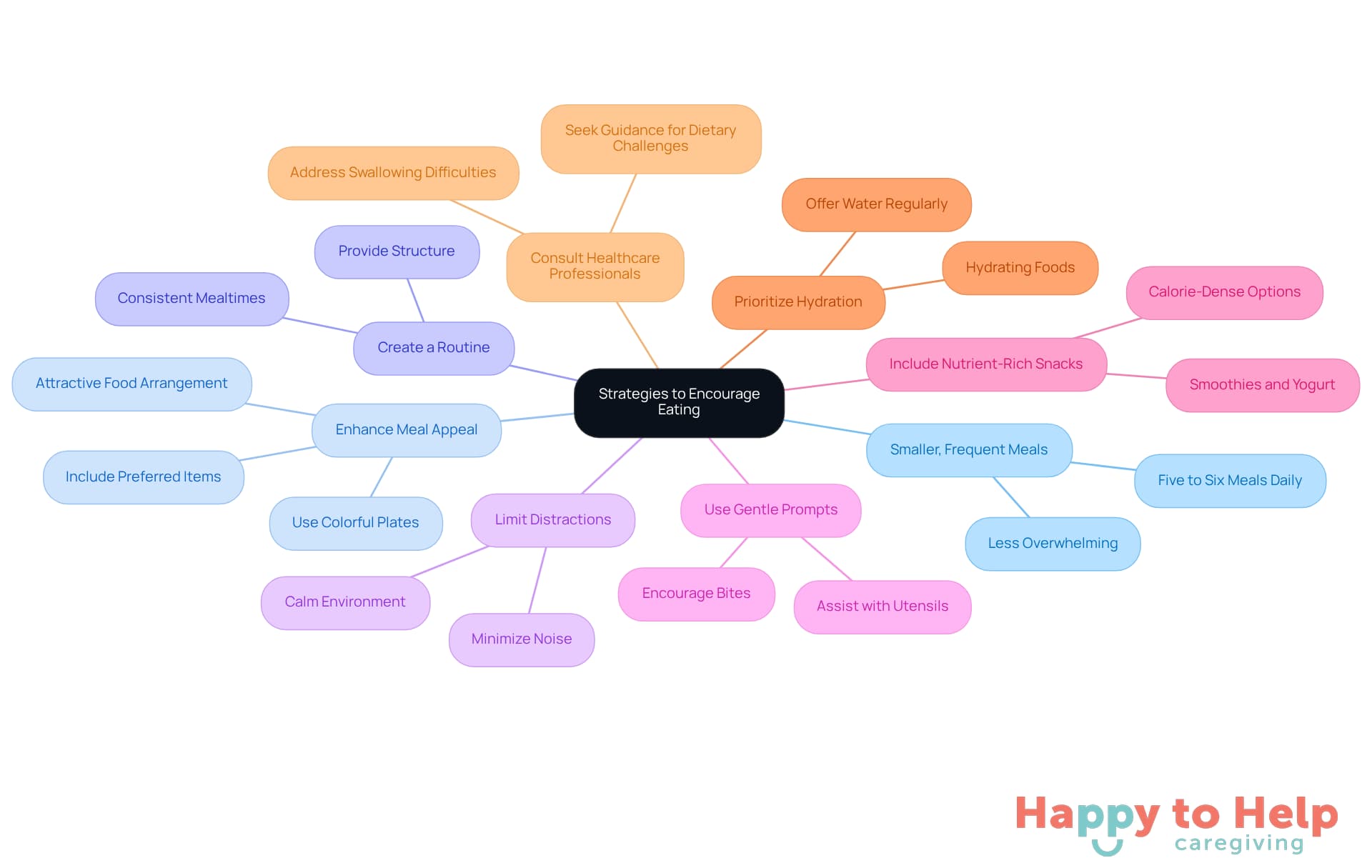
Caregivers may find it challenging to encourage eating among individuals experiencing dementia refusing to eat. Many face difficulties in ensuring that their loved ones, particularly those with dementia refusing to eat, receive adequate nutrition, which can lead to health complications. Here are several effective strategies to address this issue:
- Offer Smaller, Frequent Meals: Instead of three large meals, provide five to six smaller meals throughout the day. This approach can make eating feel less overwhelming and more manageable.
- Enhance Meal Appeal: Use colorful plates and arrange dishes attractively to stimulate interest. Including preferred items can also encourage people to eat, making mealtimes more enjoyable. Consider using simple, solid-colored plates that contrast with the food to help it stand out.
- Create a Routine: Establish consistent mealtimes to provide structure and predictability. Consistent dining schedules can help address the issue of dementia refusing to eat, providing reassurance and alleviating anxiety related to food.
- Limit Distractions: Minimize noise and visual disturbances during meals to assist the person in concentrating on nourishment. A calm environment can significantly improve the mealtime experience, allowing for better engagement with food.
- Use Gentle Prompts: Encourage eating by gently reminding the person to take bites or offering assistance with utensils if needed. Gentle encouragement is often more effective than pressure when dealing with dementia refusing to eat, promoting independence while ensuring they receive adequate nutrition.
- Include Nutrient-Rich Snacks: Offer convenient snacks that are rich in calories and nutrients, such as smoothies, yogurt, or cheese, to enhance dietary intake. These snacks can help maintain strength and overall health without overwhelming a person during main meals.
- Prioritize Hydration: Ensure that people are adequately hydrated by offering water and hydrating foods. Regular hydration is crucial to prevent dehydration, which can be a concern for those with dementia.
- Consult Healthcare Professionals: If there are significant dietary challenges or swallowing difficulties, it is important to consult a healthcare provider for guidance and support.
Create a Supportive Mealtime Environment
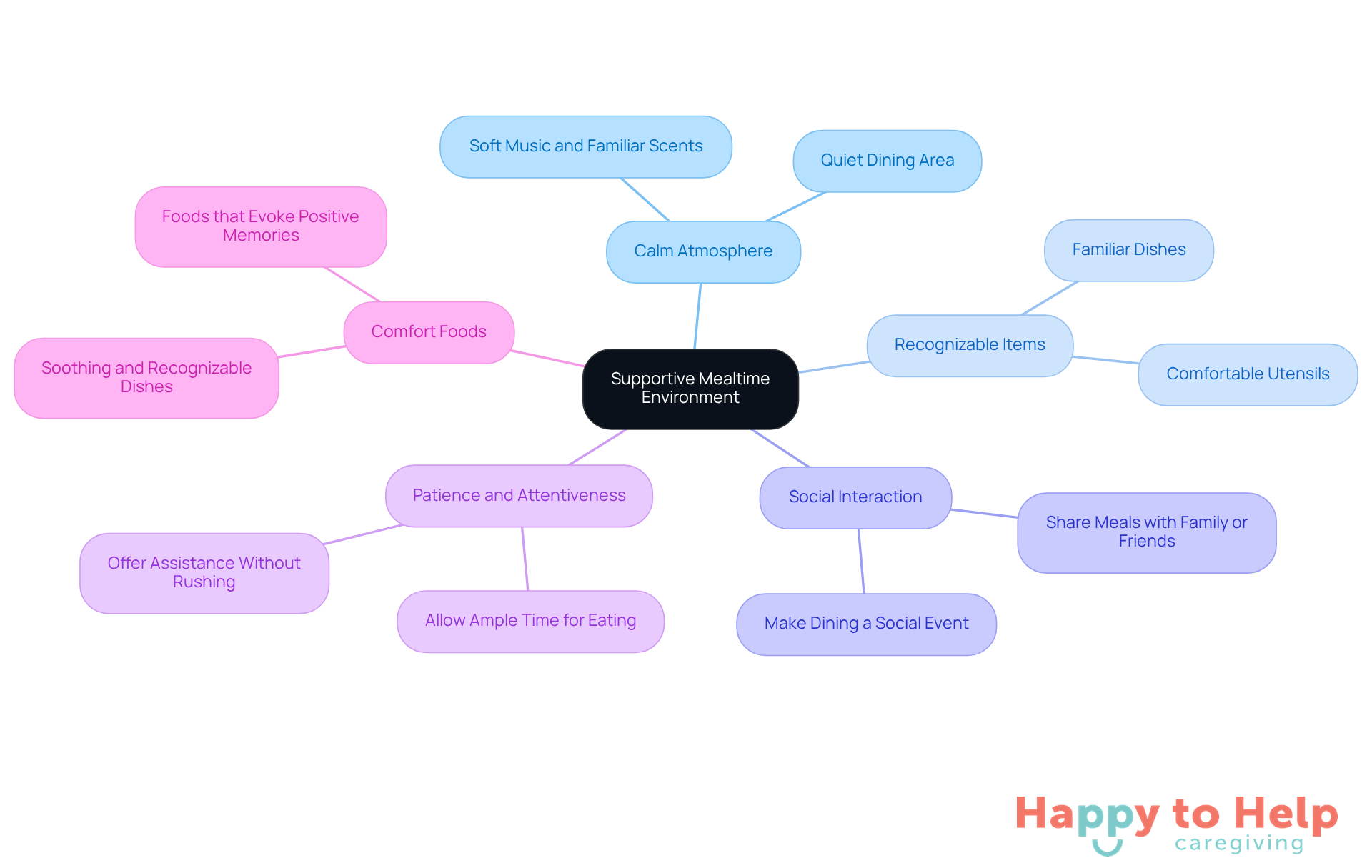
For caregivers, creating a supportive mealtime environment can be challenging, especially when dealing with dementia refusing to eat. Distractions and an uninviting atmosphere can hinder a person's dining experience, especially for individuals with dementia refusing to eat, leading to decreased appetite and enjoyment. To address these issues, caregivers can implement several effective strategies:
- Set a Calm Atmosphere: Ensure the dining area is quiet and free from distractions. Soft music or familiar scents can create a pleasant ambiance.
- Use Recognizable Items: Serve food on familiar dishes and utilize utensils that the person is comfortable with to promote a sense of normalcy.
- Encourage Social Interaction: Whenever possible, share meals with family or friends to make dining a social event, which can enhance enjoyment and stimulate appetite, especially for individuals dealing with dementia refusing to eat.
- Be Patient and Attentive: Allow ample time for the person experiencing dementia refusing to eat, and be attentive to their needs, offering assistance as necessary without rushing them.
- Include Comfort Foods: Offer dishes that are soothing and recognizable to the person, as these can bring back positive memories and promote consumption.
Recognize When to Seek Professional Assistance
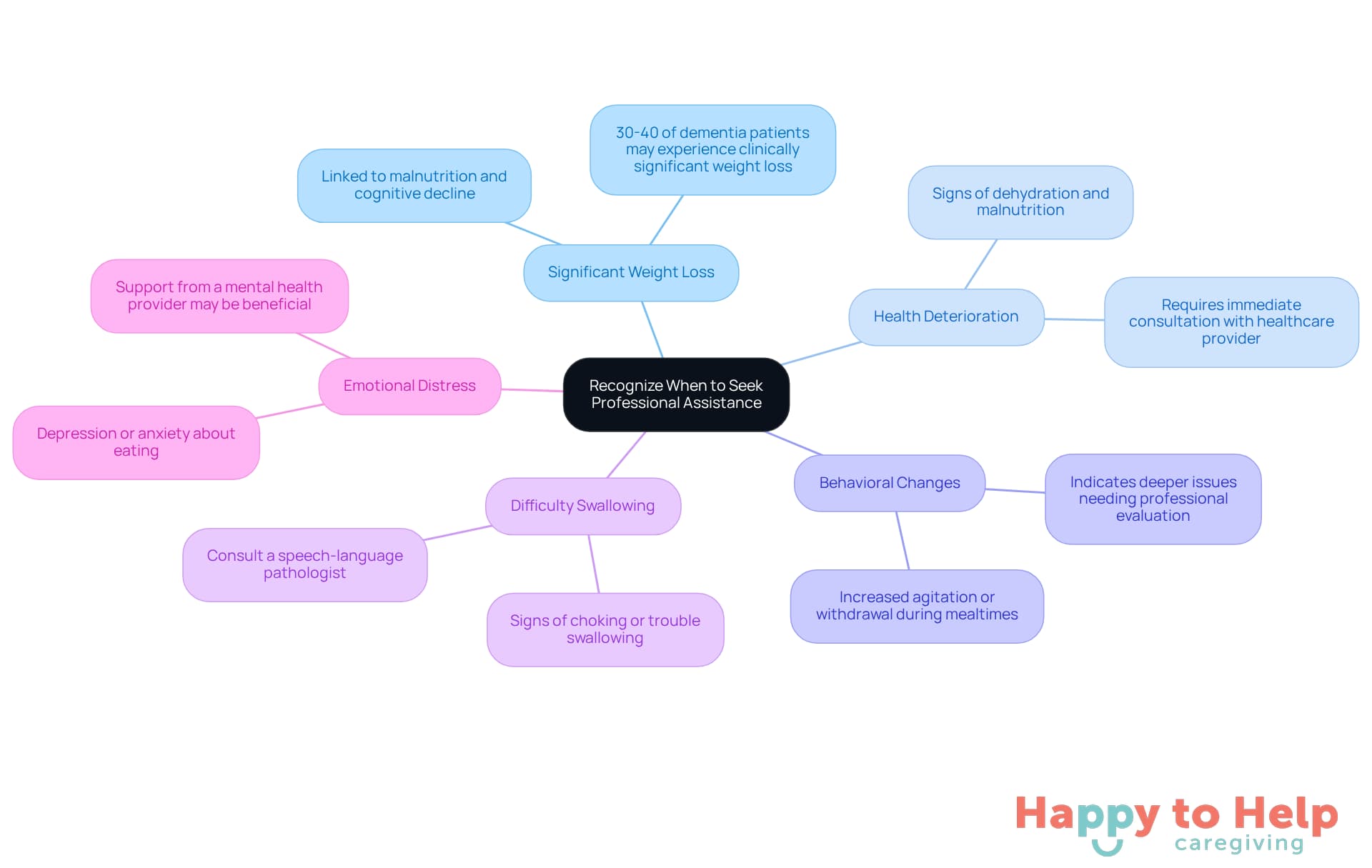
Caregivers should be aware of several critical signs that may indicate the need for professional assistance:
-
Significant Weight Loss: Noticeable weight loss or a refusal to eat for an extended period can signal serious underlying health issues. Research shows that 30-40% of dementia patients may experience clinically significant weight loss, often linked to malnutrition and cognitive decline, particularly in cases of dementia refusing to eat.
-
Health Deterioration: Signs of dehydration, malnutrition, or other health concerns require immediate consultation with a healthcare provider. Timely intervention is crucial as malnutrition in patients with dementia refusing to eat can lead to accelerated functional decline and increased mortality risk.
-
Behavioral Changes: Sudden shifts in behavior, such as increased agitation or withdrawal during mealtimes, may indicate deeper issues that need professional evaluation. Dementia refusing to eat can complicate dietary habits, and these behavioral and psychological symptoms should be addressed by a specialist.
-
Difficulty Swallowing: If the person shows signs of choking or has trouble swallowing, consulting a speech-language pathologist or healthcare provider is essential. These difficulties can pose significant health risks and require specialized intervention.
-
Emotional Distress: If the individual appears depressed or anxious about eating, support from a mental health provider may be beneficial. Emotional well-being is closely tied to nutritional intake, and addressing these feelings can improve overall health outcomes.
By recognizing these signs, caregivers can ensure their loved ones receive the necessary care and support, ultimately enhancing their quality of life.
Key Takeaways for Caregivers
Addressing the issue of dementia refusing to eat presents a significant challenge for caregivers. Understanding the underlying reasons for appetite loss is crucial, as it can stem from:
- Cognitive impairment
- Physical difficulties
- Sensory changes
- Emotional factors
- Health conditions
This multifaceted problem not only affects the nutritional intake of individuals with dementia but also impacts their overall well-being.
To tackle this issue effectively, caregivers can implement several strategies:
- Offering smaller, more frequent meals can make eating less daunting.
- Enhancing the appeal of meals through presentation and variety can stimulate interest.
- Establishing consistent mealtime routines and creating a calm dining atmosphere are essential for encouraging eating.
- Recognizing signs that indicate the need for professional assistance can significantly improve the quality of care provided.
Ultimately, caregivers should approach mealtime with empathy and creativity. By employing tailored strategies that promote nutritional intake while enriching the dining experience, they can positively impact the health and dignity of individuals with dementia. Prioritizing both the physical and emotional aspects of eating fosters a sense of comfort and respect during meals.
https://iframe.tely.ai/cta/eyJhcnRpY2xlX2lkIjogIjY5MjI0ZjYyZmViYTIxODdjZTM2NWJhOCIsICJjb21wYW55X2lkIjogIjY4ZWU1ZGNhNzMxNzYyNTU3ZjNjOTVjMSIsICJpbmRleCI6IG51bGwsICJ0eXBlIjogImFydGljbGUifQ==Frequently Asked Questions
What are the main reasons for appetite loss in individuals with dementia?
Appetite loss in dementia can be attributed to cognitive impairment, physical difficulties, sensory changes, emotional factors, and underlying health conditions.
How does cognitive impairment affect appetite in dementia patients?
Cognitive impairment in dementia affects the brain's ability to recognize hunger cues, leading to a significant decrease in appetite as individuals may struggle to understand when they are hungry or how to express their needs.
What physical difficulties do dementia patients face that impact their ability to eat?
Many dementia patients experience challenges such as difficulty chewing or swallowing, which can arise from muscle weakness or coordination issues, discouraging them from eating.
How do sensory changes influence the appetite of individuals with dementia?
Dementia often causes alterations in taste and smell, making meals less appealing. Individuals may prefer stronger flavors or sweeter dishes due to reduced sensory perception.
What emotional factors can affect the appetite of those with dementia?
Depression and anxiety are common among dementia patients and can significantly impact appetite, leading to a lack of interest in nourishment.
How can underlying health conditions contribute to appetite loss in dementia?
Underlying medical issues, such as pain or gastrointestinal problems, can lead to a refusal to eat. Regular check-ins with healthcare providers can help identify and address these concerns.
What strategies can caregivers use to encourage eating in dementia patients?
Caregivers can promote improved dietary habits by creating a serene dining environment, engaging patients in food preparation, and providing familiar dishes to enhance the dining experience.
List of Sources
- Understand the Reasons for Appetite Loss in Dementia
- Dementia and appetite loss: Causes and management (https://medicalnewstoday.com/articles/dementia-patient-not-eating)
- Dementia and Appetite: Is Your Loved One with Dementia Not Eating? (https://lidementia.org/dementia-and-appetite)
- Meta-analysis and moderator analysis of the prevalence of malnutrition and malnutrition risk among older adults with dementia (https://sciencedirect.com/science/article/abs/pii/S0020748923002134)
- Appetite Loss in Memory Care: Warning Signs & Solutions (https://irisseniorliving.com/senior-living/tx/dallas/dickason-ave/blog/appetite-loss-in-memory-care-warning-signs-solutions)
- Prevalence of Malnutrition in People with Dementia in Long-Term Care: A Systematic Review and Meta-Analysis - PMC (https://pmc.ncbi.nlm.nih.gov/articles/PMC10343750)
- Implement Strategies to Encourage Eating
- Fostering the Enjoyment of Eating through Inclusive Strategies for People Living with Dementia | Global Brain Health Institute (https://gbhi.org/news-publications/fostering-enjoyment-eating-through-inclusive-strategies-people-living-dementia)
- Tips for Caregivers: Helping People With Alzheimer’s Disease Eat Well (https://nia.nih.gov/health/alzheimers-caregiving/tips-caregivers-helping-people-alzheimers-disease-eat-well)
- Helping caregivers help people with dementia eat at home (https://news.osu.edu/helping-caregivers-help-people-with-dementia-eat-at-home)
- Dementia And Eating Issues: How To Help Your Loved One Eat More - NCCDP (https://nccdp.org/dementia-and-eating-issues-how-to-help-your-loved-one-eat-more)
- 7 Caretaker Tips for Getting Dementia Patients to Eat (https://verywellhealth.com/how-to-get-dementia-patients-to-eat-11711215)
- Create a Supportive Mealtime Environment
- The Therapeutic Benefits of Family-Style Dining for Persons Living with Dementia - BHI Senior Living (https://bhiseniorliving.org/the-therapeutic-benefits-of-family-style-dining-for-persons-living-with-dementia)
- The Impact that Dining Can Have on Living a Full Life for Memory Care Patients - CCL Hospitality Group (https://ccl-hg.com/perspectives/the-impact-that-dining-can-have-on-living-a-full-life-for-memory-care-patients)
- Supporting someone with dementia to eat and drink (https://alzheimers.org.uk/get-support/living-with-dementia/improving-eating-experience-dementia)
- Helping caregivers help people with dementia eat at home (https://news.osu.edu/helping-caregivers-help-people-with-dementia-eat-at-home)
- The Therapeutic Benefits of Family-Style Dining for Persons Living with Dementia - Wesley Manor (https://wesleymanor.org/the-therapeutic-benefits-of-family-style-dining-for-persons-living-with-dementia-2)
- Recognize When to Seek Professional Assistance
- 7 Caretaker Tips for Getting Dementia Patients to Eat (https://verywellhealth.com/how-to-get-dementia-patients-to-eat-11711215)
- What Should You Do If Alzheimer's Patients Are Not Eating? - NCCDP (https://nccdp.org/what-should-you-do-if-alzheimers-patients-are-not-eating)
- Weight Loss in Patients with Dementia: Considering the Potential Impact of Pharmacotherapy - PMC (https://pmc.ncbi.nlm.nih.gov/articles/PMC6779159)
- Malnutrition predicts faster functional loss in dementia patients | King's College London (https://kcl.ac.uk/news/malnutrition-predicts-faster-functional-loss-in-dementia-patients)
- Weight loss in Alzheimer disease (https://sciencedirect.com/science/article/pii/S000291652307034X)