
For families in our service areas
For families in our service areas, this guide explains caregiving and how non-medical in-home caregiving can support care planning in East Idaho, Treasure Valley & Magic Valley, Northern Wasatch, North Central West Virginia, and Northeast Ohio.
What You Need to Know About Care for Blind Elderly: Enhance Safety
Understanding the complexities of vision loss in the elderly presents a significant challenge for caregivers. Conditions such as age-related macular degeneration, cataracts, and glaucoma are increasingly prevalent, making it essential for caregivers to enhance the safety and independence of blind seniors. This situation not only poses risks but also affects the quality of life for these individuals.
So, how can caregivers effectively address these challenges? The answer lies in implementing practical strategies that empower blind seniors to lead fulfilling lives. By exploring innovative resources and actionable steps, caregivers can create a secure and supportive environment that fosters both safety and autonomy.
Here are some effective strategies:
- Educate Yourself: Understanding the specific conditions affecting vision can help caregivers provide better support.
- Adapt the Environment: Simple modifications in the home can significantly enhance safety and accessibility.
- Encourage Independence: Empower seniors by involving them in decision-making and daily activities.
By focusing on these solutions, caregivers can mitigate risks and promote a more fulfilling life for blind elderly individuals.
Understand the Causes and Types of Vision Loss in the Elderly
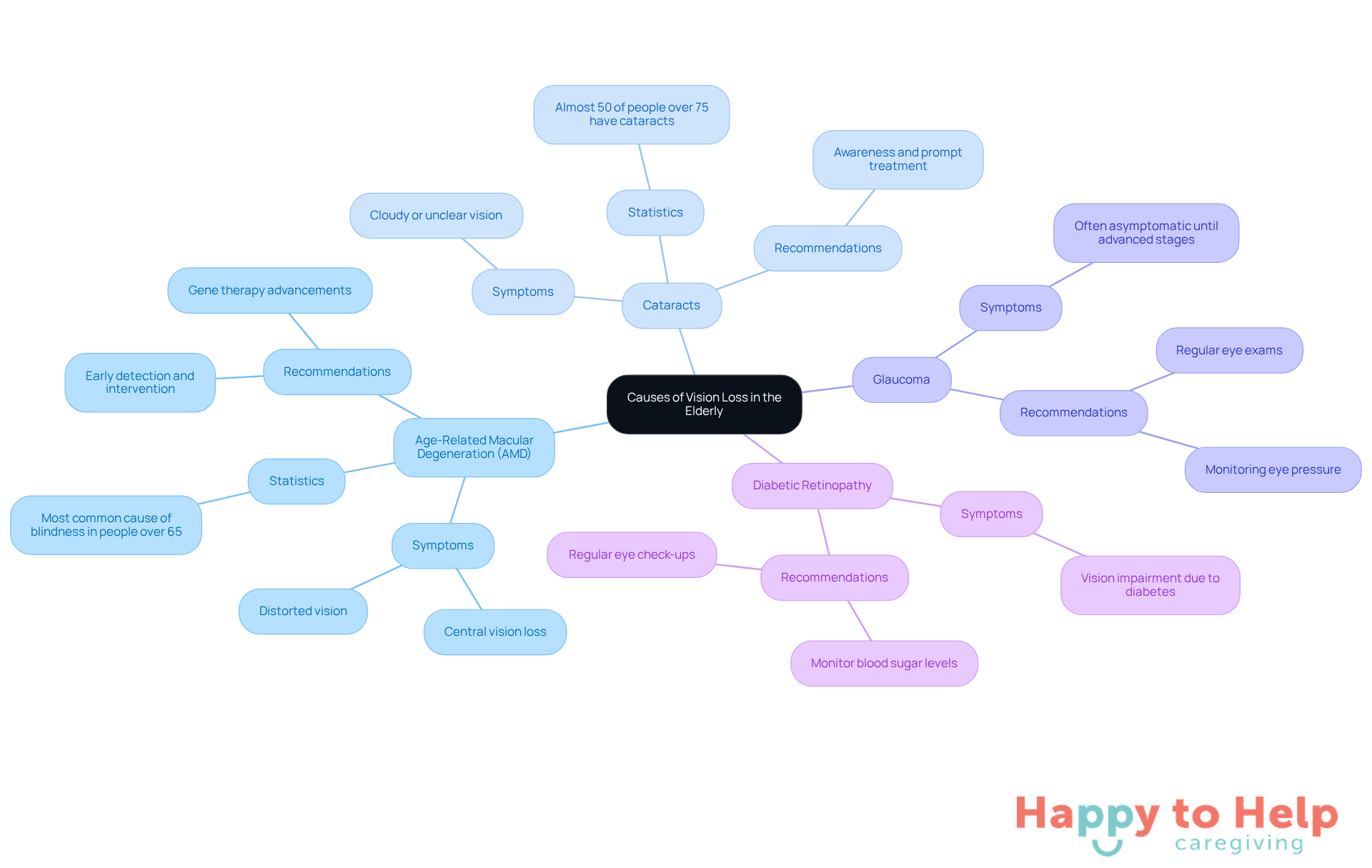
To effectively care for blind elderly individuals, understanding the common causes of sight loss is crucial. The most prevalent conditions include:
-
Age-Related Macular Degeneration (AMD): This condition is the leading cause of vision loss among older adults, primarily affecting central vision. Recent research from the University of Utah highlights the importance of early detection and intervention. Advancements in gene therapy show promise in halting AMD progression. Dr. Hageman, a leading researcher in this field, states, "The ultimate goal is to slow or halt AMD with a single injection into the eye."
-
Cataracts: Marked by the clouding of the eye's lens, cataracts result in unclear sight and are very prevalent among older adults. Statistics suggest that almost 50% of people over 75 have cataracts, making awareness and prompt treatment crucial (source: National Eye Institute).
-
Glaucoma: This group of eye conditions damages the optic nerve, often linked to increased eye pressure. Regular eye exams are vital for early detection, as glaucoma can progress without noticeable symptoms. Experts recommend that caregivers ensure their loved ones have annual eye check-ups to monitor for this condition.
-
Diabetic Retinopathy: Resulting from diabetes, this condition damages the retina and can lead to significant eyesight impairment. Monitoring blood sugar levels and regular eye check-ups are critical for those at risk. Maintaining healthy blood pressure and cholesterol levels is also important for overall eye health.
Recognizing these conditions enables caregivers to identify potential issues early and seek appropriate medical advice to better care for blind elderly. Acquainting oneself with the signs linked to each condition helps in efficiently tracking the eye health of older adults.
Create a Safe and Accessible Home Environment
To enhance safety and accessibility in the home for blind elderly individuals, it’s essential to care for blind elderly and address several key challenges.
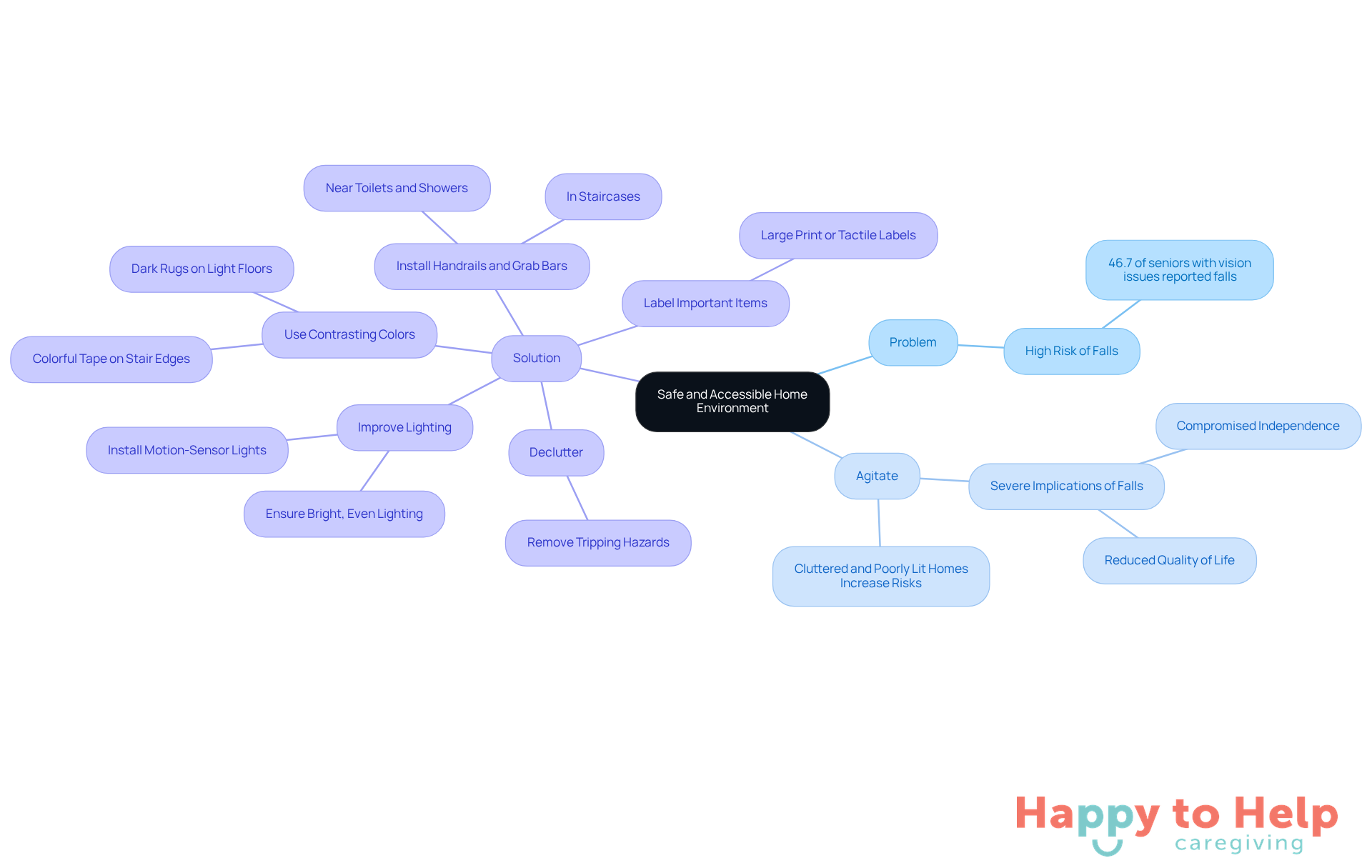
Problem: Many elderly individuals with significant sight impairment face a heightened risk of accidents at home. Statistics reveal that 46.7% of seniors with vision issues reported experiencing a fall, underscoring the urgent need for a safer living environment.
Agitate: The implications of these accidents can be severe, leading to injuries that compromise independence and quality of life. Caregivers must recognize that a cluttered and poorly lit home can exacerbate the risks, making it crucial to implement effective safety measures in their care for blind elderly.
Solution: Here are actionable steps caregivers can take to create a safer home:
-
Declutter: Remove unnecessary items from walkways and common areas to prevent tripping hazards. A clutter-free environment not only reduces the risk of falls but also promotes a sense of calm and order.
-
Improve Lighting: Ensure all areas of the home are well-lit. Bright, even lighting is essential, and installing motion-sensor lights in hallways and staircases can provide additional safety during nighttime hours. As Emma Pizzuti highlights, proper lighting is one of the most crucial methods to establish a secure home for individuals with impaired sight.
-
Use Contrasting Colors: Applying contrasting colors for walls, floors, and furniture can significantly assist visually impaired individuals in distinguishing between different areas and objects. For instance, using dark rugs on light floors can enhance depth perception and orientation.
-
Install Handrails and Grab Bars: Placing these in critical areas such as staircases and bathrooms offers essential support and stability, helping to prevent falls. Grab bars should be installed near toilets and in showers to enhance safety during personal care activities. Judy A. Stevens emphasizes the necessity for focused fall prevention measures that are essential to care for blind elderly, underscoring the significance of these adjustments.
-
Label Important Items: Utilizing large print or tactile labels on frequently used items assists with identification, making daily tasks more manageable. This simple modification can greatly enhance independence and confidence.
Implementing these modifications can significantly reduce the risk of accidents and enhance the care for blind elderly individuals, helping them feel more secure in their environment. Experts emphasize that a well-organized and accessible home is not just a safety measure; it is a vital component of maintaining independence and quality of life for seniors. Furthermore, managing sight loss can be an emotional journey, and offering a safe and nurturing home environment is crucial for promoting resilience and well-being.
Encourage Independence and Emotional Support
To promote independence and provide emotional support for blind elderly individuals, caregivers who care for blind elderly face significant challenges. These individuals often struggle with feelings of isolation and a loss of autonomy, which can severely impact their emotional well-being. Addressing these issues is crucial for enhancing their quality of life.
-
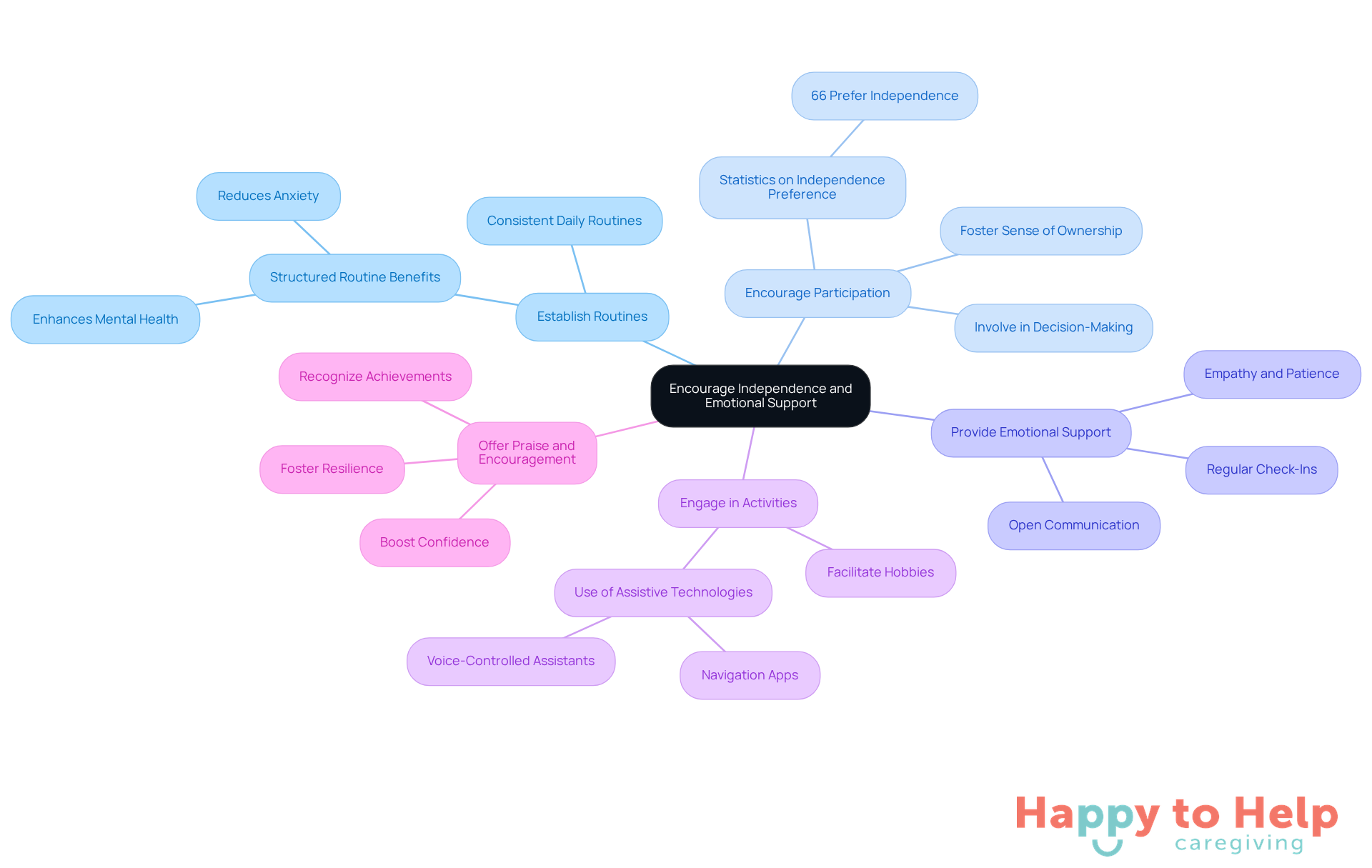
Establish Routines: Consistent daily routines instill a sense of security and control, vital for emotional well-being. Research suggests that a structured routine can greatly enhance mental health outcomes, especially for older adults dealing with vision loss. In fact, studies show that establishing a daily routine may improve overall health and reduce anxiety levels.
-
Encourage Participation: Involving elderly individuals in decision-making about their care and daily activities fosters a sense of ownership and autonomy. This empowerment is essential, as studies indicate that older adults who feel in control of their lives report greater satisfaction and reduced anxiety. A national survey reveals that 66% of Americans prefer independence over a longer life dependent on others, underscoring the importance of promoting autonomy.
-
Provide Emotional Support: Regular check-ins and open communication about feelings and concerns are essential. Emotional support not only aids in establishing trust but also reduces feelings of isolation, which can be intensified by sight impairment. Caregivers should be empathetic and patient, as these qualities are key to creating a supportive environment. As Sanjay Shetty, MD, emphasizes, "As we grow older, the desire to stay independent becomes even more important."
-
Engage in Activities: Facilitating participation in hobbies and social activities can significantly reduce feelings of loneliness. Activities such as music, audiobooks, or tactile crafts provide cognitive stimulation and relaxation, enhancing overall emotional health. Utilizing assistive technologies, like navigation apps or voice-controlled smart assistants, can also help older adults engage more fully in their interests.
-
Offer Praise and Encouragement: Recognizing even the smallest achievements boosts confidence and motivation. Positive reinforcement is vital for maintaining a sense of accomplishment and independence, particularly for seniors navigating the challenges of vision loss. By celebrating these victories, caregivers can help foster resilience and a positive outlook.
By concentrating on these strategies, caregivers can effectively care for blind elderly individuals while helping them preserve their independence and emotional health.
Utilize Resources and Assistive Technologies for Effective Care
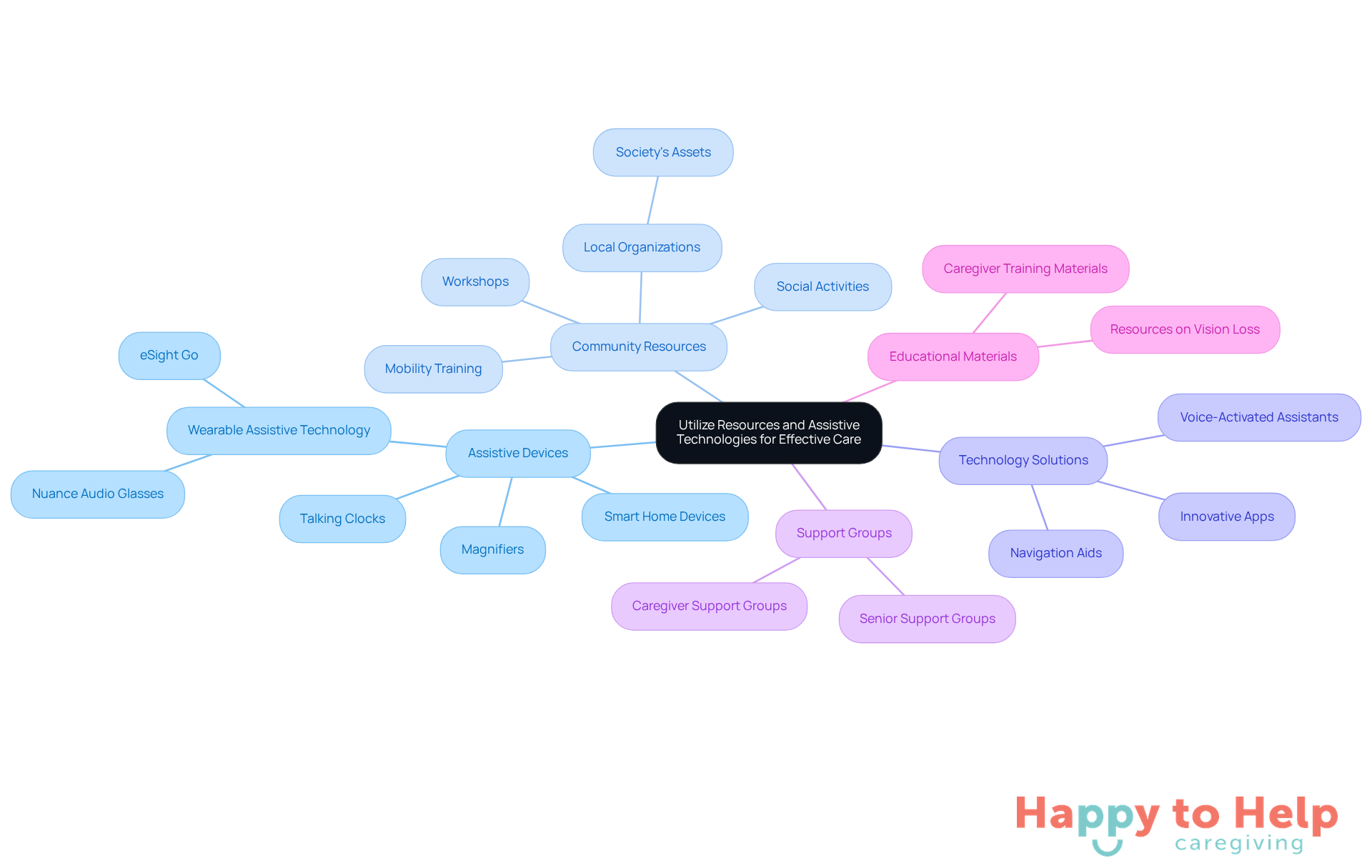
Caregivers face significant challenges in providing quality care for blind elderly individuals, often feeling overwhelmed by the complexities involved in their care for blind elderly. This can lead to feelings of isolation for both caregivers and seniors, impacting their overall well-being. However, by exploring various resources and assistive technologies, caregivers can enhance the quality of care and promote independence for these individuals.
Assistive Devices: Implement tools such as magnifiers, talking clocks, and smart home devices that facilitate daily tasks and promote independence. These devices improve safety and ease of use, allowing seniors to navigate their environments more confidently. According to a recent report, the DisabilityTech market is expected to reach $37 billion by 2029, highlighting the growing importance of these technologies in improving the lives of people with disabilities.
Community Resources: Engage with local organizations that provide essential support services for the visually impaired. These may include mobility training, social activities, and workshops that foster community connections and reduce feelings of isolation. Organizations like Society's Assets offer vital resources and support for individuals affected by sight loss, ensuring they receive the help they need.
Technology Solutions: Leverage innovative apps tailored for the visually impaired, including navigation aids and voice-activated assistants. These technologies empower seniors to maintain their independence by simplifying tasks and enhancing their ability to interact with their surroundings. As technology expert Roland Mattern states, "Assistive technologies can significantly enhance the quality of life for older adults with central sight impairment, promoting greater independence while allowing them to navigate more safely."
Support Groups: Encourage participation in support groups for both caregivers and older adults. These groups provide a space for sharing experiences, coping strategies, and emotional support, which can be invaluable in managing the challenges related to vision loss.
Educational Materials: Provide access to resources that educate caregivers and seniors about vision loss and available support options. Knowledge is crucial in navigating the complexities of care and ensuring that both caregivers and seniors feel informed and empowered.
By effectively utilizing these resources, caregivers can improve the overall quality of care for blind elderly individuals and foster greater independence, ultimately enhancing their quality of life.
Taking the Next Steps
Enhancing the quality of life for blind elderly individuals presents a significant challenge for caregivers. Vision loss can stem from various causes, impacting not only the physical safety of these individuals but also their emotional well-being and independence. Understanding these complexities is crucial for caregivers who strive to provide effective support.
To address this issue, caregivers can take several critical steps:
- Creating a safe and accessible home environment is essential. This includes removing hazards and ensuring that essential items are within easy reach.
- Promoting emotional support and encouraging participation in daily activities can empower blind elderly individuals, fostering a sense of autonomy.
- Implementing practical modifications, such as using assistive technologies, plays a vital role in enhancing the lives of seniors facing vision loss. These tools can help them navigate their surroundings more easily and engage in activities they enjoy.
- Caregivers should also leverage available resources, such as community programs and support groups, to further enrich the lives of those they care for.
Ultimately, the journey of caring for blind elderly individuals goes beyond meeting their physical needs. It involves nurturing their emotional well-being and fostering a supportive atmosphere. By committing to understanding and taking action, caregivers can significantly uplift the lives of the elderly, strengthening the bonds of trust and respect within their relationships. This dedication not only benefits the individuals but also contributes to a more compassionate and inclusive community for all.
https://iframe.tely.ai/cta/eyJhcnRpY2xlX2lkIjogIjY5MjY2NjE2NWYwOGRhZjJjOGIyMWRlZSIsICJjb21wYW55X2lkIjogIjY4ZWU1ZGNhNzMxNzYyNTU3ZjNjOTVjMSIsICJpbmRleCI6IG51bGwsICJ0eXBlIjogImFydGljbGUifQ==Frequently Asked Questions
What are the common causes of vision loss in the elderly?
The common causes of vision loss in the elderly include Age-Related Macular Degeneration (AMD), cataracts, glaucoma, and diabetic retinopathy.
What is Age-Related Macular Degeneration (AMD)?
AMD is the leading cause of vision loss among older adults, primarily affecting central vision. Early detection and intervention are crucial, and advancements in gene therapy show promise in halting its progression.
How prevalent are cataracts among older adults?
Cataracts are very prevalent among older adults, with statistics indicating that almost 50% of people over 75 have cataracts. Prompt treatment is essential for managing this condition.
What is glaucoma and why is it important to have regular eye exams?
Glaucoma is a group of eye conditions that damage the optic nerve, often associated with increased eye pressure. Regular eye exams are vital for early detection, as glaucoma can progress without noticeable symptoms.
What is diabetic retinopathy and how can it be managed?
Diabetic retinopathy is a condition resulting from diabetes that damages the retina and can lead to significant eyesight impairment. It can be managed by monitoring blood sugar levels, maintaining healthy blood pressure and cholesterol levels, and having regular eye check-ups.
How can caregivers help in the early detection of vision loss conditions?
Caregivers can help by recognizing the signs linked to each condition, ensuring regular eye check-ups for their loved ones, and seeking appropriate medical advice to address potential issues early.
List of Sources
- Understand the Causes and Types of Vision Loss in the Elderly
- Strategy to prevent age-related macular degeneration identified | WashU Medicine (https://medicine.washu.edu/news/strategy-to-prevent-age-related-macular-degeneration-identified)
- Keep AMD Vision Loss In Check (https://newsinhealth.nih.gov/2025/06/keep-amd-vision-loss-check)
- Visionary: Utah Researcher Dares to Stop a Leading Cause of Blindness (https://uofuhealth.utah.edu/newsroom/news/2025/10/visionary-utah-researcher-dares-stop-leading-cause-of-blindness)
- Most Americans Unaware of One of the Leading Causes of Blindness Among Seniors | Chicago Arbor Eye Institute (https://chicagoarboreye.com/most-americans-unaware-of-one-of-the-leading-causes-of-blindness-among-seniors)
- Macular Degeneration: How Yale Experts Treat This Common Cause of Vision Loss (https://yalemedicine.org/news/macular-degeneration)
- Create a Safe and Accessible Home Environment
- Coping with Vision Loss: Tips for Seniors and Family Caregivers (https://homewellcares.com/blogs/coping-with-vision-loss-tips-for-seniors-and-family-caregivers)
- Tips and Tools for Home Safety When Living with Vision Loss (https://ncoa.org/article/safety-tips-for-older-adults-living-with-vision-loss)
- Falls Among Persons Aged ≥65 Years With and Without Severe Vision Impairment — United States, 2014 | MMWR (https://cdc.gov/mmwr/volumes/65/wr/mm6517a2.htm)
- Creating a Safe Home for Seniors with Low Vision (https://cohme.org/post/creating-a-safe-home-for-seniors-with-low-vision)
- Accessibility in the News- Knowledge is Power for 10-03 | Access Press (https://accesspress.org/accessible-technology-2025-digital-inclusion)
- Encourage Independence and Emotional Support
- Foundation Fighting Blindness and Alma Join Forces to Bridge the Mental Health Gap for Blind and Low Vision Individuals and Their Families (https://prnewswire.com/news-releases/foundation-fighting-blindness-and-alma-join-forces-to-bridge-the-mental-health-gap-for-blind-and-low-vision-individuals-and-their-families-302443455.html)
- Introducing Eye2Eye: Peer Support by and for People who are Blind or Visually Impaired - The Alliance for Rights and Recovery (https://rightsandrecovery.org/e-news-bulletins/2025/07/29/introducing-eye2eye-peer-support-by-and-for-people-who-are-blind-or-visually-impaired)
- How to Care for Blind Elderly with Love, Safety & Dignity (https://graciousheartsinc.com/blog/care-for-blind-elderly)
- Daily Routine: Associations With Health Status and Urgent Health Care Utilization Among Older Adults - PMC (https://pmc.ncbi.nlm.nih.gov/articles/PMC6857682)
- For Americans, Every Day Is Independence Day When It Comes to Their Health (https://policy.humana.com/issue-area/news-and-resources/news-press/2025/for-americans--every-day-is-independence-day-when-it-comes-to)
- Utilize Resources and Assistive Technologies for Effective Care
- Empowering older adults with central vision loss through technology (https://mcknightsseniorliving.com/home/columns/marketplace-columns/empowering-older-adults-with-central-vision-loss-through-technology)
- Increased Independence Resources for those who are Visually Impaired or Blind - Kenosha.com (https://kenosha.com/2025/11/21/societys-assets-increased-independence-resources-for-those-who-are-visually-impaired-or-blind)
- 2025 Special Issue on Advancements and Innovations in Technology (https://afb.org/news-publications/publications/jvib/authors/calls-papers/2025-special-issue-technology)
- CES 2025: Accessibility Tech Reshapes Innovation And Inclusion (https://forbes.com/sites/billschiffmiller/2025/01/20/accessibility-tech-showcased-at-ces-2025-is-transforming-shared-experiences)
- China uses tech to aid elderly, disabled (https://english.cdpf.org.cn/2025-09/15/c\_1125789.htm)