
For families in our service areas
For families in our service areas, this guide explains caregiving and how non-medical in-home caregiving can support care planning in East Idaho, Treasure Valley & Magic Valley, Northern Wasatch, North Central West Virginia, and Northeast Ohio.
Quick Guide to Choose an Easy to Use Blood Pressure
Choosing a blood pressure monitor for the elderly can feel overwhelming for caregivers. It’s essential to find a device that not only meets practical needs but also eases the emotional burden of managing health. Features like intuitive design, large displays, automatic cuff inflation, and accurate readings are crucial. These elements cater to the unique challenges seniors face, such as cognitive and physical limitations. By prioritizing user-friendly devices, caregivers can promote effective health management while ensuring their loved ones feel supported.
Imagine the relief of knowing that a simple press of a button can provide accurate readings without the hassle. This thoughtful design helps reduce stress for both caregivers and seniors, fostering a sense of independence and confidence in health monitoring. It’s about more than just numbers; it’s about nurturing well-being and peace of mind.
As caregivers, you’re doing an incredible job, often juggling multiple responsibilities. Remember, you’re not alone in this journey. By choosing the right tools, you can make a significant difference in the lives of those you care for. Let’s embrace these supportive technologies together, ensuring that health management is as smooth and compassionate as possible.
Why Choose an Easy to Use Blood Pressure Matters
Choosing the right blood pressure monitor for elderly individuals isn’t just about convenience; it’s about ensuring their health and safety in a way that truly meets their unique needs. Caregivers often face emotional challenges, feeling the weight of responsibility as they navigate the complexities of technology. With so many devices on the market, understanding which features enhance usability can significantly impact daily health management.
But how can caregivers find a monitor that balances ease of use with essential functionality? It can feel overwhelming, and that’s completely understandable. This guide is here to explore the critical steps and considerations necessary to select the most suitable blood pressure monitor. We aim to empower caregivers, providing the support they need to care for their loved ones effectively.
Remember, you’re not alone in this journey. Many caregivers share similar experiences, and together, we can find solutions that bring peace of mind.
Understand the Unique Needs of Elderly Users
When choosing a blood pressure monitor for elderly users, it’s important to consider their unique needs with care and compassion:
-
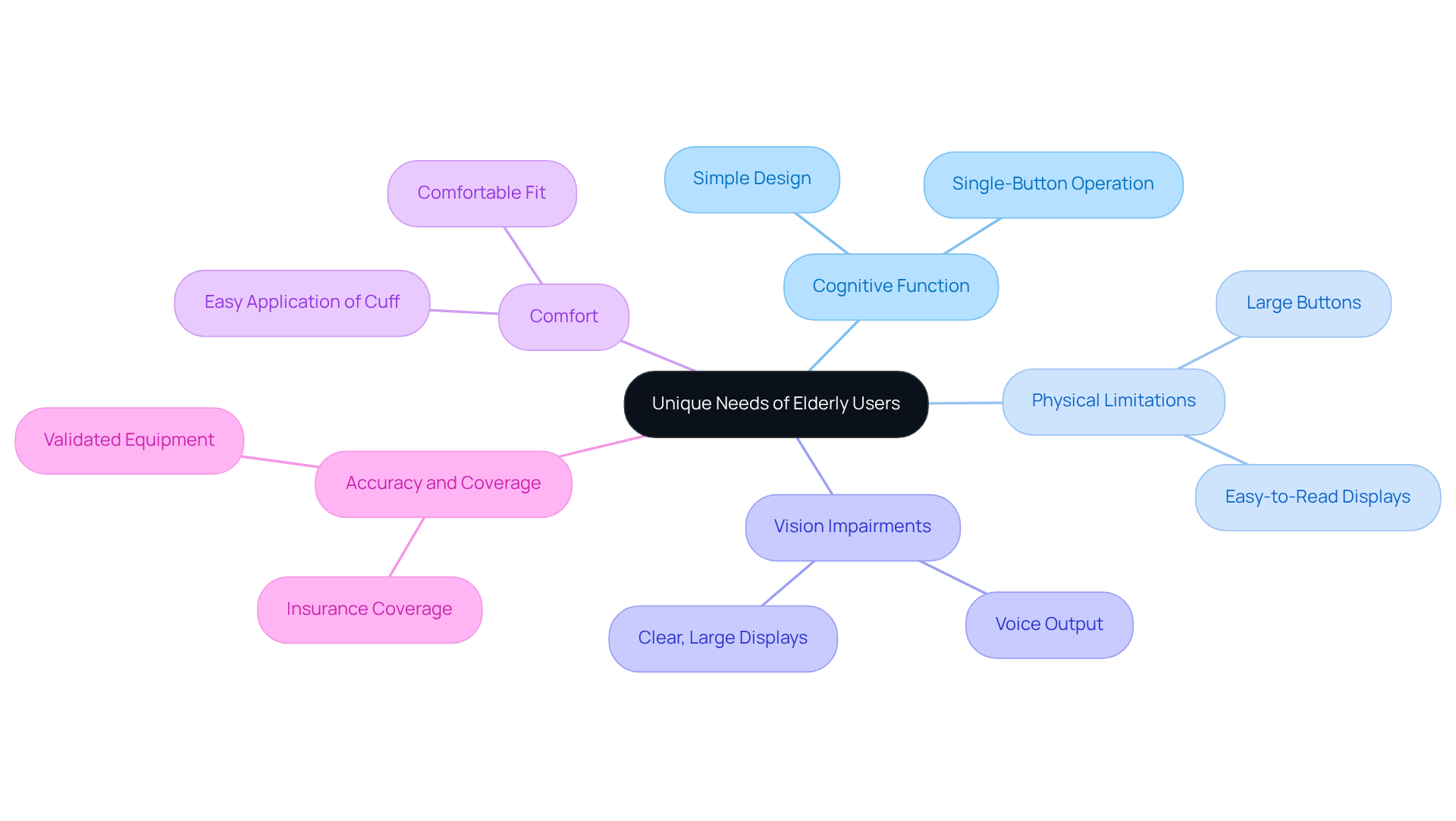
Cognitive Function: Many seniors face cognitive challenges that can make following complex instructions difficult. Opt for devices with simple, intuitive designs, such as an easy to use blood pressure monitor for elderly, that are easy to understand and use. For instance, the Omron 3 Series features a single-button operation, making it user-friendly for those who may struggle with more complicated devices.
-
Physical Limitations: It’s crucial to select monitors that are manageable for individuals with arthritis or limited dexterity. Look for devices with large buttons and easy-to-read displays, like the VitalTrack Pro. These features ensure accessibility for all users, promoting independence and confidence.
-
Vision Impairments: Choose monitors with clear, large displays. Models that offer voice output to read results aloud can be a game-changer for those with vision challenges, significantly enhancing usability and comfort.
-
Comfort: The cuff should be designed for easy application and removal, fitting comfortably without causing discomfort during measurements. This small detail can make a big difference in the user experience.
-
Accuracy and Coverage: It’s essential to verify the accuracy of the blood pressure device, as validated equipment provides dependable readings. Additionally, caregivers should consider whether the device is covered by Medicare or insurance plans, as this can greatly influence affordability.
By thoughtfully addressing these factors, caregivers can select an easy to use blood pressure monitor for elderly individuals that is both user-friendly and effective. This approach ultimately promotes better health management and peace of mind for both caregivers and their loved ones.
Identify Essential Features for Ease of Use
When it comes to choosing an easy to use blood pressure monitor for elderly, it’s important to focus on features that truly make a difference in their daily lives. Here are some key aspects to consider:
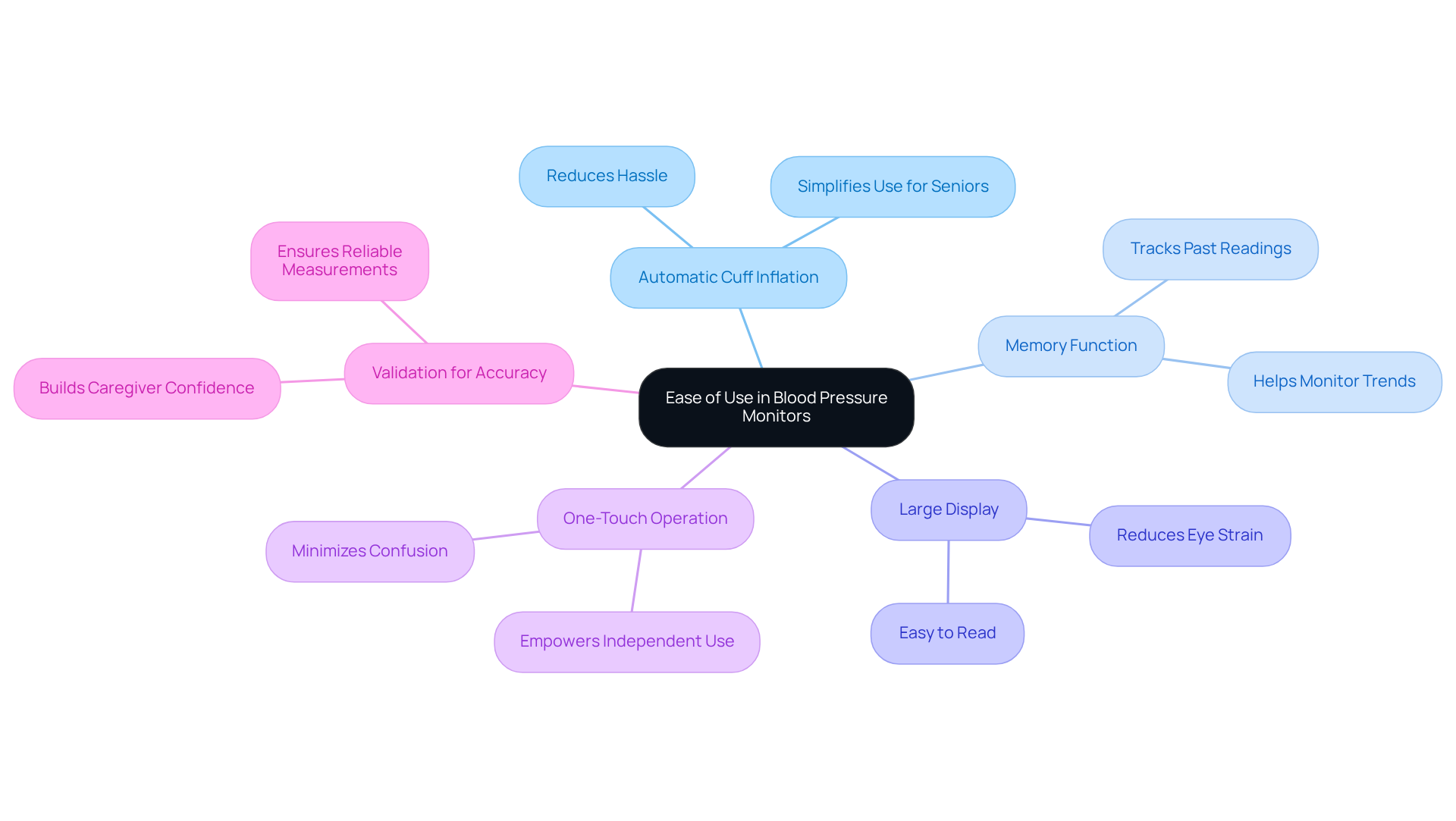
- Automatic Cuff Inflation: Imagine the relief of a monitor that inflates the cuff on its own. This feature takes away the hassle and confusion of manual inflation, making it so much easier for seniors. Dr. Rakotz points out that this simplicity is vital for those who might find manual devices challenging to use.
- Memory Function: A monitor with memory capability can keep track of past readings, which is incredibly helpful for both individuals and healthcare professionals. This feature allows for monitoring trends over time, which is essential for managing conditions like hypertension. It’s also a good idea to maintain a written log of measurements as a backup, ensuring nothing slips through the cracks.
- Large Display: A clear, large display is a must for seniors. It makes reading results effortless, reducing eye strain and ensuring that users can quickly grasp their arterial tension readings.
- One-Touch Operation: Devices that operate with just one button can significantly ease the process for seniors. This design of the easy to use blood pressure monitor for elderly minimizes confusion and empowers them to take their measurements independently, promoting regular monitoring.
- Validation for Accuracy: Choosing a clinically validated device is crucial. Accurate measurements are key to effective health management, especially since nearly 50% of adults in the U.S. face elevated arterial conditions. A validated monitor gives caregivers the confidence they need to make informed health decisions.
By focusing on these essential features, caregivers can select a device that not only enhances the experience for seniors but also encourages consistent and accurate tracking. This ultimately leads to better health outcomes, providing peace of mind for both seniors and their loved ones.
Compare Models and Read Reviews
Caring for elderly loved ones can be a challenging journey, especially when it comes to monitoring their health. When comparing an easy to use blood pressure monitor for elderly individuals, caregivers can take a few thoughtful steps to ensure they choose the best option.
-
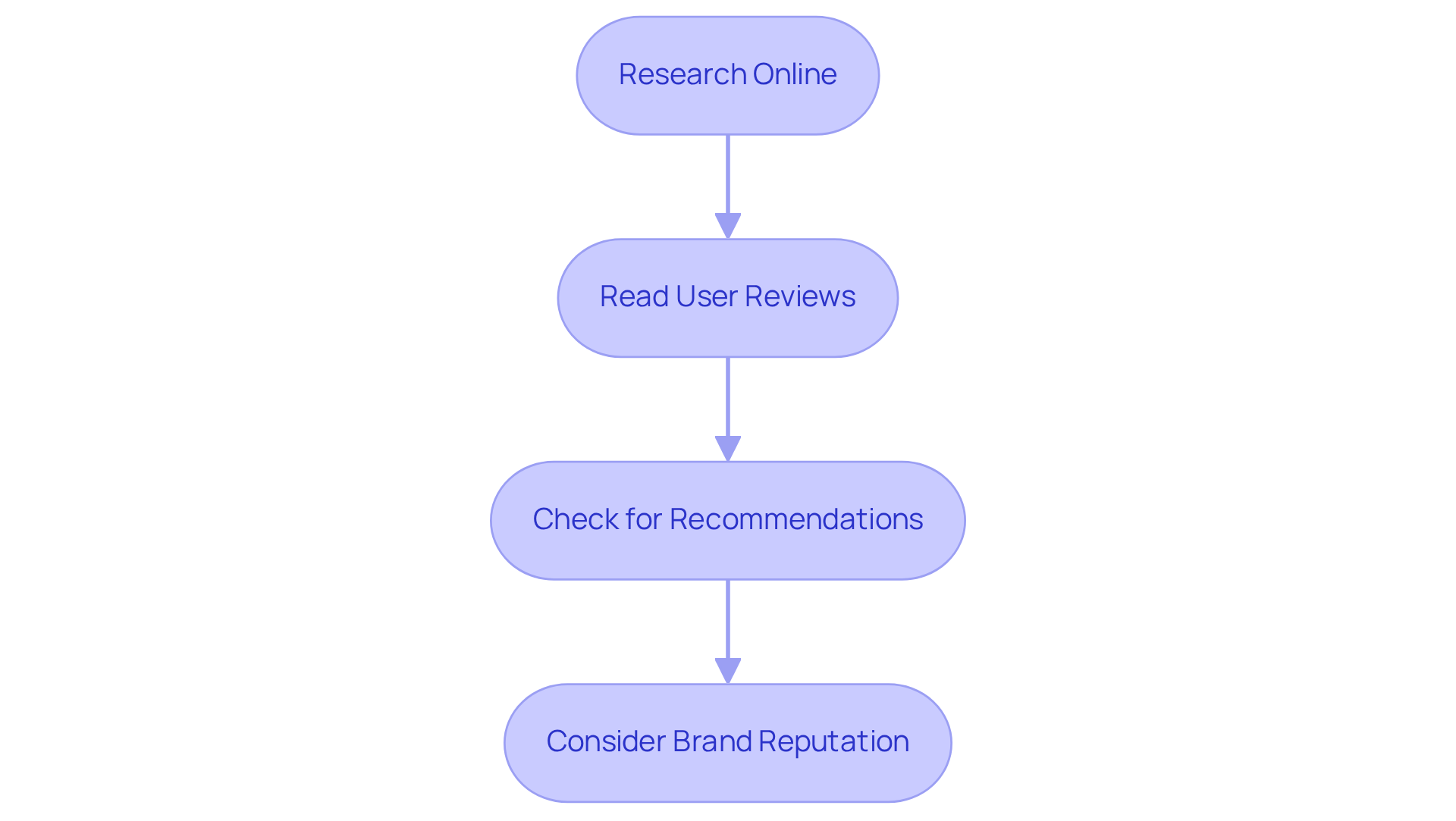
It’s important to research online. Look for reputable health websites and consumer reports that offer detailed comparisons of various models. Focus on features, pricing, and ratings to get a clear picture of each monitor’s performance.
-
Read user reviews. Feedback from seniors or caregivers can be incredibly insightful. Pay attention to comments about ease of use, comfort, and accuracy. These reviews often share practical experiences that can guide your purchasing decisions.
-
Don’t hesitate to check for recommendations. Seeking advice from healthcare professionals or trusted sources within the senior care community can be invaluable. Experts can provide insights into the most reliable and user-friendly options available, such as an easy to use blood pressure monitor for elderly, helping you feel more confident in your choice.
-
Also, consider the brand reputation. Established brands usually have a proven track record of producing dependable medical devices. Look for brands that receive high ratings and endorsements from healthcare providers, as these often indicate quality and reliability.
By taking the time to perform thorough research and considering feedback from those who understand the needs of older adults, caregivers can find the most suitable easy to use blood pressure monitor for elderly. This thoughtful approach not only ensures precise tracking but also enhances health management, ultimately providing peace of mind for both caregivers and their loved ones.
Test the Monitor for Comfort and Usability
Before you finalize your choice, it’s important to take a moment to test the blood pressure monitor. This step can make a world of difference for both caregivers and those they care for.
-
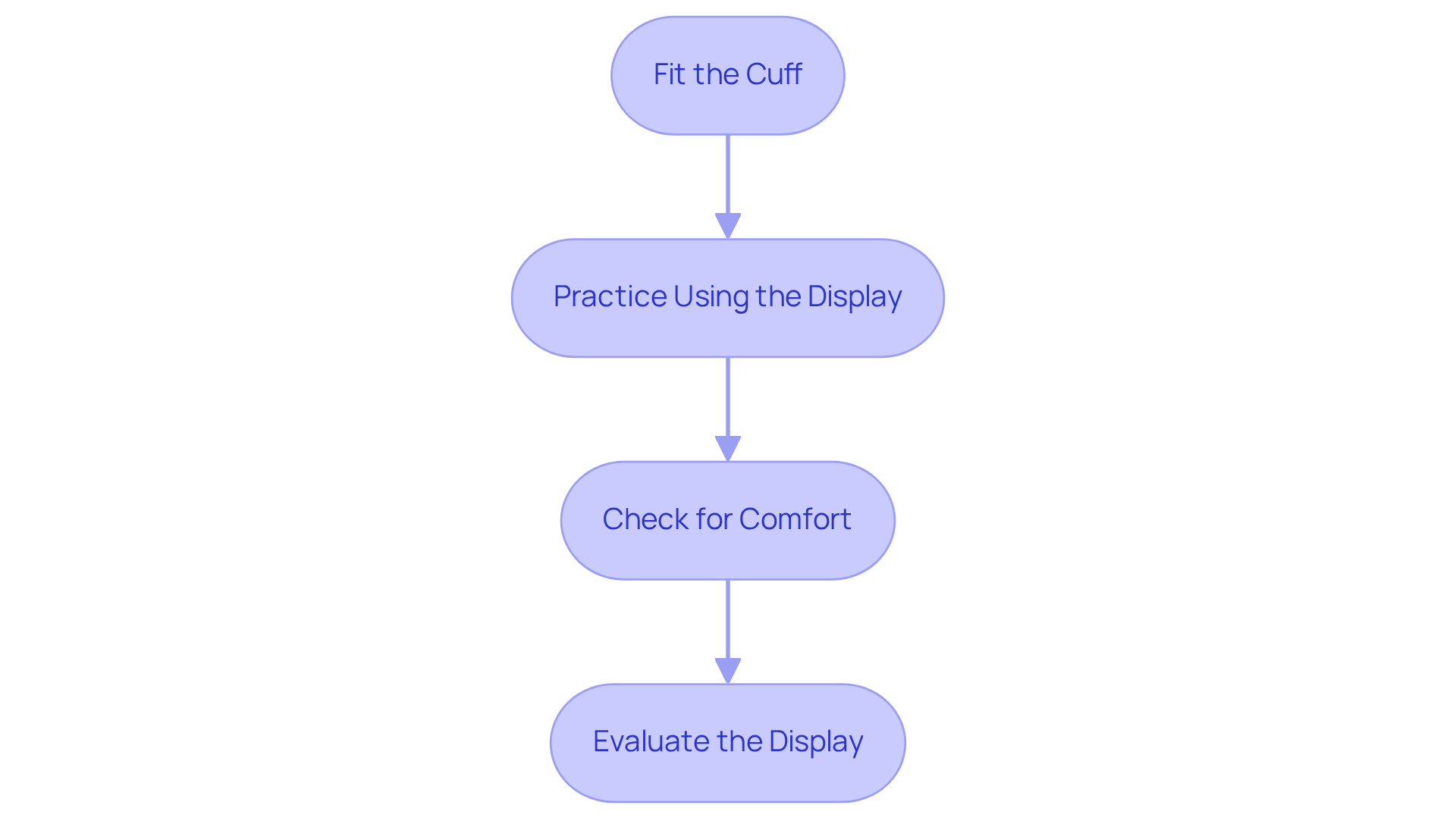
Fit the Cuff: Make sure the cuff fits snugly around the upper arm, but not too tight or loose. Susan Booth, a CR test engineer, reminds us that "an ill-fitting cuff can produce inaccurate results." If possible, let the individual try it on to see how it feels.
-
Practice Using the Display: Help the individual get familiar with how the display works. Walk them through the process of taking a reading, ensuring they feel confident and understand each step.
-
Check for Comfort: While they take a reading, observe their comfort level. It’s essential that they feel at ease and that the cuff inflates smoothly, without causing any pain or discomfort.
-
Evaluate the Display: Ensure that the display is easy to read from a distance and that the results are clear and understandable.
It’s worth noting that around 6.4% of U.S. adults have arms that are too large for standard cuffs, which can lead to inaccurate readings. By thoroughly testing the easy to use blood pressure monitor for elderly, caregivers can ensure it’s user-friendly and encourages consistent monitoring—an essential part of managing health effectively.
Additionally, user testing for an easy to use blood pressure monitor for elderly individuals is crucial. It helps ensure that these devices truly meet their specific needs, providing peace of mind for both caregivers and those they care for.
Moving Forward with Choose an Easy to Use Blood Pressure
Choosing the right blood pressure monitor for elderly individuals is a vital step in promoting their health and well-being. Caregivers, by understanding the unique needs of seniors, can select devices that prioritize simplicity and comfort. This ensures that elderly users can easily monitor their health without frustration. An easy-to-use blood pressure monitor not only empowers seniors but also brings peace of mind to their caregivers.
It's important to consider the cognitive, physical, and sensory challenges that seniors may face. Features like the following enhance usability:
- Automatic cuff inflation
- Large displays
- One-touch operation
Accuracy and validation of devices are crucial for reliable readings. Taking the time to compare models, read reviews, and test monitors for comfort can significantly improve the user experience.
Ultimately, the goal is to foster independence and confidence in health management for elderly individuals. By prioritizing accessibility and ease of use, caregivers can make informed choices that lead to better health outcomes. Advocating for the needs of seniors in health monitoring is essential, ensuring they have access to the best tools available for managing their well-being.
https://iframe.tely.ai/cta/eyJhcnRpY2xlX2lkIjogIjY5MGJlZWY0ZDQ0YmUwZTAwOWE5OWM0NSIsICJjb21wYW55X2lkIjogIjY4ZWU1ZGNhNzMxNzYyNTU3ZjNjOTVjMSIsICJpbmRleCI6IG51bGwsICJ0eXBlIjogImFydGljbGUifQ==Frequently Asked Questions
What should be considered when choosing a blood pressure monitor for elderly users?
It's important to consider cognitive function, physical limitations, vision impairments, comfort, accuracy, and coverage when selecting a blood pressure monitor for elderly users.
How does cognitive function affect the choice of blood pressure monitors for seniors?
Many seniors face cognitive challenges that make complex instructions difficult, so it's best to opt for devices with simple, intuitive designs, such as those with single-button operation.
What features are important for seniors with physical limitations?
Look for blood pressure monitors that have large buttons and easy-to-read displays to accommodate individuals with arthritis or limited dexterity.
How can vision impairments influence the selection of blood pressure monitors?
Choose monitors with clear, large displays and consider models that offer voice output to read results aloud, which can significantly enhance usability for those with vision challenges.
What should be considered regarding the cuff of the blood pressure monitor?
The cuff should be designed for easy application and removal, fitting comfortably to avoid discomfort during measurements.
Why is accuracy important in blood pressure monitors for elderly users?
Verifying the accuracy of the blood pressure device is essential, as validated equipment provides reliable readings, which is crucial for health management.
How can coverage by Medicare or insurance plans affect the choice of blood pressure monitors?
Caregivers should consider whether the device is covered by Medicare or insurance, as this can greatly influence the affordability of the monitor for elderly individuals.