

For families in our service areas
For families in our service areas, this guide explains caregiving and how non-medical in-home caregiving can support care planning in East Idaho, Treasure Valley & Magic Valley, Northern Wasatch, North Central West Virginia, and Northeast Ohio.
Understanding Your Options
Choosing the right adult care provider for your family can feel overwhelming. It's essential to start by understanding your loved one's specific care needs and preferences. This initial step is crucial, as it lays the foundation for finding the right support.
Next, take the time to research and compare potential providers. Gathering recommendations from trusted sources can be incredibly helpful. As you explore your options, checking credentials is vital to ensure that the providers meet necessary standards.
Conducting interviews allows you to connect personally with potential caregivers, helping you gauge their empathy and understanding. It's also important to review contracts carefully, ensuring that the selected provider aligns with your family member's requirements. This thorough approach fosters a positive caregiving relationship, one built on trust and compassion.
Remember, you are not alone in this journey. Many families face similar challenges, and there are resources available to support you. By taking these steps, you can find a caregiver who not only meets practical needs but also brings warmth and understanding to your loved one's life.
The Importance of Choose the Right Adult Care Provider
Choosing the right adult care provider for a loved one is a decision that carries significant weight. It profoundly impacts the well-being and quality of life of everyone involved. Families often find themselves navigating a myriad of options, each with its own set of needs, preferences, and qualifications. This can lead to feelings of stress and uncertainty.
In this guide, we will explore essential steps to:
- Assess care requirements
- Research potential providers
- Conduct meaningful interviews
- Understand contractual obligations
Our aim is to empower families, leading to a more informed and confident decision-making process.
How can families effectively balance these considerations? It's about finding a caregiver who not only meets practical needs but also fosters a supportive and trusting relationship. Remember, you are not alone in this journey. Many have walked this path, and there are compassionate services ready to support you every step of the way.
Assess Care Needs and Preferences
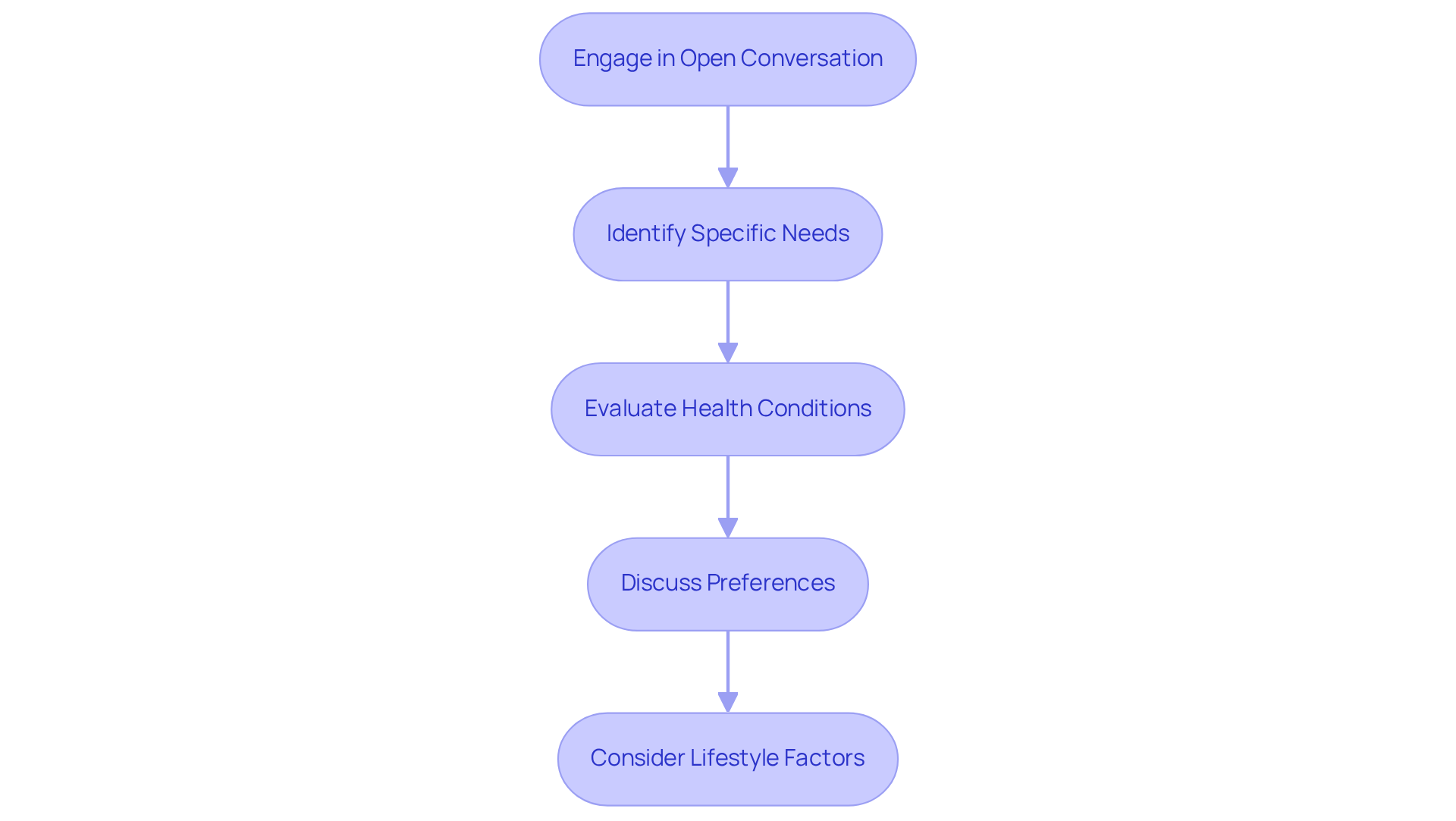
Begin by engaging in an open conversation with your dear one about their needs and preferences. This initial step is crucial in understanding the support an adult care provider may require.
-
Identify Specific Needs: Take a moment to assess whether your loved one needs assistance with daily activities such as bathing, dressing, meal preparation, or medication management. Research indicates that an adult care provider often assists with a variety of tasks, including managing medications for older adults with chronic conditions. For instance, those who serve as an adult care provider for high-need older adults frequently help with medication management, which is essential for maintaining health.
-
Evaluate Health Conditions: It’s important to consider any medical conditions that may require specialized assistance, such as dementia, mobility issues, or chronic illnesses. Research shows that roughly 65 percent of supporters, including adult care providers, of high-need elderly individuals help with medication management, emphasizing the complexity of support needs among seniors receiving home- and community-based services.
-
Discuss Preferences: Open a dialogue about your loved one's preferences regarding support providers. Discuss aspects such as gender, language, and personality traits that would foster a sense of comfort. Geriatric specialists highlight the importance of matching the traits of an adult care provider with the comfort levels of the recipient to enhance the experience of assistance. As one expert pointed out, "Aligning caregiver characteristics with the recipient's preferences can greatly enhance the quality of support."
-
Consider Lifestyle Factors: Reflect on how much independence your loved one wishes to maintain and any activities they enjoy that could be incorporated into their support plan. Individualized support plans that include enjoyable activities, such as gardening or reading, can significantly enhance the quality of life for seniors, making them feel more involved and appreciated.
By thoroughly evaluating these factors, you can create a comprehensive picture of the type of assistance needed, guiding your search for a suitable adult care provider.
Research and Compare Care Providers
Once you have a clear understanding of care needs, it’s time to begin the journey of finding the right adult care provider. This process can feel overwhelming, but you’re not alone. Here are some steps to help you navigate this important decision:
-
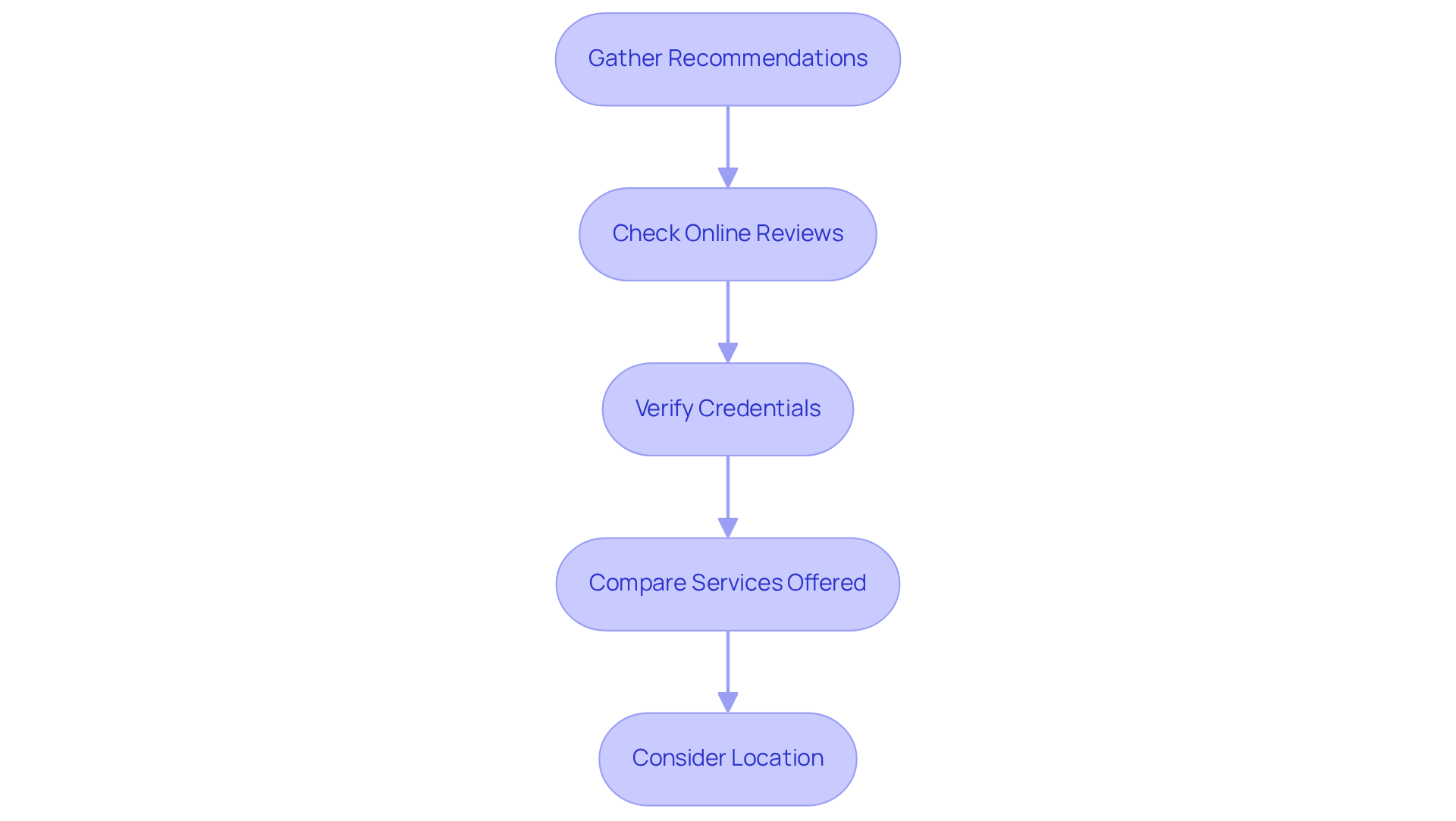
Gather Recommendations: Reach out to friends, family, or healthcare professionals for recommendations based on their experiences. Personal recommendations can provide valuable context and a sense of trust.
-
Check Online Reviews: Explore reviews and testimonials on platforms like Google, Yelp, or specialized caregiving websites. Understanding a provider's reputation is crucial; after all, 90% of readers are influenced by positive reviews, while 86% are deterred by negative ones. This insight can guide you in making informed choices.
-
Verify Credentials: It’s essential to ensure that the providers you consider are licensed and insured. Look for certifications that demonstrate their commitment to quality service. This step can significantly impact the level of assistance provided by an adult care provider for your loved one.
-
Compare Services Offered: Create a list of potential providers and compare the services they offer. Consider availability, types of care, and any additional support like technology integration that enhances communication and care management. Remember, 40% of consumers consult reviews on multiple platforms before deciding, highlighting the need for a thorough evaluation of services.
-
Consider Location: Proximity matters for convenience. Ensuring that caregivers can easily access your relative’s home can facilitate regular visits and oversight by family members, providing peace of mind.
By systematically gathering and comparing this information, including insights from various sources, you can create a shortlist of potential adult care providers that meet your loved one’s specific needs. This approach ensures a more tailored and effective caregiving experience. Keep in mind that 25% of patients leave reviews after a positive or negative experience, underscoring the importance of feedback in the decision-making process. Additionally, recognizing that 41% of support providers report low overall well-being emphasizes the significance of selecting the right caregiving service to alleviate some of that pressure.
Conduct Interviews and Assess Compatibility
After narrowing down your options, it's time to schedule interviews with the shortlisted adult care providers.
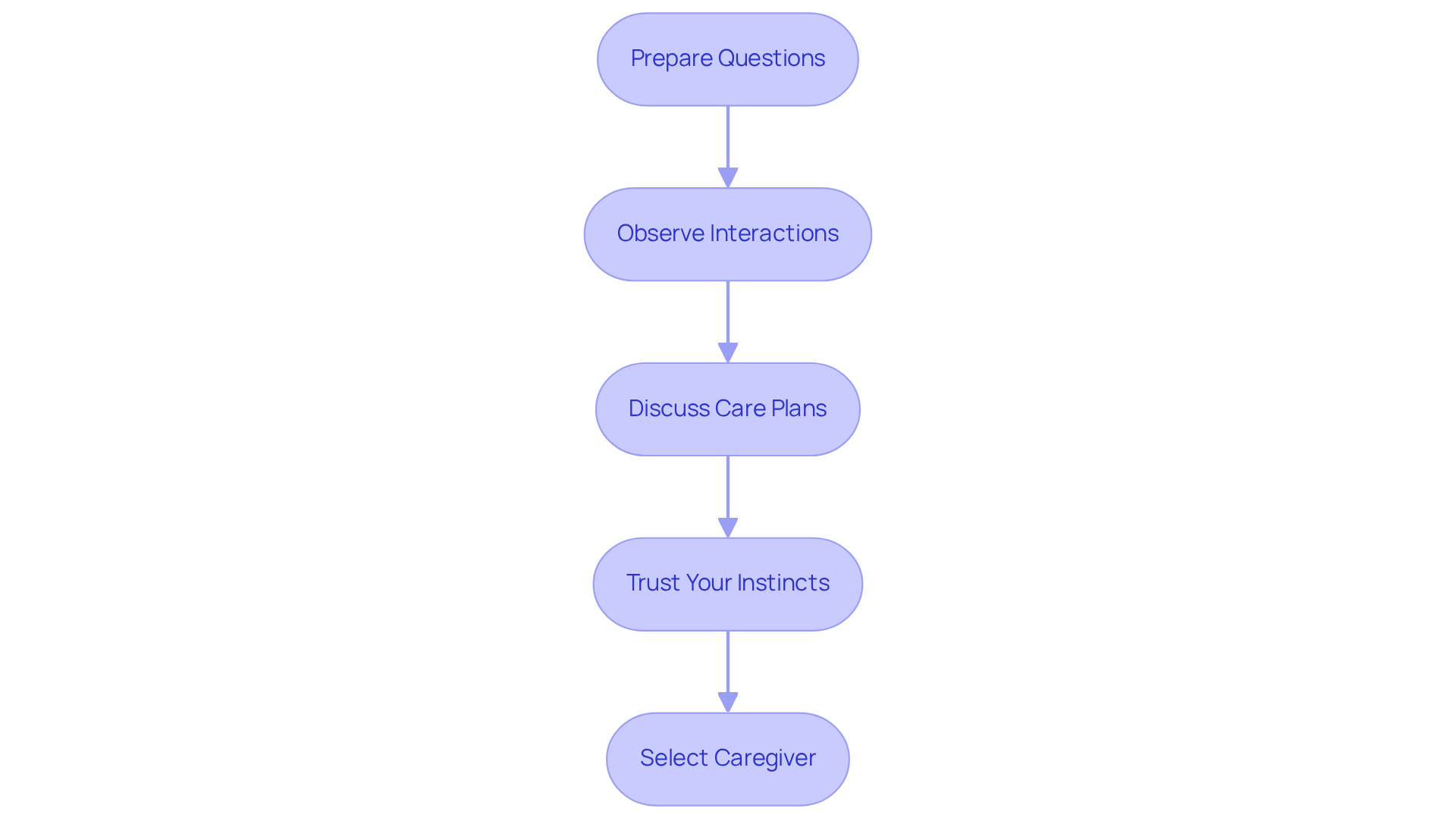
Prepare Questions: Create a list of inquiries that focus on your family member’s specific needs, the support provider’s experience, and their method of care. Consider asking:
- How do you handle emergencies?
- Can you provide examples of how you engage clients in activities?
- What is your approach to communication with family members?
Observe Interactions: Pay close attention to how the provider interacts with your family member during the interview. Look for signs of empathy, patience, and understanding.
Discuss care plans by inquiring with prospective adult care providers about how they would customize their services to accommodate your family member's needs and preferences.
Trust Your Instincts: Reflect on how comfortable your loved one feels with the support person. Remember, compatibility is key to a successful caregiving relationship.
This step ensures that you select a caregiver who not only possesses the right skills but also fosters a positive and trusting relationship with your loved one.
Review Contracts and Understand Terms of Service
Before finalizing your choice, it’s essential to take a moment to review the contract and terms of service. This step is vital for ensuring a smooth caregiving experience through the support of an adult care provider for your loved one.
-
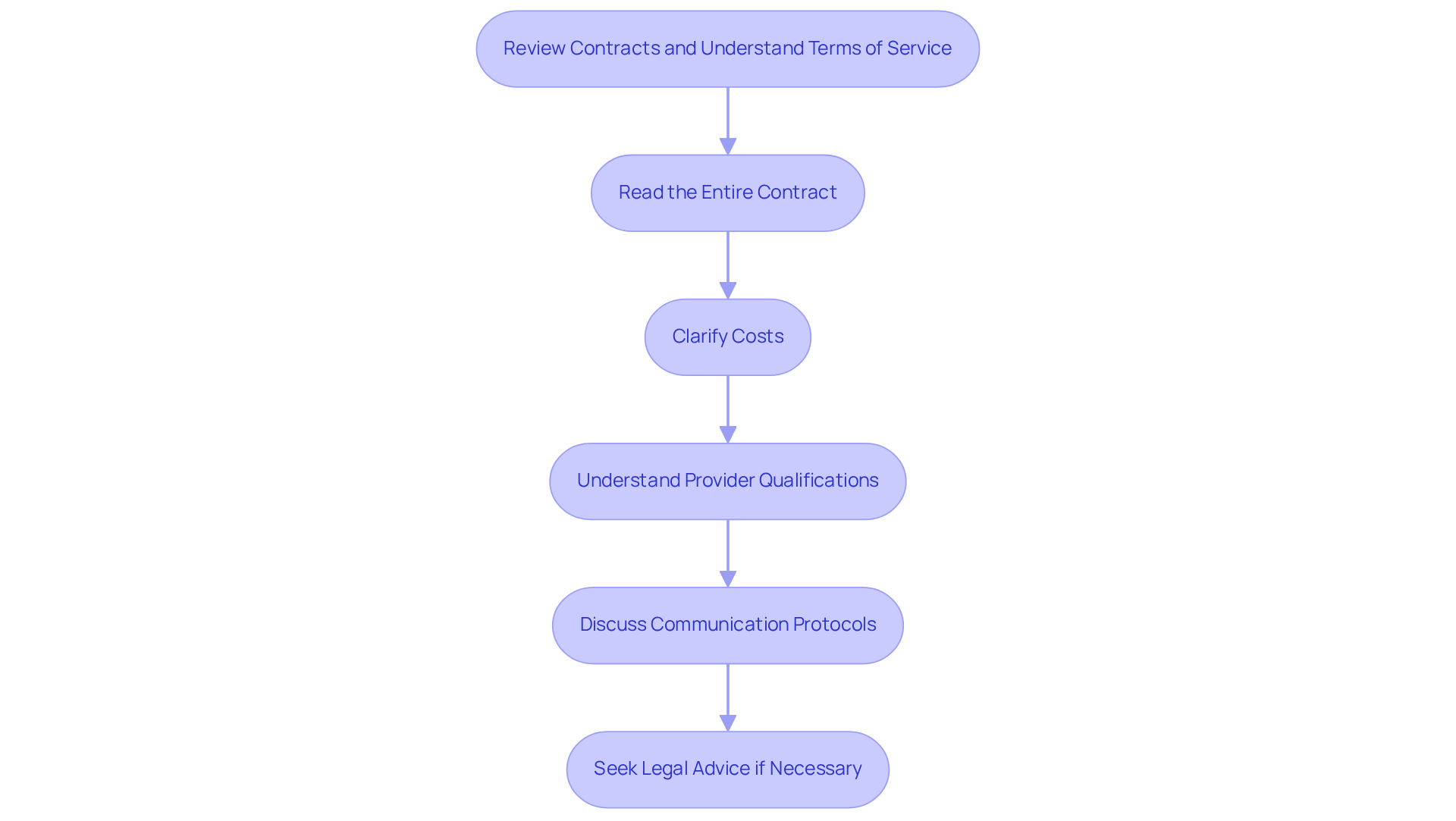
Read the Entire Contract: It’s important to carefully examine all sections, including payment terms, cancellation policies, and service guarantees. It is crucial for an adult care provider to understand these components. Many individuals aged 65 and above mistakenly believe that Medicare covers long-term support, highlighting the need for clarity regarding financial responsibilities.
-
Clarify Costs: Don’t hesitate to ask about any additional fees that might not be included in the base rate, such as transportation or specialized services. With the average expense of long-term assistance provided by an adult care provider reaching approximately $120,900 each year, grasping the complete financial picture is essential.
-
Understand Provider Qualifications: Ensure that the contract specifies the qualifications and training of the caregivers assigned to your loved one. This ensures that your family member receives the appropriate level of support, as the expertise of the adult care provider directly impacts the quality of care.
-
Discuss Communication Protocols: It’s vital that the contract outlines how communication will take place between the caregiver, family, and agency. Clear communication protocols, including regular updates and scheduled meetings, foster a collaborative environment and help address any changes in the treatment plan.
-
Seek Legal Advice if Necessary: If any part of the contract feels unclear, consider reaching out to a legal professional who specializes in elder care. This step can provide peace of mind and ensure a solid understanding of your rights and responsibilities.
By thoroughly reviewing the contract, you align all parties involved, leading to a more effective and supportive caregiving experience.
Your Path Forward
Choosing the right adult care provider for a loved one is a pivotal decision, filled with emotional challenges that can weigh heavily on families. It requires careful consideration and thorough evaluation, as this choice profoundly impacts not only the well-being of the individual but also the peace of mind of those who care for them. By following a structured approach that begins with assessing care needs and preferences, families can ensure that the selected provider aligns closely with the specific requirements and comfort levels of their loved ones.
Start by researching and comparing potential care providers. Conduct interviews to assess compatibility and meticulously review contracts and terms of service. Each step plays a critical role in ensuring that the chosen provider not only meets the necessary qualifications but also fosters a trusting and supportive relationship with the individual receiving care. Gathering recommendations, checking credentials, and clarifying costs are essential actions that empower families to make informed decisions, prioritizing quality and personalized care.
Ultimately, the significance of selecting the right adult care provider cannot be overstated. This choice impacts the loved one’s quality of life and brings reassurance to the family. Taking the time to engage in this process, asking the right questions, and understanding the nuances of care contracts will lead to a more positive caregiving experience. Remember, you are not alone in this journey. By equipping families with knowledge and the right tools, we can ensure that their loved ones receive the compassionate and competent care they truly deserve.
https://iframe.tely.ai/cta/eyJhcnRpY2xlX2lkIjogIjY4ZmQ2NTBkMjFlYzg0YThmMmY0NGRkMyIsICJjb21wYW55X2lkIjogIjY4ZWU1ZGNhNzMxNzYyNTU3ZjNjOTVjMSIsICJpbmRleCI6IG51bGwsICJ0eXBlIjogImFydGljbGUifQ==Frequently Asked Questions
What is the first step in assessing care needs for a loved one?
The first step is to engage in an open conversation with your loved one about their needs and preferences, which is crucial for understanding the support they may require.
What specific daily activities might an adult care provider assist with?
An adult care provider may assist with daily activities such as bathing, dressing, meal preparation, and medication management.
Why is medication management important for older adults?
Medication management is essential for maintaining health, especially for older adults with chronic conditions, as many adult care providers help manage medications.
What health conditions should be considered when evaluating care needs?
It is important to consider medical conditions such as dementia, mobility issues, or chronic illnesses, as these may require specialized assistance.
How significant is the role of preferences in choosing a support provider?
Discussing preferences regarding gender, language, and personality traits of support providers is important, as aligning caregiver characteristics with the recipient's preferences can enhance the quality of support.
What lifestyle factors should be considered when creating a support plan?
Consider how much independence your loved one wishes to maintain and any activities they enjoy, as incorporating enjoyable activities into their support plan can significantly enhance their quality of life.
How can a comprehensive evaluation of care needs assist in finding a suitable provider?
By thoroughly evaluating needs, preferences, and lifestyle factors, you can create a comprehensive picture of the type of assistance required, guiding your search for a suitable adult care provider.