4 Steps to Choose the Right At Home Caretaker for Your Loved One
For families in our service areas
For families in our service areas, this guide explains home care and how non-medical in-home caregiving can support care planning in East Idaho, Treasure Valley & Magic Valley, Northern Wasatch, North Central West Virginia & Southwestern Pennsylvania, and Northeast Ohio.
Understanding Choose the Right At Home Caretaker
Choosing the right at-home caretaker for a loved one is a critical decision that can significantly impact their quality of life. Families often face the challenge of navigating various options and assessing specific needs, which can be overwhelming. This guide provides a structured approach to selecting the ideal caregiver, empowering families to make informed decisions.
The emotional weight of this choice can be heavy, especially when considering the unique requirements of each individual. Balancing these feelings with practical steps is essential. Families need to ensure their loved ones receive the compassionate support they deserve.
To effectively address this challenge, consider the following actionable solutions:
- Assess specific needs: Identify the unique requirements of your loved one to find a caregiver who truly understands them.
- Research options: Explore various caregiving services and compare their offerings.
- Interview potential caregivers: Engage in conversations to gauge their experience and compatibility.
By following these steps, families can navigate the complexities of caregiver selection with confidence.
Assess Care Needs and Preferences
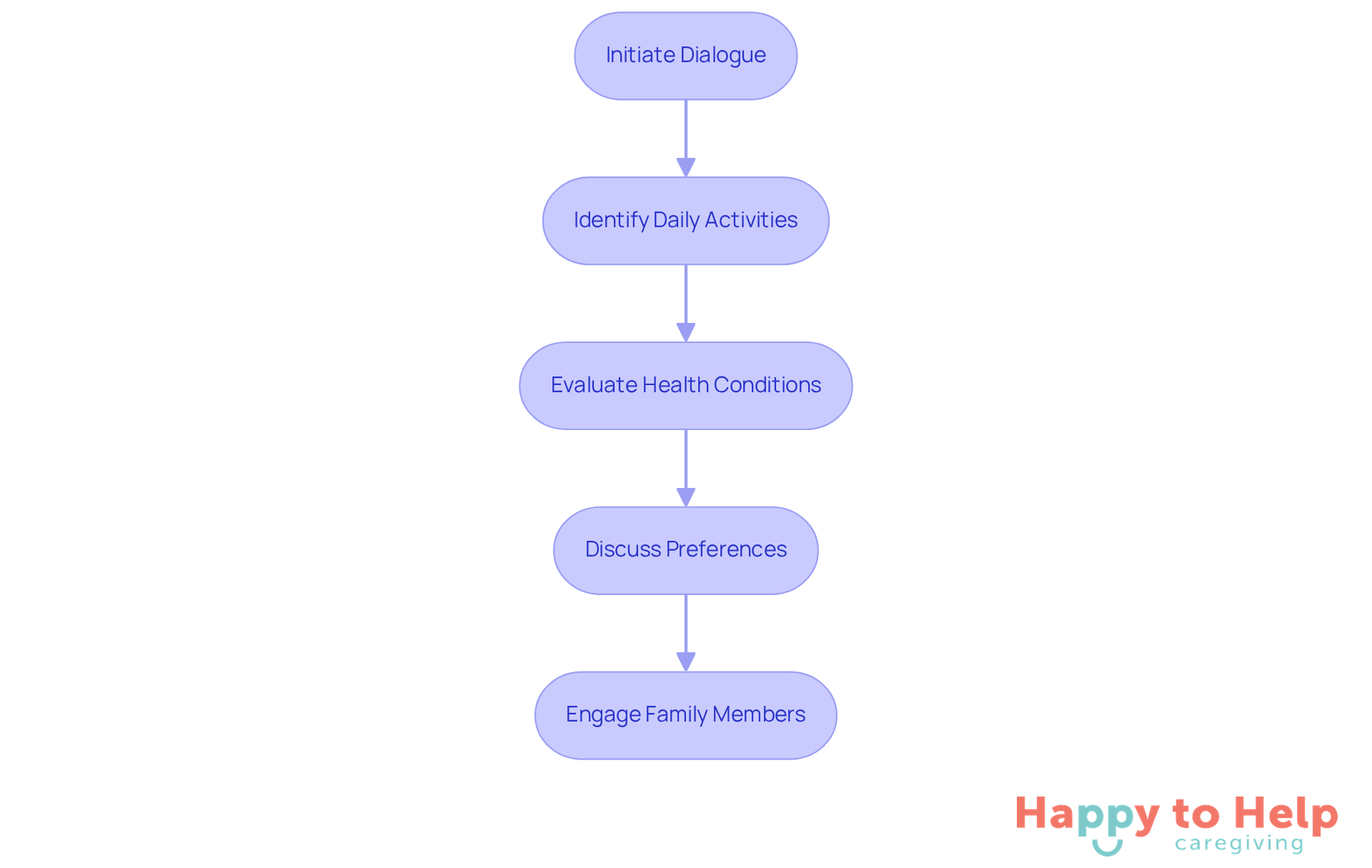
Initiate an open dialogue with your loved one to understand their daily routines, preferences, and specific medical or emotional needs. This is crucial for effective caregiving.
-
Identify Daily Activities: Start by creating a comprehensive list of activities your family member needs assistance with, such as bathing, dressing, meal preparation, and medication management. This foundational step ensures that all necessary support areas are covered.
-
Evaluate Health Conditions: Document any chronic illnesses or disabilities that require specialized care. Research shows that about 80% of seniors have at least one chronic condition, making tailored care essential for their well-being.
-
Discuss Preferences: Involve your significant other in conversations about their choices regarding the gender of the support person, personality traits, and any cultural or language factors. This dialogue is vital for fostering comfort and trust in the caregiving relationship. Geriatric care specialists emphasize that understanding these preferences can significantly enhance the caregiving experience.
-
Engage Family Members: Gather insights from family members who may have important perspectives on the individual's needs and preferences. Collaborative input can enrich the assessment process and ensure a well-rounded understanding of care requirements. Engaging family members aligns with findings that highlight the importance of social engagement for older adults, which can lead to improved mental and physical health.
This comprehensive assessment will help you find a caregiver who matches your family member's unique needs, ultimately enhancing their quality of life.
Research Caregiving Services and Options
Finding the right caregiving services can be a daunting task for families. With various options available, it’s crucial to identify the specific needs of your loved one.
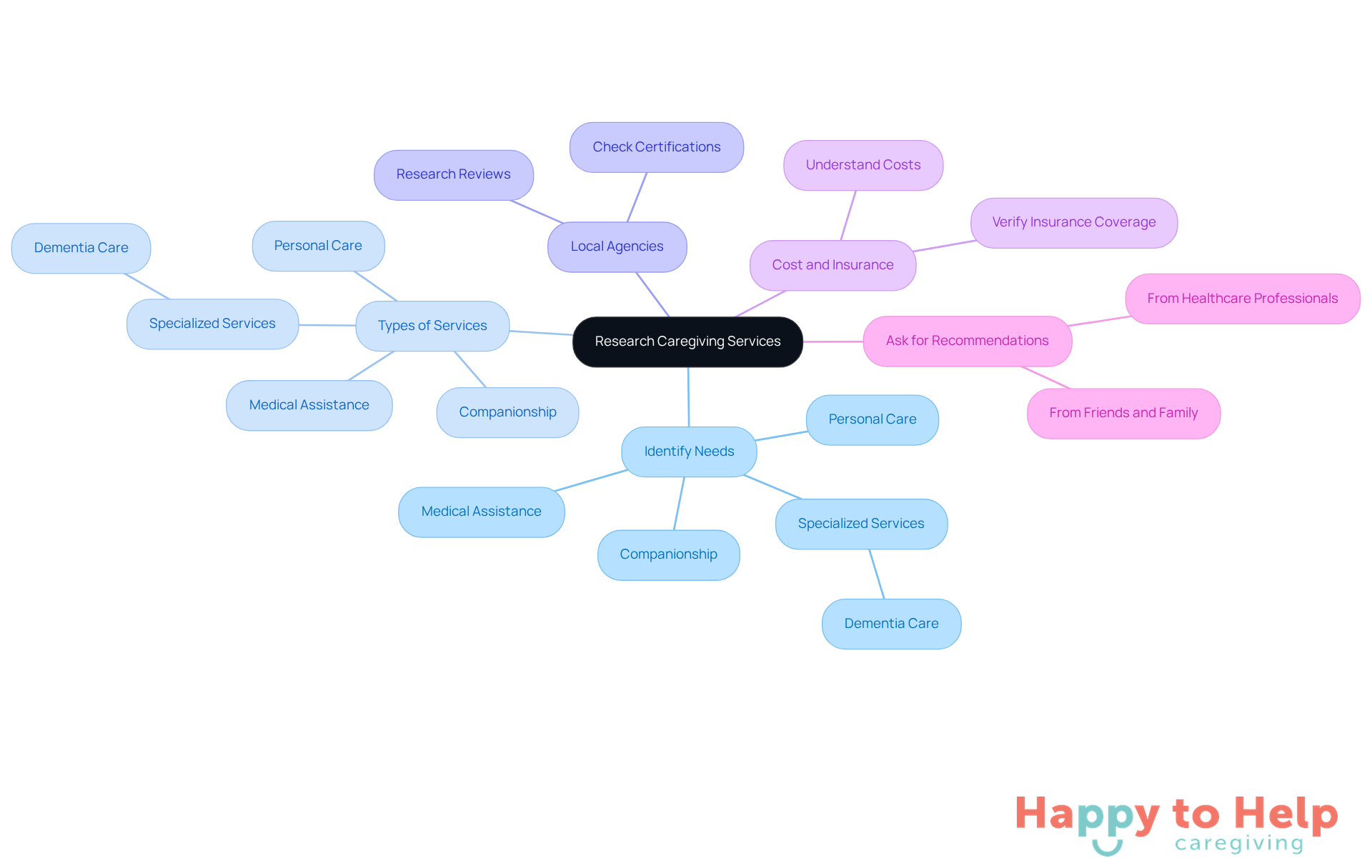
Types of Services: Start by determining whether your family member requires companionship, personal care, medical assistance, or specialized services like dementia care. Understanding these needs is the first step in ensuring they receive the appropriate support.
Local Agencies: Next, look for reputable caregiving agencies in your area. Research their reviews, ratings, and any certifications they may hold. This will help you gauge their reliability and quality of service.
Cost and Insurance: It's also important to understand the costs associated with different services. Verify if your family member’s insurance covers any of these expenses, as this can significantly impact your choices.
Ask for Recommendations: Don’t hesitate to seek recommendations from healthcare professionals, friends, or family who have experience with caregiving services. Their insights can guide you toward trustworthy options.
By creating a list of potential agencies and services that meet your family member's requirements, you can make a more informed decision, ensuring they receive the care they need.
Interview and Evaluate Potential Caregivers
When it comes to finding the right caregiver for your loved one, the process can be daunting. Many families struggle with the challenge of selecting someone who not only meets their loved one's needs but also provides quality care. This can lead to stress and uncertainty during an already difficult time.
To tackle this issue, follow these essential steps:
-
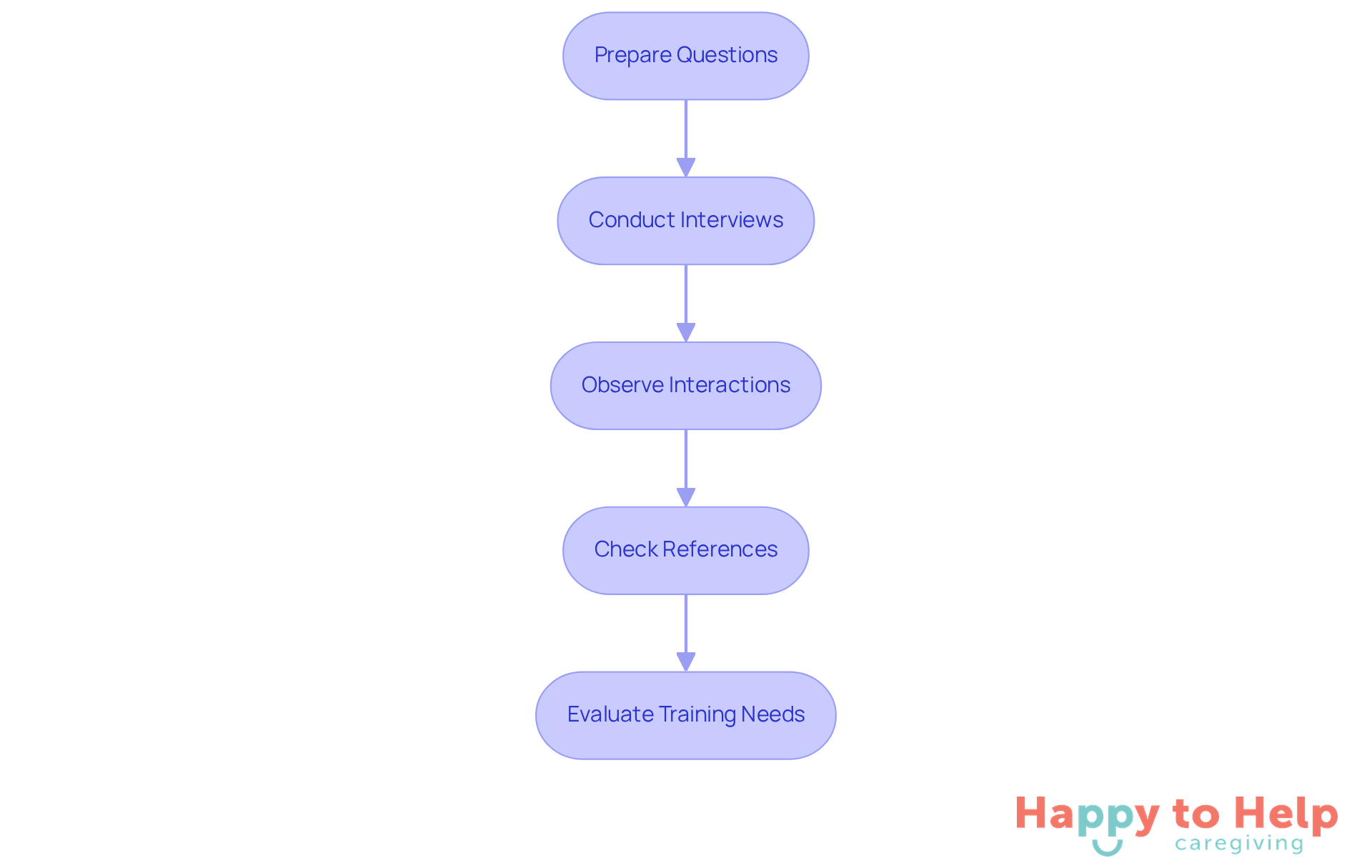
Prepare Questions: Start by creating a comprehensive list of questions that address the caregiver's experience, training, and caregiving philosophy. Key inquiries might include:
- What specific experience do you have with [specific needs]?
- How do you typically handle emergencies?
- Can you provide references from previous clients?
-
Conduct Interviews: Arrange interviews with several candidates to compare their responses and overall demeanor. This will help you assess their suitability for your loved one’s unique needs.
-
Observe Interactions: If possible, observe how the provider interacts with your loved one during the interview. Look for signs of empathy, effective communication, and a genuine connection-qualities that are crucial for a successful caregiving relationship.
-
Check References: After narrowing down your choices, contact references to gather information about the individual's reliability, professionalism, and quality of care provided to former clients.
Incorporating statistics can further highlight the importance of this process. For instance, more than 50 percent of family supporters of Medicare beneficiaries reported that they would benefit from training. This underscores the need to evaluate support training during the selection process. As Shannon Berthiaume, VP of Marketing at CareAcademy, states, "Effective training for support staff is crucial for guaranteeing quality care and enhancing patient outcomes."
By following this thorough evaluation process, you empower yourself to choose a provider who is not only qualified but also aligns well with your loved one's needs and preferences. Additionally, understanding the challenges caregivers face, such as those posed by climate-related disasters, can provide context on the importance of selecting someone who is well-prepared to handle various situations.
Create a Personalized Care Plan
For an at home caretaker, creating a personalized care plan can be a daunting task, often leading to stress and uncertainty. Without a structured approach, caregivers may struggle to meet the evolving needs of their loved ones, which can impact both care quality and family peace of mind.
To address this challenge, follow these actionable steps:
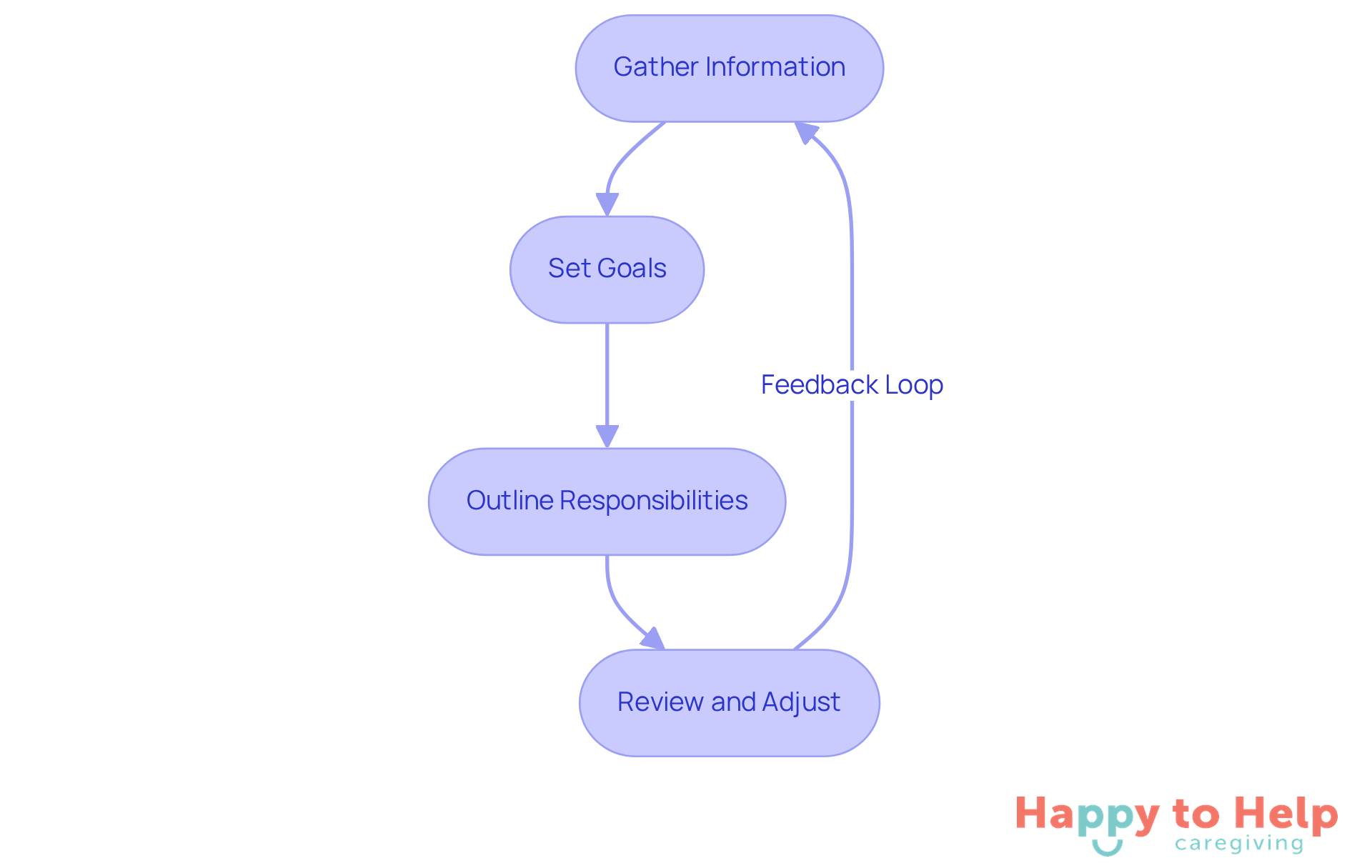
- Gather Information: Compile all relevant information from the assessment phase, including medical history, daily routines, and preferences.
- Set Goals: Define clear, achievable goals for the care plan, such as improving mobility, enhancing social interaction, or managing medications effectively.
- Outline Responsibilities: Specify the individual’s responsibilities, including daily tasks, communication protocols, and emergency procedures.
- Review and Adjust: Schedule regular check-ins to evaluate the care plan and make modifications as needed based on your family member's evolving needs.
A well-structured care plan not only guides the at home caretaker but also offers peace of mind for family members, ensuring that your loved one receives the best possible care.
Key Takeaways for Caregivers
Choosing the right at-home caretaker for a loved one can be a daunting task. Families often face the challenge of ensuring their loved ones receive the appropriate support tailored to their unique situations. This process requires careful consideration and a structured approach.
To tackle this issue, families should:
- Start with an open dialogue to identify daily activities and preferences.
- Conduct a comprehensive evaluation of caregiving services and options.
- Interview potential caregivers to gauge their suitability.
- Check references to confirm their reliability.
Crafting a personalized care plan is a vital step. This plan not only clarifies responsibilities but also adapts to the evolving needs of the individual requiring care. By prioritizing open communication and thorough evaluation, families can find the right caregiver-one who will provide compassionate and competent care.
In conclusion, the journey to find the right at-home caretaker is about more than just meeting basic needs; it’s about fostering a supportive environment that enhances the quality of life for loved ones. Families are encouraged to take a proactive stance in this process, ensuring that each step is thoughtfully executed. By following these steps, families can enrich the lives of both the caregiver and the individual receiving care.
https://iframe.tely.ai/cta/eyJhcnRpY2xlX2lkIjogIjY5MjNiYmZiZjA2NjI2NmZhOWRjOTE3ZSIsICJjb21wYW55X2lkIjogIjY4ZWU1ZGNhNzMxNzYyNTU3ZjNjOTVjMSIsICJpbmRleCI6IG51bGwsICJ0eXBlIjogImFydGljbGUifQ==Frequently Asked Questions
Why is it important to assess care needs and preferences?
Assessing care needs and preferences is crucial for effective caregiving as it helps understand daily routines, specific medical or emotional needs, and ensures that all necessary support areas are covered.
What daily activities should be included in the assessment?
The assessment should include a comprehensive list of activities such as bathing, dressing, meal preparation, and medication management that the family member needs assistance with.
How can health conditions impact the caregiving process?
Documenting any chronic illnesses or disabilities is essential because about 80% of seniors have at least one chronic condition, making tailored care necessary for their well-being.
What factors should be discussed regarding the preferences of the individual receiving care?
Conversations should include preferences about the gender of the support person, personality traits, and any cultural or language factors, as understanding these can significantly enhance the caregiving experience.
Why is it beneficial to engage family members in the assessment process?
Engaging family members can provide important insights and perspectives on the individual's needs and preferences, leading to a well-rounded understanding of care requirements and improving the individual's mental and physical health through social engagement.
How does a comprehensive assessment influence caregiver selection?
A comprehensive assessment helps find a caregiver who matches the family member's unique needs, ultimately enhancing their quality of life.
List of Sources
- Assess Care Needs and Preferences
- Through Early Discussions About Elder Care, Doctors Can Empower Seniors to Age in Place - MedCity News (https://medcitynews.com/2024/11/through-early-discussions-about-elder-care-doctors-can-empower-seniors-to-age-in-place)
- Bridging the Gap in Elderly Care: The Case for Comprehensive In-Home Assessment (https://reachmd.com/news/bridging-the-gap-in-elderly-care-the-case-for-comprehensive-in-home-assessment/2474101)
- New Study Reveals Mixed Results in Advance Care Planning for Older Adults | Johns Hopkins Bloomberg School of Public Health (https://publichealth.jhu.edu/2024/new-study-reveals-mixed-results-in-advance-care-planning-for-older-adults)
- Older adults prioritize social activities, inclusiveness in massive survey assessing what matters most to them (https://mcknights.com/news/older-adults-prioritize-social-activities-inclusiveness-in-massive-survey-assessing-what-matters-most-to-them)
- New Study Finds That While Aging Seniors Prefer In-Home Care, Most Are Critically Underprepared for Future Healthcare Needs | Cross Country Healthcare, Inc. (https://ir.crosscountry.com/news-releases/news-release-details/new-study-finds-while-aging-seniors-prefer-home-care-most-are)
- Research Caregiving Services and Options
- U.S. News Awards Announced | Elder Care Alliance (https://eldercarealliance.org/blog/2025-us-news-best-senior-living-awards)
- Home Care Industry Trends to Watch in 2025 (https://firstlighthomecare.com/blog/home-care-industry-trends)
- Comfort Keepers® Named Among America’s Best Home-Care Services by Newsweek 2025 | Comfort Keepers (https://comfortkeepers.com/articles/media-center/in-the-news/comfort-keepers-named-among-top-home-care-services-for-seniors-disabled-in-americas-best-of-the-best-rankings-from-newsweek)
- U.S. News Releases 2025 Best Senior Living Ratings (https://usnews.com/info/blogs/press-room/articles/2025-04-15/u-s-news-releases-2025-best-senior-living-ratings)
- Caregiving in the US 2025 (https://aarp.org/pri/topics/ltss/family-caregiving/caregiving-in-the-us-2025)
- Interview and Evaluate Potential Caregivers
- Study Examines Dementia Caregiver Experiences and Preparedness (https://ysph.yale.edu/news-article/study-examines-dementia-caregiver-experiences-and-preparedness)
- Research: Caregiver Training Improves Skills & Knowledge of Alzheimer's, Study Shows (https://advancecaregivers.org/caregiver-training-improves-skills-knowledge-of-alzheimers-study-shows)
- CareAcademy Announces Innovative Research Initiative with the Center for Community Health & Evaluation of Kaiser Permanente Washington to Evaluate Impact of Caregiver Training on Health Outcomes (https://businesswire.com/news/home/20250506036771/en/CareAcademy-Announces-Innovative-Research-Initiative-with-the-Center-for-Community-Health-Evaluation-of-Kaiser-Permanente-Washington-to-Evaluate-Impact-of-Caregiver-Training-on-Health-Outcomes)
- The ROI of Caregiver Training (https://homehealthcarenews.com/2024/01/the-roi-of-caregiver-training)
- Family Caregivers Deserve Recognition — Medicare Is Starting to Listen (https://commonwealthfund.org/blog/2025/family-caregivers-deserve-recognition-medicare-starting-to-listen)
- Create a Personalized Care Plan
- How a Personalized Care Plan Makes Living with Chronic Conditions Easier | Dedicated Senior Medical Center (https://dedicated.care/articles/how-personalized-care-plan-makes-living-chronic-conditions-easier)
- Developing Customized Care Plans for Seniors - New Wave Home Care (https://newwavehomecare.com/developing-customized-care-plans-for-seniors)
- Customized Care at Home: The Benefits of Personalized Care Plans - VNA Health Group (https://vnahg.org/customized-care-at-home-the-benefits-of-personalized-care-plans)
- How Personalized Care Plans Improve Quality of Life for Seniors (https://seniorcarecompanions.com/personalized-care-plans-quality-of-life-for-seniors)
- Dr Melissa O'Connor Discusses Tips on Creating Personalized Care Plans for Older Adults in Home Health | AJMC (https://ajmc.com/view/dr-melissa-o-connor-discusses-tips-on-creating-personalized-care-plans-for-older-adults-in-home-health)