

For families in our service areas
For families in our service areas, this guide explains home care and how non-medical in-home caregiving can support care planning in East Idaho, Treasure Valley & Magic Valley, Northern Wasatch, North Central West Virginia, and Northeast Ohio.
Why Effectively Pay for Home Care Services Matters
Navigating the financial landscape of home care services presents a significant challenge for many families. The costs associated with assistance can vary widely based on individual needs and locations, leaving families feeling overwhelmed. This issue is particularly pressing, as nearly half of Americans over 65 will require some form of long-term care, yet many are unprepared for the financial implications.
How can families effectively manage these costs? It’s essential to ensure that loved ones receive the care they need without falling into financial distress. To tackle this problem, families should:
- Assess their financial situation.
- Explore various funding options available to them.
- Create a manageable payment plan for home care services.
This approach is crucial in alleviating financial stress and ensuring quality care.
Understand Home Care Costs and Services
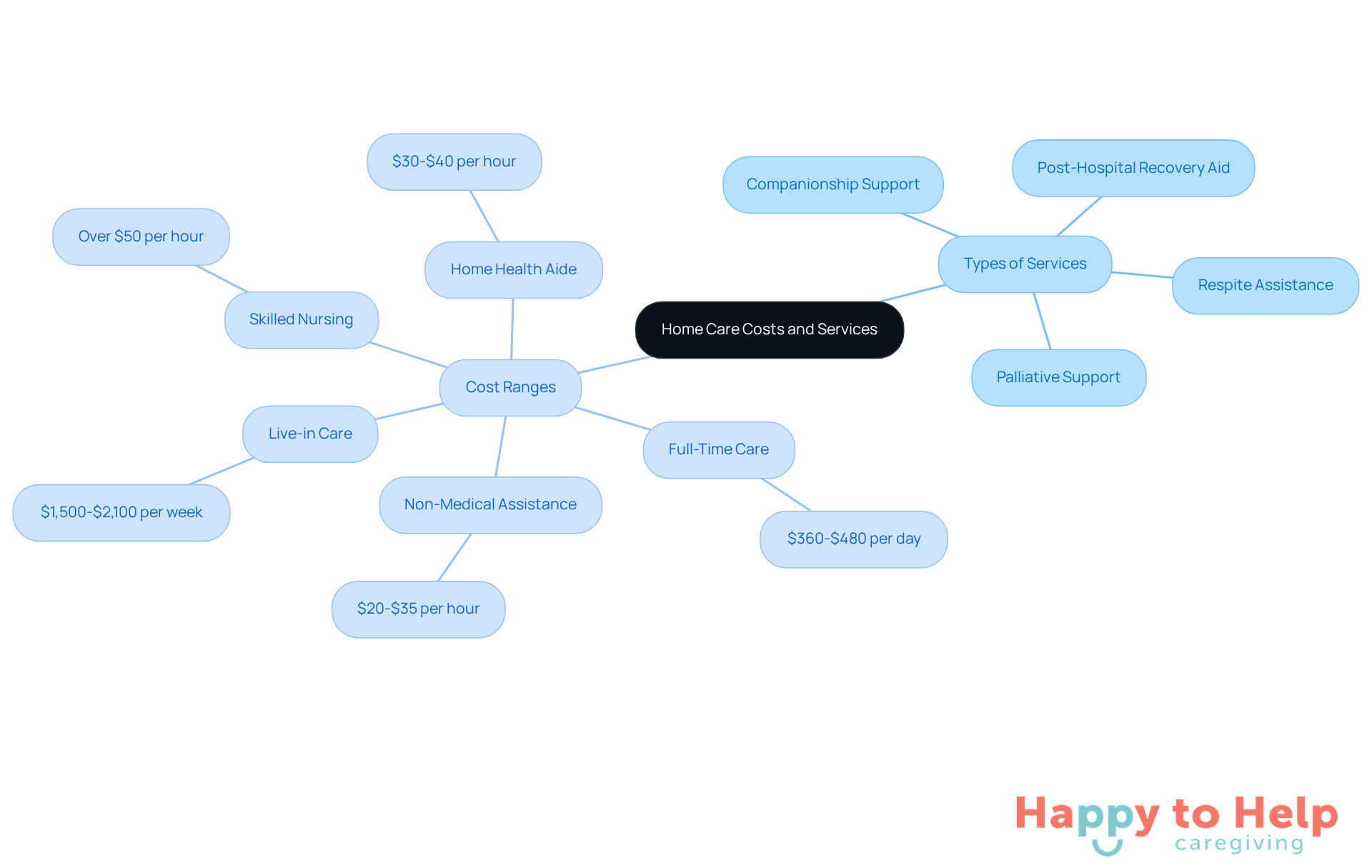
The expenses associated with paying for home care can vary significantly based on the type of assistance needed, the level of care required, and geographical location. This presents a problem for many families who are paying for home care while trying to navigate these costs. For instance, non-medical home assistance, such as companionship and personal support, typically ranges from $20 to $35 per hour, while skilled nursing can exceed $50 per hour. This disparity can create confusion and financial strain for caregivers, especially when they are paying for home care.
Moreover, it's concerning that only 42% of Boomers and 35% of Gen X'ers have financially prepared for paying for home care and long-term support. This lack of preparation highlights a major financial blind spot that can lead to unexpected burdens on families, especially when it comes to paying for home care. As Kamilah Williams-Kemp points out, proactive planning is essential to address the financial challenges associated with paying for home care for loved ones.
To address these issues, families should consider the specific offerings provided by organizations like Happy to Help Caregiving. Their services include:
- Companionship support
- Post-hospital recovery aid
- Respite assistance
- Palliative support
All tailored to meet individual needs. Understanding these options can assist families in making informed decisions about paying for home care for their loved ones.
Additionally, exploring community resources such as Meals on Wheels and senior programs can provide affordable or even free assistance. With nearly half of Americans reaching age 65 today expected to require some form of long-term assistance, grasping the nuances of residential support expenses is crucial for effective planning.
Explore Funding Sources for Home Care
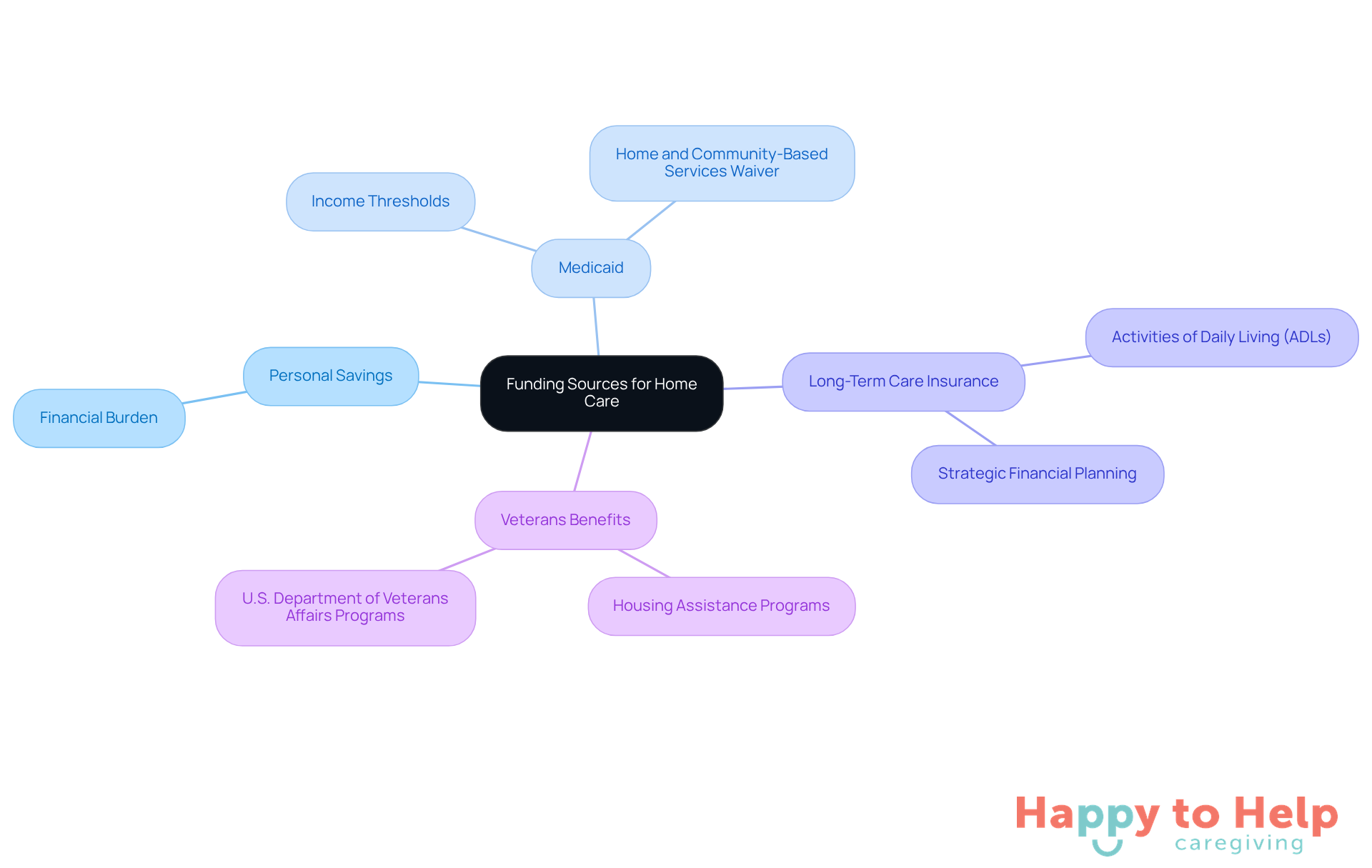
For many households, paying for home care while financing domestic support programs poses a significant challenge. A large percentage rely on personal savings to cover the costs associated with paying for home care, which can create a substantial financial burden. Medicaid serves as a crucial resource for low-income families, offering support for domestic assistance based on income thresholds and state guidelines. Many households successfully utilize Medicaid waivers to access essential services, ensuring their loved ones receive necessary care at home.
Elderly individuals may qualify for long-term care insurance benefits when they can no longer perform two activities of daily living (ADLs) independently. This qualification is vital for families planning for future support needs. Additionally, veterans may access specific benefits through the U.S. Department of Veterans Affairs, which offers programs to assist with housing expenses. Financial consultants often recommend long-term care insurance as a strategic option for families preparing for future needs. As one expert states, 'Long-term insurance can significantly ease the financial burden associated with paying for home care, allowing families to focus on caring for their loved ones rather than worrying about costs.'
To navigate these funding options effectively, families should seek advice from financial consultants or elder support specialists. This proactive approach can help them manage the complexities of financing residential assistance, ensuring they secure the best possible support for their loved ones.
Assess Your Financial Situation and Create a Payment Plan
Managing finances for domestic assistance can be a daunting challenge for caregivers. Without a clear understanding of your financial situation, it’s easy to feel overwhelmed.
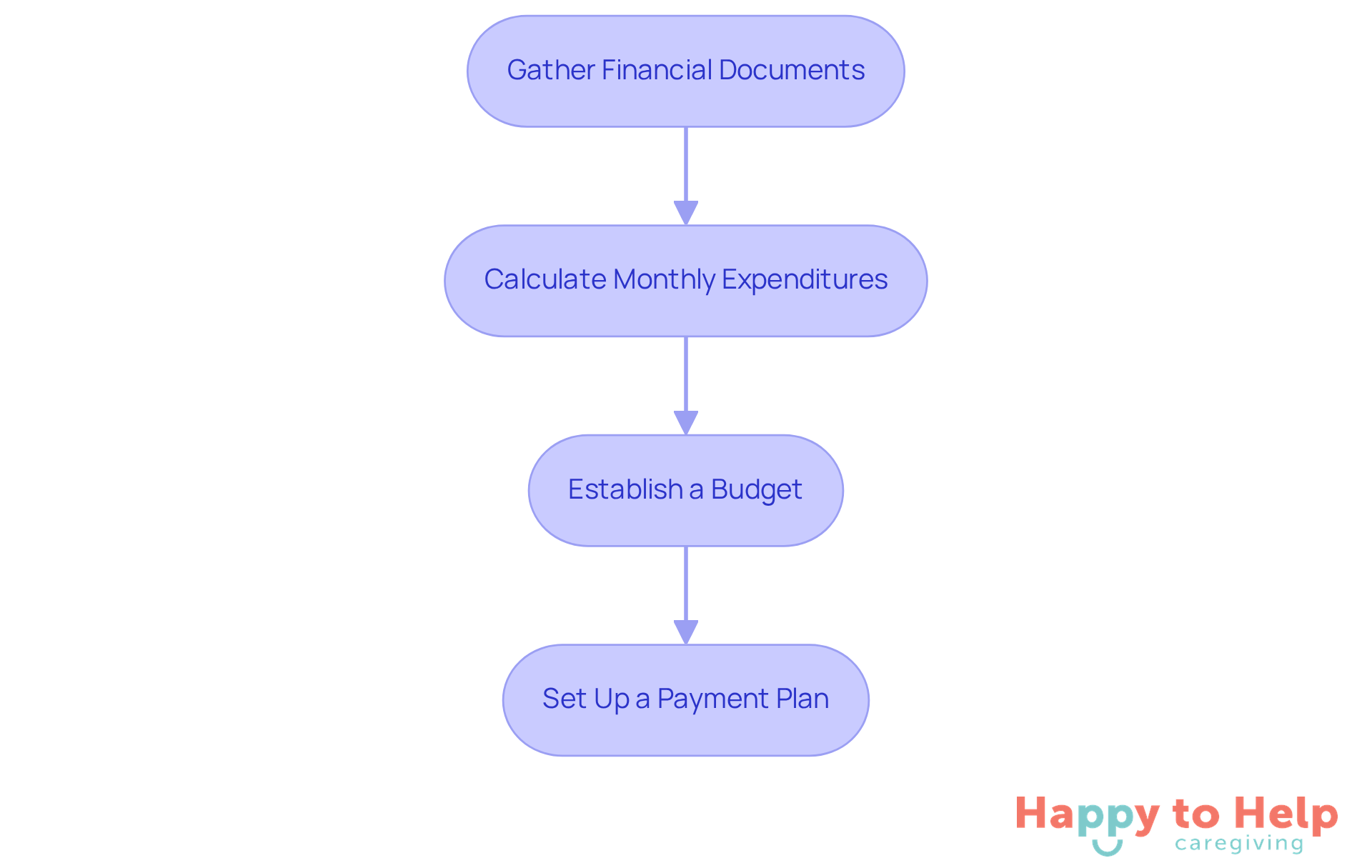
Start by gathering all relevant financial documents, such as income statements, savings accounts, and existing insurance policies. This foundational step is crucial for assessing your financial landscape. Next, calculate your monthly expenditures to determine how much you can allocate for domestic assistance. Establishing a budget that accounts for paying for home care expenses will provide clarity and help you navigate your financial obligations.
Consider setting up a payment plan for paying for home care that outlines how you will cover these costs over time. This could involve utilizing savings, insurance payouts, or exploring other funding sources. By taking these steps, you can create a manageable financial strategy that supports your caregiving responsibilities.
Navigate Application Processes for Financial Assistance
Caregivers often find that paying for home care can be a daunting task when seeking financial support. Many may struggle to navigate the various programs available, such as Medicaid or VA benefits, which can lead to frustration and delays in receiving necessary aid.
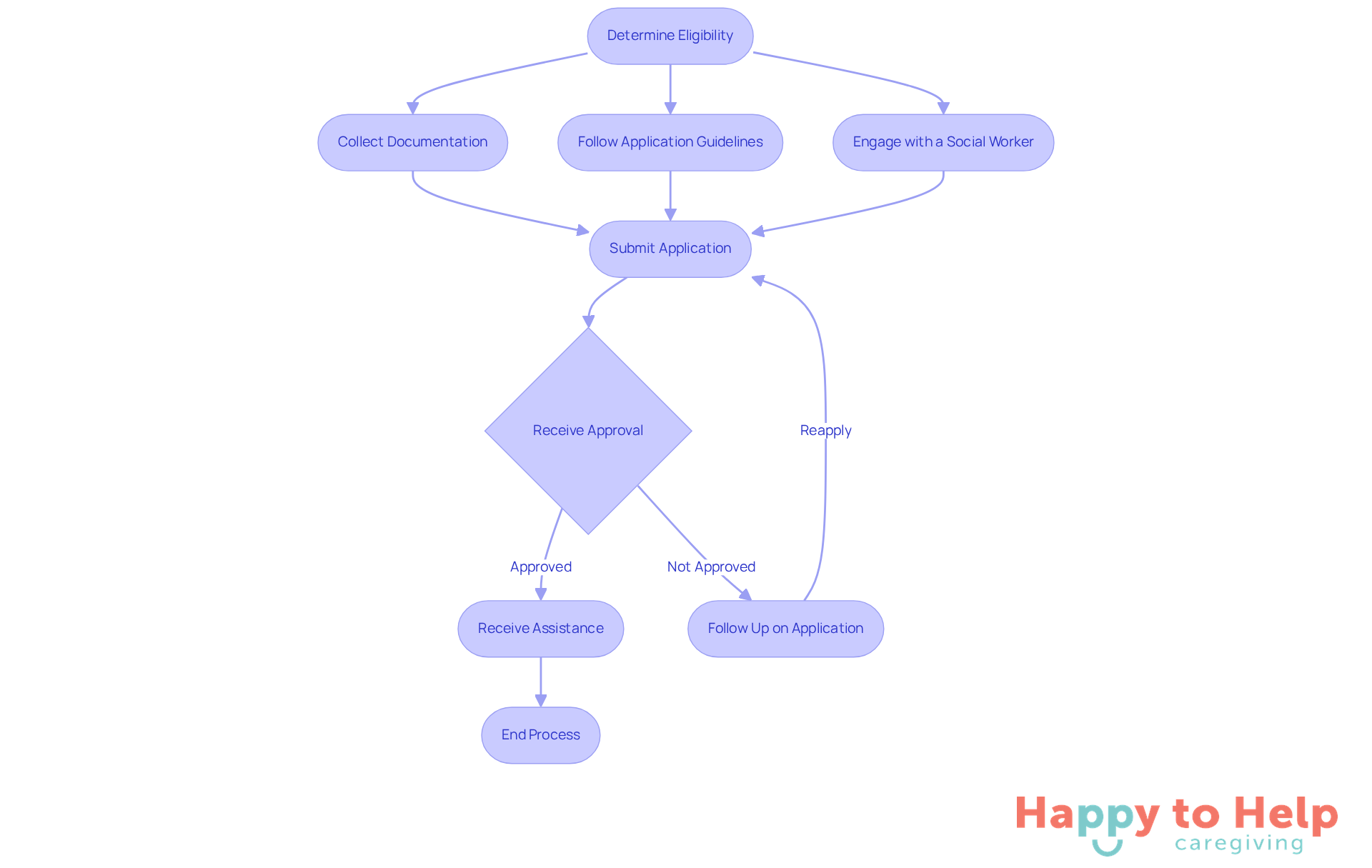
To tackle this issue, start by determining which programs you might be eligible for. Collect essential documentation, including proof of income, medical records, and any other required forms. Each program has its own application process, so adhering to the specific guidelines provided by the respective agency is crucial. For instance, Medicaid applications typically demand comprehensive financial disclosures, while VA benefits applications require verification of military service.
Engaging with a social worker or senior care advisor can be invaluable in navigating these complex processes. They can help ensure that all necessary information is accurately submitted, reducing the likelihood of errors that could delay approval. It's important to note that the average processing time for Medicaid applications can vary, often taking several weeks, so early preparation is key.
Successful examples of Medicaid applications highlight the importance of thorough documentation and adherence to guidelines, which can significantly enhance approval chances. For further assistance, caregivers can reach out to the Caregiver Support Line, available Monday through Friday from 8:00 a.m. to 8:00 p.m. ET, for guidance on navigating these processes.
Key Takeaways for Caregivers
Navigating the complexities of paying for home care services presents a significant challenge for many families. The various costs associated with different types of care - ranging from companionship to skilled nursing - can be overwhelming. With a large portion of the population unprepared for these expenses, the need for proactive financial planning becomes crucial. This step is essential to ensure that loved ones receive the necessary support without incurring overwhelming financial strain.
To alleviate the burden of home care costs, families should explore diverse funding sources. Options such as:
- Medicaid
- Long-term care insurance
- Veteran benefits
can provide much-needed financial relief. Additionally, assessing one’s financial situation and creating a structured payment plan can empower families to manage expenses effectively. Engaging with professionals, including financial consultants and elder care advisors, can further streamline the process of securing financial assistance and navigating application procedures.
Ultimately, addressing the financial aspects of home care is about more than just managing costs; it’s about ensuring dignity and quality of life for those in need of support. By taking proactive steps to understand their options and secure funding, families can focus on what truly matters: providing compassionate care for their loved ones. This approach not only eases financial pressures but also fosters a more supportive environment for both caregivers and recipients, reinforcing the importance of planning ahead for home care needs.
https://iframe.tely.ai/cta/eyJhcnRpY2xlX2lkIjogIjY5MmZiYWIxNThmZDlmMDkwN2JiMTY2OSIsICJjb21wYW55X2lkIjogIjY4ZWU1ZGNhNzMxNzYyNTU3ZjNjOTVjMSIsICJpbmRleCI6IG51bGwsICJ0eXBlIjogImFydGljbGUifQ==Frequently Asked Questions
What factors influence home care costs?
Home care costs vary based on the type of assistance needed, the level of care required, and geographical location.
What is the typical cost range for non-medical home assistance?
Non-medical home assistance, such as companionship and personal support, typically ranges from $20 to $35 per hour.
How much can skilled nursing care cost?
Skilled nursing care can exceed $50 per hour.
How prepared are Boomers and Gen X'ers for home care costs?
Only 42% of Boomers and 35% of Gen X'ers have financially prepared for paying for home care and long-term support.
Why is proactive planning important for families regarding home care?
Proactive planning is essential to address the financial challenges associated with paying for home care for loved ones and to avoid unexpected burdens on families.
What services does Happy to Help Caregiving provide?
Happy to Help Caregiving offers companionship support, post-hospital recovery aid, respite assistance, and palliative support, all tailored to meet individual needs.
What community resources can assist families with home care?
Families can explore community resources such as Meals on Wheels and senior programs, which can provide affordable or even free assistance.
Why is understanding residential support expenses important?
Understanding the nuances of residential support expenses is crucial for effective planning, especially since nearly half of Americans reaching age 65 today are expected to require some form of long-term assistance.
List of Sources
- Understand Home Care Costs and Services
- Home Care Costs in 2025: A State-by-State Guide (https://aplaceformom.com/caregiver-resources/articles/in-home-care-costs)
- Most Americans expect to experience a long-term care event, and nearly 3 in 4 want in-home care if it happens to them - according to Northwestern Mutual Planning & Progress Study (https://news.northwesternmutual.com/2025-10-07-Most-Americans-expect-to-experience-a-long-term-care-event,-and-nearly-3-in-4-want-in-home-care-if-it-happens-to-them-according-to-Northwestern-Mutual-Planning-Progress-Study)
- Home Care Costs in 2025 | NYC Families Pricing Guide (https://allheartcare.com/home-care-costs-in-2025-complete-pricing-guide-for-nyc-families)
- How Much Will Home Care Cost Per Month in 2025? | Home Care agency in New York (https://angelcareny.com/how-much-will-home-care-cost-per-month-in-2025)
- Explore Funding Sources for Home Care
- Medicaid cuts threaten home and community-based care (https://naco.org/news/medicaid-cuts-threaten-home-and-community-based-care)
- National Alliance Urges CMS To Prioritize Home-Based Care In $50B Rural Funding Program (https://homehealthcarenews.com/2025/10/alliance-urges-cms-to-prioritize-home-based-care-in-50b-rural-funding-program)
- How to Pay for Home Care (https://aplaceformom.com/caregiver-resources/articles/pay-for-home-care)
- Medicaid Home Care Cuts Could Cost States $1 Billion Over 5 Years (https://homehealthcarenews.com/2025/10/medicaid-home-care-cuts-could-cost-states-1-billion-over-5-years)
- Tracking the Medicaid Provisions in the 2025 Reconciliation Bill | KFF (https://kff.org/medicaid/tracking-the-medicaid-provisions-in-the-2025-budget-bill)
- Assess Your Financial Situation and Create a Payment Plan
- Rising elder care costs trigger financial strain across generations (https://ksby.com/us-news/rising-elder-care-costs-trigger-financial-strain-across-generations)
- Medicare Home Health Care Could Save $13-17B Per Year (https://caregiveraction.org/medicare-home-health-care)
- Long-term care costs can be a 'huge problem,' experts say. Here's why (https://cnbc.com/2025/05/17/why-long-term-care-costs-can-be-a-huge-problem.html)
- With new budget, home care industry left wanting (https://aol.com/articles/budget-home-care-industry-left-150600419.html)
- Most Americans expect to need long-term care but few are financially ready (https://investmentnews.com/retirement-planning/most-americans-expect-to-need-long-term-care-but-few-are-financially-ready/262513)
- Navigate Application Processes for Financial Assistance
- The Program of Comprehensive Assistance for Family Caregivers | Veterans Affairs (https://va.gov/family-and-caregiver-benefits/health-and-disability/comprehensive-assistance-for-family-caregivers)
- Tips for Applying for Home Care Benefits for Veterans | Right at Home Palm Beach FL (https://rightathome.net/palm-beach-fl/blog/homecare-benefits-for-veterans)
- Navigating Veterans Benefits: Accessing Home Care Through the VA - Caretech (https://caretechinc.com/navigating-veterans-benefits-accessing-home-care-through-the-va)
- New York State Medicaid (https://health.ny.gov/health\_care/medicaid)