For families in our service areas
For families in our service areas, this guide explains home care and how non-medical in-home caregiving can support care planning in East Idaho, Treasure Valley & Magic Valley, Northern Wasatch, North Central West Virginia & Southwestern Pennsylvania, and Northeast Ohio.
Understanding Find a Home Caregiver Near You
Finding the right home caregiver is a critical task that many families face. With nearly 18 million older adults needing assistance with daily activities, the challenge of navigating the selection process can significantly impact the quality of care provided. Families must not only identify suitable candidates but also ensure that these caregivers meet the unique needs and preferences of their loved ones.
This situation can be overwhelming. Families often struggle with assessing their caregiving requirements and finding ideal support in their local area. The implications of this challenge are profound, as the right caregiver can enhance the quality of life for older adults, while the wrong choice can lead to dissatisfaction and inadequate care.
So, how can families effectively tackle this issue? Start by clearly defining your caregiving needs. Consider factors such as:
- The level of assistance required
- The caregiver's experience
- Compatibility with your loved one
Engaging with local resources, such as community centers or online caregiver directories, can also provide valuable insights and options. By taking these steps, families can find the right support that aligns with their specific needs.
Assess Your Home Care Needs
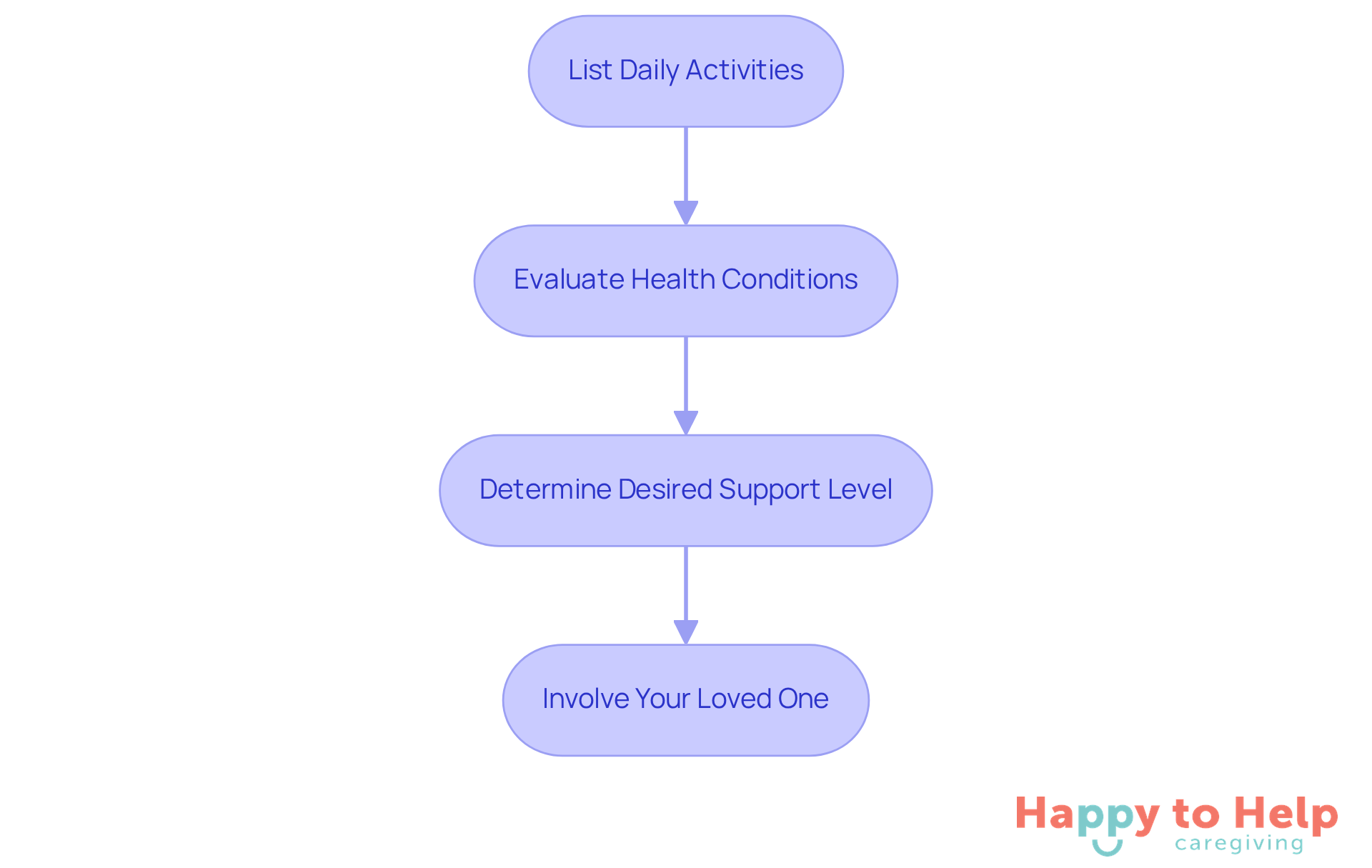
To effectively evaluate your cherished one's caregiving needs, it's essential to start by gathering detailed information about their daily routines, health conditions, and specific requirements. This process can be broken down into several key steps:
-
List Daily Activities: Begin by documenting all activities your loved one needs assistance with, such as bathing, dressing, meal preparation, and medication management. Nearly 18 million older adults report needing help with daily activities, underscoring the significance of this step.
-
Evaluate Health Conditions: Next, identify any medical conditions that require specialized attention, like dementia, mobility issues, or chronic illnesses. Cognitive and emotional states can greatly influence seniors' perceptions of their health and capabilities, making this evaluation crucial. In fact, 45% of respondents highlighted medical assistance as a necessary managed-at-home service, emphasizing the need for thorough health evaluations.
-
Determine Desired Support Level: Assess whether your loved one requires full-time assistance, part-time help, or occasional aid. This decision will help narrow down your options and ensure that the support provided aligns with their lifestyle. With projections indicating that by 2030, 21% of the American population will be at retirement age, understanding support levels is increasingly vital.
-
Involve Your Loved One: Finally, engage in a conversation about their preferences and comfort levels regarding support. This step is crucial for ensuring that the selected caregiver matches their personality and needs, fostering a sense of security and comfort in their environment. Geriatric specialists emphasize that incorporating seniors' preferences into treatment plans can lead to improved outcomes and satisfaction. Additionally, integrating mental health assessments into the evaluation process is becoming essential, not optional.
By following these steps, you can create a personalized evaluation that addresses the unique needs of your loved one, ultimately enhancing their quality of life and well-being. Remember, neglecting to assess care needs can lead to adverse consequences, making thorough evaluations critical.
Research Local Caregiver Options
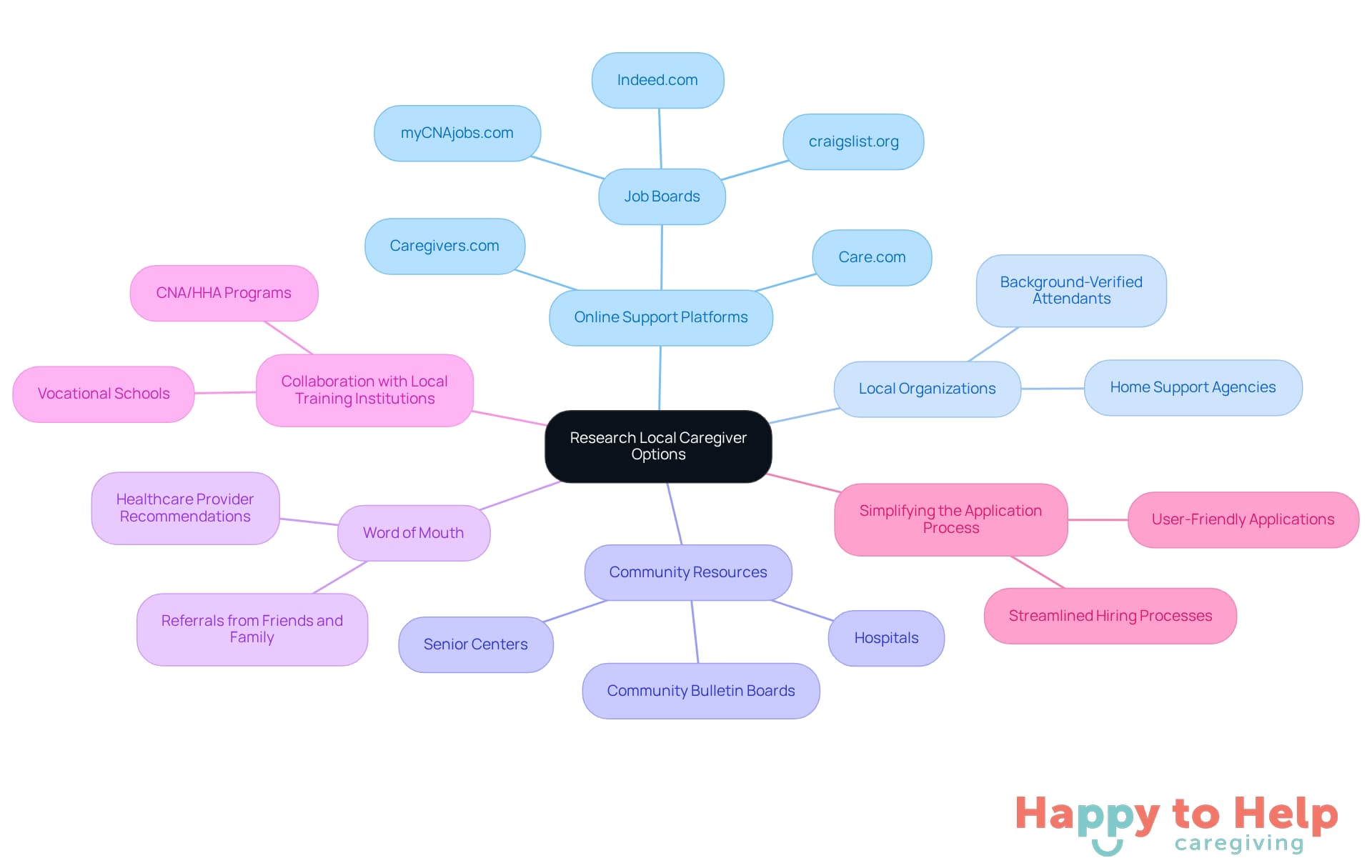
Finding a home caregiver near me can be a daunting task, especially when you consider the multitude of options available. Many people struggle with identifying a reliable home caregiver near me, leading to stress and uncertainty in caregiving situations. Fortunately, there are several valuable resources to help you navigate this process effectively.
-
Online Support Platforms: Websites like Care.com and Caregivers.com are excellent starting points. They allow you to filter providers based on specific needs, location, and budget. In fact, over 50% of support workers hired in 2017 were sourced from online job boards, highlighting the growing trend of utilizing these platforms.
-
Local Organizations: Don’t overlook nearby home support agencies. These organizations offer background-verified attendants and maintain a roster of trained professionals, such as a home caregiver near me, ready to assist. This ensures a higher level of trust and reliability in the care provided.
-
Community Resources: Local senior centers, hospitals, and community organizations can be great sources for recommendations or support registries. Engaging with these resources connects you with individuals already integrated into your community, increasing the chances of finding a suitable home caregiver near me. Additionally, community bulletin boards can be useful for discovering local support roles.
-
Word of Mouth: Referrals from friends, family, or healthcare providers can lead to reliable support providers. Personal recommendations often come from individuals with firsthand experience, enhancing trust in your decision and connecting you with the local community of support providers.
-
Collaboration with Local Training Institutions: Consider reaching out to nearby training institutions or vocational programs. They can be valuable resources for locating newly trained individuals eager to work in the field, broadening your options and connecting you with qualified candidates.
-
Simplifying the Application Process: When evaluating providers, look for agencies that streamline the application process. A user-friendly application can make it easier for support providers to apply and for you to find the right match quickly.
Interview and Evaluate Caregivers
Selecting the right home caregiver near me for your loved one can be a daunting task, especially when considering the significant issue of family member burnout. In fact, 40% of relatives in the U.S. report symptoms of burnout, which can directly impact the quality of care provided. This makes it crucial to not only find a suitable home caregiver near me but also to ensure that they are well taken care of.
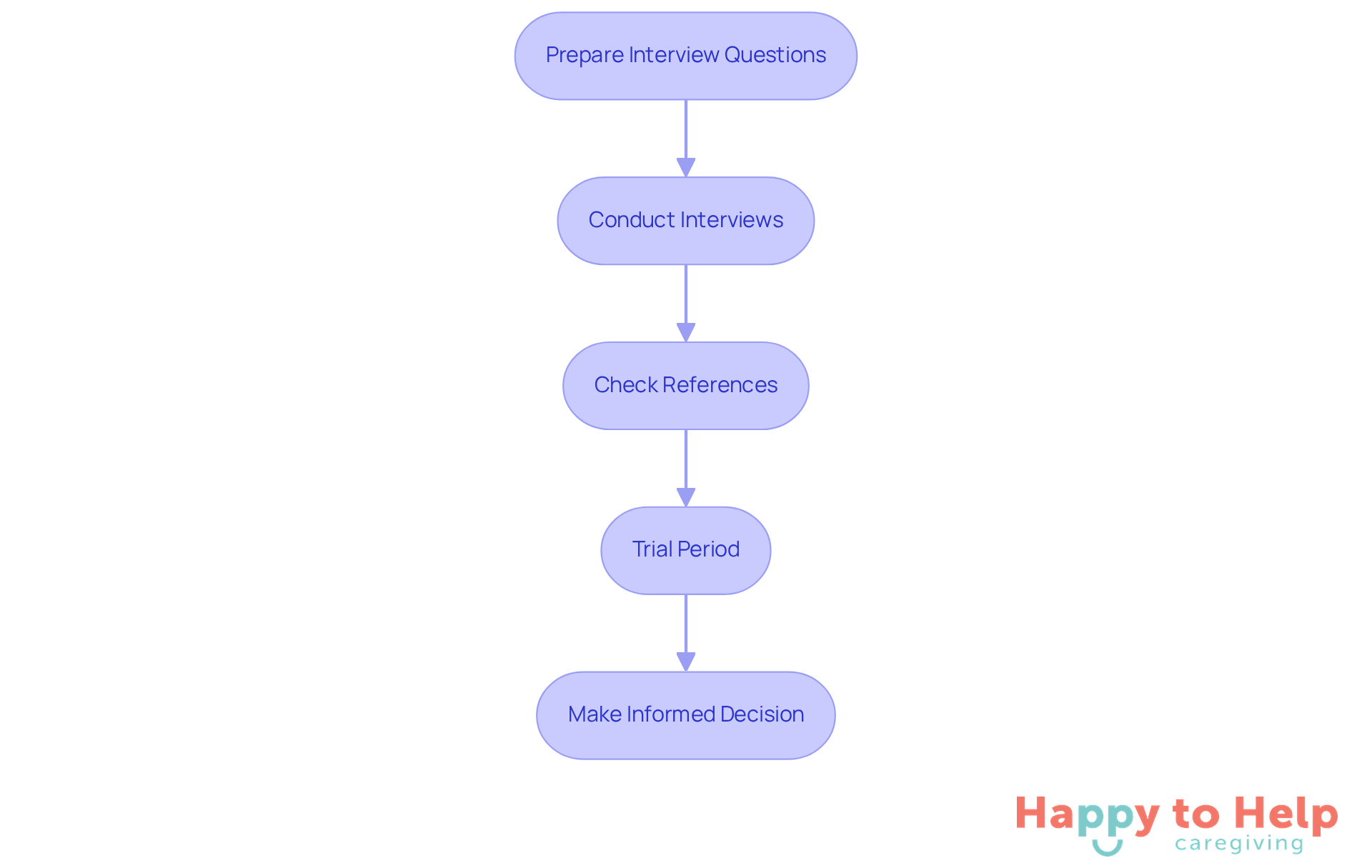
To tackle this challenge, follow these steps to identify the best fit:
-
Prepare Interview Questions: Start by crafting a comprehensive list of questions that delve into the caregiver's experience, qualifications, and caregiving philosophy. Ask about their previous work with clients who have similar needs, as this can reveal important insights into their suitability.
-
Conduct Interviews: Schedule interviews with each candidate. Pay attention to their communication style and how they respond to your loved one's specific needs. This interaction is vital for assessing their ability to connect with your family member.
-
Check References: Always request and contact references to gather information about the caregiver's reliability and performance. Families typically verify an average of three references, which can provide significant insights into the caregiver's past employment and client interactions. This practice is essential for ensuring the caregiver's suitability, as families often rely on these insights to make informed decisions.
-
Trial Period: If possible, arrange a trial period for the caregiver to work with your loved one. This allows both the caregiver and your family member to evaluate compatibility and comfort levels before committing long-term. A trial can significantly reduce the risk of mismatches and ensure a smoother transition into support.
By following these steps, families can make informed choices that prioritize the well-being and happiness of their loved ones while also considering the health of a home caregiver near me.
Create a Personalized Care Plan
For a home caregiver near me, creating an effective care plan can be challenging. Without a structured approach, the unique needs of your loved one may not be met, so it's essential to consider a home caregiver near me to prevent frustration and dissatisfaction for both parties.
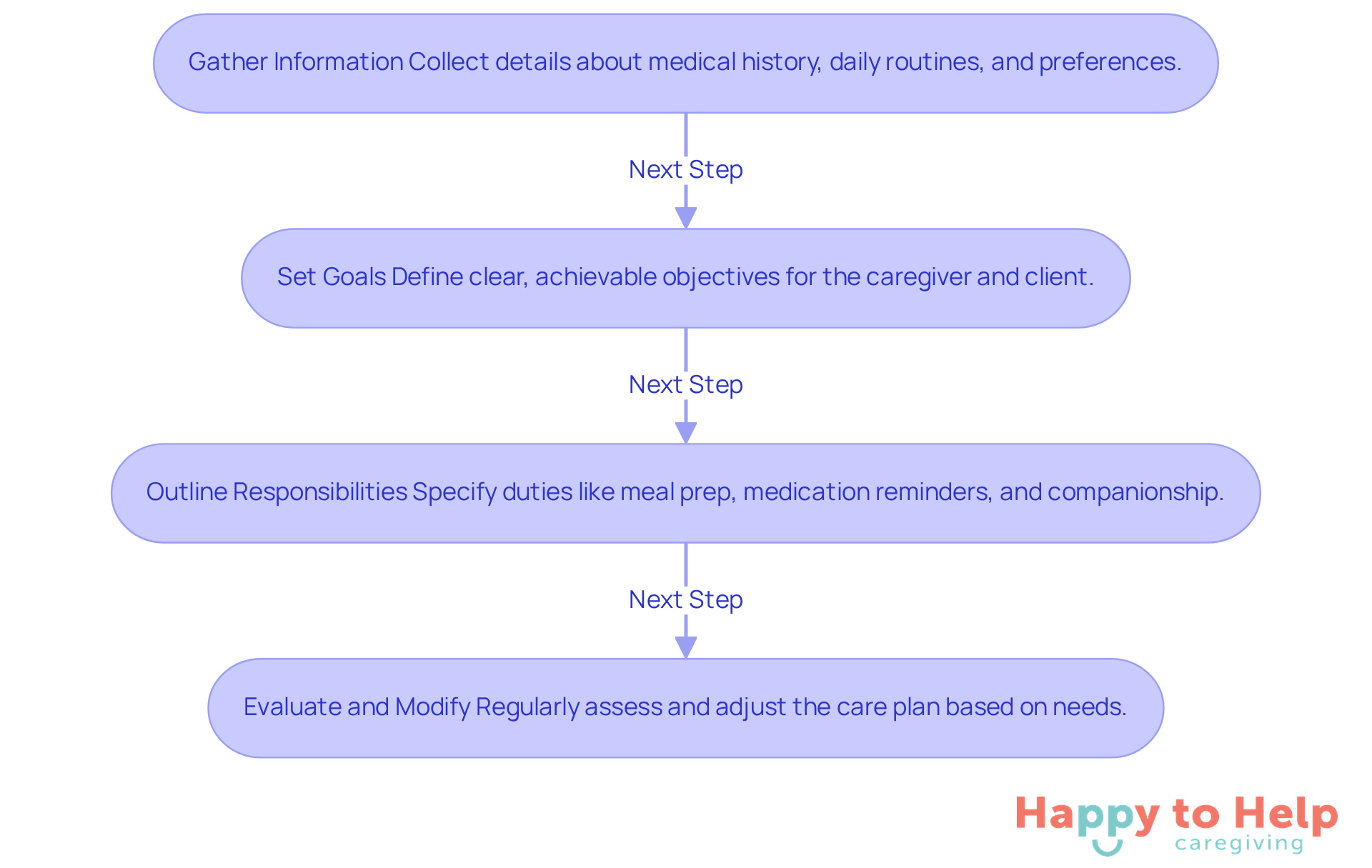
To address this issue, follow these steps:
-
Gather Information: Collect comprehensive details about your loved one's medical history, daily routines, and personal preferences. This holistic assessment is crucial for tailoring care to their unique needs.
-
Set Goals: Define clear, achievable objectives for both the provider and the client. For instance, aim to improve mobility through specific exercises or enhance social interaction by scheduling regular visits with friends and family. Research indicates that support providers who establish goals with clients report higher satisfaction and improved outcomes.
-
Outline Responsibilities: Clearly specify the individual’s duties, which may include meal preparation, medication reminders, and engaging in companionship activities. This clarity helps ensure that both parties, such as the home caregiver near me, understand expectations and responsibilities.
-
Evaluate and Modify: Regularly assess the support plan with the caregiver and your loved one to make necessary changes based on evolving needs or preferences. Ongoing assessment is essential, as personalized support plans should adjust to modifications in health condition or lifestyle, ensuring that a home caregiver near me provides continuous assistance and satisfaction.
Successful instances of individualized support plans show substantial enhancements in elder assistance. For instance, Mary, an 82-year-old woman, regained her confidence and improved her quality of life through a tailored care plan that focused on her independence and hobbies. By incorporating her interests, caregivers not only enhanced her emotional well-being but also fostered a sense of fulfillment and connection to her daily life.
Your Path Forward
Finding the right home caregiver can be a daunting challenge for families. The well-being of loved ones who require assistance hinges on this crucial decision. Without proper guidance, families may feel overwhelmed, leading to stress and uncertainty about the care their loved ones will receive.
To navigate this process effectively, families should take a structured approach. Start by thoroughly assessing the care needs of your loved one. Research local options and utilize various resources to find potential caregivers. Conduct interviews to gauge compatibility and consider trial periods to ensure a good fit. Each of these steps is vital in making an informed decision, ultimately enhancing the quality of life for seniors and alleviating stress for family members.
In conclusion, while the journey to finding a home caregiver may seem overwhelming, it is an essential investment in the health and happiness of your loved one. By taking the time to assess needs, explore local options, and establish a personalized care plan, families can ensure that their loved ones receive the compassionate and tailored support they deserve. This proactive approach fosters a sense of security for seniors and promotes a healthier caregiving environment for everyone involved.
https://iframe.tely.ai/cta/eyJhcnRpY2xlX2lkIjogIjY5MjY2NjEyNWYwOGRhZjJjOGIyMWRlZCIsICJjb21wYW55X2lkIjogIjY4ZWU1ZGNhNzMxNzYyNTU3ZjNjOTVjMSIsICJpbmRleCI6IG51bGwsICJ0eXBlIjogImFydGljbGUifQ==Frequently Asked Questions
How should I start assessing my loved one's home care needs?
Begin by gathering detailed information about their daily routines, health conditions, and specific requirements, including listing daily activities they need assistance with.
What types of daily activities should I document?
Document activities such as bathing, dressing, meal preparation, and medication management, as these are common areas where older adults may need help.
Why is it important to evaluate health conditions?
Evaluating health conditions is crucial because it helps identify any medical issues that require specialized attention, such as dementia, mobility issues, or chronic illnesses, which can significantly affect caregiving needs.
How can I determine the desired level of support for my loved one?
Assess whether your loved one requires full-time assistance, part-time help, or occasional aid, which will help narrow down options and ensure the support aligns with their lifestyle.
Why should I involve my loved one in the assessment process?
Engaging in a conversation about their preferences and comfort levels regarding support is essential for ensuring that the caregiver matches their personality and needs, fostering a sense of security and comfort.
What role do mental health assessments play in evaluating care needs?
Integrating mental health assessments into the evaluation process is becoming essential to ensure a comprehensive understanding of your loved one's overall well-being and support needs.
What are the consequences of neglecting to assess care needs?
Neglecting to assess care needs can lead to adverse consequences for your loved one, making thorough evaluations critical for enhancing their quality of life and well-being.
List of Sources
- Assess Your Home Care Needs
- New Study Finds That While Aging Seniors Prefer In-Home Care, Most Are Critically Underprepared for Future Healthcare Needs | Cross Country Healthcare, Inc. (https://ir.crosscountry.com/news-releases/news-release-details/new-study-finds-while-aging-seniors-prefer-home-care-most-are)
- Bridging the Gap in Elderly Care: The Case for Comprehensive In-Home Assessment (https://reachmd.com/news/bridging-the-gap-in-elderly-care-the-case-for-comprehensive-in-home-assessment/2474101)
- Warning From Older Adults: Care for Aging in America Needs Urgent Rethinking (https://johnahartford.org/newsroom/view/warning-from-older-adults-care-for-aging-in-america-needs-urgent-rethinking)
- WHO calls for urgent transformation of care and support systems for older people (https://who.int/news/item/01-10-2024-who-calls-for-urgent-transformation-of-care-and-support-systems-for-older-people)
- Nearly Half of All Seniors Need Help With Daily Activities, Far More Than We Thought (https://forbes.com/sites/howardgleckman/2014/10/08/nearly-half-of-all-seniors-need-help-with-daily-activities-far-more-than-we-thought)
- Research Local Caregiver Options
- As Long Island ages, home care booms. An alleged unlicensed business shows dangers to clients and aides. (https://newsday.com/long-island/investigations/home-health-care-companionship-hg7flycx)
- 7 Best Places to Find Caregivers for Home Care | Aaniie, formerly Smartcare Software (https://aaniie.com/news/7-best-places-to-find-caregivers-for-home-care)
- 9 Ways to Find Caregivers With Flexible Scheduling Options - MedCity News (https://medcitynews.com/2025/05/9-ways-to-find-caregivers-with-flexible-scheduling-options)
- Where to Find Great Caregivers in 2025: A Recruiter's Guide - HangZone Care (https://hangzonecare.com/where-to-find-great-caregivers)
- home care | Latest News | New York Post (https://nypost.com/tag/home-care)
- Interview and Evaluate Caregivers
- How to Choose the Right In-Home Caregiver for Your Loved One (https://homeinstead.com/home-care/usa/tx/carrollton-coppell-irving/407/news-and-media/navigating-in-home-care-tips-for-choosing-the-right-caregiver-for-your-loved-one)
- The Case For Stronger Caregiver Vetting In Home Care (https://homehealthcarenews.com/2024/10/the-case-for-stronger-caregiver-vetting-in-home-care)
- Caregiver Statistics: Understanding the Challenges Facing Family Caregivers in California - California Caregiver Resource Centers (https://caregivercalifornia.org/2023/02/03/caregiver-statistics-understanding-the-challenges-facing-family-caregivers-in-california)
- Professional Caregiver 101: How to Find the Right Fit for Your Loved One (https://seniorlivingnearme.com/resources/professional-caregiver-101-how-to-find-the-right-fit-for-your-loved-one)
- AARP Research Insights on Caregiving (https://aarp.org/pri/topics/ltss/family-caregiving/aarp-research-insights-caregiving)
- Create a Personalized Care Plan
- How Personalized Care Plans Improve Quality of Life for Seniors (https://seniorcarecompanions.com/personalized-care-plans-quality-of-life-for-seniors)
- How a Personalized Care Plan Makes Living with Chronic Conditions Easier | Dedicated Senior Medical Center (https://dedicated.care/articles/how-personalized-care-plan-makes-living-chronic-conditions-easier)
- Novel Care Model May Improve Outcomes for Older Adults With Multiple Chronic Conditions (https://consultqd.clevelandclinic.org/novel-care-model-may-improve-outcomes-for-older-adults-with-multiple-chronic-conditions)
- Personalizing Care Plans for Seniors: Why One Size Doesn't Fit All (https://promedcareinc.com/personalizing-care-plans-for-seniors-why-one-size-doesnt-fit-all)
- Developing Customized Care Plans for Seniors - New Wave Home Care (https://newwavehomecare.com/developing-customized-care-plans-for-seniors)