
For families in our service areas
For families in our service areas, this guide explains caregiver support and how non-medical in-home caregiving can support care planning in East Idaho, Treasure Valley & Magic Valley, Northern Wasatch, North Central West Virginia, and Northeast Ohio.
Why Find Elderly Caregivers Near Me Matters
Finding the right caregiver for an elderly loved one is a significant challenge that many families face. It often feels like navigating a complex maze filled with uncertainty and emotion. Families must assess not only the physical needs of their loved ones but also their emotional and social well-being. This can be overwhelming, especially with so many options available.
The implications of this challenge are profound. Families may worry about the quality of care their loved ones receive, which can impact both health and happiness. How can families ensure they make informed choices that prioritize their loved ones' well-being amidst these overwhelming options?
This guide offers a clear pathway through four essential steps to identify, evaluate, and select the best caregivers available. By following these steps, families can ensure that the care provided aligns with the unique needs of each individual, ultimately leading to better outcomes for their loved ones.
Assess Care Needs of Your Loved One
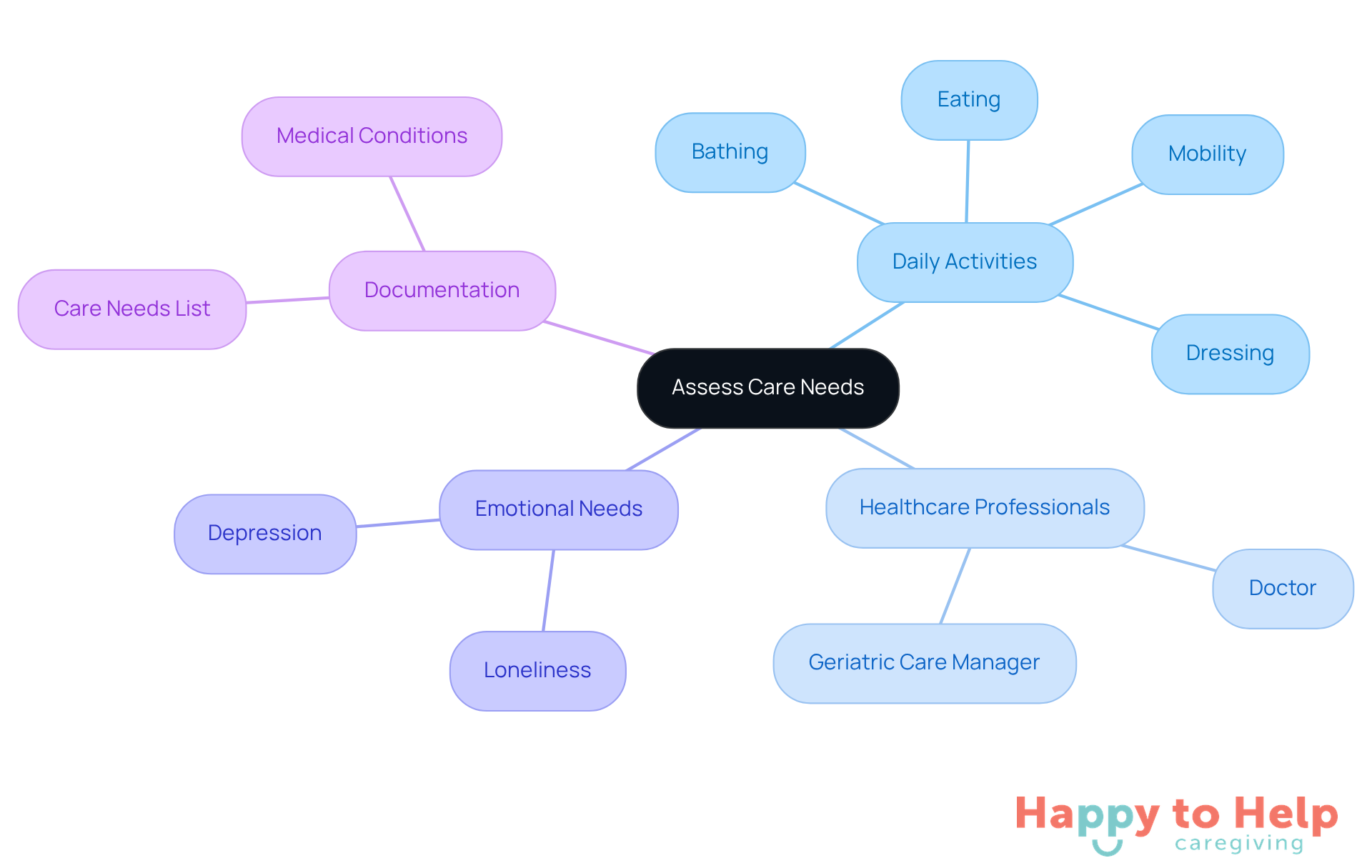
Identifying Daily Activities: Caregivers often struggle to understand their loved ones' daily routines. Observing activities like bathing, dressing, eating, or mobility can reveal significant difficulties that may require attention.
Consulting Healthcare Professionals: Involving a doctor or a geriatric care manager can provide valuable insights into your family member's health status. These professionals can recommend specific care needs tailored to their situation.
Considering Emotional and Social Needs: Emotional well-being is crucial. Assess whether your loved one feels lonely or depressed, as this can influence the type of support needed. If companionship is a priority, it’s essential to factor this into your care plan.
Documenting Everything: Create a comprehensive list of care needs, preferences, and any medical conditions. This documentation will be invaluable when discussing options with potential elderly caregivers near me.
Research Local Caregiver Services
Problem: Finding reliable caregivers can be a daunting task for families. Many struggle with the overwhelming number of options available and the need for trustworthy assistance.
Agitate: This challenge is significant, as 60% of individuals providing care have turned to online resources in the past year. This statistic highlights the difficulty families face in connecting with qualified caregivers. Without proper guidance, families may feel lost in their search, risking the well-being of their loved ones.
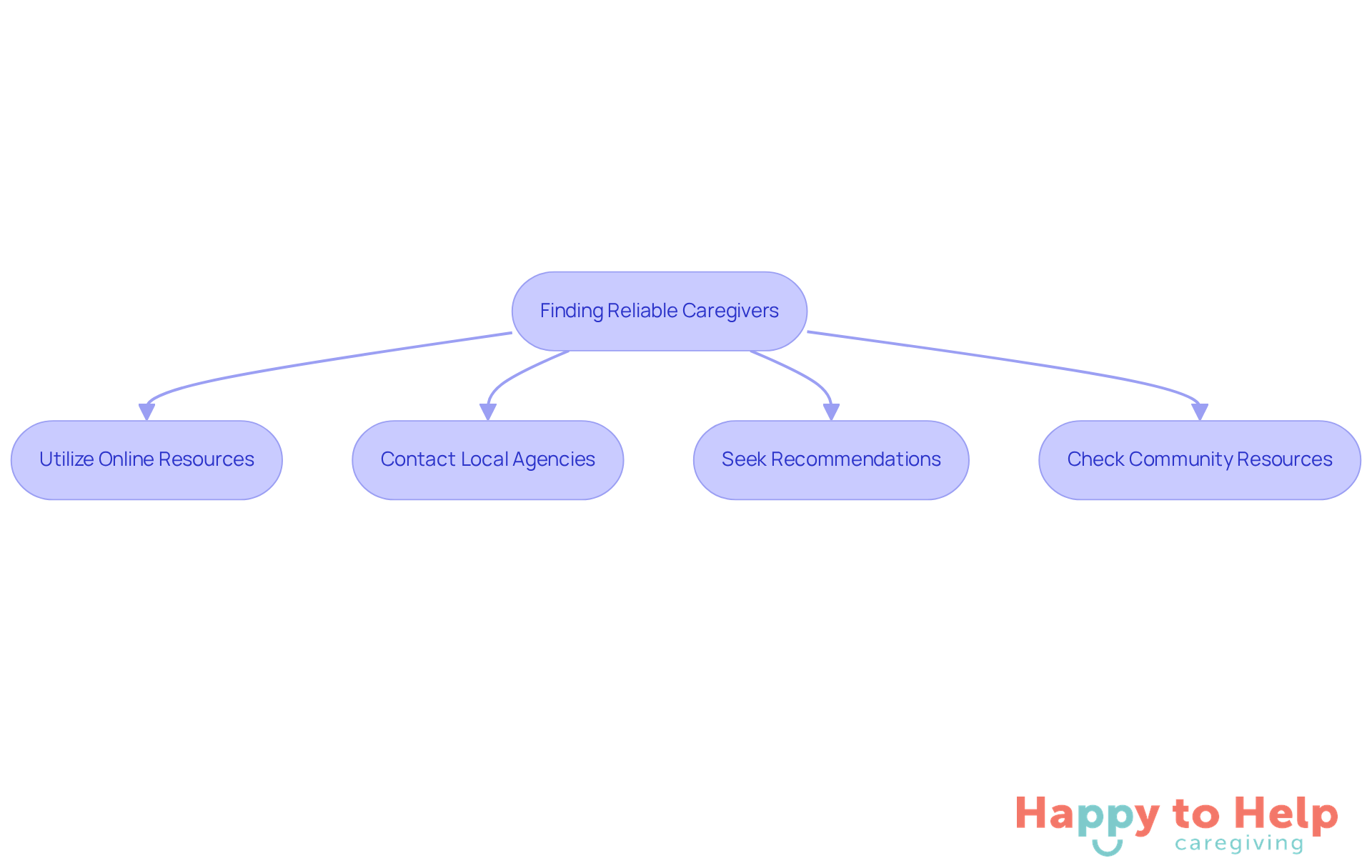
Solution: Here are some effective strategies to help you find the right caregiver:
-
Utilize online resources like Care.com and Yelp to help you locate elderly caregivers near me. Filter results based on ratings, reviews, and specific services offered. These platforms have proven effective in connecting families with caregivers.
-
Contact local agencies to find elderly caregivers near me by reaching out to home care agencies in your area. Inquire about their services, qualifications of the providers, and how they connect providers with clients. As agency representatives emphasize, "It’s essential to ensure that those providing care are not only qualified but also trained to meet the specific needs of clients."
-
Seek Recommendations: Talk to friends, family, or healthcare providers for recommendations. Personal referrals can lead to reliable attendants. Aisha Adkins, a support worker from Georgia, highlights the importance of personal connections, stating, "Recommendations from those who have experienced care firsthand can guide you to reliable options."
-
Check Community Resources: Look into local senior centers or community organizations that may offer caregiver services or can connect you with resources. These organizations often have established networks and can provide additional support in your search.
Evaluate and Interview Potential Caregivers
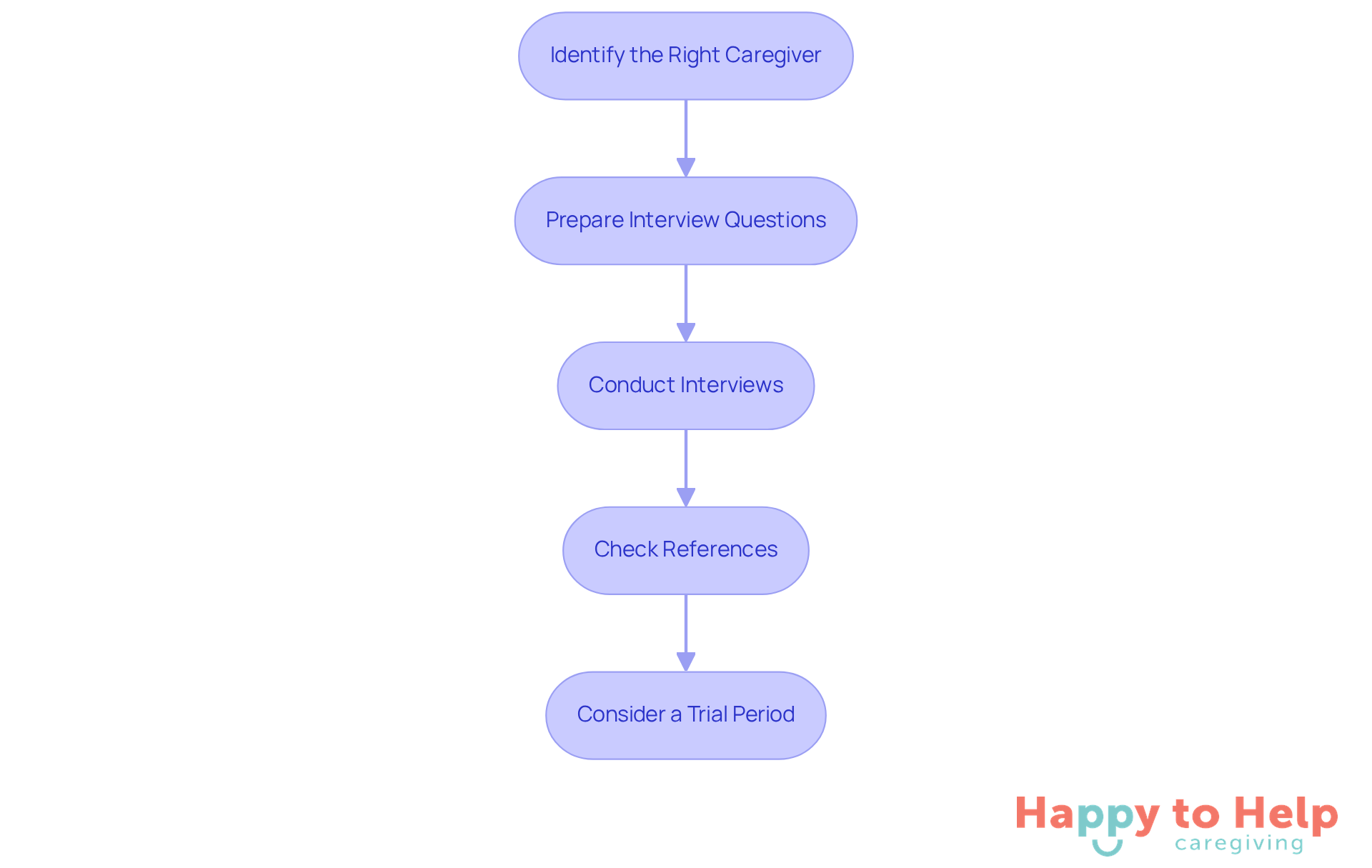
Identifying the Right Caregiver: Finding a suitable caregiver for your loved one can be a daunting task. The stakes are high, as the quality of care directly impacts their well-being. To ensure you make the best choice, it’s essential to follow a structured approach.
Prepare Interview Questions: Start by developing a list of questions that cover experience, training, and specific scenarios related to your loved one's needs. For instance, inquire about their experience with dementia care if applicable. Additionally, consider asking about their willingness to attend training sessions, as this is a critical aspect of the job.
Conduct Interviews: Arrange interviews with prospective helpers, either in person or virtually. Pay attention to their communication style and how they respond to your loved one's needs. This is crucial for establishing a positive caregiving relationship. Experts emphasize that evaluating personality traits and behaviors during interviews can be just as important as technical skills.
Check References: Always request and verify references from former clients or employers to confirm the provider's reliability and quality of care. This step is essential for providing peace of mind for families, as it verifies the individual's past performance and appropriateness for the role.
Consider a Trial Period: If feasible, set up a trial duration where the caregiver can assist your family member. This allows both parties to assess compatibility before making a long-term commitment. A successful trial can lead to improved treatment outcomes, fostering a smoother transition into support.
Create a Personalized Care Plan
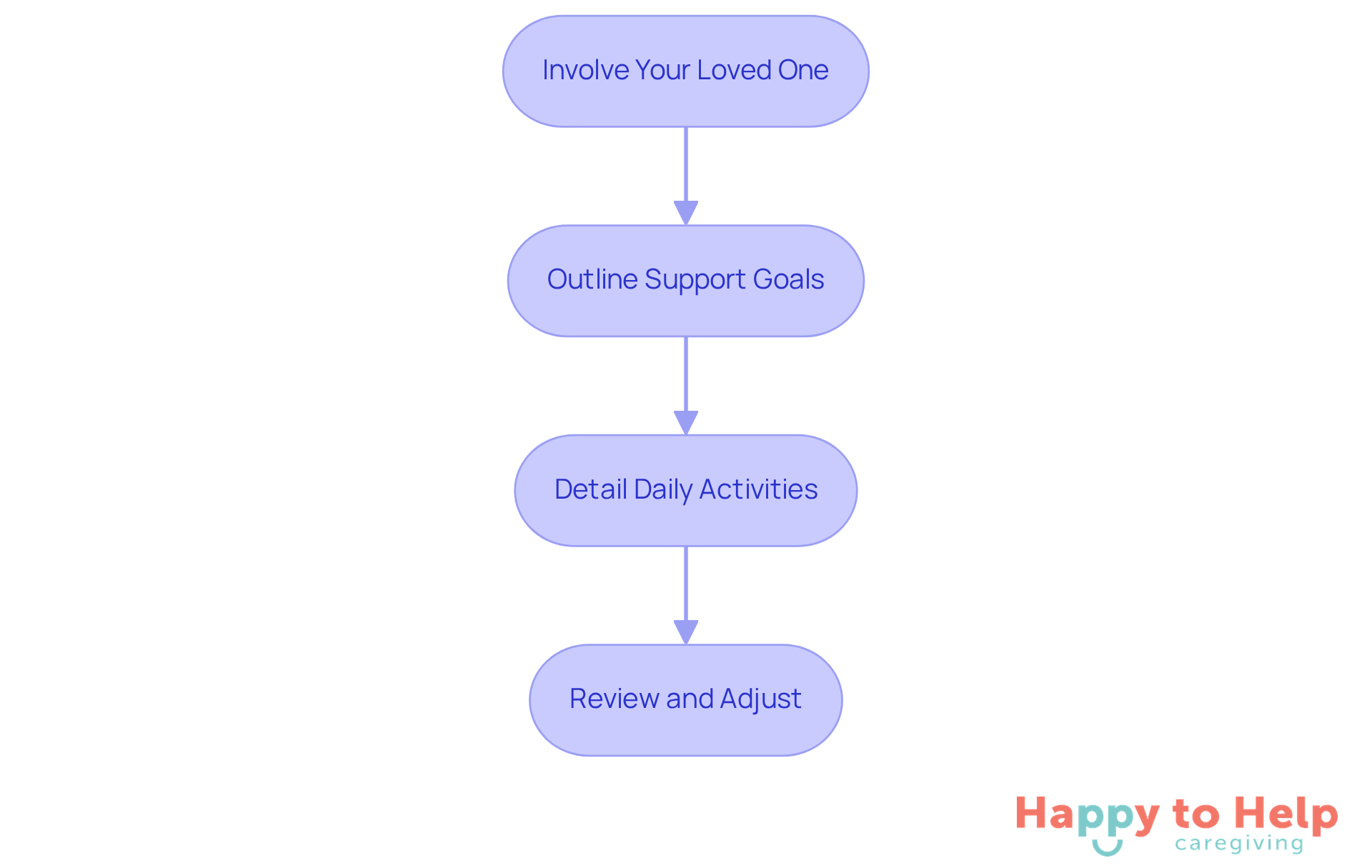
Involve Your Loved One: Engaging your loved one in the planning process is crucial. Discuss their preferences and any specific routines they wish to maintain. This involvement not only respects their autonomy but also helps in creating a more personalized care plan.
Outline Support Goals: Clearly defining objectives for the support plan is essential. Goals may include improving mobility, enhancing social interaction, or managing medications effectively. Without these clear targets, caregivers may struggle to provide the necessary support.
Detail Daily Activities: Specify the daily tasks the helper will assist with. This can include meal preparation, personal hygiene, and medication reminders. Clearly outlining these responsibilities ensures that both the caregiver and the loved one understand what to expect.
Review and Adjust: Regular check-ins are vital to review the care plan with both the caregiver and your loved one. Be open to making adjustments based on feedback and changing needs. This flexibility can significantly improve the quality of care provided.
Moving Forward with Find Elderly Caregivers Near Me
Finding the right elderly caregiver for a loved one can be a daunting task. Families often face the challenge of ensuring their loved ones receive the support they need while navigating a complex landscape of options. This process requires careful consideration and planning, as the implications of inadequate care can significantly affect a senior's quality of life.
To tackle this issue effectively, families should start by assessing the specific care needs of their loved ones. Understanding daily activities and emotional requirements is crucial. Additionally, seeking professional recommendations and utilizing online resources can streamline the search for reliable caregivers. Community organizations and personal referrals also play a vital role in identifying suitable options.
Once potential caregivers are identified, conducting thorough interviews and considering trial periods are essential steps. These actions help ensure compatibility and build trust between the caregiver and the elderly individual. By prioritizing these steps, families can create a personalized care plan that addresses the unique preferences and requirements of their loved ones.
Ultimately, the journey to finding the right caregiver is about enhancing the overall well-being of seniors. Families are encouraged to take an active role in this process, ensuring that care plans are tailored to their loved ones' needs. By following these actionable solutions, the search for elderly caregivers can lead to meaningful and positive outcomes for everyone involved.
https://iframe.tely.ai/cta/eyJhcnRpY2xlX2lkIjogIjY5MjRmMWM4ZWM0Y2FiOGU3NGVjMDBiMSIsICJjb21wYW55X2lkIjogIjY4ZWU1ZGNhNzMxNzYyNTU3ZjNjOTVjMSIsICJpbmRleCI6IG51bGwsICJ0eXBlIjogImFydGljbGUifQ==Frequently Asked Questions
How can I identify the daily activities of my loved one that may require assistance?
Observing activities such as bathing, dressing, eating, or mobility can help reveal significant difficulties that may need attention.
Why is it important to consult healthcare professionals when assessing care needs?
Involving a doctor or a geriatric care manager can provide valuable insights into your family member's health status and recommend specific care needs tailored to their situation.
What emotional and social needs should I consider when assessing care needs?
It's important to assess whether your loved one feels lonely or depressed, as their emotional well-being can influence the type of support they require. If companionship is a priority, this should be factored into your care plan.
What should I document when assessing the care needs of my loved one?
Create a comprehensive list of care needs, preferences, and any medical conditions. This documentation will be invaluable when discussing options with potential caregivers.
List of Sources
- Assess Care Needs of Your Loved One
- How to Assess if an Older Adult Needs Caregiving Help (https://aarp.org/caregiving/home-care/assessing-need-for-caregiver)
- Understanding If Your Older Loved One Needs Help | AgeWays (https://ageways.org/2021/12/15/holidays-offer-a-chance-to-assess-care-needs-of-older-loved-ones)
- Prevalence and Trends of Basic Activities of Daily Living Limitations in Middle-Aged and Older Adults in the United States - PMC (https://pmc.ncbi.nlm.nih.gov/articles/PMC10660458)
- Warning From Older Adults: Care for Aging in America Needs Urgent Rethinking (https://johnahartford.org/newsroom/view/warning-from-older-adults-care-for-aging-in-america-needs-urgent-rethinking)
- Research Local Caregiver Services
- New Online Directory Connects Dementia Caregivers with Support Resources (https://prnewswire.com/news-releases/new-online-directory-connects-dementia-caregivers-with-support-resources-302263417.html)
- 'More pressure on families.' Nearly half of US states are on the brink of a caregiving emergency (https://usatoday.com/story/news/health/2025/05/21/columbia-university-state-caregiving-study/83651201007)
- Digital Adoption by an Organization Supporting Informal Caregivers During COVID-19 Pandemic Showing Impact on Service Use, Organizational Performance, and Carers’ Well-Being: Retrospective Population-Based Database Study With Embedded User Survey (https://aging.jmir.org/2024/1/e46414)
- Caregiving Statistics US 2025: Insights for Family Caregivers (https://zencaregiving.org/caregiving-statistics-us-2025)
- What do caregivers in the North Central Region use for support and what support do they still need? / Research Snapshot - North Central Regional Center for Rural Development (https://ncrcrd.ag.purdue.edu/2024/10/04/what-do-caregivers-in-the-north-central-region-use-for-support-and-what-support-do-they-still-need-research-snapshot)
- Evaluate and Interview Potential Caregivers
- The Case For Stronger Caregiver Vetting In Home Care (https://homehealthcarenews.com/2024/10/the-case-for-stronger-caregiver-vetting-in-home-care)
- How to Hire In-Home Caregivers: 5 Essential Steps for Families - Happy To Help (https://happytohelpcaregiving.com/how-to-hire-in-home-caregivers-5-essential-steps-for-families)
- The Right Match of Caregivers and Care-Seekers - Kennedy Care (https://kennedycare.com/the-right-match-of-caregivers-and-care-seekers-2)
- 76 Best Caregiver Interview Questions for Agency Owners | CareAcademy (https://careacademy.com/blog/caregiver-interview-questions)
- Hiring an In-Home Caregiver: What to Consider (https://health.usnews.com/senior-care/caregiving/articles/hiring-an-in-home-caregiver-what-to-consider)
- Create a Personalized Care Plan
- Warning From Older Adults: Care for Aging in America Needs Urgent Rethinking (https://johnahartford.org/newsroom/view/warning-from-older-adults-care-for-aging-in-america-needs-urgent-rethinking)
- Importance of Personalized Senior Home Care in Burlington NC (https://wisdomseniorcare.com/the-importance-of-personalized-care-plans-for-seniors)
- How a Personalized Care Plan Makes Living with Chronic Conditions Easier | Dedicated Senior Medical Center (https://dedicated.care/articles/how-personalized-care-plan-makes-living-chronic-conditions-easier)
- Creating Individualized Mental Health Care Plans for Seniors - Supportive Care (https://thesupportivecare.com/blog/creating-individualized-mental-health-care-plans-for-seniors)