

For families in our service areas
For families in our service areas, this guide explains caregiving and how non-medical in-home caregiving can support care planning in East Idaho, Treasure Valley & Magic Valley, Northern Wasatch, North Central West Virginia, and Northeast Ohio.
Understanding Find Senior Residential Living Near Me
Navigating the landscape of senior living options can be an overwhelming task for families seeking the best care for their loved ones. With choices ranging from independent living to nursing homes, understanding the nuances of each type is essential. Families often find themselves confused by the variety of options available, which can lead to stress and uncertainty in making the right decision.
To address this challenge, it’s crucial to have a structured approach to finding senior residential living that aligns with individual needs and preferences. This guide will provide clear, practical solutions to help families choose the right fit amidst so many options. By focusing on specific needs and preferences, caregivers can make informed decisions that ensure their loved ones receive the best possible care.
Understand Different Types of Senior Living Options
When exploring senior living options, families often face the challenge of understanding the distinctions between available types. This can be overwhelming, especially when considering the varying levels of care required for loved ones.
Self-Sufficient Lifestyle: Designed for older adults who are typically healthy and energetic, these communities provide amenities like meal services, housekeeping, and social events. About 31% of older adults occupy independent housing arrangements, indicating a desire for autonomy while still having access to assistance.
Assisted Living: This option caters to older adults needing help with daily activities such as bathing, dressing, and medication management. Assisted housing environments offer an enhanced level of support while encouraging autonomy, with approximately 1 million seniors currently residing in these communities.
Memory Care: Specifically designed for individuals with Alzheimer's or other forms of dementia, memory care facilities offer specialized care and secure environments to ensure safety and comfort. Notably, 42% of assisted care residents have Alzheimer's or another type of dementia, emphasizing the necessity for customized support.
Nursing Homes: For seniors requiring 24/7 medical care and supervision, nursing homes deliver comprehensive health services, including rehabilitation and skilled nursing care. The typical duration in nursing homes is frequently greater than in assisted care, with many inhabitants shifting after around 22 months; roughly 60% of residents relocate to skilled nursing facilities following this timeframe.
Continuing Care Retirement Communities (CCRCs): These communities provide a continuum of care, allowing residents to transition seamlessly between independent living, assisted living, and nursing care as their needs evolve. This flexibility is increasingly important as 70% of older adults will need some form of long-term care during retirement.
By understanding these options, families can better navigate their choices based on the level of care required and the lifestyle preferences of those dear to them.

Assess Personal Needs and Preferences
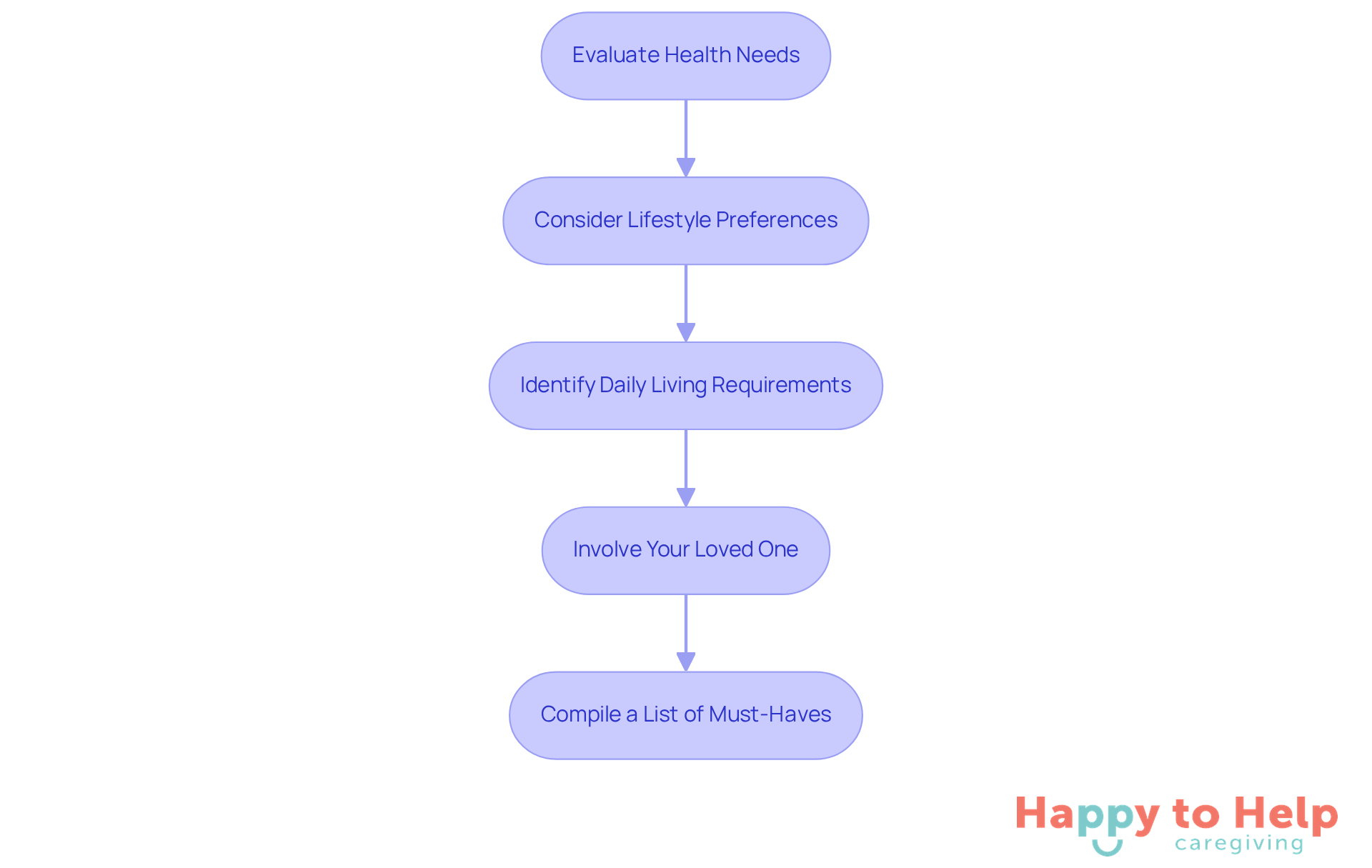
To effectively assess personal needs and preferences in elder care, caregivers face a significant challenge: ensuring that their loved ones receive the right support tailored to their unique situations. Without a thorough evaluation, families risk selecting options that do not align with their loved one's needs, leading to dissatisfaction and potential issues down the line.
-
Evaluate Health Needs: Start by identifying any medical conditions or disabilities that may require specific care or accommodations. This includes understanding mobility issues, medication management, and any specialized care needs.
-
Consider Lifestyle Preferences: Next, discuss what activities and social interactions are important to your loved one. Do they prefer a vibrant community with many social events, or a quieter environment? Understanding these preferences is crucial for their happiness.
-
Identify Daily Living Requirements: Determine what daily tasks your loved one can manage independently and where they may need assistance. This assessment will help in selecting a facility that offers the right level of support.
-
Involve Your Loved One: Engage the elderly individual in discussions about their preferences and concerns. Their input is invaluable in making a decision that respects their autonomy and desires.
-
Compile a List of Must-Haves: Based on the evaluations, assemble a list of essential features that the new housing arrangement must possess, such as pet policies, proximity to family, or specific amenities.
By thoroughly evaluating these factors, families can ensure that the selected elder care option aligns with their loved one's needs and preferences, ultimately leading to a more satisfying and supportive living situation.
Evaluate Costs and Payment Options
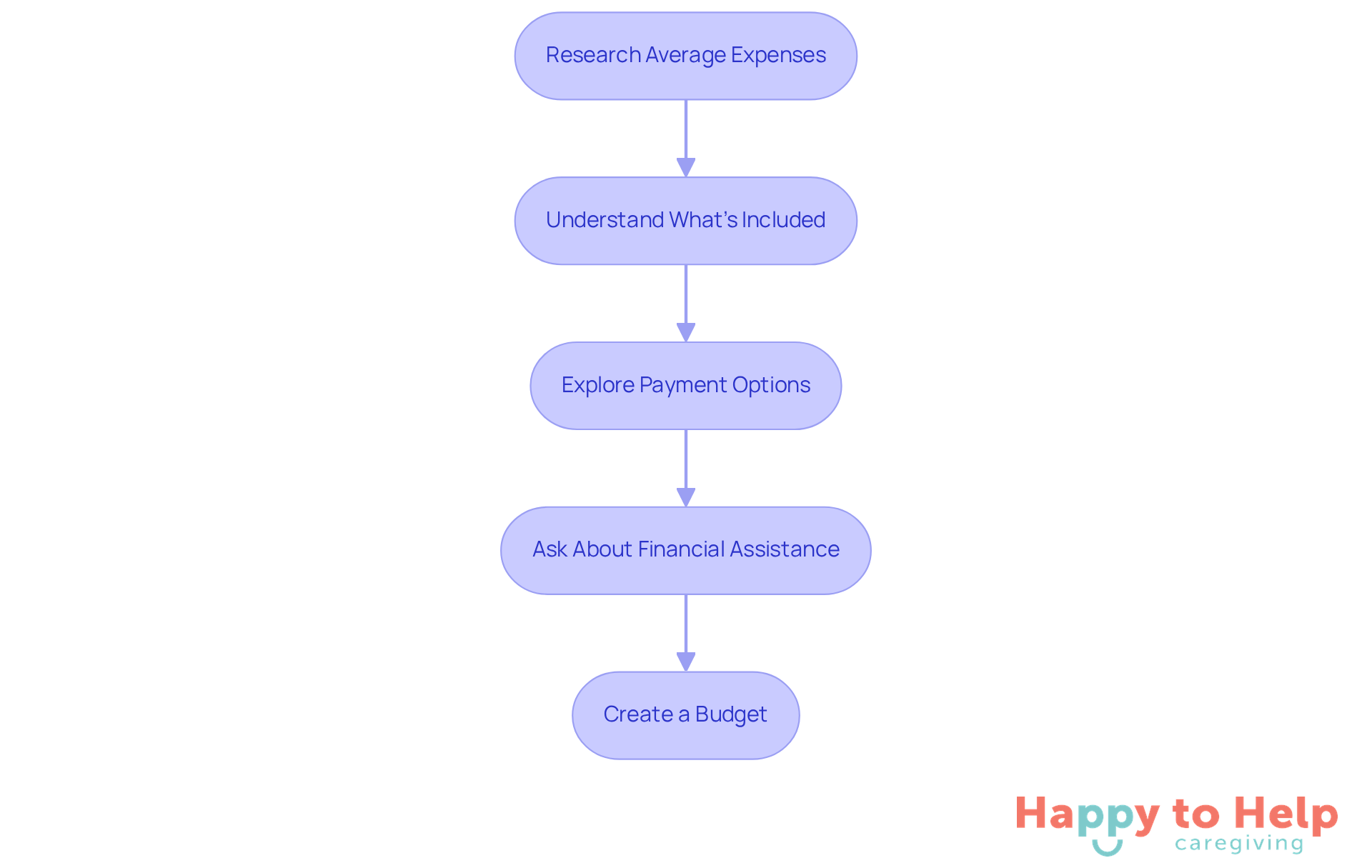
When evaluating costs and payment options for senior living, families often face a significant challenge: understanding the financial implications of their choices. With various facilities and services available, it can be overwhelming to navigate the expenses involved.
To tackle this issue, consider these steps:
-
Research average expenses by examining the average costs of different senior residential living near me facilities in your area. For instance, autonomous housing typically ranges from $2,600 to $4,000 monthly, while supported residence averages between $4,500 and $6,000. By 2025, the national median expense for assisted care is expected to be around $5,676 each month.
-
Understand What’s Included: Review the services and amenities covered in the monthly fee. Many facilities include meals, housekeeping, and transportation, while others may charge extra for these services. Clarifying what is included helps avoid unexpected costs.
-
Explore Payment Options: Consider various payment methods available for senior care, such as private pay, long-term care insurance, Medicaid, and veterans' benefits. Each option has distinct eligibility requirements and coverage levels, significantly affecting overall costs. For example, long-term care insurance can help cover assisted support costs, while Medicaid may offer aid for those who qualify.
-
Ask About Financial Assistance: Inquire whether the facility offers financial assistance programs or sliding scale fees based on income. Many communities are willing to work with families to make care more affordable, which can greatly impact your financial planning.
-
Create a Budget: Develop a comprehensive budget that includes all potential costs associated with the move, such as moving expenses, deposits, and ongoing monthly fees. This proactive approach ensures that the chosen senior residential living near me is in alignment with your financial means.
By thoroughly evaluating costs and payment options, families can make informed decisions that best suit their loved ones' needs and financial situations.
Visit and Evaluate Potential Facilities
Finding the right facility for your loved one can be a daunting task. With so many options available, how do you ensure that you choose a place that meets their needs? Evaluating potential facilities is crucial to making a confident decision.
-
Schedule Tours: Organize visits to various locations to compare surroundings, services, and staff interactions. Aim to visit at different times of the day to get a full picture of daily life.
-
Observe the Environment: Pay attention to the cleanliness, safety, and overall atmosphere of the premises. Are the common areas inviting? Do residents appear happy and engaged? These observations can reveal a lot about the quality of care.
-
Meet the Staff: Interact with caregivers and staff members. Assess their friendliness, professionalism, and willingness to answer questions. This can provide insight into the quality of care your dear one will receive.
-
Ask Questions: Prepare a list of questions to ask during your visit, such as:
- What is the staff-to-resident ratio?
- What activities are available for residents?
- How are medical emergencies handled?
-
Trust Your Instincts: After visiting, reflect on your impressions. Did the center seem like a suitable match for your family member? Trust your instincts and consider how your dear one would feel in that environment.
By thoroughly visiting and evaluating potential facilities, families can make a confident decision about the best living arrangement for their loved one.

Moving Forward with Find Senior Residential Living Near Me
Navigating the landscape of senior residential living options can be a complex journey. Families often face the challenge of understanding the distinctions between independent living, assisted living, memory care, nursing homes, and continuing care retirement communities. Each option serves different needs and preferences, making it crucial to find the right fit for loved ones.
Assessing personal needs and preferences is essential. Families should evaluate costs and payment options while visiting potential facilities. By carefully considering health requirements, lifestyle choices, and financial implications, they can select a living arrangement that aligns with their loved ones' unique situations. Engaging in thorough evaluations and site visits enhances the decision-making process, allowing families to gauge the quality of care and community atmosphere.
Ultimately, prioritizing the well-being and happiness of loved ones is key. By exploring options, assessing needs, and engaging with facilities, families can ensure that their chosen environment offers the support and comfort necessary for a fulfilling life. This proactive approach not only eases the transition but also fosters a sense of security and peace of mind for everyone involved.
https://iframe.tely.ai/cta/eyJhcnRpY2xlX2lkIjogIjY5MmY5MTg2NWE2YzBkMzU2MDcwMDJmMiIsICJjb21wYW55X2lkIjogIjY4ZWU1ZGNhNzMxNzYyNTU3ZjNjOTVjMSIsICJpbmRleCI6IG51bGwsICJ0eXBlIjogImFydGljbGUifQ==Frequently Asked Questions
What are the different types of senior living options available?
The main types of senior living options include self-sufficient lifestyle communities, assisted living, memory care, nursing homes, and continuing care retirement communities (CCRCs).
What is a self-sufficient lifestyle community?
A self-sufficient lifestyle community is designed for older adults who are typically healthy and energetic, offering amenities like meal services, housekeeping, and social events while allowing residents to maintain their autonomy.
Who typically resides in assisted living facilities?
Assisted living facilities cater to older adults who need help with daily activities such as bathing, dressing, and medication management, with approximately 1 million seniors currently living in these communities.
What is memory care, and who is it for?
Memory care is specifically designed for individuals with Alzheimer's or other forms of dementia, providing specialized care and secure environments to ensure safety and comfort.
What services do nursing homes provide?
Nursing homes offer 24/7 medical care and supervision, including comprehensive health services, rehabilitation, and skilled nursing care for seniors who require constant support.
How long do seniors typically stay in nursing homes?
The typical duration in nursing homes is often greater than in assisted care, with many residents staying for around 22 months before transitioning to skilled nursing facilities.
What are Continuing Care Retirement Communities (CCRCs)?
CCRCs provide a continuum of care, allowing residents to transition seamlessly between independent living, assisted living, and nursing care as their needs evolve, which is important since 70% of older adults will require some form of long-term care during retirement.
Why is it important for families to understand these senior living options?
Understanding these options helps families navigate their choices based on the level of care required and the lifestyle preferences of their loved ones.
List of Sources
- Understand Different Types of Senior Living Options
- 40 Assisted Living Statistics for 2025 - Caring.com (https://caring.com/resources/assisted-living-statistics)
- Senior Living Statistics (https://rosewood-nursing.com/post/senior-living-statistics)
- 2025 Senior Living Statistics | SeniorLiving.org (https://seniorliving.org/companies/statistics)
- Facts & Figures (https://ahcancal.org/Assisted-Living/Facts-and-Figures/Pages/default.aspx)
- Assess Personal Needs and Preferences
- Analysis: Senior Housing Can Reduce Acute Care Service Needs for Older Adults - National Investment Center (https://nic.org/news-press/analysis-senior-housing-can-reduce-acute-care-service-needs-for-older-adults)
- U.S. News Releases 2025 Best Senior Living Ratings (https://usnews.com/info/blogs/press-room/articles/2025-04-15/u-s-news-releases-2025-best-senior-living-ratings)
- Facts & Figures (https://ahcancal.org/Assisted-Living/Facts-and-Figures/Pages/default.aspx)
- Seven trends in senior living that will define 2025 and beyond (https://mcknightsseniorliving.com/home/columns/guest-columns/seven-trends-in-senior-living-that-will-define-2025-and-beyond)
- Evaluate Costs and Payment Options
- Assisted Living Statistics in 2025 │ The Senior List (https://theseniorlist.com/assisted-living/statistics)
- 40 Assisted Living Statistics for 2025 - Caring.com (https://caring.com/resources/assisted-living-statistics)
- Assisted Living Costs by State: 2025 Pricing Guide (https://aplaceformom.com/caregiver-resources/articles/cost-of-assisted-living)
- Senior Living Costs by Care Type | ONELIFE Senior Living Guide (https://onelifeseniorliving.com/blog/how-much-does-senior-living-cost-a-breakdown-by-care-type)
- Assisted Living Statistics | Senior Living By The Numbers (https://sagapixel.com/marketing/assisted-living-statistics)
- Visit and Evaluate Potential Facilities
- 15 Things to Look for When Touring a Senior Living Facility (https://health.usnews.com/best-senior-living/articles/touring-senior-living-facility-questions)
- 61 Assisted Living Statistics Operators Should Know | Aline (https://alineops.com/blog/assisted-living-statistics)
- Optimal Assisted Living Staff-to-Resident Ratio for Success | Xenia (https://xenia.team/articles/assisted-living-staff-to-resident-ratio-for-effective-operations)
- Staffing Patterns in Nursing Homes, Assisted Living Communities, and Memory Care Units: Variation across Shifts - PMC (https://pmc.ncbi.nlm.nih.gov/articles/PMC12010473)
- Staff-to-Resident Ratios in Assisted Living: An In-Depth Analysis (https://qwick.com/blog/staff-resident-ratios)