4 Steps to Hire a Caregiver Near You for Your Loved One

For families in our service areas
For families in our service areas, this guide explains caregiver support and how non-medical in-home caregiving can support care planning in East Idaho, Treasure Valley & Magic Valley, Northern Wasatch, North Central West Virginia & Southwestern Pennsylvania, and Northeast Ohio.
Why Hire a Caregiver Near Me Matters
Hiring a caregiver can be a daunting task for families seeking the best support for their loved ones. The complexities involved - such as understanding specific care needs, budget constraints, and whether to hire through an agency or directly - can significantly impact the quality of care provided. With nearly two-thirds of aging adults requiring assistance, families face a critical challenge: how to make informed and effective choices in this process.
This guide aims to empower families by breaking down the essential steps to hire a caregiver near you. By understanding the nuances of caregiver hiring, families can find the right fit for their unique circumstances, ensuring their loved ones receive the care they deserve.
Assess Care Needs and Budget
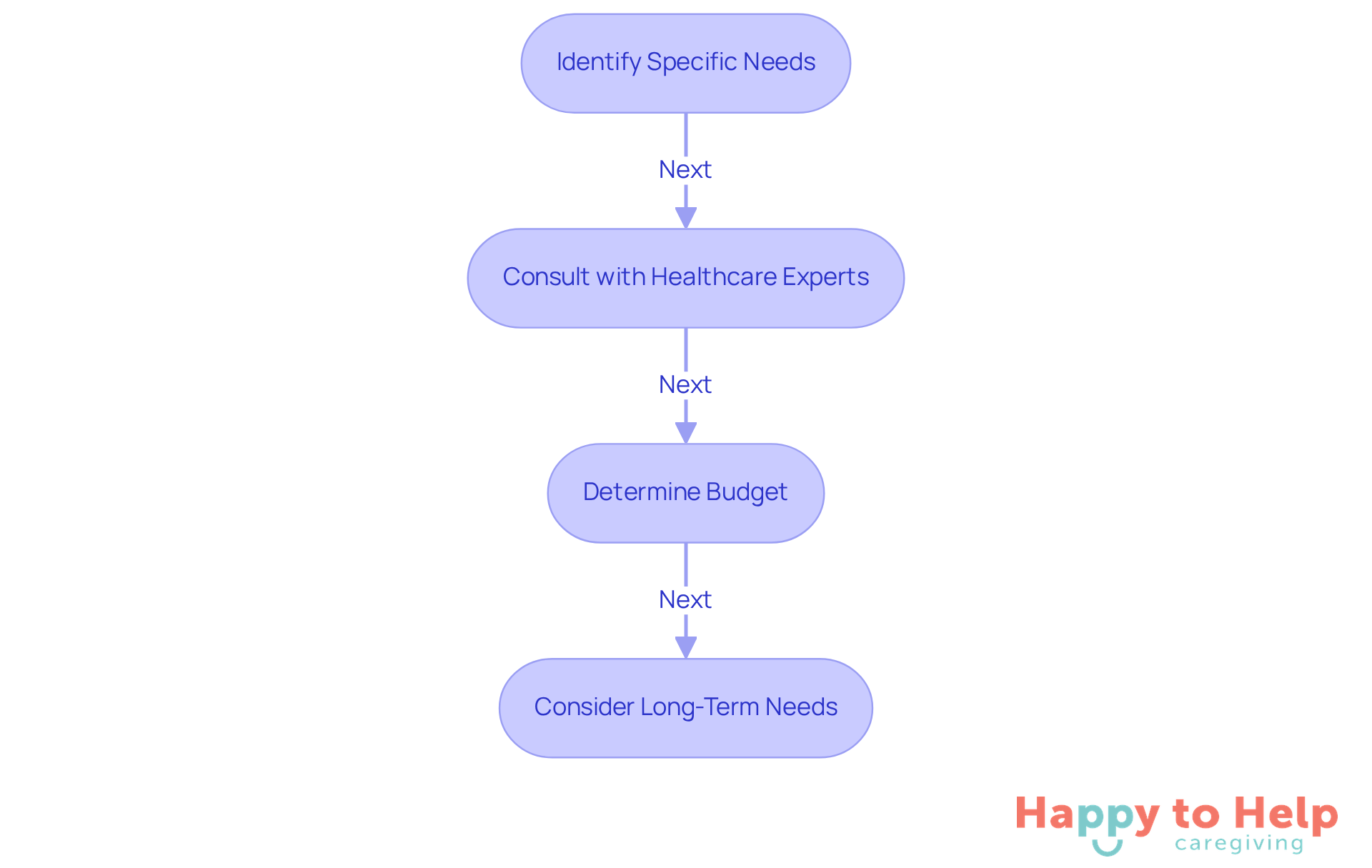
Identify Specific Needs: Caregivers often face the challenge of understanding the specific needs of their family members. Begin by listing daily activities that may be difficult for them, such as:
- bathing
- dressing
- meal preparation
- medication management
- companionship
Additionally, consider any medical conditions that may require specialized treatment.
Consult with Healthcare Experts: Engaging with healthcare professionals can provide valuable insights. If possible, speak with your loved one's physician or a healthcare expert to assess the level of assistance required. They can offer recommendations based on medical history and current health status, helping you understand the extent of support needed.
Determine Budget: Financial considerations are crucial in caregiving. Assess your financial situation to establish a realistic budget for caregiving services. Typical expenses in your region may range from $25 to $80 per hour, depending on the type of assistance required. It's also important to consider how many hours of help you will need each week.
Consider Long-Term Needs: Caregiving needs can evolve over time. Think about whether your loved one's requirements may change in the future. Preparing for potential increases in support needs can help you avoid future financial strain.
Choose Between Direct Hire or Agency
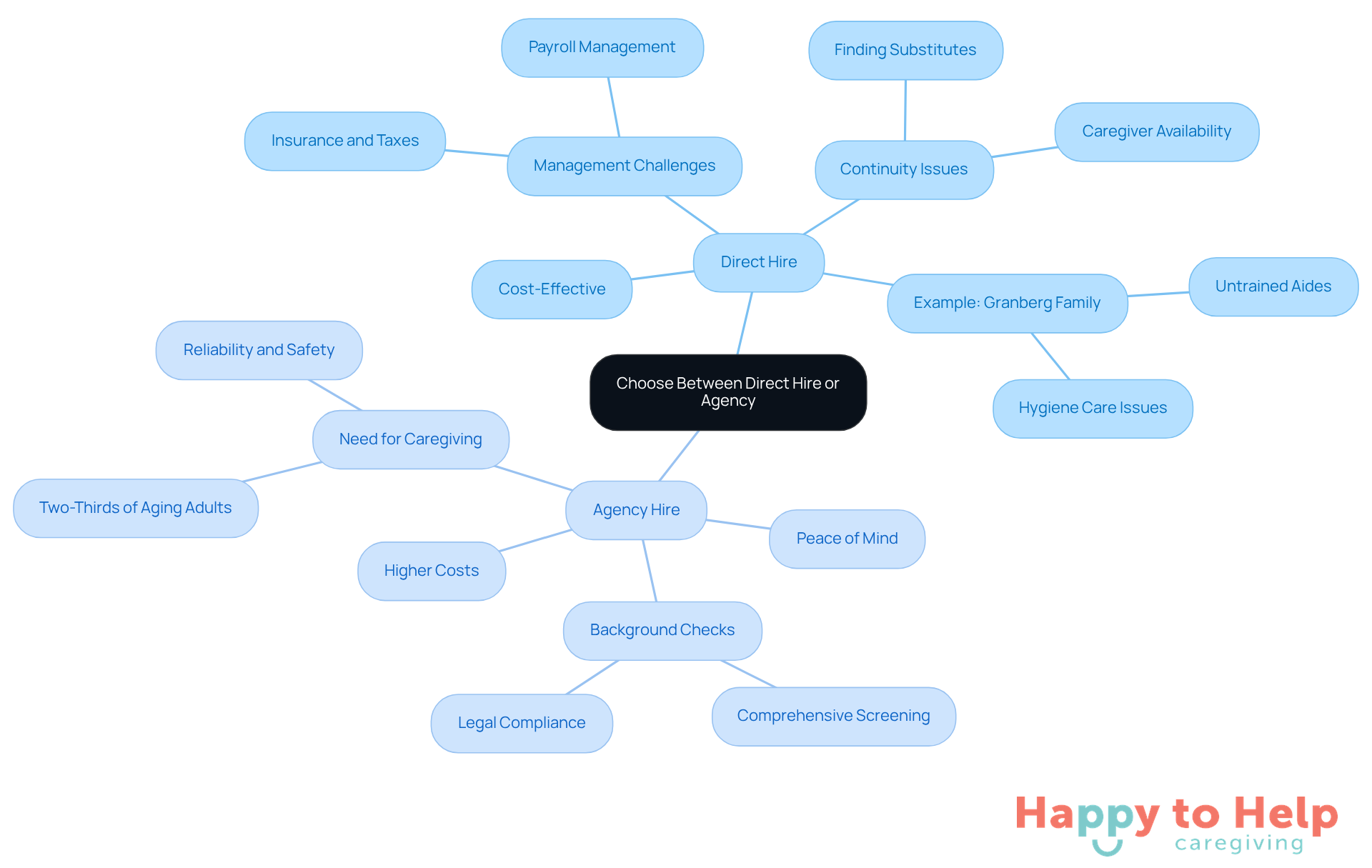
Direct Hire: Hiring a personal assistant directly can be cost-effective since you avoid agency fees. However, this approach comes with its own set of challenges. You’ll need to manage payroll, taxes, and insurance, which can be complex and time-consuming. Additionally, families must be ready for potential issues, such as finding a substitute if the caregiver is unavailable, which can disrupt care continuity. For instance, the Granberg family faced difficulties with untrained private aides, underscoring the importance of thorough screening in aide selection.
Agency Hire: On the other hand, utilizing a caregiving service often provides peace of mind. Agencies conduct comprehensive background checks, handle payroll, and offer substitute staff when necessary. This structured oversight ensures that care remains consistent and compliant with regulations. While this option may come with higher costs, the legal and financial protections offered by accredited agencies can justify the expense, especially for families prioritizing reliability and safety. It's worth noting that about two-thirds of aging adults eventually require caregiving assistance, highlighting the need for informed decisions regarding caregiving options.
Evaluate Your Comfort Level: Think about your comfort with managing the hiring process. If you prefer a hands-off approach, an agency might be the better choice, relieving you of administrative burdens. Conversely, if you want more control over selecting support staff and are willing to take on additional responsibilities, direct hiring could be suitable.
Research local options to hire a caregiver near me by investigating local agencies and independent support providers. Reading reviews and seeking recommendations can help you when you want to hire a caregiver near me that meets your needs. Families should consider the experiences of others, as seen with the Granberg family, who encountered challenges with untrained private aides, emphasizing the necessity of thorough screening in aide selection.
Interview and Screen Potential Caregivers
-
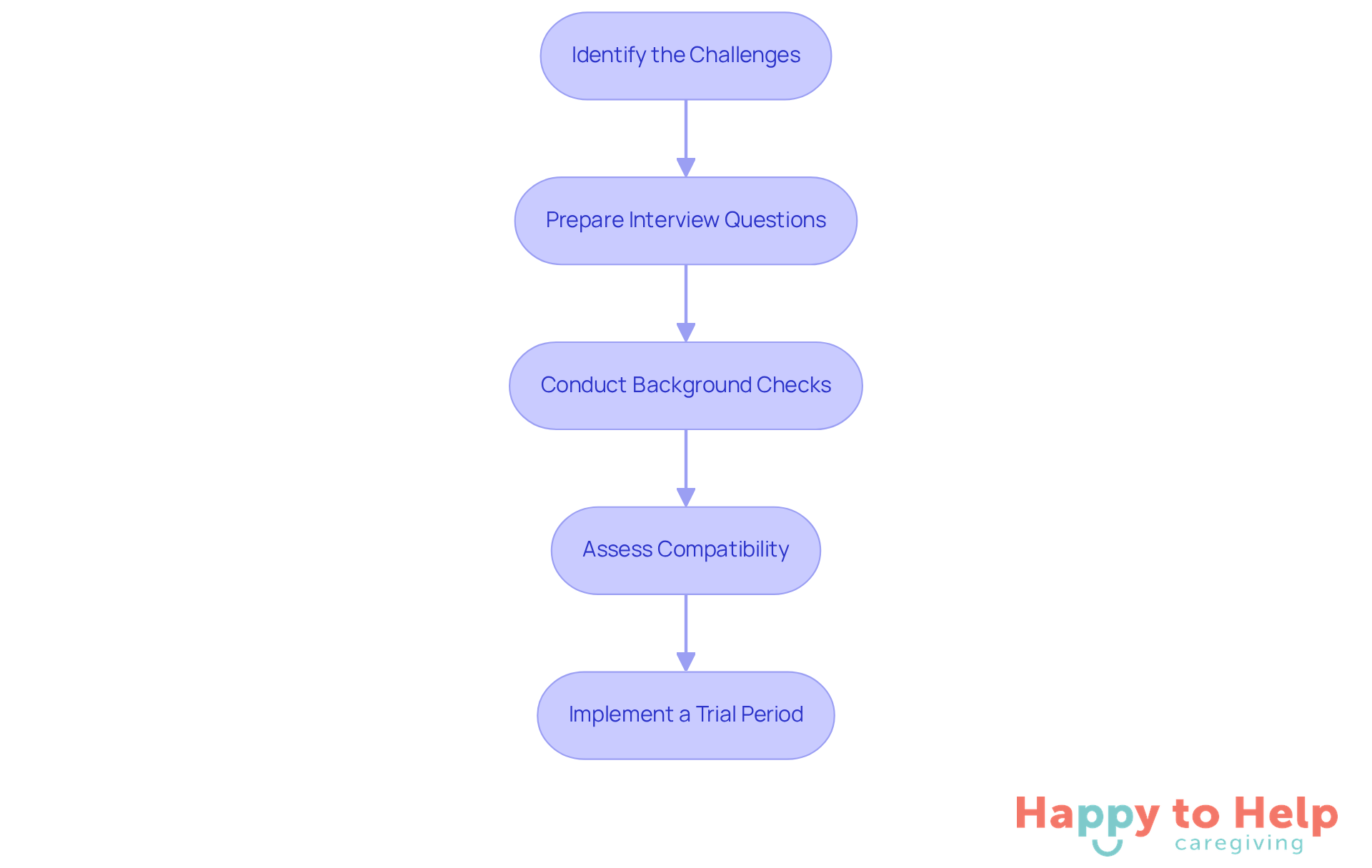
Identify the Challenges: Caregivers often face significant challenges when selecting the right support worker. The emotional connection between the caregiver and the individual receiving care is crucial. Statistics reveal that nearly 1 in 4 caregivers feel socially isolated, highlighting the importance of compatibility in caregiving relationships.
-
Prepare Interview Questions: To address these challenges, create a thorough list of inquiries that explore the individual's experience, qualifications, and caregiving philosophy. Effective questions might include: 'What experience do you have with [specific condition]?' and 'How do you handle challenging situations?' This approach not only gauges their expertise but also reveals their problem-solving skills.
-
Conduct Background Checks: Another critical step is to verify the provider's credentials through thorough background checks. This process should encompass checking references, previous employment, and any criminal history. Given that support worker background checks are typically more extensive than routine employment checks, they often include national criminal records and abuse registries. As Matthew J. Rodgers, co-founder of iprospectcheck, states, "Home healthcare employers that are looking to hire a caregiver near me should conduct extensive background checks on each applicant." This diligence helps ensure the safety of your loved one and complies with the Fair Credit Reporting Act (FCRA), which mandates transparency in the background check process.
-
Assess Compatibility: During the interview, observe the provider's demeanor and communication style closely. When you hire a caregiver near me, compatibility is vital, as the supporter should be able to relate to your family member, promoting a feeling of comfort and trust.
-
Implement a Trial Period: Introducing a trial phase can be advantageous, enabling the helper to assist your family member for several days. This arrangement provides both parties the opportunity to assess compatibility and make necessary adjustments. Such practical experiences can significantly influence the long-term success of the caregiving relationship.
Develop a Care Plan and Write a Contract
-
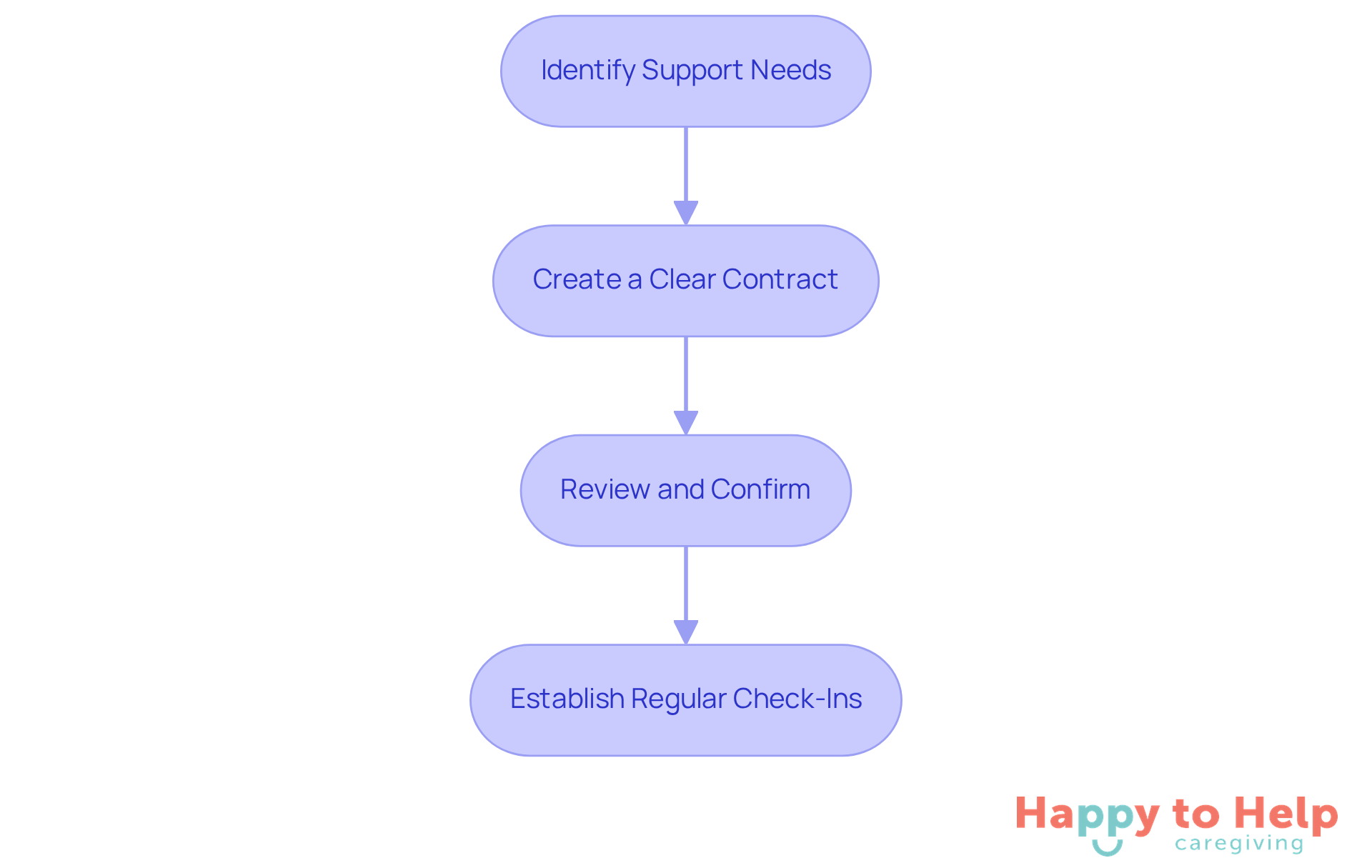
Identify Support Needs: Caregivers often struggle to define the specific support requirements for their loved ones. This can lead to confusion and unmet needs. To address this, collaborate with a helper to create a comprehensive support plan that outlines daily activities, medical requirements, and any particular preferences your loved one may have. Ensure this plan is flexible to adapt to changing needs.
-
Create a Clear Contract: Misunderstandings can arise without a well-defined agreement. Draft a contract for the support provider that includes payment terms, work schedule, responsibilities, and termination conditions. A clear and comprehensive document helps prevent conflicts and ensures everyone is on the same page.
-
Review and Confirm: It's crucial for both parties to fully understand the plan and contract. Examine these documents together, ensuring all details are clear and accepted. Once finalized, both the caregiver and the family should sign the contract to formalize the agreement.
-
Establish Regular Check-Ins: Ongoing communication is vital for effective caregiving. Schedule regular meetings to discuss the plan's effectiveness and make necessary adjustments. This practice not only helps maintain a positive relationship but also ensures that care remains aligned with your loved one's evolving needs.
Your Path Forward
Finding the right caregiver for a loved one can be a daunting challenge. Families often face the stress of ensuring their loved ones receive the best possible support while navigating budget constraints and the complexities of hiring. This process can feel overwhelming, but it’s crucial for the well-being of both the caregiver and the individual in need of assistance.
To tackle this issue, families should start by:
- Assessing care needs and understanding the pros and cons of direct hiring versus agency services. This foundational step allows for informed decision-making.
- Interviewing and screening potential caregivers is essential.
- Developing a comprehensive care plan and creating a clear contract will further solidify the caregiver-client relationship, ensuring that unique needs are met effectively and compassionately.
Compatibility and ongoing communication are vital components of a successful caregiving experience. They foster trust and understanding, which are crucial for both parties involved. By prioritizing these elements, families can significantly enhance the quality of life for their loved ones.
Ultimately, taking the time to follow these steps not only safeguards the well-being of your loved one but also brings peace of mind to the family. Emphasizing thorough research and thoughtful planning will lead to a more fulfilling caregiving relationship. Remember, investing in the right caregiver is an investment in the quality of life for everyone involved.
https://iframe.tely.ai/cta/eyJhcnRpY2xlX2lkIjogIjY5MjRmMjA5Y2Q1NjY3YWUxYjQzNTcxMyIsICJjb21wYW55X2lkIjogIjY4ZWU1ZGNhNzMxNzYyNTU3ZjNjOTVjMSIsICJpbmRleCI6IG51bGwsICJ0eXBlIjogImFydGljbGUifQ==Frequently Asked Questions
What should I do to identify the specific care needs of my family member?
Begin by listing daily activities that may be difficult for them, such as bathing, dressing, meal preparation, medication management, and companionship. Additionally, consider any medical conditions that may require specialized treatment.
How can healthcare experts assist in assessing care needs?
Engaging with healthcare professionals can provide valuable insights. Speaking with your loved one's physician or a healthcare expert can help assess the level of assistance required based on their medical history and current health status.
What factors should I consider when determining a budget for caregiving services?
Assess your financial situation to establish a realistic budget. Typical expenses for caregiving services in your region may range from $25 to $80 per hour, depending on the type of assistance required. Also, consider how many hours of help you will need each week.
Why is it important to consider long-term care needs?
Caregiving needs can evolve over time, so it is important to think about whether your loved one's requirements may change in the future. Preparing for potential increases in support needs can help you avoid future financial strain.
List of Sources
- Assess Care Needs and Budget
- Cost of In-Home Care in California (2025) + 11 Ways to Pay (https://lovinghomecareinc.com/blog/cost-of-in-home-care-california)
- Medicaid Home Care Cuts Could Cost States $1 Billion Over 5 Years (https://homehealthcarenews.com/2025/10/medicaid-home-care-cuts-could-cost-states-1-billion-over-5-years)
- Home Care Costs in 2025: A State-by-State Guide (https://aplaceformom.com/caregiver-resources/articles/in-home-care-costs)
- Bridging the Gap in Elderly Care: The Case for Comprehensive In-Home Assessment (https://reachmd.com/news/bridging-the-gap-in-elderly-care-the-case-for-comprehensive-in-home-assessment/2474101)
- New Study Finds That While Aging Seniors Prefer In-Home Care, Most Are Critically Underprepared for Future Healthcare Needs | Cross Country Healthcare, Inc. (https://ir.crosscountry.com/news-releases/news-release-details/new-study-finds-while-aging-seniors-prefer-home-care-most-are)
- Choose Between Direct Hire or Agency
- Choosing a Caregiver: Agency vs Independent Contractors (https://senior1care.com/senior-care-advice/choosing-a-caregiver-agency-vs-independent-contractors-fortwayne)
- Hiring a Qualified Home Care Agency vs Hiring an Independent Caregiver: Which is Best for Your Loved One? (https://assistinghands.com/135/texas/nesanantonio/blog/hiring-a-qualified-home-care-agency-vs-hiring-an-independent-caregiver-which-is-best-for-your-loved-one)
- Risks of Hiring a Private Caregiver vs. Benefits of an Accredited Home Care Agency (https://brightstarcare.com/locations/las-vegas-w/about-us/blog/dangers-of-hiring-privately-and-the-benefits-of-hiring-a-caregiver-from-an-actual-accredited-agency)
- Forbes: How to Choose the Right Caregiver or Caregiving Agency (https://nyulangone.org/news/forbes-how-choose-right-caregiver-or-caregiving-agency)
- Direct vs. Agency-Hired Caregiver: Pros & Cons (https://goinstacare.com/blogs/direct-vs-agency-caregiver)
- Interview and Screen Potential Caregivers
- Caregiver Background Checks: A Complete Guide [2025] - iprospectcheck (https://iprospectcheck.com/caregiver-background-checks)
- Caregiving Statistics US 2025: Insights for Family Caregivers (https://zencaregiving.org/caregiving-statistics-us-2025)
- National Alliance for Caregiving: Caregiving in the US 2025 Report (https://johnahartford.org/resources/view/national-alliance-for-caregiving-caregiving-in-the-us-2025-report)
- DISA | Caregiver Screening for Safe Home Healthcare (https://disa.com/news/caregiver-background-check-best-practices)
- The Case For Stronger Caregiver Vetting In Home Care (https://homehealthcarenews.com/2024/10/the-case-for-stronger-caregiver-vetting-in-home-care)
- Develop a Care Plan and Write a Contract
- Caregiving in the US 2025 (https://aarp.org/pri/topics/ltss/family-caregiving/caregiving-in-the-us-2025)
- Creating a Caregiver Contract: What to Include and Why It's Important (https://seniorlivingnearme.com/resources/creating-a-caregiver-contract-what-to-include-and-why-its-important)
- What is a Caregiver Agreement and When to Use it? (https://rothkofflaw.com/2025/08/14/what-is-a-caregiver-agreement-and-when-to-use-it)
- THE IMPORTANCE OF CAREGIVER CONTRACTS FOR FAMILY CAREGIVERS - Brody Wilkinson PC (https://brodywilk.com/the-importance-of-caregiver-contracts-for-family-caregivers)
- Caregivers Face Lasting Financial, Emotional and Career Impacts, Edward Jones Study Finds (https://prnewswire.com/news-releases/caregivers-face-lasting-financial-emotional-and-career-impacts-edward-jones-study-finds-302459732.html)