
Why Hire a Private Caregiver Wanted for Matters
Hiring a private caregiver can be a daunting task for families. The challenge lies in finding the right individual who can provide the best possible care for their loved ones. Caregivers face significant emotional and physical demands, making it essential for families to clearly define roles, qualifications, and support systems.
What steps can families take to attract skilled caregivers while fostering an environment that promotes their well-being and retention? This article outlines four essential steps to streamline the hiring process and enhance caregiver satisfaction. By addressing these challenges, families can benefit both the caregiver and the loved ones they serve.
Define the Caregiver Role Clearly
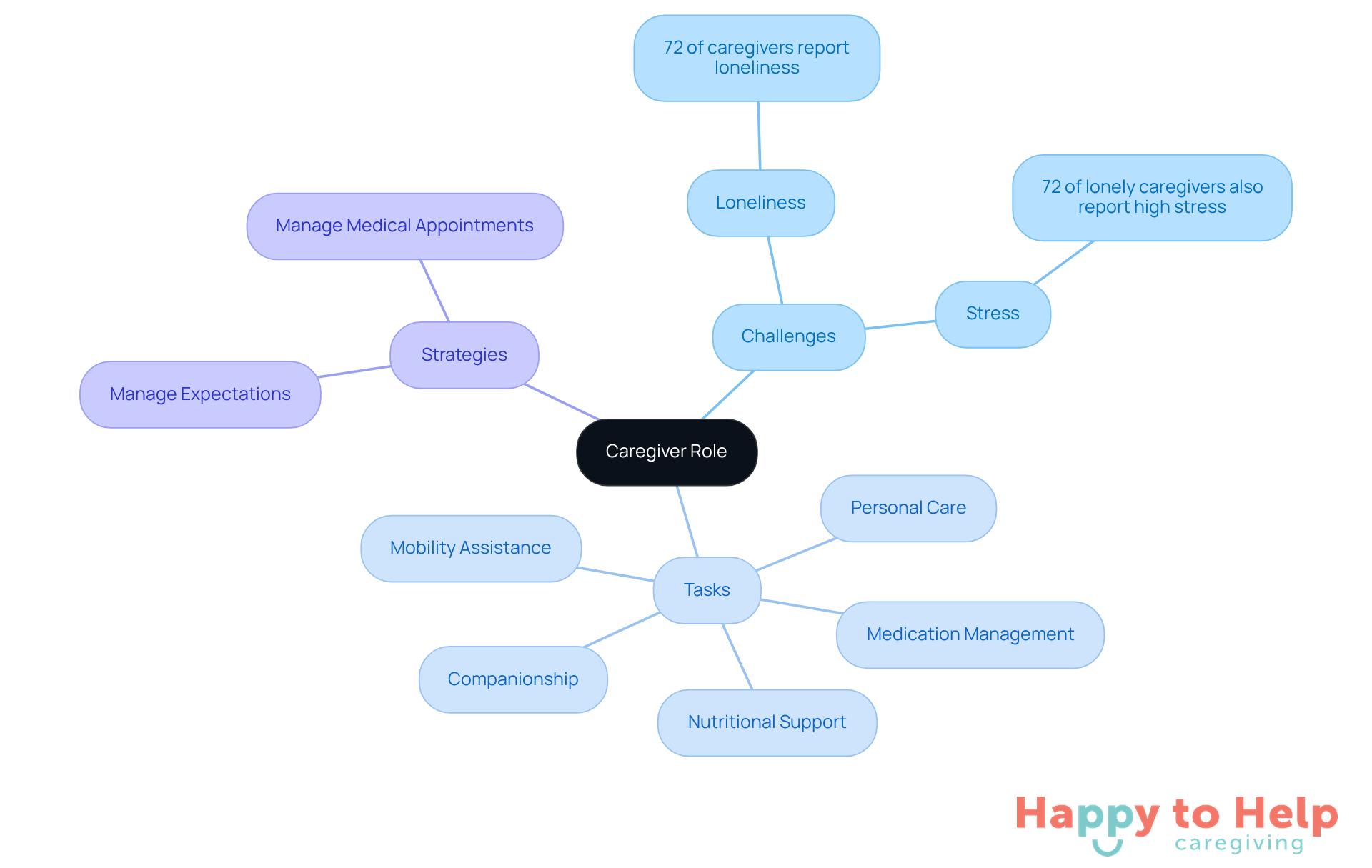
Caregivers face significant challenges in their roles, particularly when it comes to providing emotional support and companionship. Many caregivers struggle with feelings of loneliness and stress, which can adversely affect their mental health and the quality of care they provide.
Studies indicate that approximately 72% of caregivers who report feelings of loneliness also experience high levels of stress. This highlights the critical need for caregivers to cultivate meaningful connections with those they assist. Engaging conversations and social interactions can greatly enhance the emotional well-being of both caregivers and clients.
To address these challenges, caregivers should focus on specific tasks they will perform, such as:
- Personal care
- Companionship
- Medication management
- Mobility assistance
- Nutritional support
Clearly specifying the hours and days they are expected to work can also help manage expectations.
Additionally, outlining any special requirements, such as experience with specific medical conditions or disabilities, is essential. Caregivers should also take charge of managing medical appointments to ensure elderly clients have access to necessary healthcare services. By implementing these strategies, caregivers can improve their own mental health while providing better support to their clients.
List Required Qualifications and Skills
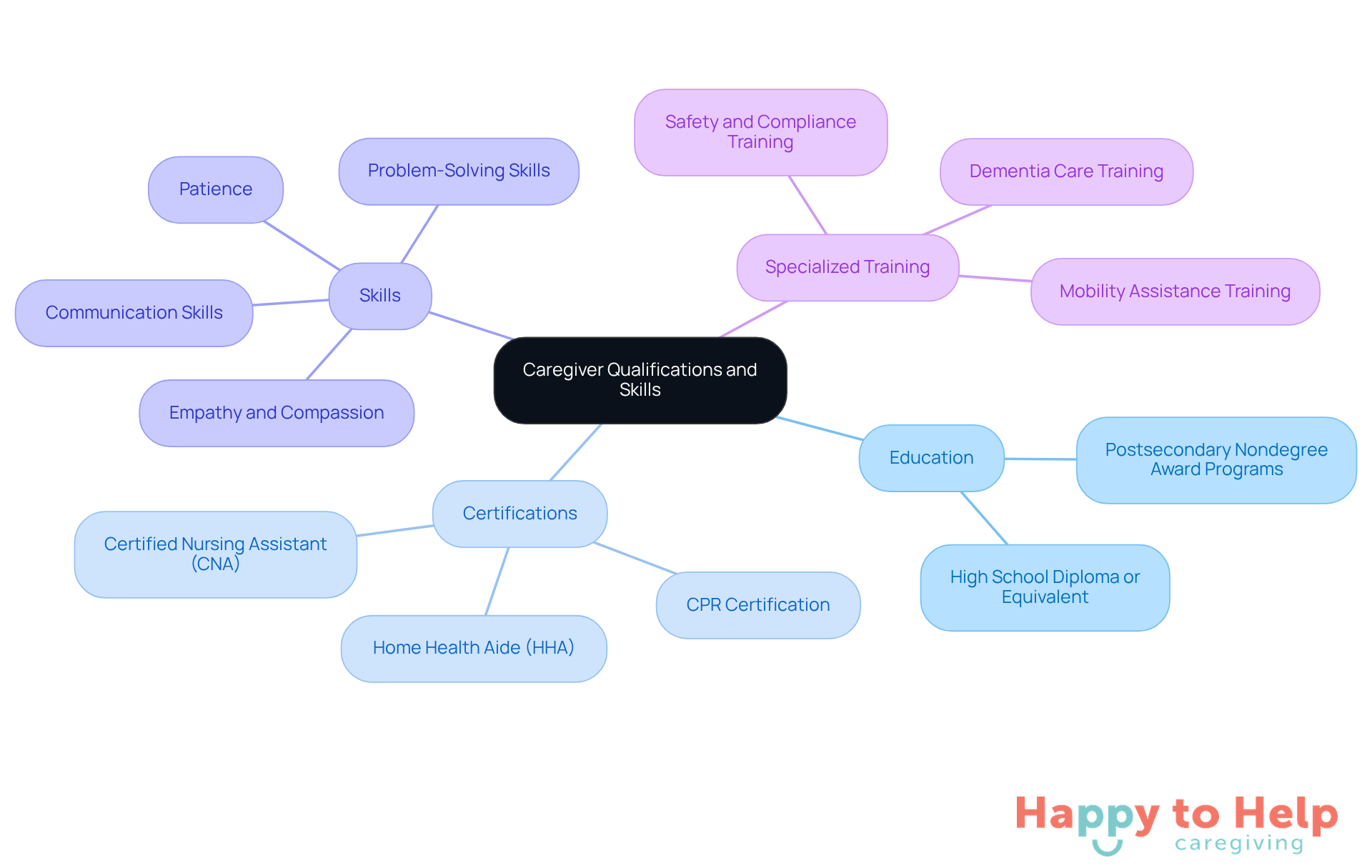
Caregivers face significant challenges when it comes to meeting the necessary qualifications for their roles. Without a minimum level of education, such as a high school diploma or equivalent, caregivers may struggle to provide the best care possible. Additionally, lacking essential certifications-like CPR, CNA, or HHA-can hinder their ability to respond effectively in emergencies.
To address these issues, it's crucial for caregivers to focus on acquiring the necessary qualifications. Here are some essential requirements:
- Education: A minimum level of education, such as a high school diploma or equivalent, is required.
- Certifications: Necessary certifications, including CPR, CNA, or HHA, should be obtained.
- Skills: Essential skills like patience, communication, and problem-solving are vital for effective caregiving.
- Specialized Training: Consider additional training in specialized areas, such as dementia care or mobility assistance, to enhance your skill set.
By prioritizing these qualifications, caregivers can improve their competence and confidence in providing care, ultimately leading to better outcomes for those they serve.
Outline Benefits and Support for Caregivers
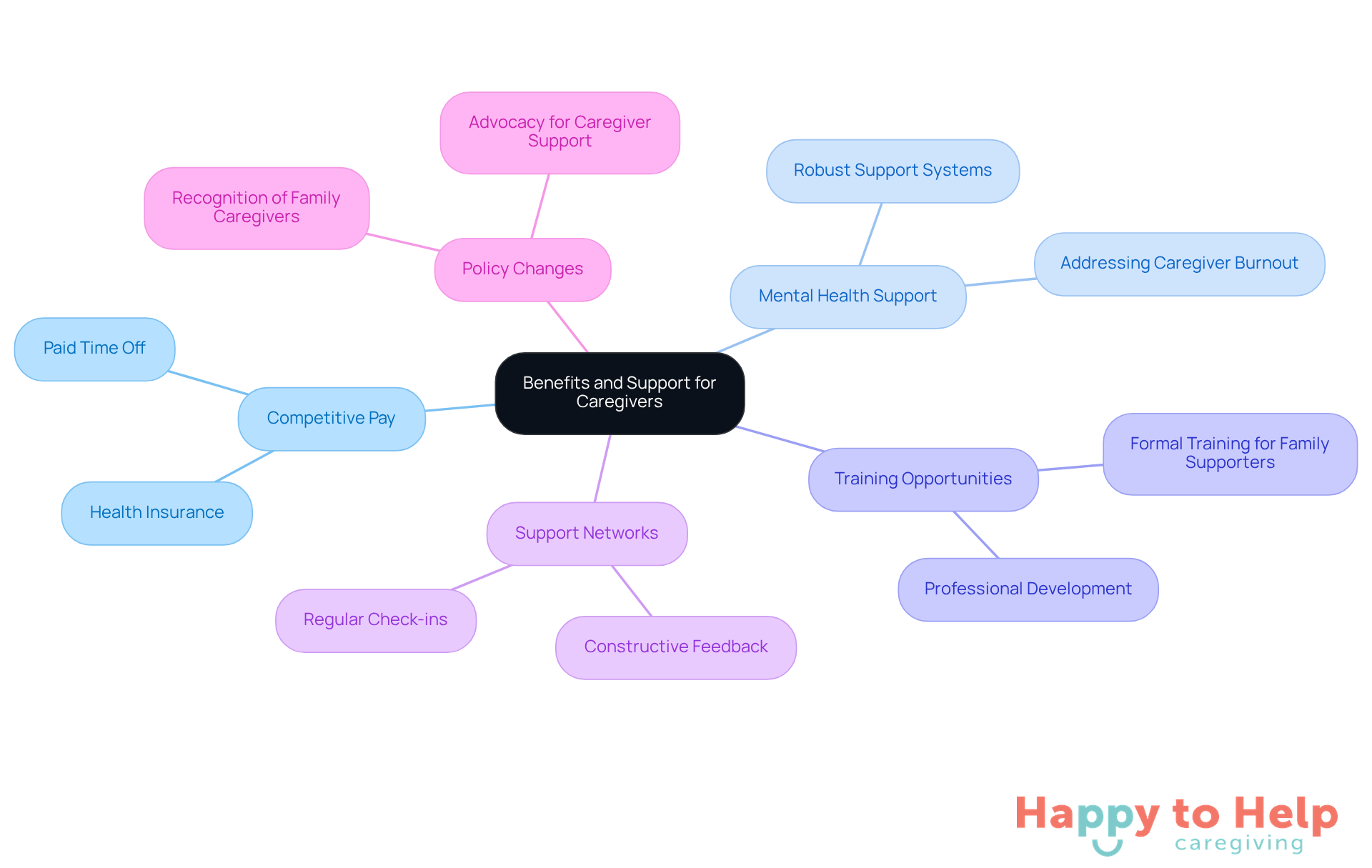
To attract and retain skilled providers, offering competitive pay and benefits, such as health insurance and paid time off, is crucial. Research indicates that nearly half of caregivers report declining mental health, underscoring the urgent need for robust support systems.
Megan Shepherd-Banigan notes, "Defining the experiences of those providing care based on the illness of the recipient alone doesn’t offer enough insight into what these individuals genuinely require." This highlights the necessity for comprehensive support tailored to caregivers' needs.
To address these challenges, organizations should provide access to training and professional development opportunities. Not only does this enhance support staff skills, but it also boosts job satisfaction, which is vital for retention rates. Additionally, creating a strong support network with regular check-ins and constructive feedback can significantly alleviate the emotional and physical strains caregivers often face.
Rani E. Snyder emphasizes that "HaH programs' success greatly depends on family supporters' active participation; however, many lack formal training, resulting in heightened stress and potential dangers for both patients and supporters." This points to the importance of equipping family supporters with the necessary training to reduce stress and improve care quality.
Furthermore, fostering a positive work atmosphere that recognizes and appreciates the contributions of caregivers is essential. This approach not only enhances the morale of those providing care but also improves the quality of service offered to clients, ultimately benefiting families who are seeking a private caregiver wanted for reliable in-home assistance.
Promoting policy changes to officially acknowledge and assist family supporters can further strengthen these support systems.
Simplify the Application Process
Problem: The caregiving industry faces a significant challenge with a turnover rate of 66%, meaning that many new hires leave within their first 90 days. This high turnover can disrupt care continuity and increase recruitment costs.
Agitate: When agencies fail to attract and retain quality caregivers, they not only struggle with staffing but also risk compromising the quality of care provided to clients. This can lead to a negative reputation and further difficulties in hiring.
Solution: To combat these issues, agencies can take several actionable steps:
-
Develop a Clear Job Description: Create a concise job description that outlines the role's expectations, required qualifications, and unique benefits of working with your agency. Highlight flexible scheduling options, as agencies that allow support staff to choose their preferred shifts, locations, or client types are more likely to retain them. To attract quality candidates, it is essential to emphasize opportunities for professional growth and a supportive work environment, as a private caregiver is wanted.
-
Leverage Online Job Platforms: Utilize platforms like Indeed, ZipRecruiter, and SimplyHired to maximize visibility for your postings for private caregiver wanted positions. These platforms can reach a broad audience, with Indeed attracting over 100 million unique visitors monthly, making it an effective channel for recruitment.
-
Streamline the Application Process: Implement a straightforward application form that eliminates unnecessary questions. Aim for an application completion time of no more than 8-10 minutes to reduce abandonment rates and encourage more candidates to apply.
-
Schedule Interviews Promptly: Ensure that interviews are scheduled quickly and provide timely feedback to applicants. This practice keeps candidates engaged and demonstrates your agency's commitment to a positive hiring experience, enhancing your reputation and attracting more applicants.

Taking the Next Steps
Finding the right private caregiver for a family can be a complex and emotional process. Families often struggle with defining the caregiver's role, identifying necessary qualifications, and ensuring a supportive work environment. This challenge can lead to stress and uncertainty, impacting both the caregiver's effectiveness and the family's peace of mind.
To address these issues, it's crucial to clearly define the caregiver's responsibilities and ensure they possess the required qualifications. Providing competitive pay and benefits is essential for attracting skilled caregivers, while a streamlined hiring process can significantly reduce turnover rates. Each of these elements contributes to a positive experience for both caregivers and clients, ultimately enhancing the quality of care provided.
In conclusion, prioritizing these steps not only facilitates the hiring of a competent private caregiver but also fosters a supportive atmosphere that benefits everyone involved. Families seeking a caregiver should approach this process with clarity and compassion, recognizing the vital role these professionals play in enhancing the lives of their loved ones. Taking action now can lead to a more fulfilling caregiving experience for both the caregiver and the family.
https://iframe.tely.ai/cta/eyJhcnRpY2xlX2lkIjogIjY5MjRmMjBiZWM0Y2FiOGU3NGVjMDEwZSIsICJjb21wYW55X2lkIjogIjY4ZWU1ZGNhNzMxNzYyNTU3ZjNjOTVjMSIsICJpbmRleCI6IG51bGwsICJ0eXBlIjogImFydGljbGUifQ==Frequently Asked Questions
What challenges do caregivers face in their roles?
Caregivers face significant challenges, particularly in providing emotional support and companionship, which can lead to feelings of loneliness and stress, adversely affecting their mental health and the quality of care they provide.
What percentage of caregivers report feelings of loneliness and stress?
Approximately 72% of caregivers who report feelings of loneliness also experience high levels of stress.
How can caregivers enhance their emotional well-being?
Caregivers can enhance their emotional well-being by cultivating meaningful connections with those they assist through engaging conversations and social interactions.
What specific tasks should caregivers focus on?
Caregivers should focus on tasks such as personal care, companionship, medication management, mobility assistance, and nutritional support.
Why is it important for caregivers to specify their working hours?
Clearly specifying the hours and days they are expected to work helps manage expectations for both caregivers and clients.
What special requirements should caregivers outline?
Caregivers should outline any special requirements, such as experience with specific medical conditions or disabilities.
How can caregivers ensure clients have access to healthcare services?
Caregivers should take charge of managing medical appointments to ensure elderly clients have access to necessary healthcare services.
List of Sources
- Define the Caregiver Role Clearly
- I Can’t Talk to My Ill Spouse. How Can I Get Support? (https://aarp.org/caregiving/basics/caregiver-find-emotional-support)
- Essential Caregiver Duties for Elderly Well-being (https://lovinghomecareinc.com/caregiver-duties-responsibilities-elderly)
- Caregiving can be a tough, lonely mission. One daughter found ways to reconnect (https://npr.org/sections/shots-health-news/2024/10/31/nx-s1-5172517/caregiver-caregiving-isolation-burnout-resources)
- Location, individual circumstances impact caregiver well-being, researchers find | Penn State University (https://psu.edu/news/research/story/location-individual-circumstances-impact-caregiver-well-being-researchers-find)
- List Required Qualifications and Skills
- Home Health and Personal Care Aides (https://bls.gov/ooh/healthcare/home-health-aides-and-personal-care-aides.htm)
- What Qualifications Do I Need to Become a Caregiver? - Senior1Care of South Bend (https://senior1care.com/caregiver/caregiver-qualifications-requirements)
- Home Care Training: Key Qualifications for Success - Cottage Home Care (https://cottagehomecare.com/blog/home-care-qualifications-guide)
- 8 Essential Caregiver Skills You Need To Succeed - NCCDP (https://nccdp.org/8-essential-caregiver-skills-you-need-to-succeed)
- Professional Caregiver Requirements - HomeChoice Home Care Solutions (https://homechoicehomecare.com/careers-in-caring/professional-caregiver-requirements)
- Outline Benefits and Support for Caregivers
- Health Affairs Forefront Article: Supporting Family Caregivers In Hospital At Home (https://johnahartford.org/resources/view/health-affairs-forefront-article-supporting-family-caregivers-in-hospital-at-home)
- Reimagining Support for Family Caregivers and Their Loved Ones (https://medschool.duke.edu/news/reimagining-support-family-caregivers-and-their-loved-ones)
- HHS Backs AI Innovation for America’s Caregivers | HHS.gov (https://hhs.gov/press-room/hhs-backs-ai-innovation-for-americas-caregivers.html)
- News Releases (https://hcaoa.org/news-releases.html)
- Building a lifeline for family caregivers across the US (https://news.mit.edu/2025/ianacare-builds-lifeline-for-family-caregivers-across-us-0811)
- Simplify the Application Process
- Top Caregiver Recruitment Tips for Home Health Agencies - HCMP Blog (https://homecaremarketing.com/recruiting-hiring/home-health-caregiver-recruitment)
- Strategies for Recruiting & Retaining Caregivers in Home Health Care (https://nursemagic.ai/post/strategies-for-recruiting-retaining-caregivers-in-home-health-care)
- The Ultimate Guide to Caregiver Recruitment for Home Care Agencies (https://telescopehr.com/blog/the-ultimate-guide-to-caregiver-recruitment-for-home-care-agencies)
- Recruit, Onboard, Track, Pay, and Retain: Simplify Home Care HR Management With One Solution | Aaniie, formerly Smartcare Software (https://aaniie.com/news/recruit-onboard-track-pay-retain-simplify-home-care-hr-management-with-one-solution)
- How to Onboard Caregivers Quickly and Effectively | HHAeXchange (https://hhaexchange.com/blog/how-to-onboard-caregivers-quickly-and-effectively)