For families in our service areas
For families in our service areas, this guide explains caregiver support and how non-medical in-home caregiving can support care planning in East Idaho, Treasure Valley & Magic Valley, Northern Wasatch, North Central West Virginia, and Northeast Ohio.
Manage Caregiver Burnout Effectively at a Glance
Managing caregiver burnout effectively begins with recognizing the signs of exhaustion. It's important to understand that caregivers often face significant emotional and physical fatigue. By prioritizing self-care, setting realistic goals, and seeking support from community resources, caregivers can take proactive steps towards enhancing their well-being.
Utilizing various strategies and support networks not only helps in alleviating stress but also improves the quality of care they provide. Remember, you are not alone in this journey. There are compassionate resources available to support you, and reaching out can make a world of difference.
Understanding Manage Caregiver Burnout Effectively
Caregiver burnout is a widespread issue that impacts nearly half of those in caregiving roles, leading to emotional, physical, and mental exhaustion. It's essential to understand that managing this burnout is not only beneficial for caregivers but also crucial for the quality of care they provide to their loved ones.
What strategies can caregivers implement to reclaim their well-being and remain effective in their roles? This article explores the vital steps that can assist caregivers in:
- Recognizing the signs of burnout
- Applying effective management techniques
- Seeking the support they need to flourish
Define Caregiver Burnout and Its Impact
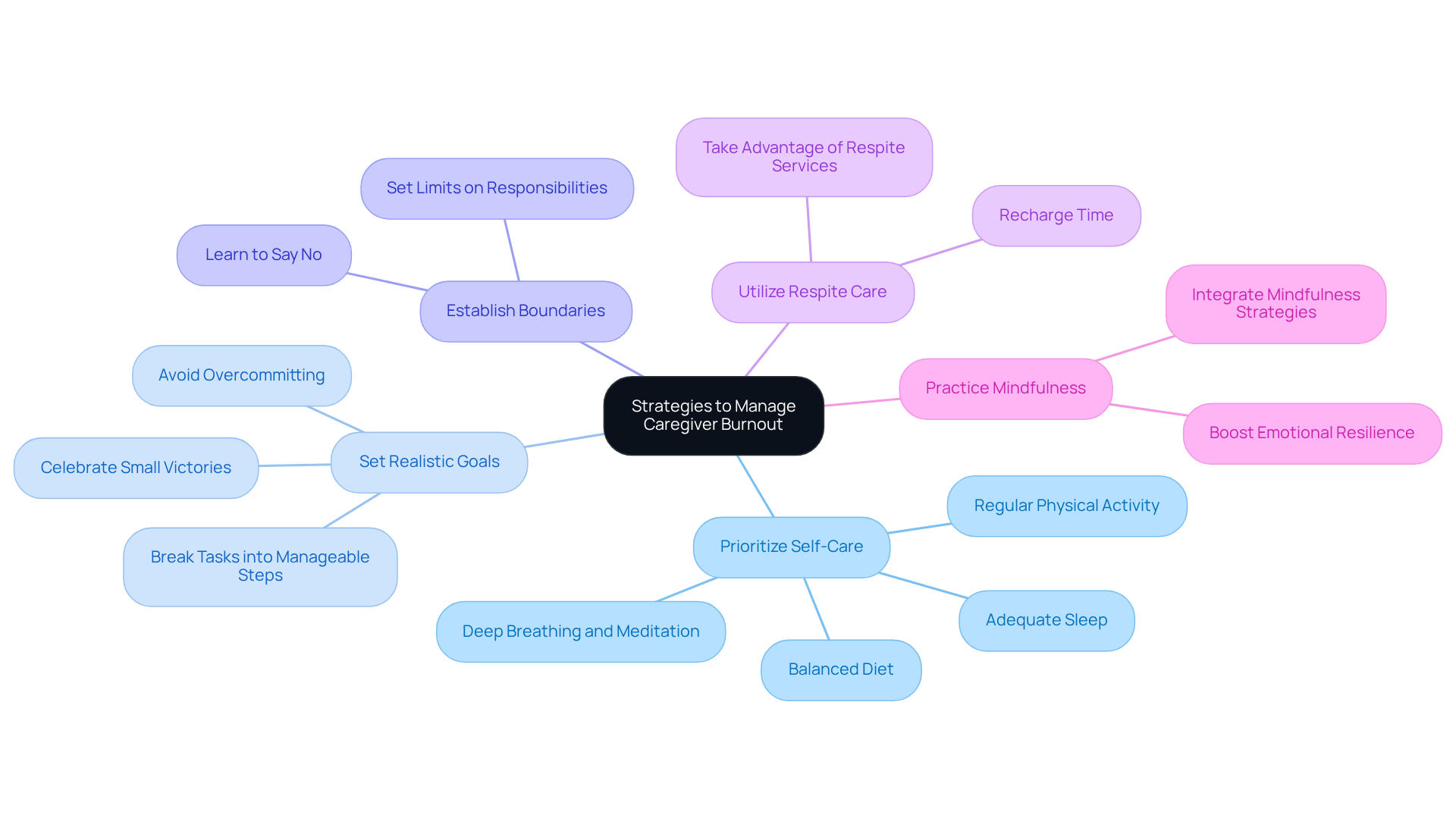
The exhaustion experienced by those providing care illustrates the significant condition of emotional, physical, and mental fatigue, which raises awareness about how to manage caregiver burnout. It occurs when caregivers feel overwhelmed by their duties, which emphasizes the importance of knowing how to manage caregiver burnout. This condition often arises from prolonged stress, leading to feelings of helplessness, frustration, and entrapment. The consequences of support provider burnout extend beyond the individual, significantly impacting the quality of care given to those receiving help. Statistics reveal that nearly half of caregivers experience some type of burden, with prevalence rates ranging from 31.67% to 61.73%. Moreover, studies indicate that about one in three individuals in caregiving roles suffers from depression and anxiety, with median prevalence rates of 33.35% for depression and 35.25% for anxiety. These challenges can diminish their ability to provide effective care.
Mental health professionals emphasize the critical need for caregivers to understand how to manage caregiver burnout by recognizing their limits and seeking support. For instance, Deborah Derrickson Kossmann, a psychologist, highlights the importance of negotiating for assistance to alleviate stress and enhance caregiving effectiveness. Dr. Susan Wehry also notes that a continuous 'fight or flight' state can lead to burnout and a lack of emotional engagement. Real-world experiences illustrate the emotional and physical toll of providing care; many caregivers report symptoms such as insomnia, fatigue, and feelings of being overwhelmed. The COVID-19 pandemic has exacerbated these challenges, with over half of caregivers reporting heightened anxiety and depression during this time.
Ultimately, recognizing how to manage caregiver burnout and addressing the exhaustion of caregivers is crucial, not only for their well-being but also for the health and quality of assistance offered to their loved ones. Without adequate support, exhaustion can lead to diminished caregiving efficiency and increased health risks for caregivers. This highlights the importance of self-care and support networks. Support groups, as noted by Jerry Bishop, can serve as valuable resources for caregivers seeking connection and assistance.
Recognize the Signs and Symptoms of Burnout
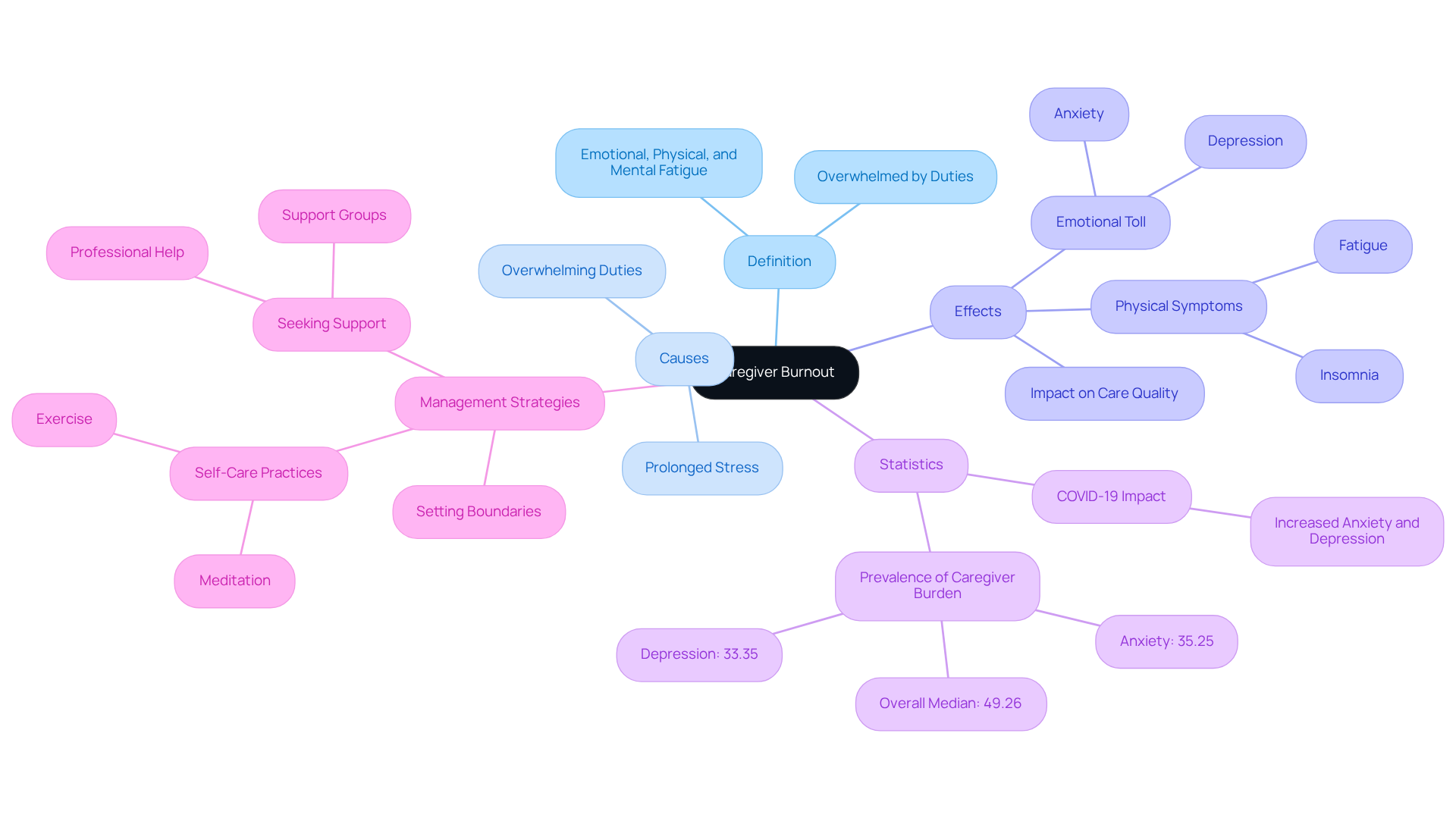
Recognizing the signs of provider burnout is vital for understanding how to manage caregiver burnout effectively. Caregivers often face emotional exhaustion and significant stress, highlighting the importance of learning how to manage caregiver burnout. Physical symptoms such as chronic fatigue, sleep disturbances—impacting up to 3 million individuals—headaches, and changes in appetite reflect the toll of caregiving responsibilities.
Cognitive impairments are also common; many caregivers report difficulties concentrating, forgetfulness, and indecisiveness, which can hinder their ability to provide care effectively. Additionally, social withdrawal, marked by isolating oneself from friends and family and losing interest in once-enjoyed activities, often occurs as caregivers grapple with their emotional burdens. Heightened irritability, characterized by increased frustration and mood swings, can affect relationships and overall well-being.
Awareness of these symptoms is crucial. Nearly 46% of caregivers report feeling overwhelmed by their responsibilities. By identifying these indicators early, support providers can take preventive actions on how to manage caregiver burnout and address exhaustion before it escalates. Remember, as Edward Albert said, "The simple act of caring is heroic." Family support is invaluable in overcoming these challenges, offering the encouragement and affection that caregivers need during difficult times.
Implement Strategies to Manage Burnout
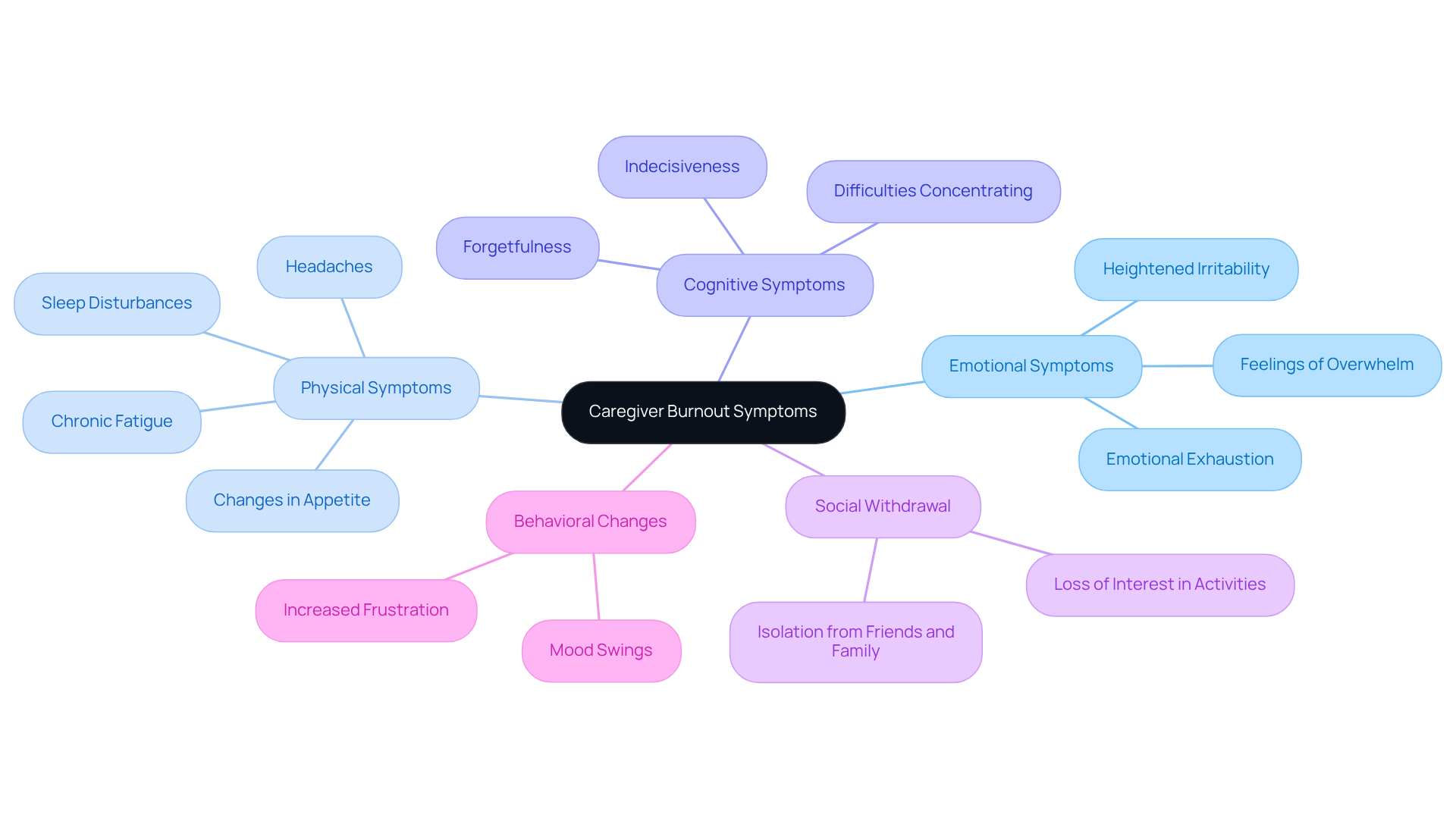
To effectively address caregiver burnout, it is important to understand how to manage caregiver burnout with a compassionate approach. It's essential to recognize the emotional challenges you face and understand how to manage caregiver burnout by taking proactive steps toward your well-being. Here are some nurturing strategies to consider:
-
Prioritize Self-Care: Engage in regular physical activity, maintain a balanced diet, and ensure you get enough sleep. Simple practices like deep breathing or meditation can help lower tension and restore your spirit.
-
Set Realistic Goals: Break your tasks into manageable steps and avoid overcommitting yourself. Remember to celebrate small victories along the way; they can keep your motivation alive.
-
Establish Boundaries: It’s important to learn to say no and set limits on your caregiving responsibilities. This will help you prevent feelings of being overwhelmed.
-
Utilize Respite Care: Don’t hesitate to take advantage of respite care services. Allowing yourself time to recharge is vital for your emotional health.
-
Practice Mindfulness: Integrating mindfulness strategies into your daily routine can significantly boost your emotional resilience and alleviate stress.
By actively engaging in these strategies, you can discover how to manage caregiver burnout while cultivating a more balanced and sustainable caregiving experience. Remember, you are not alone in this journey, and taking care of yourself is a crucial step in providing the best support for those you care for.
Seek Support from Resources and Community
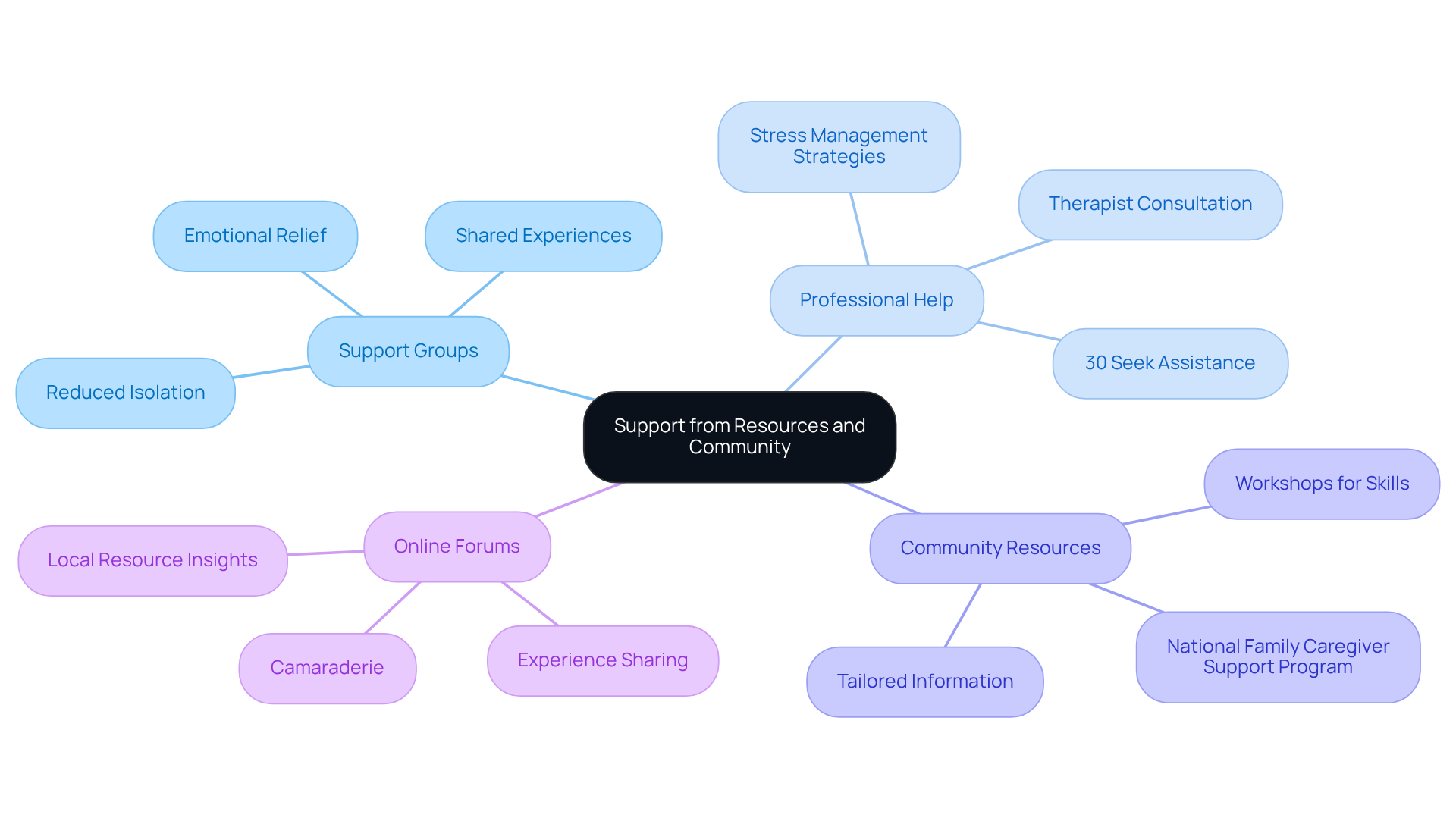
Caregivers often face significant emotional challenges, and it's essential to understand how to manage caregiver burnout and the stress that can arise in these roles. Proactively seeking assistance from diverse resources and community networks can greatly reduce tension and enhance well-being. Here are several effective options to consider:
- Support Groups: Joining a caregiver support group can be a lifeline, providing emotional relief and fostering connections through shared experiences. Many caregivers report that engaging in these groups significantly reduces feelings of isolation. Research shows that individuals in caregiving roles who participate in support groups experience lower levels of tension and improved mental well-being.
- Professional Help: Consulting with a therapist or counselor can be incredibly beneficial. These professionals offer effective strategies to manage stress and navigate emotional challenges, promoting mental health. It's worth noting that approximately 30% of caregivers seek professional assistance, which can be crucial in learning how to manage caregiver burnout.
- Community Resources: Organizations like the National Family Caregiver Support Program provide tailored information and assistance. These resources help caregivers obtain essential services and support for their family members. Additionally, local agencies often offer workshops that equip support providers with practical skills and knowledge.
- Online Forums: Engaging in online communities allows caregivers to share experiences and gain insights from others facing similar challenges. These platforms foster a sense of camaraderie and serve as valuable sources of information about local resources and assistance services.
By utilizing these resources, caregivers can build a robust support network that enhances their resilience and overall quality of life. Moreover, initiatives such as the CFPB's Money As You Grow program illustrate effective strategies for empowering caregivers, highlighting the importance of financial literacy and resource management in their roles. Remember, reaching out for help is a sign of strength, and there are many compassionate individuals and resources ready to support you on this journey.
Moving Forward with Manage Caregiver Burnout Effectively
Recognizing and addressing caregiver burnout is essential for maintaining the well-being of both caregivers and those they support. Understanding the emotional and physical toll that caregiving can take allows individuals to take proactive steps to manage their stress and prevent burnout. It is crucial to recognize the signs of burnout, implement self-care strategies, and seek support from community resources. Caregivers must prioritize their own health to provide effective care.
Key insights include recognizing burnout symptoms, such as emotional exhaustion and physical fatigue, which are prevalent among caregivers. Setting realistic goals, establishing boundaries, and utilizing respite care are vital strategies in mitigating the impact of burnout. Additionally, engaging in support groups and professional counseling can provide invaluable assistance, helping caregivers feel less isolated and more empowered in their roles.
Ultimately, the journey of caregiving is filled with challenges, but it also offers opportunities for growth and connection. By actively seeking support and implementing effective self-care strategies, caregivers can foster resilience within themselves. It is vital to remember that asking for help is a sign of strength. By taking these steps, caregivers can ensure they remain healthy and capable of providing the best care for their loved ones.
https://iframe.tely.ai/cta/eyJhcnRpY2xlX2lkIjogIjY4ZjZjZDJjMTdmYjYxMDU5OGZlZmVkNSIsICJjb21wYW55X2lkIjogIjY4ZWU1ZGNhNzMxNzYyNTU3ZjNjOTVjMSIsICJpbmRleCI6IG51bGwsICJ0eXBlIjogImFydGljbGUifQ==Frequently Asked Questions
What is caregiver burnout?
Caregiver burnout is a significant condition characterized by emotional, physical, and mental fatigue experienced by those providing care. It occurs when caregivers feel overwhelmed by their duties, often due to prolonged stress.
What are the symptoms of caregiver burnout?
Symptoms of caregiver burnout can include feelings of helplessness, frustration, entrapment, insomnia, fatigue, and an overall sense of being overwhelmed.
How prevalent is caregiver burnout among caregivers?
Statistics indicate that nearly half of caregivers experience some type of burden, with prevalence rates ranging from 31.67% to 61.73%. Additionally, about one in three caregivers suffers from depression and anxiety, with median prevalence rates of 33.35% for depression and 35.25% for anxiety.
What are the consequences of caregiver burnout?
The consequences of caregiver burnout extend beyond the individual, negatively impacting the quality of care provided to those receiving assistance. It can also lead to increased health risks for caregivers.
How can caregivers manage burnout?
Caregivers can manage burnout by recognizing their limits, seeking support, and negotiating for assistance. Mental health professionals emphasize the importance of self-care and building support networks.
What role do support groups play for caregivers?
Support groups can serve as valuable resources for caregivers, providing connection and assistance, which can help alleviate the emotional and physical toll of caregiving.
How has the COVID-19 pandemic affected caregivers?
The COVID-19 pandemic has exacerbated challenges for caregivers, with over half reporting heightened anxiety and depression during this time.