
What You Need to Know About Steps for Home Health Care in Fremont
Navigating the complexities of home health care can be a daunting task for families seeking the best support for their loved ones. With a rapidly aging population and varying needs, understanding the essential steps for effective home care in Fremont is crucial.
Families often face the challenge of ensuring they choose the right services and providers. This not only involves meeting medical requirements but also fostering a supportive and compatible environment. The implications of not addressing these needs can lead to inadequate care and increased stress for both caregivers and recipients.
To tackle these challenges, families should focus on creating a personalized care plan. Start by assessing individual needs, which can vary widely among patients. Next, verify caregiver qualifications to ensure they are equipped to provide the necessary support. Understanding costs is also vital, as it helps families budget effectively while securing quality care.
By following these steps, families can navigate the complexities of home health care with confidence, ensuring their loved ones receive the best possible support.
Identify Care Needs and Preferences
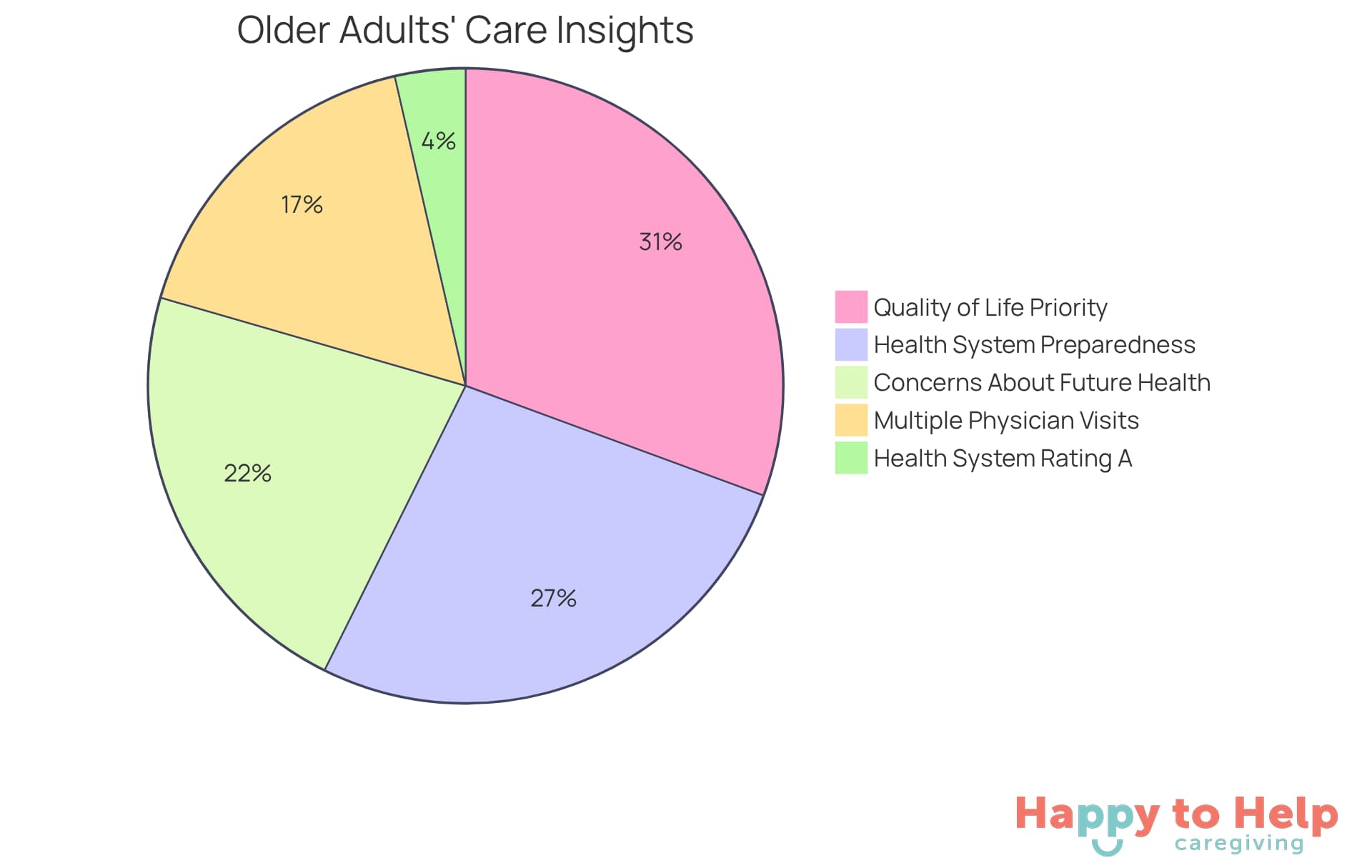
Conducting a comprehensive assessment of an individual's physical, emotional, and social needs is crucial. 94% of older adults prioritize maintaining quality of life over mere longevity, underscoring the importance of tailored evaluations.
Involving family members in these conversations can provide valuable insights into preferences, daily routines, and specific support requirements. Family participation is essential for effective home health care Fremont evaluations, fostering a supportive atmosphere for personalized treatment plans.
It's also vital to consider any medical conditions that require customized support or monitoring. With 52% of Medicare beneficiaries visiting more than three physicians each year, the need for coordinated services becomes evident. Alarmingly, only 11% of older adults rate the health system with an 'A' grade, highlighting significant gaps in care.
Recording preferences regarding activities, companionship, and daily routines ensures that support plans align with the individual's lifestyle and wishes. The U.S. population of adults aged 65 and older has risen 60% from 2000 to 2022, making personalized assessments increasingly critical.
Evaluating the degree of independence the individual wishes to maintain is essential. 68% of older adults express concerns about managing future health and long-term support needs, emphasizing the importance of promoting autonomy in assistance. Furthermore, 82% of older individuals believe the U.S. health system is unprepared for the growing demands of the aging demographic.
Research and Compare Home Care Providers
Finding the right home support agency can be a daunting task for caregivers. With numerous options available, it’s essential to ensure that the chosen agency meets specific needs and standards. This challenge can lead to confusion and uncertainty, making the selection process overwhelming.
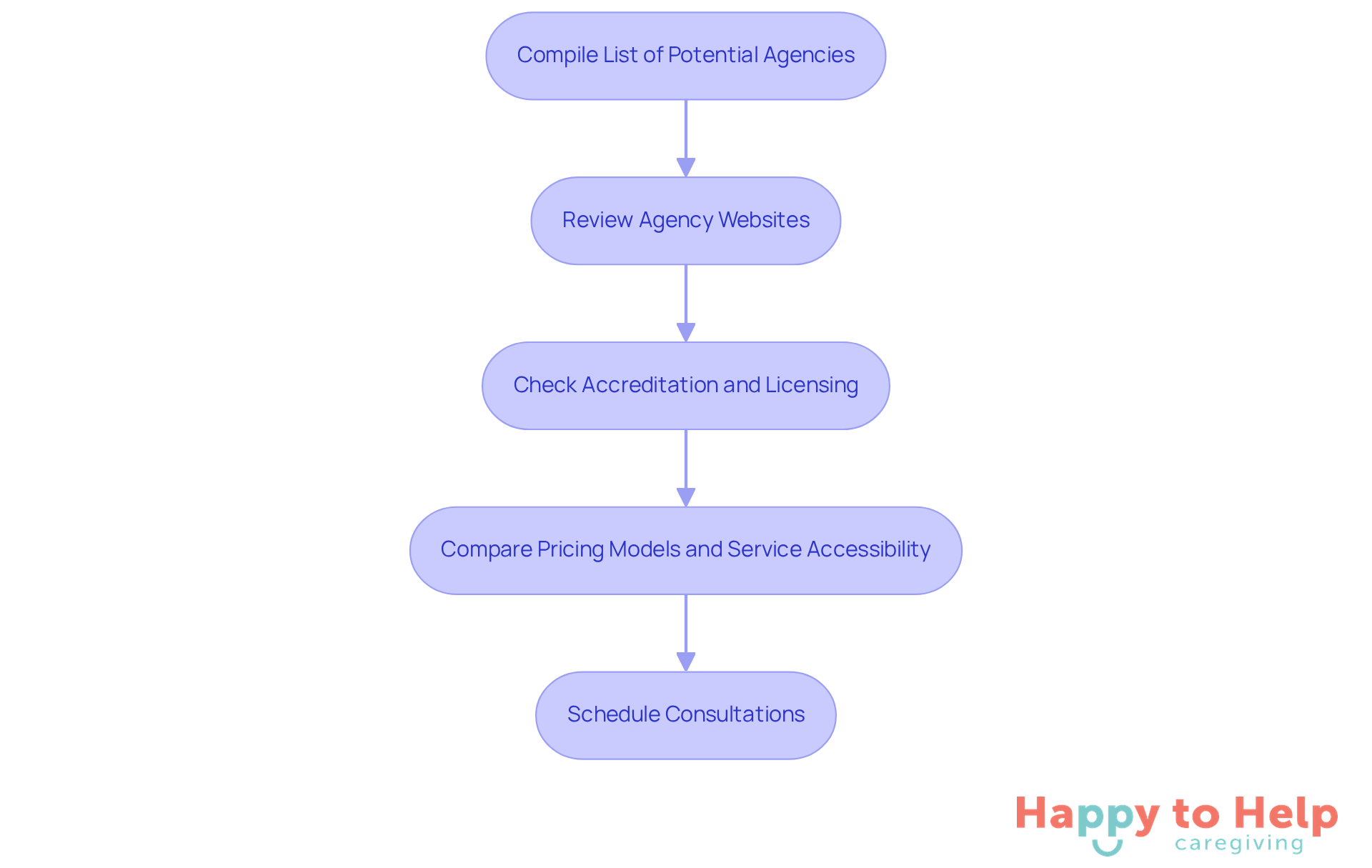
To tackle this issue, start by compiling a list of potential home health care Fremont agencies. Next, review each agency’s website to understand the services they offer and read client testimonials. This will give you insight into their reputation and the quality of care they provide.
Additionally, check for the accreditation and licensing status of the agencies. This step is crucial, as it ensures that the agency adheres to industry standards and regulations. Compare pricing models and service accessibility, such as whether they offer 24/7 assistance, to find the best fit for your needs.
Finally, schedule consultations with your top choices. This allows you to ask questions and gauge their responsiveness, helping you make an informed decision. By following these steps, caregivers can navigate the selection process for home health care in Fremont more effectively and find the right support for their loved ones.
Verify Caregiver Qualifications and Experience
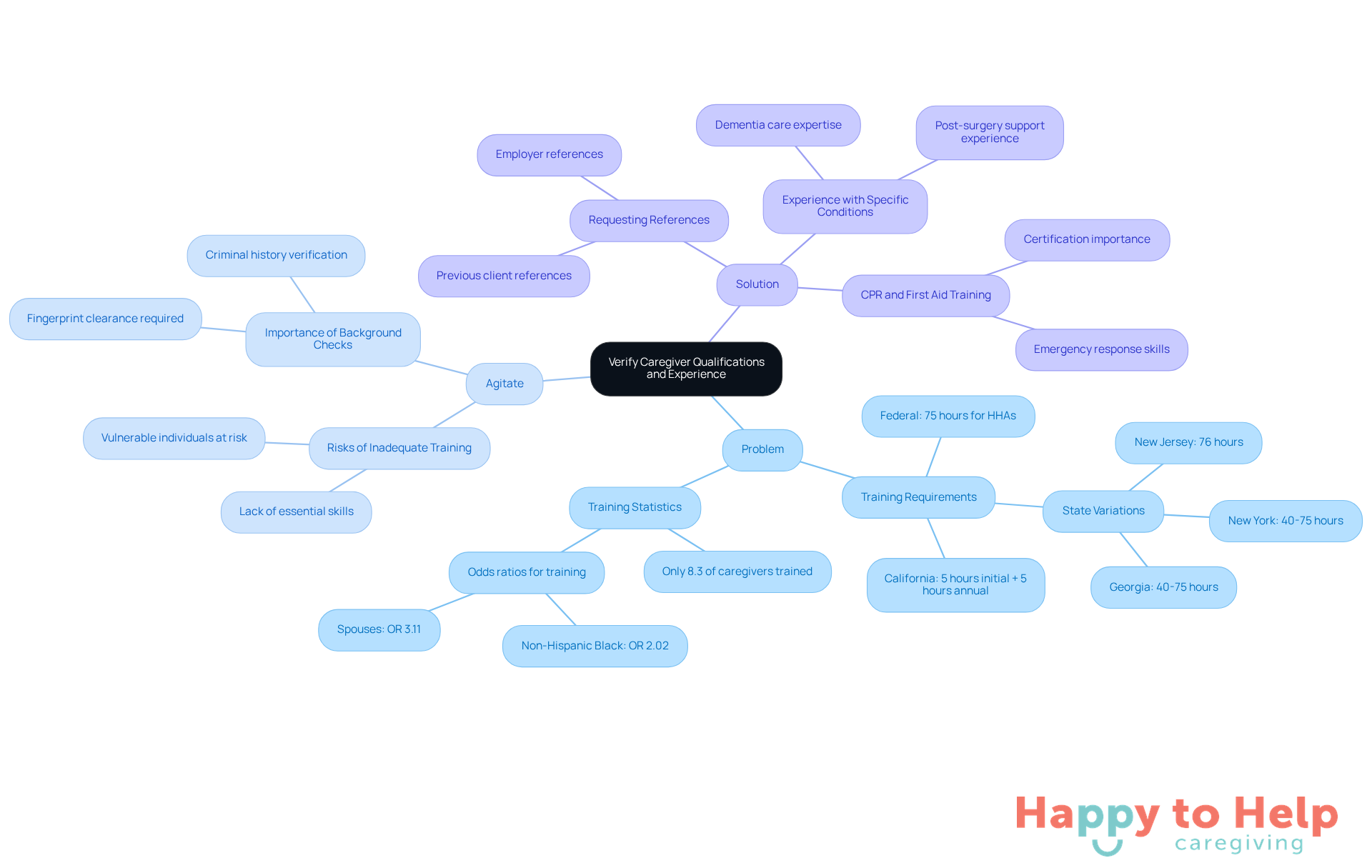
Problem: Ensuring the qualifications of support providers is crucial for the safety and well-being of those receiving care. In California, for example, home health care Fremont aides are required to complete a minimum of 5 hours of initial training and 5 hours annually. However, only 8.3% of support providers in home health care Fremont have received formal training, which highlights the importance of verifying qualifications.
Agitate: Without proper training, caregivers may lack essential skills, putting vulnerable individuals at risk. Additionally, conducting thorough background checks, including fingerprint clearance, is vital to ensure that caregivers have no criminal records. Many states mandate these checks as part of the hiring process, confirming the identity and criminal history of applicants.
Solution: To enhance the quality of care in home health care Fremont, inquire about the provider's experience with specific conditions, such as dementia or post-surgery support. Caregivers trained in these areas are better equipped to handle unique challenges. Furthermore, requesting references from previous clients or employers can provide valuable insights into the provider's reliability and effectiveness.
- Ensure that attendants are trained in CPR and first aid, as certification in these areas is crucial for responding effectively to emergencies.
- The 21st Century Cures Act continues to influence caregiver training standards, making it essential for households to stay informed about these regulations.
Understand Costs and Payment Options
Understanding the costs associated with home health care Fremont services is crucial for families seeking support for their loved ones. The median hourly rate for non-medical in-home assistance in California hovers around $35. Monthly expenses for 40 hours of support can range from $4,000 to $6,400, depending on the level of care required. In Fremont, home health care services have an average starting price that is about 4% lower than the national average of $22.40 per hour, making it a more budget-friendly option compared to other urban areas.
Families face several challenges when exploring payment options for home assistance:
- Medicare: This program offers limited coverage for skilled nursing or therapy services after hospitalization but does not cover long-term personal or custodial care.
- Medi-Cal: California's Medicaid program provides In-Home Supportive Services (IHSS) for qualifying low-income seniors, covering comprehensive in-home assistance costs. However, eligibility is contingent on strict income and asset limits.
- Long-Term Care Insurance (LTCI): This insurance can help with in-home assistance expenses, but families must ensure their policy explicitly covers this type of support, as coverage can vary significantly.
- Private Pay: Many families opt to pay out-of-pocket, allowing for greater control over provider selection and service schedules, though this can quickly deplete savings.
Additionally, financial support programs can alleviate some of the burdens associated with home expenses. Programs like the Veteran’s Pension and VA Aid and Attendance benefits provide financial assistance for eligible veterans and their families. Families can also explore options such as reverse mortgages or selling life insurance policies to fund in-home assistance.
Creating a detailed budget is essential. Families should consider all potential costs, including hourly rates, flat fees for specialized services, and any additional expenses that may arise. By carefully evaluating care needs and comparing rates among local providers, families can make informed decisions that align with their financial situation.

Assess Caregiver Compatibility and Communication
Finding the right provider for caregiving can be challenging. Poor communication and mismatched personalities can lead to misunderstandings and dissatisfaction. To address these issues, caregivers must take proactive steps to ensure a good fit between the provider and the client.
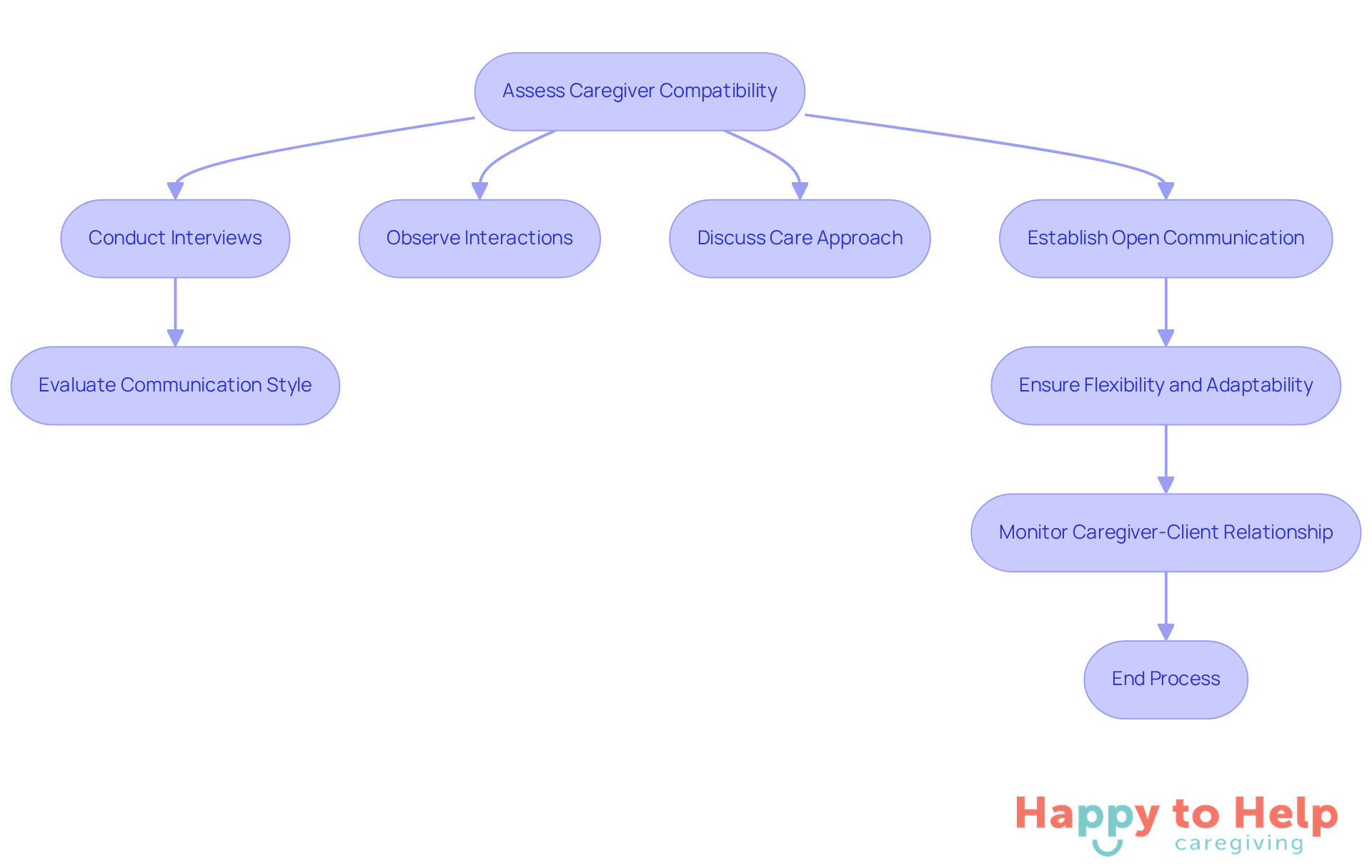
Start by conducting interviews with potential providers. Assess their communication style and personality to gauge how well they might connect with the client. Additionally, observe interactions during trial visits to see how the provider engages with the client in real-time.
It's also crucial to discuss the provider’s approach to care. Understanding how they manage challenges can reveal their problem-solving skills and adaptability. Ensure that the provider is willing to adjust to the client’s preferences and routines, as this flexibility is key to successful caregiving.
Finally, establish open lines of communication between the caregiver, client, and family members. This ensures that everyone is on the same page and can address any concerns promptly, fostering a supportive environment for the client.
Taking the Next Steps
Navigating the complexities of home health care in Fremont can be daunting for families. The challenge lies in ensuring that loved ones receive the personalized support they need, which can often feel overwhelming. Without proper guidance, families may struggle to find the right care, leading to stress and uncertainty.
To address these challenges, it’s essential to focus on individual care needs. Start by:
- Researching potential providers and verifying caregiver qualifications.
- Understanding the costs involved, including various payment options and assistance programs.
- Considering tailored evaluations that account for unique preferences and medical requirements.
Effective communication and compatibility between caregivers and clients are vital. Establishing a strong relationship fosters a supportive environment that enhances the quality of care. By following these essential steps, families can ensure their loved ones receive the best possible support, promoting safety and well-being in the comfort of their own homes.
Taking action now can lead to a more fulfilling and dignified experience for those in need of home health care. Remember, the right support is just a few steps away.
https://iframe.tely.ai/cta/eyJhcnRpY2xlX2lkIjogIjY5NDFmMzQwMTE4MTVjMDQxY2UzNWU0NCIsICJjb21wYW55X2lkIjogIjY4ZWU1ZGNhNzMxNzYyNTU3ZjNjOTVjMSIsICJpbmRleCI6IG51bGwsICJ0eXBlIjogImFydGljbGUifQ==Frequently Asked Questions
Why is it important to identify care needs and preferences for older adults?
Identifying care needs and preferences is crucial because 94% of older adults prioritize maintaining quality of life over mere longevity. Tailored evaluations help ensure that support aligns with individual lifestyles and wishes.
How can family members contribute to the care assessment process?
Family members can provide valuable insights into the individual's preferences, daily routines, and specific support requirements, fostering a supportive atmosphere for personalized treatment plans.
What role do medical conditions play in care assessments?
Medical conditions require customized support or monitoring. With many older adults visiting multiple physicians, coordinated services become essential to address their health needs effectively.
What is the current perception of the health system among older adults?
Only 11% of older adults rate the health system with an 'A' grade, indicating significant gaps in care, and 82% believe the system is unprepared for the growing demands of the aging demographic.
How can preferences regarding daily activities be recorded?
Recording preferences about activities, companionship, and daily routines ensures that support plans are tailored to align with the individual's lifestyle and wishes.
What percentage of older adults are concerned about managing future health needs?
68% of older adults express concerns about managing their future health and long-term support needs, highlighting the importance of promoting their autonomy in assistance.
What steps should caregivers take when researching home care providers?
Caregivers should compile a list of potential agencies, review their websites and client testimonials, check their accreditation and licensing status, compare pricing models, and schedule consultations with top choices.
Why is it important to check the accreditation and licensing status of home care agencies?
Checking accreditation and licensing ensures that the agency adheres to industry standards and regulations, which is crucial for providing quality care.
How can caregivers assess the responsiveness of home care agencies?
Scheduling consultations with top agency choices allows caregivers to ask questions and gauge the agencies' responsiveness, helping them make an informed decision.
List of Sources
- Identify Care Needs and Preferences
- Warning From Older Adults: Care for Aging in America Needs Urgent Rethinking (https://johnahartford.org/newsroom/view/warning-from-older-adults-care-for-aging-in-america-needs-urgent-rethinking)
- Long Term Care 2025 Trends and Outlook (https://providermagazine.com/Articles/Pages/Long Term Care 2025 Trends and Outlook.aspx)
- Increasing resident care needs, staffing challenges have senior living leaders turning to value-based care, AI (https://mcknightsseniorliving.com/news/increasing-resident-care-needs-staffing-challenges-have-senior-living-leaders-turning-to-value-based-care-ai)
- How Family Involvement Enhances the Success of Personalized Support Plans (https://heartwisesupport.org/post/how-family-involvement-enhances-the-success-of-personalized-support-plans-ed3c1)
- Older adults prioritize social activities, inclusiveness in massive survey assessing what matters most to them (https://mcknights.com/news/older-adults-prioritize-social-activities-inclusiveness-in-massive-survey-assessing-what-matters-most-to-them)
- Verify Caregiver Qualifications and Experience
- Factors associated with receipt of caregiver training among family and unpaid caregivers of people living with dementia (https://sciencedirect.com/science/article/pii/S2667032125000186)
- 2025 home care trends include tightened EVV oversight, investments in caregiver training (https://mcknightshomecare.com/2025-home-care-trends-include-tightened-evv-oversight-investments-in-caregiver-training)
- Caregiver Training Requirements by State (https://careacademy.com/blog/do-you-know-the-caregiver-training-requirements-in-your-state)
- Caregiver Certification Requirements And How To Qualify - NCCDP (https://nccdp.org/caregiver-certification-requirements-and-how-to-qualify)
- US News & World Report Highlights CCA's Caregiver Training (https://advancecaregivers.org/report-us-news-world-report-highlights-ccas-caregiver-training)
- Understand Costs and Payment Options
- 10 Ways to Pay for In-Home Care in California | Families Choice Home Care (https://familieschoicehomecare.com/ways-to-pay-for-in-home-care-in-california)
- Cost of In-Home Care in California (2025) + 11 Ways to Pay (https://lovinghomecareinc.com/blog/cost-of-in-home-care-california)
- What Resources Are Available to Pay for Home Care in California? - Senior Caring Solutions (https://homecaresd.com/resources-pay-home-care-california)
- How much does home care cost in Fremont, CA? (https://care.com/cost/home-care/fremont-ca)
- Assess Caregiver Compatibility and Communication
- The Evolution Of Caregiver-Client Matching In Home Care (https://homehealthcarenews.com/2023/08/the-evolution-of-caregiver-client-matching-in-home-care)
- 5 Tips for Client and Caregiver Compatibility (https://activatedinsights.com/articles/5-tips-client-caregiver-compatibility)
- Introducing HomeChoice Match: Revolutionizing Caregiver-Client Connections - HomeChoice Home Care Solutions (https://homechoicehomecare.com/homechoice-home-care-news/introducing-homechoice-match-revolutionizing-caregiver-client-connections)
- Introducing Compatibility: A Smarter Way to Match Carers & Clients | Careberry (https://careberry.com/news-article/introducing-compatibility-a-smarter-way-to-match-carers-clients)
- The Importance of Effective Communication in Caregiving (https://familycaregiversonline.net/the-importance-of-effective-communication-in-caregiving)