
Understanding Steps for In Home Care in Santa Clarita
Navigating the complexities of in-home care can be overwhelming for families in Santa Clarita. With so many options and considerations, it’s easy to feel lost. This situation poses a significant challenge: how can families effectively assess their unique needs, explore available services, and evaluate caregiver qualifications while managing costs?
Understanding these critical areas is essential. Families must delve into their specific requirements and the services that can meet them. By doing so, they empower themselves to make informed choices that enhance the quality of care for their aging relatives. This article outlines five essential steps to simplify the decision-making process and ensure that loved ones receive the tailored care they deserve.
- Assess unique needs
- Explore available services
- Evaluate caregiver qualifications
- Manage costs
- Make informed choices
Assess Care Needs and Preferences
Understanding Holistic Needs in Caregiving
Caregivers often face the challenge of fully grasping an individual's physical, emotional, and social needs. This lack of understanding can lead to inadequate support and care. As Kathryn Anderton, Vice President of Clinical Operations, notes, "The idea of kinship in healthcare has evolved to encompass a more holistic perspective, entailing biological, social, psychological, and legal aspects."
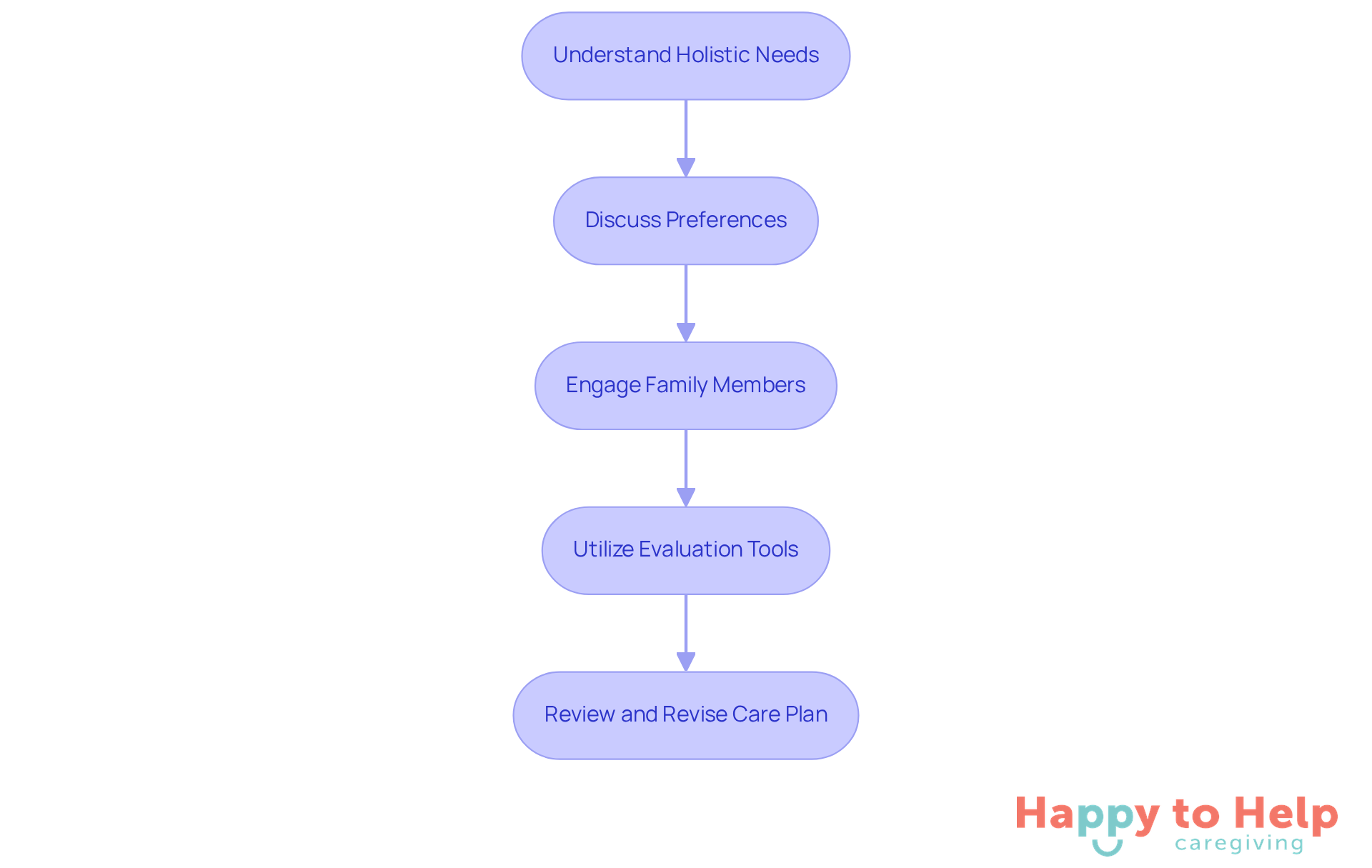
To address this issue, it's crucial to discuss preferences regarding daily routines, activities, and types of support. This customization of caregiving strategies ensures that the individual's unique needs are met effectively.
Engaging relatives in the evaluation process is another vital step. Their insights can provide valuable perspectives on the individual's requirements and preferences. Research shows that family involvement can significantly enhance a patient’s mental well-being and motivation to adhere to treatment plans.
Utilizing organized evaluation instruments or surveys can help systematically record these needs. This approach aligns with recommendations for health management programs to implement tools that enhance ongoing oversight of the patient’s condition at home.
Finally, it's essential to consistently review and revise the evaluation to reflect any changes in the person's situation or choices. This flexibility in the support plan is crucial for adapting to evolving needs. Involving family members as part of the patient’s overall care team has been shown to improve chronic disease management.
Explore Available Care Services
When exploring in home care Santa Clarita options, families often encounter the challenge of navigating various local agencies and their specific offerings. This can lead to confusion and uncertainty about which services best meet their loved ones' needs.
To address this issue, it’s essential to consider key services that can significantly enhance the caregiving experience:
- Companionship Care: This service provides emotional support and social interaction, helping to alleviate feelings of loneliness and isolation among seniors. Caregivers engage clients in enjoyable activities, fostering meaningful connections.
- Personal Care: Assistance with daily living activities such as bathing, dressing, and meal preparation ensures that clients maintain their dignity and independence.
- Respite Support: Designed to offer temporary relief for primary caregivers, respite support allows family members to take a break while ensuring their loved ones receive quality assistance.
- Specialized Medical Assistance: For individuals with specific health conditions, such as Alzheimer’s or Parkinson’s, specialized care programs are available through agencies like Senior Helpers and Visiting Angels. These programs are tailored to meet the unique needs of clients, ensuring they receive appropriate support.
Flexibility in service delivery is crucial in home care Santa Clarita. Many agencies, including Senior Helpers, offer part-time and full-time options for in home care Santa Clarita, allowing families to choose the level of care that best fits their situation. This adaptability is vital for accommodating changing needs over time.
Moreover, the incorporation of technology in caregiving has become increasingly significant. Features like telehealth consultations and online scheduling, provided by organizations such as Visiting Angels, enhance the caregiving experience, making it easier for families to manage support plans and stay connected with caregivers.
Ultimately, ensuring that the selected services align with the assessed needs and preferences of the individual is essential. This customized approach not only enhances the quality of assistance but also boosts the overall well-being of clients, enabling them to thrive in their own homes.
Evaluate Caregiver Qualifications and Experience
Problem: Caregivers often face significant challenges in providing effective support due to varying levels of training and experience.
Agitate: With nearly 53 million family caregivers in the U.S., understanding the unique challenges they encounter is crucial. Many caregivers may lack specialized knowledge in areas such as dementia or post-surgery assistance, which can hinder their ability to provide optimal care. As Eileen Lawless highlights, caregivers frequently experience incredible stress, making it essential for them to possess strong communication skills and empathy to build trust with clients.
Solution: To ensure caregivers meet industry standards, consider the following actionable steps:
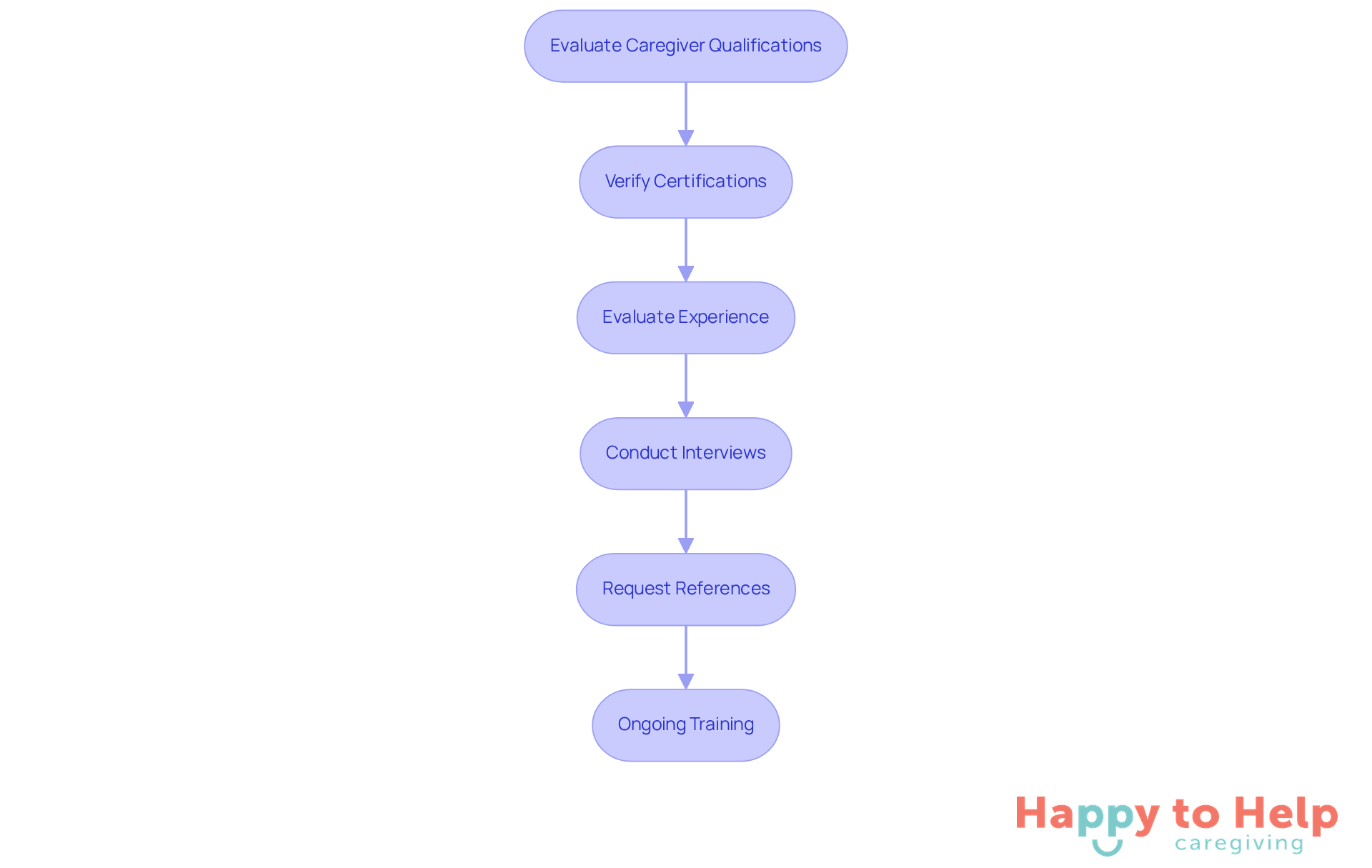
- Verify Certifications: Always check caregivers' certifications and training credentials.
- Evaluate Experience: Assess their experience with specific conditions relevant to the client.
- Conduct Interviews: Interview potential caregivers to gauge their communication skills and empathy.
- Request References: Ask for references from previous clients or employers to validate their reliability.
- Ongoing Training: Ensure caregivers receive continuous training and support to adapt to changing client needs. This aligns with findings from case studies emphasizing the necessity for better training and resources for caregivers.
Understand Costs and Payment Options
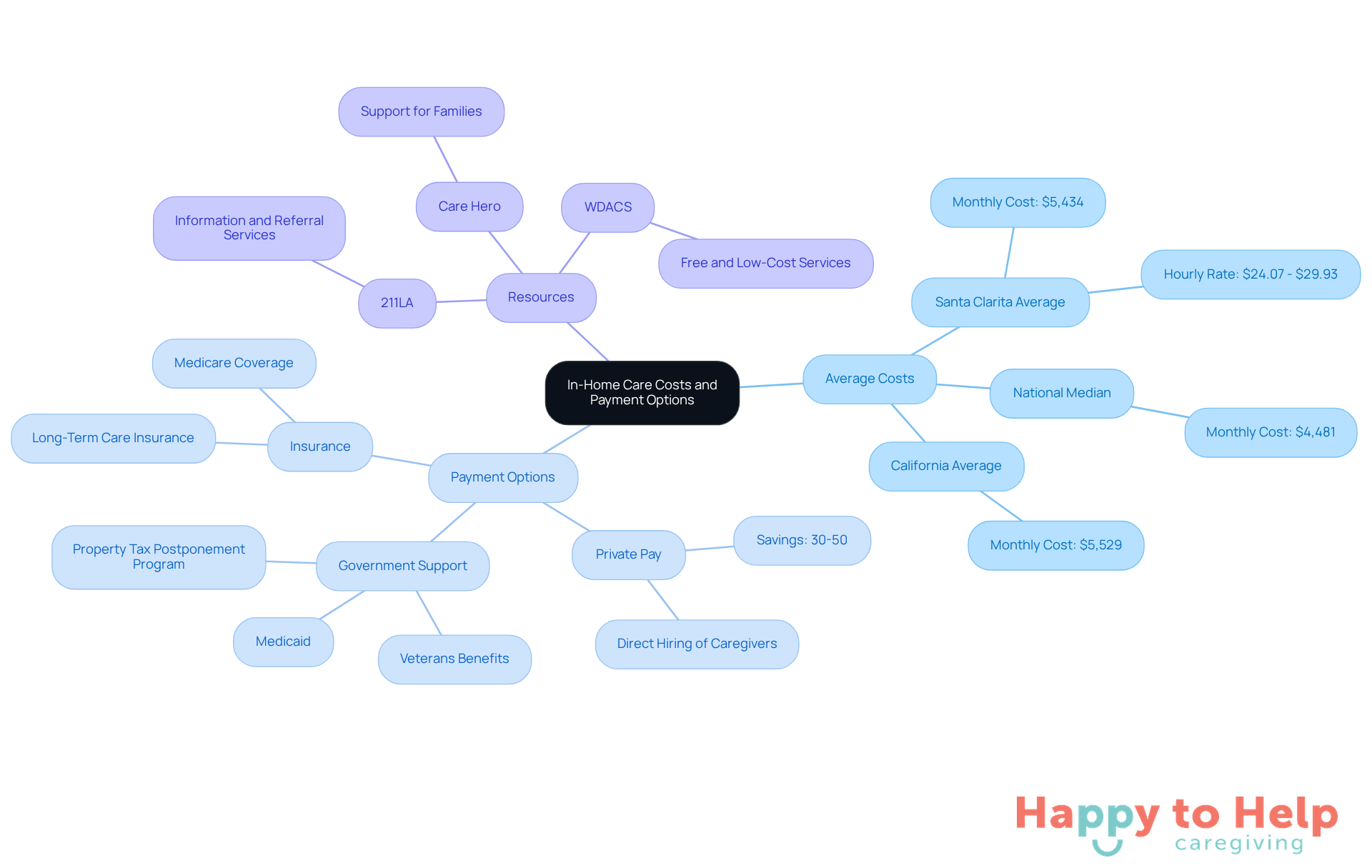
Understanding the costs associated with in-home care Santa Clarita is crucial for families seeking support for their loved ones. The average monthly expense for home support clients in the area is approximately $5,434, which is notably higher than the national median of $4,481 but slightly lower than California's average of $5,529. This variation underscores the importance of researching local rates, as costs can fluctuate based on the level of assistance required and the specific services provided.
Families often face the challenge of navigating payment options. Private pay arrangements allow households to hire caregivers directly, potentially saving them 30-50% compared to traditional home assistance agencies. In Santa Clarita, caregivers typically start at around $24.07 per hour, with maximum rates reaching $29.93 per hour. This flexibility enables families to tailor support to fit their budget and needs.
Insurance options, such as long-term care insurance, may reimburse policyholders for in-home assistance, though coverage can vary significantly. Additionally, government programs like Medicaid provide essential support for low-income seniors, offering a range of home support services through state-specific waivers. Veterans may also be eligible for home assistance benefits through veterans' pensions, further easing financial pressures.
Creating a comprehensive budget is vital for families to account for all potential expenses, including additional resources or supplies that may arise. Regularly reviewing financial strategies ensures that families can adapt to changing support needs or costs, maintaining a sustainable approach to caregiving.
For those in need of assistance, resources like 211LA offer free information and referral services to connect families with community programs and financial aid options. As 211LA states, "We help older adults connect with programs in the community." By leveraging these resources, families can more effectively navigate the complexities of financing in-home care Santa Clarita, ensuring their loved ones receive the necessary support while managing costs.
Moreover, families should be aware of the Property Tax Postponement Program, which allows eligible seniors to defer property tax payments, potentially freeing up funds for home assistance or other expenses. Since 2004, senior care costs have increased by an average of 1.5% to 3.8% annually, making it essential for families to stay informed about the financial landscape they are navigating.
Research Client Testimonials and Reviews
Finding a reliable caregiving service can be challenging. Many families struggle with ensuring their loved ones receive the best care possible. This uncertainty can lead to stress and anxiety, making it crucial to conduct thorough research before making a decision.
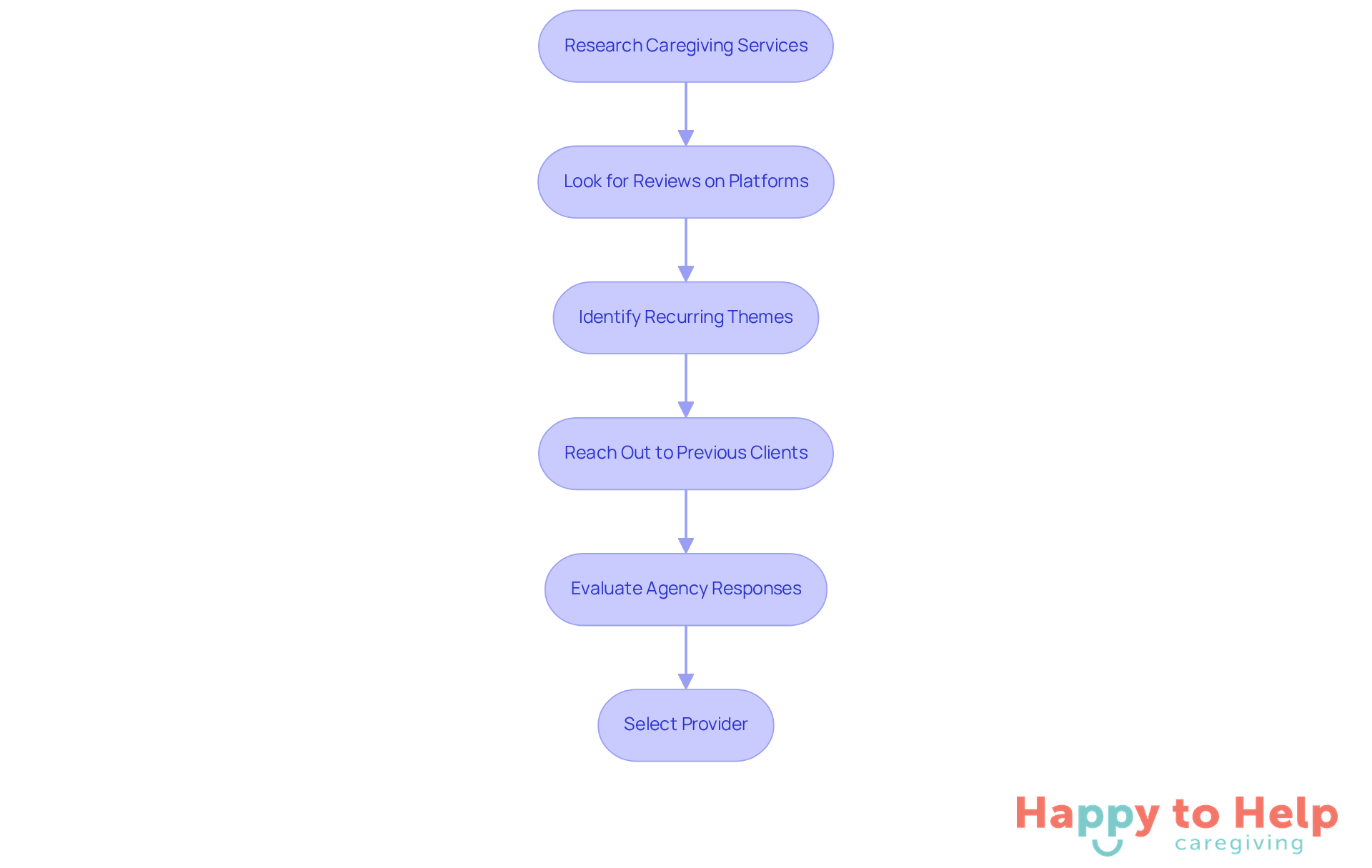
To navigate this process effectively, start by looking for reviews on reputable platforms like:
- Yelp
- Agency websites
Pay attention to recurring themes in testimonials, particularly regarding caregiver compassion and reliability. These insights can provide a clearer picture of what to expect.
Additionally, consider reaching out to previous clients or their families for firsthand accounts of their experiences. Their insights can be invaluable in understanding the quality of care provided.
It's also essential to evaluate how agencies respond to negative feedback. A provider's willingness to address concerns can indicate their commitment to quality care.
By gathering and analyzing this information, you can narrow down your choices and select a provider with a strong track record, ensuring peace of mind for you and your family.
Making the Right Choice
Navigating in-home care in Santa Clarita can be challenging for families seeking personalized support for their loved ones. The complexities involved often lead to confusion and uncertainty about how to provide the best care. Without a clear understanding of the holistic needs of clients, families may struggle to create effective caregiving strategies that promote well-being and dignity.
To address these challenges, families must take critical steps in the caregiving process:
- Assess care needs to understand what support is necessary.
- Explore available services and evaluate caregiver qualifications to ensure that the right fit is found.
- Understand costs and research client testimonials to provide valuable insights into the quality of care available.
- Engage family members in this process and utilize evaluation tools to enhance the effectiveness of the care provided.
Ultimately, informed decision-making is key to navigating the complexities of in-home care. Families are encouraged to actively participate in the caregiving journey, leveraging available resources and staying attuned to the evolving needs of their loved ones. By prioritizing these essential steps, families can secure the best possible care, ensuring that their loved ones receive the support they deserve while maintaining their independence and quality of life.
https://iframe.tely.ai/cta/eyJhcnRpY2xlX2lkIjogIjY5MjRmMjEwZWM0Y2FiOGU3NGVjMDExNSIsICJjb21wYW55X2lkIjogIjY4ZWU1ZGNhNzMxNzYyNTU3ZjNjOTVjMSIsICJpbmRleCI6IG51bGwsICJ0eXBlIjogImFydGljbGUifQ==Frequently Asked Questions
Why is it important to assess care needs and preferences in caregiving?
Assessing care needs and preferences is crucial because it helps caregivers understand an individual's physical, emotional, and social needs, ensuring that support and care are tailored to meet those unique requirements effectively.
How can family involvement enhance caregiving?
Family involvement can provide valuable insights into the individual's needs and preferences, significantly enhancing the patient's mental well-being and motivation to adhere to treatment plans.
What tools can be used to evaluate care needs systematically?
Organized evaluation instruments or surveys can be utilized to systematically record care needs, aligning with recommendations for health management programs to enhance ongoing oversight of the patient's condition.
Why is it necessary to review and revise care evaluations regularly?
Regularly reviewing and revising care evaluations is essential to reflect any changes in the individual's situation or choices, ensuring that the support plan remains flexible and adapts to evolving needs.
What are some key services available in home care Santa Clarita?
Key services include companionship care, personal care, respite support, and specialized medical assistance for specific health conditions like Alzheimer’s or Parkinson’s.
How does flexibility in service delivery benefit families seeking in-home care?
Flexibility in service delivery allows families to choose part-time or full-time care options that best fit their situation, accommodating changing needs over time.
What role does technology play in enhancing the caregiving experience?
Technology, such as telehealth consultations and online scheduling, enhances the caregiving experience by making it easier for families to manage support plans and stay connected with caregivers.
How can ensuring alignment between selected services and assessed needs improve caregiving?
Ensuring that selected services align with assessed needs and preferences enhances the quality of assistance provided, boosting the overall well-being of clients and enabling them to thrive in their own homes.
List of Sources
- Assess Care Needs and Preferences
- Family Involvement During Patient Hospitalisation—Developing and Testing a Clinical Decision Aid - PMC (https://pmc.ncbi.nlm.nih.gov/articles/PMC11891467)
- The Value and Process of Engaging Family in Care Management (https://thoroughcare.net/blog/value-process-engaging-family-care-management)
- Older adults prioritize social activities, inclusiveness in massive survey assessing what matters most to them (https://mcknights.com/news/older-adults-prioritize-social-activities-inclusiveness-in-massive-survey-assessing-what-matters-most-to-them)
- Warning From Older Adults: Care for Aging in America Needs Urgent Rethinking (https://johnahartford.org/newsroom/view/warning-from-older-adults-care-for-aging-in-america-needs-urgent-rethinking)
- Aurora releases study to address needs of older adults and caregivers (https://denver7.com/news/front-range/aurora/aurora-releases-study-to-address-needs-of-older-adults-and-caregivers)
- Explore Available Care Services
- Home Care Services in Santa Clarita, California | Senior Helpers of Santa Clarita - Lancaster (https://seniorhelpers.com/ca/santa-clarita)
- Senior Helpers Opens Doors in Santa Clarita (https://ktla.com/business/press-releases/ein-presswire/825586079/senior-helpers-opens-doors-in-santa-clarita)
- The 10 Best Home Care Agencies for Seniors in Santa Clarita, CA for 2025 | Caring.com (https://caring.com/senior-care/in-home-care/california/santa-clarita)
- Visiting Angels Santa Clarita, CA (https://visitingangels.com/santaclarita/elderly-companion-care)
- Treated Like Family: Comfort Keepers Ensures Their Patients Are Well Taken Care Of (https://hometownstation.com/khts-featured/treated-like-family-comfort-keepers-ensures-their-patients-are-well-taken-care-of-568605)
- Evaluate Caregiver Qualifications and Experience
- Your Working Caregiver Experience Matters: What Every Working Caregiver Should Know (https://lifework.arizona.edu/news/2025/your-working-caregiver-experience-matters-what-every-working-caregiver-should-know)
- Location, individual circumstances impact caregiver well-being, researchers find | Penn State University (https://psu.edu/news/research/story/location-individual-circumstances-impact-caregiver-well-being-researchers-find)
- Family Caregivers: One of the Most Important but Difficult Jobs (https://iredellhealth.org/news/releases/family-caregivers-one-of-the-most-important-but-difficult-jobs)
- New Florida Law Expands Access to Home Health Care (https://members.homecarefla.org/news/Details/new-florida-law-expands-access-to-home-health-care-285127)
- Understand Costs and Payment Options
- How much does a caregiver cost in Santa Clarita, CA? (https://care.com/cost/caregivers/santa-clarita-ca)
- How to Pay for In-Home Care: A Comprehensive Guide for Families - Go Care Hero (https://gocarehero.com/resource/how-to-pay-for-in-home-care-a-comprehensive-guide-for-families)
- 8 Ways to Pay for In-Home Care (https://comforcare.com/blog/8-ways-to-pay-for-in-home-care)
- Home Care in Santa Clarita, CA | HomeCare.org (https://homecare.org/santa-clarita-ca)
- Ways To Pay for In-Home Senior Care: A Guide for Families (https://rightathome.net/resources/guides/ways-to-pay)
- Research Client Testimonials and Reviews
- The Power of Online Reviews for Homecare Agencies: Build a 5-Star Reputation (https://caretap.net/blog/power-online-reviews-homecare-agencies-build-reputation)
- Why Home-Based Care Providers Can’t Ignore Their Online Reputation (https://homehealthcarenews.com/2025/07/why-home-based-care-providers-cant-ignore-their-online-reputation)
- 10 Different Ways Nursing Homes Can Get More Testimonials (https://ltcnews.com/articles/ways-nursing-homes-can-get-testimonials)
- The Power of Client Testimonials and Case Studies for Home Care Agencies (https://seniorcaremarketingmax.com/blogs/the-power-of-client-testimonials-and-case-studies-for-home-care-agencies)
- Why Client Testimonials Matter in HealthCare | Data Soft Logic (https://datasoftlogic.com/news/why-client-testimonials-matter-in-healthcare)