
What You Need to Know About Comparisons Between Home Care Reno and
Choosing the right care model for loved ones can be an overwhelming decision for families. The emotional and practical implications of home care versus traditional care create a significant challenge. Home care offers personalized support in a familiar environment, promoting independence and emotional well-being. In contrast, traditional care provides structured medical oversight in institutional settings.
Each model has distinct advantages and challenges. Families often struggle to navigate these options, raising the question: how can caregivers ensure the best quality of life for those they care for? This article delves into key comparisons between home care and traditional care, exploring benefits, costs, and emotional impacts. By understanding these factors, families can make informed choices that best suit their loved ones' needs.
Define Home Care and Traditional Care Models
Support services address a significant challenge for caregivers: the need for non-medical assistance in daily tasks. These services focus on helping individuals with activities like bathing, dressing, and meal preparation, promoting independence and comfort in their own homes.
In contrast, traditional treatment often occurs in institutional settings, such as nursing homes or assisted living facilities. Here, residents receive comprehensive medical and personal support, but this model can prioritize medical needs over personal preferences. As a result, caregivers may find that the assistance provided is more standardized and less tailored to individual needs.
To enhance the caregiving experience, consider the following actionable solutions:
- Encourage independence by integrating support services into daily routines.
- Communicate preferences clearly to ensure that care aligns with individual needs.
- Utilize community resources to supplement home care reno, allowing for a more personalized approach.
By focusing on these strategies, caregivers can create a more supportive environment that respects the preferences and comfort of those they care for.

Explore Services Offered by Home Care Providers
Caregivers often face significant challenges, including emotional strain and physical exhaustion. The demands of providing care can lead to feelings of isolation and burnout, making it essential to seek support.
Home care providers offer a variety of services tailored to individual needs, which can alleviate some of this burden:
- Companionship Care: Provides emotional support and social interaction to combat loneliness.
- Post-Hospital Recovery Assistance: Helps with daily activities and rehabilitation after hospital stays.
- Respite Care: Offers temporary relief for family caregivers, allowing them to take breaks while ensuring their loved ones are cared for.
- Palliative Support Care: Focuses on comfort and quality of life for individuals with serious illnesses.
In contrast, conventional assistance facilities often present a more rigid framework. While they typically include medical services, rehabilitation, and round-the-clock supervision, home care may offer a more individualized approach than traditional options.
By understanding the available options, caregivers can make informed decisions that enhance their well-being and that of their loved ones.

Assess Emotional and Practical Implications of Care Choices
Choosing between domestic support and conventional assistance presents a significant challenge for caregivers. The emotional and practical consequences of this decision can greatly impact both the individual receiving care and their family.
Home care reno often fosters a sense of independence and comfort, allowing individuals to remain in familiar surroundings. This can significantly enhance emotional well-being. Families frequently report reduced stress levels and increased satisfaction when their loved ones receive home care reno assistance. In fact, studies indicate a 25% improvement in anxiety and depression scores for patients receiving support in their residences.
Conversely, conventional support settings can lead to feelings of isolation and a lack of independence. Residents may struggle to adjust to a more institutionalized atmosphere, which can exacerbate emotional distress. While conventional assistance may offer more extensive medical supervision, it often comes at the expense of personal connection.
Domestic support provides more adaptable scheduling and individualized focus, making it a compelling option for many families. Additionally, patients receiving home care reno services experience substantial financial advantages, realizing approximately 30% in healthcare expense reductions compared to conventional treatment environments.
This shift towards residential support, particularly in home care reno, reflects a growing acknowledgment of its benefits, including enhanced recovery rates and overall patient satisfaction. Reports show that satisfaction rates are 90% for residential assistance compared to 70% for hospital treatment.
In summary, caregivers should weigh the emotional and practical implications of their choices carefully. By considering the advantages of home support, they can make informed decisions that prioritize the well-being of their loved ones.

Compare Costs of Home Care and Traditional Care
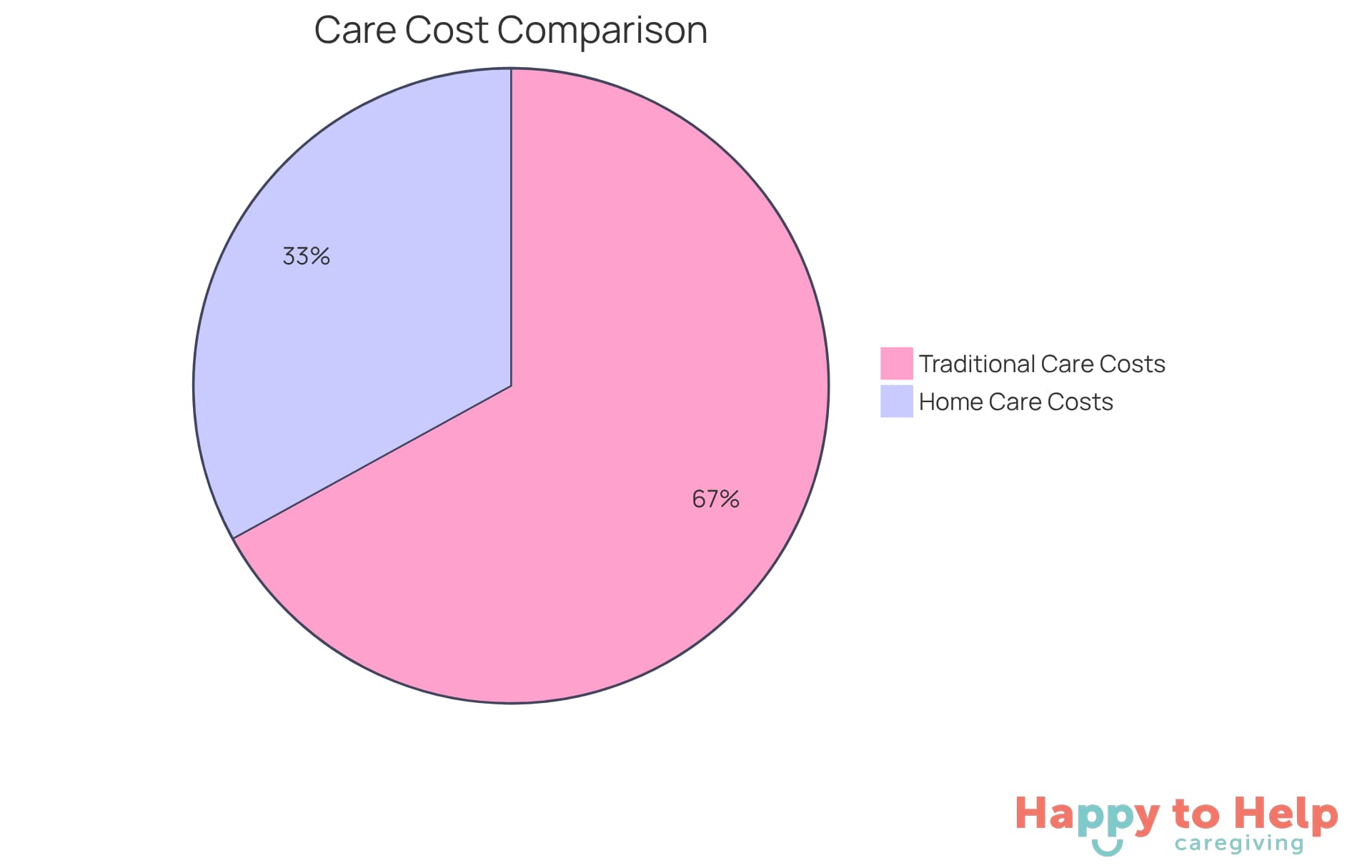
Problem: The expenses linked to home support and conventional assistance can differ greatly, posing a challenge for families seeking care for their loved ones.
Agitate: Home support options typically charge on an hourly basis, with national averages around $33 per hour for non-medical assistance. This model allows families to pay only for the support they need, potentially leading to lower overall expenses. In contrast, traditional facilities often impose a fixed monthly charge that can exceed $5,000. Additionally, these facilities may include extra costs for medical services, meals, and activities, making them more expensive in the long run. Families must carefully consider these costs in relation to the level of support and personal attention their loved ones require.
Solution: To navigate these financial challenges, families should explore home support options that align with their specific needs. By opting for hourly billing, they can manage expenses more effectively while ensuring their loved ones receive the necessary care.
Summarize Key Differences and Similarities
Choosing the right care model can be a significant challenge for families. Caregivers often face the dilemma of whether to opt for home care reno or traditional care, each with its own set of advantages and challenges.
Home Care Reno provides personalized, non-medical support in a familiar environment. This approach in home care reno promotes independence and emotional well-being, making it a more cost-effective and flexible option for many families. However, it may lack the comprehensive medical oversight that some individuals require.
On the other hand, Traditional Care provides structured medical oversight, which is essential for those with significant health needs. While this model ensures safety and medical attention, it can also lead to feelings of isolation for the individual receiving care.
Both models aim to enhance the quality of life for those in need. The choice ultimately hinges on specific needs, preferences, and financial considerations of the family. By carefully evaluating these factors, caregivers can make informed decisions that best support their loved ones.

Key Takeaways for Caregivers
The discussion surrounding home care and traditional care models reveals a significant challenge for families: choosing the right care option for their loved ones. Home care offers personalized, non-medical support in a familiar environment, promoting independence and emotional well-being. However, traditional care provides structured medical oversight, which is essential for individuals with significant health needs but may lead to feelings of isolation.
Families face a dilemma. On one hand, home care services deliver flexibility, emotional support, and cost-effectiveness. On the other hand, traditional care ensures comprehensive medical attention, often at a higher financial and emotional cost. Caregivers must weigh these factors carefully, considering not only practical implications but also the emotional and psychological effects on both caregivers and those receiving care.
To navigate this decision, families should assess individual needs, preferences, and financial considerations. Staying informed about available options is crucial. Embracing the benefits of home care can lead to enhanced quality of life, greater satisfaction, and a more supportive caregiving environment. By advocating for the best possible care, families can ensure their loved ones receive the support they truly need.
https://iframe.tely.ai/cta/eyJhcnRpY2xlX2lkIjogIjY5M2Y3NWE4YWIxOGVmNWI4ZjA0NTBjMyIsICJjb21wYW55X2lkIjogIjY4ZWU1ZGNhNzMxNzYyNTU3ZjNjOTVjMSIsICJpbmRleCI6IG51bGwsICJ0eXBlIjogImFydGljbGUifQ==Frequently Asked Questions
What is home care and how does it differ from traditional care models?
Home care provides non-medical assistance for daily tasks, promoting independence and comfort in individuals' homes. In contrast, traditional care models occur in institutional settings like nursing homes, where comprehensive medical and personal support is offered, often prioritizing medical needs over personal preferences.
What types of services do home care providers offer?
Home care providers offer various services, including companionship care, post-hospital recovery assistance, respite care, and palliative support care. These services are tailored to individual needs and can alleviate the emotional and physical strain on caregivers.
How can caregivers enhance the caregiving experience?
Caregivers can enhance the experience by encouraging independence through support services, clearly communicating preferences to align care with individual needs, and utilizing community resources to create a more personalized approach.
What are the benefits of companionship care?
Companionship care provides emotional support and social interaction, helping to combat loneliness for individuals receiving care.
What is respite care and why is it important?
Respite care offers temporary relief for family caregivers, allowing them to take breaks while ensuring their loved ones are still cared for. This service is important to prevent caregiver burnout and maintain their well-being.
How does palliative support care differ from traditional care?
Palliative support care focuses on comfort and quality of life for individuals with serious illnesses, while traditional care often emphasizes medical treatment and rehabilitation within a more rigid framework.
List of Sources
- Define Home Care and Traditional Care Models
- What’s Next For Home Health As The Industry Faces Its Biggest Test Yet (https://homehealthcarenews.com/2025/10/whats-next-for-home-health-as-the-industry-faces-its-biggest-test-yet)
- Place-Agnostic Models Signal New Era For Home-Based Care, Senior Living (https://homehealthcarenews.com/2025/11/place-agnostic-models-signal-new-era-for-home-based-care-senior-living)
- From facility to home: How healthcare could shift by 2025 (https://mckinsey.com/industries/healthcare/our-insights/from-facility-to-home-how-healthcare-could-shift-by-2025)
- House passes bill extending hospital at home waivers for five years (https://healthcaredive.com/news/house-passes-bill-extending-hospital-at-home-waivers-for-five-years/806798)
- White Paper: The Future of Home Care: A 2025 Survey of the Home Care Industry & Future Trends (https://axiscare.com/white-papers/access-home-care-industry-survey-and-trends-report)
- Explore Services Offered by Home Care Providers
- State of home care in 2025 (https://mcknightshomecare.com/state-of-home-care-in-2025)
- FastStats (https://cdc.gov/nchs/fastats/home-health-care.htm)
- Fewer Medicare Advantage Plans Are Offering Home-Based Care Services For 2025 (https://homecareofcolorado.org/?option=com\_content&view=article&id=2475:fewer-medicare-advantage-plans-are-offering-home-based-care-services-for-2025&catid=23:in-the-news&Itemid=196)
- News Releases (https://hcaoa.org/news-releases.html)
- Disruption Redefines Home-Based Care: Providers Confront Challenges, Seize New Opportunities (https://homehealthcarenews.com/2025/10/disruption-redefines-home-based-care-providers-confront-challenges-seize-new-opportunities)
- Assess Emotional and Practical Implications of Care Choices
- Emotional Impact of Home Care (https://ultimatecareny.com/resources/emotional-impact-of-home-care)
- Families Prefer In-Home Care To Senior Living – Yet Struggle To Identify Needed Support (https://homehealthcarenews.com/2025/11/families-prefer-in-home-care-to-senior-living-yet-struggle-to-identify-needed-support)
- Home Care Impact on Recovery of Patient (A Statistics Report) (https://lovinghomecareinc.com/home-care-recovery-statistics)
- Caregivers Face Mental, Physical Health Risks (https://usnews.com/news/health-news/articles/2025-01-07/caregivers-face-mental-physical-health-risks)
- Compare Costs of Home Care and Traditional Care
- Home Care Costs in 2025: A State-by-State Guide (https://aplaceformom.com/caregiver-resources/articles/in-home-care-costs)
- Understanding the Cost and Value of Home Care in 2025 (https://assistinghands.com/135/texas/nesanantonio/blog/understanding-the-cost-and-value-of-home-care-in-2025)
- The Cost of In-Home Caregivers May Surprise You (https://health.usnews.com/senior-care/caregiving/articles/how-much-do-in-home-caregivers-cost)
- How Much Does In-Home Care Cost in 2025? A State-by-State Guide - Elder Answers (https://elder-answers.com/how-does-in-home-care-cost-in-2025)
- 24/7 In-Home Care Costs in 2025 - Assisted Living Magazine (https://assistedlivingmagazine.com/24-7-in-home-care-costs-in-2025)
- Summarize Key Differences and Similarities
- Home Care Impact on Recovery of Patient (A Statistics Report) (https://lovinghomecareinc.com/home-care-recovery-statistics)
- From facility to home: How healthcare could shift by 2025 (https://mckinsey.com/industries/healthcare/our-insights/from-facility-to-home-how-healthcare-could-shift-by-2025)
- Providers Betting Big on Future of Hospital at Home | AHA (https://aha.org/aha-center-health-innovation-market-scan/2024-04-09-providers-betting-big-future-hospital-home)
- 4 Quotes Illuminating At-Home Care CEOs' 2025 Strategies (https://homehealthcarenews.com/2025/06/4-quotes-illuminating-at-home-care-ceos-2025-strategies)
- Home-based care: An old approach that’s transforming healthcare (https://statnews.com/sponsor/2022/12/14/home-based-care-an-old-approach-thats-transforming-healthcare)