
For families in our service areas
For families in our service areas, this guide explains in-home care and how non-medical in-home caregiving can support care planning in East Idaho, Treasure Valley & Magic Valley, Northern Wasatch, North Central West Virginia, and Northeast Ohio.
The Importance of In Home Care for Family Member Needs
Navigating the complexities of in-home care for family members presents a significant challenge for many caregivers. The responsibility of ensuring that loved ones receive appropriate support, while respecting their preferences and needs, can feel overwhelming. This situation often leads to emotional and logistical strains that complicate the caregiving experience.
What happens when the demands of caregiving clash with these challenges? Understanding how to balance these elements is crucial for providing compassionate and effective care. This article outlines five essential steps that empower caregivers to create a tailored care strategy:
- Evaluating health conditions
- Selecting qualified caregivers
- Establishing effective communication protocols
- Creating a support network
- Monitoring and adjusting care plans
These steps are designed to help caregivers navigate their responsibilities with confidence.
Evaluate Care Needs and Preferences
Problem: Caregivers often face the challenge of accurately assessing their relative's health condition, which can include various medical issues and mobility challenges. Without a thorough evaluation, it becomes difficult to provide the necessary support.
Agitate: This oversight can lead to increased health risks and a decline in the quality of life for the individual. Understanding their preferences regarding daily routines, activities, and social interactions is crucial, as it directly impacts their well-being and happiness.
Solution: To address these challenges, caregivers should take the following steps:
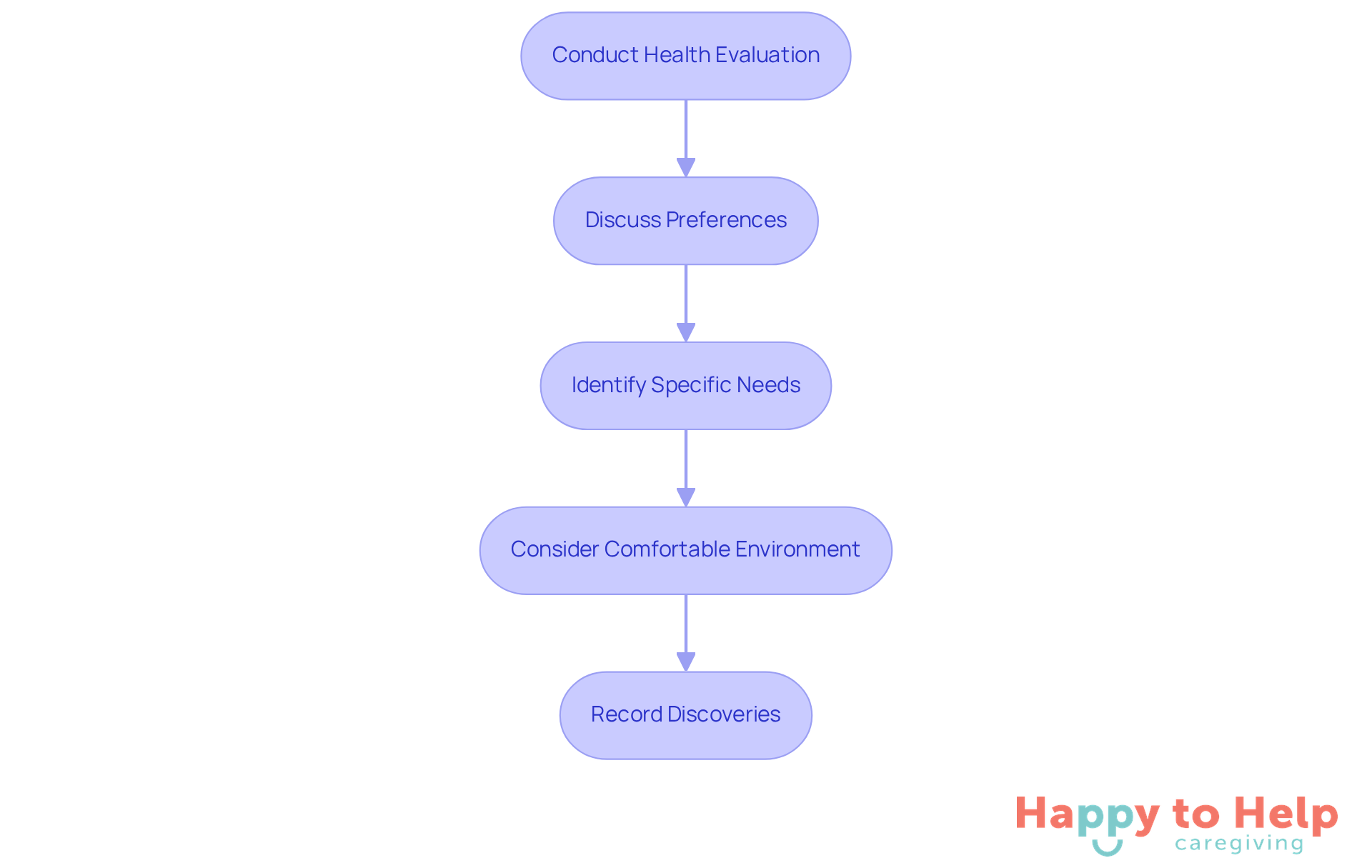
- Conduct a thorough evaluation of your relative's health condition, including any medical issues and mobility challenges.
- Discuss with your family member their preferences regarding daily routines, activities, and social interactions.
- Identify any specific needs such as assistance with personal support, medication management, or companionship.
- Consider the environment in which they feel most comfortable and secure, as this can significantly affect their overall well-being.
- Record all discoveries to assist future treatment choices and conversations with possible caregivers.
By implementing these actionable steps, caregivers can ensure that their loved ones receive the support they need.
Identify Available In-Home Care Services
Finding the right in-home assistance for your loved ones can be a daunting task. Caregivers often face the challenge of navigating various service options, which can lead to confusion and stress. Understanding the distinctions between medical and non-medical assistance is crucial in identifying what best suits your relative's needs in home care for family members.
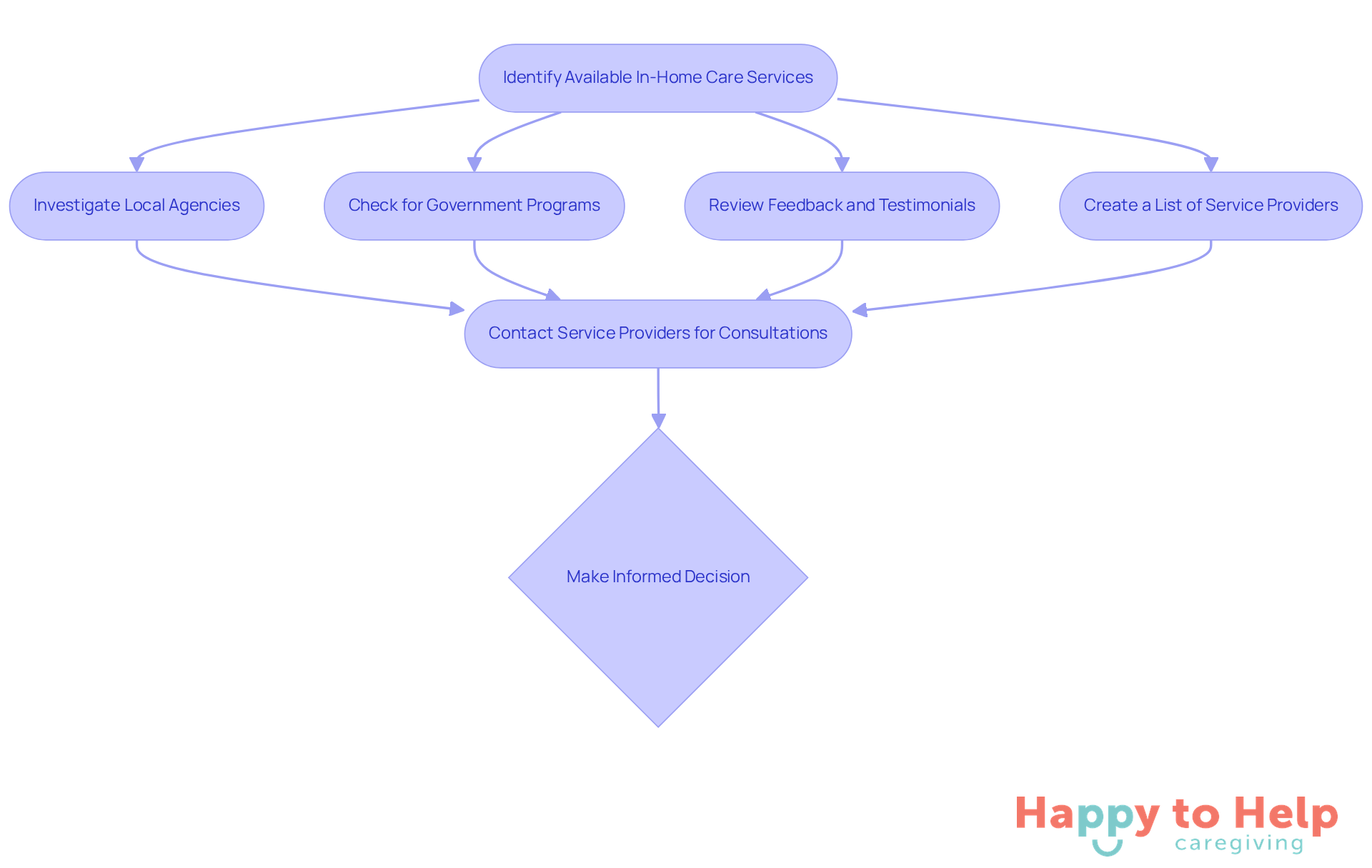
To tackle this issue, start by investigating local in-home assistance agencies and the specific services they provide, such as:
- Companionship
- Personal support
- Skilled nursing
This will give you a clearer picture of what’s available in your area. Additionally, check for any government programs or financial assistance options that may help cover costs, easing the financial burden on families.
It's also important to review feedback and testimonials from other households. This can provide valuable insights into the quality of care offered by various agencies. Finally, create a list of potential service providers to contact for further information and consultations. By taking these steps, you can make informed decisions that ensure your loved ones receive the care they deserve.
Select Qualified Caregivers
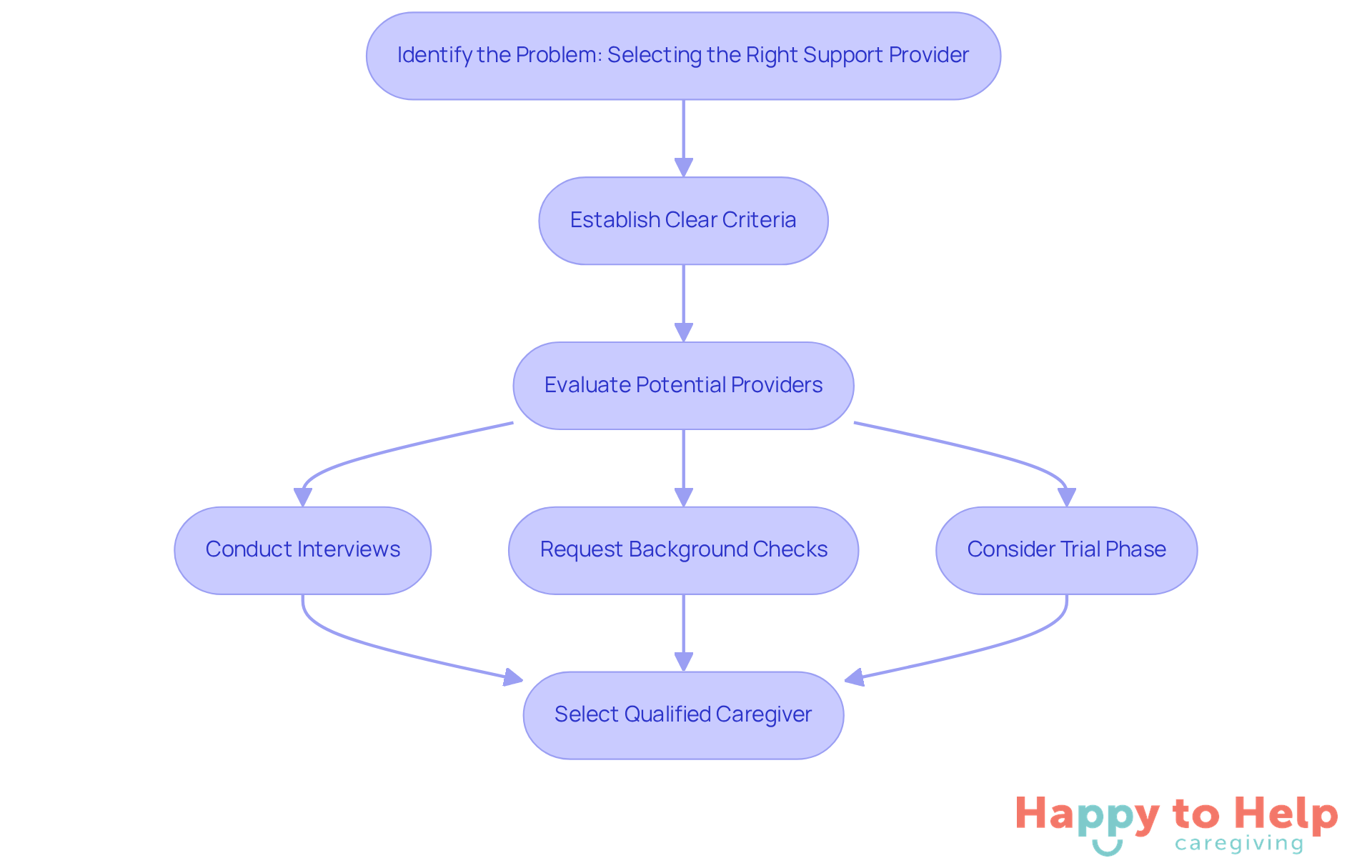
Problem: Selecting the right support provider can be a daunting task for caregivers. With so many options available, it’s crucial to establish clear criteria for choosing the right fit.
Agitate: Without proper evaluation, caregivers risk compromising the quality of care for their loved ones. This can lead to frustration and dissatisfaction, impacting both the caregiver and the individual receiving care. As Barbara Sadick emphasizes, treating aides as valued employees is essential for fostering a positive caregiving environment.
Solution: Start by focusing on essential factors such as relevant experience, specialized training, and personal attributes like empathy and effective communication skills. Conduct thorough interviews with potential providers to assess their compatibility with your specific needs and preferences in home care for family member. This aligns with caregiving experts' guidance on the importance of evaluating personal support requirements.
- Request comprehensive background checks and references to confirm the individual's reliability, professionalism, and past performance in similar roles.
- Kevin Ryan points out that many households rely on various benefits to manage in-home support expenses, underscoring the need to verify qualifications.
Consider introducing a trial phase in home care for family member, which allows you to observe the provider's interactions with your relative and assess their ability to meet support expectations before committing to a long-term agreement. This approach helps families evaluate the provider's effectiveness in real-life situations.
Finally, ensure that the assistant has training relevant to your relative's health issues, such as dementia support or mobility aid. The national median expense for a nonmedical in-home support worker is approximately $33 per hour, highlighting the importance of investing in qualified assistance.
Create a Personalized Care Plan
Establishing a support plan can be challenging for caregivers, especially when it comes to addressing the physical, emotional, and social needs of their loved ones. Without a clear plan, caregivers may struggle to provide the necessary support, leading to increased stress and potential neglect of essential tasks.
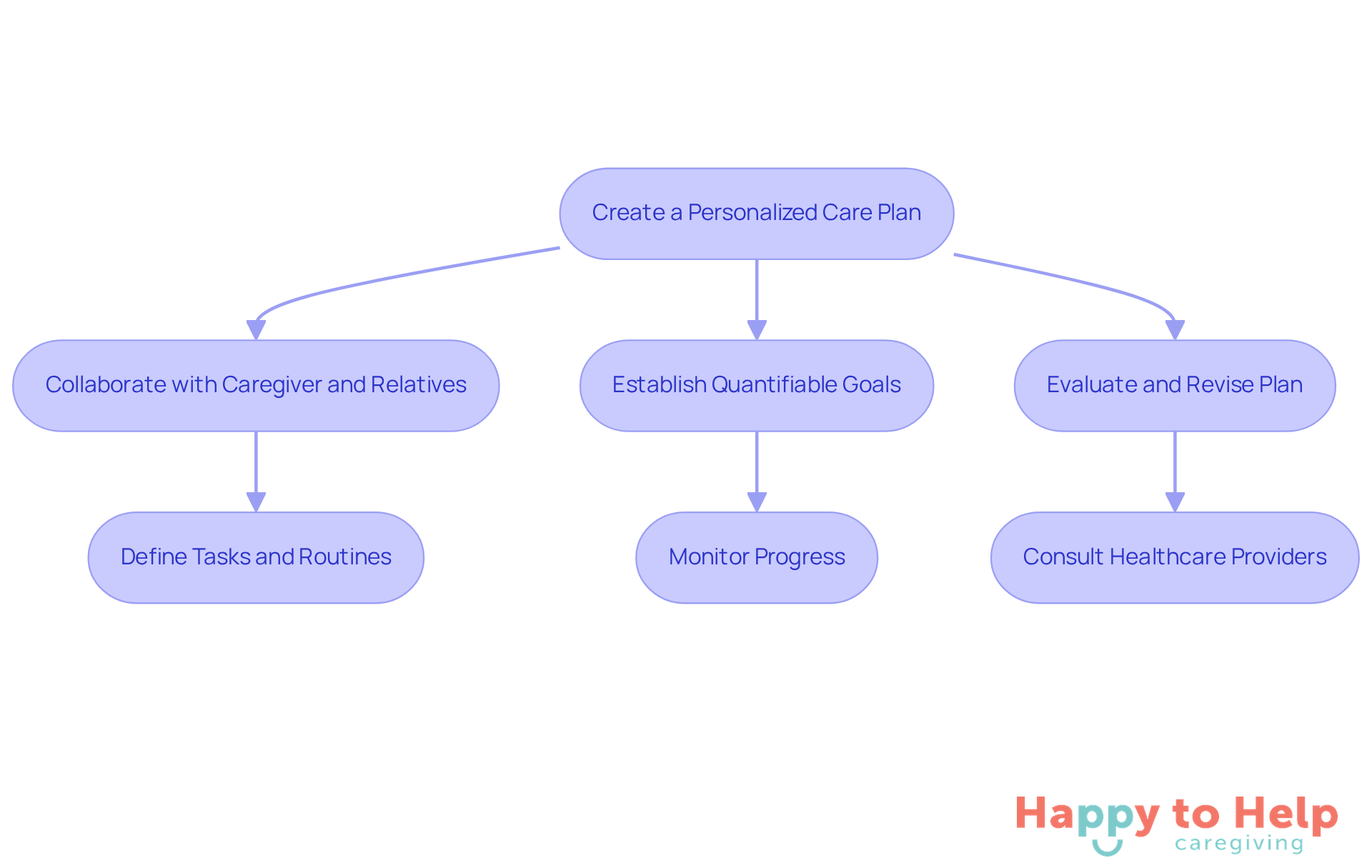
To tackle this issue, it’s crucial to work collaboratively with the caregiver and relatives to set clear objectives for the support plan. This should include specific tasks and routines, such as:
- Meal preparation
- Medication schedules
- Daily activities
By defining these elements, caregivers can ensure that all aspects of care are covered.
Next, establish quantifiable goals to monitor progress. This allows for adjustments to be made as needed, ensuring that the plan remains effective and relevant. It's also important to keep the support plan adaptable, accommodating any changes in the relative's condition or preferences over time.
Finally, consistently evaluate and revise the support plan in collaboration with healthcare providers and specialists. This ongoing assessment helps to ensure that the care provided is always aligned with the evolving needs of the individual.
Set Up Scheduling and Communication Protocols
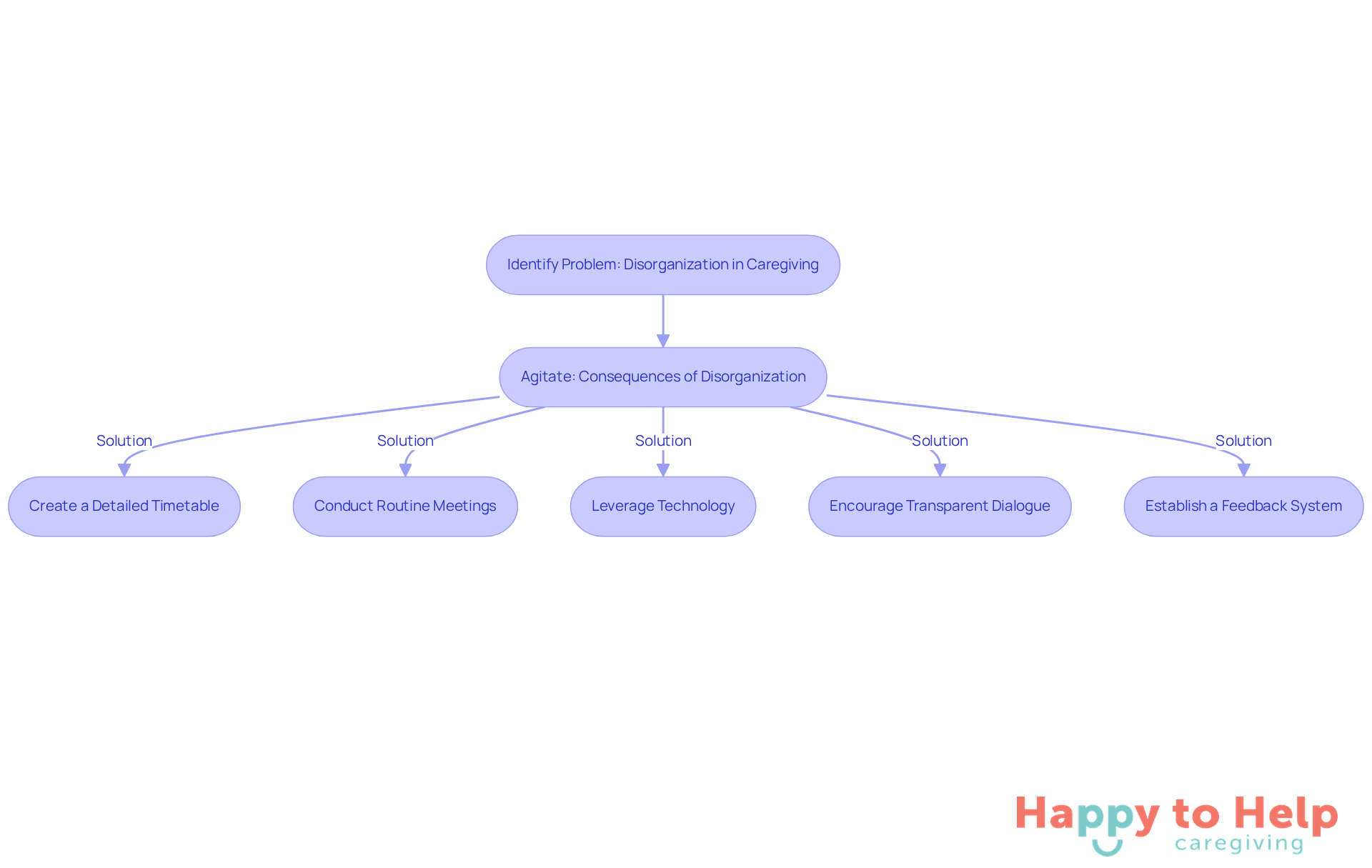
Problem: Caregivers often struggle with organization and communication, which can lead to confusion and stress for both providers and family members.
Agitate: Without a clear timetable, caregivers may miss important appointments or overlook daily tasks, resulting in inadequate support for their loved ones. This disorganization can exacerbate feelings of frustration and helplessness among family members, making it crucial to establish a structured approach to caregiving.
Solution:
- Create a Detailed Timetable: Develop a timetable that specifies shifts for caregivers, daily tasks, and appointments. This organized method ensures everyone is informed about routines and responsibilities.
- Conduct Routine Meetings: Hold regular meetings among relatives and support providers to discuss any issues or updates regarding the support strategy. Monthly gatherings can foster open dialogue and address concerns promptly, while weekly updates are essential for effective communication.
- Leverage Technology: Utilize shared calendars or communication apps to keep everyone informed and engaged. AI-driven tools can analyze patient information, providing insights into clients' emotional and psychological conditions, which enhances communication and service quality.
- Encourage Transparent Dialogue: Foster open communication between support providers and family members to quickly address any changes in the family member's condition or preferences. Encouraging caregivers to express concerns and share observations can significantly improve the quality of assistance. Research shows that 63.9% of patients felt more satisfied with caregivers who demonstrated concern and compassion.
- Establish a Feedback System: Implement a feedback mechanism to evaluate the effectiveness of the support provided. Regular assessments can help identify areas for improvement and ensure the care plan aligns with the relative's evolving needs. Given that 50% of employed caregivers seek additional jobs to cover caregiving costs, effective communication and scheduling are vital for alleviating some of the financial pressures families face.
Key Takeaways for Caregivers
In-home care for family members presents a significant challenge that demands careful planning and consideration. Without a structured approach, caregivers may struggle to meet the needs of their loved ones, leading to stress and potential health risks. This situation can be overwhelming, but there are effective strategies to navigate these complexities.
To address these challenges, caregivers should start by evaluating the health conditions and personal preferences of their family members. Understanding these factors is crucial in selecting suitable in-home care services. Next, caregivers must identify qualified professionals who can provide the necessary support. This involves checking credentials and experience to ensure the best fit for individual needs.
Creating a personalized care plan is another essential step. This plan should be tailored to the specific requirements of the individual, ensuring that all aspects of their care are addressed. Additionally, maintaining clear communication among all parties involved - caregivers, family members, and healthcare providers - is vital for successful caregiving.
Ultimately, the goal is to empower family members to thrive in their home environment. By implementing these actionable steps, caregivers can alleviate stress and enhance the overall quality of life for their loved ones. Embracing this structured approach not only benefits those receiving care but also equips families with the confidence and compassion needed to navigate the complexities of caregiving.
https://iframe.tely.ai/cta/eyJhcnRpY2xlX2lkIjogIjY5MjY0MzY3MDFkMWUzYmY0NmRiMjJjZiIsICJjb21wYW55X2lkIjogIjY4ZWU1ZGNhNzMxNzYyNTU3ZjNjOTVjMSIsICJpbmRleCI6IG51bGwsICJ0eXBlIjogImFydGljbGUifQ==Frequently Asked Questions
What challenges do caregivers face when assessing their relative's health condition?
Caregivers often struggle to accurately assess their relative's health condition, which may include various medical issues and mobility challenges. This lack of thorough evaluation can lead to increased health risks and a decline in the individual's quality of life.
Why is it important to understand a relative's preferences regarding daily routines and activities?
Understanding a relative's preferences for daily routines, activities, and social interactions is crucial as it directly impacts their well-being and happiness. It helps caregivers provide support that aligns with the individual's desires and needs.
What steps should caregivers take to evaluate their relative's care needs?
Caregivers should conduct a thorough evaluation of the relative's health condition, discuss their preferences, identify specific needs (such as personal support or medication management), consider their comfort in different environments, and record all findings for future reference.
What types of in-home care services are available for loved ones?
Available in-home care services include companionship, personal support, and skilled nursing. Understanding the distinctions between medical and non-medical assistance is essential for identifying the best fit for a relative's needs.
How can caregivers find suitable in-home assistance for their loved ones?
Caregivers can find suitable in-home assistance by investigating local agencies, reviewing the specific services they offer, checking for government programs or financial assistance, reading feedback and testimonials from other families, and creating a list of potential service providers for further consultation.
What should caregivers consider when choosing an in-home care service?
Caregivers should consider the specific needs of their loved ones, the types of services provided by agencies, the quality of care indicated by testimonials, and any financial assistance options available to help cover costs.
List of Sources
- Evaluate Care Needs and Preferences
- New Report Reveals Crisis Point for America’s 63 million Family Caregivers (https://press.aarp.org/2025-07-24-New-Report-Reveals-Crisis-Point-for-Americas-63-million-Family-Caregivers)
- Opinion | America’s Caregivers Are in Crisis (https://nytimes.com/2025/11/24/opinion/caregiving-crisis.html)
- A Place for Mom Releases Dual Reports on the Future of Family Caregiving, Including a New Talkspace Collaboration Highlighting Caregiver Mental Health (https://finance.yahoo.com/news/place-mom-releases-dual-reports-140000433.html)
- State Strategies and New Resources to Advance Family Caregiver Assessments - NASHP (https://nashp.org/state-strategies-and-new-resources-to-advance-family-caregiver-assessments)
- Caregiver Statistics: Demographics (https://caregiver.org/resource/caregiver-statistics-demographics)
- Identify Available In-Home Care Services
- Home Care Industry Trends to Watch in 2025 (https://firstlighthomecare.com/blog/home-care-industry-trends)
- Health Care Industry Trends to Watch in 2025 - Cornell Brooks Public Policy (https://publicpolicy.cornell.edu/masters-blog/health-care-industry-trends-to-watch-in-2025)
- How 3 Top Trends Have Shaped Home-Based Care This Year (https://homehealthcarenews.com/2025/08/how-3-top-trends-have-shaped-home-based-care-this-year)
- How to Choose the Right In-Home Care Provider for Your Loved One | Luxe Homecare (https://luxehomecare.com/how-to-choose-the-right-in-home-care-provider-for-your-loved-one)
- Home Health Care Trends for 2025 (https://carevoyant.com/home-health-blog/home-health-care-trends-2025)
- Select Qualified Caregivers
- How to Hire In-Home Caregivers: 5 Essential Steps for Families - Happy To Help (https://happytohelpcaregiving.com/how-to-hire-in-home-caregivers-5-essential-steps-for-families)
- How to Choose the Right In-Home Care Provider for Your Loved One | Luxe Homecare (https://luxehomecare.com/how-to-choose-the-right-in-home-care-provider-for-your-loved-one)
- How to Hire an In-Home Caregiver (https://aplaceformom.com/caregiver-resources/articles/hiring-an-in-home-caregiver)
- Find the Right Home Health Aide for Your Loved One (https://aarp.org/caregiving/home-care/home-health-aides)
- Tips for Choosing the Right In-Home Caregiver (https://visitingangels.com/lutz/news-info/tips-for-choosing-the-right-in-home-caregiver/24672)
- Create a Personalized Care Plan
- State of home care in 2025 (https://mcknightshomecare.com/state-of-home-care-in-2025)
- Personalized Home Care Plans Guide: What to Expect (https://h2hhc.com/blog/personalized-home-care-plans)
- Home Care Statistics In 2025: Key Insights In Home Care (https://sagapixel.com/marketing/home-care-statistics)
- The Future of Private Home Care: What to Expect in 2025 (https://anodyne-services.com/2024/08/14/the-future-of-private-home-care-what-to-expect-in-2025)
- Customized Care at Home: The Benefits of Personalized Care Plans - VNA Health Group (https://vnahg.org/customized-care-at-home-the-benefits-of-personalized-care-plans)
- Set Up Scheduling and Communication Protocols
- How to Enhance Communication Between Home Health Caregivers and Clients (https://nursemagic.ai/post/how-to-enhance-communication-between-home-health-caregivers-and-clients)
- HHS Backs AI Innovation for America’s Caregivers | HHS.gov (https://hhs.gov/press-room/hhs-backs-ai-innovation-for-americas-caregivers.html)
- Disruption Redefines Home-Based Care: Providers Confront Challenges, Seize New Opportunities (https://homehealthcarenews.com/2025/10/disruption-redefines-home-based-care-providers-confront-challenges-seize-new-opportunities)
- Caregiver Statistics: Work and Caregiving (https://caregiver.org/resource/caregiver-statistics-work-and-caregiving)
- Communication Tips for Caregivers (https://heart.org/en/health-topics/caregiver-support/communication-tips-for-caregivers)