

For families in our service areas
For families in our service areas, this guide explains home care and how non-medical in-home caregiving can support care planning in East Idaho, Treasure Valley & Magic Valley, Northern Wasatch, North Central West Virginia, and Northeast Ohio.
Understanding Your Options
Choosing the right home care agency for elderly care can be a daunting task, filled with emotional challenges. Caregivers often feel overwhelmed by stress and burnout, as they strive to ensure their loved ones receive the best possible support. It’s essential to take a moment to breathe and approach this process with care and compassion.
Start by assessing the individual care needs of your loved one. Understanding their health and social requirements is crucial in finding an agency that can provide the right support. As you begin your research, keep in mind that you are not alone in this journey; many families face similar challenges and concerns.
Next, take the time to evaluate various agencies. Look into their qualifications and credentials, ensuring they meet the necessary standards. This step is vital in fostering peace of mind, knowing that your loved one will be in capable hands. Involving family members in this decision-making process can also provide additional support and perspectives, making it a collective effort.
Visiting agencies allows you to see firsthand the environment in which your loved one will receive care. This personal touch can help alleviate any worries, as you witness the compassionate care being offered. Remember, it’s okay to ask questions and seek clarity—this is about your loved one’s well-being.
Finally, make informed decisions based on your findings and feelings. Trust your instincts and choose an agency that resonates with you and your family. By taking these essential steps, you can ensure that your loved one receives the compassionate care they deserve, bringing comfort to both them and yourself.
The Importance of Choose Home Care Agencies Near Me for
Choosing the right home care agency for elderly care is a deeply significant decision. It can profoundly impact the quality of life for our loved ones. As more seniors require assistance, navigating this complex landscape becomes essential. This guide offers valuable insights into assessing individual care needs, researching potential agencies, and evaluating qualifications. Our aim is to empower families to make informed choices.
How can we balance the emotional connections we have with our elderly family members against the practical considerations involved in selecting the best care? This is a question many caregivers face, often feeling overwhelmed by the weight of responsibility. Remember, you are not alone in this journey. There are compassionate services available that can help ease the stress and provide the support needed for both you and your loved ones.
Assess Individual Care Needs
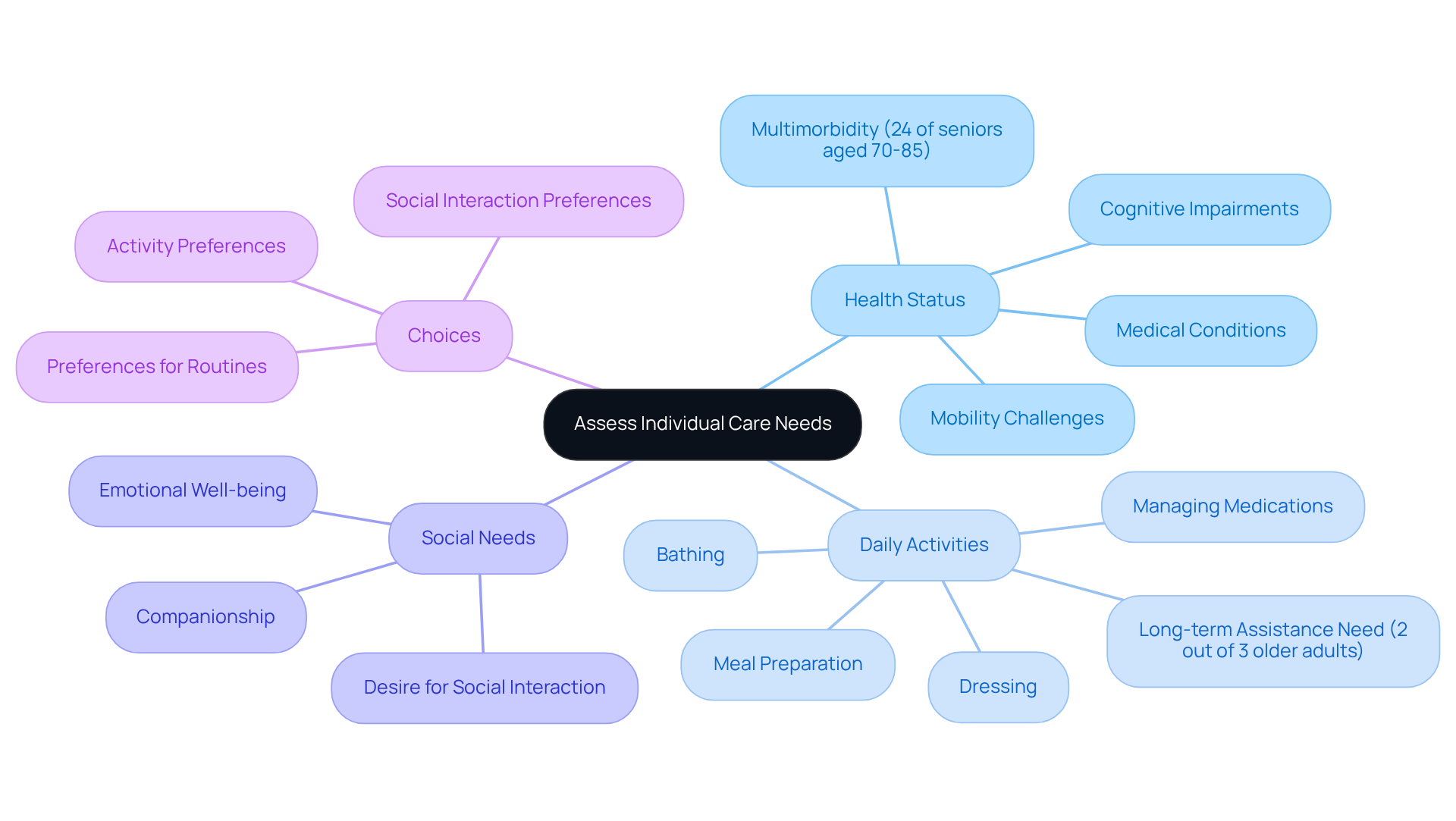
Begin by performing a thorough evaluation of the elderly person's support needs. This step is vital for ensuring they receive the appropriate assistance. Let's explore several key areas:
- Health Status: Assess any existing medical conditions, mobility challenges, or cognitive impairments. It's important to note that around 24% of seniors aged 70 to 85 may have five or more illnesses simultaneously. This statistic highlights the complexity of support needs and the necessity for personalized care plans.
- Daily Activities: Identify specific daily tasks that may pose difficulties, such as bathing, dressing, meal preparation, or managing medications. Research indicates that approximately two out of three older adults will require long-term assistance with daily activities. This evaluation is crucial for effective planning and support.
- Social Needs: Consider the level of companionship that may be necessary to alleviate feelings of loneliness and enhance emotional well-being. Many older adults express a strong desire for social interaction, which plays a significant role in maintaining mental health.
- Choices: Reflect on the person's preferences regarding routines, activities, and social interactions. Understanding these choices can significantly enhance the quality of support, ensuring that the individual feels comfortable and valued.
Document these needs clearly, as this information will serve as a foundation for finding home care agencies near me for elderly support. Engaging with geriatric specialists can offer deeper insights into effective assessment strategies, ensuring that every aspect of the individual's health and well-being is considered. Utilizing standardized assessment tools, such as the Barthel ADL Index or the Geriatric Depression Scale, can further improve the accuracy of your evaluations.
Research Home Care Agencies
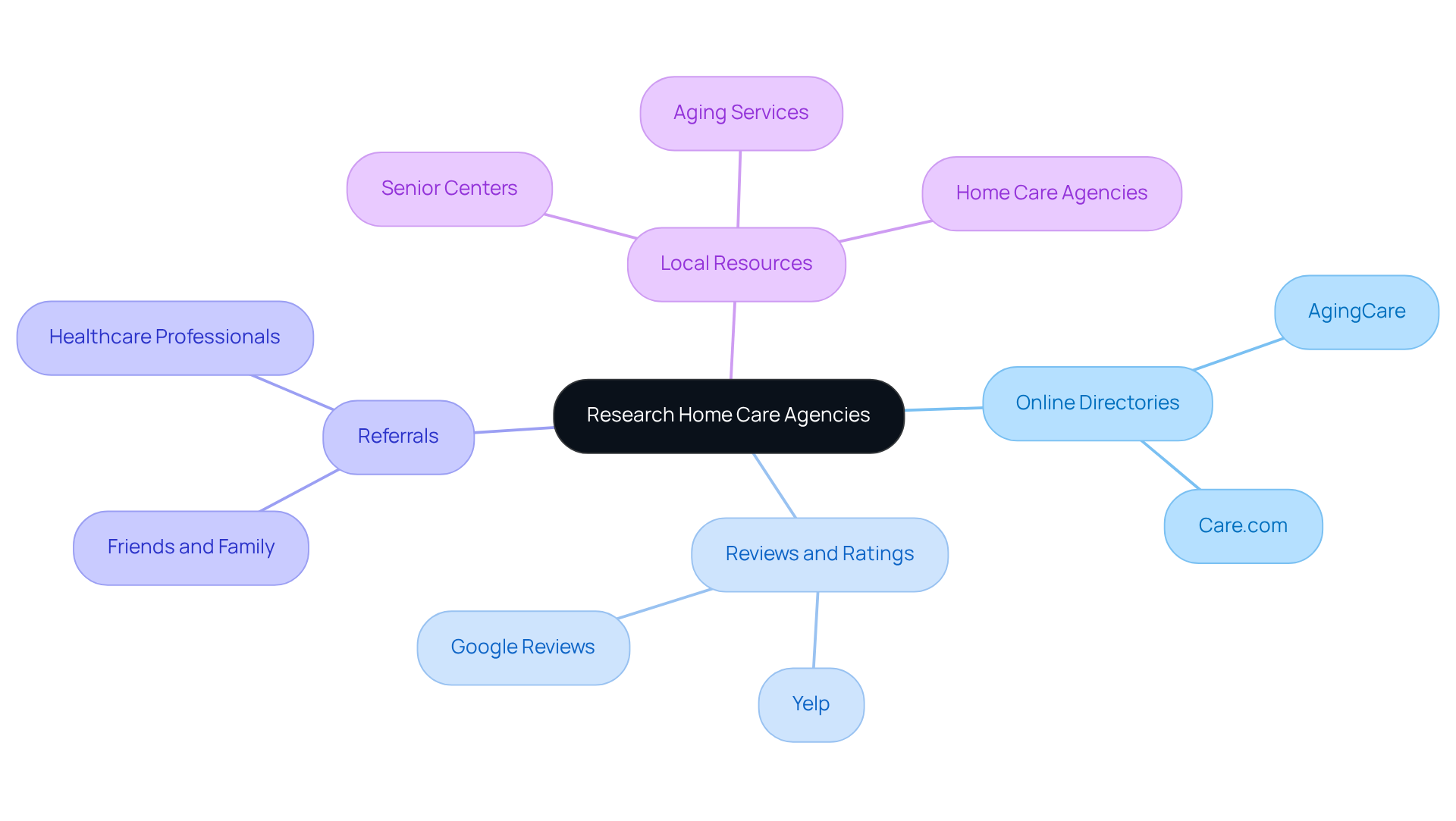
Begin your research by exploring these compassionate resources:
- Online Directories: Websites such as AgingCare and Care.com, along with local government resources, can offer you lists of home care agencies available in your area, helping you feel more connected and informed.
- Reviews and Ratings: Take a moment to check online reviews on platforms like Yelp or Google. These insights can help you understand the experiences of other families and guide your decisions with confidence.
- Referrals: Don’t hesitate to reach out to friends, family, or healthcare professionals for their recommendations. Their personal experiences can be invaluable in your search for the right care.
- Local Resources: Consider contacting local senior centers, aging services, or home care agencies near me for elderly assistance. They can provide you with details on trustworthy organizations that truly care about their clients.
As you gather this information, compile a list of organizations that resonate with you and seem promising based on your research. This step is essential in finding the right support for your loved ones.
Evaluate Qualifications and Services
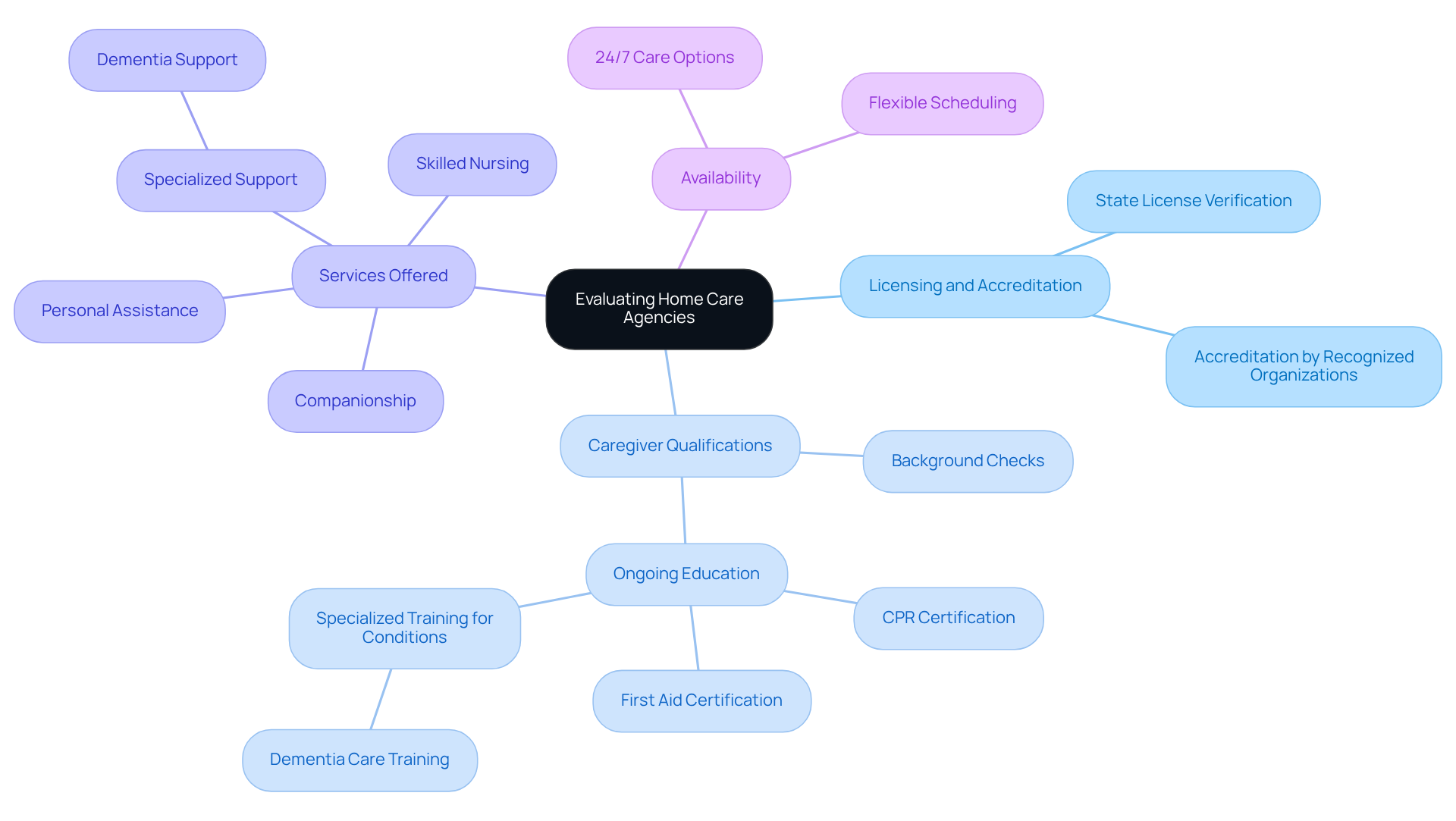
When evaluating home care agencies near me for elderly care, it is essential to consider several key factors to ensure the best support for your loved ones.
- Licensing and Accreditation: It’s vital to confirm that the agency holds a valid state license and is accredited by recognized organizations. This verification offers reassurance about the quality of service, ensuring compliance with industry standards and regulations.
- Caregiver Qualifications: Investigate the training and qualifications of caregivers. Ensure they undergo thorough background checks and participate in ongoing education, including certifications in CPR, first aid, and specialized training for conditions such as dementia. This commitment helps them stay updated on best practices in caregiving.
- Services Offered: Evaluate the range of services provided, including companionship, personal assistance, skilled nursing, and specialized support for conditions like dementia. A comprehensive array of services can better meet the unique needs of your loved one. For instance, Happy to Help Caregiving highlights personalized assistance tailored to individual preferences.
- Availability: Check the organization's availability, including options for 24/7 care and flexibility in scheduling. This ensures that support can be customized to fit your family's needs, which is a hallmark of Happy to Help Caregiving's approach.
Making a comparison chart can be an effective method to visualize the distinctions between organizations. Consider including criteria such as licensing status, caregiver qualifications, types of services offered, and availability options. This can help you make an informed decision regarding home care agencies near me for elderly, which prioritizes the well-being of your loved one.
Visit Agencies and Meet Caregivers
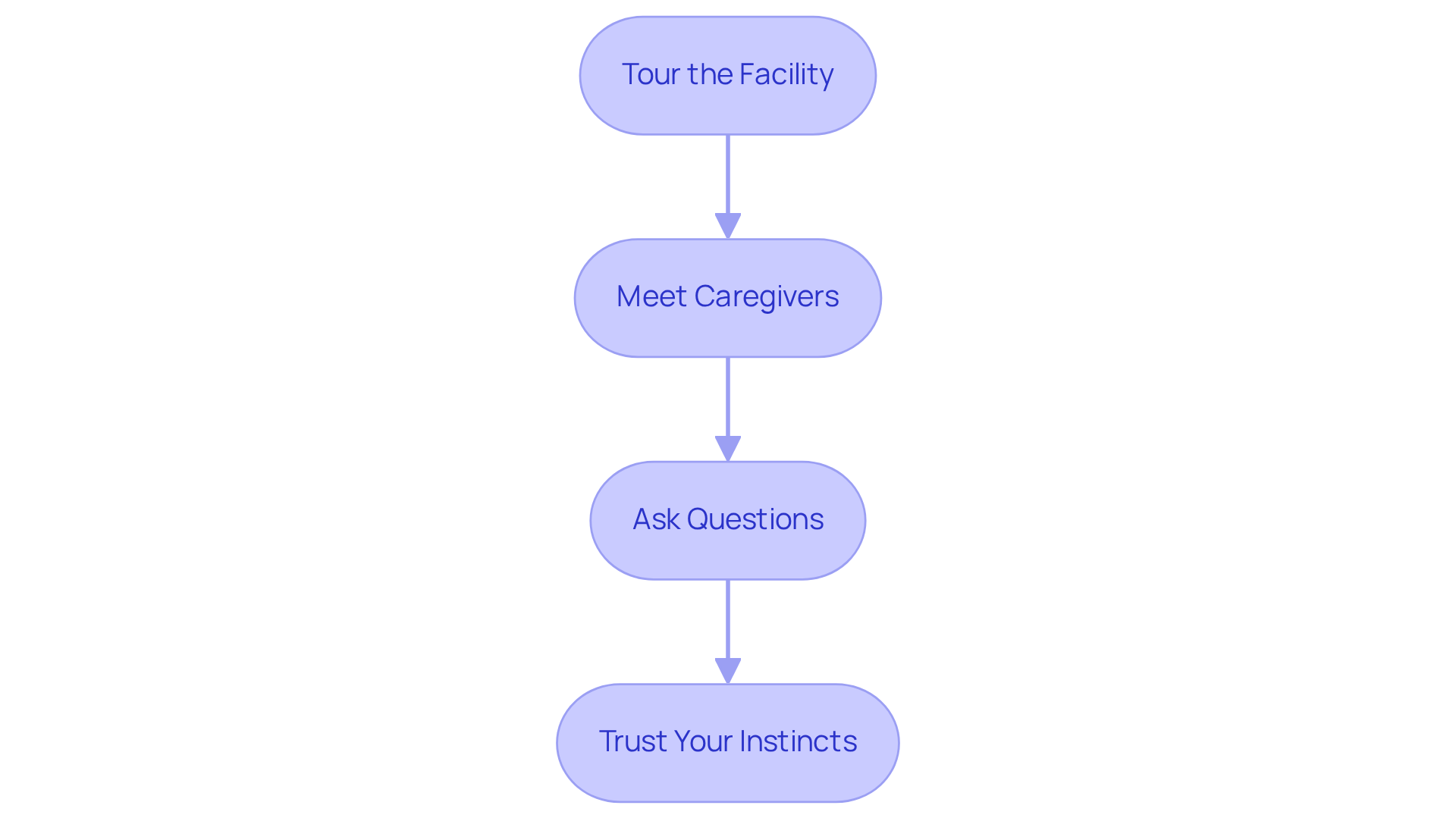
Schedule visits to the shortlisted agencies and take the following steps:
-
Tour the Facility: Observe the cleanliness, organization, and overall atmosphere of the agency. A well-kept setting reflects the organization's commitment to quality service, fostering a sense of trust.
-
Meet Caregivers: Engage with potential caregivers to assess their demeanor and communication style. This personal connection is vital for building trust and comfort, which are essential for your loved one’s well-being.
-
Ask Questions: Inquire about the organization's policies, caregiver training, and how they handle emergencies or changes in support needs. Understanding these aspects will help you evaluate the organization's readiness and reliability.
-
Trust Your Instincts: Pay attention to your feelings regarding the organization and its caregivers. Your comfort level will significantly influence the overall care experience for your family member.
Taking thorough notes during your visits will empower you to make a well-informed decision, ensuring that the chosen organization aligns with the specific needs and preferences of your loved one.
Make an Informed Decision
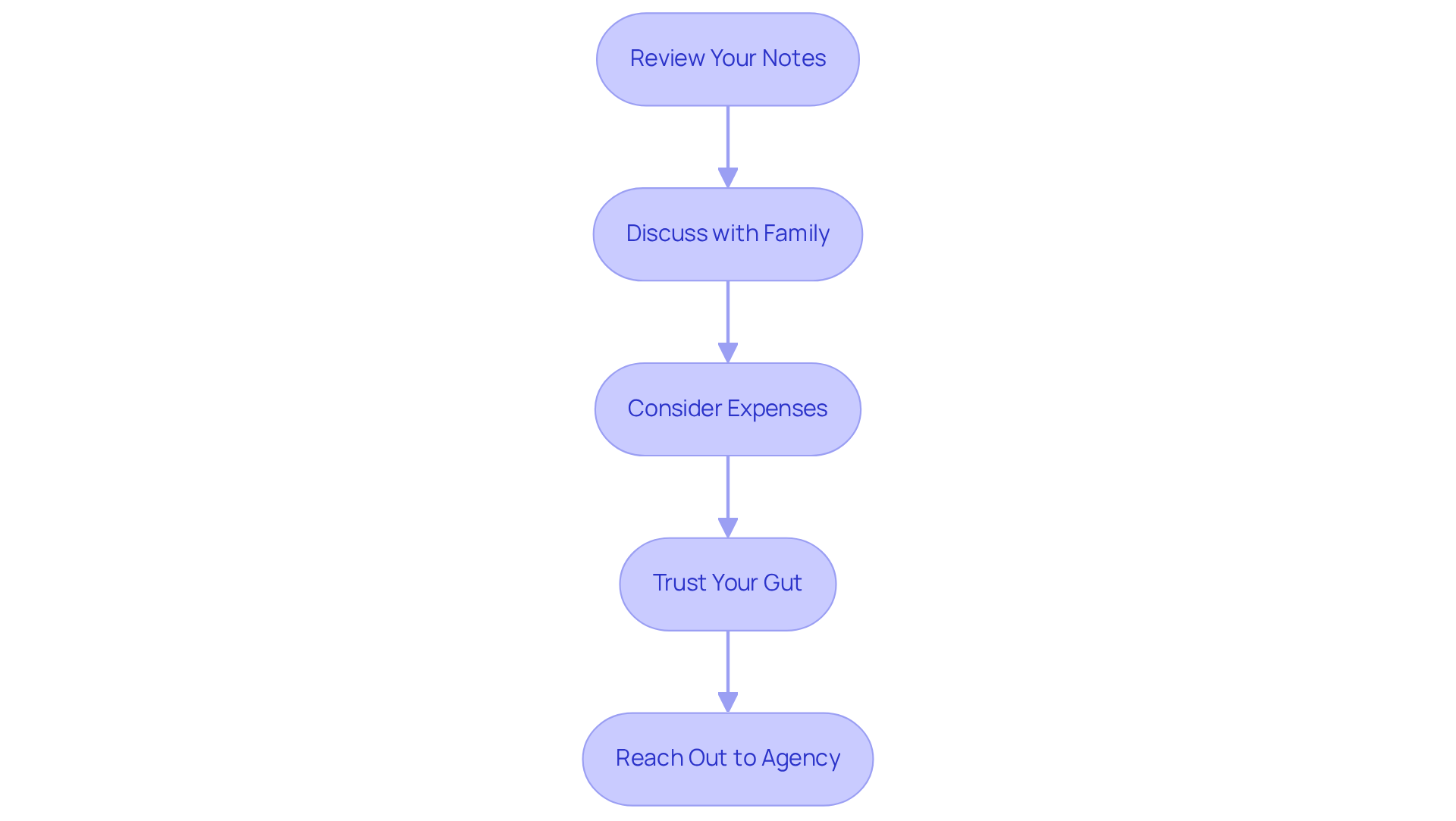
After gathering all necessary information, it’s important to take a moment to reflect before making your decision. Here are some steps to consider:
- Review Your Notes: Take a gentle stroll through the notes you’ve gathered during your research, evaluations, and visits to each agency. This can help you recall the feelings and thoughts that stood out to you.
- Discuss with Family: Involve your family in this heartfelt discussion. Sharing different perspectives can be incredibly valuable, and it ensures that everyone feels included and supported in the decision-making process.
- Consider Expenses: Look closely at the pricing models of the organizations. It’s essential to find a balance that fits within your budget while also meeting the support needs of your loved one.
- Trust Your Gut: Ultimately, choose the organization that resonates most with you and your family. Consider both the emotional connection and practical aspects, as they are both crucial in this journey.
Once you’ve made your decision, reach out to the chosen agency. They will be there to guide you through the next steps in setting up care, providing the support you need.
Your Path Forward
Choosing the right home care agency for elderly care is a significant decision, one that weighs heavily on the hearts of families. It requires careful consideration of various factors, as each loved one has unique needs that deserve attention. By understanding these individual care requirements, researching available agencies, evaluating qualifications, and meeting caregivers, families can ensure their cherished ones receive the best possible support tailored to their circumstances.
Assessing health, daily activities, social needs, and personal preferences is crucial in creating a comprehensive care plan. Researching home care agencies through online directories, reviews, and referrals can provide valuable insights into the options available. Evaluating the qualifications and services of these agencies, along with visiting them in person, helps establish trust and comfort—essential elements for effective caregiving.
Ultimately, the well-being of elderly individuals hinges on the quality of care they receive. Taking the time to follow these steps empowers families to make informed choices, enhancing the overall care experience for their loved ones. Prioritizing thorough research and open communication will lead to a more positive outcome, ensuring that seniors receive the compassionate and personalized support they truly deserve.
https://iframe.tely.ai/cta/eyJhcnRpY2xlX2lkIjogIjY4Zjk3MTE1NzE1OWY4OGZhOTZmZDFiNSIsICJjb21wYW55X2lkIjogIjY4ZWU1ZGNhNzMxNzYyNTU3ZjNjOTVjMSIsICJpbmRleCI6IG51bGwsICJ0eXBlIjogImFydGljbGUifQ==Frequently Asked Questions
What is the first step in assessing the care needs of an elderly person?
The first step is to perform a thorough evaluation of the elderly person's support needs, which is vital for ensuring they receive appropriate assistance.
What areas should be considered when evaluating an elderly person's support needs?
Key areas to consider include health status, daily activities, social needs, and personal choices regarding routines and interactions.
Why is it important to assess health status in elderly individuals?
Assessing health status is important because around 24% of seniors aged 70 to 85 may have five or more illnesses simultaneously, highlighting the complexity of their support needs.
What daily activities might elderly individuals struggle with?
Elderly individuals may have difficulties with daily tasks such as bathing, dressing, meal preparation, or managing medications.
How prevalent is the need for long-term assistance with daily activities among older adults?
Research indicates that approximately two out of three older adults will require long-term assistance with daily activities.
Why should social needs be considered in elderly care assessments?
Social needs are important to consider because many older adults express a strong desire for social interaction, which plays a significant role in maintaining their mental health and alleviating feelings of loneliness.
How can documenting individual care needs help in finding support?
Documenting these needs serves as a foundation for finding suitable home care agencies and ensures that the individual's health and well-being are considered in the search for care.
What resources can be used to research home care agencies?
Resources include online directories like AgingCare and Care.com, reviews and ratings on platforms like Yelp or Google, referrals from friends, family, or healthcare professionals, and local senior centers or aging services.
Why is it beneficial to check reviews and ratings of home care agencies?
Checking reviews and ratings helps understand the experiences of other families, which can guide your decisions with confidence when selecting a care agency.
What standardized assessment tools can improve the evaluation of elderly care needs?
Standardized assessment tools such as the Barthel ADL Index or the Geriatric Depression Scale can improve the accuracy of evaluations regarding elderly care needs.