5 Steps to Choose the Right Home Agencies Near You for Care

For families in our service areas
For families in our service areas, this guide explains caregiving and how non-medical in-home caregiving can support care planning in East Idaho, Treasure Valley & Magic Valley, Northern Wasatch, North Central West Virginia, and Northeast Ohio.
Why Choose the Right Home Agencies Near Me Matters
Choosing the right home care agency can feel like navigating a labyrinth. With thousands of options available, families seeking assistance for their loved ones face a significant challenge. They must ensure quality care while also addressing specific needs and preferences.
This situation can lead to confusion and stress, as the stakes are high when it comes to the well-being of loved ones. Families often worry about finding an agency that aligns with their values and care requirements. So, how can one determine which agency truly meets these needs?
This guide offers a structured approach to selecting the ideal home care agency. It highlights key factors and actionable steps that can lead to a more informed decision. By following this guide, caregivers can navigate the complexities of choosing a home care agency with greater confidence.
Assess Your Care Needs and Preferences
Assessing the specific needs of individuals requiring assistance is crucial. Without a clear understanding of these needs, caregivers may struggle to provide effective support. This can lead to unmet medical, social, and personal requirements, ultimately affecting the well-being of those in their care.
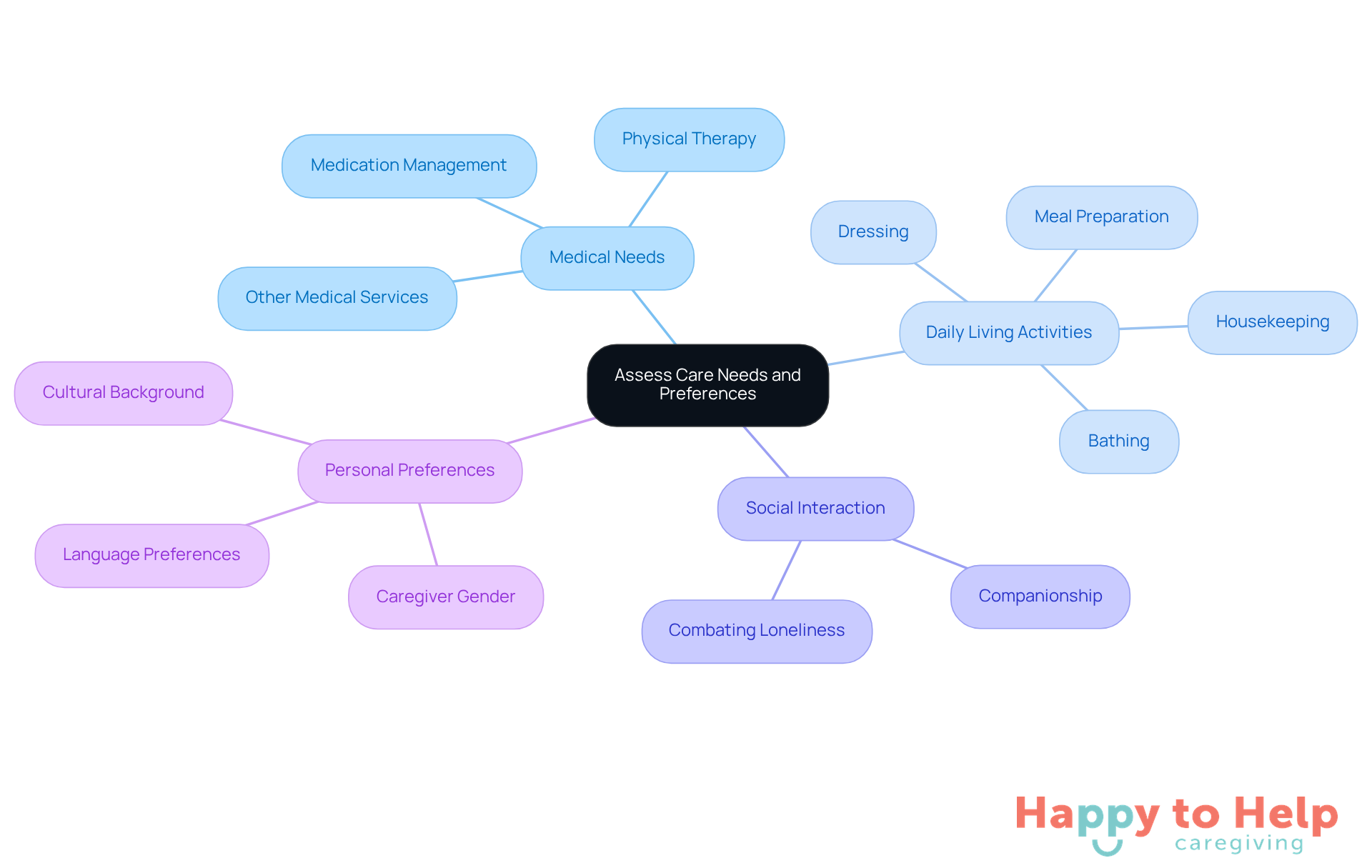
To address this challenge, consider the following areas:
- Medical Needs: Does the person require assistance with medication management, physical therapy, or other medical services?
- Daily Living Activities: Identify tasks such as bathing, dressing, meal preparation, and housekeeping that may need support.
- Social Interaction: Determine if companionship is necessary to combat loneliness or isolation.
- Personal Preferences: Take into account the individual's preferences regarding caregivers, such as gender, language, and cultural background.
Documenting these needs and preferences creates a clear understanding of the support required, enabling caregivers to tailor their assistance effectively.
Research Local Home Care Agencies
Finding reliable home care agencies can be a daunting task, especially when you consider the vast number of options available. With around 12,000 Medicare-registered support organizations and over 35,000 unlicensed providers, the challenge is not just about finding help, but ensuring that the help you find is trustworthy and meets your needs.
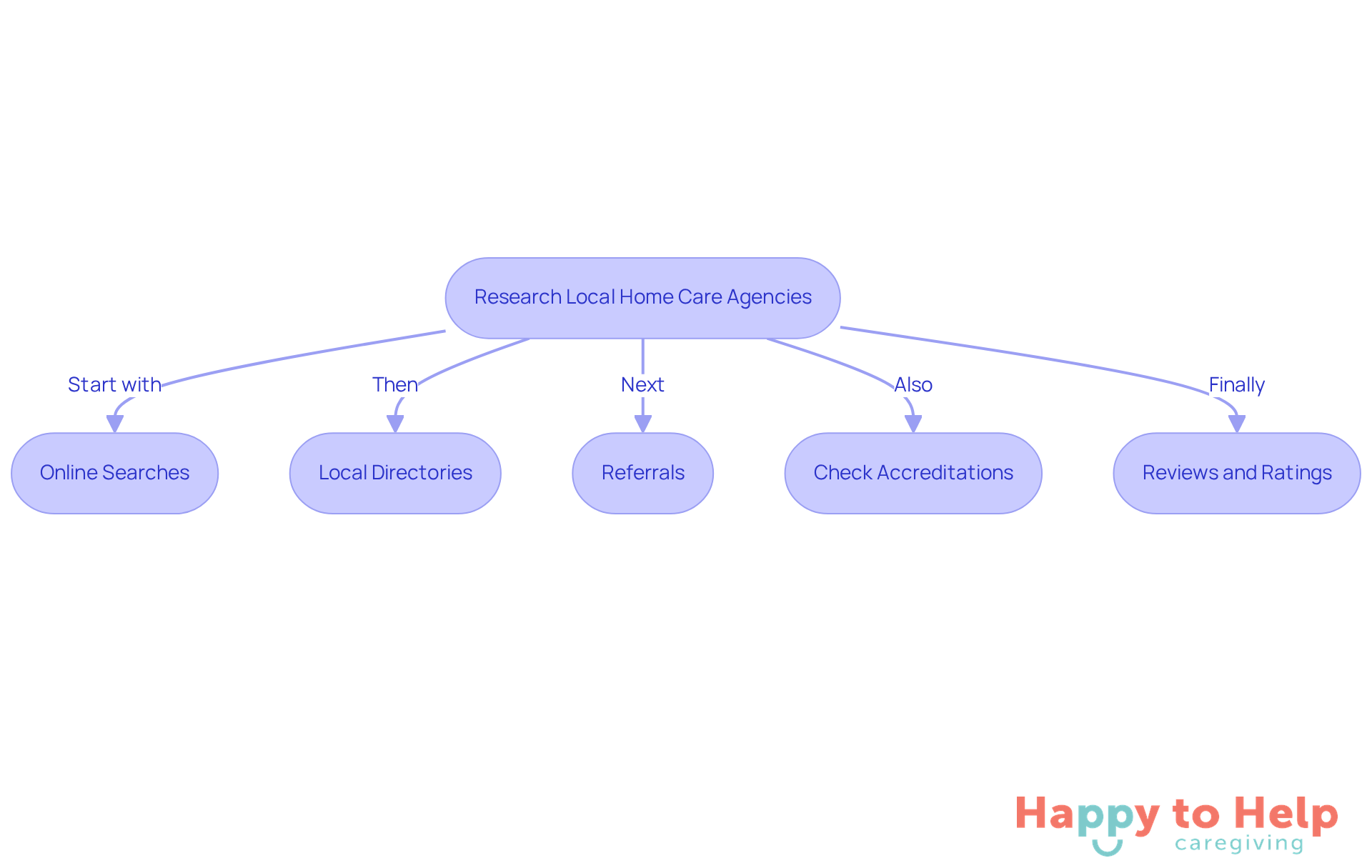
To tackle this issue, start with online searches. Use search engines to pinpoint home agencies near me. Pay attention to reviews and ratings on platforms like Google and Yelp, as well as specialized caregiving websites that focus on user experiences. Notably, 91% of domestic support clients express satisfaction with their caregivers, which underscores the importance of individualized attention.
Next, explore local directories. These resources often provide listings of home agencies near me that offer licensed residential support services, along with valuable information about their offerings and contact details. Prioritizing accredited organizations is crucial for ensuring quality care.
Don’t underestimate the power of referrals. Ask friends, family, or healthcare professionals for recommendations based on their experiences. Personal referrals can lead you to reliable organizations. For example, one family shared their positive experience with Home Care Maria, praising their excellent service during a challenging time.
Check for accreditations as well. Make sure the organizations you consider are accredited and comply with state licensing requirements. This information is typically available on their websites or can be verified through state health departments, providing peace of mind about the quality of service.
Finally, take a close look at reviews and ratings. Examine the average ratings of domestic support agencies on review platforms. A high rating often indicates consistent quality of assistance, while individual reviews can shed light on specific experiences. With an estimated 15 million Americans receiving in-home support services, thorough research is essential.
By following these steps, you can effectively narrow down your options and find a support service that meets your needs and expectations.
Evaluate Qualifications and Services Offered
When evaluating home agencies near me, families often face the challenge of ensuring their loved ones receive the best possible care. This decision can be overwhelming, given the variety of options and the importance of quality assistance.
-
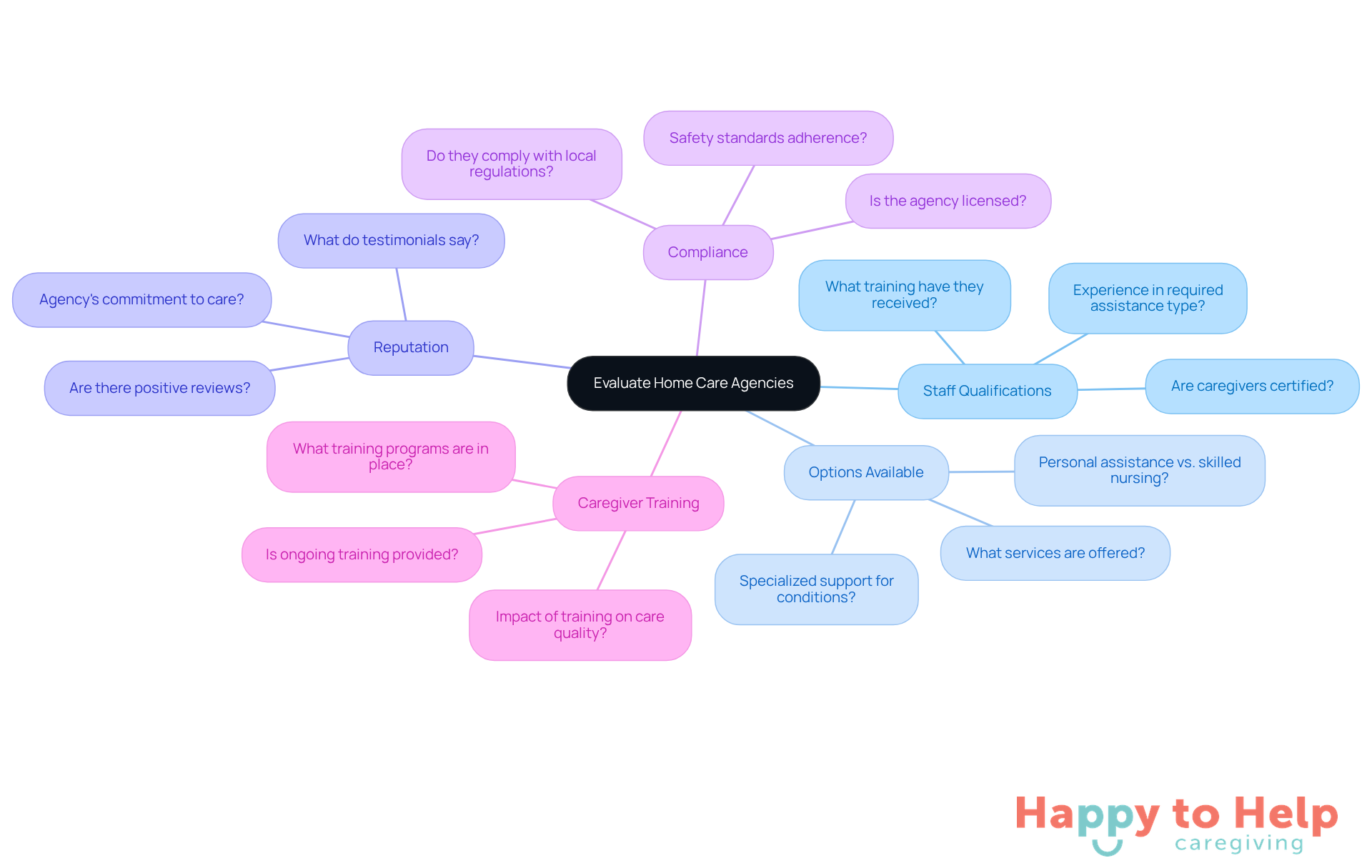
Staff Qualifications: One critical factor to consider is the qualifications of the staff. It’s essential to verify that caregivers are trained, certified, and have undergone thorough background checks. Inquire about their specific experience in delivering the type of assistance your loved one requires. Research shows that well-trained caregivers not only demonstrate improved competence but also lead to better patient outcomes and higher job satisfaction.
-
Options Available: Another important aspect is the range of options available. Ensure the organization offers a comprehensive selection of services tailored to your needs, such as personal assistance, companionship, skilled nursing, and specialized support for conditions like Alzheimer’s. Notably, about 60% of home assistance providers offer skilled nursing support, reflecting the growing demand for such expertise in the field.
-
Reputation: Assessing the agency's reputation is also vital. Look for testimonials and reviews from other families to gauge the organization’s reliability and quality of care. Positive feedback often highlights the agency's commitment to compassionate service and effective communication, which are crucial for building trust and comfort.
-
Compliance: Additionally, confirm that the organization complies with local regulations and holds the necessary licenses to operate. Adherence to these standards is essential for ensuring the safety and well-being of clients.
-
Importance of Caregiver Training: The significance of ongoing caregiver training cannot be overstated. Industry leaders emphasize that comprehensive training programs enhance caregivers' skills and confidence, ultimately improving the quality of assistance provided. Agencies that prioritize training not only retain staff more effectively but also ensure caregivers are equipped to meet the diverse needs of their clients.
By thoroughly evaluating these factors, families can make informed decisions when selecting home agencies near me for support services, ensuring their loved ones receive the highest quality of care.
Visit Agencies and Interview Caregivers
Finding the right caregiver can be a daunting task. You want someone who not only meets the qualifications but also fits well with your loved one's needs. This challenge can lead to stress and uncertainty, making it crucial to approach the selection process thoughtfully.
To tackle this issue, consider scheduling visits to shortlisted agencies and preparing to interview caregivers. Here are some actionable steps:
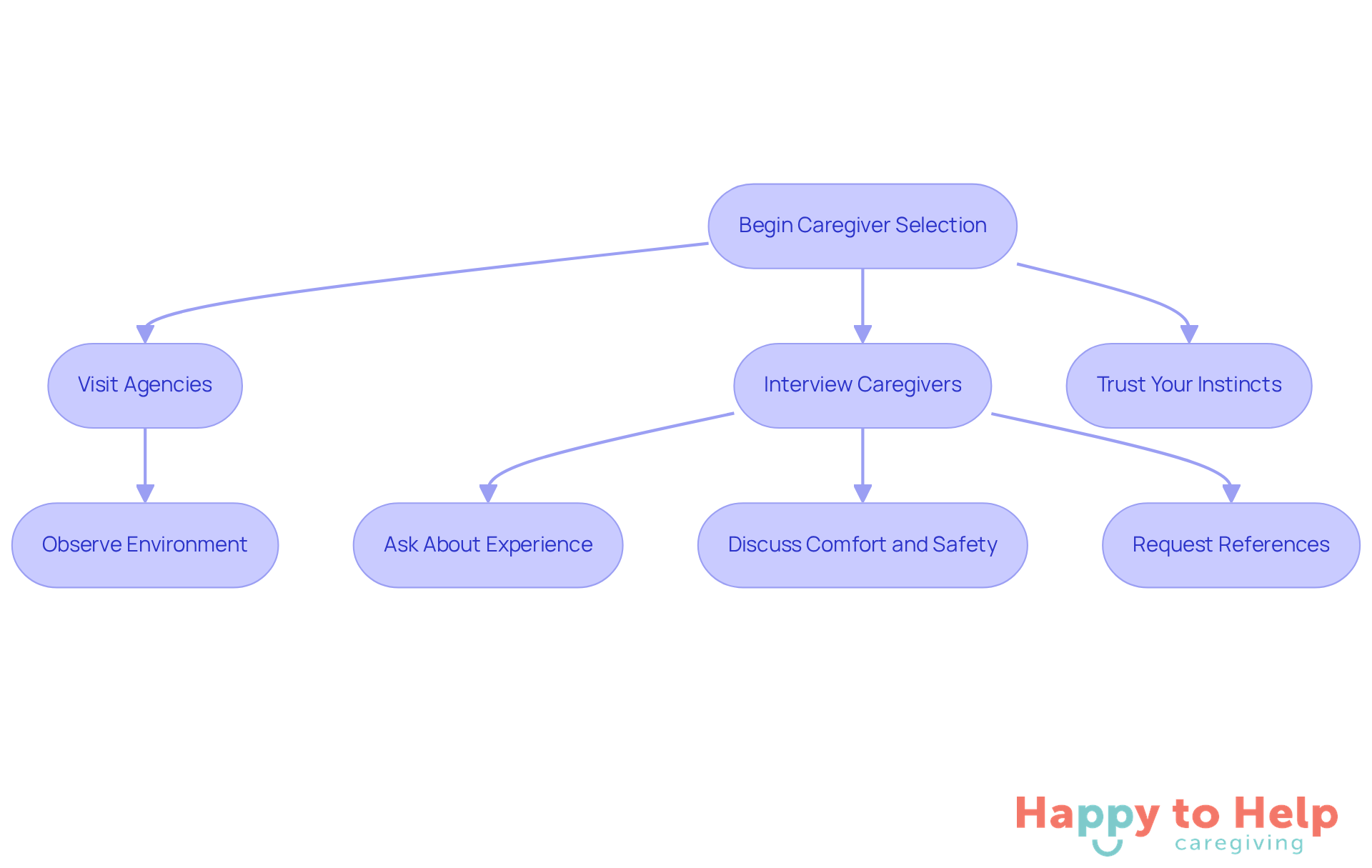
- Observing the Environment: Pay attention to the agency's facilities, cleanliness, and overall atmosphere. A well-maintained environment often reflects the quality of care provided.
- Interviewing Caregivers: Ask potential caregivers about their experience, approach to care, and how they handle specific situations. Consider questions like:
- What is your experience with clients who have similar needs?
- How do you ensure the comfort and safety of your clients?
- Can you provide references from previous clients?
- Trust Your Instincts: Evaluate how comfortable you feel with the caregivers and whether they seem genuinely compassionate and attentive.
By following these steps, you can make a more informed decision and find a caregiver who truly meets your needs.
Review Contracts and Understand Payment Options
Before finalizing your choice, it’s crucial to address the potential problem of misunderstanding contracts in caregiving. Misinterpretations can lead to conflicts and unmet expectations, which can complicate care arrangements.
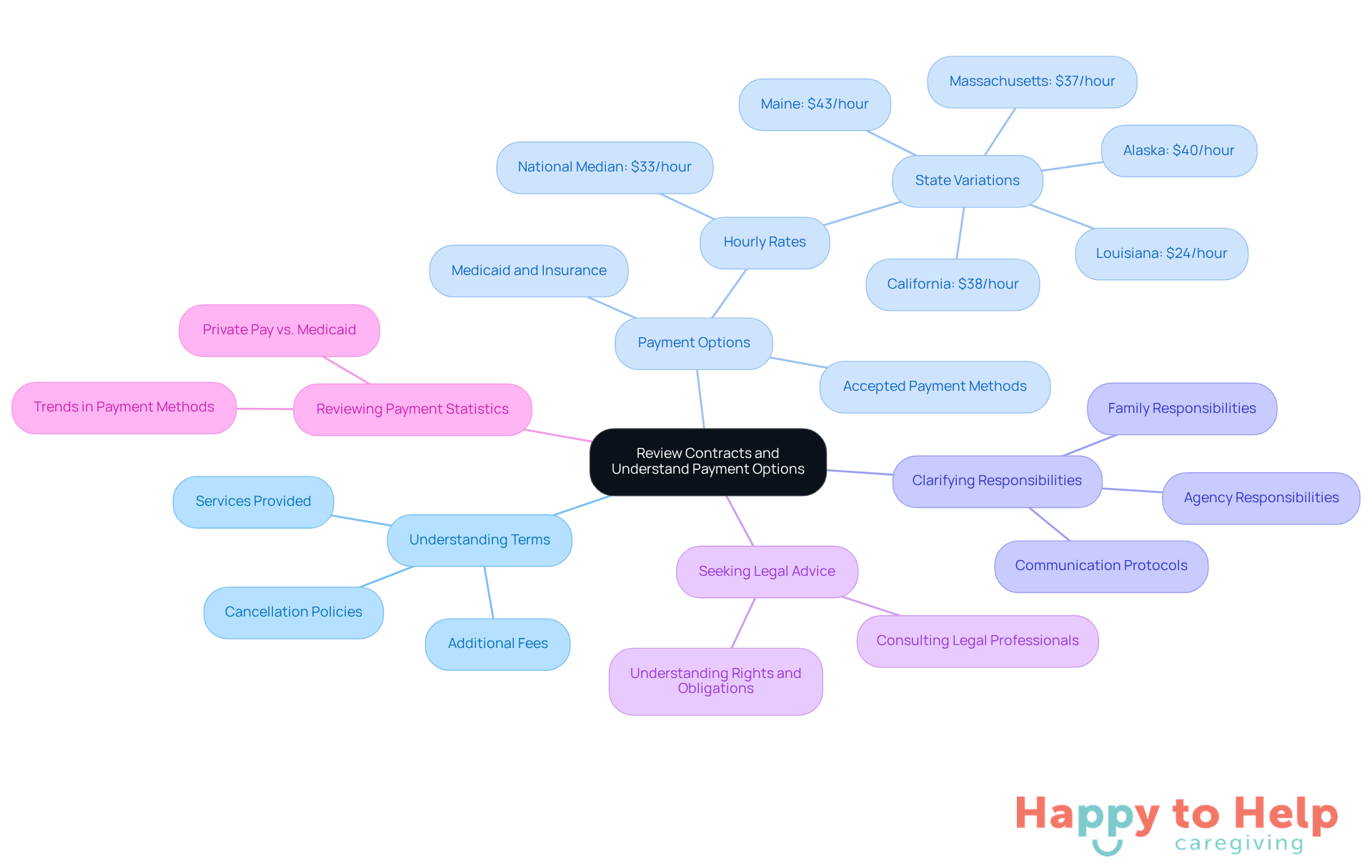
Understanding Terms: Ensure you comprehend all terms, including services provided, cancellation policies, and any additional fees that may apply. This clarity helps prevent misunderstandings later.
Payment Options: Inquire about various payment methods accepted by the organization. The national median expense for nonmedical in-home assistance is currently $33 per hour, with state expenses ranging from $24 to $43. For example, in Alaska, the hourly rate is $40, and in Massachusetts, it is $37. Confirm whether they accept Medicaid, private insurance, or offer sliding scale fees and payment plans to accommodate different financial situations.
Clarifying Responsibilities: Make sure the contract clearly outlines the responsibilities of both the agency and the family. This encompasses communication protocols, plan updates, and any responsibilities related to caregiver training and oversight.
Seeking Legal Advice: If necessary, consult with a legal professional to clarify any complex terms or conditions. Legal experts can provide insights into caregiving agreements, ensuring that families fully understand their rights and obligations. As mentioned by legal experts, "Examining caregiving contracts in detail can avert future conflicts and guarantee transparency in support expectations."
Reviewing Payment Statistics: Get to know statistics on payment options accepted by home agencies near me. For instance, many agencies report that a significant portion of their clients utilize private pay methods, while approximately 18% rely on Medicaid for daily services. Understanding these trends can help you make informed decisions about financing care.
Taking the Next Steps
Choosing the right home care agency presents a significant challenge that can greatly affect the quality of life for those needing assistance. Families often struggle to understand individual care requirements and preferences, which can lead to mismatched support for their loved ones. This situation not only complicates the caregiving experience but can also diminish the comfort and security that clients and their families seek.
To address this issue, families should follow several essential steps:
- Assess Care Needs: Identify the specific requirements of your loved one.
- Research Local Agencies: Look for agencies that have a good reputation in your area.
- Evaluate Qualifications and Services: Ensure that the agency meets necessary standards and offers the services you need.
- Interview Caregivers: Meet potential caregivers to gauge their suitability.
- Review Contracts Thoroughly: Understand financial obligations and agency policies.
Each of these steps is crucial for making informed choices, from determining the right level of care to grasping financial responsibilities and agency reputations. By prioritizing these factors, families can confidently navigate the complex landscape of home care services.
Ultimately, finding the ideal home care agency goes beyond just meeting basic needs; it’s about ensuring dignity, respect, and quality of life for those who require assistance. Families are encouraged to take the time to explore their options, ask the right questions, and seek recommendations. By doing so, they empower themselves and contribute to a supportive environment that values the well-being of every individual in their care.
https://iframe.tely.ai/cta/eyJhcnRpY2xlX2lkIjogIjY5MjNhMGE5MjcyNDliYTNkMmMzZTYwMyIsICJjb21wYW55X2lkIjogIjY4ZWU1ZGNhNzMxNzYyNTU3ZjNjOTVjMSIsICJpbmRleCI6IG51bGwsICJ0eXBlIjogImFydGljbGUifQ==Frequently Asked Questions
Why is it important to assess care needs and preferences?
Assessing care needs and preferences is crucial to ensure that caregivers provide effective support. Without a clear understanding of these needs, caregivers may struggle to meet medical, social, and personal requirements, negatively impacting the well-being of those in their care.
What areas should be considered when assessing care needs?
Key areas to consider include medical needs (such as medication management and physical therapy), daily living activities (like bathing and meal preparation), social interaction (to combat loneliness), and personal preferences regarding caregivers (including gender, language, and cultural background).
How can documenting care needs and preferences help caregivers?
Documenting needs and preferences creates a clear understanding of the support required, enabling caregivers to tailor their assistance effectively to meet the specific needs of the individual.
What challenges exist when researching local home care agencies?
The challenge lies in the vast number of available options, which includes around 12,000 Medicare-registered support organizations and over 35,000 unlicensed providers. Finding trustworthy help that meets specific needs can be daunting.
What steps can be taken to find reliable home care agencies?
Start with online searches to find local agencies, check reviews and ratings on platforms like Google and Yelp, explore local directories for licensed providers, seek referrals from friends and healthcare professionals, verify accreditations, and examine individual reviews for insights on specific experiences.
Why is it important to prioritize accredited organizations when choosing a home care agency?
Prioritizing accredited organizations is crucial for ensuring quality care, as accreditation indicates compliance with state licensing requirements and standards for service delivery.
What role do reviews and ratings play in selecting a home care agency?
Reviews and ratings help gauge the quality of assistance provided by domestic support agencies. High ratings indicate consistent quality, while individual reviews can offer insights into specific experiences and satisfaction levels among clients.
List of Sources
- Assess Your Care Needs and Preferences
- The senior population is booming. Caregiving is struggling to keep up (https://cnbc.com/2025/11/21/senior-caregiving-labor.html)
- Home Care Industry Trends to Watch in 2025 (https://firstlighthomecare.com/blog/home-care-industry-trends)
- Warning From Older Adults: Care for Aging in America Needs Urgent Rethinking (https://johnahartford.org/newsroom/view/warning-from-older-adults-care-for-aging-in-america-needs-urgent-rethinking)
- Research Local Home Care Agencies
- 52 Eye-Opening Home Health Statistics: Insights for 2025 (https://boosthomehealth.com/home-health-statistics)
- Home Care Statistics In 2025: Key Insights In Home Care (https://sagapixel.com/marketing/home-care-statistics)
- FastStats (https://cdc.gov/nchs/fastats/home-health-care.htm)
- The 10 Best Home Care Agencies for Seniors in San Francisco County, CA for 2025 (https://caring.com/senior-care/in-home-care/california/san-francisco-county)
- Home Care Industry Overview and Statistics (https://ankota.com/home-care-industry-overview-and-statistics)
- Evaluate Qualifications and Services Offered
- New Research Highlights Critical Role of Training in Caregiver Retention (https://careacademy.com/blog/role-of-training-in-caregiver-retention)
- The Importance of Caregiver Training: Enhancing Quality of Care | Caretap | (https://caretap.net/blog/importance-caregiver-training-enhancing-quality-care)
- US News & World Report Highlights CCA's Caregiver Training (https://advancecaregivers.org/report-us-news-world-report-highlights-ccas-caregiver-training)
- The National Alliance for Caregiving and AARP Release Caregiving Report - CAPC - News Bites (https://capc.org/blog/new-data-on-family-caregivers-in-the-us)
- Caregiver Statistics: Demographics (https://caregiver.org/resource/caregiver-statistics-demographics)
- Visit Agencies and Interview Caregivers
- How to Hire an In-Home Caregiver (https://aplaceformom.com/caregiver-resources/articles/hiring-an-in-home-caregiver)
- The Caregiving Landscape: Data & Insights on the Caregiver Experience in the U.S. (https://caregiveraction.org/caregiver-statistics)
- Caregiver Statistics: Demographics (https://caregiver.org/resource/caregiver-statistics-demographics)
- Tips for Choosing a Senior In-Home Care Agency: 10 Things to Consider - Mary Ann Morse Home Care (https://maryannmorse.org/2023/07/28/tips-for-choosing-a-senior-in-home-care-agency-ten-things-to-consider)
- 10 Tips for Finding the Right Home Care Agency | VirginiaNavigator (https://disabilitynavigator.org/article/93691/10-tips-finding-right-home-care-agency)
- Review Contracts and Understand Payment Options
- Cost of Long Term Care by State | Cost of Care Report | Carescout (https://carescout.com/cost-of-care)
- Home Care Costs in 2025: A State-by-State Guide (https://aplaceformom.com/caregiver-resources/articles/in-home-care-costs)
- Facts & Figures (https://ahcancal.org/Assisted-Living/Facts-and-Figures/Pages/default.aspx)
- Home-Based Care Providers Adapt To A Volatile Reimbursement Landscape (https://homehealthcarenews.com/2025/11/home-based-care-providers-adapt-to-a-volatile-reimbursement-landscape)