
For families in our service areas
For families in our service areas, this guide explains caregiving and how non-medical in-home caregiving can support care planning in East Idaho, Treasure Valley & Magic Valley, Northern Wasatch, North Central West Virginia, and Northeast Ohio.
Why Find Age Care Near Me Matters
Navigating the complexities of in-home care can be daunting for families seeking support for their loved ones. With an increasing demand for elder care services, understanding the various types of care available is essential for making informed decisions that enhance quality of life.
The challenge lies in the overwhelming options available. Caregivers often struggle to identify the right services and providers, which can lead to confusion and stress. This uncertainty can impact not only the caregivers but also the well-being of their loved ones.
So, how can caregivers effectively find the right age care services? This guide outlines a step-by-step approach to help caregivers navigate these choices. By focusing on individual needs, families can ensure peace of mind for both caregivers and their loved ones.
Understand Different Types of In-Home Care Services
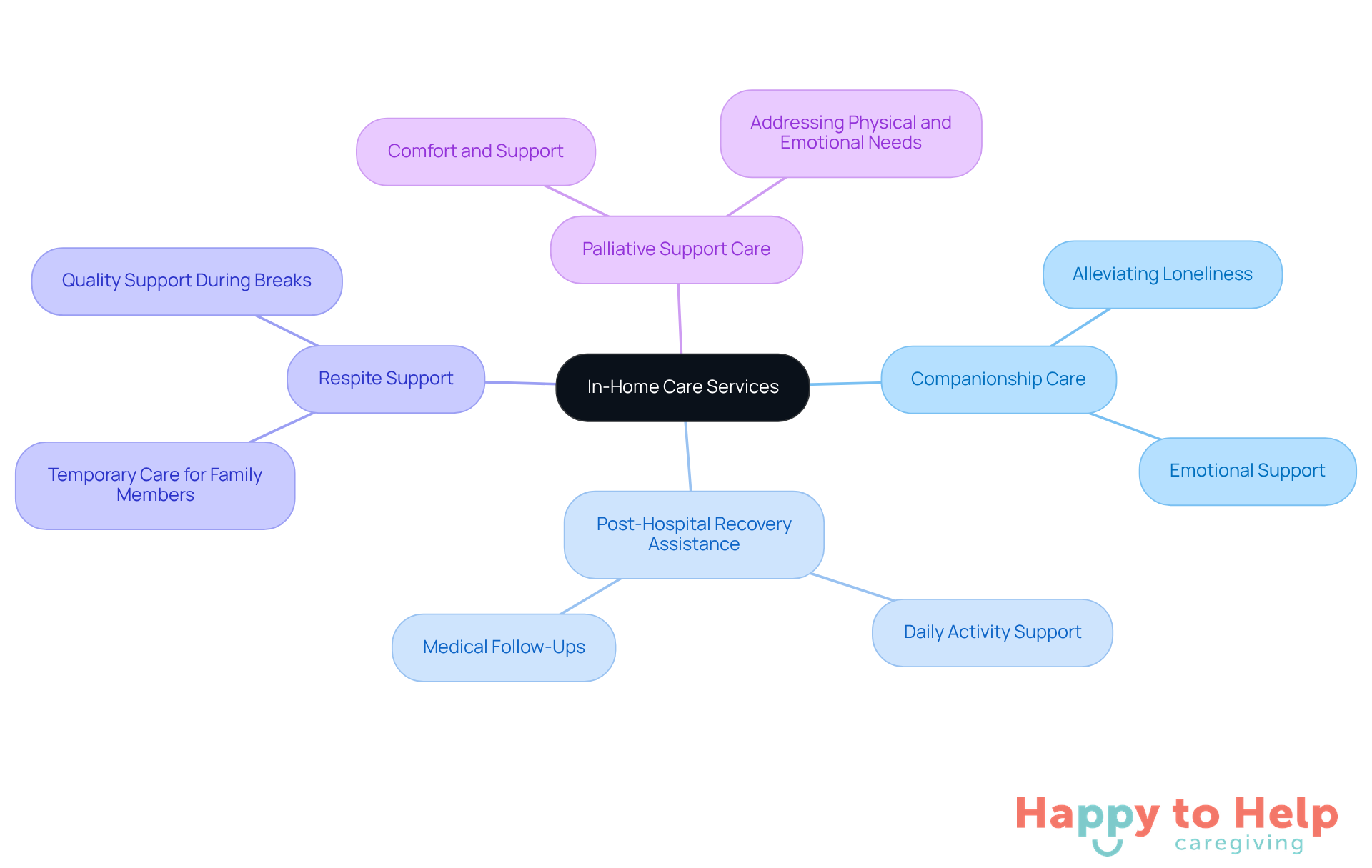
In-home care services can be crucial for caregivers facing the challenges of supporting their loved ones. These challenges often include feelings of isolation for seniors and the physical demands placed on caregivers. Understanding the types of in-home care available can help alleviate these issues.
-
Companionship Care: This service focuses on providing emotional support and companionship to seniors, helping to alleviate feelings of loneliness and isolation.
-
Post-Hospital Recovery Assistance: Tailored for individuals recovering from surgery or illness, this service includes help with daily activities and medical follow-ups.
-
Respite Support: This temporary assistance option enables primary caregivers to take a break while ensuring their family members receive quality support.
-
Palliative Support Care: Designed for individuals with serious illnesses, this service focuses on providing comfort and support, addressing both physical and emotional needs.
By grasping these classifications, caregivers can make informed decisions about which type of support is most suitable for their family member’s situation.
Identify Your Care Needs and Preferences
To effectively identify your loved one's care needs and preferences, caregivers face a significant challenge. Understanding these needs is crucial for providing appropriate support, especially as the demand for elder care services continues to rise.
-
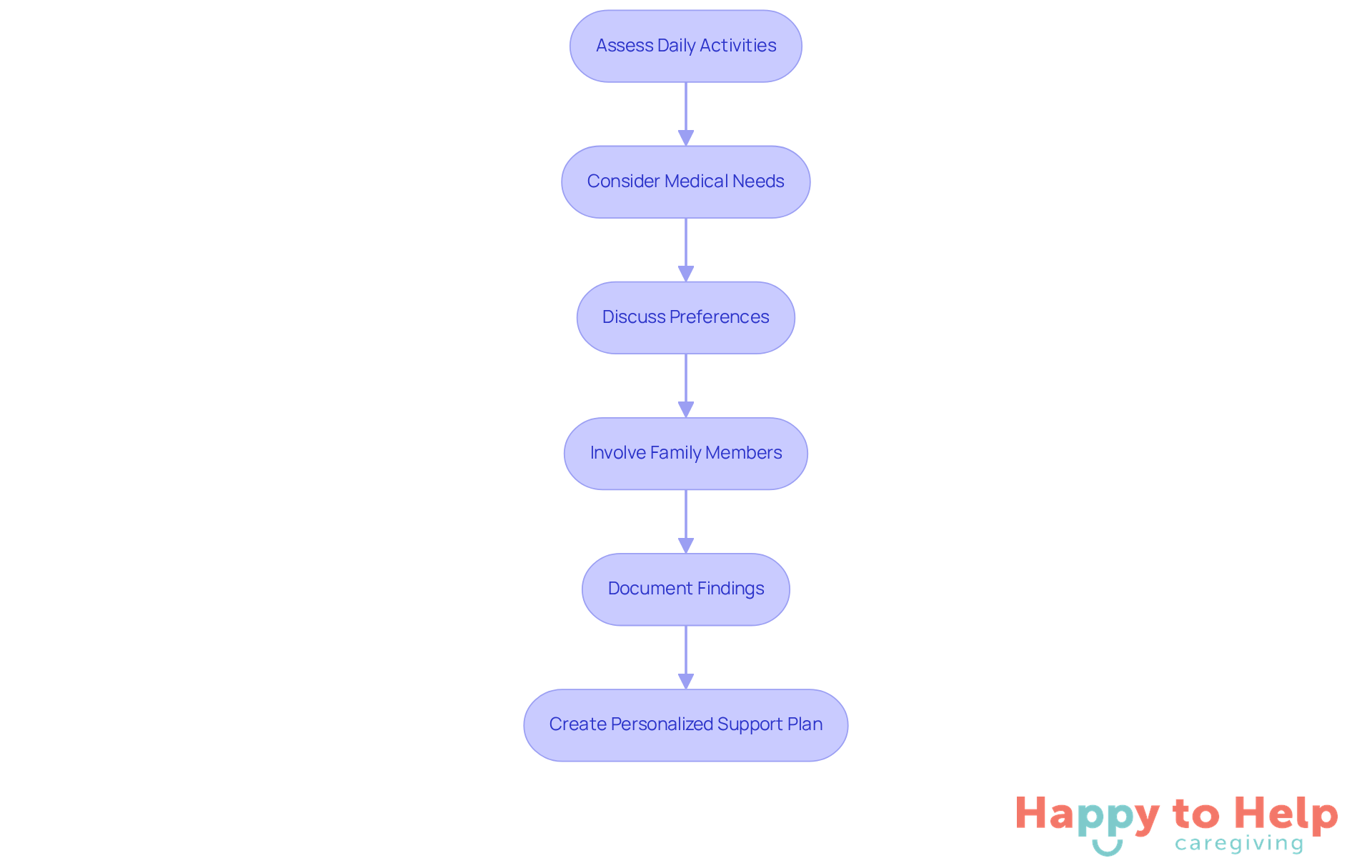
Assess Daily Activities: Start by evaluating which daily tasks your loved one finds challenging, such as bathing, dressing, or meal preparation. Comprehending these challenges is essential for customizing support.
-
Consider Medical Needs: Document any medical conditions that require specialized attention or monitoring, including chronic illnesses like diabetes or cognitive impairments such as dementia. This information is vital for developing a thorough support plan.
-
Discuss Preferences: Engage in an open dialogue with your loved one about their preferences regarding caregivers, daily routines, and activities they enjoy. This conversation is key to ensuring that their support aligns with their lifestyle and wishes.
-
Involve Family Members: Gather insights from family members who may have valuable perspectives on your loved one's needs and preferences. Collaborative discussions can lead to a more comprehensive understanding of the support needed.
-
Document Findings: Compile the information gathered from assessments and discussions into a clear outline. This documentation will serve as a basis for expressing specific needs when seeking age care near me services.
By following these steps, you can create a personalized support plan that not only addresses medical needs but also respects your loved one's preferences, ultimately enhancing their quality of life at home. Given the challenges caregivers encounter, including possible Medicaid reductions impacting resources, it is vital to approach this process with care. Consulting with geriatric care specialists can provide additional insights into common medical needs and preferences, ensuring a well-rounded care strategy.
Research and Evaluate Caregiving Agencies
When researching caregiving agencies, caregivers face the challenge of selecting a reliable provider. This decision is crucial, especially as the senior population continues to grow, with projections indicating that by 2034, there will be more seniors than children in the U.S. Families increasingly expect elevated standards of support and safety, making it essential to choose wisely.
To tackle this problem, follow these structured steps:
-
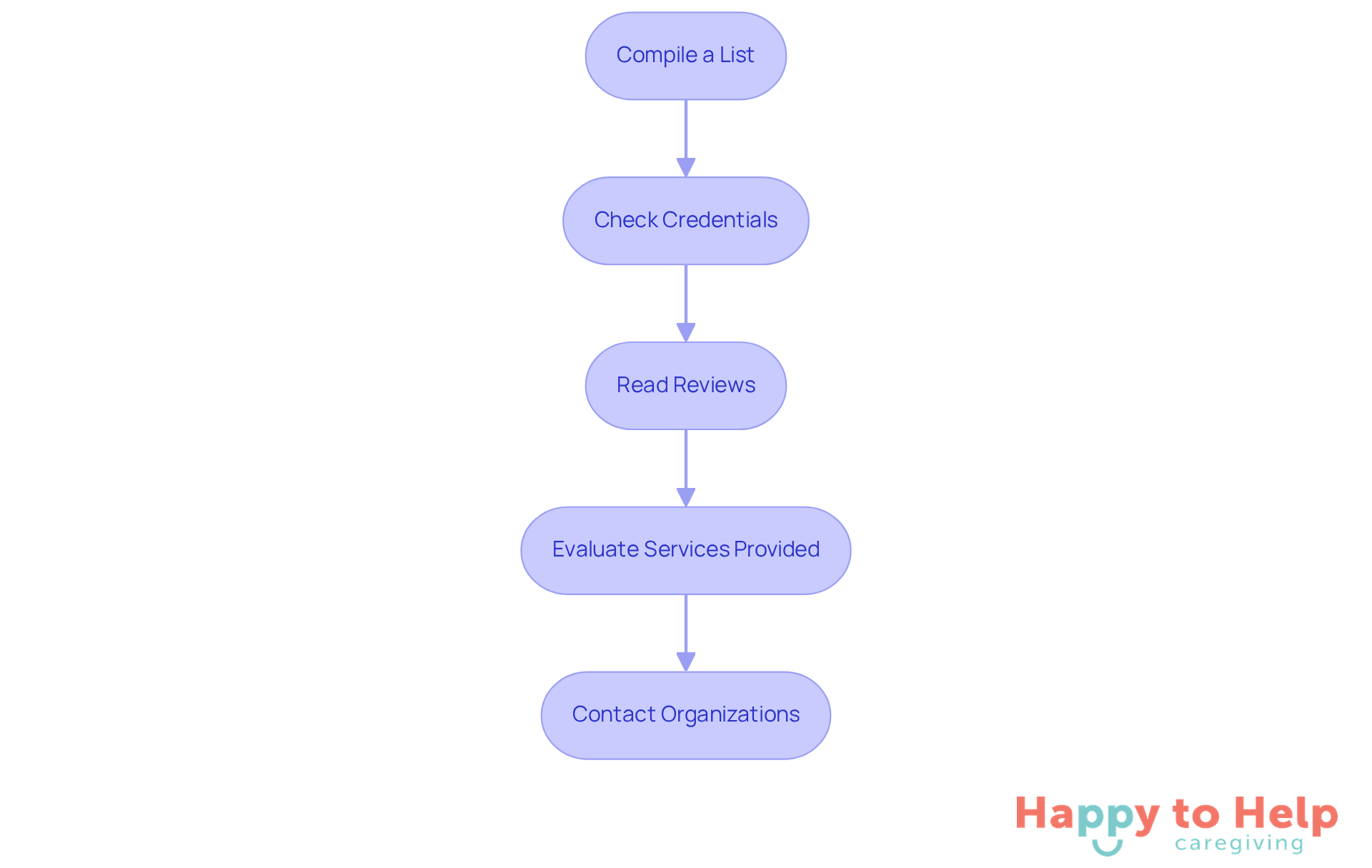
Compile a List: Start by creating a comprehensive list of local caregiving organizations. Use resources like online directories, community referrals, and recommendations from family and friends to gather potential options.
-
Check Credentials: Verify that each organization holds the necessary licenses and accreditations from relevant state or national entities. In 2025, organizational qualifications will be more important than ever, as families seek assurance of quality care.
-
Read Reviews: Examine online evaluations and testimonials from other families to assess the organization's reputation and quality of service. A robust organization will receive favorable responses, demonstrating their dedication to individualized and respectful support. As one industry leader noted, "One of the distinct indicators of an exceptional organization is its dedication to personalized support plans."
-
Evaluate Services Provided: Ensure that the organization offers the specific types of care your loved one needs, whether it be companionship, medical assistance, or specialized services. Agencies that diversify their offerings can better meet the unique needs of seniors, especially in light of challenges like Medicaid cuts and staffing shortages in assisted living facilities.
-
Contact Organizations: Reach out directly to organizations for detailed information about their services, caregiver qualifications, and availability. Interacting with representatives can provide insight into their operational methods and commitment to quality service.
By following these steps, you can narrow down your options to agencies that align with your loved one's assistance requirements, ensuring a supportive and reliable caregiving environment.
Interview Potential Caregivers
To effectively interview potential caregivers, it's essential to follow these steps:
-
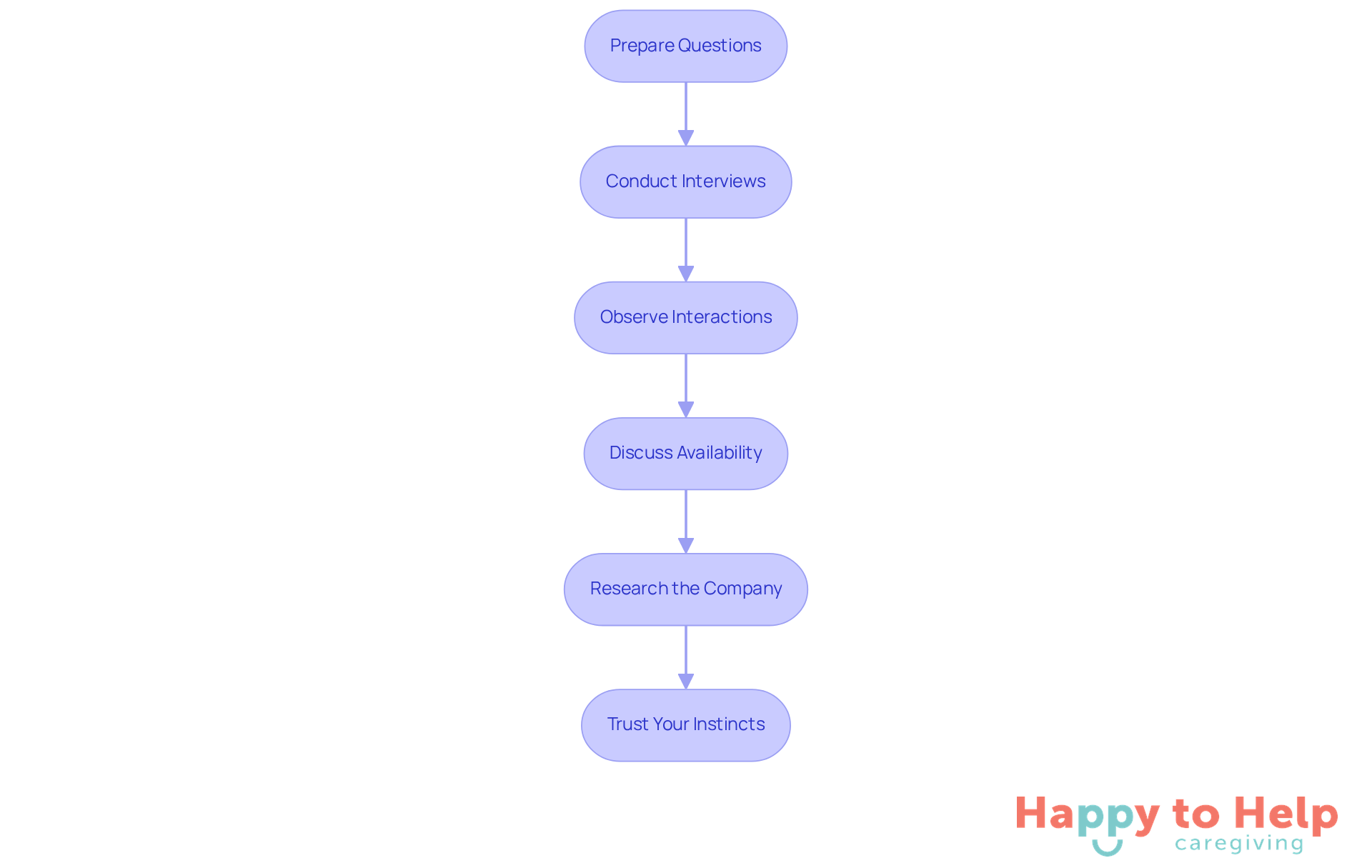
Prepare Questions: Start by creating a comprehensive list of questions that address experience, qualifications, and specific caregiving scenarios. Key inquiries might include:
- What experience do you have with seniors?
- How do you handle emergencies?
- Can you provide references?
-
Conduct Interviews: Schedule interviews with shortlisted candidates. Utilize in-person meetings or video calls to facilitate a personal connection.
-
Observe Interactions: During the interview, closely watch how the caregiver engages with your family member. Look for signs of empathy, patience, and effective communication skills-traits crucial for building trust and rapport.
-
Discuss Availability: Confirm that the caregiver's availability aligns with your family member's needs. Ensure flexibility in scheduling to accommodate any changes in care requirements.
-
Research the Company: Before the interview, take time to research the caregiving agency. Understanding their values and services can help you tailor your questions and demonstrate genuine interest.
-
Trust Your Instincts: After the interviews, reflect on how comfortable your family member feels with each caregiver. Their comfort and sense of security are paramount in the caregiving relationship.
This structured approach not only helps identify caregivers who meet the necessary qualifications but also ensures a good fit with your loved one's personality, fostering a supportive and nurturing environment.
Remember: 71% of caregivers face financial struggles, with many living paycheck to paycheck. It's essential to find someone who can provide the right support. Additionally, seeking help and setting boundaries is crucial for caregiver well-being, as caregiving can significantly impact emotional and relational dynamics.
Review Contracts and Payment Options
Before finalizing your caregiver choice, it’s essential to thoroughly review the contract and payment options to avoid potential pitfalls:
Problem: Many families face confusion when selecting a caregiver due to unclear agreements. Misunderstandings can lead to unmet expectations and financial strain.
Agitate: Without a clear understanding of the services offered, caregiver duties, and the length of assistance, families may find themselves in difficult situations. For instance, the projected national median cost for 24/7 in-home care ranges from $21,823 to $24,006, which can significantly impact your financial planning.
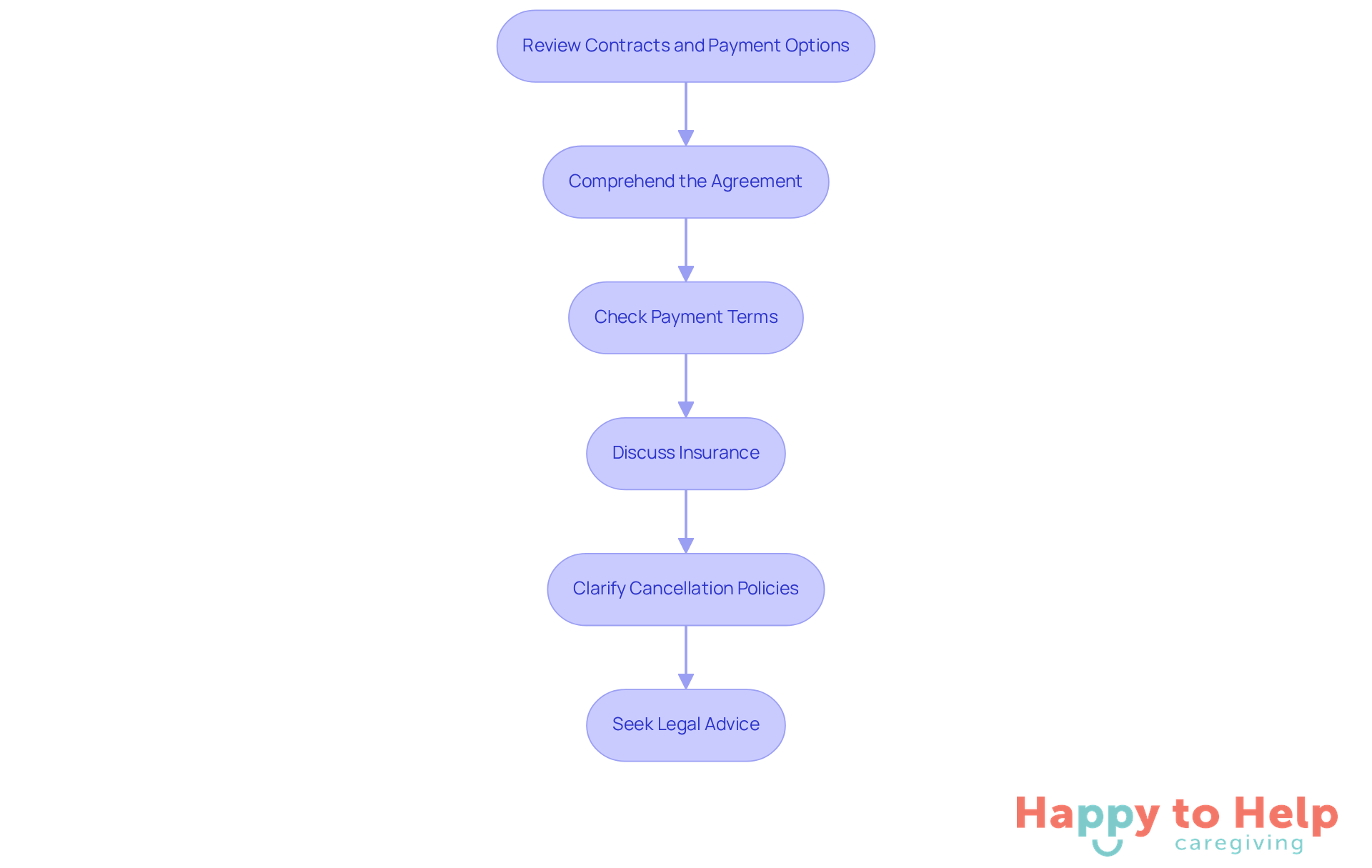
Solution: Here are actionable steps to ensure a smooth caregiving arrangement:
- Comprehend the Agreement: Ensure the contract clearly specifies the services, caregiver duties, and duration of assistance. This clarity helps prevent misunderstandings and aligns expectations.
- Check Payment Terms: Review payment options, including average hourly rates, which in 2025 range from $25 to $35 nationally. Consider package deals or additional fees for specialized services to budget effectively.
- Discuss Insurance: Inquire if the organization accepts insurance or offers payment plans. Many organizations are adapting to provide flexible payment options, easing financial pressures for families.
- Clarify Cancellation Policies: Understand the agency's policies regarding cancellations or changes in assistance needs. Knowing these terms can help you navigate unexpected situations without incurring unnecessary costs.
- Seek Legal Advice: If needed, consult a legal professional to ensure the contract is fair and protects your family's interests. As legal experts emphasize, "Grasping the intricacies of caregiving agreements is vital to protect your family's rights and guarantee quality support."
By thoroughly reviewing these aspects, you can enhance the quality of care for your loved ones and ensure a transparent caregiving arrangement.
Your Path Forward
Finding the right age care services for loved ones presents a significant challenge for many caregivers. This journey requires careful consideration and informed decision-making, as the implications of inadequate care can be profound. Caregivers often face the daunting task of navigating various types of in-home care, which can complicate their ability to meet the specific needs of their family members.
To address this issue, it’s crucial to take a structured approach. Start by identifying the care needs and preferences of your loved one. Next, research and evaluate caregiving agencies to find the best fit. Interview potential caregivers to ensure they align with your expectations, and carefully review contracts and payment options. Each of these steps is vital in securing care that meets both medical requirements and personal wishes, ultimately leading to a more fulfilling experience for everyone involved.
As the demand for elder care services continues to rise, caregivers must be proactive and thorough. Engaging in open dialogues with loved ones and leveraging the insights provided can help families navigate this complex landscape with confidence. By taking these steps, not only can caregivers secure quality care, but they also contribute to the overall well-being of both themselves and their loved ones. Thoughtful planning in the caregiving process is essential, ensuring that everyone involved feels supported and respected.
https://iframe.tely.ai/cta/eyJhcnRpY2xlX2lkIjogIjY5MjNiNTZjZDBlYWU0ZmFhYjk4ODNjOCIsICJjb21wYW55X2lkIjogIjY4ZWU1ZGNhNzMxNzYyNTU3ZjNjOTVjMSIsICJpbmRleCI6IG51bGwsICJ0eXBlIjogImFydGljbGUifQ==Frequently Asked Questions
What are the different types of in-home care services available?
The main types of in-home care services include Companionship Care, Post-Hospital Recovery Assistance, Respite Support, and Palliative Support Care.
What is Companionship Care?
Companionship Care focuses on providing emotional support and companionship to seniors, helping to alleviate feelings of loneliness and isolation.
What does Post-Hospital Recovery Assistance entail?
Post-Hospital Recovery Assistance is tailored for individuals recovering from surgery or illness and includes help with daily activities and medical follow-ups.
What is Respite Support?
Respite Support is a temporary assistance option that allows primary caregivers to take a break while ensuring their family members receive quality support.
What is the purpose of Palliative Support Care?
Palliative Support Care is designed for individuals with serious illnesses, focusing on providing comfort and support to address both physical and emotional needs.
How can caregivers identify their loved one's care needs and preferences?
Caregivers can identify care needs by assessing daily activities, considering medical needs, discussing preferences with their loved one, involving family members, and documenting their findings.
Why is it important to assess daily activities?
Assessing daily activities helps caregivers understand which tasks their loved one finds challenging, allowing for customized support.
What should caregivers consider regarding medical needs?
Caregivers should document any medical conditions that require specialized attention or monitoring, such as chronic illnesses or cognitive impairments.
How can family members contribute to identifying care needs?
Family members can provide valuable perspectives on the loved one's needs and preferences, leading to a more comprehensive understanding of the support required.
Why is it important to document findings when identifying care needs?
Documenting findings creates a clear outline of the loved one's needs and preferences, which can be useful when seeking age care services.
List of Sources
- Understand Different Types of In-Home Care Services
- What’s Next For Home Health As The Industry Faces Its Biggest Test Yet (https://homehealthcarenews.com/2025/10/whats-next-for-home-health-as-the-industry-faces-its-biggest-test-yet)
- State of home care in 2025 (https://mcknightshomecare.com/state-of-home-care-in-2025)
- Home Care Industry Trends to Watch in 2025 (https://firstlighthomecare.com/blog/home-care-industry-trends)
- Types of Home Care Services in 2025 (https://websterhc.com/breaking-down-the-different-types-of-home-care-services-in-2025)
- Identify Your Care Needs and Preferences
- The senior population is booming. Caregiving is struggling to keep up (https://cnbc.com/2025/11/21/senior-caregiving-labor.html)
- What Is the Caregiver Crisis? | Johns Hopkins Bloomberg School of Public Health (https://publichealth.jhu.edu/2025/what-is-the-caregiver-crisis)
- Warning From Older Adults: Care for Aging in America Needs Urgent Rethinking (https://johnahartford.org/newsroom/view/warning-from-older-adults-care-for-aging-in-america-needs-urgent-rethinking)
- 'More pressure on families.' Nearly half of US states are on the brink of a caregiving emergency (https://usatoday.com/story/news/health/2025/05/21/columbia-university-state-caregiving-study/83651201007)
- The declining population will make it even harder to care for elders (https://npr.org/2025/11/02/nx-s1-5535648/population-elderly-caregivers)
- Research and Evaluate Caregiving Agencies
- The senior population is booming. Caregiving is struggling to keep up (https://cnbc.com/2025/11/21/senior-caregiving-labor.html)
- Regulatory Compliance Tops 2025 Priorities For Home- And Community-Based Service Providers (https://homehealthcarenews.com/2025/06/regulatory-compliance-tops-2025-priorities-for-home-and-community-based-service-providers)
- What Makes a Trusted Senior Home Care Agency Stand Out in 2025? - Home Care Assistance oF Jefferson County (https://homecareassistanceofjefferson.com/what-makes-a-trusted-senior-home-care-agency-stand-out-in-2025)
- As Family Caregiving Grows, So Does the Need for Reform - Medicare Rights Center (https://medicarerights.org/medicare-watch/2025/08/14/as-family-caregiving-grows-so-does-the-need-for-reform)
- How Home Care Agencies Can Prepare Now to Secure a Strong Start in 2025 (https://aaniie.com/news/how-home-care-agencies-can-prepare-now-to-secure-a-strong-start-in-2025)
- Interview Potential Caregivers
- The senior population is booming. Caregiving is struggling to keep up (https://cnbc.com/2025/11/21/senior-caregiving-labor.html)
- The Secrets to Successful Caregiver Interviews - HomeChoice Home Care Solutions (https://homechoicehomecare.com/careers-in-caring/the-secrets-to-successful-caregiver-interviews)
- The Caregiving Landscape: Data & Insights on the Caregiver Experience in the U.S. (https://caregiveraction.org/caregiver-statistics)
- A caregiver's survival guide: Advice from people who've been there (https://wvtf.org/2025-10-18/a-caregivers-survival-guide-advice-from-people-whove-been-there)
- Caregiver Statistics: Work and Caregiving (https://caregiver.org/resource/caregiver-statistics-work-and-caregiving)
- Review Contracts and Payment Options
- News & Commentary: July 1, 2025 ✦ OnLabor (https://onlabor.org/july-1-2025)
- 24/7 In-Home Care Costs in 2025 - Assisted Living Magazine (https://assistedlivingmagazine.com/24-7-in-home-care-costs-in-2025)
- A New Labor Rule Could Push Caregivers to the Breaking Point | ACLU (https://aclu.org/news/womens-rights/a-new-labor-rule-could-push-caregivers-to-the-breaking-point)
- A ‘Win’ For Home Care: DOL Proposes Reinstating Companionship Exemption (https://homehealthcarenews.com/2025/07/a-win-for-home-care-dol-proposes-reinstating-companionship-exemption)
- 2025 Caregiver Stipend Programs: What’s New This Year? — Paid.Care (https://paid.care/guides/2025-caregiver-stipend-programs-whats-new-this-year)