

For families in our service areas
For families in our service areas, this guide explains caregiving and how non-medical in-home caregiving can support care planning in East Idaho, Treasure Valley & Magic Valley, Northern Wasatch, North Central West Virginia, and Northeast Ohio.
What You Need to Know About Find Private Care Near Me
Navigating the landscape of private care services presents a significant challenge for families, particularly in an era where social isolation can deeply affect the well-being of loved ones. This situation creates a pressing need for effective caregiving solutions. Families often struggle to find the right support that ensures dignity and independence for their loved ones.
With numerous options available, determining which services best meet the unique needs of family members can feel overwhelming. Caregivers need clear guidance to make informed decisions. This article serves as a comprehensive guide, offering practical solutions to help caregivers identify and select the most suitable private care options.
Identify Types of Private Care Services
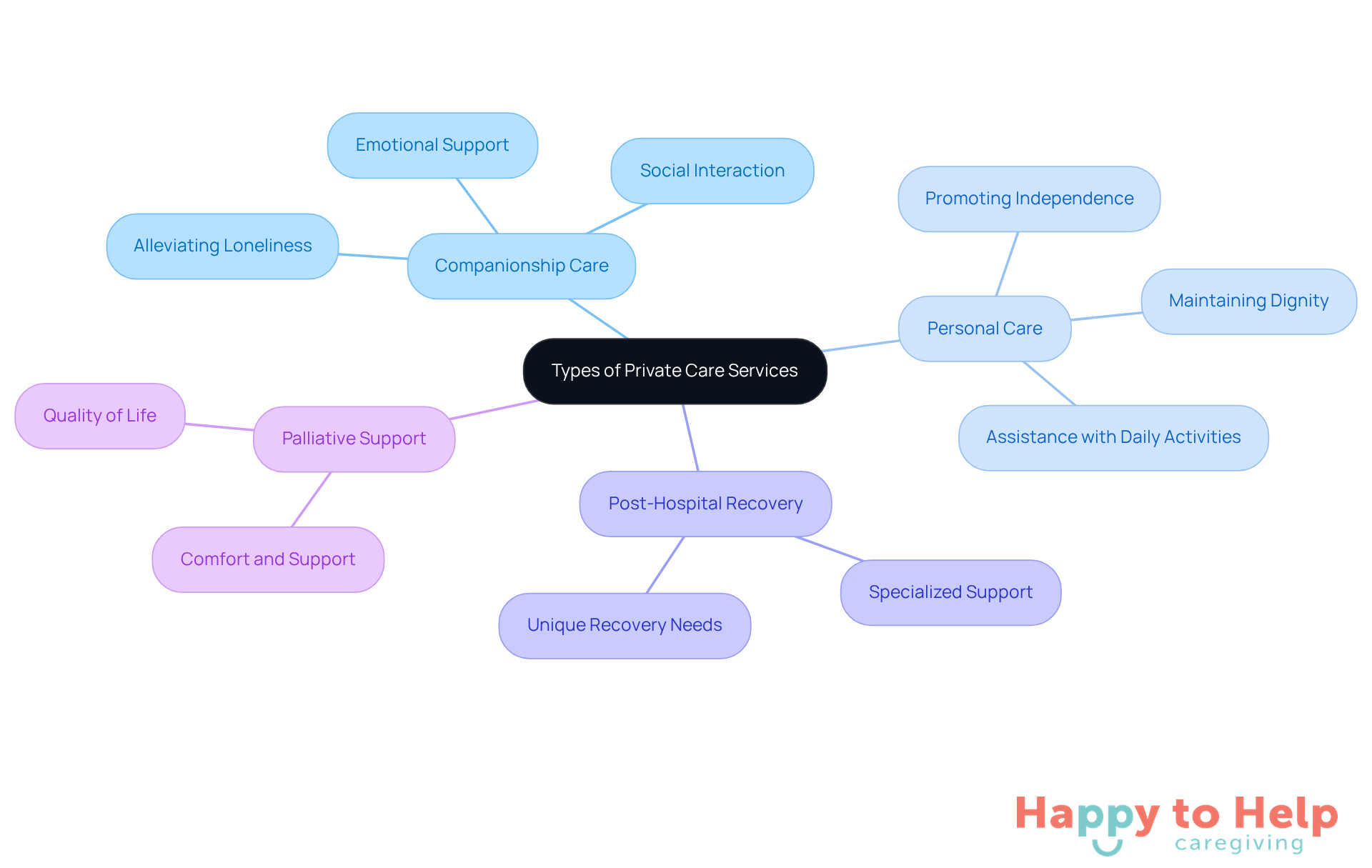
Understanding the various types of private assistance services is crucial for caregivers. One significant issue is social isolation, which can increase the risk of dementia by nearly 50%. With 10,000 individuals turning 65 daily, the demand for companionship support is on the rise.
Companionship Care addresses this problem by providing emotional support and social interaction, helping to alleviate feelings of loneliness. This service plays a critical role in maintaining mental health.
Personal Care involves assistance with daily activities such as bathing, dressing, and meal preparation. This ensures that individuals can maintain their dignity and independence.
Post-Hospital Recovery offers specialized support for individuals recuperating at home after a hospital stay, focusing on their unique recovery needs.
Palliative Support is essential for providing comfort and support to individuals with serious illnesses, ensuring their quality of life.
Recent trends show that 77% of adults over 50 prefer to age in their own homes. Support professionals emphasize that companionship assistance not only enhances emotional well-being but also fosters a sense of security and belonging. As the population ages, the need for tailored support that addresses both physical and emotional requirements becomes increasingly essential.
Caregivers should investigate local providers for private care near me to understand which services are available and how they can meet their family member's specific needs.
Assess Your Care Needs and Preferences
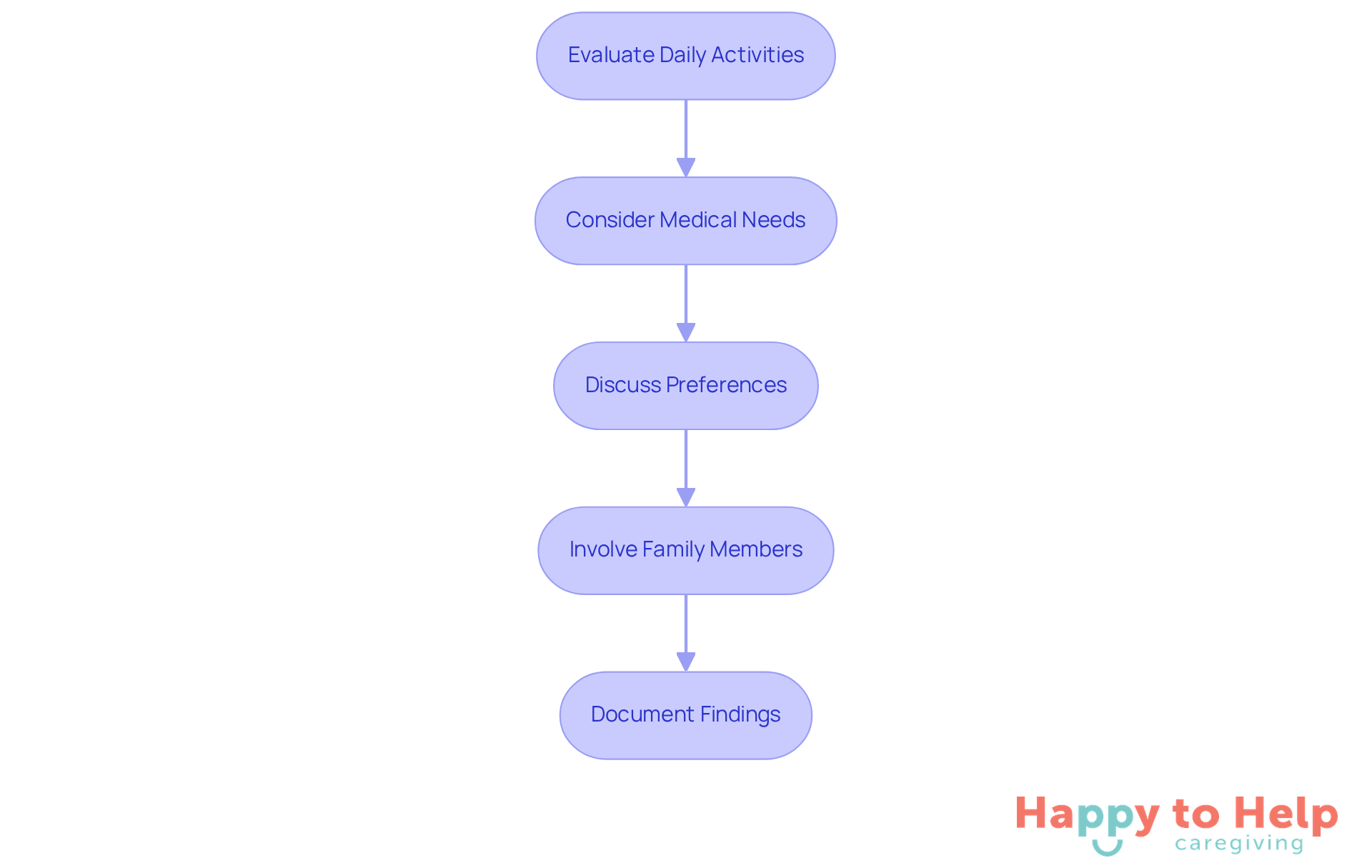
To effectively assess care needs for your loved ones, it's crucial to follow these essential steps:
-
Evaluate Daily Activities: Start by observing which daily tasks your loved one struggles with, such as bathing, dressing, or meal preparation. Research shows that limitations in dressing are common among older adults, with a prevalence of 9.4% reported in 2018. This can significantly impact their independence and quality of life.
-
Consider Medical Needs: Take note of any medical conditions that require specialized attention or monitoring. With the elderly population projected to grow from 56.1 million in 2020 to 82.1 million by 2050, understanding typical medical requirements is essential for effective caregiving.
-
Discuss Preferences: Engage your loved one in conversations about their preferences for assistance, including the type of caregiver they feel comfortable with. Many elderly individuals express a desire for health partners who understand their unique challenges and needs.
-
Involve Family Members: Gather insights from family members who may have valuable perspectives on the individual's requirements and preferences. Family involvement is vital, as it leads to a more comprehensive understanding of support needs. As Terry Fulmer states, "It is not too late to shift towards age-friendly support, which prioritizes the requirements and wishes of older adults in their support plan."
-
Document Findings: Create a list of support needs and preferences to guide your search for suitable services. This documentation will help ensure that the selected private care near me aligns with your loved one's lifestyle and enhances their overall well-being.
Research Local Private Care Providers
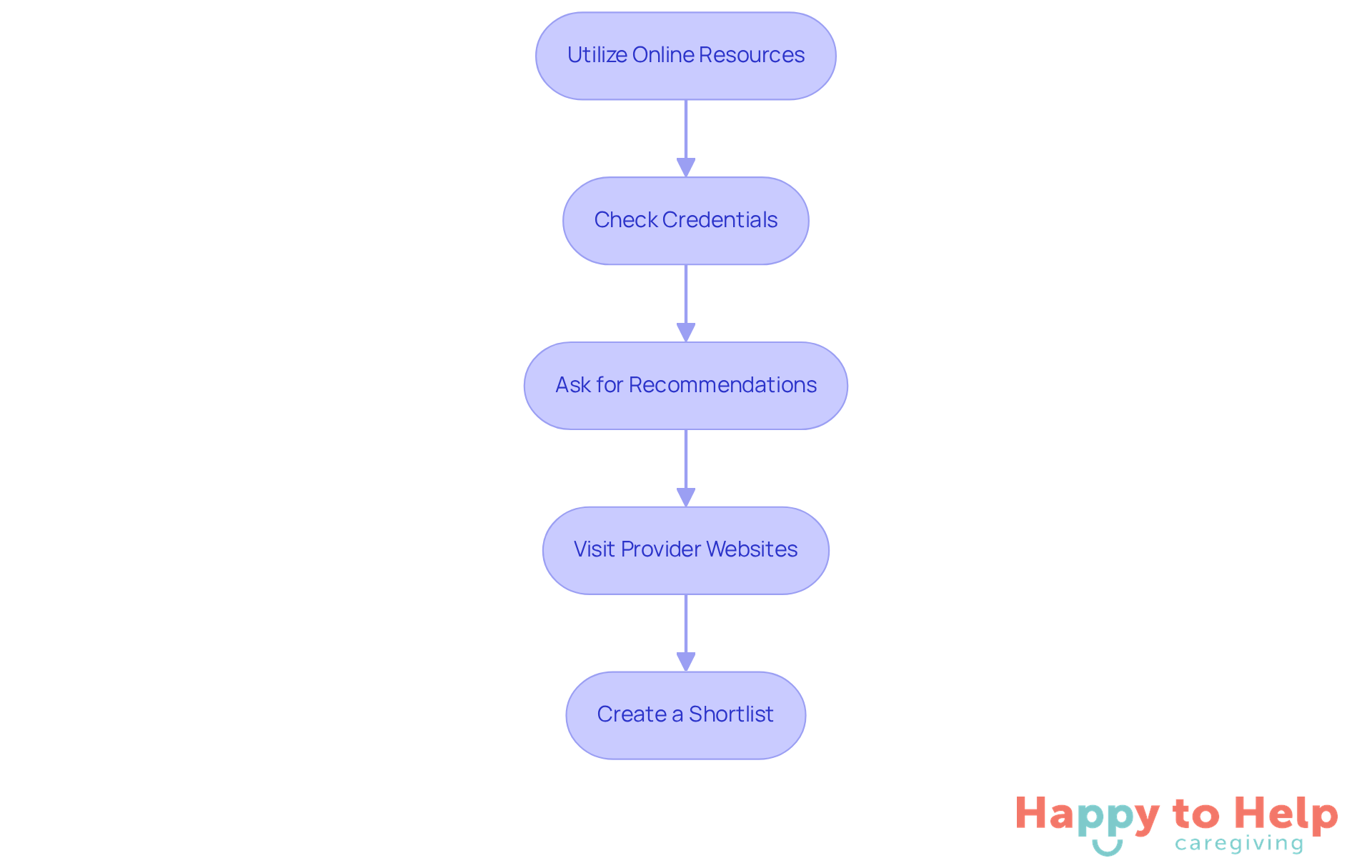
Finding reliable care providers can be a daunting task for caregivers. With so many options available, it’s crucial to ensure that you choose the right one for your needs. Here are some steps to help you navigate this process effectively:
- Utilize online resources like Care.com and Yelp to help you find private care near me while allowing you to read reviews from other families.
- Check Credentials: It’s essential to ensure that the providers are licensed and insured. Additionally, check for any certifications relevant to the type of care needed.
- Ask for Recommendations: Don’t hesitate to reach out to friends, family, or healthcare professionals for recommendations based on their experiences.
- Visit Provider Websites: Look for detailed information about services offered, staff qualifications, and client testimonials to gauge their reliability.
- Create a Shortlist: Compile a list of potential providers that meet your criteria for further evaluation, making the decision process easier.
Evaluate Caregivers' Qualifications and Compatibility
Finding the right caregiver can be a daunting task. Many families struggle with ensuring that their loved ones receive the best possible private care near me. This challenge can lead to stress and uncertainty about the quality of private care near me that is being provided.
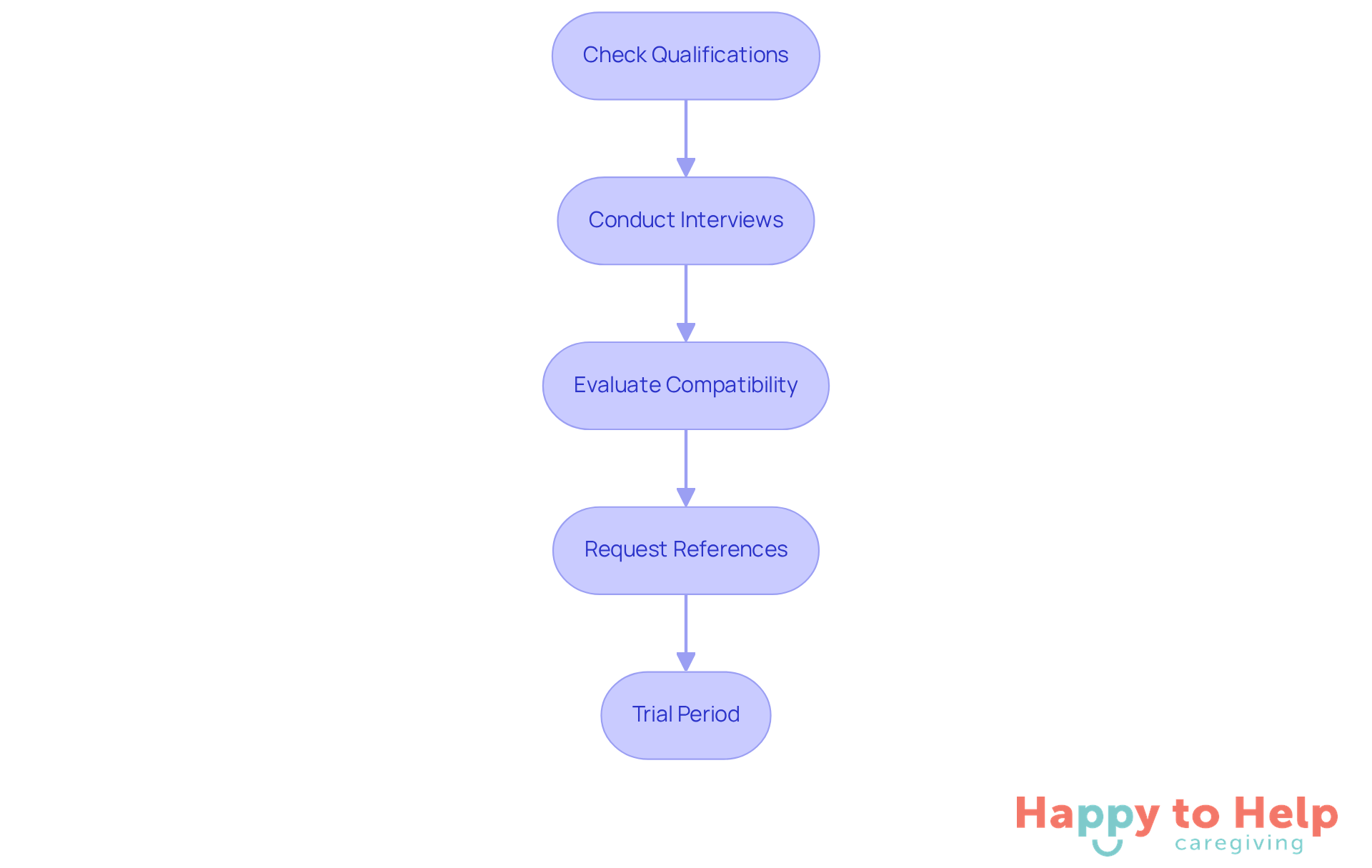
To address this issue, consider the following actionable steps:
- Check Qualifications: Verify that caregivers have the necessary training and certifications, such as CPR or CNA. This ensures they are equipped to handle emergencies and provide quality private care near me.
- Conduct Interviews: Arrange interviews with prospective providers to assess their experience and approach to care. This interaction can reveal their suitability for your family's needs in terms of private care near me.
- Evaluate Compatibility: Observe how effectively the provider engages with your family member. Compatibility can significantly enhance the caregiving experience, especially in private care near me, making it more comfortable for everyone involved.
- Request References: Ask for references from previous clients to gain insights into the provider's reliability and effectiveness. Hearing from others about private care near me can provide peace of mind.
- Trial Period: If possible, arrange for a trial period to see how the caregiver and your loved one interact in a real-world setting. This can help you make a more informed decision.
Compare Costs and Payment Options
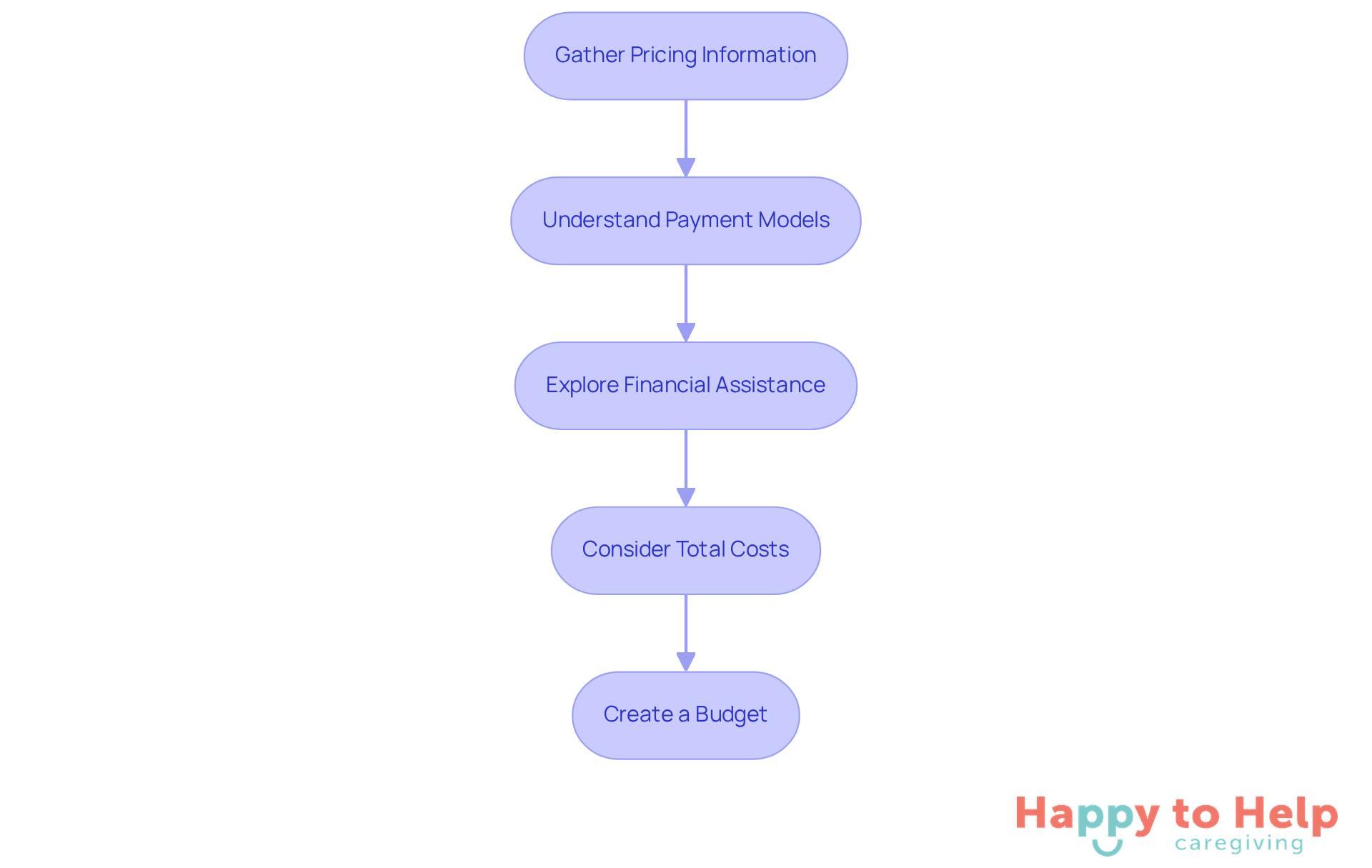
To effectively compare costs and payment options for in-home care, caregivers face a significant challenge: understanding the financial implications of their choices. With various service providers and payment models available, navigating this landscape can be overwhelming.
-
Gather Pricing Information: Start by contacting multiple service providers to obtain quotes. Be mindful of the variations in pricing structures, as these can greatly affect your overall costs.
-
Understand Payment Models: Familiarize yourself with different payment models, such as hourly rates, flat fees, and package deals. For instance, the median hourly rate for home health aide services in the U.S. is around $34, but rates can vary from $18 to over $40 based on location and service type.
-
Explore Financial Assistance: Investigate potential financial support options, including long-term support insurance, Medicaid, and veterans' benefits. Notably, only 5.4% of qualified veterans currently receive benefits, indicating a significant opportunity for those eligible to secure financial assistance for in-home care. Additionally, 90% of family caregivers provide some form of financial support for their relatives, highlighting the financial strain many families face.
-
Consider Total Costs: It's crucial to look beyond just the hourly rates. Additional expenses, such as travel fees or necessary supplies, can accumulate quickly. For example, a 15-hour weekly assistance plan could total approximately $2,145 each month, making it essential to consider all potential costs.
-
Create a Budget: After conducting your research, develop a budget that outlines expected costs and identifies potential financial resources. Understanding the financial implications of caregiving early on can save time and money in the long run. Financial experts emphasize that planning ahead is vital for effectively managing these expenses.
By following these steps, families can make informed decisions about in-home care, ensuring they find the best options that meet their loved ones' needs while managing costs effectively.
Moving Forward with Find Private Care Near Me
Finding the right private care for loved ones is a significant challenge that demands careful thought and a structured approach. The variety of private care services available - from companionship and personal care to post-hospital recovery and palliative support - addresses specific needs that can greatly improve the quality of life for seniors. Understanding these options allows caregivers to tailor their search for the most suitable support.
Caregivers often face the daunting task of navigating this landscape. Without a clear understanding of their loved ones' needs, they may struggle to find the right fit. This can lead to feelings of frustration and helplessness. However, by following essential steps, caregivers can simplify the process of finding private care nearby. These steps include:
- Assessing care needs and preferences
- Researching local providers
- Evaluating caregivers’ qualifications and compatibility
- Comparing costs and payment options
Each step empowers caregivers to make informed decisions that align with their loved ones' unique circumstances, ensuring that their physical and emotional needs are effectively met.
Ultimately, securing private care is not merely about finding assistance; it’s about promoting dignity, independence, and well-being for those in need. As the demand for personalized care continues to rise, it’s crucial for caregivers to actively engage in this process. They should ask the right questions and explore all available resources. By taking these steps, families can ensure their loved ones receive the compassionate care they deserve, paving the way for healthier and happier lives at home.
https://iframe.tely.ai/cta/eyJhcnRpY2xlX2lkIjogIjY5MjNhMDk1ZTUyZmU2NjM2Njg4NjcwZCIsICJjb21wYW55X2lkIjogIjY4ZWU1ZGNhNzMxNzYyNTU3ZjNjOTVjMSIsICJpbmRleCI6IG51bGwsICJ0eXBlIjogImFydGljbGUifQ==Frequently Asked Questions
What are the different types of private care services available?
The main types of private care services include Companionship Care, Personal Care, Post-Hospital Recovery, and Palliative Support.
How does Companionship Care benefit individuals?
Companionship Care provides emotional support and social interaction, helping to alleviate feelings of loneliness and maintain mental health.
What does Personal Care involve?
Personal Care involves assistance with daily activities such as bathing, dressing, and meal preparation, helping individuals maintain their dignity and independence.
What is the purpose of Post-Hospital Recovery services?
Post-Hospital Recovery services offer specialized support for individuals recuperating at home after a hospital stay, focusing on their unique recovery needs.
What is Palliative Support and why is it important?
Palliative Support provides comfort and support to individuals with serious illnesses, ensuring their quality of life is maintained.
What recent trends are affecting private care services for older adults?
Recent trends show that 77% of adults over 50 prefer to age in their own homes, increasing the demand for tailored support that addresses both physical and emotional needs.
How can caregivers assess the care needs of their loved ones?
Caregivers can assess care needs by evaluating daily activities, considering medical needs, discussing preferences with their loved ones, involving family members, and documenting findings.
Why is it important to involve family members in assessing care needs?
Involving family members provides valuable perspectives on the individual's requirements and preferences, leading to a more comprehensive understanding of support needs.
What should caregivers do after assessing care needs?
Caregivers should create a list of support needs and preferences to guide their search for suitable private care services that align with their loved one's lifestyle.
List of Sources
- Identify Types of Private Care Services
- Types of Home Care Services in 2025 (https://websterhc.com/breaking-down-the-different-types-of-home-care-services-in-2025)
- Disruption Redefines Home-Based Care: Providers Confront Challenges, Seize New Opportunities (https://homehealthcarenews.com/2025/10/disruption-redefines-home-based-care-providers-confront-challenges-seize-new-opportunities)
- Growing Trend of Private Pay Home Care for Elderly (https://regencyhcs.com/blog/growing-trend-of-private-pay-home-care-for-elderly)
- Caring Senior Service Banks Growth Goals On New House-Made Technology (https://homehealthcarenews.com/2025/10/caring-senior-service-banks-growth-goals-on-new-house-made-technology)
- FastStats (https://cdc.gov/nchs/fastats/home-health-care.htm)
- Assess Your Care Needs and Preferences
- Warning From Older Adults: Care for Aging in America Needs Urgent Rethinking (https://johnahartford.org/newsroom/view/warning-from-older-adults-care-for-aging-in-america-needs-urgent-rethinking)
- 30 Inspirational Quotes for Caregivers (https://agingcare.com/articles/caregivers-quotes-inspiration-141133.htm)
- FastStats (https://cdc.gov/nchs/fastats/older-american-health.htm)
- Prevalence and Trends of Basic Activities of Daily Living Limitations in Middle-Aged and Older Adults in the United States - PMC (https://pmc.ncbi.nlm.nih.gov/articles/PMC10660458)
- Research Local Private Care Providers
- What do caregivers in the North Central Region use for support and what support do they still need? / Research Snapshot - North Central Regional Center for Rural Development (https://ncrcrd.ag.purdue.edu/2024/10/04/what-do-caregivers-in-the-north-central-region-use-for-support-and-what-support-do-they-still-need-research-snapshot)
- Resources to support new caregivers (https://uhc.com/news-articles/healthy-living/resources-to-support-new-caregivers)
- Informal Caregivers’ Use of Internet-Based Health Resources: An Analysis of the Health Information National Trends Survey - PMC (https://pmc.ncbi.nlm.nih.gov/articles/PMC6715019)
- New Online Directory Connects Dementia Caregivers with Support Resources (https://caregiver.org/news/new-online-directory-connects-dementia-caregivers-with-support-resources)
- U.S. Caregivers' Use of Technology to Help with Caregiving (https://aarp.org/pri/topics/ltss/family-caregiving/caregiving-technology-survey)
- Evaluate Caregivers' Qualifications and Compatibility
- Perfect Pairings: Creating Personalized, Highly Compatible Caregiver-Client Matches to Boost Your Bottom Line | Aaniie, formerly Smartcare Software (https://aaniie.com/news/creating-personalized-highly-compatible-caregiver-client-matches-to-boost-bottom-line)
- The Importance of Caregiver-Client Relationships in Senior Well-Being (https://homeinstead.com/home-care/usa/in/goshen/588/news-and-media/the-importance-of-caregiver-client-relationships-in-senior-well-being)
- Finding the Right Caregiver Match | Active Day (https://activeday.com/news/finding-the-right-caregiver-match)
- Evaluate Home Care Providers: Step-by-Step Guide (https://proactivehealthcarestaffing.co/how-to-assess-experience-and-qualification-home-care-providers)
- Caregiver-Patient Matching in Home Care (https://carevoyant.com/home-health-blog/caregiver-patient-matching-home-care)
- Compare Costs and Payment Options
- The Cost of In-Home Caregivers May Surprise You (https://health.usnews.com/senior-care/caregiving/articles/how-much-do-in-home-caregivers-cost)
- Home Care Costs in 2025: A State-by-State Guide (https://aplaceformom.com/caregiver-resources/articles/in-home-care-costs)
- The Caregiving Landscape: Data & Insights on the Caregiver Experience in the U.S. (https://caregiveraction.org/caregiver-statistics)
- Cost of In-Home Care in California (2025) + 11 Ways to Pay (https://lovinghomecareinc.com/blog/cost-of-in-home-care-california)
- How to Finance Home Care Services - Home Matters (https://homematters.com/paying-for-home-care)