

For families in our service areas
For families in our service areas, this guide explains caregiving and how non-medical in-home caregiving can support care planning in East Idaho, Treasure Valley & Magic Valley, Northern Wasatch, North Central West Virginia, and Northeast Ohio.
The Importance of Find Private Duty Care Near Me for
Navigating the complex world of caregiving for loved ones can be overwhelming. Families often face a daunting array of private duty care options, each designed to meet the unique challenges faced by seniors and individuals with special needs. This specialized support is crucial for ensuring that loved ones receive personalized assistance, promoting their independence and enhancing their quality of life.
However, with so many choices available, how can families confidently select the right caregiving services? This uncertainty can lead to stress and confusion, making it difficult to find the best fit for their loved ones' needs and preferences.
This guide breaks down the essential steps to simplify the search for private duty care. By following these actionable solutions, families can empower themselves to make informed decisions, ensuring their loved ones receive the care they truly deserve.
Understand Private Duty Caregiving
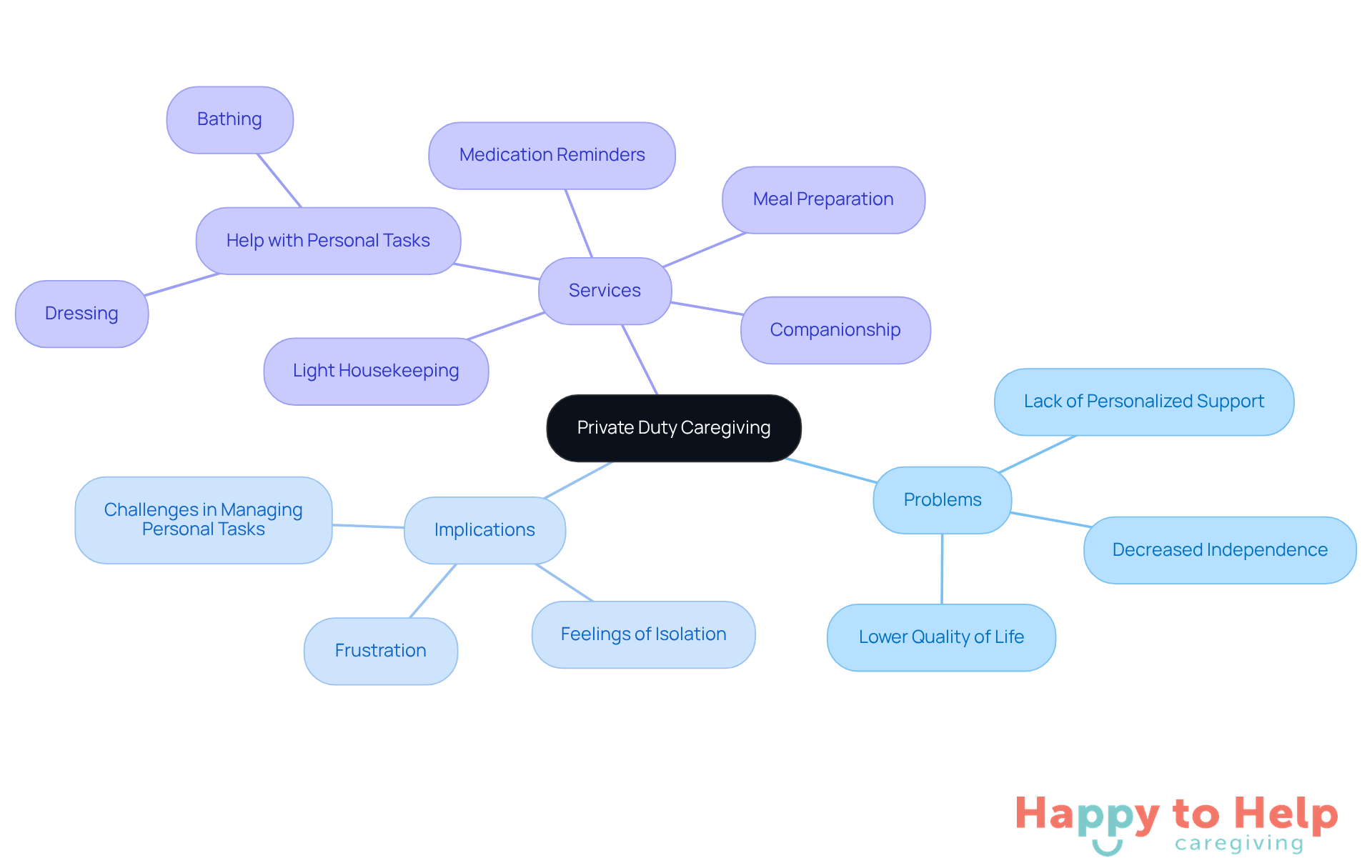
Private duty caregiving addresses a significant problem: many seniors and individuals with special needs struggle with daily activities due to a lack of personalized support. This can lead to decreased independence and a lower quality of life.
The implications of inadequate assistance are profound. Without proper help, individuals may face challenges in managing personal tasks, which can lead to feelings of isolation and frustration.
Fortunately, private duty near me caregiving provides a valuable solution. This type of assistance, known as private duty near me, provides non-medical support tailored to individual needs, promoting independence and enhancing overall well-being. Services include:
- Companionship
- Help with personal tasks like bathing and dressing
- Meal preparation
- Medication reminders
- Light housekeeping
Understanding these services is crucial for families. It empowers them to make informed decisions about the support their loved ones require, ensuring they receive the appropriate care in a comfortable environment.
Identify Care Needs and Preferences
Evaluating a loved one's daily living activities and the challenges they face is crucial for effective caregiving. Many older adults encounter difficulties related to their physical health, cognitive abilities, and emotional needs. Engaging in open conversations about their preferences for daily routines, social interactions, and enjoyable activities is essential.
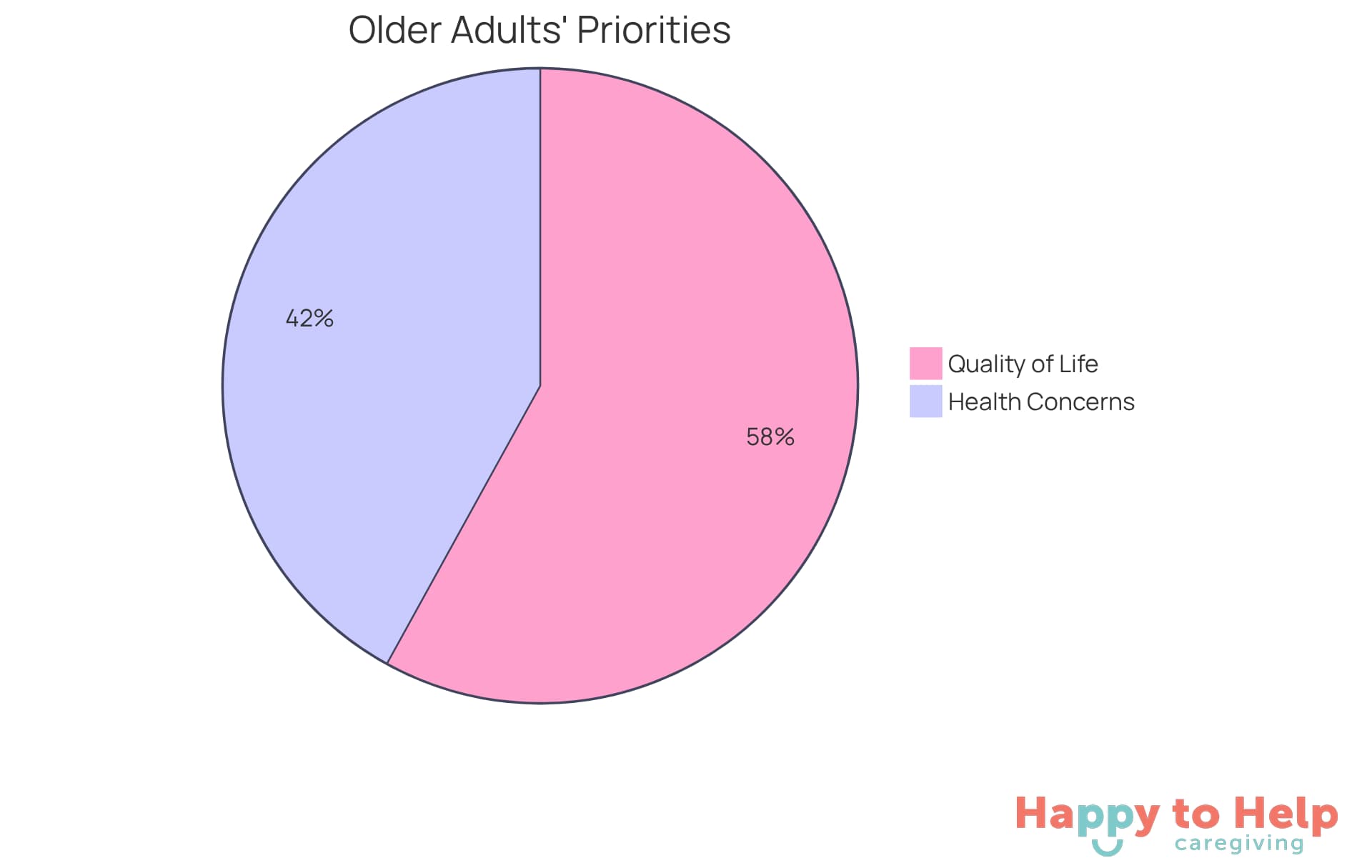
Research indicates that 94% of older adults prioritize maintaining quality of life over longevity. This highlights the importance of aligning support with their desires. Additionally, 68% express concerns about meeting future health and long-term support needs, which can significantly influence their preferences for assistance.
Consulting healthcare professionals can provide valuable insights into any medical conditions that may affect treatment. Notably, 94% of older adults believe that health providers should be educated on the unique health issues they face. Documenting these needs and preferences lays a solid foundation for selecting appropriate caregiving services.
Engaging family members in these discussions ensures a comprehensive understanding of what matters most to your loved one. This collaborative approach can lead to more tailored care options. Furthermore, recognizing the importance of social engagement is vital, as studies show that social interactions can enhance the well-being of older adults. Incorporating quotes from family supporters can also offer personal insights that resonate with your loved one’s preferences.
Research and Evaluate Caregiving Services
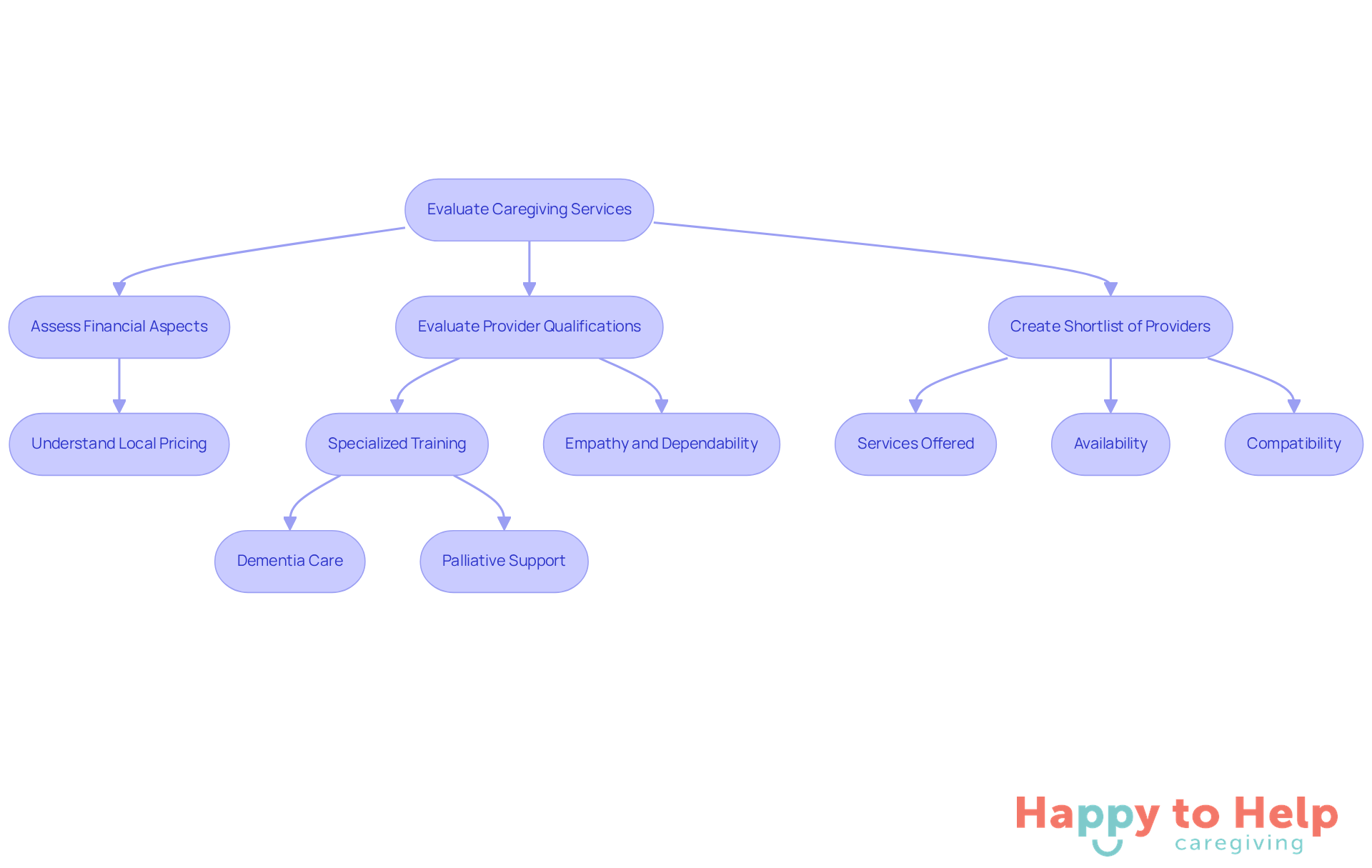
Finding the right assistance services can be a daunting task for caregivers. With the national median expense for nonmedical in-home assistance projected to be $33 per hour in 2025, and state rates ranging from $24 to $43, understanding local pricing is crucial. This financial aspect can add stress to an already challenging situation.
When assessing potential providers, it's essential to prioritize their qualifications and experience. Look for specialized training that aligns with your family member's specific needs, such as:
- Dementia care
- Palliative support
Industry specialists emphasize that caregivers should not only possess the necessary skills but also demonstrate empathy and dependability. This combination is vital for ensuring quality care.
Additionally, consider reaching out to local senior centers or healthcare providers for recommendations on private duty near me. Creating a shortlist of potential providers or agencies allows for a thorough assessment based on:
- Services offered
- Availability
- Compatibility with your family member's preferences
This proactive approach can significantly ease the transition to in-home assistance, ensuring that your loved one receives the support they need in a familiar environment.
Conduct Interviews with Caregivers
Finding the right caregiver for your loved one can be a daunting task. Many families struggle with ensuring that the caregiver not only has the right experience but also aligns with the emotional and practical needs of their loved one. This challenge can lead to feelings of uncertainty and stress for both the caregiver and the family.
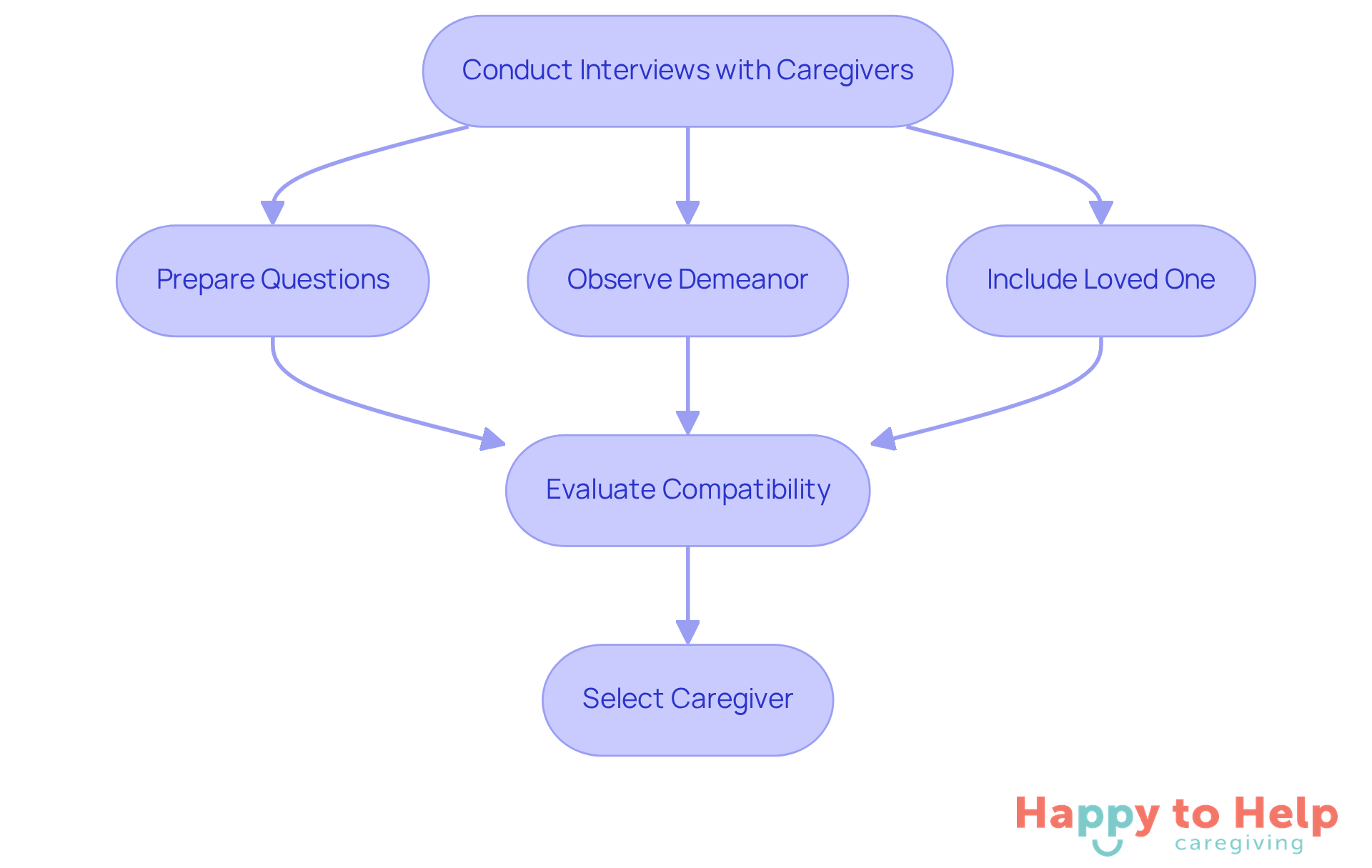
To address this issue, it’s essential to prepare a focused list of questions during the interview process. Consider asking about:
- Previous work experience with seniors
- Approach to handling emergencies
- Strategies for engaging clients in enjoyable activities
Paying close attention to the caregiver's demeanor and communication style is crucial, as these factors significantly impact compatibility with your partner. Including your loved one in the interview process can be particularly beneficial. It allows them to express their preferences and comfort levels directly, fostering a sense of agency in their care choices.
This collaborative approach not only enhances the provider-client match but also ensures that the selected caregiver meets the emotional and practical needs of your loved one. By taking these steps, families can feel more confident in their caregiving decisions.
Review Contracts and Service Agreements
Choosing a provider or agency can be daunting, especially when it comes to understanding the contract or service agreement. Many caregivers face the challenge of unclear terms, which can lead to misunderstandings and potential financial risks. For instance, if a home care provider breaks a lamp, the replacement cost could reach up to $500. This highlights the importance of reviewing insurance clauses and understanding the implications of the agreement.
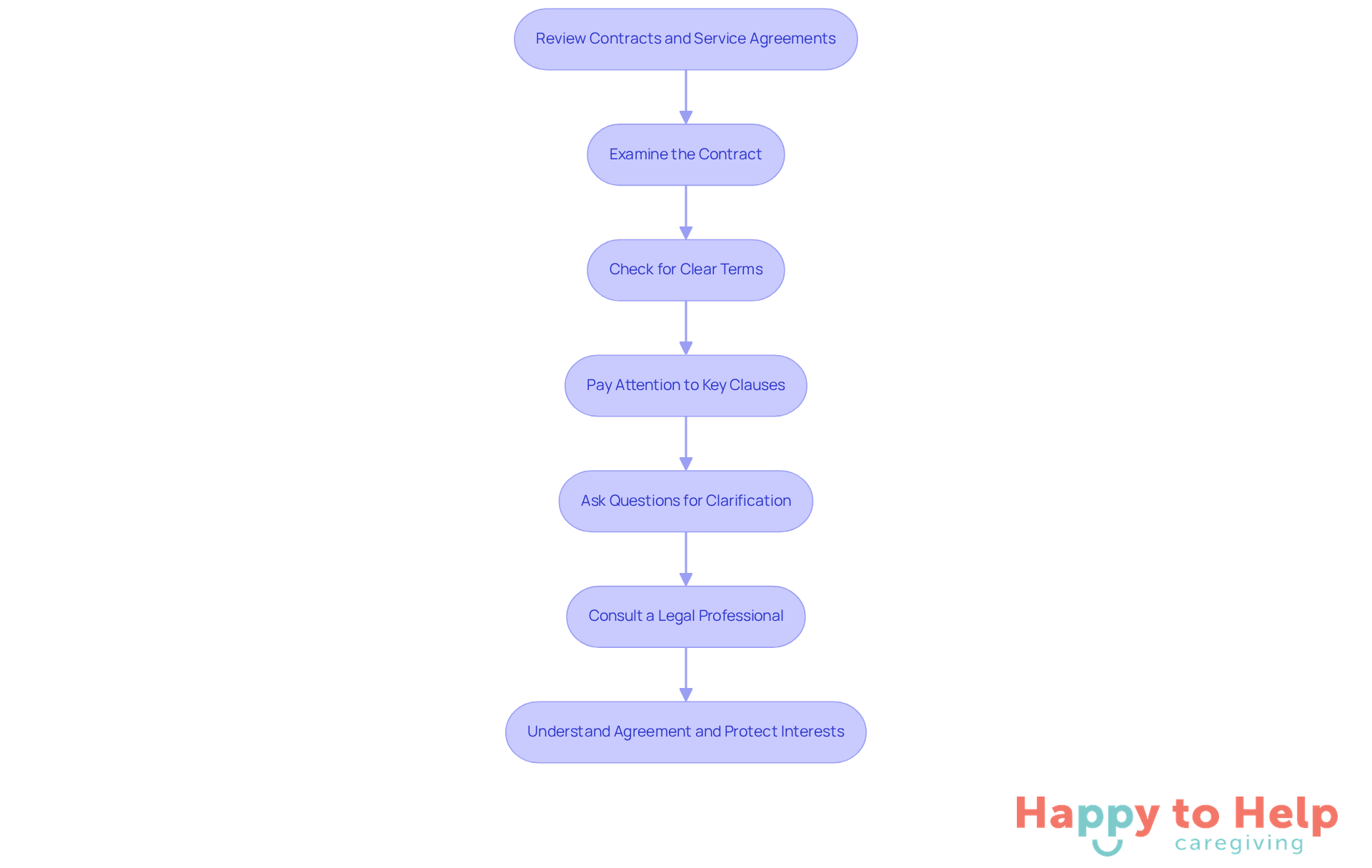
To navigate this issue effectively, it’s crucial to examine the contract closely. Ensure that it clearly specifies the services to be provided, payment terms, and cancellation policies. Pay particular attention to clauses detailing provider qualifications, background checks, and liability insurance. As XINSURANCE emphasizes, "Liability insurance is essential for home health aides and caregivers to protect against claims."
If any part of the agreement is unclear, don’t hesitate to ask questions or seek clarification. Consulting with a legal professional can also be beneficial, ensuring that the agreement safeguards your loved one's interests and adheres to local regulations. This proactive approach helps prevent misunderstandings and ensures that all parties are aligned on expectations.
Key Takeaways for Caregivers
Finding the right private duty care for loved ones is a significant challenge that can greatly impact their quality of life. Families often struggle with ensuring that their loved ones receive the personalized support necessary to maintain independence and dignity. This challenge can lead to stress and uncertainty, making it crucial to understand the nuances of private duty caregiving.
To address this issue, families should take several key steps:
- Identify specific care needs and preferences.
- Research available services and conduct thorough interviews with potential caregivers.
- Carefully review contracts to ensure all expectations are clear.
Each of these steps empowers families to make informed decisions, ensuring that the chosen caregiver meets both practical requirements and aligns with the emotional and social needs of their loved one.
The importance of personalized care cannot be overstated. Engaging in open dialogue with loved ones and assessing their unique needs fosters a supportive environment that enhances overall well-being. This proactive approach alleviates the stress of caregiving and reinforces the value of companionship and tailored support in the lives of seniors and individuals with special needs.
Taking the time to find the right private duty care can lead to a more fulfilling and enriched life for those who matter most.
https://iframe.tely.ai/cta/eyJhcnRpY2xlX2lkIjogIjY5MjI0ZjhkOWEwZThiZmU5YWJhN2M5OSIsICJjb21wYW55X2lkIjogIjY4ZWU1ZGNhNzMxNzYyNTU3ZjNjOTVjMSIsICJpbmRleCI6IG51bGwsICJ0eXBlIjogImFydGljbGUifQ==Frequently Asked Questions
What is private duty caregiving?
Private duty caregiving provides non-medical support tailored to the individual needs of seniors and individuals with special needs, helping them with daily activities and promoting independence.
What services are included in private duty caregiving?
Services include companionship, assistance with personal tasks like bathing and dressing, meal preparation, medication reminders, and light housekeeping.
Why is understanding caregiving services important for families?
Understanding these services empowers families to make informed decisions about the support their loved ones require, ensuring they receive appropriate care in a comfortable environment.
How can families identify the care needs and preferences of their loved ones?
Families can evaluate a loved one's daily living activities and challenges, engage in open conversations about their preferences for routines and social interactions, and consult healthcare professionals for insights on medical conditions.
What do older adults prioritize regarding their care?
Research shows that 94% of older adults prioritize maintaining quality of life over longevity, emphasizing the need for support that aligns with their desires and preferences.
How can family involvement impact caregiving decisions?
Engaging family members in discussions about care needs ensures a comprehensive understanding of what matters most to the loved one, leading to more tailored care options.
What role does social engagement play in the well-being of older adults?
Social interactions are vital for enhancing the well-being of older adults, as studies indicate that they can significantly improve their quality of life.
List of Sources
- Understand Private Duty Caregiving
- Growing Trend of Private Pay Home Care for Elderly (https://regencyhcs.com/blog/growing-trend-of-private-pay-home-care-for-elderly)
- Why Senior Home Care is More Important Than Ever (https://homeinstead.com/home-care/usa/la/carencro/347/news-and-media/senior-home-care-is-more-important-than-ever)
- Private-Duty Nursing Attracts PE Investment Amid Strong Market Potential – And Rising Concerns (https://homehealthcarenews.com/2025/07/private-duty-nursing-attracts-pe-investment-amid-strong-market-potential-and-rising-concerns)
- National Alliance for Caregiving: Caregiving in the US 2025 Report (https://johnahartford.org/resources/view/national-alliance-for-caregiving-caregiving-in-the-us-2025-report)
- Caregiving in the US 2025 (https://aarp.org/pri/topics/ltss/family-caregiving/caregiving-in-the-us-2025)
- Identify Care Needs and Preferences
- Older adults prioritize social activities, inclusiveness in massive survey assessing what matters most to them (https://mcknights.com/news/older-adults-prioritize-social-activities-inclusiveness-in-massive-survey-assessing-what-matters-most-to-them)
- The senior population is booming. Caregiving is struggling to keep up (https://cnbc.com/2025/11/21/senior-caregiving-labor.html)
- Warning From Older Adults: Care for Aging in America Needs Urgent Rethinking (https://johnahartford.org/newsroom/view/warning-from-older-adults-care-for-aging-in-america-needs-urgent-rethinking)
- Aurora releases study to address needs of older adults and caregivers (https://denver7.com/news/front-range/aurora/aurora-releases-study-to-address-needs-of-older-adults-and-caregivers)
- Research and Evaluate Caregiving Services
- Caregiver Statistics: Demographics (https://caregiver.org/resource/caregiver-statistics-demographics)
- 39 Caregiver Statistics, Facts & Trends (https://humancareny.com/blog/39-caregiver-statistics-facts-trends)
- Home Care Costs in 2025: A State-by-State Guide (https://aplaceformom.com/caregiver-resources/articles/in-home-care-costs)
- Caregiving in the US 2025 (https://aarp.org/pri/topics/ltss/family-caregiving/caregiving-in-the-us-2025)
- The Caregiving Landscape: Data & Insights on the Caregiver Experience in the U.S. (https://caregiveraction.org/caregiver-statistics)
- Conduct Interviews with Caregivers
- Choosing the Right Senior Caregiver in San Antonio, TX (https://cbs42.com/business/press-releases/ein-presswire/866933575/choosing-the-right-senior-caregiver-in-san-antonio-tx)
- Choosing the Right Caregivers | Visiting Angels (https://visitingangels.com/rochester/articles/choosing-the-right-caregivers-what-families-should-look-for/26613)
- How to Choose the Right In-Home Caregiver for Your Loved One (https://homeinstead.com/home-care/usa/tx/carrollton-coppell-irving/407/news-and-media/navigating-in-home-care-tips-for-choosing-the-right-caregiver-for-your-loved-one)
- Caregiver Statistics: Demographics (https://caregiver.org/resource/caregiver-statistics-demographics)
- Perfect Pairings: Creating Personalized, Highly Compatible Caregiver-Client Matches to Boost Your Bottom Line | Aaniie, formerly Smartcare Software (https://aaniie.com/news/creating-personalized-highly-compatible-caregiver-client-matches-to-boost-bottom-line)
- Review Contracts and Service Agreements
- FTC Chairman Ferguson Issues Noncompete Warning Letters to Healthcare Employers and Staffing Companies (https://ftc.gov/news-events/news/press-releases/2025/09/ftc-chairman-ferguson-issues-noncompete-warning-letters-healthcare-employers-staffing-companies)
- Home Health Care Liability Insurance Coverage Options - CM&F (https://cmfgroup.com/knowledge-center/home-health-care-malpractice/coverage-options)
- FTC To Health Care Employers: Review Your Noncompete Agreements - KFF Health News (https://kffhealthnews.org/morning-breakout/ftc-to-health-care-employers-review-your-noncompete-agreements)
- The Importance of Home Care Insurance (https://inszoneinsurance.com/blog/the-importance-of-home-care-insurance)
- Liability Insurance for In-Home Caregiver - XINSURANCE (https://xinsurance.com/risk-class/in-home-caregiver-insurance)