
For families in our service areas
For families in our service areas, this guide explains caregiving and how non-medical in-home caregiving can support care planning in East Idaho, Treasure Valley & Magic Valley, Northern Wasatch, North Central West Virginia, and Northeast Ohio.
Understanding Find Private Sitters for Elderly Near
Finding the right support for elderly loved ones is a significant challenge that many families encounter. This issue is often compounded by the emotional weight of ensuring their comfort and safety. Families may feel overwhelmed by the myriad of options available, leading to the risk of inadequate care.
To navigate this complex landscape, it’s crucial to assess individual needs and preferences. This guide offers a structured approach to locating private sitters, emphasizing the importance of enhancing the caregiving experience. By exploring practical steps and resources, families can illuminate the path to finding qualified caregivers who can truly make a difference in the lives of seniors.
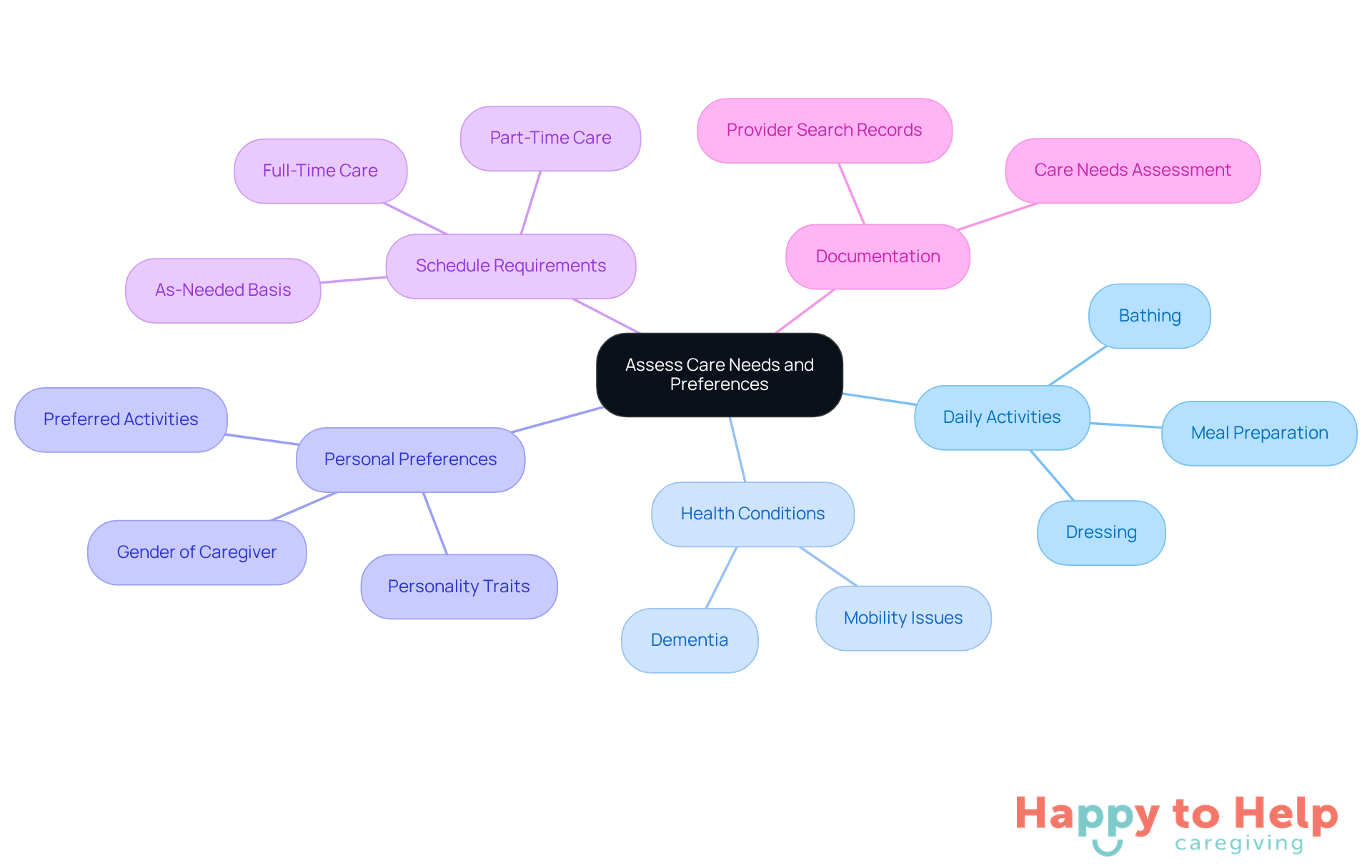
Assess Care Needs and Preferences
Begin by evaluating the specific needs of the elderly person. This is crucial because understanding these needs can significantly impact their quality of life.
Daily Activities: Identify which daily tasks the individual struggles with, such as bathing, dressing, or meal preparation. These challenges can lead to frustration and a sense of loss of independence.
Health Conditions: Take note of any medical conditions that require special attention, like dementia or mobility issues. These factors can complicate caregiving and necessitate tailored support.
Personal Preferences: Discuss preferences regarding the gender of support individuals, personality traits, and activities they enjoy. This will help in finding private sitters for elderly near me who align with their lifestyle and comfort level, making the experience more enjoyable for everyone involved.
Schedule Requirements: Determine the hours and days when care is needed, whether it’s full-time, part-time, or on an as-needed basis. Clear scheduling can alleviate stress for both the caregiver and the elderly individual.
Record these requirements clearly to direct your search for an appropriate provider.
Research and Evaluate Potential Sitters
For families, finding the right private sitters for elderly near me can be a daunting task. With the growing demand for private sitters for elderly near me, it’s crucial to navigate the options effectively to ensure your loved ones receive the best care possible.
Problem: The challenge lies in identifying qualified caregivers who meet specific needs. Families often face uncertainty about where to start and how to evaluate private sitters for elderly near me.
Agitate: This uncertainty can lead to stress and anxiety, especially when considering the well-being of elderly family members. The consequences of choosing the wrong caregiver can be significant, impacting both the quality of care and the peace of mind for families.
Solution: To ease this process, leverage a variety of resources:
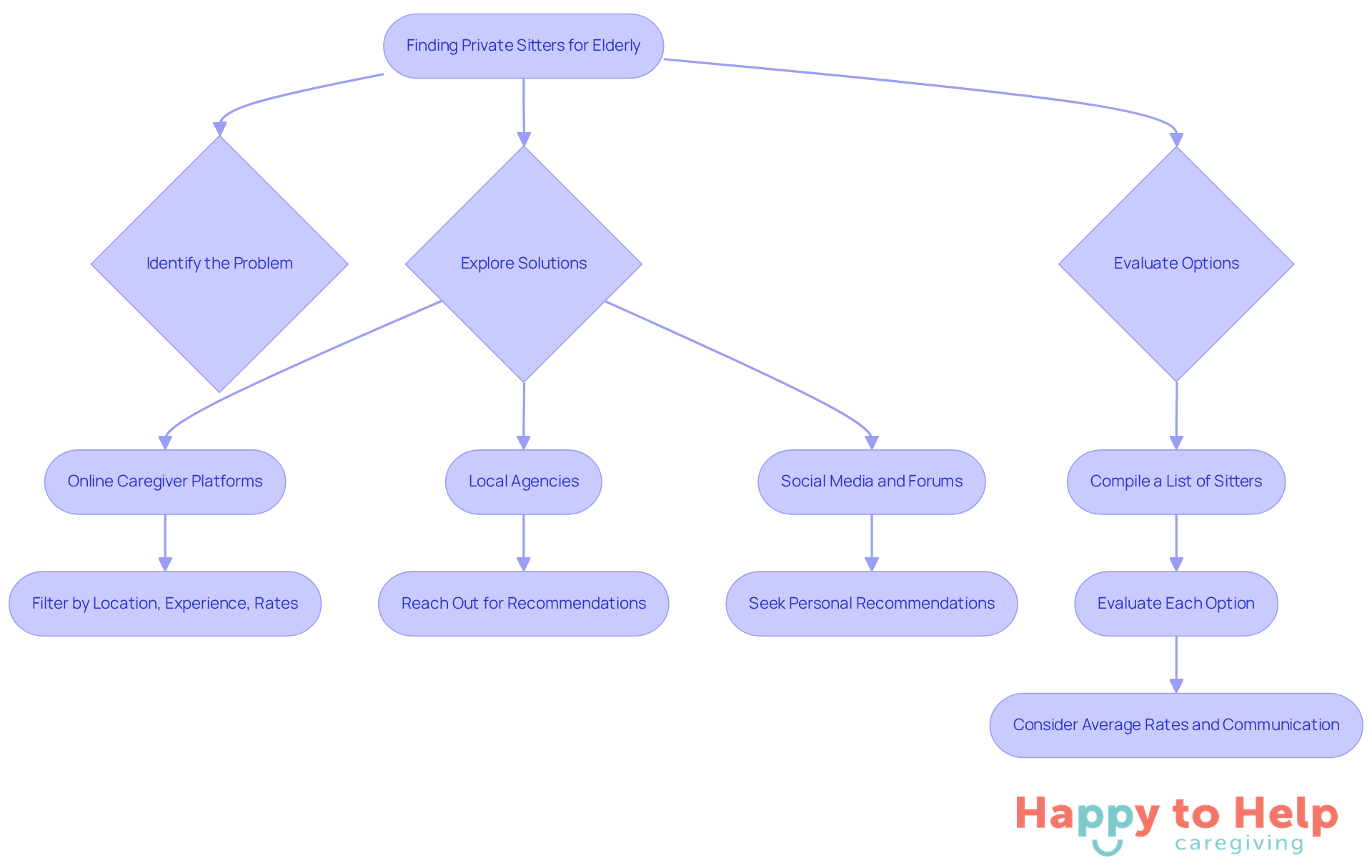
- Online Caregiver Platforms: Websites like Care.com and CareLinx allow you to filter caregivers by location, experience, and rates. In San Jose, CA, for instance, you can find private sitters for elderly near me at competitive rates, making it easier to locate someone who fits your budget and requirements. Notably, the job market for in-home support providers is projected to grow by 41% over the next five years, underscoring the increasing demand for these services.
- Local Agencies: Reach out to nearby caregiving organizations that offer screened support providers. These agencies typically maintain a list of skilled experts, including private sitters for elderly near me, who can cater to specific needs, ensuring a higher standard of service. However, be mindful of potential challenges such as staff turnover and inconsistent attendance, which can affect care quality. Engage with community centers, senior living facilities, or local hospitals for recommendations on reliable private sitters for elderly near me. These organizations often have valuable insights into trustworthy services available in your area.
- Social Media and Forums: Utilize platforms like Facebook groups or Reddit to seek personal recommendations from others who have employed aides. This can provide valuable firsthand experiences and insights.
After compiling a list of private sitters for elderly near me, evaluate each option carefully to ensure they align with your loved one's needs and preferences. Keep in mind the average rates for support providers in your area and the importance of regular communication to prevent common issues reported by clients.
Verify Credentials and Conduct Background Checks
Once you have a shortlist of potential caregivers, verifying their credentials is crucial to ensure safety and reliability. Without a thorough vetting process, families may unknowingly invite risks into their homes.
-
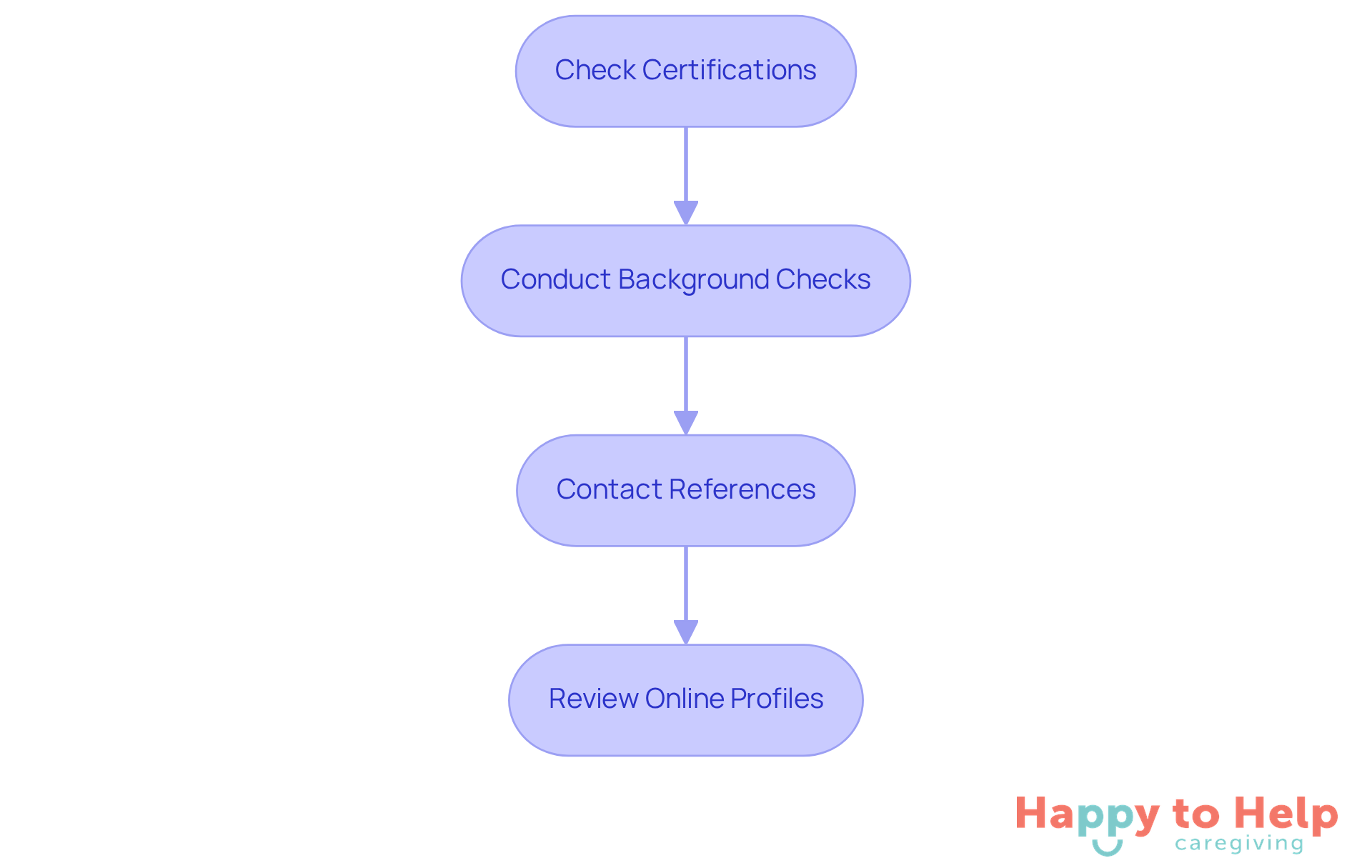
Check Certifications: Confirm that the caregiver holds relevant certifications, such as CPR and First Aid training, along with any state-required licenses. This ensures they are equipped to handle emergencies and provide safe care.
-
Conduct Background Checks: Utilize reputable services like Checkr or Care.com to perform thorough background checks. These checks can reveal criminal histories, verify employment records, and provide references. Inadequate background checks can lead to severe legal consequences, as evidenced by a $6 million lawsuit resulting from improper checks. Identifying significant issues, such as a history of violence or financial problems, is essential for protecting clients.
-
Contact References: Reach out to former employers or clients to inquire about the individual's reliability, skills, and overall performance. Ask specific questions about their experience and how they managed various situations, which can provide valuable insights into their caregiving style and effectiveness.
-
Review Online Profiles: Look for reviews and ratings on support provider platforms to gauge the experiences of others with the assistant. Positive feedback can indicate a trustworthy and competent individual, while negative reviews may raise red flags.
This thorough vetting process is essential for ensuring that you choose a reliable and qualified support worker. The demand for home health and personal care aides is anticipated to rise significantly, with around 765,800 job openings expected annually and employment in this sector projected to grow by 17% from 2024 to 2034. By prioritizing safety and integrity through comprehensive background checks, families can feel confident in their choice, knowing that they are welcoming a vetted professional into their home.
Interview Candidates for Compatibility
Finding private sitters for elderly near me can be a daunting task. Without thorough preparation for interviews, caregivers may struggle to establish a meaningful connection, which is crucial for effective support. This challenge can lead to feelings of loneliness and anxiety in seniors, making it essential to approach the selection process with care.
To tackle this issue, consider these key steps:
-
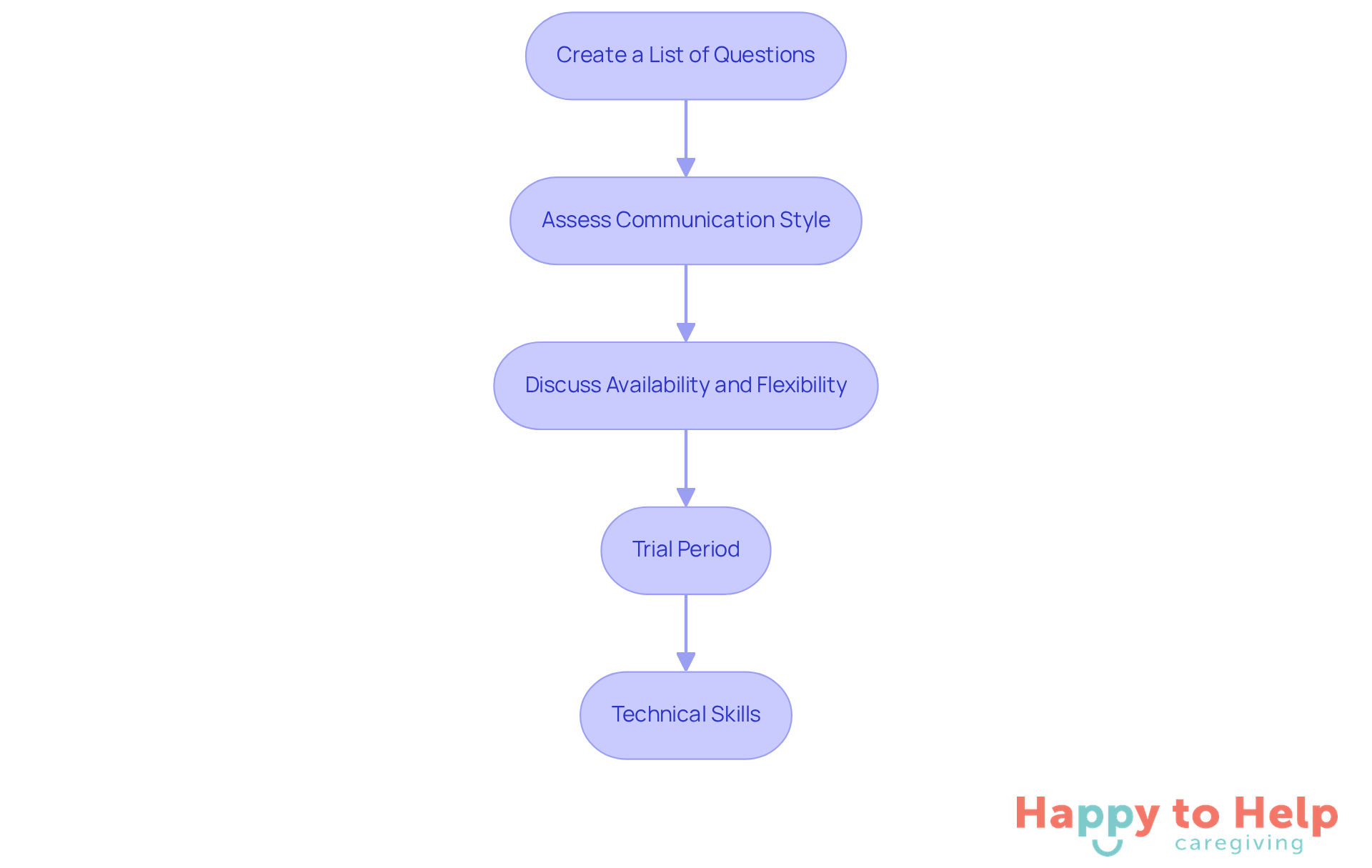
Create a List of Questions: Formulate questions that explore the caregiver's experience, caregiving philosophy, and specific scenarios relevant to the elderly individual's needs. For instance, ask about their approach to situations where a client may refuse medication. This can reveal their problem-solving skills and empathy.
-
Assess Communication Style: Observe how the provider communicates during the interview. Are they patient and understanding? Do they engage in active listening? Effective communication is vital, as studies show that strong caregiver-client relationships significantly enhance emotional resilience and overall well-being in seniors. Meaningful interactions can reduce feelings of loneliness, depression, and anxiety, making this assessment crucial.
-
Discuss Availability and Flexibility: Ensure that the provider's schedule aligns with the elderly person's needs. Discuss potential modifications in support requirements and how the provider would adapt to these changes. Flexibility is essential for continuity of care, especially as seniors' needs evolve. Confirm their availability for nights and weekends, as this is a critical consideration during the interview process.
-
Trial Period: Arrange a trial period where the assistant can spend time with the elderly individual. This allows both parties to gauge compatibility and interaction dynamics. Such experiences can provide invaluable insights, helping to establish trust and comfort, which are essential for effective caregiving. During this period, evaluate how the provider manages cultural or personal value differences with clients, as this can significantly influence the caregiving relationship.
-
Technical Skills: Ensure that the provider possesses basic computer skills, which are increasingly important in today’s caregiving environment. This capability can enhance communication and documentation of support.
By conducting thorough interviews and considering these factors, you can find private sitters for elderly near me who not only have the necessary qualifications but also foster a meaningful connection with your loved one. As caregiving professionals emphasize, the relationship between a support provider and an elderly client is more than transactional; it’s relational and often becomes a vital element of effective in-home assistance.
Select a Sitter and Establish Care Agreements
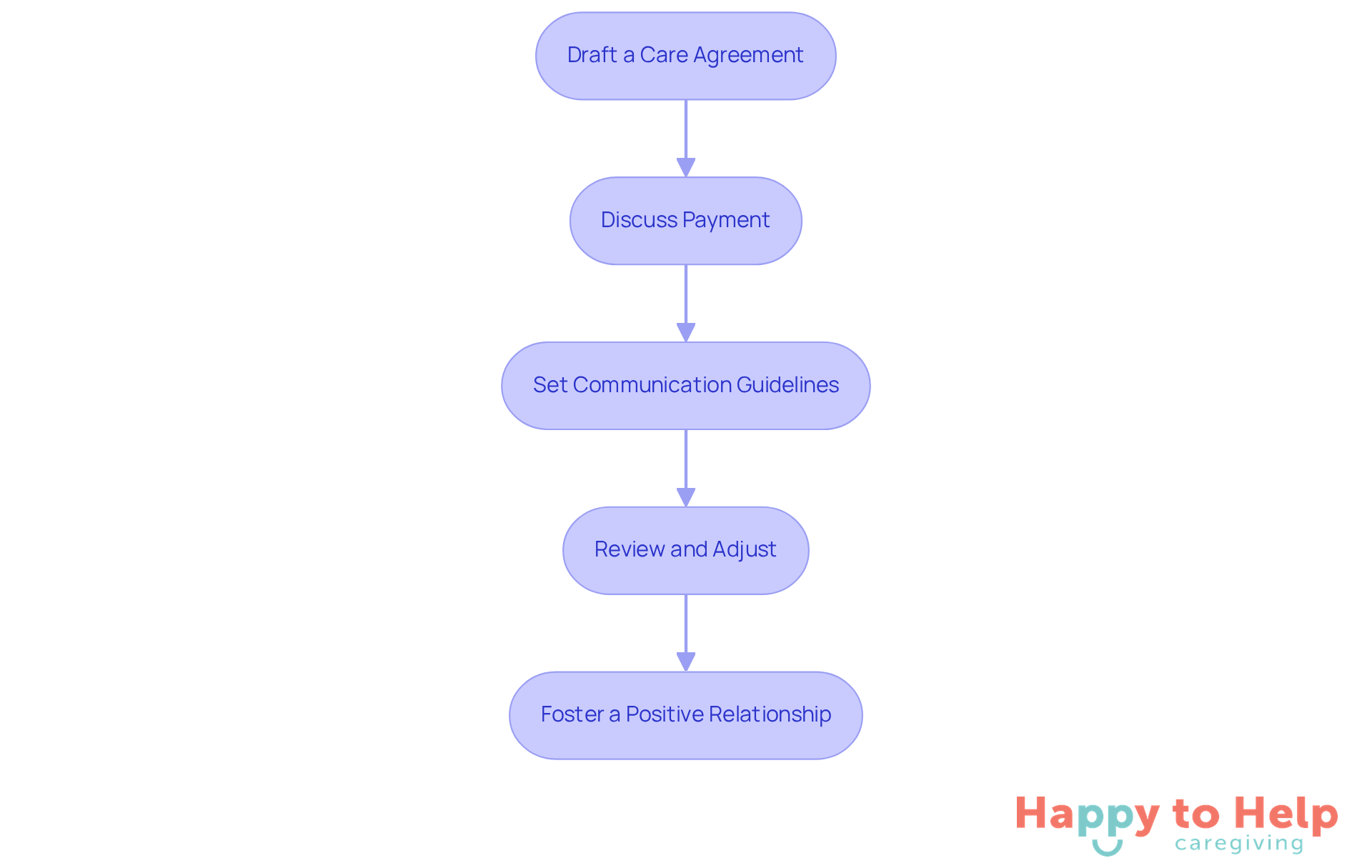
Selecting the right caregiver is just the beginning; formalizing the arrangement is crucial to ensure effective care. Here’s how to tackle this process:
-
Draft a Care Agreement: Start with a written agreement that outlines the caregiver's responsibilities, work hours, payment terms, and specific care instructions. Don’t forget to include emergency contact information and procedures. This clarity is vital for preparedness.
-
Discuss Payment: Clearly define the payment structure, including hourly rates, payment methods, and any additional costs for supplies or transportation. For instance, the national median hourly wage for home assistance is about $33, but this varies significantly by state, ranging from $20.60 in Louisiana to $45.32 in South Dakota. Understanding these differences can help families budget effectively. It's also important to recognize that caregivers often face average out-of-pocket expenses of around $7,200 annually, highlighting the financial responsibilities involved.
-
Set Communication Guidelines: Establish how you will communicate with the caregiver about care updates, scheduling changes, and any concerns. Consistent communication builds trust and ensures that the caregiver aligns with the elderly person's needs. With 70% of working caregivers facing job-related challenges due to their responsibilities, clear communication can alleviate stress for both caregivers and families.
-
Review and Adjust: Schedule regular meetings to evaluate the support arrangement and make necessary adjustments based on the elderly person's evolving needs. Given that 39% of caregivers leave their jobs to dedicate more time to caregiving, discussing payment structures and work arrangements is essential for a sustainable caregiving situation.
Having a clear agreement in place fosters a positive working relationship, ensuring that the elderly individual receives the best possible care while providing peace of mind for family members.
Moving Forward with Find Private Sitters for Elderly Near
Finding suitable private sitters for elderly individuals presents a significant challenge that requires careful consideration and planning. Families often struggle with assessing care needs and identifying qualified caregivers, which can lead to anxiety about their loved ones' well-being.
To address this issue, it’s essential to evaluate the specific needs and preferences of the elderly person. This evaluation directly influences the type of care required and helps families make informed decisions. Utilizing various resources, such as online platforms and local agencies, can significantly enhance the search for qualified caregivers.
Moreover, conducting thorough background checks and interviews is crucial. These steps ensure compatibility and trustworthiness, fostering a positive caregiver-client relationship that is vital for effective care.
In conclusion, finding the right private sitter for elderly care is about more than just filling a position; it’s about creating a meaningful connection that enhances the quality of life for seniors. Families should take a proactive approach, ensuring they meet immediate care needs while promoting a nurturing and respectful atmosphere. By following these guidelines, individuals can make informed decisions that lead to successful caregiving arrangements, ultimately enriching the lives of both the elderly and their families.
https://iframe.tely.ai/cta/eyJhcnRpY2xlX2lkIjogIjY5MjBmZDhmYzQ4NjU1NjRkNDliYzZiZSIsICJjb21wYW55X2lkIjogIjY4ZWU1ZGNhNzMxNzYyNTU3ZjNjOTVjMSIsICJpbmRleCI6IG51bGwsICJ0eXBlIjogImFydGljbGUifQ==Frequently Asked Questions
Why is it important to assess care needs and preferences for elderly individuals?
Assessing care needs and preferences is crucial because it significantly impacts the quality of life for the elderly person. Understanding their specific needs helps ensure they receive appropriate support.
What daily activities should be evaluated when assessing an elderly person's care needs?
Daily activities to evaluate include bathing, dressing, and meal preparation. Identifying struggles in these areas can help address frustrations and maintain a sense of independence.
How do health conditions affect caregiving for the elderly?
Health conditions, such as dementia or mobility issues, require special attention and can complicate caregiving. Tailored support is necessary to accommodate these conditions.
What personal preferences should be considered when finding a caregiver for the elderly?
Personal preferences to discuss include the gender of support individuals, desired personality traits, and activities the elderly person enjoys. This helps in finding caregivers who align with their lifestyle and comfort.
How can scheduling requirements impact the caregiving process?
Determining the hours and days when care is needed-whether full-time, part-time, or on an as-needed basis-can alleviate stress for both the caregiver and the elderly individual.
What resources can families use to research and evaluate potential sitters for the elderly?
Families can use online caregiver platforms, local agencies, and social media or forums to find and evaluate potential sitters. These resources help identify qualified caregivers who meet specific needs.
What are some examples of online caregiver platforms?
Examples of online caregiver platforms include Care.com and CareLinx, which allow users to filter caregivers by location, experience, and rates.
What should families be cautious about when working with local caregiving agencies?
Families should be mindful of potential challenges such as staff turnover and inconsistent attendance, which can affect the quality of care provided by local agencies.
How can community resources assist in finding reliable caregivers?
Community centers, senior living facilities, and local hospitals often have valuable insights and recommendations for trustworthy private sitters for the elderly.
What should families consider after compiling a list of potential sitters?
Families should evaluate each option carefully to ensure they align with the elderly person's needs and preferences, keeping in mind average rates for support providers and the importance of regular communication.
List of Sources
- Assess Care Needs and Preferences
- Older adults’ care preferences honored, but inequities apparent, analysts find (https://mcknights.com/news/older-adults-care-preferences-honored-but-inequities-apparent-analysts-find)
- Aurora releases study to address needs of older adults and caregivers (https://denver7.com/news/front-range/aurora/aurora-releases-study-to-address-needs-of-older-adults-and-caregivers)
- Warning From Older Adults: Care for Aging in America Needs Urgent Rethinking (https://johnahartford.org/newsroom/view/warning-from-older-adults-care-for-aging-in-america-needs-urgent-rethinking)
- WHO calls for urgent transformation of care and support systems for older people (https://who.int/news/item/01-10-2024-who-calls-for-urgent-transformation-of-care-and-support-systems-for-older-people)
- Research and Evaluate Potential Sitters
- 7 Best Places to Find Caregivers for Home Care | Aaniie, formerly Smartcare Software (https://aaniie.com/news/7-best-places-to-find-caregivers-for-home-care)
- 27 Eye-Opening Quotes from Home Care Clients (https://activatedinsights.com/articles/eye-opening-quotes-from-home-care-clients)
- In Home Caregiver Salaries & Top Paying Companies in San Jose, CA | Nov 11, 2025 (https://readysethire.com/job-search/position-salary-in-city/in-home-caregiver-salary-in-san-jose-ca)
- 70+ Inspirational Caregiver Quotes (https://h2hhc.com/blog/inspirational-caregiver-quotes)
- 25+ Inspirational Quotes for Caregivers (https://caringseniorservice.com/blog/quotes-for-caregiver-inspiration)
- Verify Credentials and Conduct Background Checks
- DISA | Caregiver Screening for Safe Home Healthcare (https://disa.com/news/caregiver-background-check-best-practices)
- Home Health and Personal Care Aides (https://bls.gov/ooh/healthcare/home-health-aides-and-personal-care-aides.htm)
- The Importance of Background Checks on In-Home Caregivers - Critical Research (https://criticalresearch.com/background-checks/importance-background-checks-home-care)
- Why Thorough Background Checks Matter for Companionship Care (https://southerncaliforniacaregiving.com/why-thorough-background-checks-matter-for-companionship-care)
- The Case For Stronger Caregiver Vetting In Home Care (https://homehealthcarenews.com/2024/10/the-case-for-stronger-caregiver-vetting-in-home-care)
- Interview Candidates for Compatibility
- Home Care Clients Like Their Caregivers More Than Their Provider, Data Shows (https://homehealthcarenews.com/2024/08/home-care-clients-like-their-caregivers-more-than-their-provider-data-shows)
- Finding the Right Caregiver Match | Active Day (https://activeday.com/news/finding-the-right-caregiver-match)
- 76 Best Caregiver Interview Questions for Agency Owners | CareAcademy (https://careacademy.com/blog/caregiver-interview-questions)
- Perfect Pairings: Creating Personalized, Highly Compatible Caregiver-Client Matches to Boost Your Bottom Line | Aaniie, formerly Smartcare Software (https://aaniie.com/news/creating-personalized-highly-compatible-caregiver-client-matches-to-boost-bottom-line)
- The Importance of Caregiver-Client Relationships in Senior Well-Being (https://homeinstead.com/home-care/usa/in/goshen/588/news-and-media/the-importance-of-caregiver-client-relationships-in-senior-well-being)
- Select a Sitter and Establish Care Agreements
- Home Care Costs in 2025: A State-by-State Guide (https://aplaceformom.com/caregiver-resources/articles/in-home-care-costs)
- Caregiver Statistics: Work and Caregiving (https://caregiver.org/resource/caregiver-statistics-work-and-caregiving)
- Cost of Long Term Care by State | Cost of Care Report | Carescout (https://carescout.com/cost-of-care)
- New Report Reveals Crisis Point for America’s 63 million Family Caregivers (https://states.aarp.org/maryland/caregiving-report)
- Average Senior In-Home Care Costs in 2025 (https://seniorliving.org/home-care/costs)