
Why Find the Best Caregiving Agencies Near Matters
Navigating the world of caregiving presents a significant challenge for many, particularly when it comes to finding the right agency to support a loved one. With countless options available, caregivers often feel overwhelmed by the need to understand the specific services offered and to identify trustworthy providers. This situation can lead to anxiety and uncertainty, making it crucial to ensure quality care for those in need.
So, how can caregivers effectively sift through the noise to find the best caregiving agencies that align with their unique needs and preferences? This guide outlines five essential steps designed to streamline the process. By following these actionable solutions, caregivers can make informed choices that enhance the well-being of those they care for.
Identify Types of Caregiving Services Offered
Researching the caregiving agencies near me is crucial for ensuring your loved one receives the support they need. Caregivers often find it overwhelming to locate suitable caregiving agencies near me that cater to specific needs. Without proper assistance, caregivers may experience burnout, leading to a decline in the quality of care provided.
To address these challenges, consider the following common caregiving services:
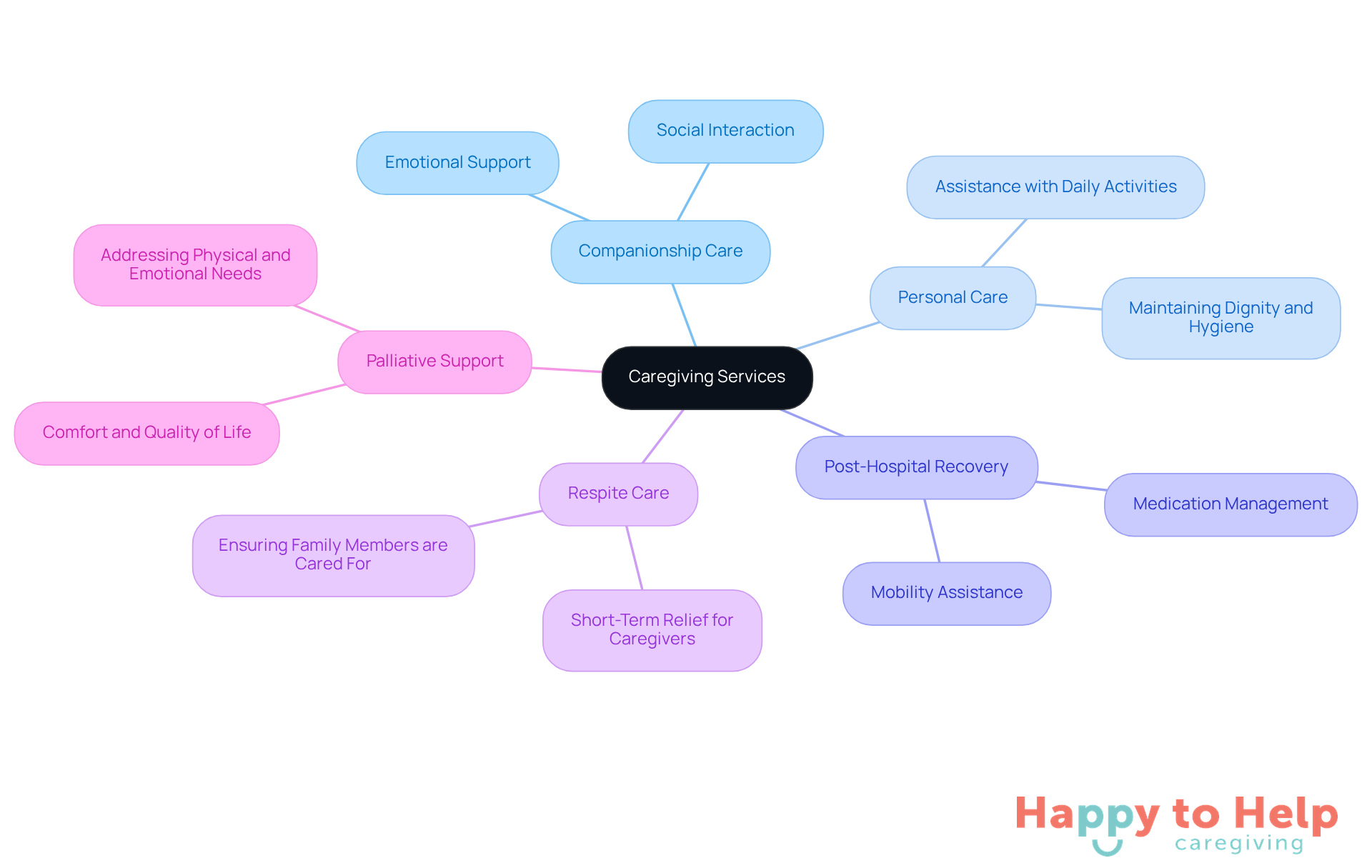
- Companionship Care: This service provides emotional support and social interaction, helping to alleviate feelings of loneliness.
- Personal Care: Assistance with daily activities such as bathing, dressing, and grooming ensures that your loved one maintains their dignity and hygiene.
- Post-Hospital Recovery: After surgery or illness, help with recovery, including medication management and mobility assistance, is essential for a smooth transition back home.
- Respite Care: This short-term relief for primary caregivers allows them to take necessary breaks while ensuring their family members are well cared for.
- Palliative Support: Specialized assistance for individuals with serious illnesses focuses on comfort and quality of life, addressing both physical and emotional needs.
Make a list of the services that are most relevant to your loved one's needs. This will guide your search and help you find the right support.
Assess Individual Care Needs and Preferences
Evaluating a person's support requirements and preferences is crucial for effective assistance. Caregivers often face challenges in providing the right support, which can lead to inadequate care and dissatisfaction for both the caregiver and the individual receiving care.
-
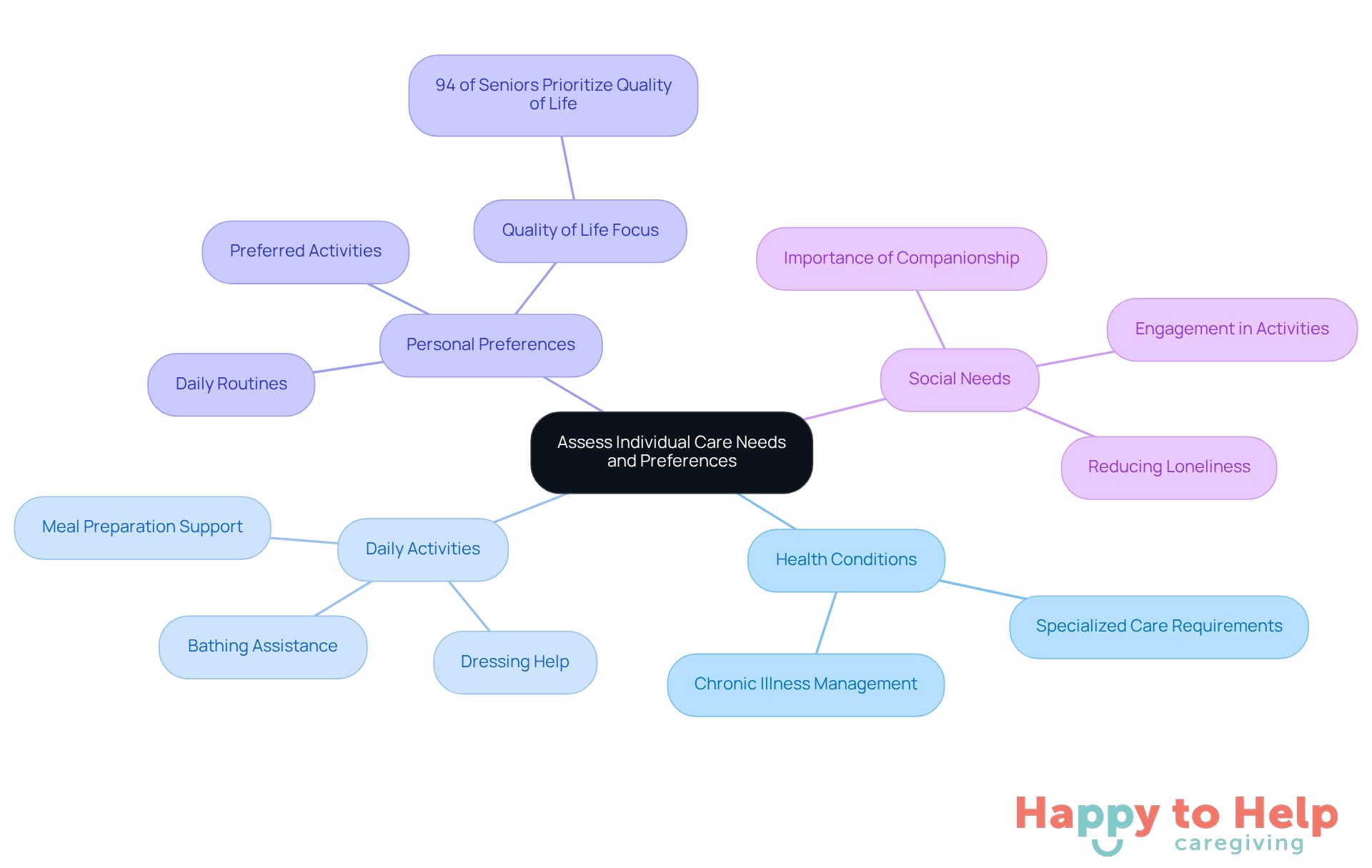
Health Conditions: It's essential to identify any medical conditions that require specialized care. This ensures caregivers are prepared to handle specific health issues effectively.
-
Daily Activities: Determine which daily tasks the individual struggles with, such as bathing, dressing, or meal preparation. Understanding these challenges allows caregivers to provide targeted assistance.
-
Personal Preferences: Pay attention to the individual’s likes and dislikes, including preferred activities and routines. Personalization is key; older adults thrive when their support aligns with their interests and lifestyle. In fact, 94% of seniors prioritize quality of life over lifespan, highlighting the importance of tailored support plans.
-
Social Needs: Recognize the importance of companionship and social interaction. Engaging in meaningful conversations and activities can reduce feelings of loneliness and enhance emotional well-being. Research shows that social involvement helps older individuals feel younger and can even extend their lifespan, making it a vital aspect of support.
Engaging in open conversations with your loved one is essential for understanding their wishes and concerns about support. This dialogue builds trust and allows them to express their needs, ensuring that the assistance provided is respectful and attentive to their unique situation. As Terry Fulmer, President of The John A. Hartford Foundation, states, "It is not too late to shift to age-friendly support, which prioritizes the needs and desires of older adults in their support plan." By creating personalized care plans that reflect these preferences, caregivers can significantly improve satisfaction and enhance the quality of life for seniors.
Research and Compare Local Caregiving Agencies
Finding reliable caregiving organizations can be a daunting task for many families. With so many options available, it’s crucial to identify trustworthy agencies that meet specific needs. This challenge can lead to confusion and stress, making it essential to approach the search methodically.
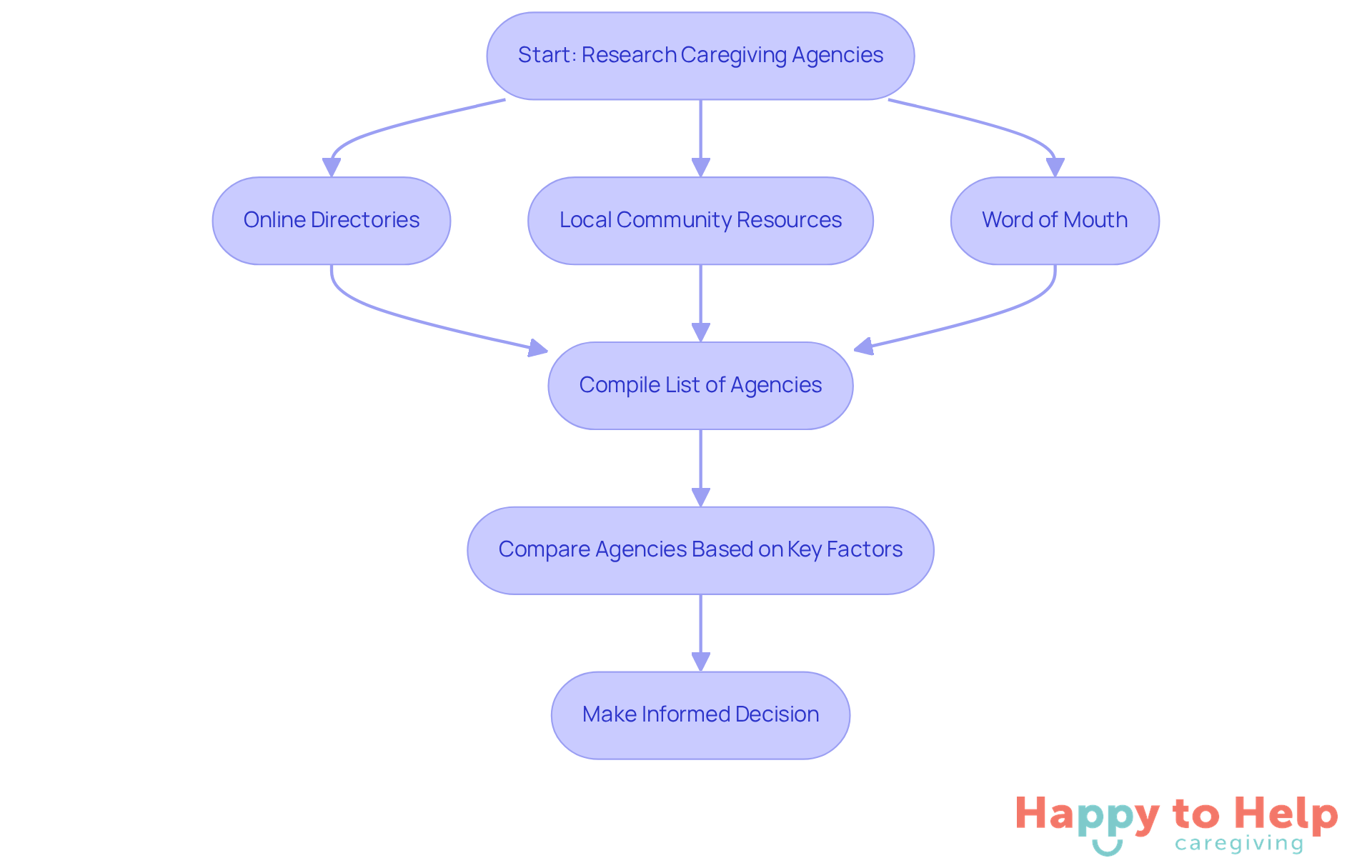
To tackle this issue, start by gathering a list of caregiving agencies near me. Utilize resources such as:
- Online Directories: Websites like Yelp, Care.com, and A Place for Mom can provide lists of agencies along with reviews.
- Local Community Resources: Check with local senior centers or hospitals for recommendations.
- Word of Mouth: Inquire with friends, family, or healthcare professionals about their experiences with local organizations.
Once you have compiled a list, compare agencies based on key factors:
- Services offered
- Availability and flexibility
- Caregiver qualifications
- Client reviews and testimonials
Creating a comparison chart can help visualize your options, making it easier to make an informed decision.
Verify Credentials and Read Client Reviews
Choosing the right caregiving agencies near me can be a daunting task, especially given the vast number of options available. The problem lies in the fact that many unlicensed providers exist-over 35,000-compared to roughly 12,000 Medicare-registered home support organizations. This disparity highlights the importance of selecting caregiving agencies near me to ensure compliance with local regulations and standards.
To navigate this challenge, consider these key factors:
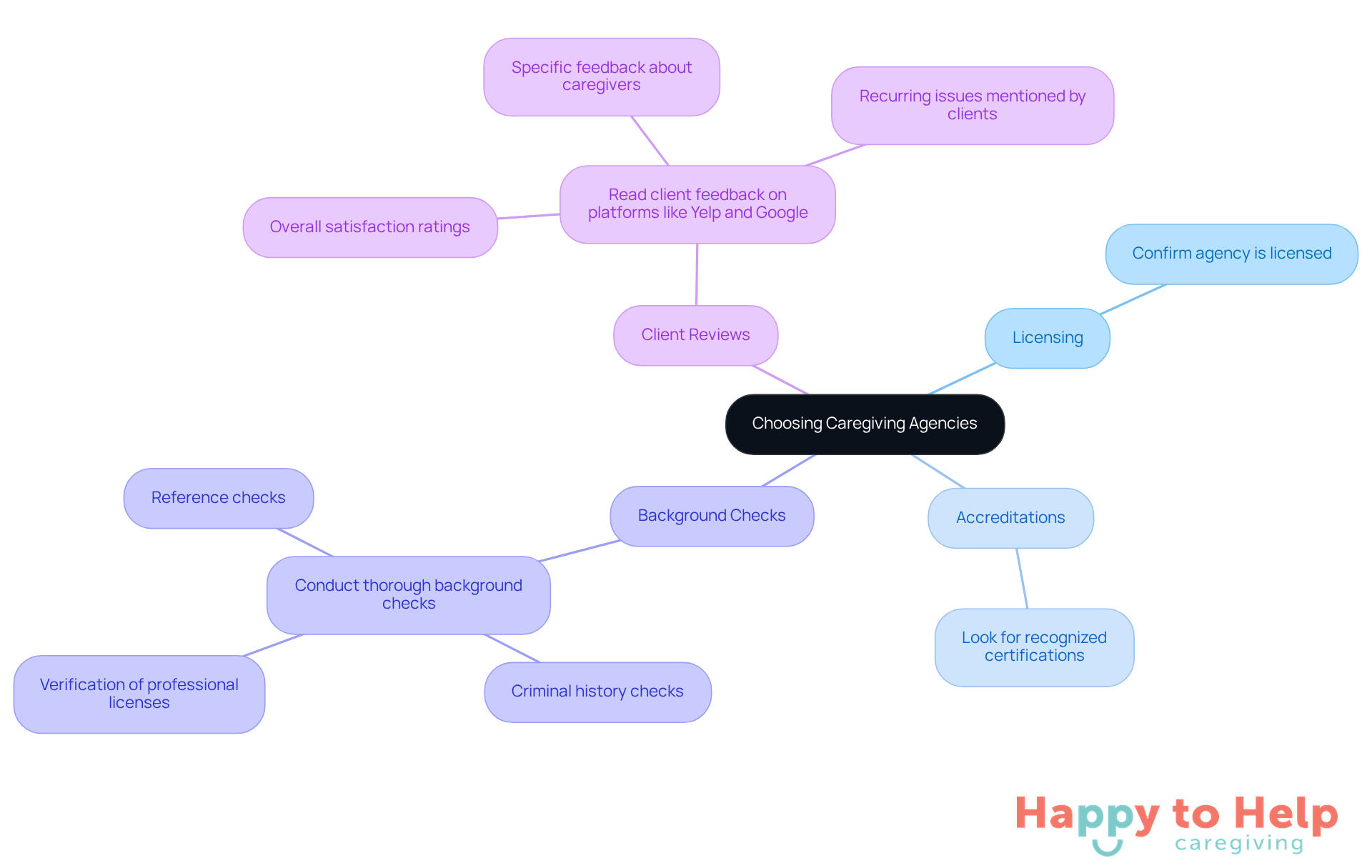
- Licensing: Always confirm that the agency is licensed to operate in your state. This not only ensures adherence to local laws but also enhances the credibility of the provider.
- Accreditations: Look for accreditations from recognized organizations. These certifications indicate that the organization meets established quality standards, providing reassurance about the level of service your loved one will receive.
- Background Checks: Verify that the organization conducts thorough background checks on their caregivers. Research shows that 91% of home support clients express satisfaction with their caregivers, often due to the agency's commitment to hiring qualified professionals. Additionally, 89% of patients report being pleased with home healthcare services, reflecting the overall quality of support provided. A robust background check process typically includes criminal history checks, verification of professional licenses, and reference checks to ensure caregivers are trustworthy and capable.
Moreover, reading client reviews on platforms like Yelp and Google can offer valuable insights into the reliability of caregiving agencies near me. Pay attention to:
- Overall satisfaction ratings
- Specific feedback about caregivers
- Any recurring issues mentioned by clients
This information will help you gauge the agency's reliability and quality of care, ensuring you make an informed choice for your loved one's needs.
Discuss Costs and Payment Options
When evaluating caregiving agencies near me, understanding the related expenses is crucial. Without this knowledge, you risk choosing an agency that may not fit your budget or your loved one's needs.
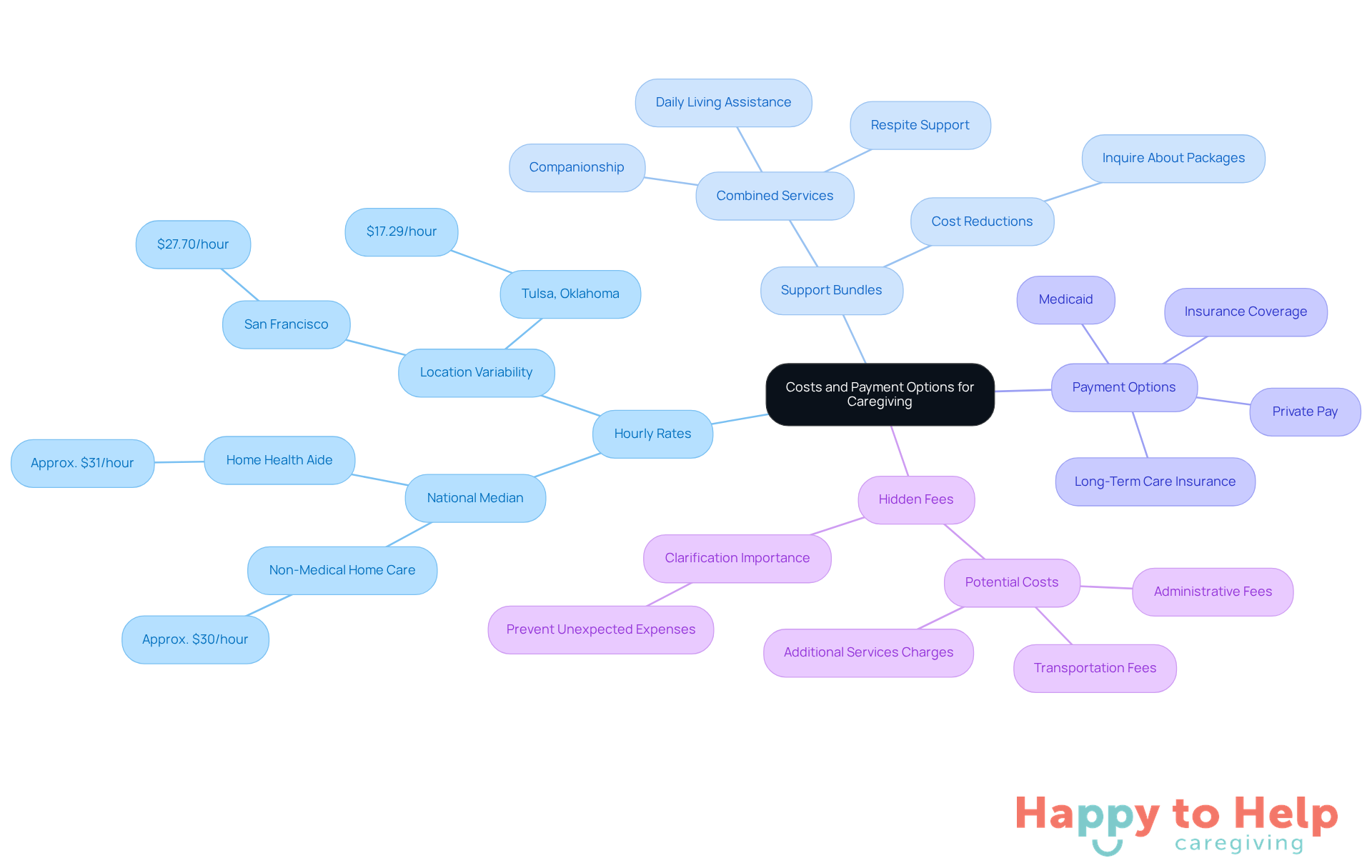
Hourly Rates: The average hourly rates for caregiving services can vary significantly based on location and the type of care required. For instance, the national median expense for non-medical home assistance is roughly $33 per hour, while home health aide support averages about $31 per hour. In urban areas, rates may be higher; cities like San Francisco charge about $27.70 per hour compared to Tulsa, Oklahoma, where the rate is around $17.29. This variability highlights the importance of researching caregiving agencies near me to identify the best fit for your financial situation.
Support Bundles: Many organizations offer support bundles that can lead to cost reductions. These packages may include combined services such as companionship, assistance with daily living tasks, and respite support, which can be more economical than purchasing options separately. Always inquire about available packages that could lower overall expenses, as these can significantly impact your budget.
Payment Options: It's essential to understand the payment methods available. Options may include private pay, insurance coverage, and Medicaid. Some organizations may also accept long-term care insurance, which can help reduce costs. Discussing these options upfront will help you determine what aligns best with your financial situation and ensure you are aware of all potential funding sources.
Hidden Fees: Be proactive in asking about any potential hidden fees that could affect your budget. These may include transportation costs, administrative fees, or charges for additional services not covered in the initial agreement. Clarifying these details can prevent unexpected expenses later and help you budget more effectively.
By having a clear understanding of these financial aspects, you empower yourself to choose caregiving agencies near me that meet your loved one's care needs while fitting within your financial plan.
Your Path Forward
Finding the right caregiving agency can be a daunting task for many families. The challenge lies in ensuring that loved ones receive the quality support they deserve. Without proper guidance, caregivers may feel overwhelmed by the variety of services available and the individual care needs that must be assessed. This uncertainty can lead to stress and dissatisfaction with the care provided.
To navigate this process effectively, caregivers should take a structured approach. Start by:
- Researching local agencies and verifying their credentials.
- Discussing costs upfront to help in making informed decisions.
- Utilizing reliable resources to compare local agencies to identify specific services that align with their loved ones' needs and preferences.
Understanding the financial implications of caregiving services is crucial. Families must find support that fits within their budget while still meeting care requirements. Engaging in open discussions about preferences and needs not only personalizes the care experience but also fosters greater satisfaction for both caregivers and recipients.
Ultimately, the quest for the best caregiving agencies is about more than just finding a service provider; it’s about creating a supportive environment that prioritizes dignity and quality of life. By taking proactive steps and leveraging the insights shared, caregivers can empower themselves to make choices that positively impact their loved ones' lives. While the journey may be challenging, the rewards of compassionate and tailored support are immeasurable.
https://iframe.tely.ai/cta/eyJhcnRpY2xlX2lkIjogIjY5MjEwYWI4YzQ4NjU1NjRkNDliYzZlMiIsICJjb21wYW55X2lkIjogIjY4ZWU1ZGNhNzMxNzYyNTU3ZjNjOTVjMSIsICJpbmRleCI6IG51bGwsICJ0eXBlIjogImFydGljbGUifQ==Frequently Asked Questions
What types of caregiving services are commonly offered?
Common caregiving services include companionship care, personal care, post-hospital recovery, respite care, and palliative support.
What is companionship care?
Companionship care provides emotional support and social interaction, helping to alleviate feelings of loneliness for the individual receiving care.
How does personal care assist individuals?
Personal care involves assistance with daily activities such as bathing, dressing, and grooming, ensuring that individuals maintain their dignity and hygiene.
What is the purpose of post-hospital recovery services?
Post-hospital recovery services help individuals after surgery or illness, including medication management and mobility assistance for a smooth transition back home.
What is respite care and why is it important?
Respite care offers short-term relief for primary caregivers, allowing them to take necessary breaks while ensuring their family members are well cared for.
What does palliative support focus on?
Palliative support provides specialized assistance for individuals with serious illnesses, focusing on comfort and quality of life while addressing both physical and emotional needs.
Why is assessing individual care needs and preferences important?
Evaluating a person's support requirements and preferences is crucial for effective assistance, ensuring caregivers provide the right support and avoid inadequate care.
What factors should be considered when assessing care needs?
Factors to consider include health conditions, daily activities the individual struggles with, personal preferences, and social needs.
How can caregivers personalize support for older adults?
Caregivers can personalize support by understanding the individual's likes, dislikes, and preferred activities, creating tailored support plans that enhance their quality of life.
Why is social interaction important for older adults?
Social interaction helps reduce feelings of loneliness, enhances emotional well-being, and can even extend lifespan, making it a vital aspect of support for older individuals.
How can open conversations improve caregiving?
Engaging in open conversations with loved ones helps caregivers understand their wishes and concerns, building trust and ensuring that the assistance provided is respectful and attentive to their unique situation.
List of Sources
- Identify Types of Caregiving Services Offered
- Types of Home Care Services in 2025 (https://websterhc.com/breaking-down-the-different-types-of-home-care-services-in-2025)
- Caregiving in the US 2025: A Comprehensive Overview (https://retirementlivingsourcebook.com/proagingnews/caregiving-in-the-us-2025-a-comprehensive-overview)
- The Caregiving Landscape: Data & Insights on the Caregiver Experience in the U.S. (https://caregiveraction.org/caregiver-statistics)
- National Alliance for Caregiving: Caregiving in the US 2025 Report (https://johnahartford.org/resources/view/national-alliance-for-caregiving-caregiving-in-the-us-2025-report)
- Caregiver Statistics: Demographics (https://caregiver.org/resource/caregiver-statistics-demographics)
- Assess Individual Care Needs and Preferences
- Older adults prioritize social activities, inclusiveness in massive survey assessing what matters most to them (https://mcknights.com/news/older-adults-prioritize-social-activities-inclusiveness-in-massive-survey-assessing-what-matters-most-to-them)
- Bridging the Gap in Elderly Care: The Case for Comprehensive In-Home Assessment (https://reachmd.com/news/bridging-the-gap-in-elderly-care-the-case-for-comprehensive-in-home-assessment/2474101)
- Share Your Voice: COA Community Survey | Council on Aging (https://help4seniors.org/news/council-on-aging-conducting-community-needs-assessment-survey)
- Caregiver Statistics: Demographics (https://caregiver.org/resource/caregiver-statistics-demographics)
- Warning From Older Adults: Care for Aging in America Needs Urgent Rethinking (https://johnahartford.org/newsroom/view/warning-from-older-adults-care-for-aging-in-america-needs-urgent-rethinking)
- Verify Credentials and Read Client Reviews
- House Passes Home Care Bill Establishing a Licensure Process for Home Care Agencies – Chelsea Record (https://chelsearecord.com/2025/11/20/house-passes-home-care-bill-establishing-a-licensure-process-for-home-care-agencies)
- Another State Faces The Pros, Cons Of Standardizing Home Care (https://homehealthcarenews.com/2024/12/another-state-faces-the-pros-cons-of-standardizing-home-care)
- 52 Eye-Opening Home Health Statistics: Insights for 2025 (https://boosthomehealth.com/home-health-statistics)
- Home Care Statistics In 2025: Key Insights In Home Care (https://sagapixel.com/marketing/home-care-statistics)
- FastStats (https://cdc.gov/nchs/fastats/home-health-care.htm)
- Discuss Costs and Payment Options
- Home Care Costs in 2025: A State-by-State Guide (https://aplaceformom.com/caregiver-resources/articles/in-home-care-costs)
- The Cost of In-Home Caregivers May Surprise You (https://health.usnews.com/senior-care/caregiving/articles/how-much-do-in-home-caregivers-cost)
- Most Americans expect to experience a long-term care event, and nearly 3 in 4 want in-home care if it happens to them - according to Northwestern Mutual Planning & Progress Study (https://news.northwesternmutual.com/2025-10-07-Most-Americans-expect-to-experience-a-long-term-care-event,-and-nearly-3-in-4-want-in-home-care-if-it-happens-to-them-according-to-Northwestern-Mutual-Planning-Progress-Study)
- 24/7 In-Home Care Costs in 2025 - Assisted Living Magazine (https://assistedlivingmagazine.com/24-7-in-home-care-costs-in-2025)