

For families in our service areas
For families in our service areas, this guide explains caregiving and how non-medical in-home caregiving can support care planning in East Idaho, Treasure Valley & Magic Valley, Northern Wasatch, North Central West Virginia, and Northeast Ohio.
Understanding Find the Best Elderly Homecare Near Me
Navigating the complex landscape of elderly homecare presents a significant challenge for families seeking the best support for their loved ones. With a growing number of options available, understanding individual care needs and preferences is crucial. Families often feel overwhelmed by the myriad of choices, which can lead to uncertainty about how to ensure a comfortable and safe environment for their seniors.
This situation can create stress and anxiety for caregivers, as they grapple with the responsibility of making the right decisions. The implications of choosing the wrong provider can be serious, affecting not only the quality of care but also the overall well-being of their loved ones. So, how can families effectively assess these needs and select the right provider?
This guide offers a structured approach to finding the best elderly homecare services. By breaking down the process into manageable steps, families can make informed decisions that enhance the quality of life for their seniors. With the right tools and knowledge, navigating this complex landscape becomes a more straightforward task.
Assess Individual Care Needs and Preferences
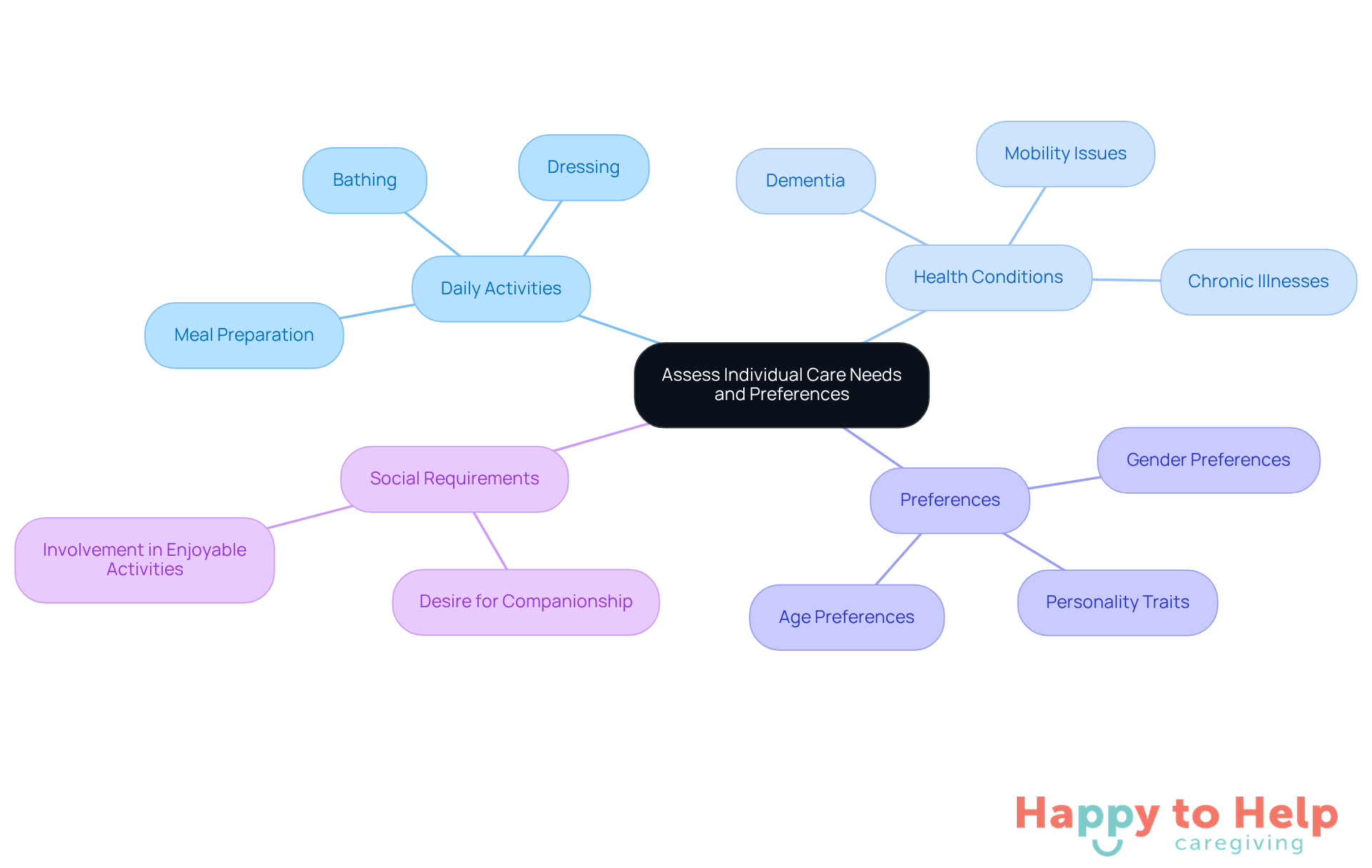
Identify Daily Activities: Caregivers often face the challenge of understanding which daily activities their loved ones find difficult. Activities like bathing, dressing, or meal preparation can be particularly challenging. Studies indicate that 21% of older adults require assistance with these tasks, underscoring the need for tailored support.
Consider Health Conditions: It's essential to consider any medical conditions that may necessitate specialized care. Conditions such as dementia, mobility issues, or chronic illnesses can significantly impact the level of support required. Notably, 45% of individuals aged 65 to 69 do not need assistance, compared to just 4% of those aged 90 or older, highlighting the varying support needs across different age groups.
Discuss Preferences: Engaging your loved one in discussions about their caregiver preferences is crucial. Factors like gender, age, and personality traits can greatly influence their comfort level. As noted by Heisinger Bluffs, "When they share preferences, it fosters a sense of control and encourages collaboration with healthcare providers." This involvement is vital for building trust in the caregiving relationship.
Evaluate Social Requirements: Social interactions play a significant role in emotional well-being. Assessing the desire for companionship and involvement in enjoyable activities is essential for a holistic support approach.
Document everything by compiling a detailed list of requirements and preferences to guide your research and interviews with potential elderly homecare near me providers. This documentation serves as a valuable reference, ensuring that the chosen support aligns with your loved one's unique needs and enhances their quality of life. Regular check-ins and feedback sessions are crucial for adapting the care plan to meet evolving needs and preferences.
Research Local Homecare Services and Options
Finding Reliable Homecare Services
Finding trustworthy homecare services can be a daunting task for caregivers. With so many options available, it’s crucial to ensure that you choose a provider that meets your loved one's needs. The implications of selecting the wrong service can lead to stress and dissatisfaction, making it essential to approach this decision carefully.
-
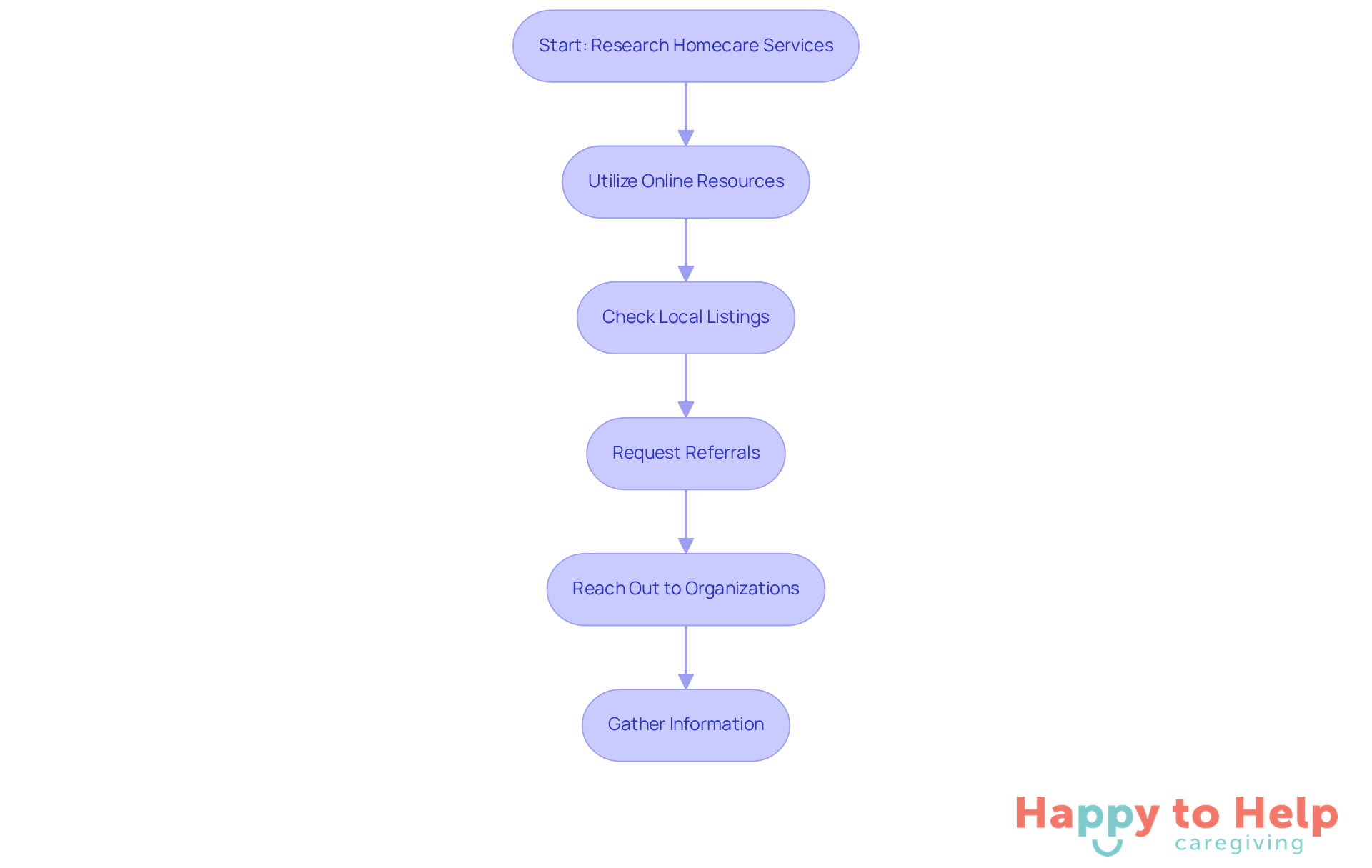
Utilize Online Resources
Start by searching online directories like Caring.com, Yelp, or Care.com. These platforms provide reviews and ratings that can help you assess the quality of elderly homecare near me. According to industry specialists, leveraging these online resources is vital for locating reputable firms that align with your requirements. -
Check Local Listings
Don’t overlook local community centers or hospitals, which often have resources or recommendations for homecare services. These listings can provide valuable insights into organizations that are well-regarded in your community, helping you make a more informed choice. -
Request Referrals
Reach out to friends, family, or healthcare professionals for suggestions based on their experiences with nearby organizations. Personal recommendations can be invaluable when searching for elderly homecare near me, guiding you toward trustworthy options and helping you avoid potential pitfalls. -
Reach Out to Organizations
Compile a list of potential firms and contact them to inquire about their offerings, availability, and pricing. This initial interaction can reveal their customer support and responsiveness-critical factors in your decision-making process. Don’t forget to ask about the training requirements for caregivers, as this is an important aspect to consider when hiring. -
Gather Information
Collect brochures, product descriptions, and other relevant materials from the organizations to compare their offerings effectively. Additionally, inquire about background checks for caregivers, especially if you’re considering direct-hire agencies. Understanding the typical expenses of home assistance, which can vary from $24 per hour, will also help you set financial expectations. This information will empower you to make an informed choice about the best elderly homecare near me services for your loved one.
Evaluate and Compare Homecare Providers
-
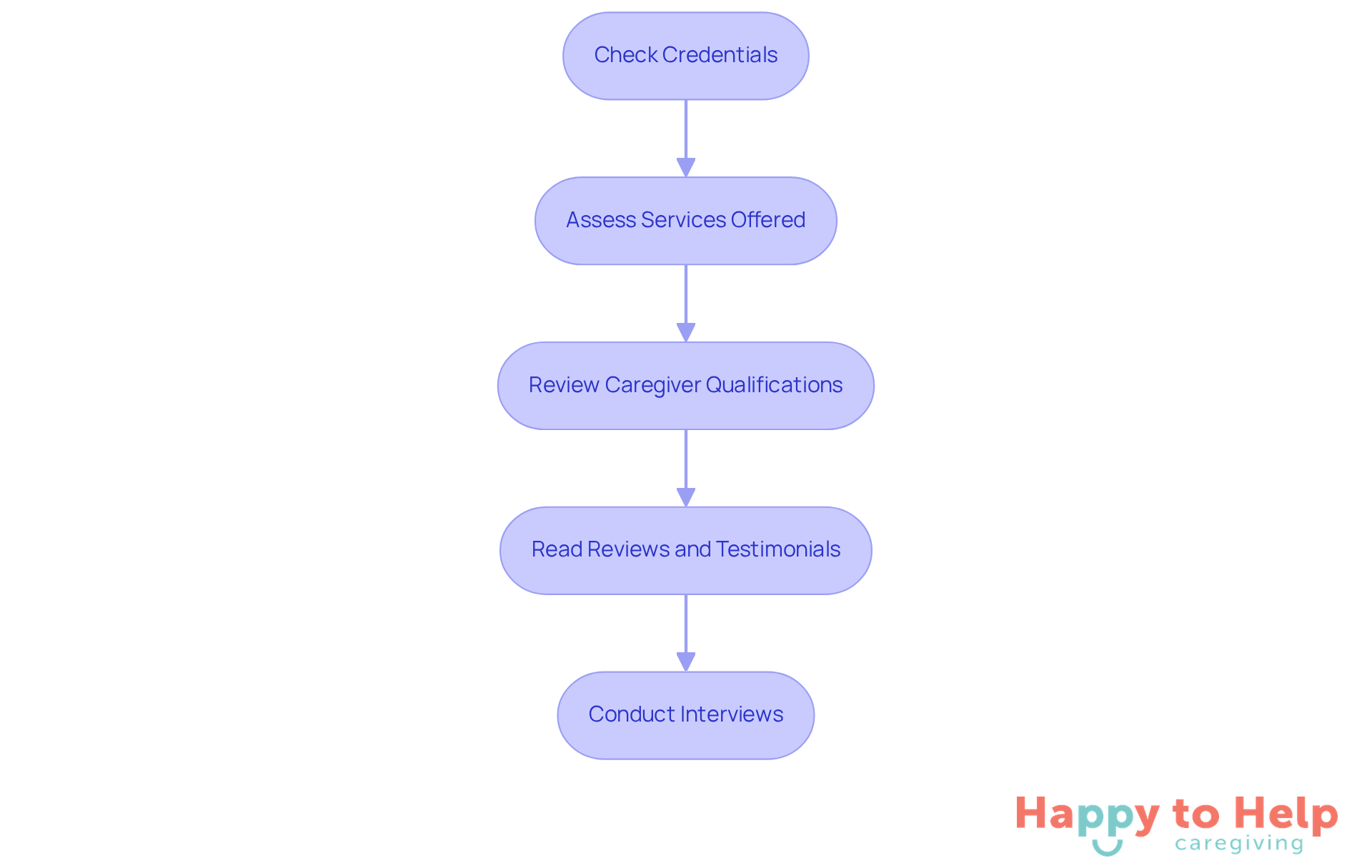
Check Credentials: One major challenge caregivers face is ensuring that the organizations they consider are properly licensed and accredited. This verification is crucial, as it confirms compliance with industry standards, which directly impacts the quality of service provided.
-
Assess Services Offered: Caregivers often struggle to find agencies that meet their specific needs. It's important to compare the range of services offered, especially specialized support options like elderly homecare near me, palliative assistance, and post-hospital recovery aid. Additionally, consider the adaptability in scheduling and caregiver availability; nearly 80% of home health service users prefer to remain in their own residences (source: Aging Population Statistics).
-
Review Caregiver Qualifications: Another concern is the qualifications of caregivers. Inquire about their training and background checks. Agencies that prioritize ongoing training can better equip caregivers to meet diverse client needs. With the rising demand for specialized support, organizations that emphasize caregiver training can significantly enhance patient satisfaction.
-
Read Reviews and Testimonials: Feedback from families who have used these services can provide valuable insights. Favorable testimonials often indicate a trustworthy provider. Studies show that 91% of patients express satisfaction with their home health experiences (source: Patient Satisfaction with Home Health Services), largely due to the compassionate approach of caregivers who treat clients like family.
-
Conduct Interviews: Engaging directly with potential organizations can clarify how they address your loved one's specific needs. Ask targeted questions about their support methods and specialized offerings. This interaction can provide a deeper understanding of their operational practices and commitment to quality service.
As elder support expert [insert name] emphasizes, evaluating offerings provided by elderly homecare near me organizations is crucial to ensure that families find the most suitable option for their loved ones' distinct requirements. It's also important to note that many homecare agencies offer specialized support services, which can greatly enhance the quality of assistance provided.
Involve Family in the Decision-Making Process
Problem: Coordinating care for a loved one can be challenging, especially when family members have differing opinions and concerns. Without a structured approach, miscommunication can lead to stress and frustration.
Agitate: This lack of clarity can create tension within the family, making it difficult to ensure that your loved one receives the best possible support. It's essential to address these challenges head-on to foster a collaborative environment.
Solution: Here are some actionable steps to improve family communication and decision-making:
-
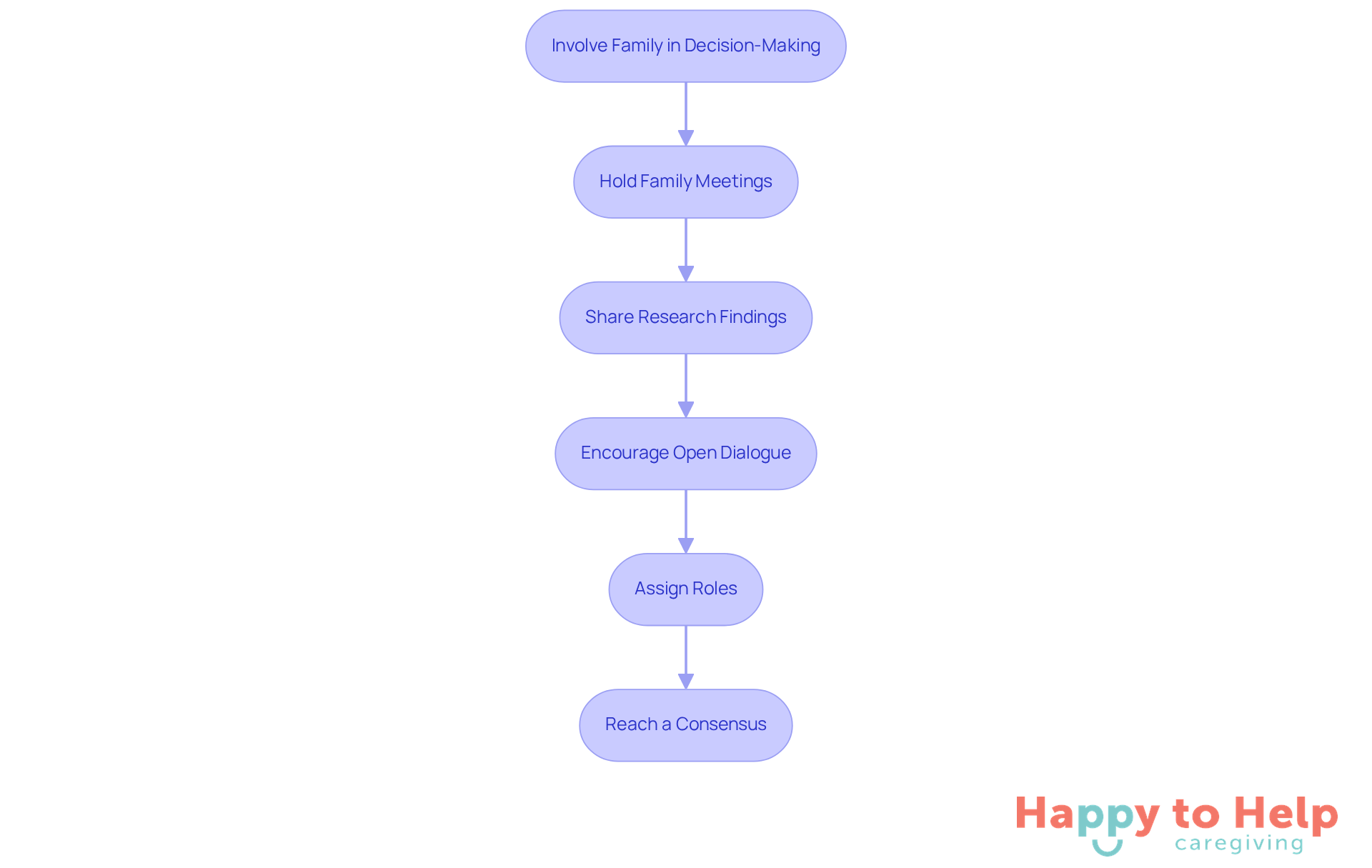
Hold Family Meetings: Organize a gathering with all family members to discuss the support needs and preferences of your loved one. This ensures everyone is on the same page.
-
Share research findings regarding elderly homecare near me providers, including pros and cons, to facilitate informed discussions.
-
Encourage Open Dialogue: Allow family members to express their concerns and preferences regarding care options. This can help identify any underlying issues or fears.
-
Assign Roles: Designate specific roles or responsibilities to family members, such as researching organizations or coordinating visits, to streamline the process.
-
Reach a Consensus: Aim to reach a collective decision that reflects the best interests of your loved one, ensuring that everyone feels involved and valued in the process.
Finalize Your Choice and Establish Care
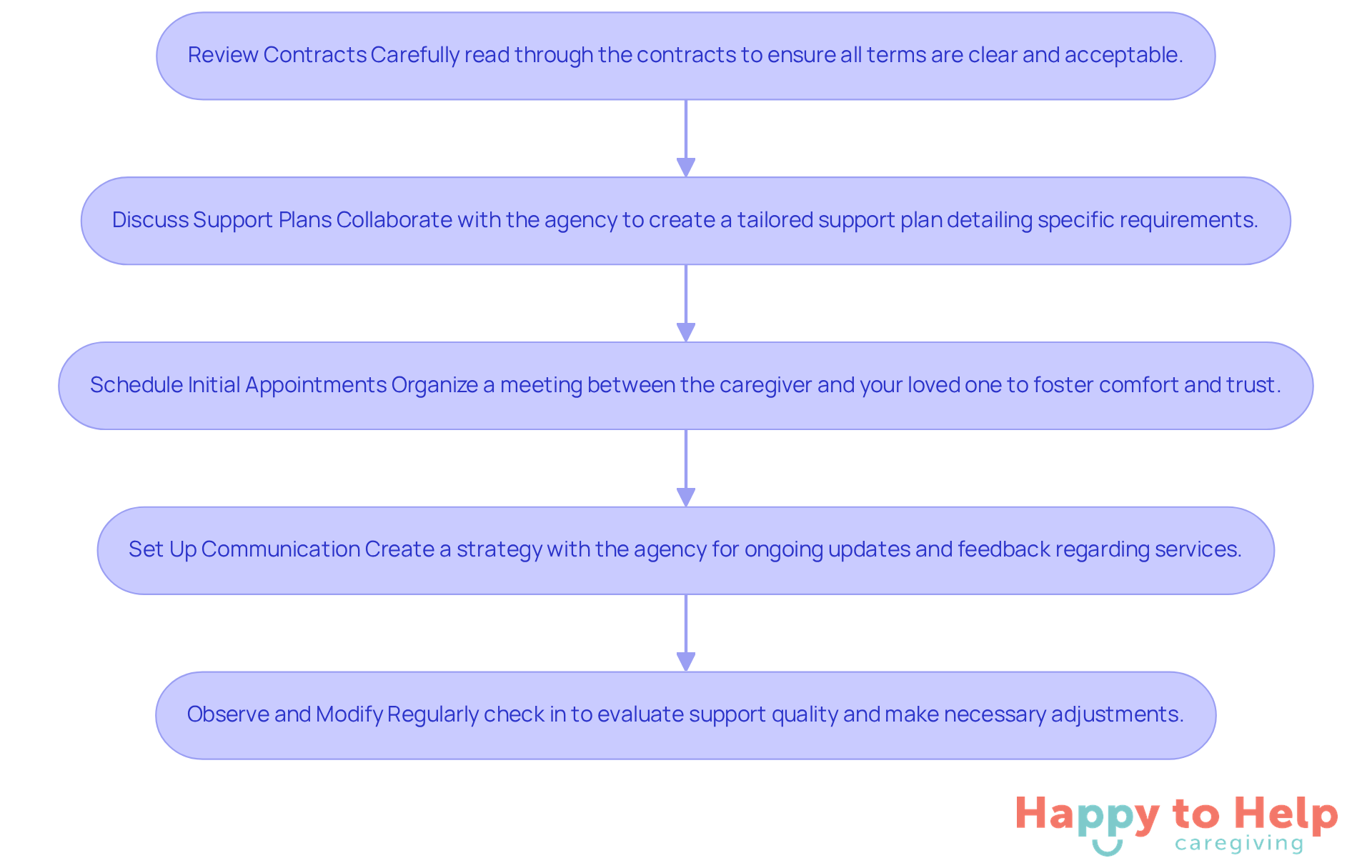
Review Contracts: Caregivers often face confusion when navigating service agreements. It's crucial to carefully read through the contracts supplied by the selected organization. Ensure all terms are clear and acceptable to avoid misunderstandings later on.
Discuss Support Plans: Collaborating with the agency to create a tailored support plan is essential. This plan should detail the specific requirements and preferences of your loved one. As elder support specialists note, a well-designed support plan acts as a roadmap for assisting daily routines and health needs, ultimately enhancing overall well-being.
Schedule Initial Appointments: Establishing rapport is vital. Organize for the caregiver to meet your loved one before assistance begins. This initial meeting helps foster comfort and trust, setting a positive tone for future interactions.
Set Up Communication: Effective communication is key. Create a strategy with the agency to ensure ongoing updates and feedback regarding the services provided. This keeps everyone informed and engaged in the care process.
Observe and Modify: Once assistance starts, it's important to stay connected. Regularly check in with your loved one and the provider to evaluate the quality of support. Be prepared to make adjustments as necessary. Remember, families play an active role in creating customized support plans by sharing stories about routines, hobbies, and preferences. Engaging in this process not only enhances the care experience but also empowers seniors by respecting their individuality and choices.
Key Takeaways for Caregivers
Finding the right elderly homecare provider is a significant challenge that can greatly affect the quality of life for your loved ones. Many caregivers struggle with understanding individual care needs and navigating local options, which can lead to feelings of uncertainty and stress. This decision is not just about physical care; it’s about ensuring emotional well-being and dignity for seniors.
To tackle this issue, caregivers should take a structured approach. Start by assessing the specific care needs of your loved one. What daily activities require assistance? Understanding these needs is crucial. Next, research local homecare options thoroughly. Look for providers that align with your loved one’s unique preferences and requirements. Involving family members in this process not only fosters collaboration but also ensures that everyone feels valued and included.
Key insights to consider include:
- Evaluating the qualifications of caregivers
- Utilizing online resources for reliable information
- Engaging family members in discussions to strengthen the caregiving process
By following these steps, caregivers can confidently navigate the complexities of finding the best elderly homecare.
Ultimately, securing appropriate homecare is about enhancing emotional well-being and maintaining dignity for seniors. Taking the time to assess, compare, and finalize care arrangements improves the quality of life for loved ones and empowers families to create a supportive environment. Prioritize these steps to ensure a positive caregiving experience that respects the individuality of those who matter most.
https://iframe.tely.ai/cta/eyJhcnRpY2xlX2lkIjogIjY5NDBhMjM5NGFiMmI4OGM4M2NiZjVjMiIsICJjb21wYW55X2lkIjogIjY4ZWU1ZGNhNzMxNzYyNTU3ZjNjOTVjMSIsICJpbmRleCI6IG51bGwsICJ0eXBlIjogImFydGljbGUifQ==Frequently Asked Questions
What should caregivers consider when assessing individual care needs?
Caregivers should identify daily activities their loved ones find difficult, consider any health conditions that may require specialized care, discuss preferences regarding caregivers, and evaluate social requirements for emotional well-being.
How prevalent is the need for assistance with daily activities among older adults?
Studies indicate that 21% of older adults require assistance with daily activities such as bathing, dressing, or meal preparation.
What factors influence the level of support required by older adults?
Factors include age and specific health conditions. For example, 45% of individuals aged 65 to 69 do not need assistance, while only 4% of those aged 90 or older do.
Why is it important to discuss caregiver preferences with loved ones?
Discussing preferences fosters a sense of control and encourages collaboration with healthcare providers, which is vital for building trust in the caregiving relationship.
What role do social interactions play in caregiving?
Social interactions are important for emotional well-being, so assessing the desire for companionship and enjoyable activities is essential for a holistic support approach.
What steps can caregivers take to research local homecare services?
Caregivers can utilize online resources, check local listings, request referrals from friends and family, reach out to organizations, and gather information about potential providers.
What online resources can help find reliable homecare services?
Online directories like Caring.com, Yelp, and Care.com provide reviews and ratings that can help assess the quality of elderly homecare services.
How can local community centers assist in finding homecare services?
Local community centers or hospitals often have resources or recommendations for homecare services, providing valuable insights into well-regarded organizations in the community.
What should caregivers inquire about when contacting potential homecare providers?
Caregivers should ask about offerings, availability, pricing, customer support, caregiver training requirements, and background checks for caregivers.
What financial considerations should caregivers keep in mind when seeking homecare services?
Caregivers should understand the typical expenses of home assistance, which can vary from $24 per hour, to set appropriate financial expectations.
List of Sources
- Assess Individual Care Needs and Preferences
- Through Early Discussions About Elder Care, Doctors Can Empower Seniors to Age in Place - MedCity News (https://medcitynews.com/2024/11/through-early-discussions-about-elder-care-doctors-can-empower-seniors-to-age-in-place)
- Nearly half of older adults worldwide struggle with daily tasks, study reveals (https://mcknights.com/news/nearly-half-of-older-adults-worldwide-struggle-with-daily-living-activities-study-reveals)
- Two-thirds of seniors need help doing one or more daily activities - Harvard Health (https://health.harvard.edu/blog/two-thirds-of-seniors-need-help-doing-one-or-more-daily-activities-201312136942)
- How to Involve Seniors in Their Own Care Decisions (https://hbrhc.com/blog/how-to-involve-seniors-in-care-decisions)
- Older adults prioritize social activities, inclusiveness in massive survey assessing what matters most to them (https://mcknights.com/news/older-adults-prioritize-social-activities-inclusiveness-in-massive-survey-assessing-what-matters-most-to-them)
- Research Local Homecare Services and Options
- Find the Right Home Health Aide for Your Loved One (https://aarp.org/caregiving/home-care/home-health-aides)
- 15 Effective Home Care Referral Sources (https://careacademy.com/blog/home-health-care-referrals)
- Home Care Business Growth Statistics | Aaniie Formerly Smartcare Software (https://aaniie.com/resources/home-care-business-growth-statistics)
- 7 Best Places to Find Caregivers for Home Care | Aaniie, formerly Smartcare Software (https://aaniie.com/news/7-best-places-to-find-caregivers-for-home-care)
- Home Care Industry Overview and Statistics (https://ankota.com/home-care-industry-overview-and-statistics)
- Evaluate and Compare Homecare Providers
- The 2024 Year in Review in Home Health Care - Alora Health (https://alorahealth.com/blog-the-2024-year-in-review-in-home-health-care)
- 52 Eye-Opening Home Health Statistics: Insights for 2025 (https://boosthomehealth.com/home-health-statistics)
- Tension Between Demand Growth, Rate Pressure Shape At-Home Care Playbooks (https://homehealthcarenews.com/2025/08/tension-between-demand-growth-rate-pressure-shapes-at-home-care-playbooks)
- FastStats (https://cdc.gov/nchs/fastats/home-health-care.htm)
- Top 3 Trends in Homecare for 2025 (https://homecaremag.com/top-trends-in-homecare)
- Finalize Your Choice and Establish Care
- Dr Melissa O'Connor Discusses Tips on Creating Personalized Care Plans for Older Adults in Home Health | AJMC (https://ajmc.com/view/dr-melissa-o-connor-discusses-tips-on-creating-personalized-care-plans-for-older-adults-in-home-health)
- 2025: AI enhances personalized care; caregiver experience in the spotlight (https://healthcareitnews.com/news/2025-ai-enhances-personalized-care-caregiver-experience-spotlight)
- Customized Care at Home: The Benefits of Personalized Care Plans - VNA Health Group (https://vnahg.org/customized-care-at-home-the-benefits-of-personalized-care-plans)
- How Personalized Support Plans Improve Quality of Life (https://heartwisesupport.org/post/how-personalized-support-plans-improve-quality-of-life)
- Boosting Confidence Through Personal Care Plans for Seniors (https://seniorlifestyle.com/resources/blog/personalized-care-plans-for-seniors)