
Why Find the Best Home Health Agency Near Me Matters
Choosing the right home health agency is a critical decision that can significantly affect the well-being of loved ones in need of care. Caregivers often face the daunting task of navigating through a plethora of options, making it challenging to find the best fit. This guide aims to simplify that search process by providing essential steps to evaluate care needs, agency qualifications, and financial considerations.
But why is this choice so important? The implications of selecting the wrong agency can be profound, potentially leading to inadequate care and increased stress for both caregivers and their loved ones. Caregivers must ensure that their chosen agency not only meets their expectations but also delivers the compassionate and competent care their loved ones deserve.
To tackle this challenge, caregivers can follow a clear roadmap:
- Assess specific care needs
- Research agency qualifications
- Consider financial aspects
By taking these steps, caregivers can make informed decisions that prioritize the health and happiness of their loved ones.
Assess Your Care Needs and Preferences
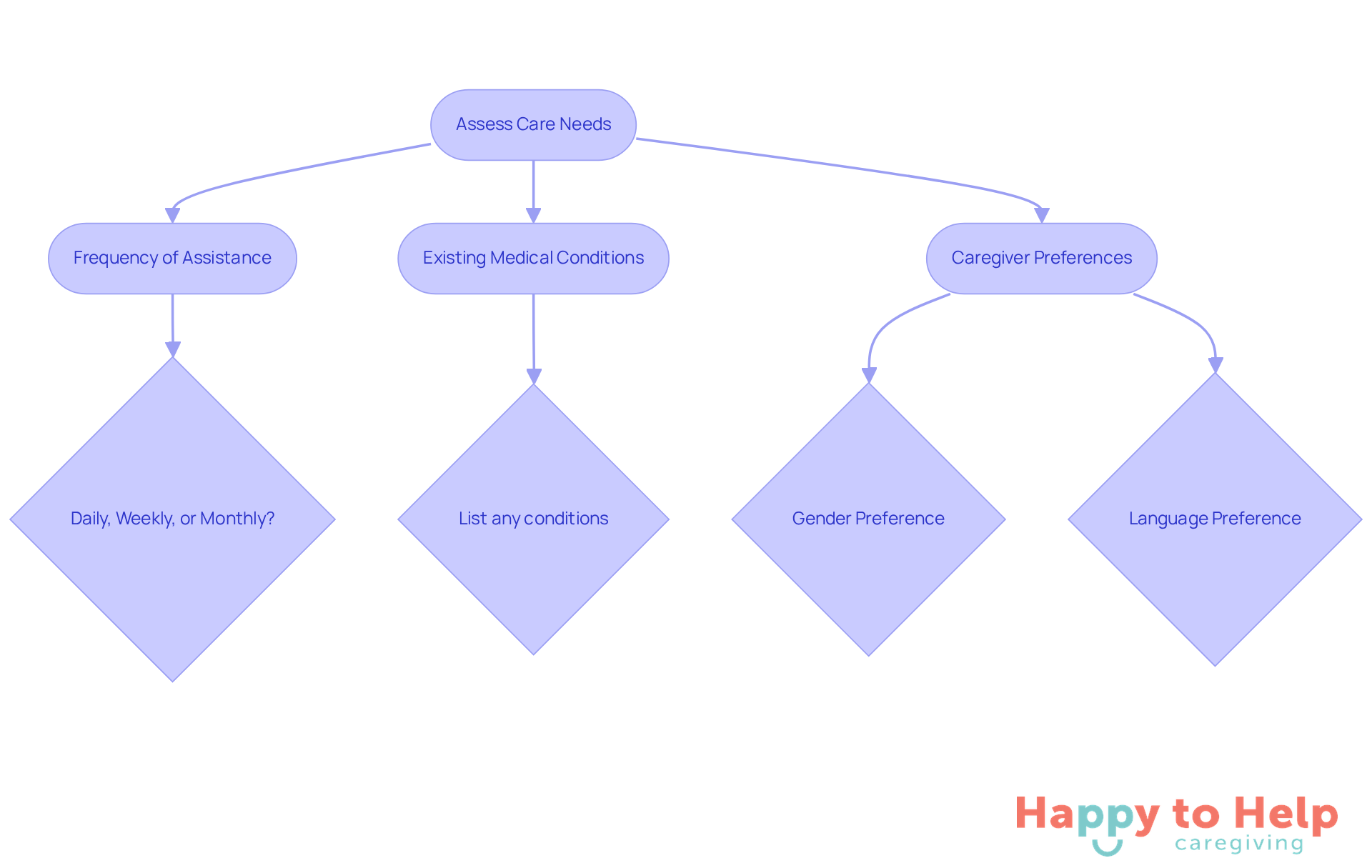
Identifying the right support for your loved one can be challenging. Caregivers often face the problem of determining whether companionship, personal assistance, or medical help is needed. This decision is crucial, as it directly impacts the quality of care provided.
It's essential to consider:
- How often assistance will be required
- Any existing medical conditions
- Personal preferences regarding caregiver characteristics, such as gender and language
Involving your loved one in this discussion is vital; it ensures their comfort and preferences are prioritized. Research shows that families who engage their loved ones in care decisions report higher satisfaction with the services received.
To tackle this issue effectively, create a checklist to document these needs. This checklist will serve as a valuable reference when assessing the best home health agency near me. By organizing your requirements, you not only clarify what is needed but also help ensure that the best home health agency near me aligns with the unique needs of your family member.
Research Local Home Health Agencies
Caregivers may find it daunting to locate the best home health agency near me. With so many options available, it’s crucial to ensure that you choose a licensed organization that meets your needs. The implications of selecting the wrong provider can lead to inadequate care and increased stress for both the caregiver and the patient.
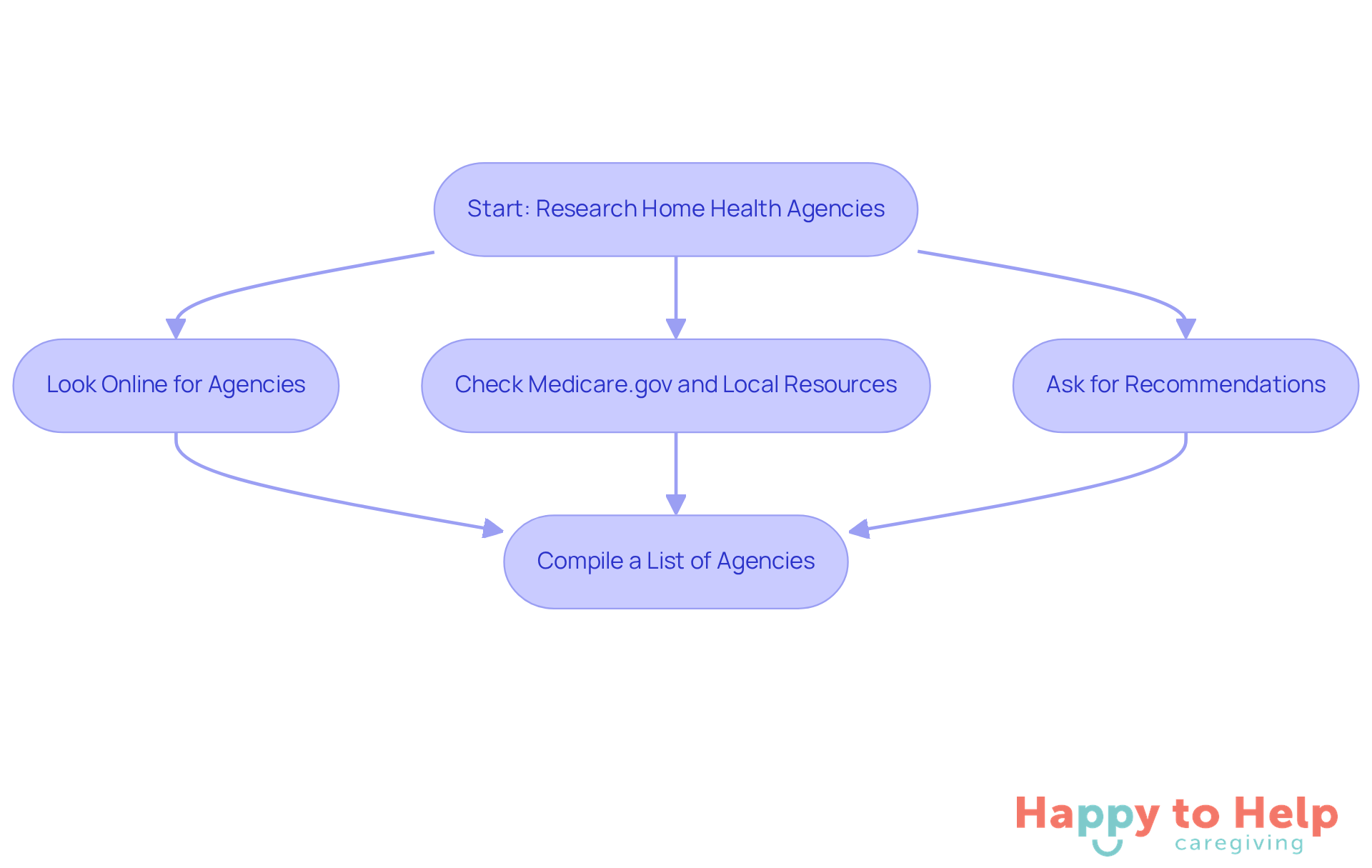
To tackle this challenge, start by looking online for the best home health agency near me. Websites such as Medicare.gov and local health department resources can offer valuable information about licensed organizations. Additionally, consider asking for recommendations from healthcare providers, friends, or family members who have experience with the best home health agency near me for home health care.
Compile a list of at least five organizations to assess further. This proactive approach not only helps you gather essential information but also empowers you to make informed decisions about the care you seek.
Evaluate Qualifications and Caregiver Experience
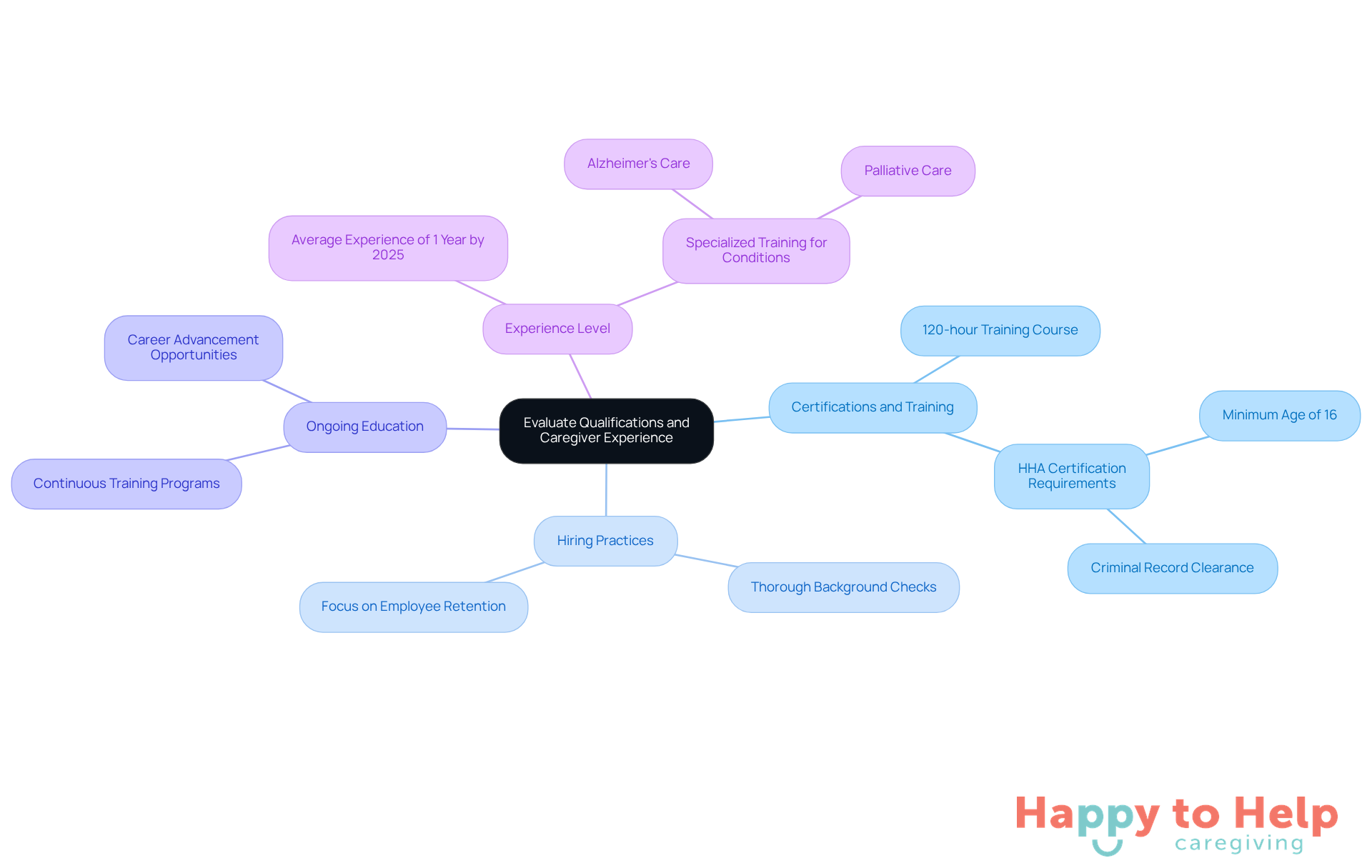
When selecting a home health service, one major problem arises: the qualifications of the staff. Many families may not realize the importance of asking about certifications and training programs that demonstrate a commitment to quality service. For instance, numerous organizations require caregivers to complete a 120-hour training course approved by the California Department of Public Health, covering essential skills for patient support. Prioritizing specialized skills that cater to your loved one's needs can significantly enhance the quality of care provided.
Another critical aspect to consider is the agency's hiring practices. It's essential to ensure they conduct thorough background checks and provide ongoing training for their staff. This commitment to continuous education not only sharpens the skills of caregivers but also boosts job satisfaction and retention rates. In fact, studies indicate that over 40% of organizations are focusing on training and development to improve employee retention, especially with an expected 7.4 million job vacancies in direct support by 2029.
Additionally, consider the typical experience level of the support staff within the organization. By 2025, the average support provider will have about one year of experience. However, organizations with more experienced staff often deliver more reliable and effective assistance. For example, those that prioritize support worker experience and specialized training can offer tailored care for specific conditions, such as Alzheimer's or palliative care.
Experts in the field emphasize that provider experience is vital for delivering high-quality home health services. As one specialist noted, "Caregivers who receive extra training and development can provide patients with superior quality service and generally experience greater job satisfaction." This underscores the necessity of not only hiring qualified caregivers but also investing in their ongoing development to meet the diverse needs of clients effectively.
Understand Costs and Payment Options
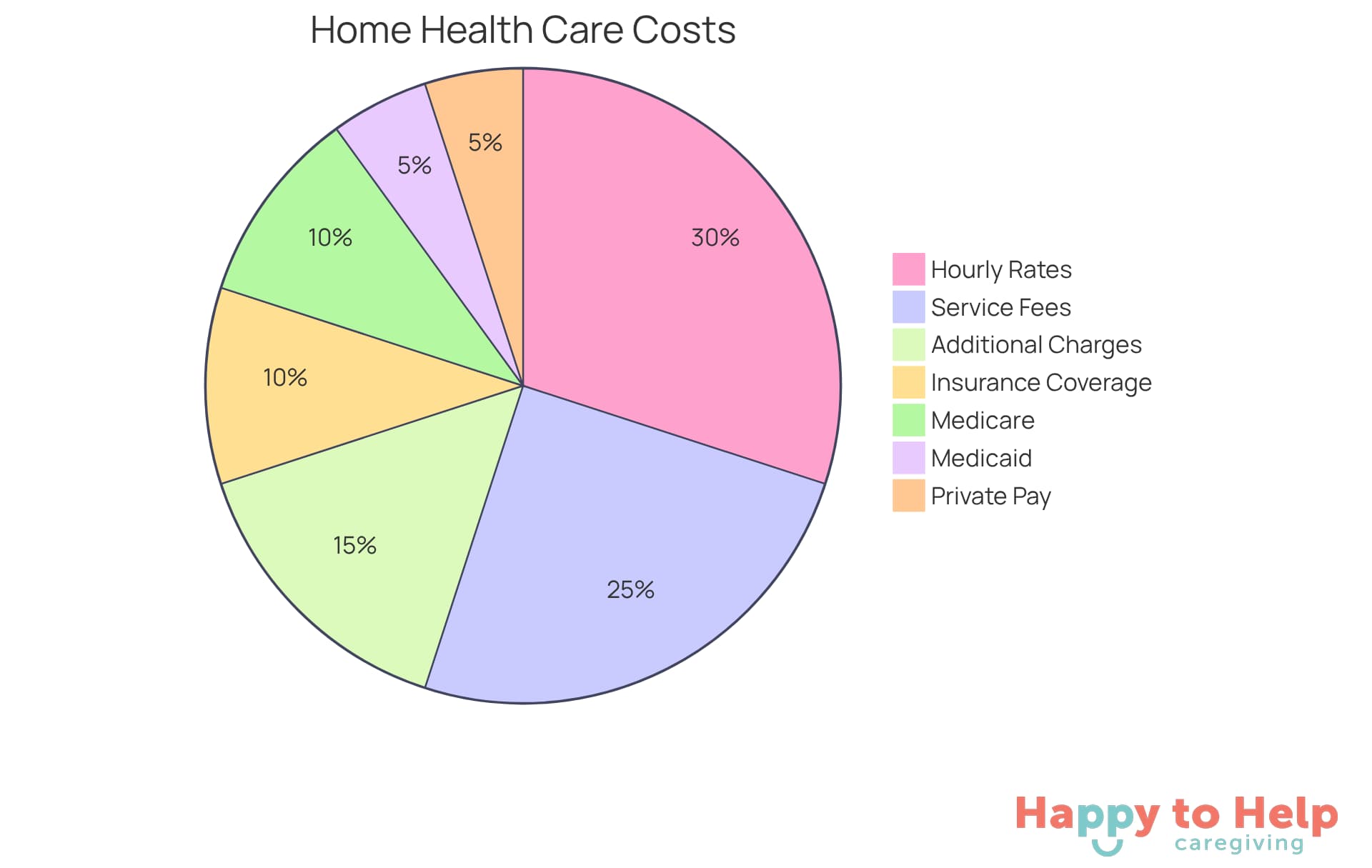
When exploring options for the best home health agency near me, caregivers encounter a significant challenge: understanding the costs associated with the support they need. It's essential to ask for detailed information about pricing from the best home health agency near me. Request a comprehensive outline that includes:
- Hourly rates
- Service fees
- Any additional charges for specialized assistance
The national median cost for in-home assistance is about $33 per hour, with state prices ranging from $24 to $43 per hour. This variability highlights the importance of thorough research. For instance, a typical care plan of 44 hours a week can amount to approximately $6,292 per month, but actual costs can differ greatly depending on location and specific care requirements.
To alleviate financial burdens, inquire about payment options such as:
- Insurance coverage
- Medicare
- Medicaid
- Private pay
Many families discover that Medicare and Medicaid can cover medically necessary services if prescribed by a physician. This can significantly ease financial stress. Additionally, discussing financial aid options with organizations can provide insights into available resources. While hiring a private caregiver might seem more affordable, agencies offer substantial benefits, including background checks, training, and reliability.
Understanding these financial factors is crucial for making informed decisions that align with your budget. Transparent pricing models are vital; the best home health agency near me clearly outlines its costs and payment options, fostering trust and enabling better decision-making. By proactively asking questions, caregivers can navigate the complexities of home health care costs and secure the best support for their loved ones.
Communicate with Agencies and Ask Questions
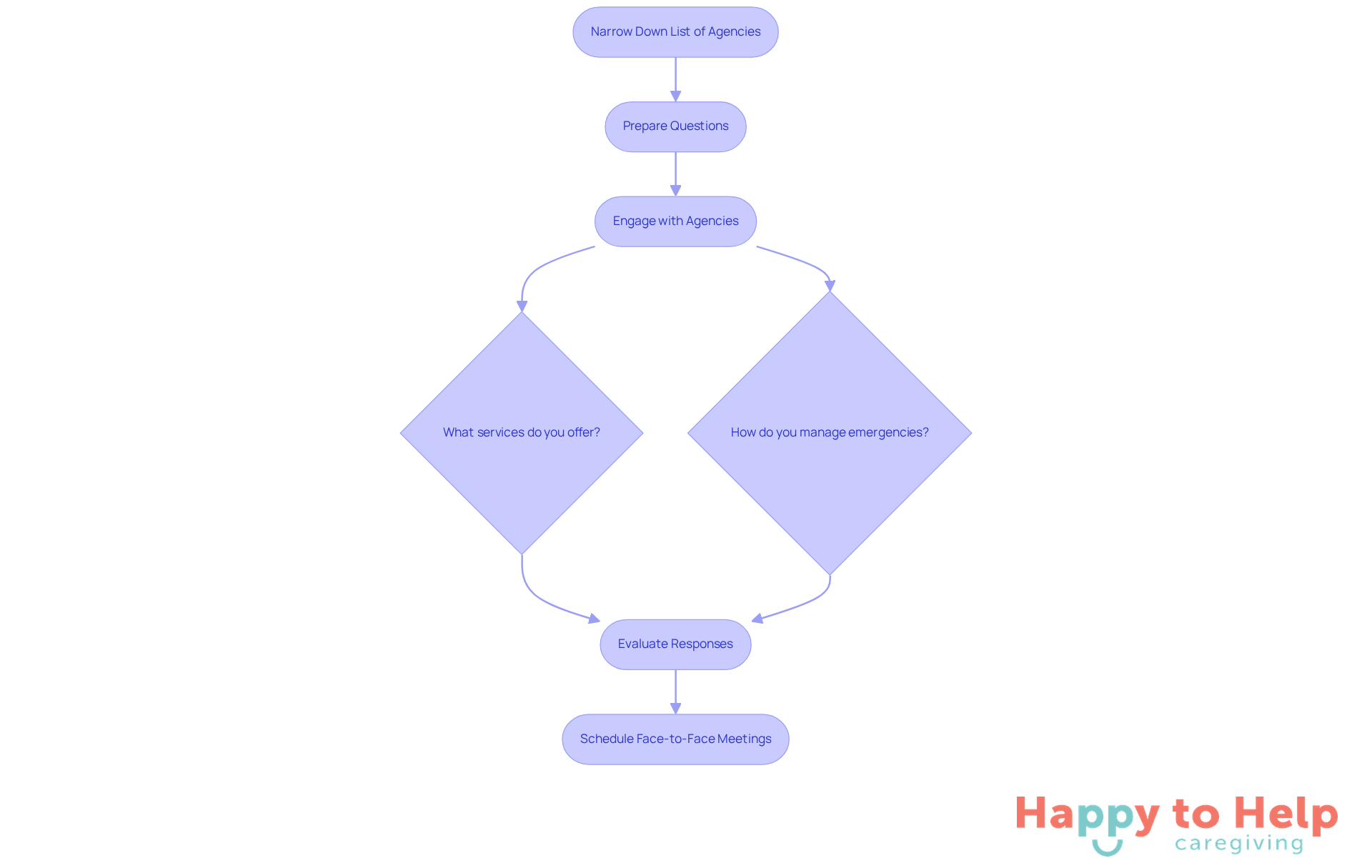
After narrowing down your list of potential home health agencies, the next step is to engage directly with the best home health agency near me. This can be a challenging process, as selecting the best home health agency near me is essential for ensuring quality care for your loved one. To help guide your conversations, prepare a comprehensive list of questions:
- What specific services do you offer?
- How do you manage emergencies and ensure timely responses?
- What is your caregiver-to-client ratio?
- What measures do you have in place to maintain caregiver quality?
As you engage with each organization, pay close attention to their response times and the thoroughness of their answers. Timely and comprehensive replies can indicate the organization's overall quality. For instance, clients have reported delays in starting care, with some waiting over a month for a caregiver after state approval.
Whenever possible, organize face-to-face meetings to gain a deeper understanding of the organization’s environment and approach to care. This direct interaction can provide valuable insights into how they prioritize communication and responsiveness, which are crucial for ensuring your loved one's needs are met effectively.
Remember, as Jim Rohn said, "One person caring about another represents life's most significant value," so it's essential to choose an agency that reflects this value in their service.
Your Path Forward
Finding the right home health agency can be a daunting task for caregivers. The challenge lies in understanding the specific care needs of loved ones, researching local options, and evaluating qualifications and costs. This process is crucial, as it directly impacts the well-being of those who require assistance.
Caregivers often face the stress of ensuring that their family members receive quality care. Without proper guidance, they may struggle to navigate the myriad of choices available. This uncertainty can lead to decisions that do not fully align with the care requirements or personal preferences of their loved ones.
To address these challenges, caregivers should take a systematic approach:
- Assess Care Needs: Understand the specific requirements of the individual needing care.
- Research Local Options: Look into various agencies and their services.
- Evaluate Qualifications: Check the credentials and experience of the staff.
- Understand Costs: Be aware of payment options and any hidden fees.
- Communicate Effectively: Engage in open discussions with agencies to clarify expectations.
By following these steps, caregivers can make informed choices that not only meet the required standards but also foster a compassionate and supportive environment for patients. The journey to find the best home health agency involves careful consideration and proactive engagement.
Ultimately, the effort invested in this process is invaluable. By asking the right questions and thoroughly vetting potential providers, caregivers can secure quality care that enhances the quality of life for their loved ones. This commitment reflects a deep dedication to the health and happiness of those who matter most.
https://iframe.tely.ai/cta/eyJhcnRpY2xlX2lkIjogIjY5MjEwYWMwYTE0NTEzNzg0OGJmYTRjZSIsICJjb21wYW55X2lkIjogIjY4ZWU1ZGNhNzMxNzYyNTU3ZjNjOTVjMSIsICJpbmRleCI6IG51bGwsICJ0eXBlIjogImFydGljbGUifQ==Frequently Asked Questions
How can I assess the care needs and preferences of my loved one?
To assess care needs, consider how often assistance will be required, any existing medical conditions, and personal preferences regarding caregiver characteristics, such as gender and language. Involving your loved one in this discussion is important to prioritize their comfort and preferences.
Why is it important to involve my loved one in care decisions?
Involving your loved one in care decisions ensures their comfort and preferences are prioritized. Research indicates that families who engage their loved ones in these discussions report higher satisfaction with the services received.
What should I do to organize care needs effectively?
Create a checklist to document the care needs and preferences of your loved one. This checklist will serve as a reference when assessing potential home health agencies and help clarify what is needed.
How can I research local home health agencies?
Start by looking online for licensed home health agencies, using resources like Medicare.gov and local health department websites. Additionally, ask for recommendations from healthcare providers, friends, or family members who have experience with home health care.
What should I consider when selecting a home health agency?
Ensure that the agency is licensed and meets your specific needs. Compile a list of at least five organizations to assess further, as this proactive approach helps gather essential information and empowers informed decision-making.
What are the risks of choosing the wrong home health agency?
Selecting the wrong provider can lead to inadequate care and increased stress for both the caregiver and the patient, making it crucial to choose a reputable and suitable agency.
List of Sources
- Assess Your Care Needs and Preferences
- 52 Eye-Opening Home Health Statistics: Insights for 2025 (https://boosthomehealth.com/home-health-statistics)
- Caregiving in the US 2025 (https://aarp.org/pri/topics/ltss/family-caregiving/caregiving-in-the-us-2025)
- Caregiver Statistics: Demographics (https://caregiver.org/resource/caregiver-statistics-demographics)
- Number of Family Caregivers Supporting Older Adults Increased Nearly One-Third Between 2011 and 2022 | Johns Hopkins Bloomberg School of Public Health (https://publichealth.jhu.edu/2025/number-of-family-caregivers-supporting-older-adults-increased-nearly-one-third-between-2011-and-2022)
- 25+ Inspirational Quotes for Caregivers (https://caringseniorservice.com/blog/quotes-for-caregiver-inspiration)
- Research Local Home Health Agencies
- Home Care Statistics In 2025: Key Insights In Home Care (https://sagapixel.com/marketing/home-care-statistics)
- Home Healthcare Statistics and Facts (2025) (https://media.market.us/home-healthcare-statistics)
- 52 Eye-Opening Home Health Statistics: Insights for 2025 (https://boosthomehealth.com/home-health-statistics)
- FastStats (https://cdc.gov/nchs/fastats/home-health-care.htm)
- Top 10 Home Care Agencies in Los Angeles, CA | Affordable Pricing (https://care.com/home-care-agencies/los-angeles-ca)
- Evaluate Qualifications and Caregiver Experience
- Home Health Aide (https://cdph.ca.gov/Programs/CHCQ/LCP/Pages/hha.aspx)
- New Research Highlights Critical Role of Training in Caregiver Retention (https://careacademy.com/blog/role-of-training-in-caregiver-retention)
- Research: Caregiver Training Improves Skills & Knowledge of Alzheimer's, Study Shows (https://advancecaregivers.org/caregiver-training-improves-skills-knowledge-of-alzheimers-study-shows)
- 2025 Home Care Statistics: Trends & Insights To Know (https://premierhcinc.com/blog/home-care-statistics)
- Caregiver Statistics: Demographics (https://caregiver.org/resource/caregiver-statistics-demographics)
- Understand Costs and Payment Options
- The Cost of Dignity: A Guide to In-Home Care Costs and Happier Aging in 2025 | Nurse Next Door (https://nursenextdoor.com/blog/how-much-does-senior-home-care-cost)
- 52 Eye-Opening Home Health Statistics: Insights for 2025 (https://boosthomehealth.com/home-health-statistics)
- Home Care Costs in 2025: A State-by-State Guide (https://aplaceformom.com/caregiver-resources/articles/in-home-care-costs)
- Understanding the Cost and Value of Home Care in 2025 (https://assistinghands.com/135/texas/nesanantonio/blog/understanding-the-cost-and-value-of-home-care-in-2025)
- Communicate with Agencies and Ask Questions
- 27 Eye-Opening Quotes from Home Care Clients (https://activatedinsights.com/articles/eye-opening-quotes-from-home-care-clients)
- 11 Questions to Ask a Home Healthcare Agency (https://maximhealthcare.com/healthcare-blog/questions-to-ask-a-home-healthcare-agency)
- The World's Best Caregiving Quotes to Inspire Your Career | Visiting Angels Prescott (https://visitingangels.com/prescott/articles/the-worlds-best-caregiving-quotes-to-inspire-your-career/19696)
- 27 Inspirational Quotes for Caregivers (https://ultimatecareny.com/resources/27-quotes-for-caregivers)