
For families in our service areas
For families in our service areas, this guide explains in-home care and how non-medical in-home caregiving can support care planning in East Idaho, Treasure Valley & Magic Valley, Northern Wasatch, North Central West Virginia, and Northeast Ohio.
Quick Guide to Find the Best In-Home Care
Finding the best in-home care for seniors begins with a deep understanding of their unique needs. It’s essential to recognize the emotional challenges faced by both seniors and their caregivers. Researching caregiving options can feel overwhelming, but it’s a crucial step toward ensuring a nurturing environment that enhances quality of life.
Assessing individual care needs is vital. It’s not just about the services provided; it’s about ensuring that these services align with the senior’s preferences and promote their overall well-being. Interviewing potential caregivers is an opportunity to gauge their empathy and dedication—qualities that are essential in this journey. Finalizing arrangements can bring a sense of relief, knowing that the right care is in place.
Throughout this process, it’s important to acknowledge the feelings of stress and burnout that caregivers may experience. By selecting appropriate services, caregivers can find the support they need, allowing them to focus on what truly matters—providing compassionate care to their loved ones. Remember, you are not alone in this journey; there is help available to ease your burdens and enhance your loved one’s life.
Why Find the Best In-Home Care Matters
Navigating the complex landscape of in-home care for seniors can be daunting for families seeking the best support for their loved ones. It’s understandable to feel overwhelmed. With so many options available, grasping the nuances of various services—from companionship to post-hospital recovery—can significantly impact the well-being of elderly individuals. As families embark on this journey, they often grapple with the question: how can they ensure they are selecting the most suitable care that not only meets the physical needs of seniors but also enriches their emotional and social lives?
This guide aims to provide a comprehensive roadmap to finding the best in-home care, empowering families to make informed decisions that enhance their loved ones' quality of life. You are not alone in this process; many families share similar concerns, and there are compassionate solutions available. Together, we can navigate this journey with confidence and care.
Understand In-Home Care Options
In-home assistance provides the best in-home care for seniors by offering a variety of services tailored to meet the unique needs of elderly individuals, ensuring they receive the support necessary to thrive in their own homes. It’s essential to understand these options, as they can significantly impact both the elderly and their caregivers.
-
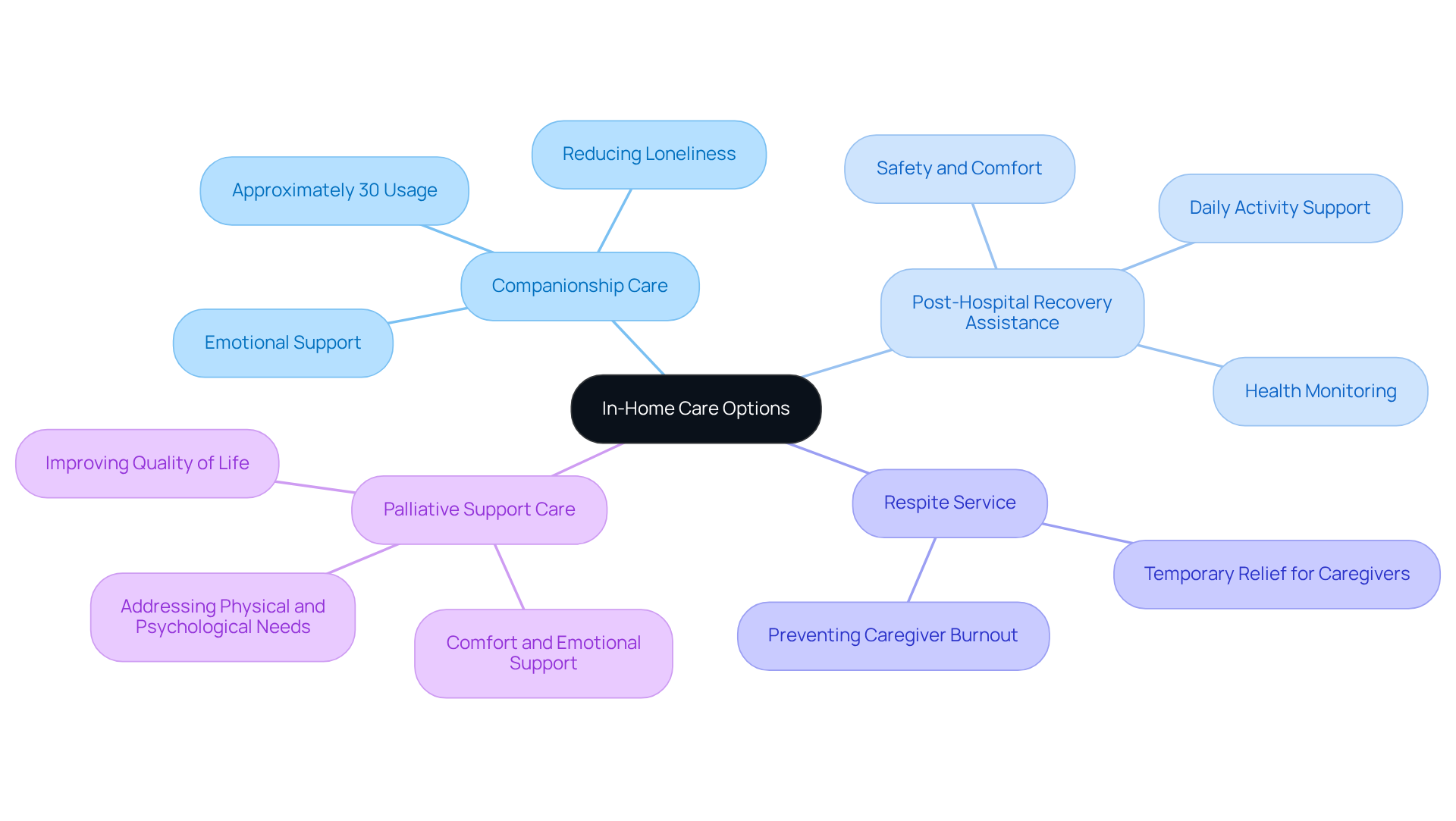
Companionship Care offers crucial emotional support and social interaction, which can greatly alleviate feelings of loneliness and isolation. Research indicates that consistent companionship can enhance mental well-being and cognitive abilities, making it a vital aspect of elderly support. Approximately 30% of older adults utilize companionship support services, underscoring its growing importance in maintaining quality of life. Regular visits from support providers not only uplift a senior's spirits but also foster a sense of connection through friendly interaction and shared activities, as highlighted in various case studies.
-
Post-Hospital Recovery Assistance is tailored for those transitioning from hospital to home, ensuring safety and comfort during this critical recovery period. Caregivers provide help with daily activities and monitor health, playing a crucial role in preventing complications and promoting healing.
-
Respite Service offers temporary relief for primary caregivers, allowing them to recharge while ensuring their loved ones receive dedicated attention. This type of care is essential in preventing caregiver burnout, which can adversely affect the quality of care provided.
-
Palliative Support Care is focused on improving the quality of life for individuals facing serious illnesses, prioritizing comfort and emotional support. It addresses both physical and psychological needs, ensuring clients feel valued and cared for.
Understanding these options empowers families to select the best in-home care for seniors that aligns with their loved ones' needs and preferences, fostering a supportive environment that encourages independence and well-being.
Assess Individual Care Needs
To effectively assess individual care needs, it’s important to approach the process with empathy and understanding. Here are some thoughtful steps to consider:
-
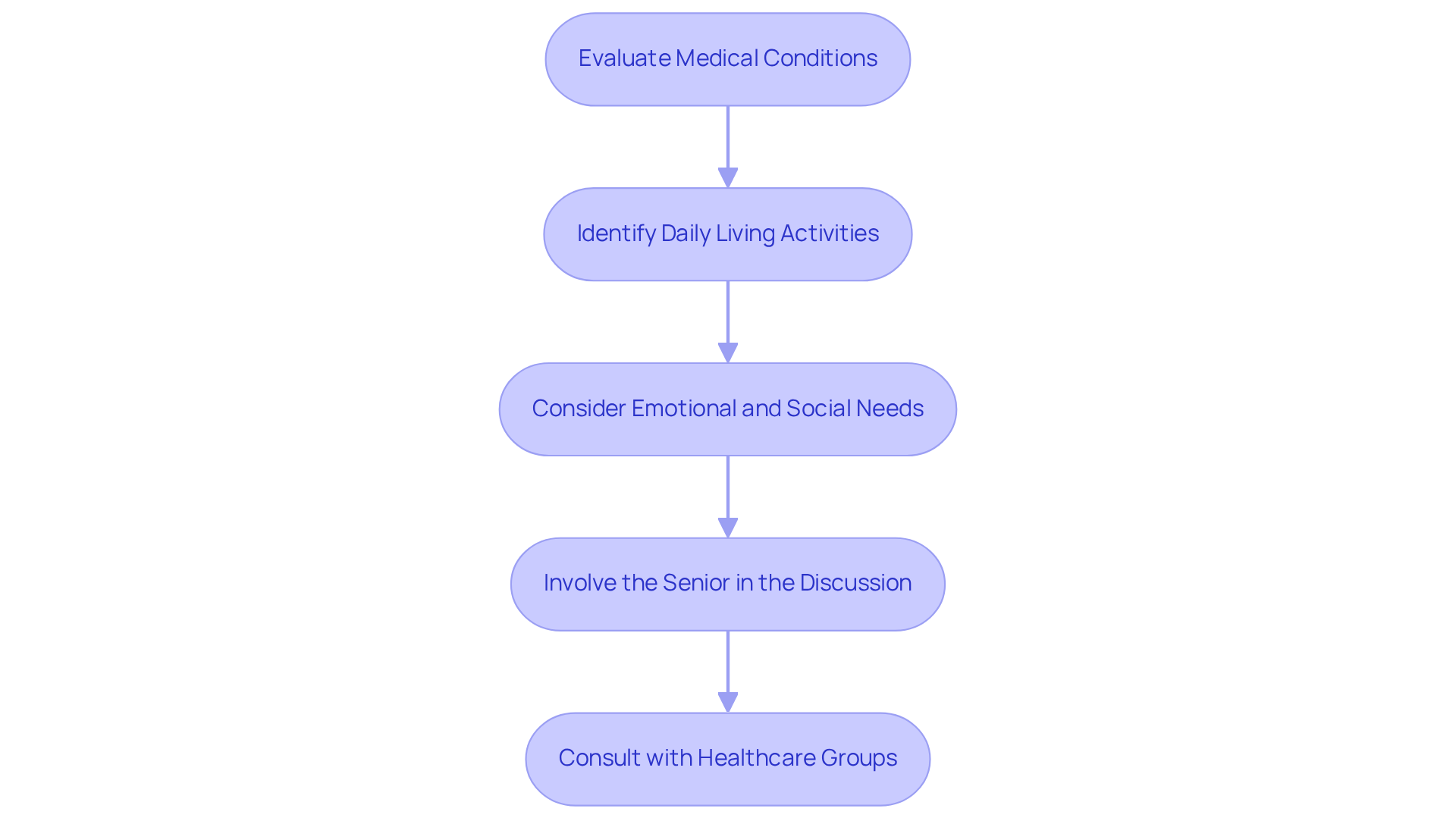
Evaluate Medical Conditions: Begin by compiling a comprehensive list of any chronic illnesses, disabilities, or recent surgeries that may require specialized care. This step is vital, as older adults with chronic conditions like Parkinson’s or dementia often need more intensive support.
-
Identify Daily Living Activities: Take a moment to assess which daily tasks—such as bathing, dressing, and meal preparation—the elderly individual can manage independently and which ones may require assistance. Difficulty in handling these Activities of Daily Living (ADLs) and Instrumental Activities of Daily Living (IADLs) can indicate a need for additional support.
-
Consider Emotional and Social Needs: Reflect on the individual’s emotional well-being and social interactions. Signs of emotional distress, like withdrawal from social activities or mood fluctuations, may suggest feelings of isolation. Companionship can be crucial for their overall health and happiness.
-
Involve the Senior in the Discussion: Engage the senior in conversations about their preferences and concerns regarding support. Their insights are essential in developing a support plan that honors their desires and encourages their independence.
-
Consult with Healthcare Groups: Collaborate with medical experts and home assistance organizations to gather insights and suggestions that can guide your evaluation process. This ensures a thorough understanding of the senior’s unique requirements.
This comprehensive evaluation will illuminate the support needed, guiding the selection of the best in-home care for seniors tailored to the individual’s distinct needs. Remember, you are not alone in this journey; compassionate care is available to help navigate these challenges.
Research and Evaluate Caregiving Agencies
When researching caregiving agencies, it’s important to approach the process with care and compassion. Here are some steps to guide you:
-
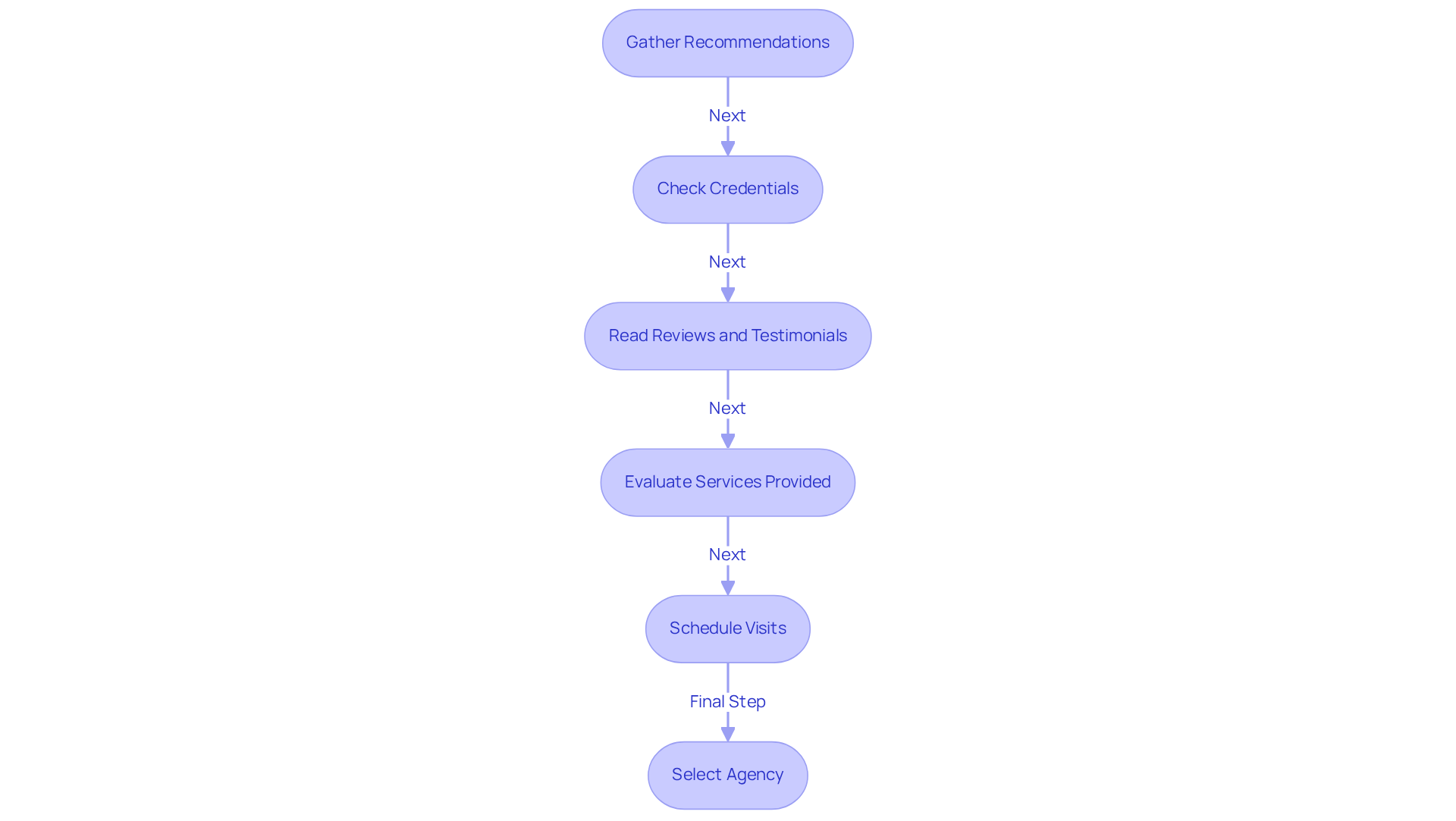
Gather Recommendations: Reach out to friends, family, or healthcare professionals. Their personal experiences with specific agencies can provide you with valuable insights into the quality of service. Remember, personal suggestions often come from a place of genuine concern and can help you feel more confident in your choices.
-
Check Credentials: It’s crucial to ensure that the agency is licensed and insured, with certified caregivers. Look for accreditations from recognized organizations, as these reflect a commitment to quality standards. Did you know that approximately 80% of caregiving agencies in the U.S. are licensed? This statistic highlights the importance of verifying credentials to ensure your loved one receives the best care.
-
Read Reviews and Testimonials: Take the time to investigate online reviews and testimonials from other families. This can help you assess the agency's reputation. In 2025, several top home support agencies were recognized based on feedback from residents and families, underscoring the significance of community experiences. "Reading evaluations can offer insights into the agency's reliability and the standard of assistance provided," says Liz Pearce, director of senior living at U.S. News.
-
Evaluate Services Provided: Ensure the agency offers the specific services you need, whether it’s companionship, respite assistance, or specialized medical support. This step is essential to guarantee that the agency can meet the unique requirements of your loved one.
-
Schedule Visits: Arrange visits to potential agencies to meet the staff and observe their operations. This firsthand experience can provide valuable insights into their care approach and help you gauge how well they align with your family’s expectations.
By conducting thorough research, you can confidently select the agency that provides the best in-home care for seniors and aligns with your needs and expectations. This thoughtful approach ensures a supportive environment for your loved ones, allowing you to feel at ease knowing they are in caring hands.
Interview Potential Caregivers
When interviewing potential caregivers, it's important to approach the process with care and compassion. Here are some steps to ensure a successful selection:
-
Prepare Questions: Create a thoughtful list of questions that explore their experience, training, and caregiving philosophy. Consider asking:
- What experience do you have with seniors?
- How do you handle emergencies? Can you share examples of unexpected situations you've managed?
- Can you provide references from previous clients?
- Have background checks and drug screenings been completed?
-
Assess Compatibility: Pay attention to how the caregiver interacts with the senior. Effective communication, patience, and understanding are essential traits. The bond between caregiver and senior can significantly impact the quality of care, as trust and rapport are vital for a successful caregiving connection.
-
Discuss Availability and Flexibility: Ensure that the caregiver's schedule aligns with the family's needs, including any potential changes in support requirements. Adaptability is key, especially as those needs may evolve over time.
-
Evaluate Communication Skills: Strong communication is crucial in caregiving. It's important that the caregiver can clearly articulate instructions and maintain open lines of communication with both the senior and family members. Discuss preferred communication methods regarding the client's condition and care, as this is particularly important for managing emergencies and coordinating care effectively.
-
Arrange an In-Person or Virtual Meeting: If possible, schedule a meeting with the caregiver before making a decision. This gives families the opportunity to assess compatibility and comfort in a more personal setting.
Thorough interviews will help families find a caregiver who is not only qualified but also a good match for their loved one, ultimately enhancing the caregiving experience.

Finalize Care Arrangements and Contracts
To finalize care arrangements and contracts effectively, it’s important to approach this process with compassion and understanding. Here are some steps to guide you:
-
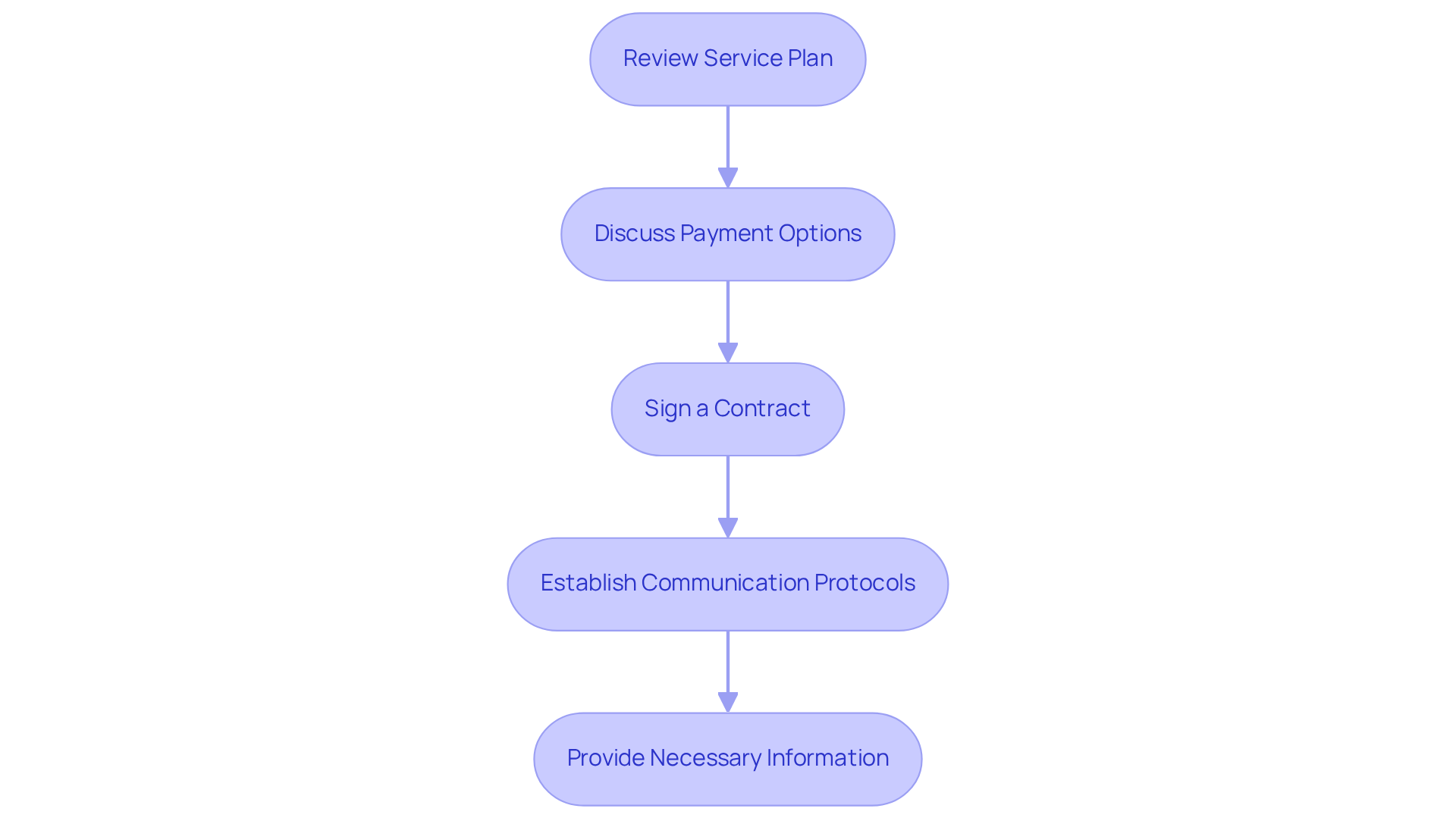
Review Service Plan: Begin by confirming that the service plan accurately reflects the needs and preferences discussed during the assessment and interviews. This step is crucial, as it ensures that the services provided align with the senior's specific requirements. According to the 2020 National Post-acute and Long-term Care Study, effective care arrangements significantly improve patient outcomes.
-
Discuss Payment Options: Clarify the payment structure, including hourly rates, payment methods, and any additional fees. Understanding these details upfront can prevent misunderstandings later. Families often prefer flexible payment options, which can enhance satisfaction with caregiving services.
-
Sign a Contract: It’s essential to draft and sign a contract that outlines the services to be provided, the responsibilities of the provider, and the terms of termination. This document serves to protect both the family and the support provider, establishing clear expectations. Healthcare experts note that having a formal agreement can prevent disputes and ensure accountability.
-
Establish Communication Protocols: Arrange for frequent check-ins between the family and support provider to discuss the senior's progress and any changes in assistance requirements. Consistent communication nurtures a collaborative atmosphere and guarantees that assistance remains responsive. As one supporter highlighted, "Consistent communication is essential for adjusting assistance to address changing requirements."
-
Provide Necessary Information: Ensure that the individual providing care has all relevant information about the senior's medical history, preferences, and emergency contacts. This knowledge is vital for providing personalized and effective support. A case study from Happy to Help Caregiving demonstrates that caregivers who are well-informed about their clients can significantly improve the quality of assistance offered.
By following these steps, families can establish a solid foundation for a successful caregiving relationship that leads to the best in-home care for seniors. This ensures that seniors receive the best in-home care for seniors, tailored to their individual needs, fostering peace of mind for everyone involved.
Taking the Next Steps
Selecting the best in-home care for seniors is a vital process that ensures elderly individuals receive the support they need to thrive in their own homes. It’s essential to understand the various care options available and approach the assessment and selection thoughtfully. This way, families can create a nurturing environment that promotes independence and well-being.
This guide has explored essential steps, including:
- Understanding in-home care options
- Assessing individual care needs
- Researching caregiving agencies
- Interviewing potential caregivers
- Finalizing care arrangements
Each of these steps plays a crucial role in ensuring that the chosen care aligns with the unique requirements of the senior, fostering a supportive and effective caregiving relationship.
Ultimately, the journey to find the right in-home care is not just about meeting physical needs. It’s also about enhancing the emotional and social well-being of seniors. By investing time and effort into this process, families can ensure their loved ones receive compassionate, personalized care that enriches their lives. Taking these steps today can lead to a brighter, more fulfilling tomorrow for seniors and their families alike.
https://iframe.tely.ai/cta/eyJhcnRpY2xlX2lkIjogIjY4ZmQ2NTBjYmVkNmJmMGZmM2MwMWJjOSIsICJjb21wYW55X2lkIjogIjY4ZWU1ZGNhNzMxNzYyNTU3ZjNjOTVjMSIsICJpbmRleCI6IG51bGwsICJ0eXBlIjogImFydGljbGUifQ==Frequently Asked Questions
What are in-home care options for seniors?
In-home care options for seniors include companionship care, post-hospital recovery assistance, respite service, and palliative support care, each tailored to meet the unique needs of elderly individuals.
What is companionship care and why is it important?
Companionship care provides emotional support and social interaction to alleviate feelings of loneliness and isolation. It enhances mental well-being and cognitive abilities, making it essential for maintaining the quality of life for seniors.
What does post-hospital recovery assistance entail?
Post-hospital recovery assistance helps seniors transition from hospital to home by ensuring safety and comfort. Caregivers assist with daily activities and monitor health to prevent complications and promote healing.
What is the purpose of respite service?
Respite service offers temporary relief for primary caregivers, allowing them to recharge while ensuring that their loved ones receive dedicated attention, which helps to prevent caregiver burnout.
How does palliative support care benefit seniors?
Palliative support care focuses on improving the quality of life for individuals facing serious illnesses by prioritizing comfort and emotional support, addressing both physical and psychological needs.
How can families assess individual care needs for seniors?
Families can assess individual care needs by evaluating medical conditions, identifying daily living activities that require assistance, considering emotional and social needs, involving the senior in discussions, and consulting with healthcare groups.
Why is it important to involve the senior in care discussions?
Involving the senior in discussions about their preferences and concerns is crucial for developing a support plan that honors their desires and encourages their independence.
What steps can be taken to evaluate daily living activities for seniors?
Families should assess which daily tasks, such as bathing, dressing, and meal preparation, the elderly individual can manage independently and which ones may require assistance, to identify the need for additional support.