

For families in our service areas
For families in our service areas, this guide explains caregiving and how non-medical in-home caregiving can support care planning in East Idaho, Treasure Valley & Magic Valley, Northern Wasatch, North Central West Virginia, and Northeast Ohio.
Quick Guide to Hire a Care Taker at Home
This article outlines five essential steps for hiring a caregiver at home. It begins by emphasizing the importance of defining caregiver roles, which is crucial for understanding how best to support your loved one. Next, it addresses the need to assess care needs, ensuring that you have a clear picture of what assistance is required.
Finding and evaluating potential caregivers is the next step, where the focus shifts to identifying individuals who can provide the compassionate and tailored support your loved one deserves. Conducting effective interviews follows, allowing you to connect with caregivers on a personal level, ensuring they resonate with your family's needs.
Finally, establishing a care plan is vital. This step not only outlines the care provided but also reinforces the bond between the caregiver and the individual requiring care. Each step highlights the significance of understanding the specific needs of your loved one, ultimately facilitating a better match between caregiver and care recipient.
By following these steps, you can navigate the hiring process with confidence, knowing that your loved one will receive the compassionate care they need.
Why Hire a Care Taker at Home Matters
Navigating the journey of finding a caretaker for a loved one at home can be truly overwhelming. The myriad of responsibilities involved in caregiving often weighs heavily on families. It’s essential to recognize the vital roles a caregiver plays—from personal care and medication management to companionship and household support. Understanding this can empower families to make informed decisions. But how can one ensure that the caregiver chosen is not only qualified but also a perfect fit for their unique needs? This guide outlines five crucial steps to help families confidently select the right caregiver, fostering a supportive environment for their loved ones.
Define Caregiver Roles and Responsibilities
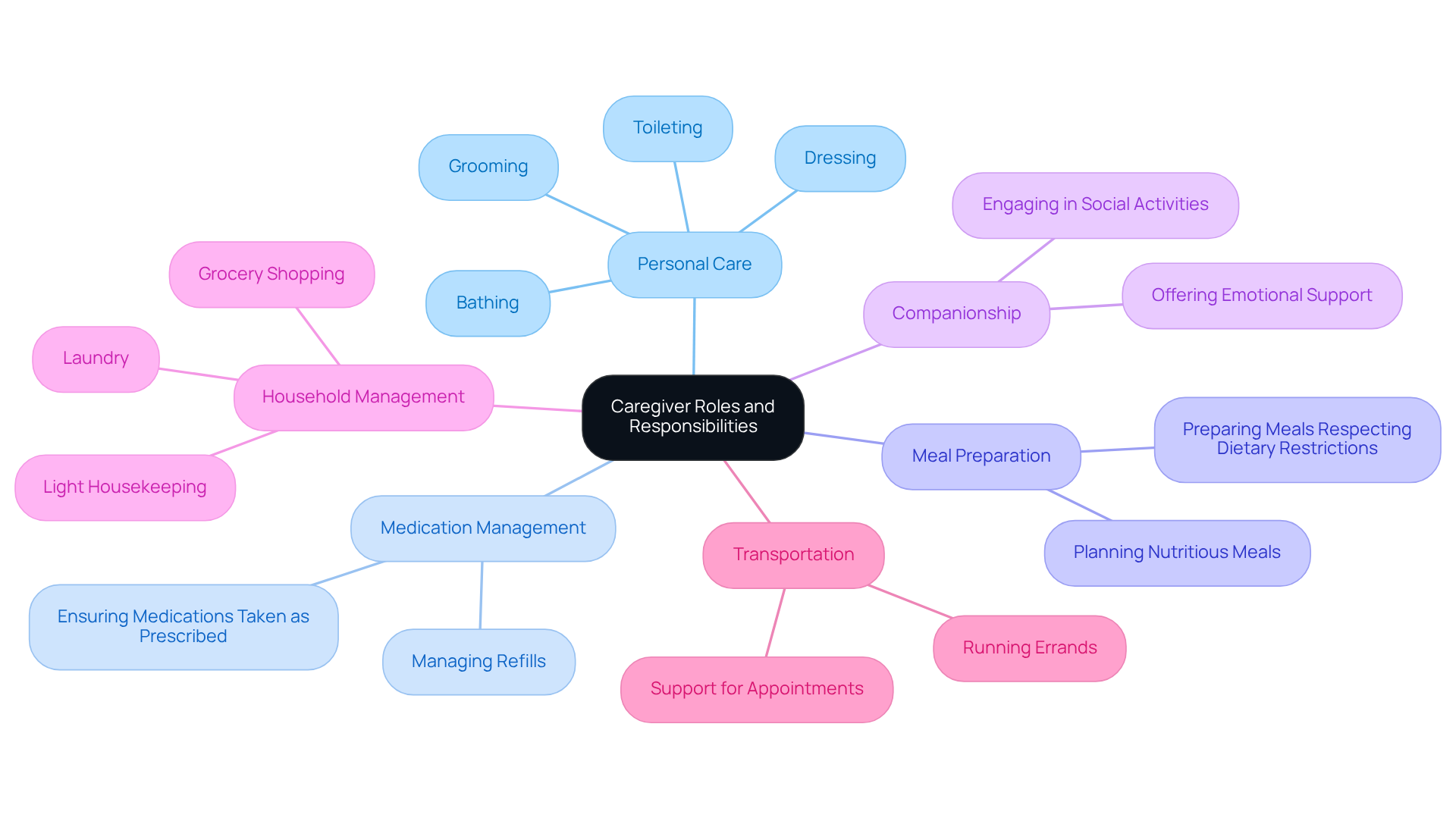
Care takers at home play a vital role in supporting individuals by adapting their tasks to meet specific needs. Their responsibilities often include:
- Personal Care: Helping with bathing, dressing, grooming, and toileting, ensuring dignity and comfort.
- Medication Management: Taking care to ensure medications are taken as prescribed, while managing refills with attention to detail.
- Meal Preparation: Planning and preparing nutritious meals that respect dietary restrictions, fostering health and well-being.
- Companionship: Offering emotional support and engaging in social activities, helping to alleviate feelings of isolation.
- Household Management: Assisting with light housekeeping, laundry, and grocery shopping, creating a nurturing environment.
- Transportation: Providing support for appointments and errands, ensuring individuals remain connected to their community.
By clearly defining these roles, families can better understand their loved ones' needs. This clarity helps in finding a care taker at home who can provide the compassionate support required. Remember, seeking help is a sign of strength, and the right caregiver can make a world of difference.
Assess Your Care Needs
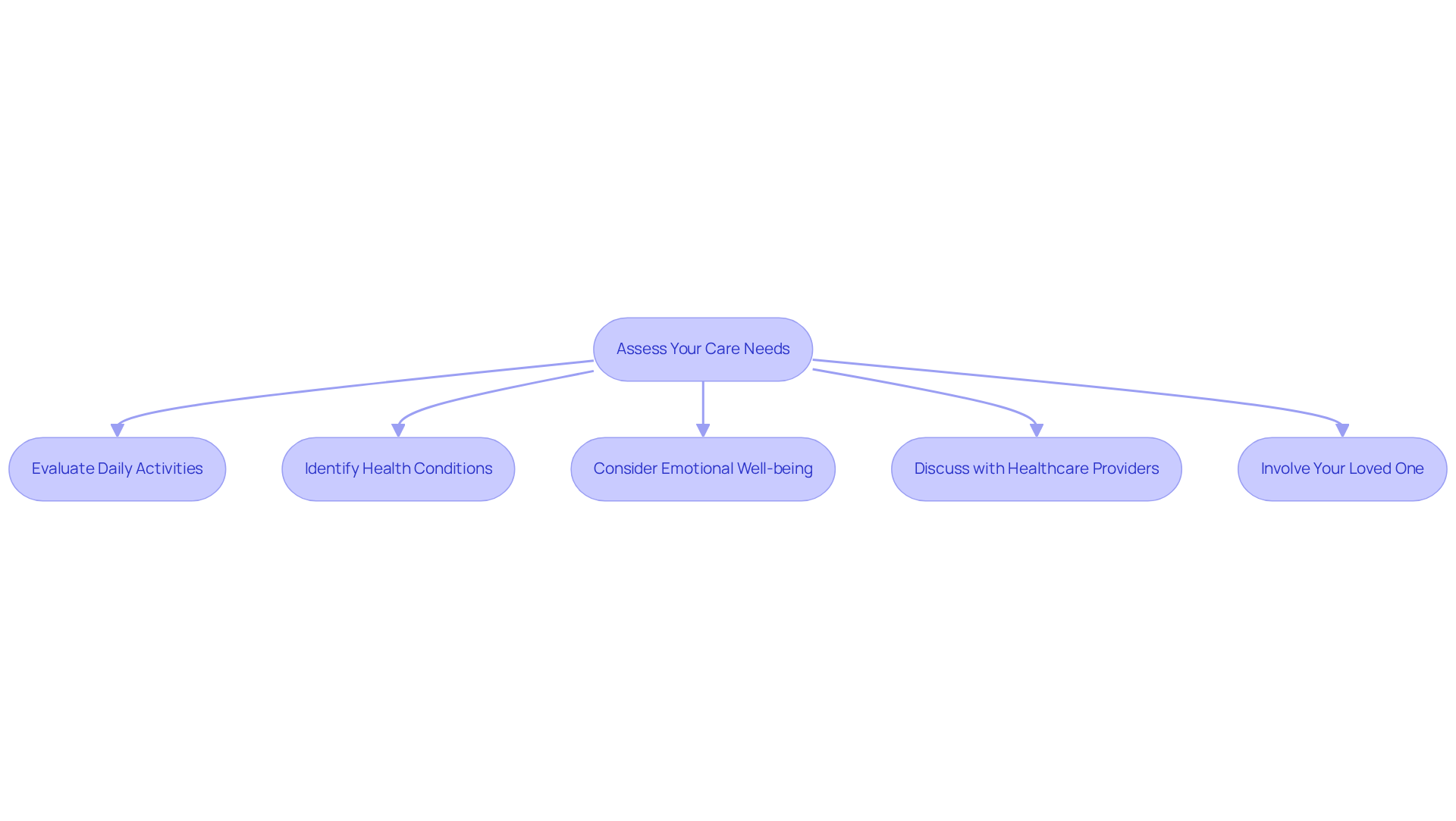
To effectively assess your loved one's care needs, it’s essential for a care taker at home to approach this with compassion and understanding. Here are some steps to consider:
-
Evaluate Daily Activities: Observe how well your loved one manages daily tasks such as bathing, dressing, eating, and mobility. This can reveal their level of independence and areas where they may need support.
-
Identify Health Conditions: Take note of any medical conditions that may necessitate specialized attention, such as dementia, diabetes, or mobility issues. Understanding these needs is crucial for providing appropriate care.
-
Consider Emotional Well-being: Assess their emotional state and social interactions. Are they feeling isolated or depressed? Recognizing these feelings can help in addressing their overall well-being.
-
Discuss with Healthcare Providers: Consult with doctors or specialists to gain insights into the level of assistance required. Their expertise can guide you in making informed decisions about care options.
-
Involve Your Loved One: Engage them in the conversation about their needs and preferences to ensure they feel comfortable with the care plan. Their input is invaluable and fosters a sense of control and dignity.
By thoroughly evaluating these areas, families can create a clear picture of the type of care taker at home needed, ensuring that the care plan is tailored to meet the physical and emotional needs of their loved one.
Find and Evaluate Potential Caregivers
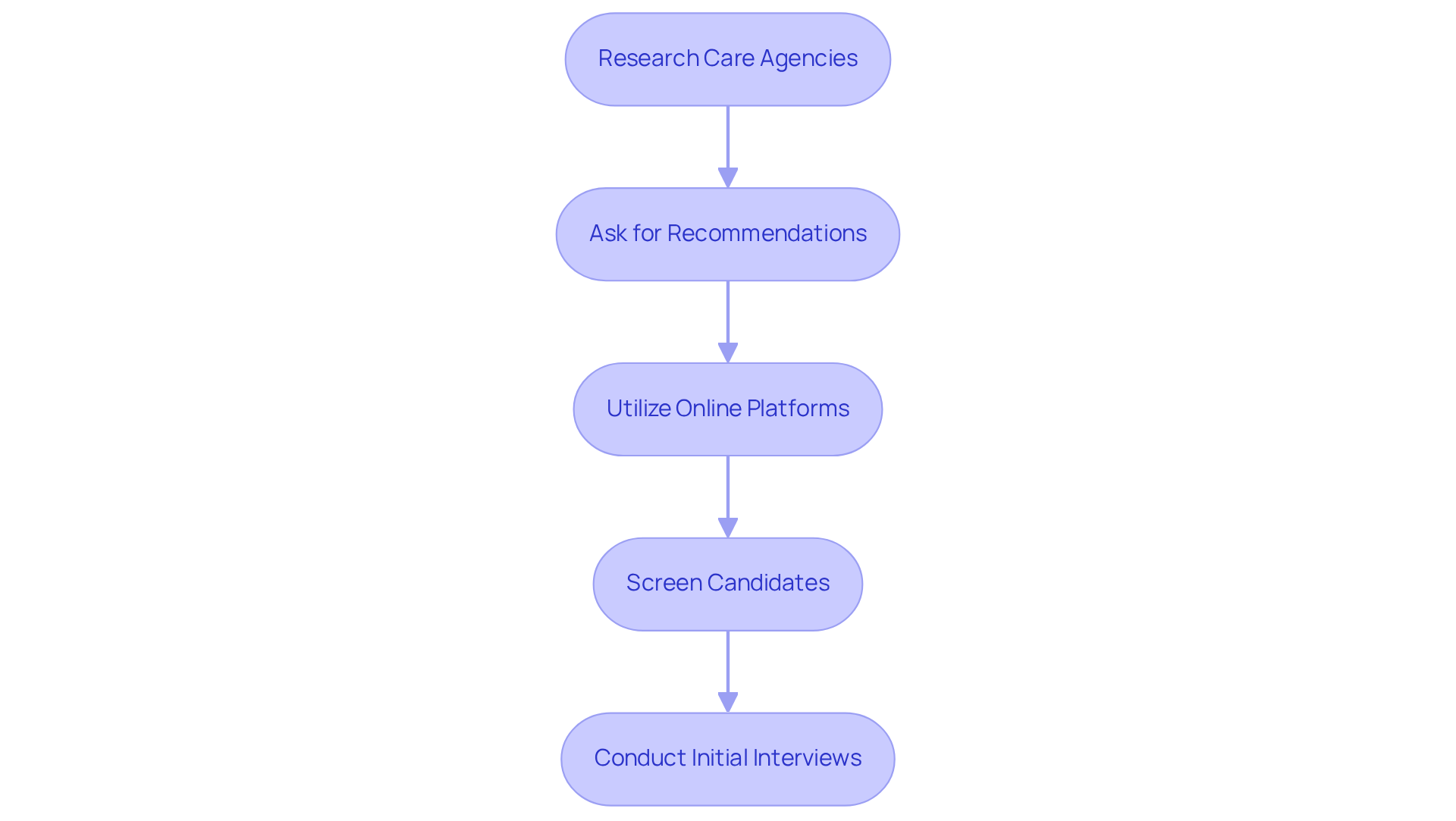
Finding the right care taker at home for your loved one can be a daunting task, filled with emotional challenges. It’s important for a care taker at home to approach this journey with care and compassion. Here are some steps to help you find and evaluate potential caregivers:
-
Research Care Agencies: Begin by looking for reputable home care agencies in your area. Take the time to read their reviews and ratings, as this can provide insight into the experiences of others.
-
Ask for Recommendations: Don’t hesitate to seek referrals from friends, family, or healthcare professionals who have experience with support providers. Their insights can be invaluable during this process.
-
Utilize Online Platforms: Websites such as Care.com or A Place for Mom can connect you with attendants and agencies that prioritize compassionate care.
-
Screen Candidates: Once you have a list of potential caregivers, screen candidates based on their experience, qualifications, and references. It’s important to look for background checks and certifications to ensure safety and reliability.
-
Conduct Initial Interviews: Narrow down your options and conduct initial interviews to gauge their compatibility with your loved one. This step is crucial in finding someone who truly understands and can address their specific needs.
By following these steps, you can feel reassured that you are considering qualified and reliable providers, such as a care taker at home, who can offer the compassionate care your loved one deserves.
Conduct Effective Interviews
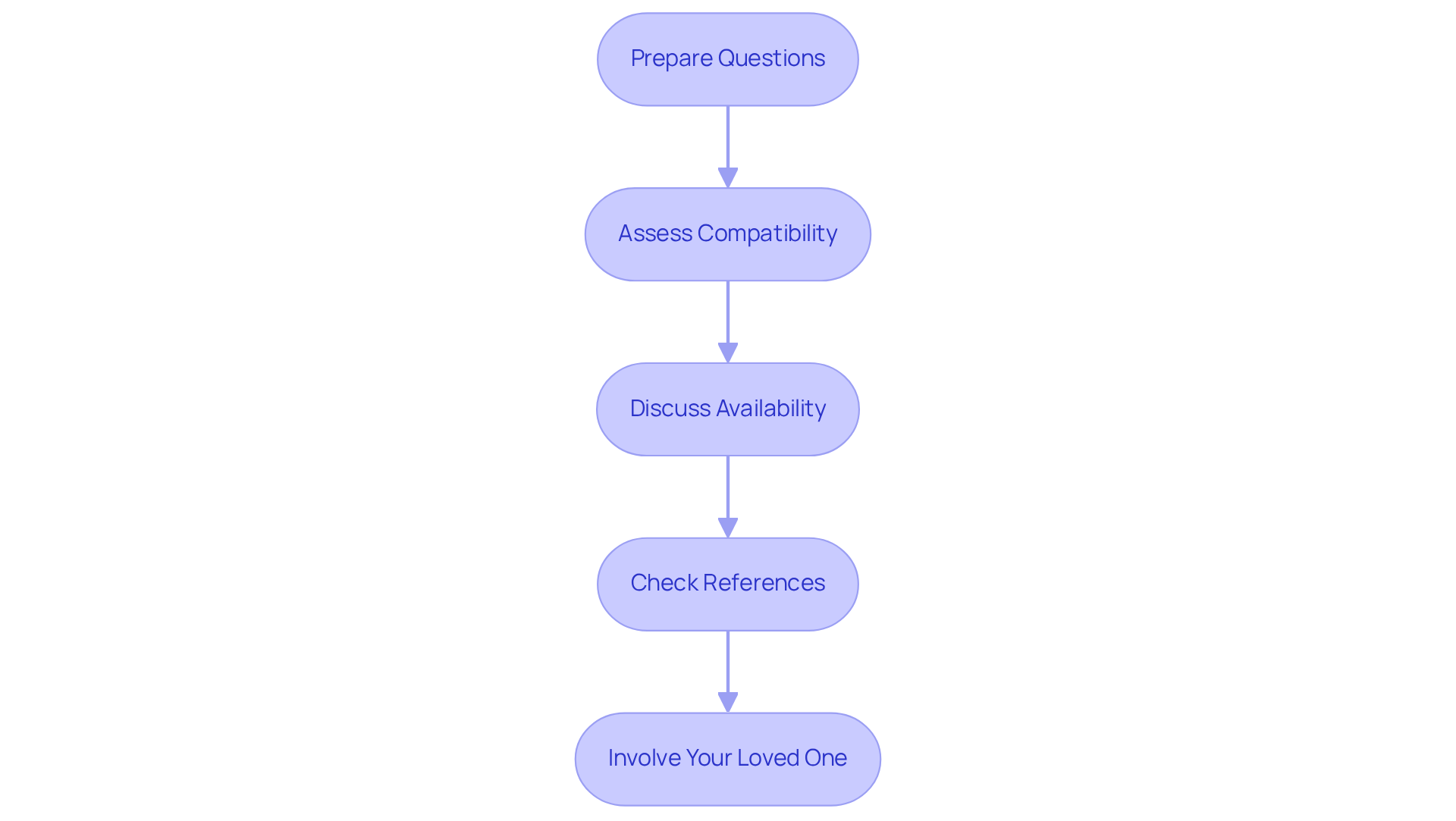
To conduct effective interviews with potential caregivers, it's essential to approach the process with care and understanding, especially when considering a care taker at home. Here are some nurturing tips to guide you:
-
Prepare Questions: Create a thoughtful list of questions that delve into their experience, caregiving approach, and how they manage challenging situations. For instance:
- What inspired you to become a caregiver?
- Can you share a challenging experience and how you navigated it?
- How do you prioritize the comfort and safety of your clients?
-
Assess Compatibility: Observe their communication style and demeanor closely. Do they exude empathy and patience?
-
Discuss Availability: It’s important to ensure their schedule aligns with your family member’s needs, including flexibility for unexpected situations.
-
Check References: After the interview, reach out to references to confirm their work history and reliability, which is vital for peace of mind.
-
Involve Your Loved One: If possible, include your loved one in the interview process. This allows you to see how they interact with the caregiver, fostering a sense of comfort and trust.
By following these steps, families can make informed and compassionate decisions about which care taker at home is the best fit for their loved ones.
Establish a Care Plan and Communication Strategy
To establish a care plan and communication strategy, consider these nurturing steps:
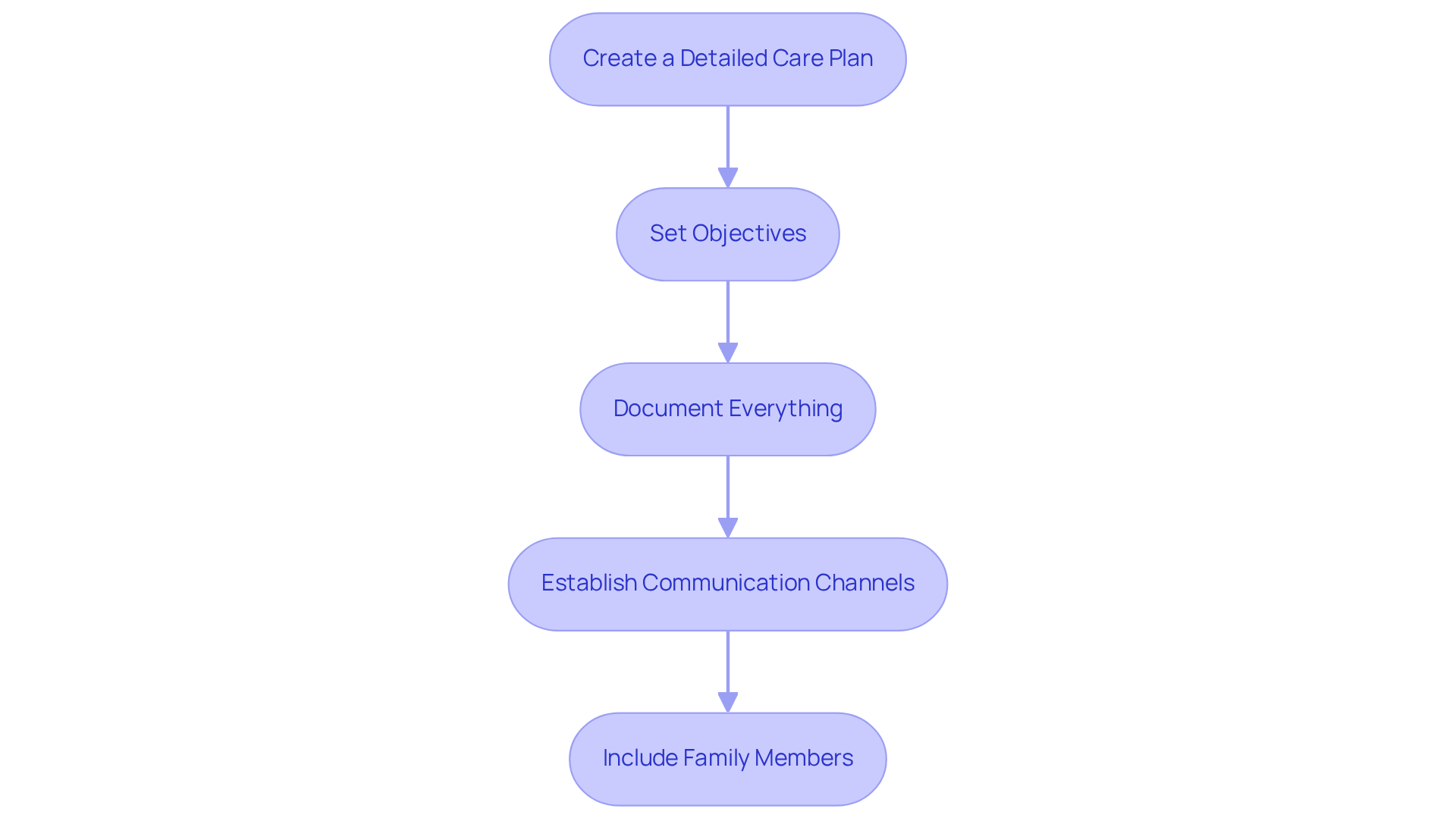
- Create a Detailed Care Plan: Begin by outlining the specific needs of your loved one. This includes their daily routines, medication schedules, and any special requirements they may have.
- Set Objectives: It’s important to define both short-term and long-term aims for their health and well-being, ensuring that every goal is aligned with their preferences.
- Document Everything: Keep a written account of the treatment plan and any changes that occur over time. This documentation is invaluable and can be shared with everyone involved in their care, fostering a sense of teamwork.
- Establish Communication Channels: Arrange for regular check-ins with the caregiver. These discussions can help address progress, concerns, and any necessary modifications to the assistance plan, ensuring everyone remains on the same page.
- Include Family Members: Make sure that all family members are informed and engaged in the support process. This collective approach not only strengthens the care provided but also nurtures a sense of unity and understanding within the family.
By implementing these compassionate strategies, families can ensure that the care taker at home creates a care environment that is consistent, effective, and truly reflective of their loved one’s needs.
Key Takeaways for Caregivers
Finding the right caretaker at home for loved ones is a journey filled with emotional challenges. It requires careful consideration and a compassionate approach. This guide has illuminated the essential steps to help families provide the best possible support for their cherished ones. By defining caregiver roles, assessing care needs, evaluating potential caregivers, conducting effective interviews, and establishing a comprehensive care plan, families can create a nurturing environment that fosters dignity and well-being.
Throughout this process, key insights emphasize the importance of understanding specific caregiving responsibilities. Recognizing emotional and physical needs, and engaging in open communication with both caregivers and family members, is vital. Each step builds towards a holistic approach that prioritizes the comfort and safety of those receiving care.
Ultimately, the journey to hiring a caregiver transcends meeting basic needs; it’s about enhancing quality of life and ensuring that loved ones feel valued and supported. By taking these thoughtful steps, families can find a caregiver who not only meets their loved one's practical requirements but also enriches their emotional and social well-being. Embrace this opportunity to create a meaningful support system that honors the unique needs of each individual, fostering a sense of connection and care that truly makes a difference.
https://iframe.tely.ai/cta/eyJhcnRpY2xlX2lkIjogIjY4ZmQ2NTBiYmVkNmJmMGZmM2MwMWJjNSIsICJjb21wYW55X2lkIjogIjY4ZWU1ZGNhNzMxNzYyNTU3ZjNjOTVjMSIsICJpbmRleCI6IG51bGwsICJ0eXBlIjogImFydGljbGUifQ==Frequently Asked Questions
What are the primary responsibilities of a caregiver at home?
The primary responsibilities of a caregiver at home include personal care (bathing, dressing, grooming, toileting), medication management, meal preparation, companionship, household management (light housekeeping, laundry, grocery shopping), and transportation for appointments and errands.
How can families assess their loved one's care needs?
Families can assess their loved one's care needs by evaluating daily activities, identifying health conditions, considering emotional well-being, discussing with healthcare providers, and involving the loved one in conversations about their needs and preferences.
Why is it important to define caregiver roles?
Defining caregiver roles is important because it helps families understand their loved ones' specific needs and find a caregiver who can provide the appropriate compassionate support required.
What should be considered when evaluating daily activities for care needs?
When evaluating daily activities, consider how well the individual manages tasks such as bathing, dressing, eating, and mobility to determine their level of independence and areas needing support.
How can emotional well-being impact the care needs of an individual?
Emotional well-being can impact care needs by revealing feelings of isolation or depression, which can indicate a need for companionship and social engagement to address their overall well-being.
Why is it beneficial to involve the loved one in discussions about their care?
Involving the loved one in discussions about their care is beneficial as it ensures they feel comfortable with the care plan and fosters a sense of control and dignity in their situation.