5 Steps to Hire a Caregiver Private Duty for Your Loved Ones

For families in our service areas
For families in our service areas, this guide explains caregiver support and how non-medical in-home caregiving can support care planning in East Idaho, Treasure Valley & Magic Valley, Northern Wasatch, North Central West Virginia, and Northeast Ohio.
The Importance of Hire a Caregiver Private Duty
Hiring a private duty caregiver for a loved one can be a daunting task. The rising demand for personalized care adds to the complexity of this decision. Families often struggle to understand the specific needs of their loved ones, from daily activities to emotional support. This lack of clarity can lead to stress and uncertainty in selecting the right caregiver.
So, how can families ensure they choose a caregiver who meets these needs while fostering a nurturing relationship? This guide provides a comprehensive approach to streamline the hiring process. It outlines essential steps to tackle the challenges associated with finding the right caregiver, ensuring that families can make informed decisions with confidence.
Understand Your Care Needs
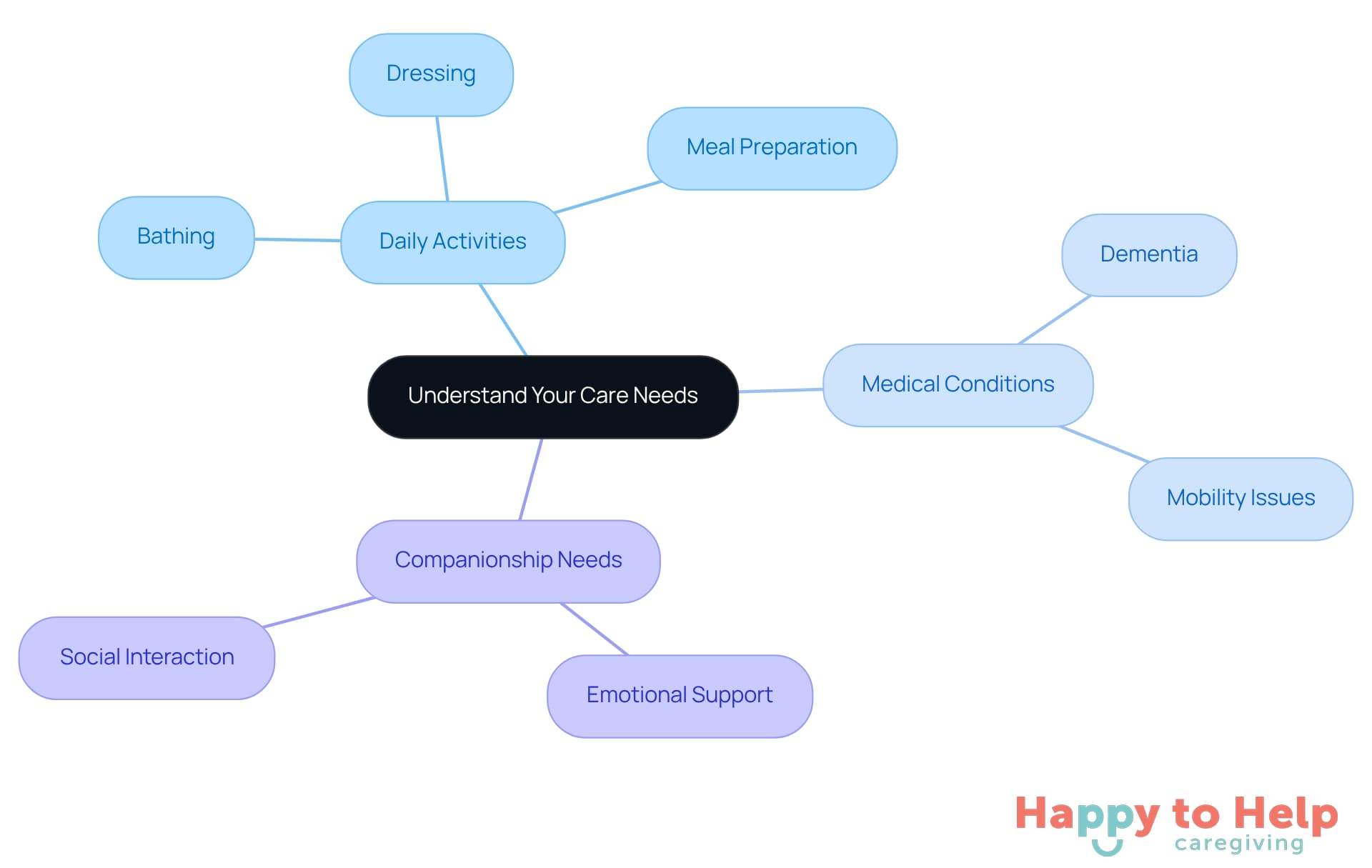
Assessing the specific needs of your loved one is crucial. Start by considering their physical, emotional, and social demands. Here are some key questions to guide you:
- What daily activities do they struggle with? Common tasks like bathing, dressing, and meal preparation can be challenging. Studies show that between 17.7% and 20.6% of females in the U.S. faced basic self-care disabilities from 2006 to 2018, indicating that many seniors need assistance with these activities.
- Are there medical conditions that require specialized care? Conditions such as dementia or mobility issues often necessitate tailored support to ensure safety and comfort.
- What level of companionship do they need? Emotional support is vital, as many older adults experience loneliness and isolation, which can affect their overall well-being. Notably, 63 million Americans are family caregivers, reflecting a 45% increase over the past decade, which underscores the growing demand for caregiver private duty services.
Engaging in open conversations with your loved one can provide valuable insights into their preferences and concerns. This dialogue fosters trust and helps identify specific areas where assistance is needed. Record these requirements clearly, as they will serve as a valuable reference throughout the hiring process. By understanding the unique care needs of your cherished individual, you can make informed decisions that enhance their quality of life and ensure they receive the support they deserve. Remember, older adults prioritize quality of life over lifespan, with 94% expressing this preference. This insight should guide your evaluation of their emotional and social needs.
Define Caregiver Qualifications and Criteria
When hiring a caregiver private duty, it’s essential to address the challenges that come with finding the right fit for your loved one. The process can be daunting, especially when considering the specific qualifications and criteria that align with their needs.
-
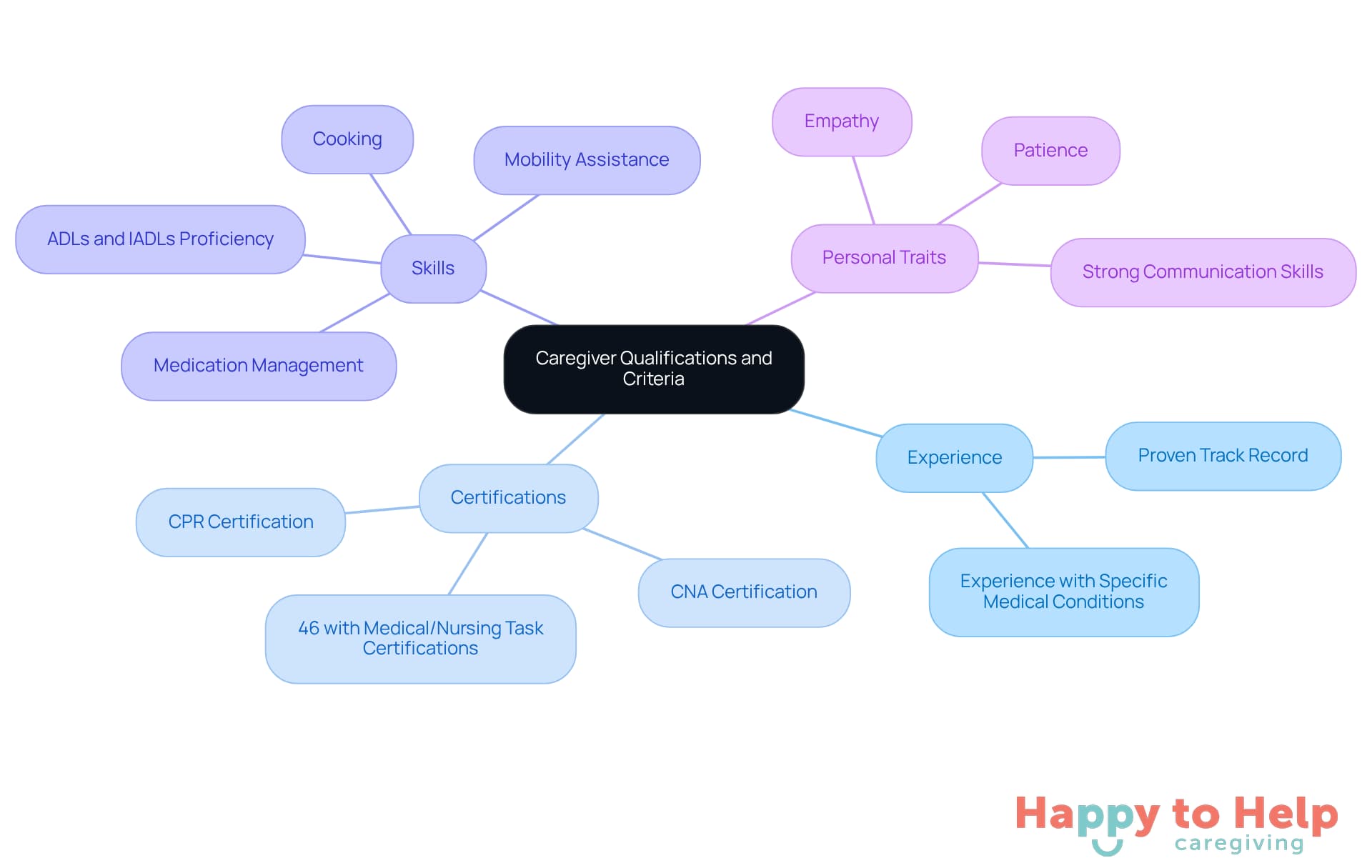
Experience: Look for caregivers who have a proven track record in similar situations or with specific medical conditions. This experience can significantly impact the quality of care provided.
-
Certifications: Ensure that potential providers hold relevant certifications, such as CPR (Cardiopulmonary Resuscitation) or CNA (Certified Nursing Assistant). Notably, about 46% of family members providing complex chronic support have medical and nursing task certifications, enhancing their ability to manage health-related needs effectively.
-
Skills: Identify essential skills required for the role, including cooking, mobility assistance, and medication management. Caregivers should be adept at performing activities of daily living (ADLs) and instrumental activities of daily living (IADLs), which are crucial for maintaining the independence of those they care for.
-
Personal Traits: Seek individuals who exhibit empathy, patience, and strong communication skills. These personal qualities are vital for building trust and ensuring a positive caregiving relationship.
Creating a checklist of these qualifications can simplify the interview process. This approach assists you in selecting a caregiver private duty who not only meets the technical criteria but also aligns with the emotional and practical needs of your family member.
Conduct Interviews and Assess Candidates
Finding the right caregiver private duty for your loved one can be a challenging task. The implications of this challenge are significant; a poor match can lead to stress for both the caregiver private duty and the family member requiring care. To navigate this process effectively, consider the following actionable solutions:
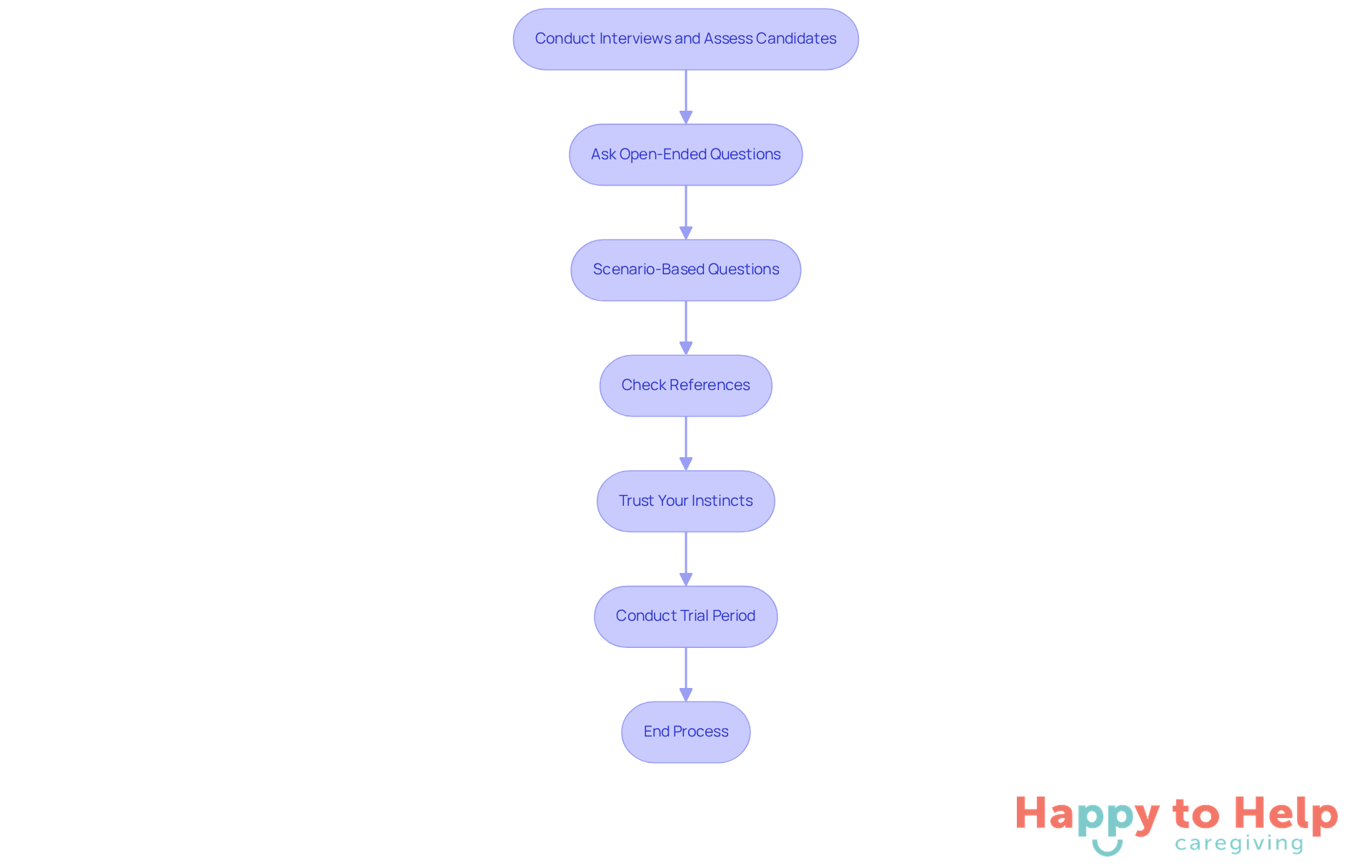
- Ask Open-Ended Questions: Inquire about their experience, caregiving philosophy, and strategies for handling challenging situations. This allows candidates to express their approach and gives insight into their problem-solving skills.
- Scenario-Based Questions: Present hypothetical situations that reflect your family member's specific needs. For instance, you might ask how they would manage a situation where someone dear to you forgets to take their medication or how they would offer emotional support during a particularly challenging day. This helps gauge their critical thinking and adaptability.
- Check References: Always request and contact references to gather insights into their past performance and reliability. Feedback from previous employers can reveal important aspects of their caregiving style.
- Trust Your Instincts: Observe how the candidate interacts with your loved one during the interview. Compatibility is essential; a supporter who relates well with your family member can greatly improve their quality of life. As Kristina Wong, a Care Manager, emphasizes, 'Connecting seniors to caregiver private duty providers with whom they best relate will enhance the quality of their life and ensure they receive the assistance they require to keep them thriving.'
Additionally, consider conducting a trial period to observe the provider's interactions in a real-life setting. Research indicates that approximately 30% of families opt for trial periods, allowing them to assess compatibility and care quality before making a long-term commitment. This practical method not only nurtures confidence in the provider's skills but also guarantees that your loved one feels at ease and safe in their care setting. Furthermore, studies show that older adults receiving both family care and caregiver private duty experience better health and less depression than those cared for by family alone, highlighting the importance of integrating professional support into caregiving.
Navigate Legal and Financial Considerations
When hiring a support worker, navigating various legal and financial considerations can be challenging. Understanding these aspects is crucial to ensure a smooth process and protect both the caregiver private duty and the individual receiving care.
-
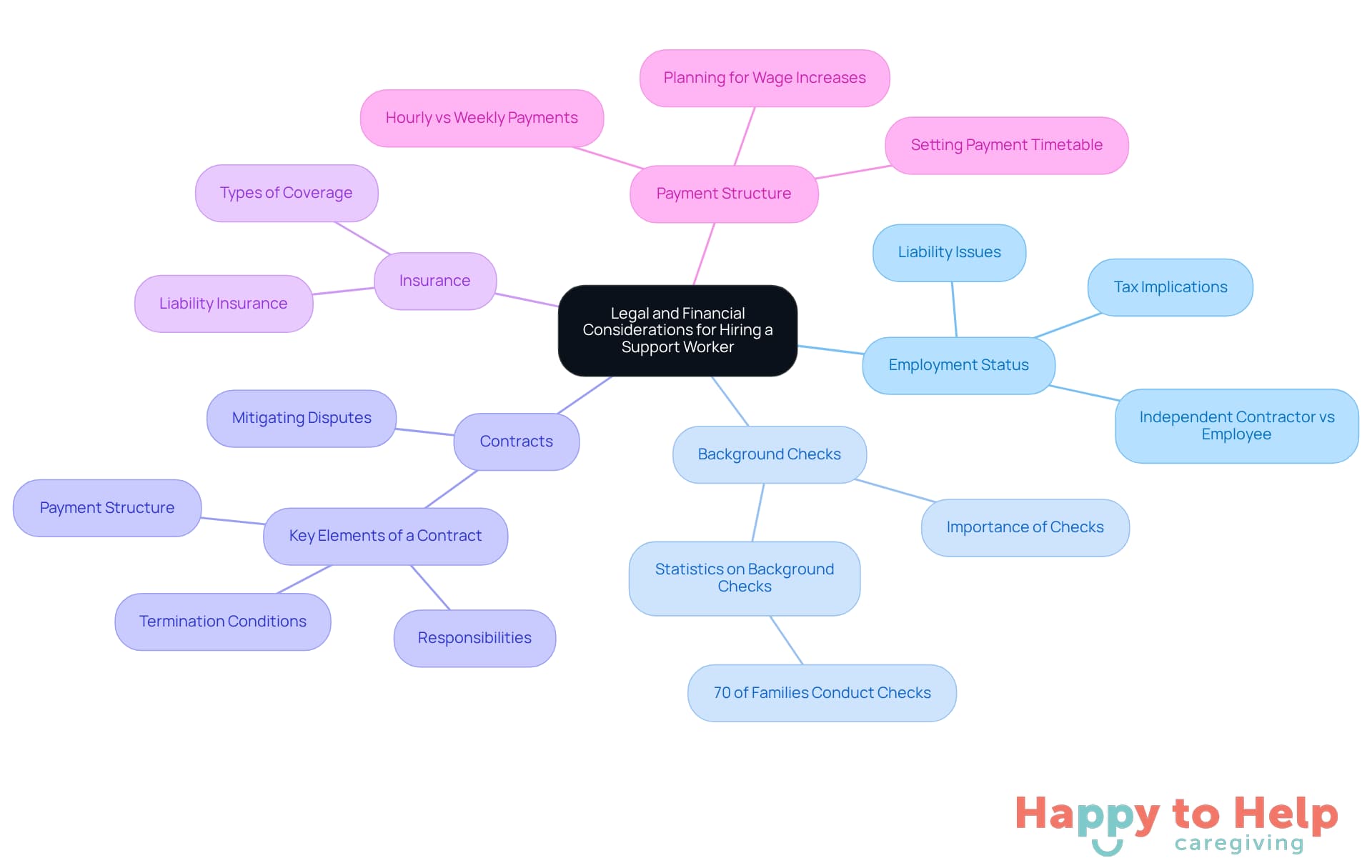
Employment Status: One of the first steps is to clarify whether the caregiver will be classified as an independent contractor or an employee. This distinction significantly impacts tax obligations and liability issues. Employers must withhold taxes for employees, while independent contractors manage their own taxes. Legal professionals recommend understanding the implications of each classification to avoid potential legal issues.
-
Conducting thorough background checks is essential for ensuring the safety and reliability of the caregiver private duty. Approximately 70% of families conduct these checks to confirm qualifications and history, according to the National Alliance for Caregiving and AARP. This step is vital in building trust and ensuring the well-being of your loved one.
-
Contracts: Drafting a clear contract is another critical step. This document should outline the provider's responsibilities, working hours, payment structure, and conditions for termination. Experts emphasize the importance of having a well-defined caregiver private duty agreement to prevent misunderstandings and protect both parties. A comprehensive contract can mitigate disputes and clarify expectations.
-
Insurance: It's wise to consider obtaining liability insurance to safeguard against potential claims. This insurance can provide peace of mind, covering any accidents or issues that may arise during caregiving. Understanding the types of coverage available can help you make informed decisions.
-
Payment Structure: Finally, decide on a payment method that suits your budget, whether hourly or weekly. Setting a clear payment timetable aids in managing financial expectations and guarantees prompt compensation for the support provider. With an anticipated job growth of 17% for home health and personal care aides from 2024 to 2034, planning for potential wage increases is essential.
Consulting with a legal professional can provide additional guidance and ensure compliance with local laws, helping you make informed decisions throughout the hiring process.
Build a Collaborative Relationship with Your Caregiver
Establishing a cooperative connection with your provider is crucial for guaranteeing quality support for your family member. In caregiver private duty, caregivers often struggle with this relationship, which can lead to misunderstandings and inadequate care. With roughly 43.5 million individuals currently assisting their loved ones in the United States, it’s essential to address these challenges head-on.
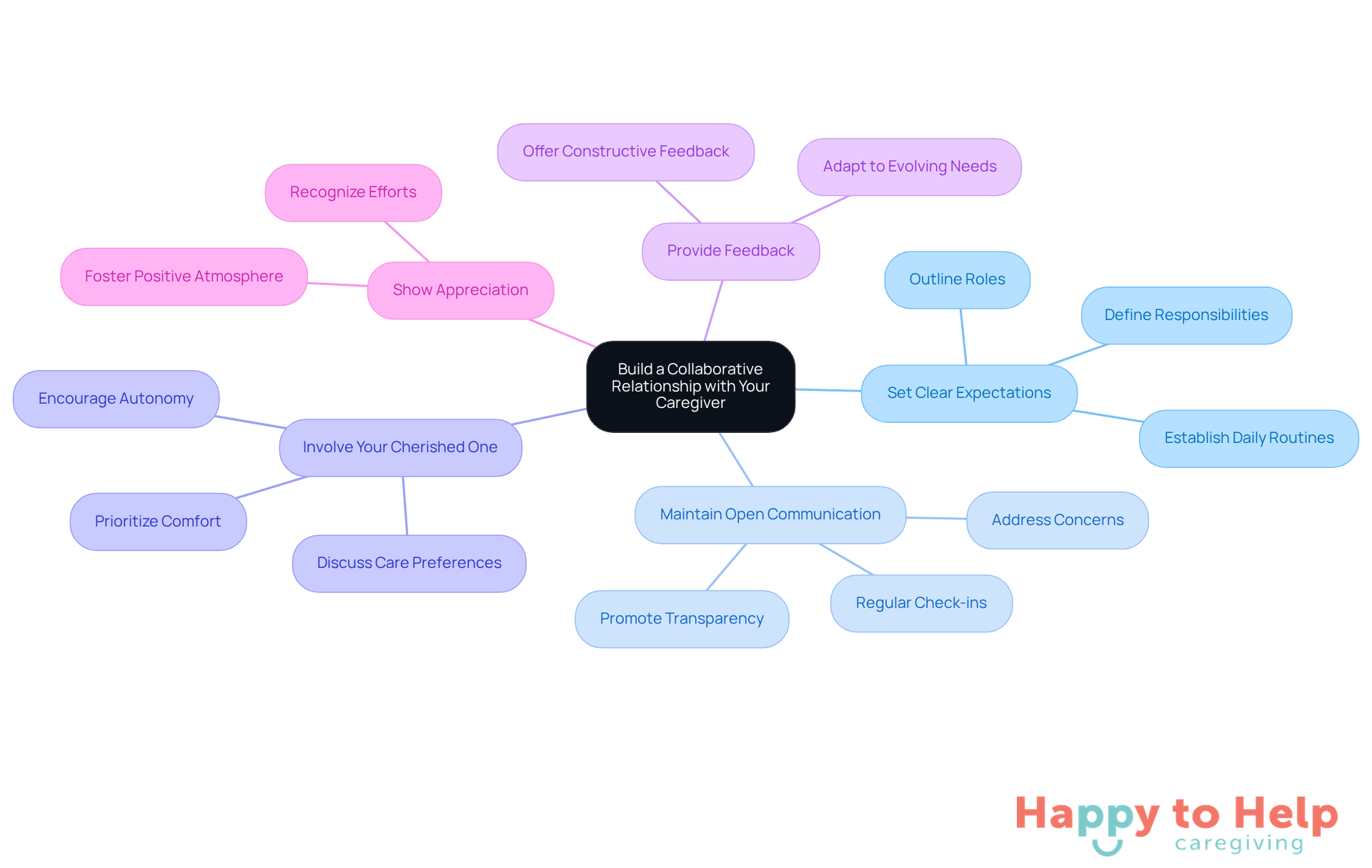
To foster a strong relationship with your provider, consider these key strategies:
- Set Clear Expectations: Clearly outline roles, responsibilities, and daily routines to align everyone’s understanding and expectations.
- Maintain Open Communication: Encourage regular check-ins to address any concerns or necessary adjustments in care, promoting transparency and trust.
- Involve Your Cherished One: Engage your cherished one in discussions about their care preferences, ensuring their comfort and autonomy are prioritized.
- Provide Feedback: Offer constructive feedback to assist the provider in adapting to your family member's evolving needs, enhancing the care experience.
- Show Appreciation: Recognize and value the provider's efforts, fostering a positive and respectful atmosphere that encourages ongoing commitment.
By nurturing this relationship, you can significantly enhance the quality of care provided by a caregiver private duty and create a supportive atmosphere for your loved one. As Tia Walker beautifully states, "To care for those who once cared for us is one of the highest honors." Acknowledging the challenges caregivers face, such as emotional distress reported by many, can also help in fostering understanding and support. Community resources and support systems are vital in this caregiving journey, providing additional strength and encouragement.
Taking the Next Steps
Hiring a private duty caregiver for a loved one can be a daunting task. Families often face the challenge of understanding the specific care needs of their loved ones, which can encompass physical, emotional, and social dimensions. This lack of clarity can lead to stress and uncertainty in selecting the right caregiver.
To address these challenges, families should start by engaging in open conversations about care needs and documenting them. This foundational step is crucial for identifying the most suitable caregiver. Key steps include defining caregiver qualifications, conducting thorough interviews, and navigating legal and financial considerations. Emphasizing experience, certifications, and personal traits is essential, as these elements contribute to finding a caregiver who not only meets technical requirements but also fosters a nurturing relationship.
Building a collaborative connection with the caregiver is vital for ongoing support and enhancing the well-being of the loved one receiving care. It’s not just about filling a role; it’s about ensuring quality of life for aging individuals. By prioritizing clear communication, mutual respect, and understanding, families can create an environment where both caregivers and care recipients thrive.
Taking proactive steps in this journey can significantly impact the health and happiness of loved ones. Here are some actionable tips:
- Assess specific care needs through open discussions.
- Define qualifications and traits desired in a caregiver.
- Conduct thorough interviews to gauge compatibility.
- Foster a collaborative relationship with the caregiver.
By approaching the task with diligence and compassion, families can ensure that their loved ones receive the best possible care.
https://iframe.tely.ai/cta/eyJhcnRpY2xlX2lkIjogIjY5NDBhMjA0MjI1ZjA3N2M1ZmMwYmYyNSIsICJjb21wYW55X2lkIjogIjY4ZWU1ZGNhNzMxNzYyNTU3ZjNjOTVjMSIsICJpbmRleCI6IG51bGwsICJ0eXBlIjogImFydGljbGUifQ==Frequently Asked Questions
Why is it important to assess the care needs of a loved one?
Assessing care needs is crucial to understand their physical, emotional, and social demands, ensuring they receive appropriate support and assistance.
What daily activities might seniors struggle with?
Seniors often struggle with basic tasks such as bathing, dressing, and meal preparation, which can indicate a need for assistance.
What medical conditions might require specialized care for seniors?
Conditions like dementia or mobility issues often necessitate tailored support to ensure the safety and comfort of seniors.
How does companionship impact older adults?
Many older adults experience loneliness and isolation, making emotional support vital for their overall well-being.
What insights can conversations with a loved one provide?
Open conversations can reveal their preferences and concerns, helping to identify specific areas where assistance is needed.
What should be recorded during the assessment of care needs?
It is important to clearly record the identified care requirements, as this will serve as a reference throughout the hiring process.
What do older adults prioritize regarding their care?
Older adults prioritize quality of life over lifespan, with 94% expressing a preference for this aspect.
What qualifications should be considered when hiring a caregiver?
Key qualifications include experience in similar situations, relevant certifications (like CPR or CNA), essential skills (such as cooking and mobility assistance), and personal traits (like empathy and communication skills).
How can creating a checklist help in the caregiver hiring process?
A checklist simplifies the interview process by assisting in selecting a caregiver who meets both technical criteria and aligns with the emotional and practical needs of the family member.
List of Sources
- Understand Your Care Needs
- Prevalence and Trends of Basic Activities of Daily Living Limitations in Middle-Aged and Older Adults in the United States - PMC (https://pmc.ncbi.nlm.nih.gov/articles/PMC10660458)
- Warning From Older Adults: Care for Aging in America Needs Urgent Rethinking (https://johnahartford.org/newsroom/view/warning-from-older-adults-care-for-aging-in-america-needs-urgent-rethinking)
- Caregiving Crisis: 45% Increase in Americans Providing Care (https://aarp.org/caregiving/basics/caregiving-in-us-survey-2025)
- Nearly half of older adults worldwide struggle with daily tasks, study reveals (https://mcknights.com/news/nearly-half-of-older-adults-worldwide-struggle-with-daily-living-activities-study-reveals)
- Define Caregiver Qualifications and Criteria
- Hiring an In-Home Caregiver - Private Home Care (https://aarp.org/caregiving/home-care/hiring-caregiver)
- Caregiver Statistics: Demographics (https://caregiver.org/resource/caregiver-statistics-demographics)
- The Caregiving Landscape: Data & Insights on the Caregiver Experience in the U.S. (https://caregiveraction.org/caregiver-statistics)
- What to Look for in In-Home Caregivers: Qualities, Services, and Questions to Ask - Sunny Days In-Home Care (https://sunnydaysinhomecare.com/what-to-look-for-in-in-home-caregivers)
- Conduct Interviews and Assess Candidates
- Caregiver Compatibility is Key – Generations Magazine (https://generations808.com/caregiver-compatibility-is-key)
- New U.S. Workforce Report: Nearly 70% of Family Caregivers Report Difficulty Balancing Career and Caregiving Responsibilities, Spurring Long-Term Impacts to U.S. Economy (https://press.aarp.org/2024-5-16-US-Workforce-Report-70-Caregivers-Difficulty-Balancing-Career-Caregiving-Responsibilities)
- The Importance of Caregiver-Client Relationships in Senior Well-Being (https://homeinstead.com/home-care/usa/in/goshen/588/news-and-media/the-importance-of-caregiver-client-relationships-in-senior-well-being)
- Reimagining Support for Family Caregivers and Their Loved Ones (https://medschool.duke.edu/news/reimagining-support-family-caregivers-and-their-loved-ones)
- Navigate Legal and Financial Considerations
- Home Health and Personal Care Aides (https://bls.gov/ooh/healthcare/home-health-aides-and-personal-care-aides.htm)
- Caregiving Crisis: 45% Increase in Americans Providing Care (https://aarp.org/caregiving/basics/caregiving-in-us-survey-2025)
- Caregiver Statistics: Work and Caregiving (https://caregiver.org/resource/caregiver-statistics-work-and-caregiving)
- The Staggering Financial Toll of Family Caregiving (https://aarp.org/caregiving/financial-legal/financial-impact-caregiving)
- Hiring a Caregiver: Should You Employ One Yourself or Go Through an Agency? (https://mblawfirm.com/insights/elder-law/hiring-a-caregiver-should-you-employ-one-yourself-or-go-through-an-agency)
- Build a Collaborative Relationship with Your Caregiver
- 70+ Inspirational Caregiver Quotes (https://h2hhc.com/blog/inspirational-caregiver-quotes)
- CaringBridge (https://caringbridge.org/resources/inspirational-quotes-on-caregiving)
- Caregiver Statistics: Demographics (https://caregiver.org/resource/caregiver-statistics-demographics)
- The Importance of Caregiver-Client Relationships in Senior Well-Being (https://homeinstead.com/home-care/usa/in/goshen/588/news-and-media/the-importance-of-caregiver-client-relationships-in-senior-well-being)