
Understanding Navigate In Home Care in Colorado
Navigating the complex landscape of in-home care services in Colorado presents a significant challenge for families seeking the best support for their loved ones. With a growing preference among seniors for in-home assistance, understanding the variety of available services is crucial for enhancing their quality of life. However, many families struggle to identify the right type of care, which can lead to gaps in support that negatively impact their loved ones' well-being.
So, how can families ensure they make informed decisions that truly benefit their elderly relatives? First, it's essential to recognize the specific needs of the individual requiring care. This understanding can guide families in selecting appropriate services, whether it's personal care, companionship, or specialized medical assistance.
Next, families should research and compare different in-home care providers. Look for agencies with positive reviews, transparent pricing, and qualified staff. Engaging with local resources, such as senior centers or healthcare professionals, can also provide valuable insights into available options.
Finally, consider involving your loved one in the decision-making process. Their preferences and comfort should be a priority, ensuring that the chosen care aligns with their needs and lifestyle. By taking these steps, families can navigate the complexities of in-home care with confidence, ultimately enhancing the quality of life for their elderly relatives.
Understand In-Home Care Services
In home care Colorado options present a significant challenge for caregivers who want to ensure their loved ones receive the right support. Many families struggle to understand the diverse range of services available, which can lead to inadequate care and increased stress for both caregivers and seniors.
As of 2025, approximately 75% of seniors prefer in home care Colorado, acknowledging its vital role in maintaining independence and enhancing quality of life. However, without a clear understanding of these options, families may overlook essential services that could improve their loved ones' well-being.
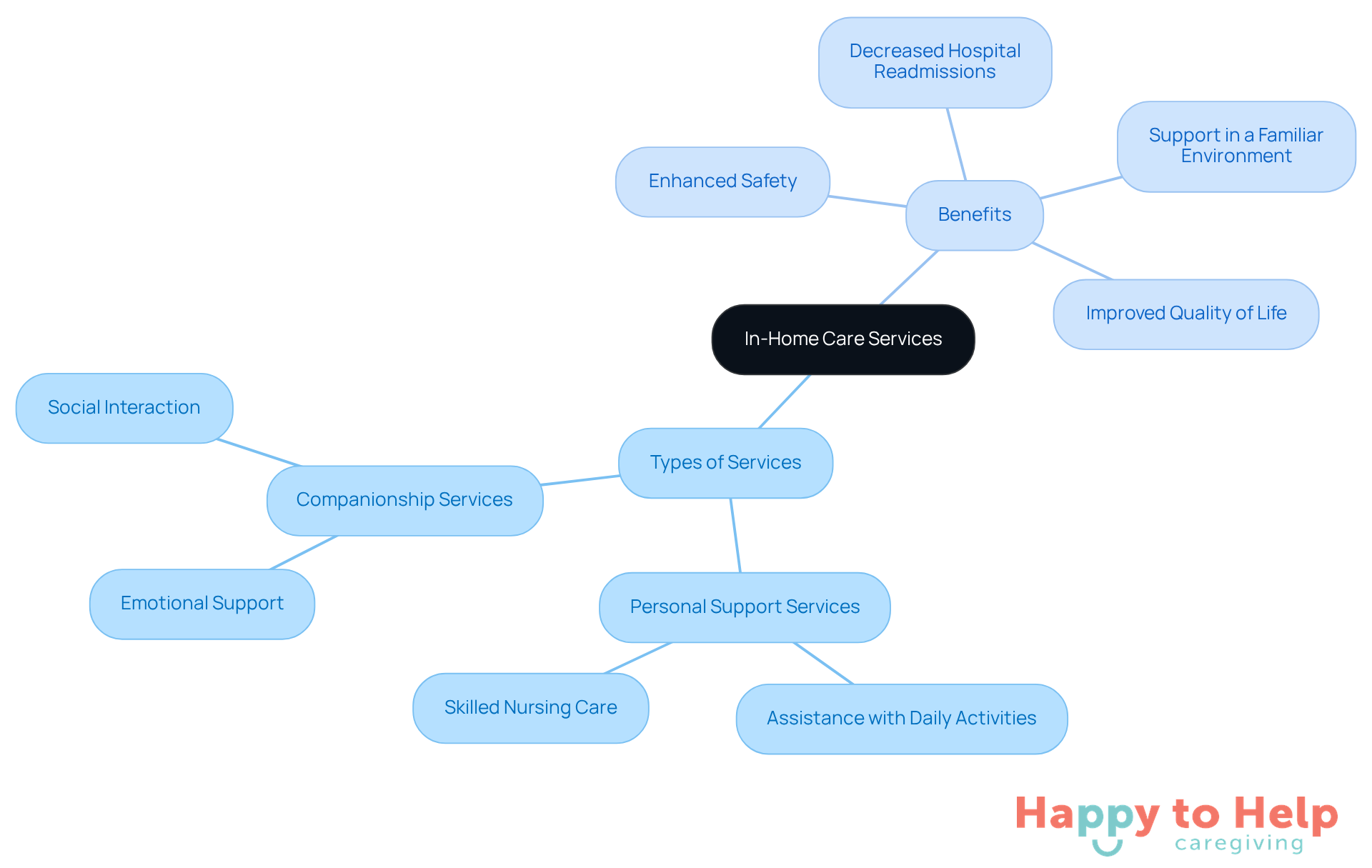
To address this issue, it’s crucial for families to comprehend the various types of in home care Colorado assistance available. Personal support services, for instance, include help with bathing, dressing, and grooming, while companionship services focus on providing emotional support and encouraging social interaction. By identifying the specific needs of their loved ones, families can ensure they receive the appropriate level of assistance.
Moreover, providers emphasize the importance of individualized support, which not only meets physical needs but also nurtures emotional health. Successful applications of in home care Colorado have demonstrated improved recovery outcomes and reduced feelings of isolation among seniors.
The benefits of in-home assistance are numerous:
- Enhanced safety
- Decreased hospital readmissions
- Support in a familiar environment
Ultimately, these services promote dignity and control for elderly individuals, allowing them to thrive in their own homes. By understanding and utilizing these options, caregivers can significantly improve the quality of life for their loved ones.
Explore Types of In-Home Care Services
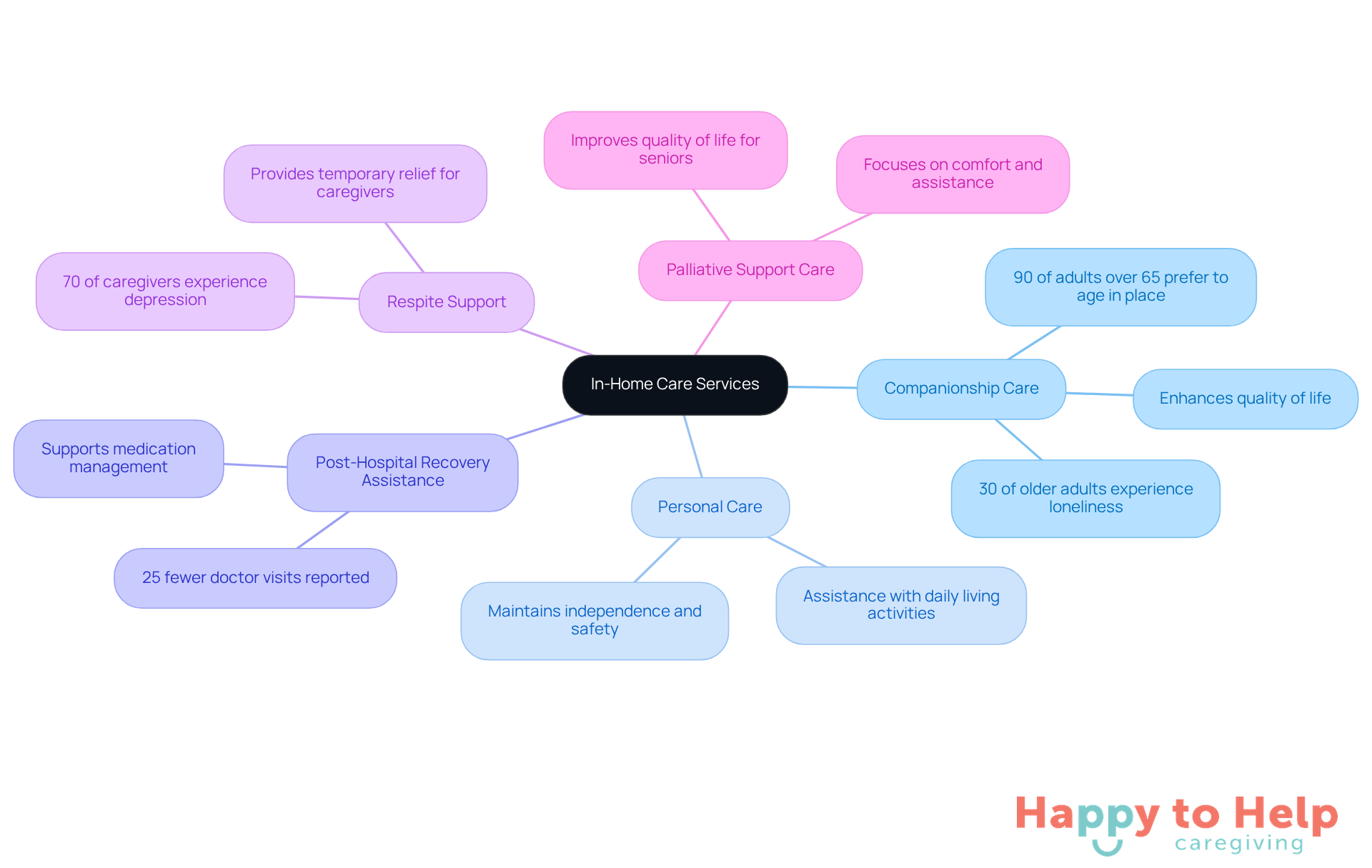
In home care Colorado, assistance options address the diverse needs of seniors and their families, tackling significant challenges faced by caregivers. Loneliness is a pressing issue; research shows that 30% of older adults experience feelings of isolation. This can lead to serious health implications, making companionship care essential.
Companionship Care offers emotional support and social interaction, crucial for alleviating loneliness. Studies indicate that 90% of adults over 65 prefer to age in place, and regular companionship can enhance their quality of life by promoting better health habits.
Personal Care involves assistance with daily living activities like bathing, dressing, and meal preparation. Professional caregivers help seniors maintain independence while ensuring their safety and well-being.
Post-Hospital Recovery Assistance supports individuals transitioning from hospital to home, ensuring they follow discharge instructions and manage medications effectively. Seniors using home assistance services report 25% fewer doctor visits each year, highlighting the importance of this support during recovery.
Respite Support provides temporary relief for primary caregivers, allowing them to take necessary breaks while ensuring their loved ones receive quality assistance. With 70% of caregivers experiencing feelings of depression, respite care is vital for their well-being.
Palliative Support Care focuses on delivering comfort and assistance for individuals with severe illnesses, improving the quality of life for seniors facing health challenges.
Understanding these options helps families choose the most suitable in home care Colorado for their loved ones, ensuring they receive the essential support to thrive at home. The national median hourly wage for companionship support is $26, providing a financial context for families considering these services. Additionally, the average length of care for older adults outside of nursing homes is about 4.5 years, indicating the long-term nature of in home care Colorado.
Evaluate Caregiving Agencies in Colorado
When families in Colorado face the challenge of selecting an agency for in home care colorado, they often encounter a daunting task. With numerous options available, how can they ensure they choose the best support for their loved ones? This decision is crucial, as it directly impacts the quality of care their relatives receive.
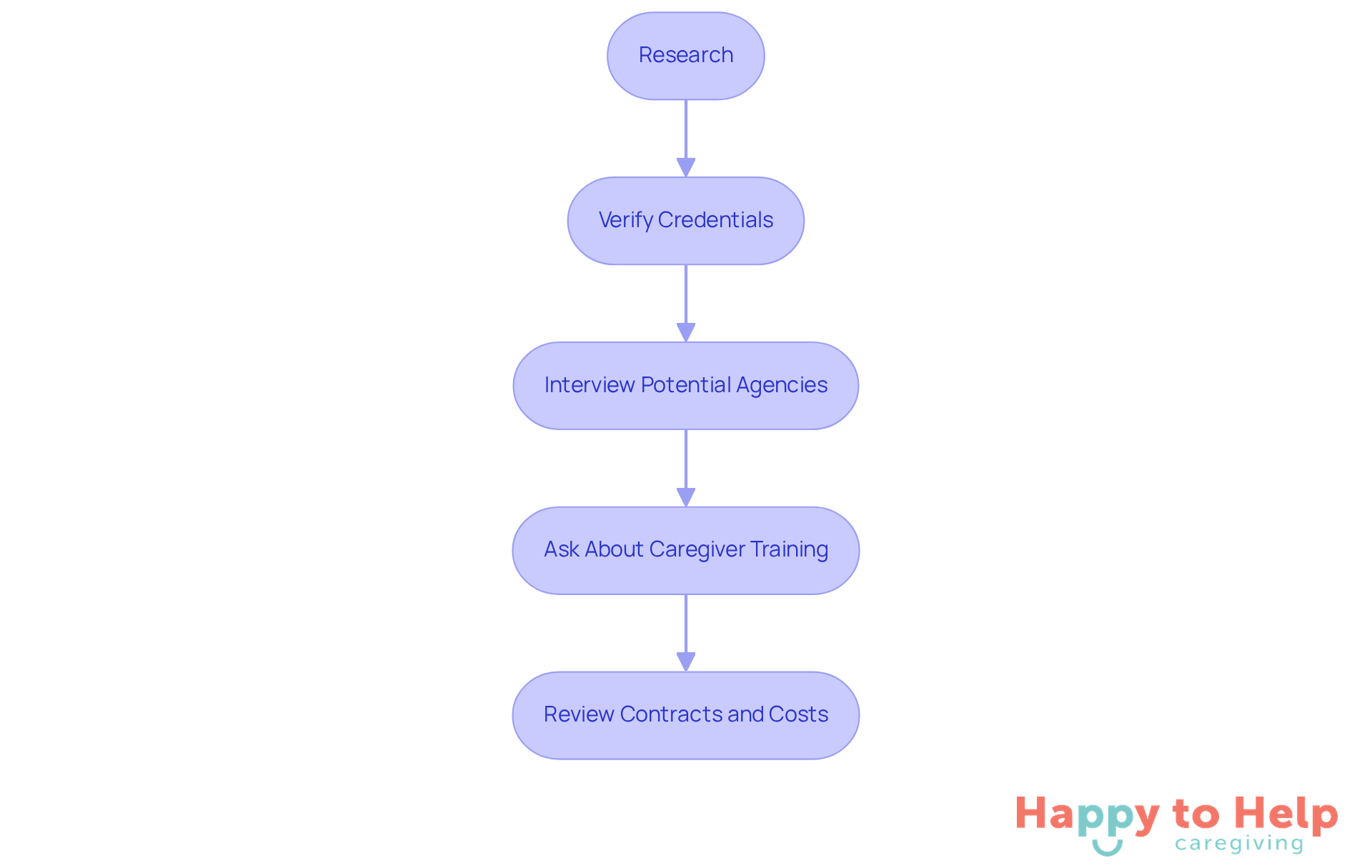
To tackle this problem, families should follow these essential steps:
-
Research: Start by seeking agencies with strong reviews and testimonials from other families. Resources such as the Colorado Department of Public Health can provide valuable insights into agency ratings and compliance with state regulations.
-
Verify Credentials: Confirm that the agency is licensed and accredited. This verification guarantees compliance with state standards for service, which is vital for the safety and well-being of clients.
-
Interview Potential Agencies: Arrange meetings with agency representatives to discuss their services, caregiver qualifications, and customized support plans. This interaction allows families to gauge the agency's responsiveness and commitment to quality care.
-
Ask About Caregiver Training: Inquire about the training and experience of caregivers. Understanding their qualifications is essential to ensure they can meet the specific needs of your loved one, especially if specialized support is required.
-
Review Contracts and Costs: Carefully examine the pricing structure and the services included in the contract. Understanding the typical expense of caregiving services in home care Colorado, which can vary from $33 per hour for in-home assistance, helps households avoid unforeseen costs and organize their budgets efficiently.
By adhering to these steps, families can confidently choose a caregiving agency that meets their expectations and requirements, ensuring their relatives receive the compassionate assistance they deserve.
Customize Care Plans for Individual Needs
Creating a customized care plan can be a daunting task for caregivers, often leading to feelings of overwhelm and uncertainty. Without a tailored approach, loved ones may not receive the support they truly need, which can impact their overall well-being.
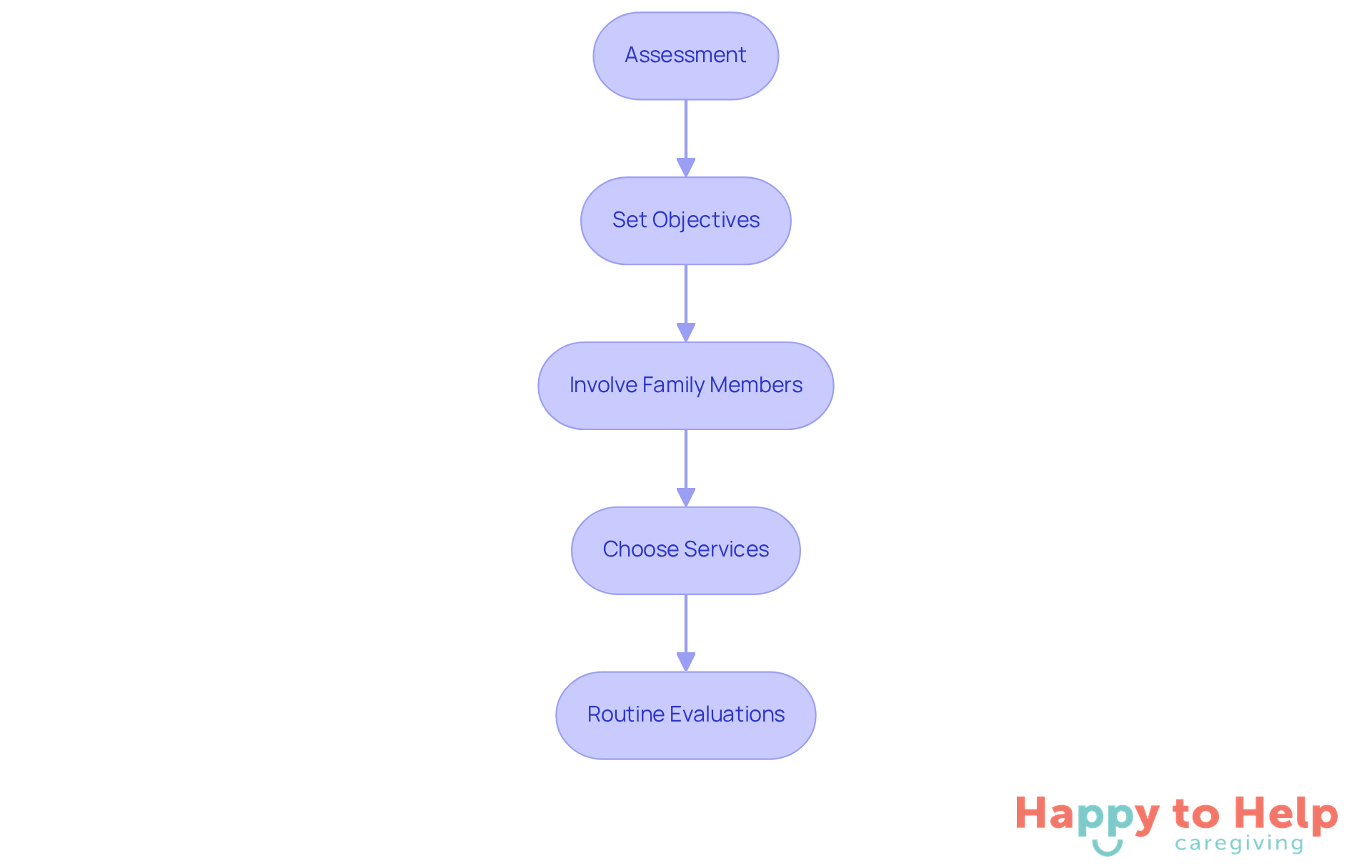
To address this challenge, follow these key steps:
- Assessment: Conduct a thorough assessment of your loved one's physical, emotional, and social needs. This may involve consultations with healthcare professionals.
- Set Objectives: Identify specific aims for support, such as improving mobility, enhancing social interaction, or managing chronic conditions.
- Involve Family Members: Engage family members in the planning process to ensure that everyone is aligned concerning support expectations and responsibilities.
- Choose Services: Based on the evaluation and objectives, select suitable services from the agency that correspond with your family member's needs.
- Routine Evaluations: Arrange routine evaluations of the support plan to make modifications as necessary, ensuring that it continues to address your family member's changing requirements.
By personalizing support strategies, relatives can guarantee that their loved ones obtain the most effective and compassionate assistance.
Initiate In-Home Care Services
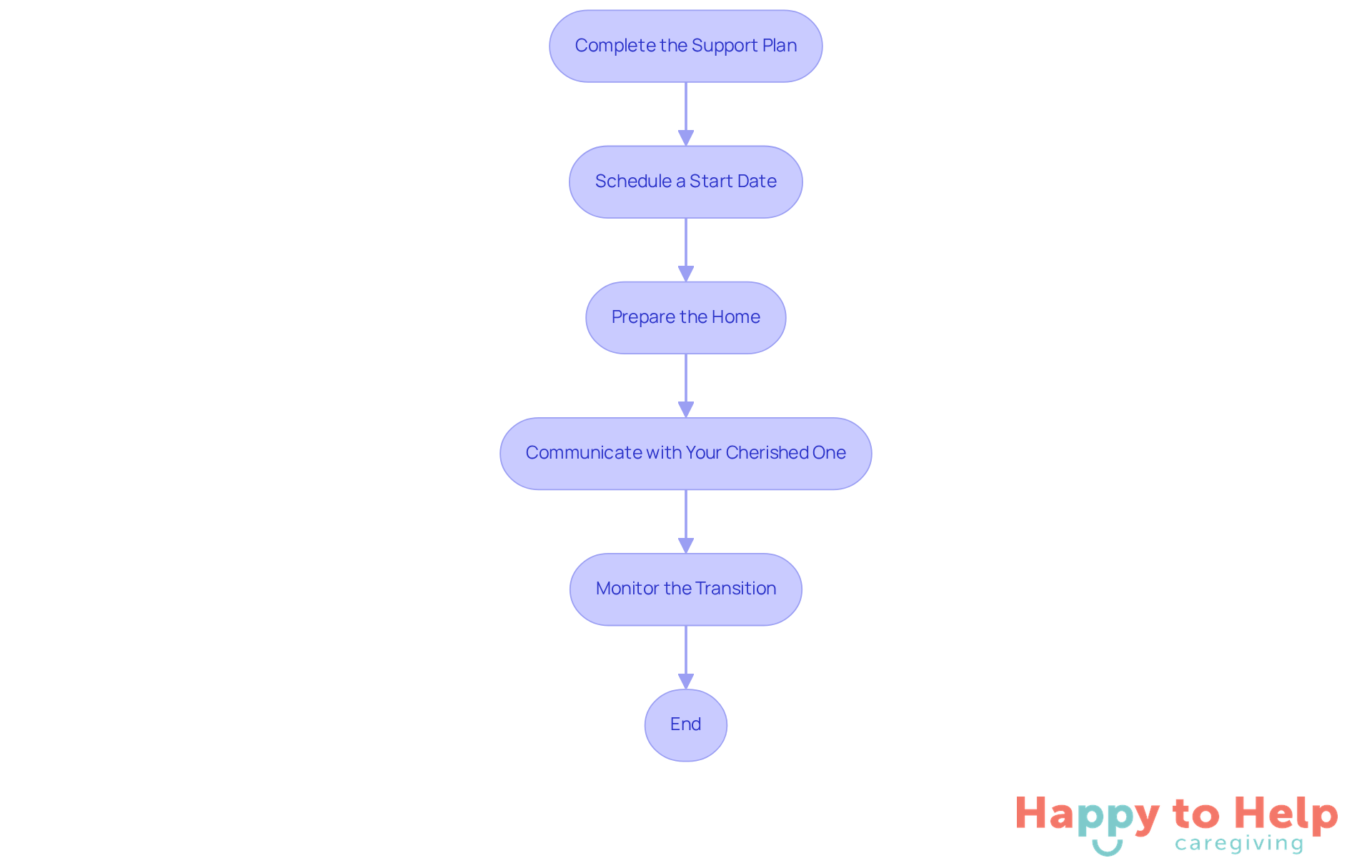
To effectively initiate in home care Colorado services, caregivers often face several challenges. Without a clear plan, the transition can be overwhelming for both the caregiver and the family member in need of assistance. Here are some actionable steps to ease this process:
-
Complete the Support Plan: Collaborate with family members and the caregiving agency to create a comprehensive support plan. Personalization is crucial; tailored care significantly enhances patient outcomes and satisfaction.
-
Schedule a Start Date: Coordinate with the agency to establish a start date for services. This allows ample time for necessary preparations at home, ensuring a smooth transition.
-
Prepare the Home: Implement safety modifications to create an accessible environment for both the caregiver and your family member. Simple changes, such as installing grab bars, improving lighting, and removing tripping hazards, can significantly reduce the risk of falls. According to the CDC, falls are the leading cause of fatal and non-fatal injuries among older adults, making home safety assessments a critical step in this process.
-
Communicate with Your Cherished One: Engage in open discussions about the upcoming changes with your loved one. Address any concerns they may have regarding receiving assistance, as effective communication can alleviate anxiety and foster a sense of security.
-
Monitor the Transition: Once services begin, stay involved by regularly checking in with both your family member and the caregiver. This ensures that the support provided aligns with expectations and allows for necessary adjustments.
By following these steps, households can facilitate a successful shift to in home care Colorado, ensuring their loved ones receive the necessary support to thrive in a familiar setting. Testimonials from families highlight the positive impact of personalized care plans, emphasizing how these transitions can be smoother and more manageable when approached thoughtfully.
Your Path Forward
Navigating in-home care services in Colorado presents a significant challenge for families striving to support their loved ones in maintaining independence and quality of life. The complexity of various in-home care options - from personal support to companionship and recovery assistance - can leave caregivers feeling overwhelmed. This uncertainty can directly affect the well-being of seniors, making it essential for families to understand their choices.
To tackle this issue, it’s crucial to explore the essential steps for:
- Evaluating caregiving agencies
- Customizing care plans
- Initiating services
Personalized care tailored to individual needs is vital, as is conducting thorough research when selecting agencies. Additionally, fostering companionship can combat loneliness among older adults, enhancing their emotional well-being. By following these steps, families can confidently navigate the complexities of in-home care and secure the best support for their loved ones.
Ultimately, effective in-home care in Colorado transcends merely meeting physical needs; it’s about creating an environment where seniors can thrive emotionally and socially. By prioritizing personalized care and actively engaging in the process, families can significantly enhance their loved ones' quality of life. These proactive measures not only benefit seniors but also alleviate the stress often felt by caregivers, fostering a more harmonious home environment.
https://iframe.tely.ai/cta/eyJhcnRpY2xlX2lkIjogIjY5MjY0MzZiM2U1ODU0NTE1NmI5MjVlMyIsICJjb21wYW55X2lkIjogIjY4ZWU1ZGNhNzMxNzYyNTU3ZjNjOTVjMSIsICJpbmRleCI6IG51bGwsICJ0eXBlIjogImFydGljbGUifQ==Frequently Asked Questions
What are in-home care services in Colorado?
In-home care services in Colorado provide support for seniors to maintain independence and enhance their quality of life, addressing diverse needs through various types of assistance.
Why do families struggle with in-home care options?
Families often struggle to understand the wide range of in-home care services available, which can lead to inadequate care and increased stress for both caregivers and seniors.
What percentage of seniors prefer in-home care?
As of 2025, approximately 75% of seniors prefer in-home care, recognizing its importance in maintaining independence.
What types of personal support services are available?
Personal support services include assistance with bathing, dressing, grooming, and meal preparation to help seniors with daily living activities.
What is companionship care, and why is it important?
Companionship care provides emotional support and social interaction to alleviate feelings of loneliness, which affects 30% of older adults and can lead to serious health issues.
How does post-hospital recovery assistance help seniors?
Post-hospital recovery assistance supports seniors transitioning from hospital to home by ensuring they follow discharge instructions and manage medications effectively, resulting in 25% fewer doctor visits each year.
What is respite support, and who benefits from it?
Respite support offers temporary relief for primary caregivers, allowing them to take breaks while ensuring their loved ones receive quality assistance, which is crucial since 70% of caregivers experience feelings of depression.
What is palliative support care?
Palliative support care focuses on delivering comfort and assistance to individuals with severe illnesses, improving the quality of life for seniors facing health challenges.
What are the financial considerations for in-home care services?
The national median hourly wage for companionship support is $26, which provides a financial context for families considering these services.
How long do older adults typically receive in-home care?
The average length of care for older adults outside of nursing homes is about 4.5 years, indicating the long-term nature of in-home care services.
List of Sources
- Understand In-Home Care Services
- The Growing Demand for Home Healthcare | Why Families Choose In-Home Care (https://lhghealth.com/blog/the-growing-demand-for-home-healthcare-why-more-families-are-choosing-in-home-care)
- Looking Ahead: The Future of Home Care and What It Means for Your Family – Inspire (https://blogs.scu.edu/inspire/2025/11/08/looking-ahead-the-future-of-home-care-and-what-it-means-for-your-family)
- How 3 Top Trends Have Shaped Home-Based Care This Year (https://homehealthcarenews.com/2025/08/how-3-top-trends-have-shaped-home-based-care-this-year)
- How In-Home Care Can Reduce Stress for Families (https://villagecaregiving.com/blog/reduce-stress-for-families)
- The Enduring Significance of Home Care for Our Aging Population - Adoration Home Health & Hospice (https://adorationhealth.com/the-enduring-significance-of-home-care-for-our-aging-population)
- Explore Types of In-Home Care Services
- A Watchful Eye and a Willing Ear for an Older Adult (https://aarp.org/caregiving/home-care/rise-of-companion-care)
- Some Important Statistics and In-Home Companion Care (https://americareinfo.com/beach-cities/articles/in-home-companion-care-some-important-facts-on-aging-to-consider)
- The Incredible Benefits of Home Care, in 7 Amazing Stats - Companions For Seniors (https://companionsforseniors.com/2019/08/benefits-home-care-amazing-stats-trends-reports)
- 10 Benefits of Professional Companion Services for Family Caregivers - Happy To Help (https://happytohelpcaregiving.com/10-benefits-of-professional-companion-services-for-family-caregivers)
- The Hidden Benefits of Companionship Care for Seniors (https://safehomecare.com/post/the-hidden-benefits-of-companionship-care-for-seniors)
- Evaluate Caregiving Agencies in Colorado
- Home Care Costs in 2025: A State-by-State Guide (https://aplaceformom.com/caregiver-resources/articles/in-home-care-costs)
- 40 Inspirational Quotes for Caregivers - Care Options for Kids (https://careoptionsforkids.com/blog/inspirational-quotes-for-caregivers)
- CaringBridge (https://caringbridge.org/resources/inspirational-quotes-on-caregiving)
- Aurora releases study to address needs of older adults and caregivers (https://denver7.com/news/front-range/aurora/aurora-releases-study-to-address-needs-of-older-adults-and-caregivers)
- Customize Care Plans for Individual Needs
- Step-by-Step Guide to Advance Care Planning (https://newsinhealth.nih.gov/2024/07/step-step-guide-advance-care-planning)
- The Value and Process of Engaging Family in Care Management (https://thoroughcare.net/blog/value-process-engaging-family-care-management)
- 55% of Health Plan Members Want More Personalized Care (https://hitconsultant.net/2023/08/15/55-of-health-plan-members-want-more-personalized-care)
- Meeting the Demand for Personalized Care (https://bstquarterly.com/article/meeting-the-demand-for-personalized-care)
- Initiate In-Home Care Services
- Get the Facts on Falls Prevention (https://ncoa.org/article/get-the-facts-on-falls-prevention)
- In-Home Care for Seniors - Caregiving News and Tips (https://aarp.org/caregiving/home-care)
- Home Safety for Seniors: Statistics & Proven Safety Solutions (https://agesafeamerica.com/home-safety-hub/articles/home-safety-seniors-statistics-solutions)
- 52 Eye-Opening Home Health Statistics: Insights for 2025 (https://boosthomehealth.com/home-health-statistics)
- Home Care Impact on Recovery of Patient (A Statistics Report) (https://lovinghomecareinc.com/home-care-recovery-statistics)