
Understanding Secure Local Respite Care
Local respite care plays a pivotal role in supporting family caregivers, who dedicate countless hours to providing care while often neglecting their own well-being. Caregivers face significant challenges, including emotional strain and financial concerns, which can make the journey to finding the right respite care daunting.
This guide offers a comprehensive look at the various types of respite care services available, empowering caregivers to identify their specific needs. However, navigating this process can be overwhelming. How can caregivers effectively overcome these obstacles and ensure they receive the relief they desperately need?
By understanding the available options and seeking support, caregivers can find the respite they need to recharge and continue their vital work.
Understand Respite Care: Definition and Importance
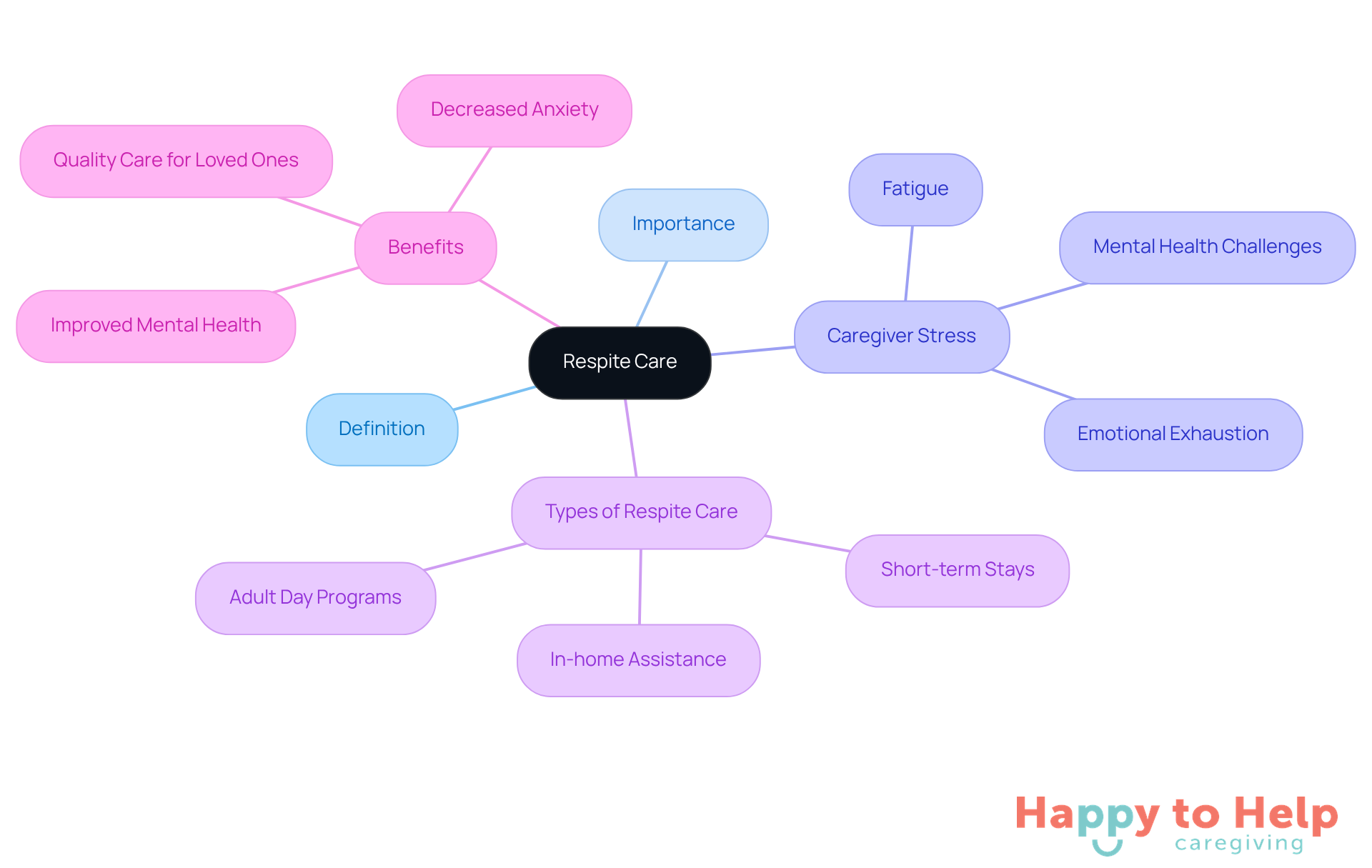
Local respite care serves as a crucial short-term relief option for primary caregivers, allowing them a much-needed break from their demanding responsibilities. Caregivers often face overwhelming stress and burnout due to the immense burden of providing care. In fact, family supporters contribute an estimated 36 billion hours of unpaid assistance each year, valued at around $600 billion. This staggering responsibility can lead to significant mental health challenges, including anxiety and depression.
The implications of caregiver stress are profound. Without adequate support, caregivers may experience fatigue and emotional exhaustion, which can negatively impact both their well-being and the quality of care they provide. However, local respite care provides a viable solution. This service can take various forms, such as in-home assistance, adult day programs, or short-term stays in specialized facilities. By utilizing local respite care, caregivers can rejuvenate while ensuring that their loved ones continue to receive essential care in a secure and nurturing environment.
Respite assistance can last from a few hours to several weeks, depending on individual needs. Caregivers who engage in relief programs often report decreased feelings of anxiety and depression, highlighting the positive effects on their mental health. For instance, facilities like Benedictine Living Community provide extensive support options, offering not just relief but also companionship and personal attention for loved ones.
These facilities ensure high-quality support by providing daily meals, housekeeping, and access to a registered nurse available on-site or on-call 24 hours a day. By understanding the significance of temporary relief assistance, caregivers can better recognize the need for these resources in their caregiving journey.
Explore Types of Respite Care Services
Caregivers often struggle with the challenge of finding adequate local respite care services to meet their unique needs. This lack of support can lead to increased stress and burnout, impacting both their well-being and that of their loved ones. Understanding the available options for local respite care is crucial for caregivers seeking relief.
-
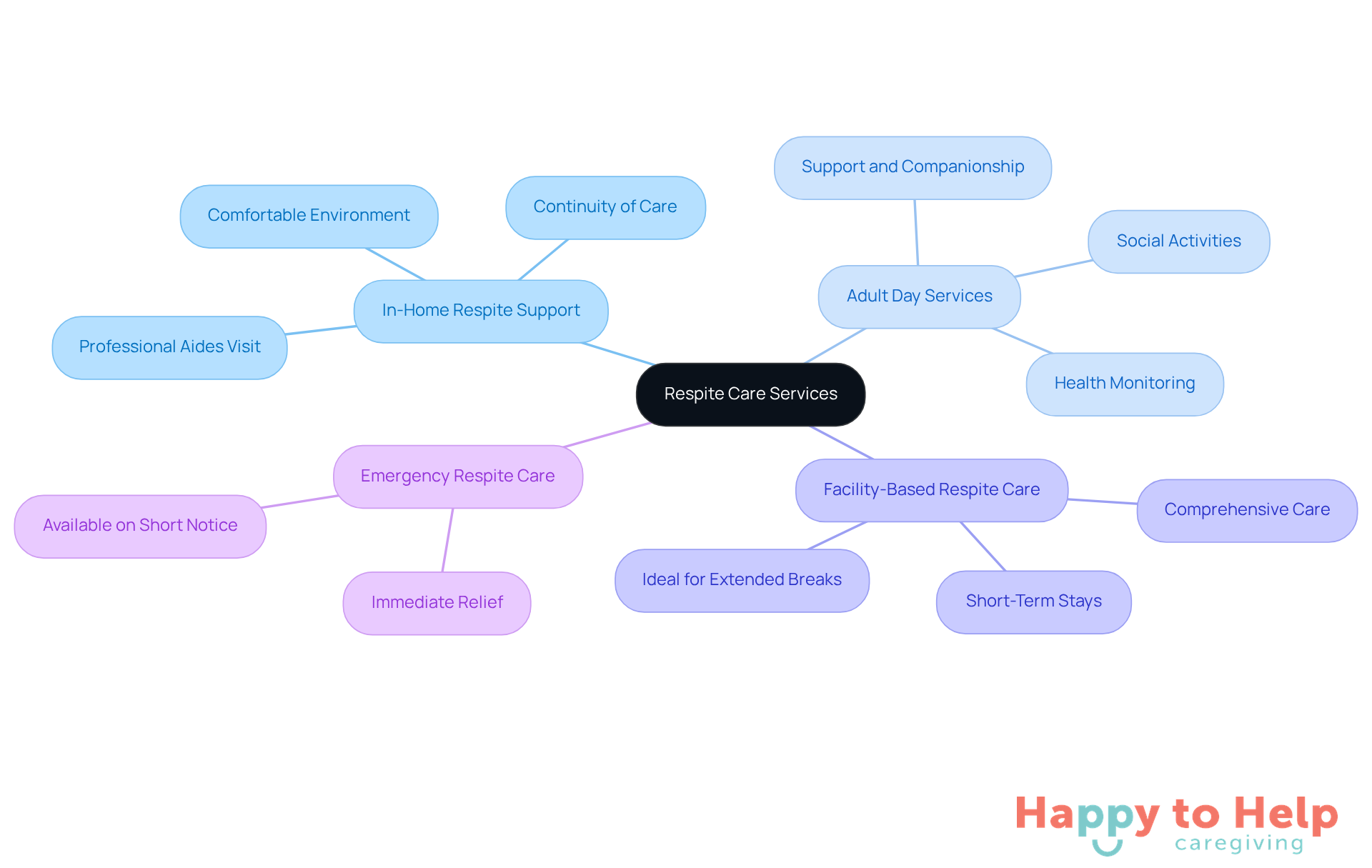
In-Home Respite Support: Professional aides can visit the residence, allowing primary supporters to take a much-needed break while ensuring their loved ones remain in a familiar and comfortable environment. This option promotes continuity of care and minimizes disruption.
-
Adult Day Services: These programs provide support and companionship for seniors throughout the day, enabling caregivers to work or take personal time. Often, adult day services include social activities and health monitoring, making them a valuable resource for those in need of assistance.
-
Facility-Based Respite Care: Short-term stays in assisted living or nursing home facilities offer comprehensive care for individuals requiring additional support. This choice is ideal for caregivers needing extended breaks, as it ensures seniors receive professional care at all times.
-
Emergency Respite Care: Available on short notice, this service provides immediate relief for caregivers during unexpected situations, such as illness or family crises.
By understanding these options, caregivers can select the most suitable service for their circumstances, ensuring their well-being and that of their loved ones. As the demand for local respite care continues to grow, caregivers are encouraged to explore these resources early to alleviate stress and maintain a healthy balance in their caregiving roles.
States like Oregon, Nebraska, and Wisconsin are leading the way in expanding care alternatives, reflecting the evolving landscape of accessible services. Additionally, caregivers can benefit from resources such as the free online course offered by PsychArmor, which educates them about temporary support and planning. Respite support can range from a few hours to a couple of weeks, providing the flexibility needed to accommodate the varying demands of caregivers.
Identify Your Respite Care Needs
To effectively identify your respite care needs, consider the following steps:
-
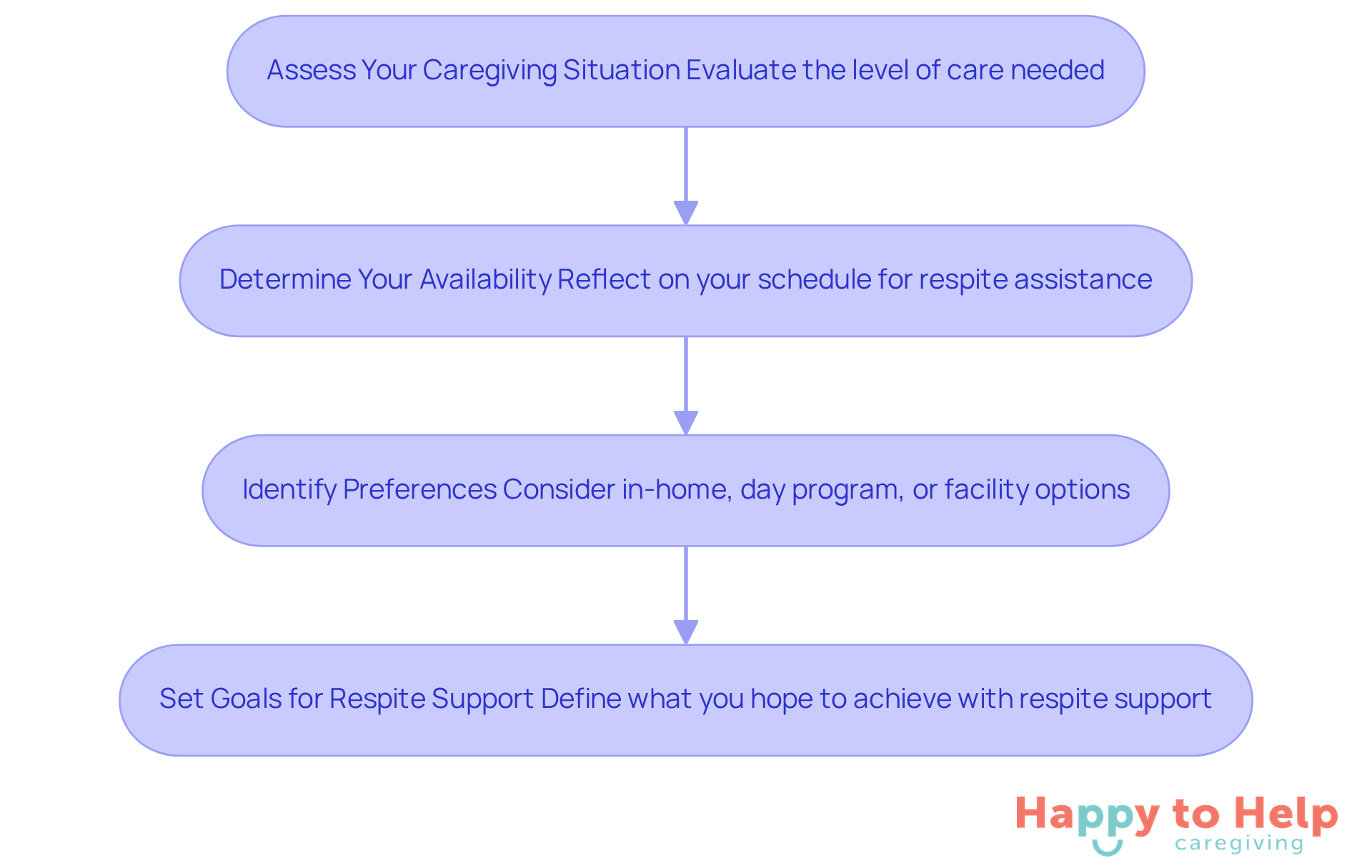
Assess Your Caregiving Situation: Caregiving can be overwhelming. Evaluate the level of care your loved one requires, including their medical, emotional, and social needs. Almost two-thirds of family supporters help with at least one activity of daily living, emphasizing the significance of comprehending specific needs. With around 63 million family supporters in the U.S., understanding the distinct requirements of your situation is essential.
-
Determine Your Availability: Reflect on your schedule and how much time you can realistically dedicate to respite assistance. Approximately 28% of family caregivers offer 40 or more hours of assistance each week, which can significantly affect personal time and well-being. Understanding your availability for local respite care is crucial for effective planning.
-
Identify Preferences: Consider whether your loved one prefers in-home assistance, participating in a day program, or residing in a facility. Grasping these preferences is essential, as it can improve their comfort and readiness to participate in support options.
-
Set Goals for Respite Support: Define what you hope to achieve with respite support, such as reducing stress, enhancing your mental health, or simply taking a break. Establishing clear goals can guide your discussions with potential providers to ensure that local respite care services align with your needs. As Jason Resendez, CEO of NAC, stresses, "caregivers are essential team members," highlighting the importance of acknowledging their role in the support process.
By clearly defining your needs, you can more effectively communicate with potential relief service providers and find the right match for your situation.
Research Local Respite Care Options
Finding relief service options can be a daunting task for caregivers. The challenge lies in identifying suitable temporary support that meets specific needs. Without proper guidance, caregivers may feel overwhelmed and uncertain about their choices.
To ease this burden, consider the following actionable steps:
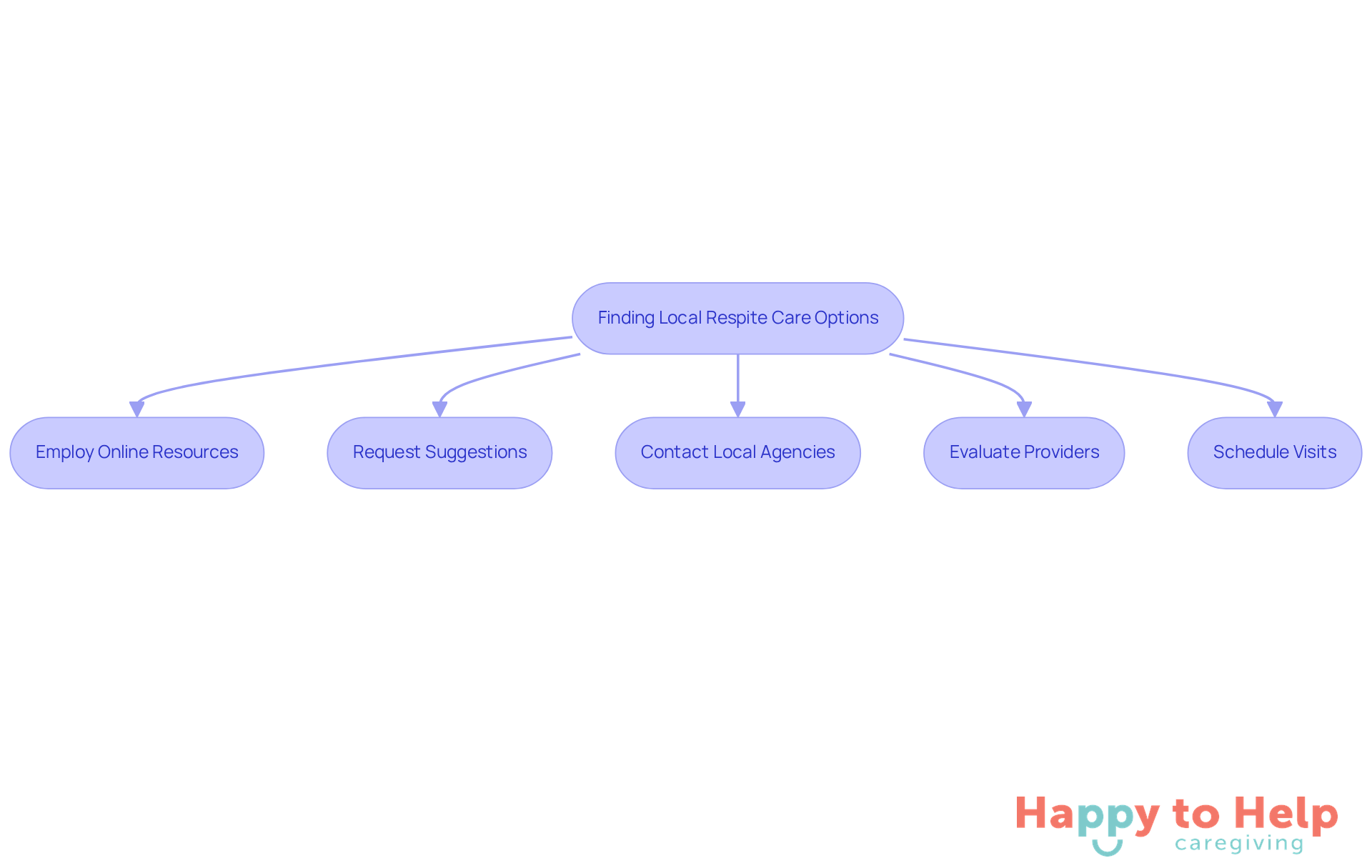
- Employ Online Resources: Websites like the ARCH National Respite Locator Service can help you find temporary support providers nearby.
- Request Suggestions: Reach out to family, friends, or local support groups for personal recommendations on temporary assistance options.
- Contact Local Agencies: Inquire with local aging agencies or community organizations that may offer respite care resources or referrals.
- Evaluate Providers: Once you have a list of potential providers, assess their services, qualifications, and reviews to ensure they align with your needs.
- Schedule Visits: If possible, visit the facilities or meet with in-home caregivers to gauge their suitability and comfort level for your loved one.
By thoroughly investigating local alternatives, you can discover a support provider that aligns with your particular requirements and preferences.
Overcome Obstacles to Securing Respite Care
Caregivers often encounter significant challenges when seeking local respite care for relief support. These obstacles can lead to feelings of guilt, financial strain, and emotional barriers, making it difficult to prioritize their own well-being. However, there are effective strategies to navigate these issues and secure the necessary local respite care.
-
Addressing Guilt: It's crucial to understand that seeking temporary help is not a sign of failure; rather, it’s a vital step for your health. Taking breaks can actually enhance your ability to provide care. As the Executive Director of the Respite Care Association of Wisconsin states, 'Looking after yourself with local respite care opportunities for relief is essential.'
-
Financial Concerns: Many caregivers worry about the costs associated with relief services. Investigating funding options like state programs, grants, or insurance coverage can alleviate some of this burden. For example, the National Family Caregiver Support Program (NFCSP) assisted over 700,000 caregivers in FY 2014, providing financial aid for those caring for individuals over 60 or with Alzheimer's. Additionally, many Medicare Advantage plans now offer non-medical supplemental benefits, including temporary support, which can help ease financial pressures.
-
Finding Reliable Providers: To ensure quality care, take the time to research and interview potential providers. This step is essential in finding someone who meets your standards and can deliver the local respite care you expect.
-
Scheduling Conflicts: Planning ahead is key. Organize temporary support in advance and communicate your needs clearly to providers to establish a suitable arrangement.
-
Emotional Barriers: Open discussions with family about the need for relief assistance can foster a supportive environment that encourages seeking help. Sharing your personal needs with temporary support management can significantly reduce feelings of guilt and anxiety, as noted by the Executive Director of the Temporary Support Association of Wisconsin.
By proactively addressing these challenges, caregivers can access local respite care, which they need to maintain their health and wellness. Notably, 88% of caregivers reported that these services improved their caregiving skills, and nearly 62% indicated that without such services, their care recipients would likely be in nursing facilities. This highlights the critical role of respite care in enabling care at home.

Your Path Forward
Local respite care is a crucial resource for family caregivers, offering the relief they desperately need from their demanding responsibilities. Caregivers often face overwhelming challenges, which can lead to burnout and decreased quality of care for their loved ones. By understanding the various types of respite services available, caregivers can take essential steps to secure the support they need.
Identifying individual respite care needs is vital. Caregivers should explore local options, from in-home support to facility-based care, to find solutions that best fit their circumstances. However, common obstacles such as feelings of guilt, financial concerns, and scheduling conflicts can hinder caregivers from prioritizing their own health. Addressing these issues is crucial for maintaining a healthy balance in caregiving roles.
Ultimately, recognizing the vital role caregivers play and the importance of their well-being is key. By actively exploring and utilizing respite care resources, caregivers can foster a healthier balance in their lives. This not only benefits them but also enhances the overall caregiving experience, allowing families to thrive despite the challenges they face.
https://iframe.tely.ai/cta/eyJhcnRpY2xlX2lkIjogIjY5MmZiYWFiODAyMzUzNTMyMmNmNTI0NyIsICJjb21wYW55X2lkIjogIjY4ZWU1ZGNhNzMxNzYyNTU3ZjNjOTVjMSIsICJpbmRleCI6IG51bGwsICJ0eXBlIjogImFydGljbGUifQ==Frequently Asked Questions
What is respite care and why is it important?
Respite care is a short-term relief option for primary caregivers, allowing them a break from their demanding responsibilities. It is important because caregivers often face overwhelming stress and burnout, which can lead to mental health challenges. Respite care provides a solution by ensuring that loved ones continue to receive essential care while caregivers rejuvenate.
What are the different types of respite care services available?
The different types of respite care services include: - In-Home Respite Support: Professional aides visit the home to provide care while caregivers take a break. - Adult Day Services: Programs that offer support and companionship to seniors during the day, including social activities and health monitoring. - Facility-Based Respite Care: Short-term stays in assisted living or nursing home facilities for individuals needing additional support. - Emergency Respite Care: Immediate relief for caregivers during unexpected situations, such as illness or family crises.
How long can respite care last?
Respite care can last from a few hours to several weeks, depending on individual needs.
What benefits do caregivers experience from utilizing respite care?
Caregivers who engage in respite care often report decreased feelings of anxiety and depression, highlighting the positive effects on their mental health.
What services do facilities like Benedictine Living Community provide?
Facilities like Benedictine Living Community offer extensive support options, including daily meals, housekeeping, and access to a registered nurse available on-site or on-call 24 hours a day.
How can caregivers find local respite care services?
Caregivers can find local respite care services by exploring available options early and seeking resources in their area. States like Oregon, Nebraska, and Wisconsin are expanding care alternatives, and caregivers can also benefit from online courses, such as those offered by PsychArmor, to educate themselves about temporary support and planning.
Why is it important for caregivers to recognize the need for respite care?
Recognizing the need for respite care is crucial for caregivers to alleviate stress, maintain their well-being, and ensure that their loved ones receive the necessary support and care.
List of Sources
- Understand Respite Care: Definition and Importance
- Caregivers and the Importance of Respite Care (https://benedictineliving.org/resources/news/caregivers-and-the-importance-of-respite-care)
- State Innovations to Advance Respite Care: Policy Strategies Shared at the State-Federal Respite Summit - NASHP (https://nashp.org/state-innovations-to-advance-respite-care-policy-strategies-shared-at-the-state-federal-respite-summit)
- Explore Types of Respite Care Services
- A Comprehensive Guide to Respite Care for Caregivers (https://caregiveraction.org/respite-care-for-caregivers)
- VA.gov | Veterans Affairs (https://caregiver.va.gov/support/Respite.asp)
- The Different Types of Respite Care (https://homeinstead.com/home-care/usa/la/carencro/347/news-and-media/different-types-of-respite-care)
- State Innovations to Advance Respite Care: Policy Strategies Shared at the State-Federal Respite Summit - NASHP (https://nashp.org/state-innovations-to-advance-respite-care-policy-strategies-shared-at-the-state-federal-respite-summit)
- What Is Respite Care and Where Can I Find Respite Caregivers Near Me? (https://health.usnews.com/senior-care/articles/what-is-respite-care-and-where-can-i-find-respite-caregivers-near-me)
- Identify Your Respite Care Needs
- Families Prefer In-Home Care To Senior Living – Yet Struggle To Identify Needed Support (https://homehealthcarenews.com/2025/11/families-prefer-in-home-care-to-senior-living-yet-struggle-to-identify-needed-support)
- State Innovations to Advance Respite Care: Policy Strategies Shared at the State-Federal Respite Summit - NASHP (https://nashp.org/state-innovations-to-advance-respite-care-policy-strategies-shared-at-the-state-federal-respite-summit)
- Family Caregivers Struggling In Some States More Than Others (https://disabilityscoop.com/2025/10/31/family-caregivers-struggling-in-some-states-more-than-others/31710)
- Family Caregiver Support, Education Needs Growing (https://hospicenews.com/2025/11/11/family-caregiver-support-education-needs-growing)
- Improving Support for Family Caregivers (https://nationalacademies.org/news/2025/07/improving-support-for-family-caregivers)
- Research Local Respite Care Options
- CaringBridge (https://caringbridge.org/resources/inspirational-quotes-on-caregiving)
- New Resources Available for Improving Respite Care Services for Caregivers | ACL Administration for Community Living (https://acl.gov/news-and-events/announcements/new-resources-available-improving-respite-care-services-caregivers)
- Stats, Facts and Things to Know About Respite Care (https://bethesdaseniorliving.com/senior-resources/stats-facts-and-things-to-know-about-respite-care)
- Respite Facts and Talking Points | ARCH National Respite Network & Resource Center (https://archrespite.org/policy/respite-facts-and-talking-points)
- Overcome Obstacles to Securing Respite Care
- How to Pay for Respite | ARCH National Respite Network & Resource Center (https://archrespite.org/caregiver-resources/how-to-pay-for-respite)
- Overcoming Caregiver Guilt About Respite Care (https://homeinstead.com/home-care/usa/la/carencro/347/news-and-media/overcoming-caregiver-guilt-about-respite-care)
- Financial Assistance for Caregivers to Cover Caregiving Costs (https://caregiveraction.org/financial-assistance-caregivers)
- Overcoming Guilt with Enjoying a Break from Caregiving (https://respitecarewi.org/news/overcoming-guilt-with-enjoying-a-break-from-caregiving)
- National Family Caregiver Support Program | ACL Administration for Community Living (https://acl.gov/programs/support-caregivers/national-family-caregiver-support-program)