

For families in our service areas
For families in our service areas, this guide explains dementia care and how non-medical in-home caregiving can support care planning in East Idaho, Treasure Valley & Magic Valley, Northern Wasatch, North Central West Virginia, and Northeast Ohio.
The Importance of Dementia Eyes Look Different Across
Dementia manifests in various forms, each presenting its own cognitive challenges. However, one often-overlooked aspect is how it affects vision. Understanding the distinct visual symptoms associated with types like Alzheimer's, vascular dementia, and Lewy body dementia is crucial for caregivers. These unique challenges can significantly impact the quality of life for those affected.
Caregivers face the problem of adapting their support strategies to address these specific visual challenges. For instance, individuals with dementia may experience difficulties with depth perception, contrast sensitivity, and visual processing. These issues can lead to confusion and increase the risk of accidents, making it essential for caregivers to be aware of these symptoms.
To tackle these challenges, caregivers can implement practical solutions. Here are some actionable tips:
- Enhance lighting: Ensure that living spaces are well-lit to reduce shadows and improve visibility.
- Use contrasting colors: Employ contrasting colors for furniture and walls to help individuals distinguish between objects.
- Simplify environments: Minimize clutter to create a more navigable space.
By understanding the visual symptoms of dementia and adapting their strategies accordingly, caregivers can enhance safety and improve the overall quality of life for those affected.
Understand Dementia and Its Visual Symptoms
Dementia encompasses a variety of brain disorders that significantly impair memory, thinking, and social abilities, ultimately disrupting daily life. A crucial yet frequently neglected aspect of cognitive decline is that dementia eyes look different, significantly affecting vision.
People with cognitive decline may experience a range of sight-related symptoms, and dementia eyes look different, including blurred vision, depth perception issues, and difficulties in identifying faces or objects. These issues arise from the degeneration of brain areas responsible for processing images, causing dementia eyes to look different and leading to misinterpretations of visual stimuli.
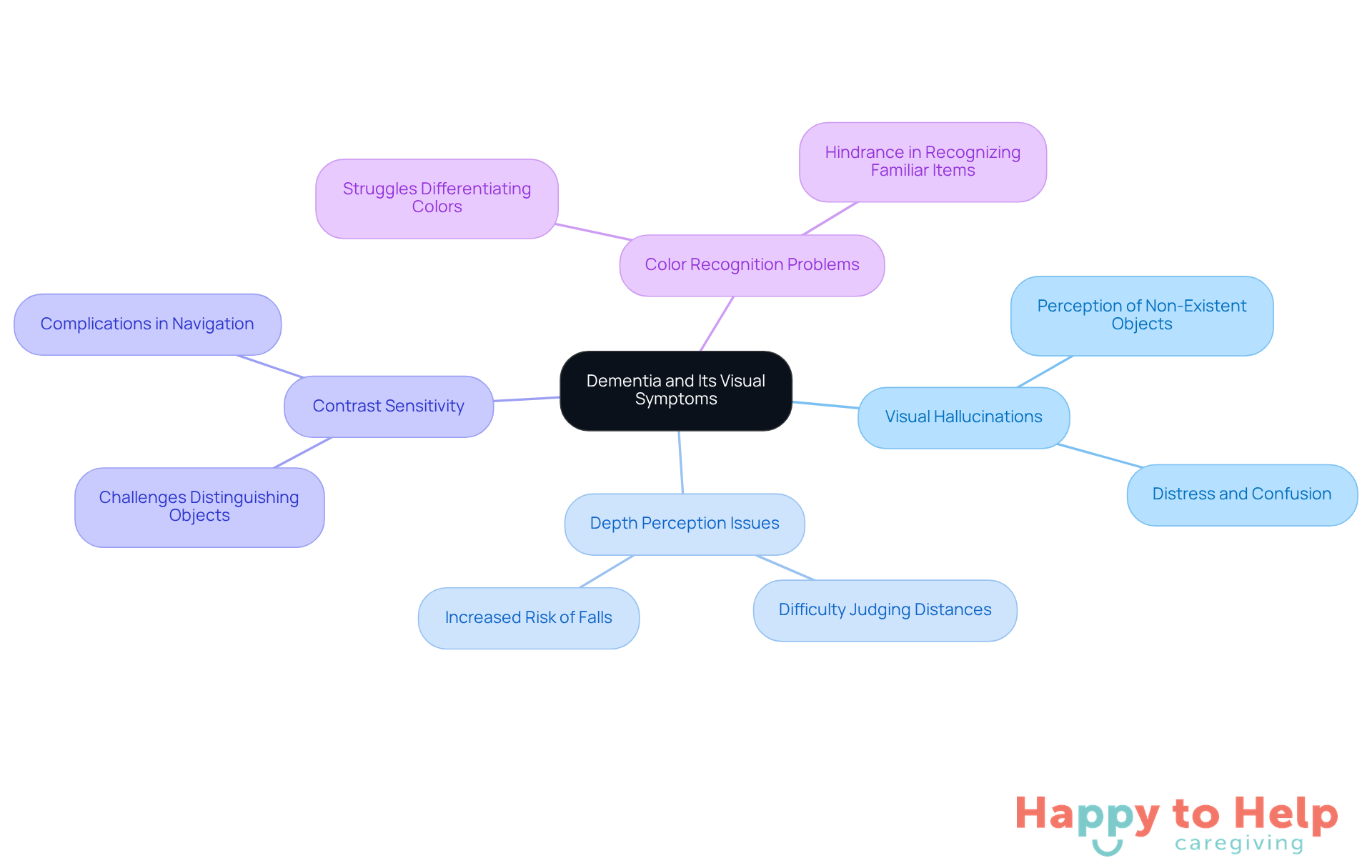
Agitate: Key visual symptoms include:
- Visual Hallucinations: Many individuals with dementia experience visual hallucinations, perceiving things that are not present, which can lead to distress and confusion.
- In individuals with dementia, their eyes look different, which can contribute to reduced contrast sensitivity, making it challenging to distinguish between objects and their backgrounds, thus complicating navigation in various environments.
- Individuals with depth perception issues may find that dementia eyes look different, leading to difficulty in judging distances and increasing the risk of falls and accidents, which poses safety concerns for those affected.
- For individuals with dementia, their eyes look different, which may contribute to struggles in differentiating colors and recognizing familiar items, ultimately hindering their ability to navigate their surroundings.
Understanding these symptoms is crucial for caregivers and families, particularly because dementia eyes look different, enabling them to provide tailored support and interventions. Studies show that almost 19% of memory-related disorders can be associated with sight impairments, which is important to consider since dementia eyes look different, emphasizing the significance of tackling these concerns in care for cognitive decline. Neurologists stress that preserving eyesight health is essential to cognitive well-being, as dementia eyes look different and routine eye exams along with suitable interventions can greatly improve the quality of life for individuals living with dementia.
Examine Visual Symptoms of Alzheimer's Disease
Alzheimer's disease primarily impacts the brain's memory and cognitive functions, but it also presents unique perceptual symptoms that pose significant challenges for caregivers.
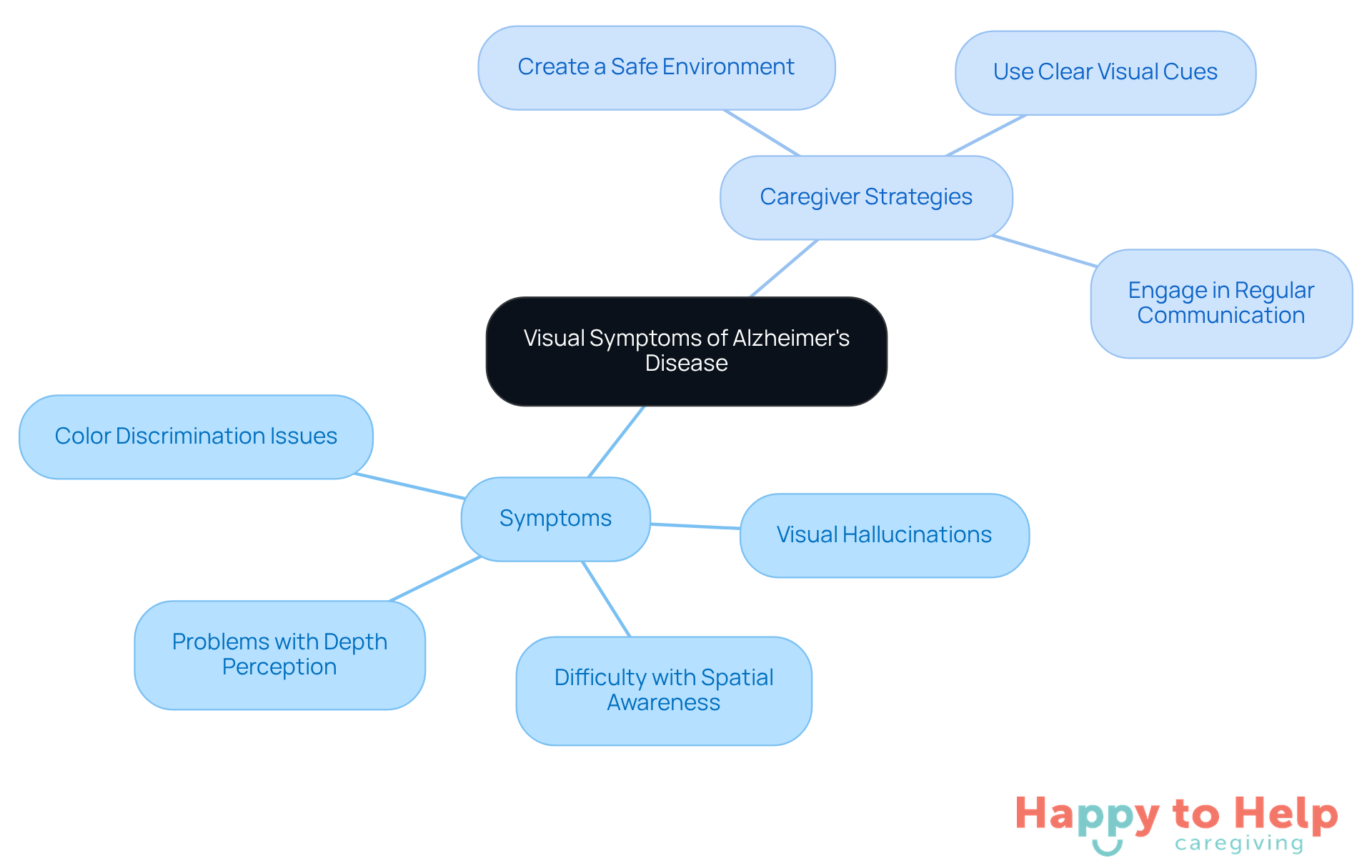
Problem: Patients may experience:
- Visual Hallucinations: These can range from simple shapes to complex scenes, often leading to confusion and distress.
- Difficulty with Spatial Awareness: Individuals may struggle to navigate familiar environments, increasing the risk of falls.
- Problems with Depth Perception: This can result in difficulty judging distances, making activities like driving or walking hazardous.
- Color Discrimination Issues: Patients may find it challenging to distinguish between colors, affecting their ability to identify items.
Agitate: These symptoms can significantly affect the quality of life for both patients and caregivers. The confusion and distress caused by visual hallucinations can lead to heightened anxiety, while difficulties with spatial awareness and depth perception can result in dangerous situations. Caregivers must be aware of these challenges to provide effective support.
Solution: To adapt their support strategies, caregivers can:
- Create a Safe Environment: Ensure that living spaces are free of hazards to minimize the risk of falls.
- Use Clear Visual Cues: Implementing contrasting colors and clear signage can help patients navigate their surroundings more easily.
- Engage in Regular Communication: Discussing experiences and feelings can help alleviate confusion and anxiety related to hallucinations.
By understanding these symptoms and implementing practical strategies, caregivers can enhance the quality of life for those affected by Alzheimer's disease.
Explore Visual Symptoms of Vascular Dementia
Vascular dementia, caused by diminished blood circulation to the brain, presents a unique set of visual challenges that differ from those seen in Alzheimer's disease. These challenges can significantly impact daily life for both patients and caregivers.
-
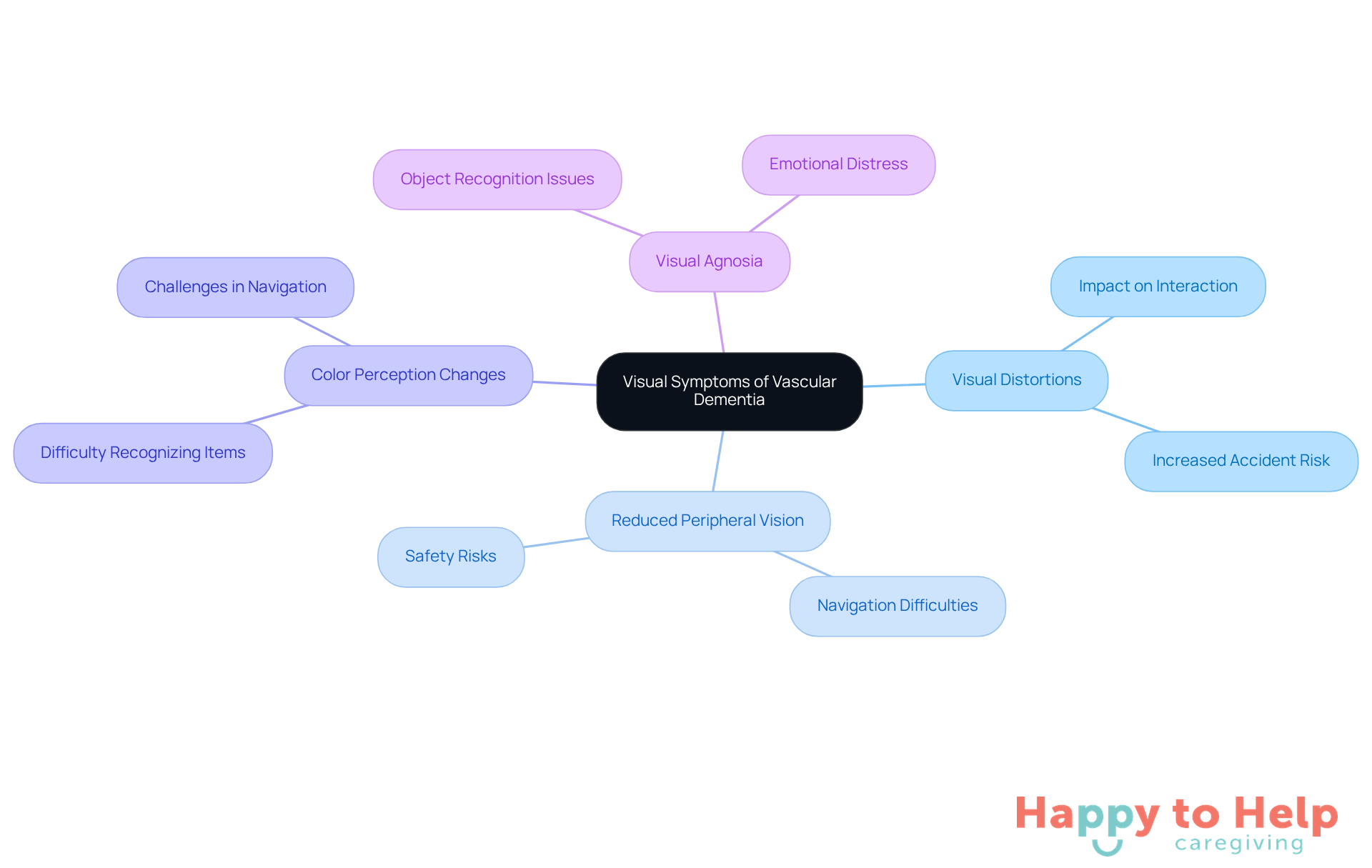
Visual Distortions: Individuals may experience objects appearing distorted or misaligned, complicating their interaction with the environment. This symptom can hinder daily activities and increase the risk of accidents.
-
Reduced Peripheral Vision: A common issue is the narrowing of peripheral vision, making it difficult for individuals to navigate their surroundings. They may not perceive items or individuals approaching from the side, resulting in potential safety risks.
-
Color Perception Changes: Similar to Alzheimer's, vascular cognitive impairment can affect color discrimination. Patients may struggle to differentiate between colors, impacting their ability to recognize familiar items and navigate effectively.
-
Visual Agnosia: Some individuals may find it challenging to recognize objects or faces, leading to confusion and frustration. This can create emotional distress for both the patient and their caregivers.
Recent studies indicate that around 16.3% of individuals with cognitive decline suffer from sight issues, underscoring the prevalence of these symptoms. As Michael J. Fox noted, "Acceptance doesn’t mean resignation; it means understanding that something is what it is and that there’s got to be a way through it."
Understanding these visual distortions is essential for caregivers. By recognizing these challenges, caregivers can offer personalized support, ensuring the safety and well-being of their loved ones.
Identify Visual Symptoms of Lewy Body Dementia
Lewy body dementia presents significant challenges for caregivers, primarily due to the abnormal protein deposits in the brain that lead to various cognitive and perceptual symptoms. Recognizing these symptoms is crucial for providing effective support and ensuring safety.
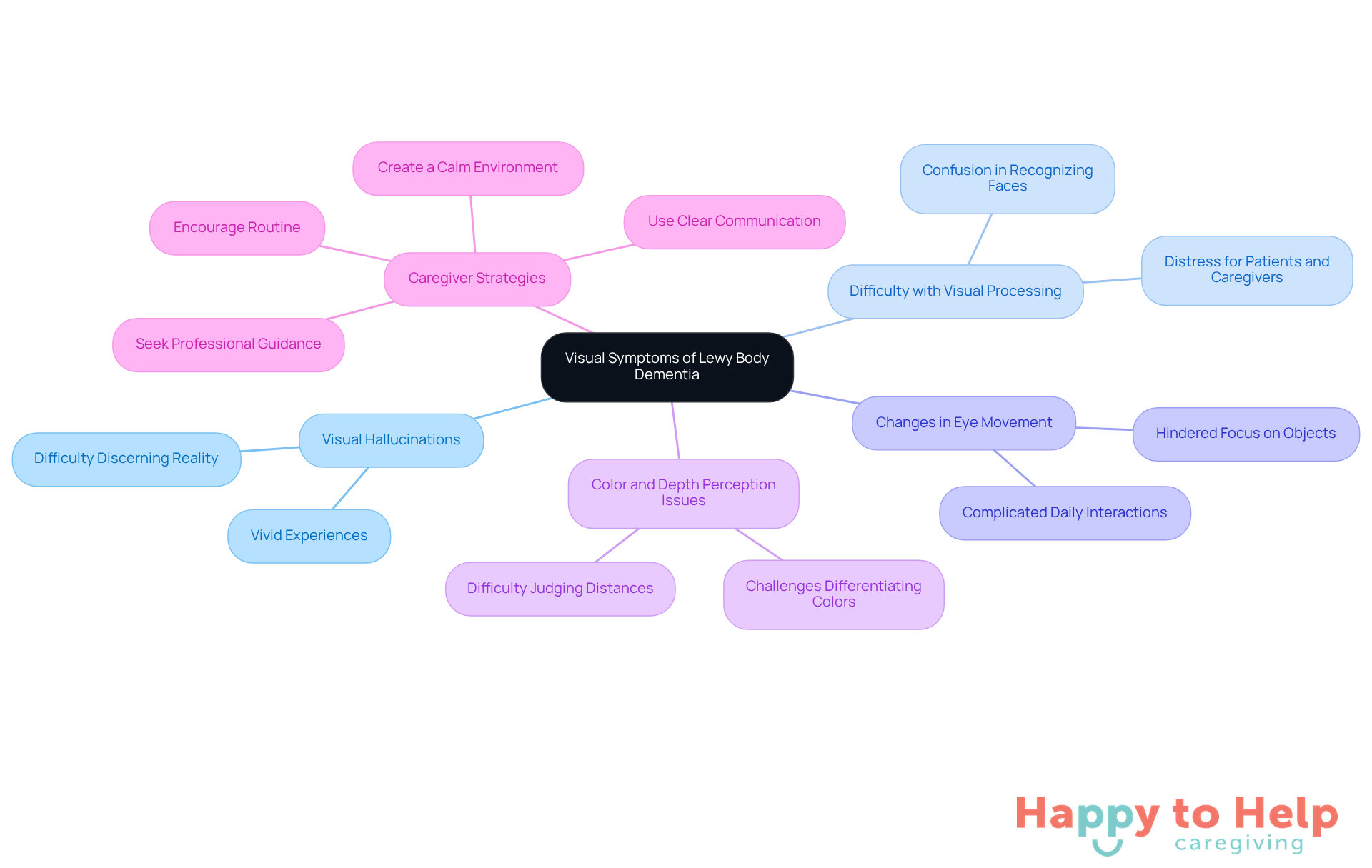
Key Visual Symptoms:
- Visual Hallucinations: These vivid experiences often involve detailed scenes or figures that are not present, making it difficult for caregivers to discern reality from hallucination.
- Difficulty with Visual Processing: Patients with dementia eyes look different and may struggle to interpret visual information, leading to confusion in recognizing familiar faces or items, which can be distressing for both the patient and caregiver.
- Changes in Eye Movement: Individuals with dementia eyes look different, and abnormal eye movements can hinder their ability to focus on objects, complicating daily interactions and activities.
- Color and Depth Perception Issues: Similar to other forms of cognitive decline, individuals may find it challenging to differentiate colors and assess distances, impacting their ability to navigate their environment safely.
To support individuals with Lewy body dementia, caregivers can implement the following strategies:
- Create a Calm Environment: Reducing visual clutter can help minimize confusion and anxiety.
- Use Clear Communication: Speak slowly and clearly, ensuring that the individual understands what is being said.
- Encourage Routine: Establishing a consistent daily routine can provide a sense of stability and predictability.
- Seek Professional Guidance: Consulting with healthcare professionals can provide additional strategies tailored to individual needs.
Compare and Contrast Visual Symptoms Across Dementia Types
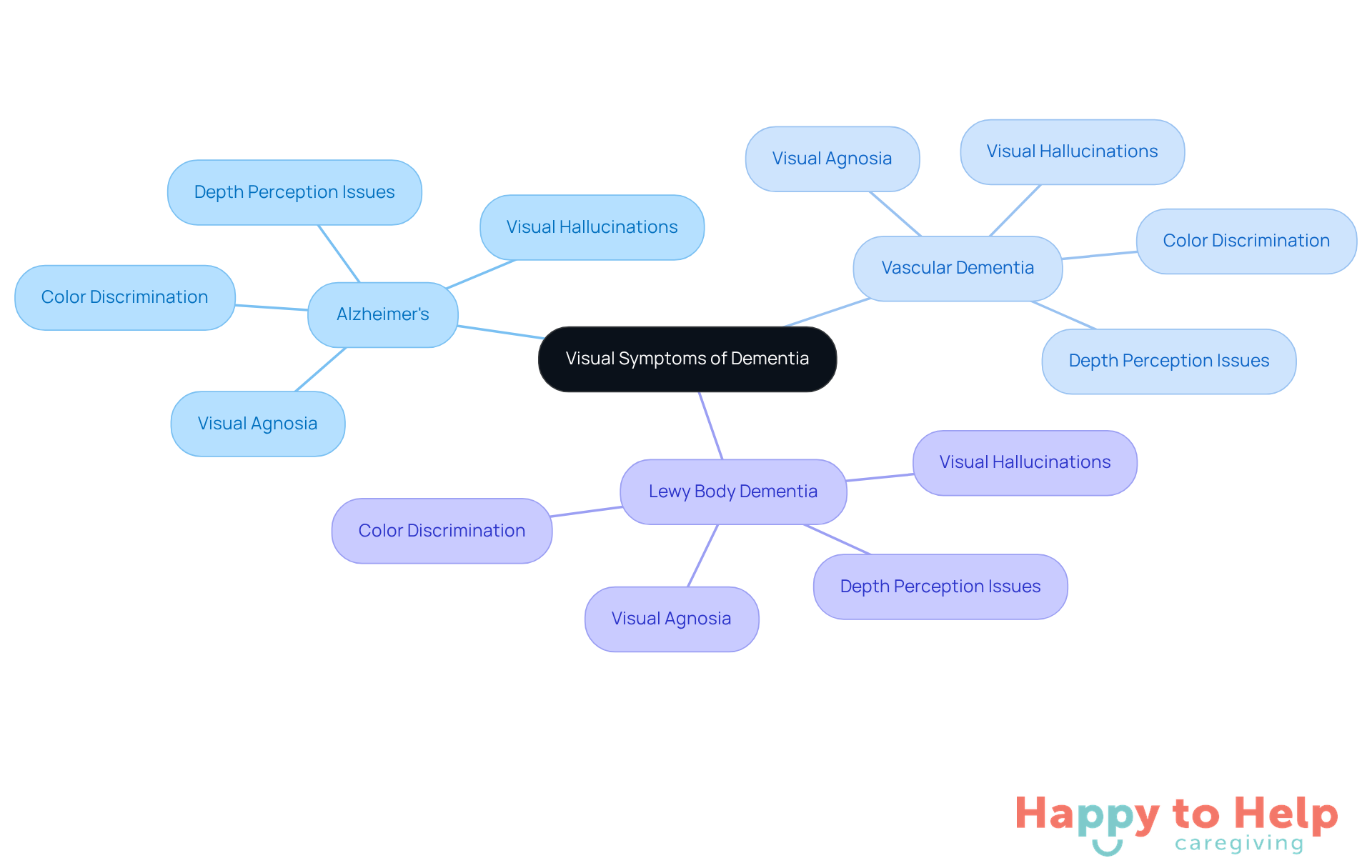
When comparing the visual symptoms of Alzheimer's, vascular dementia, and Lewy body dementia, caregivers face significant challenges. Understanding these differences is crucial for providing appropriate support.
-
Visual Hallucinations are common in both Alzheimer's and Lewy body dementia, but they are less prevalent in vascular dementia. This distinction can lead to confusion for caregivers who may not recognize the specific symptoms associated with each type.
-
Depth Perception Issues occur in all three types of dementia. However, the severity and impact on daily activities can vary greatly, making it essential for caregivers to assess each individual's situation carefully.
-
Color Discrimination is affected across all types, though the specific challenges may differ based on the underlying brain changes. Caregivers should be aware of these variations to better assist those they care for.
-
Visual Agnosia is more pronounced in vascular cognitive decline and Lewy body syndrome, impacting the ability to recognize familiar objects or faces. This can be particularly distressing for both the individual and their caregivers.
To effectively support individuals with dementia, caregivers should tailor their approaches based on these visual symptoms. By understanding the specific challenges associated with each type of dementia, caregivers can provide the most appropriate support, ensuring that individuals receive the care they need.
Taking the Next Steps
Dementia presents a significant challenge for caregivers, particularly when it comes to understanding the unique visual symptoms associated with different types. These symptoms can greatly affect the quality of life for both individuals with dementia and their caregivers. Recognizing how dementia eyes differ across types is crucial for effective care and support.
Visual symptoms such as:
- Hallucinations
- Depth perception issues
- Color discrimination challenges
vary among dementia types. For example, visual hallucinations are prevalent in Alzheimer's and Lewy body dementia but are less common in vascular dementia. Depth perception issues affect all three types, yet their severity can differ, requiring careful assessment by caregivers. Additionally, visual agnosia, especially pronounced in vascular and Lewy body dementia, is essential to understand as it can lead to emotional distress for patients.
By acknowledging these visual symptoms, caregivers can significantly enhance the quality of life for those living with dementia. This understanding empowers caregivers to provide tailored support, creating safer and more supportive environments. Raising awareness of these visual changes is vital for improving care strategies and ensuring that individuals affected receive the compassionate assistance they deserve.
https://iframe.tely.ai/cta/eyJhcnRpY2xlX2lkIjogIjY5M2Y1MDgxNjk1NDdlMzRlNWE0ZWU1OSIsICJjb21wYW55X2lkIjogIjY4ZWU1ZGNhNzMxNzYyNTU3ZjNjOTVjMSIsICJpbmRleCI6IG51bGwsICJ0eXBlIjogImFydGljbGUifQ==Frequently Asked Questions
What is dementia, and how does it affect vision?
Dementia is a variety of brain disorders that impair memory, thinking, and social abilities, disrupting daily life. It can also lead to visual symptoms, such as blurred vision, depth perception issues, and difficulties in identifying faces or objects due to the degeneration of brain areas responsible for processing images.
What are some key visual symptoms associated with dementia?
Key visual symptoms of dementia include visual hallucinations, reduced contrast sensitivity, depth perception issues, and difficulties in differentiating colors and recognizing familiar items.
How do visual hallucinations affect individuals with dementia?
Individuals with dementia may experience visual hallucinations, perceiving things that are not present, which can lead to distress and confusion.
Why is depth perception important in dementia patients?
Depth perception is crucial because individuals with dementia may have difficulty judging distances, which increases the risk of falls and accidents, posing safety concerns.
How can caregivers support individuals experiencing visual symptoms of dementia?
Caregivers can provide tailored support by understanding the visual symptoms, creating a safe environment, using clear visual cues, and engaging in regular communication to alleviate confusion and anxiety.
What is the relationship between eyesight health and cognitive well-being in dementia?
Preserving eyesight health is essential for cognitive well-being, as studies show that nearly 19% of memory-related disorders are associated with sight impairments. Routine eye exams and suitable interventions can improve the quality of life for individuals living with dementia.
What unique visual symptoms are associated with Alzheimer's disease?
Alzheimer's disease presents unique visual symptoms, including visual hallucinations, difficulty with spatial awareness, problems with depth perception, and color discrimination issues.
How can caregivers adapt their support strategies for Alzheimer's patients with visual symptoms?
Caregivers can create a safe environment, use clear visual cues, and engage in regular communication to enhance support for Alzheimer's patients experiencing visual symptoms.
List of Sources
- Understand Dementia and Its Visual Symptoms
- Nearly 20% of dementia cases could be prevented through better eye health: Study (https://fox5sandiego.com/news/nearly-20-of-dementia-cases-could-be-prevented-through-better-eye-health-study)
- Vision screening vital: new research find vision decline predicts… (https://neura.edu.au/news-media/media-releases/vision-screening-vital-new-research-find-vision-decline-predicts-cognitive-decline)
- Vision loss: The hidden risk factor for dementia and the preventative steps you can take now (https://unthsc.edu/newsroom/story/vision-loss-the-hidden-risk-factor-for-dementia-and-the-preventative-steps-you-can-take-now)
- Good Vision Is Critical for Good Brain Health (https://alzinfo.org/articles/prevention/good-vision-is-critical-for-good-brain-health)
- Alzheimer's: Could routine eye exams help spot early signs? (https://medicalnewstoday.com/articles/routine-eye-exams-may-help-spot-early-signs-alzheimers-dementia)
- Examine Visual Symptoms of Alzheimer's Disease
- Visual Perception Changes May Be an Early Warning Sign of Alzheimer's Disease (https://everydayhealth.com/alzheimers-disease/visual-perception-problems-may-be-an-early-alzheimers-sign-especially-in-women)
- Key differences between visual- and memory-led Alzheimer’s discovered (https://ucl.ac.uk/news/2025/apr/key-differences-between-visual-and-memory-led-alzheimers-discovered)
- Neuropathological basis of visual dysfunction in rare Alzheimer's forms (https://news-medical.net/news/20250403/Neuropathological-basis-of-visual-dysfunction-in-rare-Alzheimers-forms.aspx)
- Could Bizarre Visual Symptoms Be a Telltale Sign of Alzheimer’s? (https://ucsf.edu/news/2024/01/426986/could-bizarre-visual-symptoms-be-telltale-sign-alzheimers)
- Explore Visual Symptoms of Vascular Dementia
- Posterior cortical atrophy: a dementia that affects the vision (https://dementiasplatform.uk/news-and-media/blog/posterior-cortical-atrophy-a-dementia-that-affects-the-vision)
- Visual impairment in aging and cognitive decline: experience in a Memory Clinic - PMC (https://pmc.ncbi.nlm.nih.gov/articles/PMC6581941)
- (https://belleviecare.co.uk/support-advice/dementia-quotes-to-lift-your-spirits)
- Possible tool discovered to diagnose common contributor to vascular dementia (https://keck.usc.edu/news/possible-tool-discovered-to-diagnose-common-contributor-to-vascular-dementia)
- Visual Impairment and Risk of Dementia in 2 Population-Based Prospective Cohorts: UK Biobank and EPIC-Norfolk (https://academic.oup.com/biomedgerontology/article/77/4/697/6412742)
- Identify Visual Symptoms of Lewy Body Dementia
- Hallucinations Greatly Increase Odds of LBD Over Alzheimer’s (https://lbda.org/early-visual-hallucinations-greatly-increase-odds-of-lbd-over-alzheimers)
- Geriatrics Update Session Examines Lewy Body Dementia, Parkinson's Disease, Alzheimer's - UAMS News (https://news.uams.edu/2025/10/27/geriatrics-update-session-examines-lewy-body-dementia-parkinsons-disease-alzheimers)
- Association between prevalence rate of dementia with Lewy bodies and sleep characteristics in Chinese old adults - PMC (https://pmc.ncbi.nlm.nih.gov/articles/PMC9518672)
- Managing Hallucinations and Changes in Visual Perception in Lewy body dementia - Lewy Body (https://lewybody.org/information-and-support/information-leaflets/managing-hallucinations-and-changes-in-visual-perception-in-lewy-body-dementia)
- Frontiers | Characteristics of initial symptoms in patients with dementia with Lewy body disease (https://frontiersin.org/journals/neurology/articles/10.3389/fneur.2022.1024995/full)