6 Essential Activities of Daily Living Every Caregiver Should

For families in our service areas
For families in our service areas, this guide explains caregiver support and how non-medical in-home caregiving can support care planning in East Idaho, Treasure Valley & Magic Valley, Northern Wasatch, North Central West Virginia, and Northeast Ohio.
Why Activities of Daily Living Every Matters
Understanding the complexities of daily living is crucial for caregivers who assist individuals facing challenges due to age, illness, or disability. Many older adults struggle with the six activities of daily living (ADLs):
- Bathing
- Dressing
- Eating
- Toileting
- Transferring
- Managing continence
These activities are essential for maintaining autonomy and quality of life.
However, when older adults find these tasks difficult, it can lead to increased risks of depression and a decline in overall well-being. Caregivers must recognize these challenges to provide effective support.
So, how can caregivers empower their clients to navigate these fundamental activities while preserving their dignity and independence? By implementing practical strategies, caregivers can make a significant difference in their clients' lives.
Define Activities of Daily Living (ADLs)
The six activities of daily living (ADLs) represent essential self-care tasks that individuals perform daily to maintain their health and well-being. The six activities of daily living are vital for independent living and encompass tasks such as:
- Bathing
- Dressing
- Eating
- Toileting
- Transferring
- Managing continence
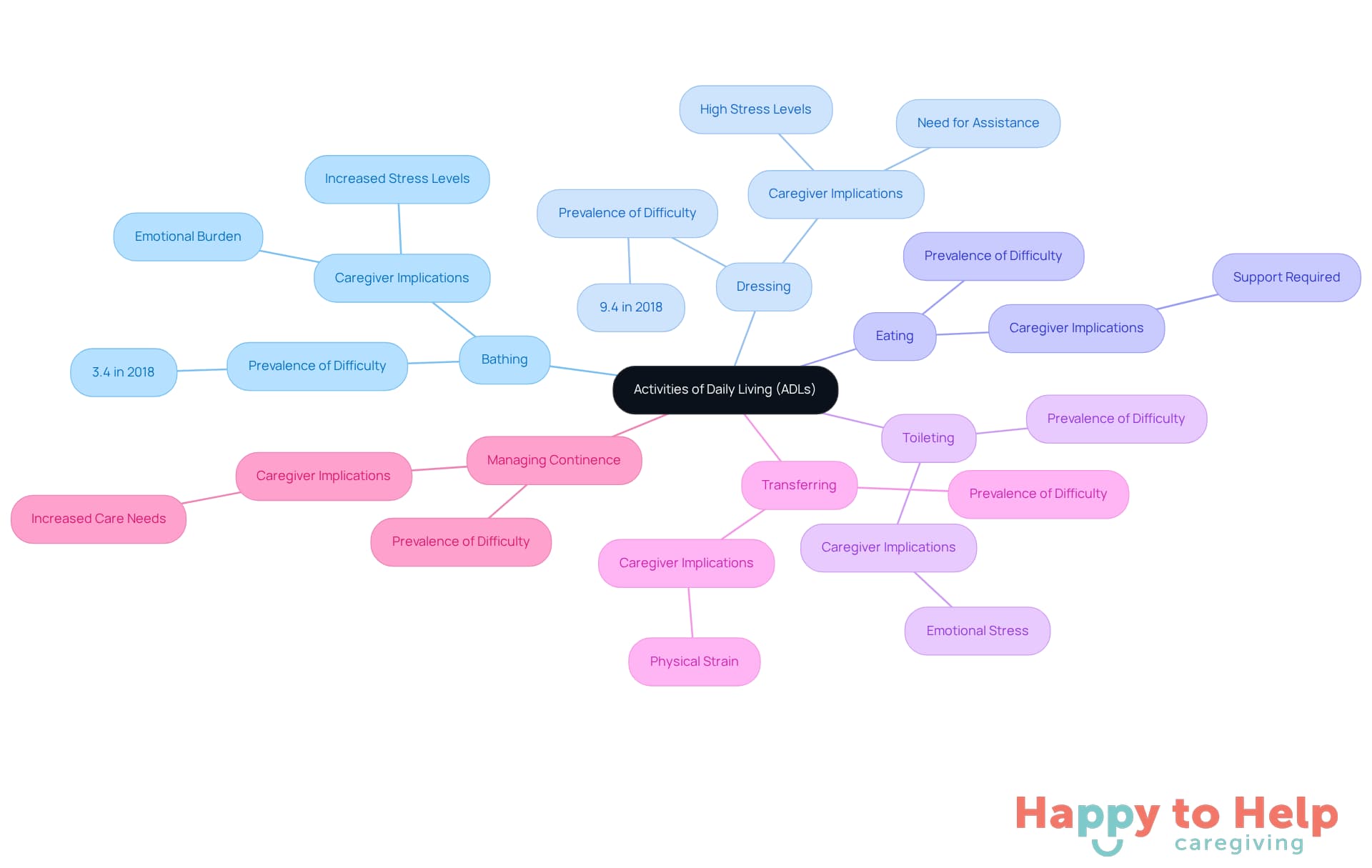
The challenge arises when individuals struggle with these tasks, which can significantly impact their autonomy and quality of life. Research shows that in 2018, the overall prevalence of ADL disability was 16.5%, indicating the substantial difficulties faced by older adults. Nearly 20 million adults aged 55 and above encounter challenges with one or more ADLs, underscoring the commonality of these issues.
The implications of these challenges extend beyond mere inconvenience. Older adults who have difficulty with ADLs often face increased risks of depression and health decline. Alarmingly, studies reveal that 40% to 70% of family caregivers experience clinically significant symptoms of depression, highlighting the emotional burden of caregiving. As Lindsey Copeland notes, "Two-thirds of those providing care assist with at least one activity of daily living (ADL), such as eating, bathing, or dressing." This statistic illustrates the crucial role caregivers play in supporting their loved ones' independence and well-being.
To effectively address these challenges, caregivers must recognize the significance of the six activities of daily living (ADLs). By understanding and supporting these vital self-care tasks, caregivers can enhance the overall quality of life for those they assist. Practical solutions include:
- Creating structured routines
- Encouraging independence in daily tasks
- Seeking community resources for additional support
By prioritizing ADLs, caregivers can ensure that their loved ones maintain their autonomy and dignity.
Explore the Six Key Activities of Daily Living
The Six Key Activities of Daily Living (ADLs)
Caregivers often face significant challenges when assisting clients with the six key Activities of Daily Living (ADLs). The six activities of daily living are crucial for maintaining autonomy and quality of life, yet they can be difficult for clients to manage independently.
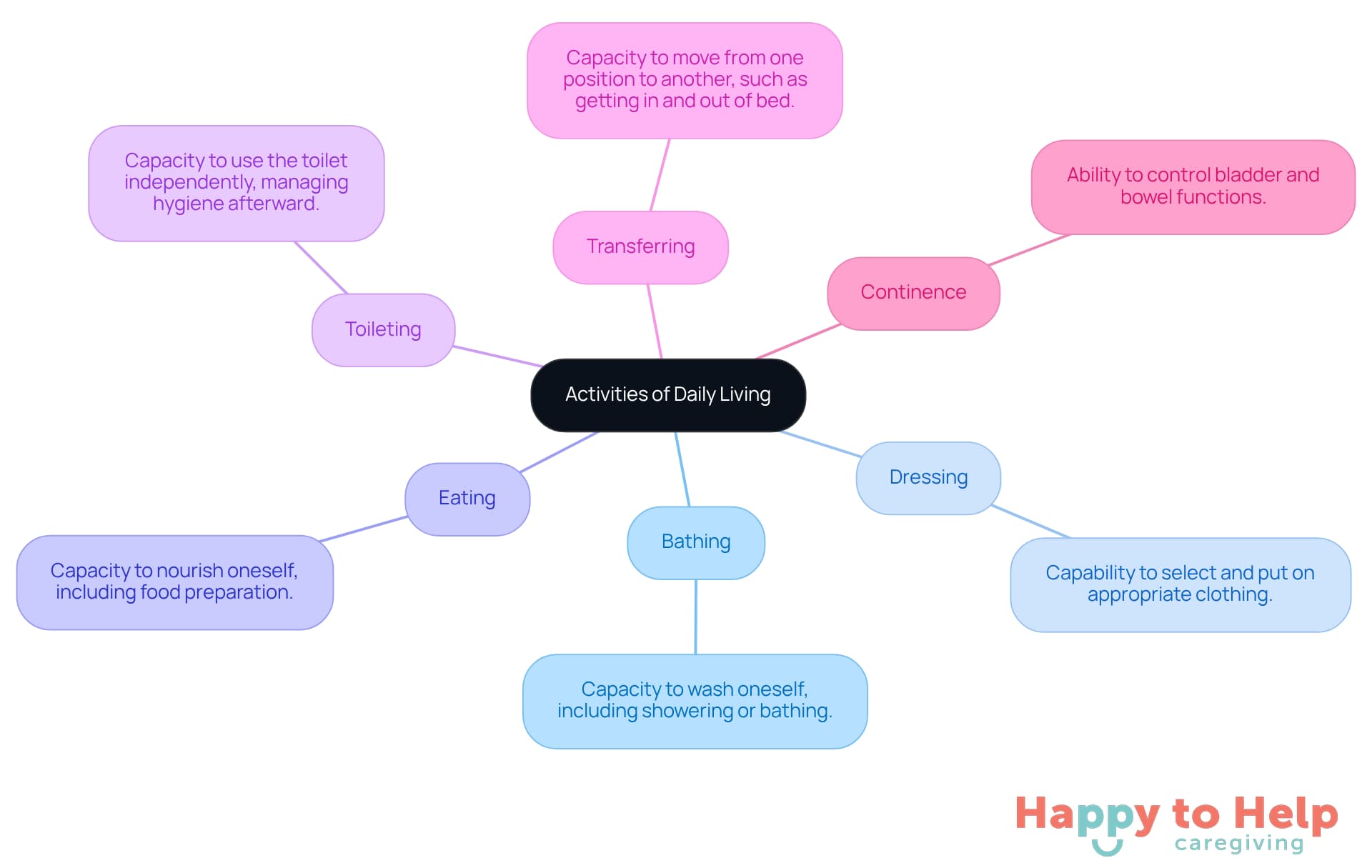
- Bathing: The capacity to wash oneself, which may involve showering or bathing.
- Dressing: The capability to select and put on appropriate clothing.
- Eating: The capacity to nourish oneself, including the preparation of food if necessary.
- Toileting: The capacity to use the toilet independently, including managing hygiene afterward.
- Transferring: The capacity to move from one position to another, such as getting in and out of bed or a chair.
- Continence: The ability to control bladder and bowel functions.
The preservation of autonomy and quality of life relies on the six activities of daily living. Caregivers must be skilled at helping clients with these tasks as required. By providing the right support, caregivers can empower clients to maintain their independence and dignity.
Understand the Importance of ADLs in Caregiving
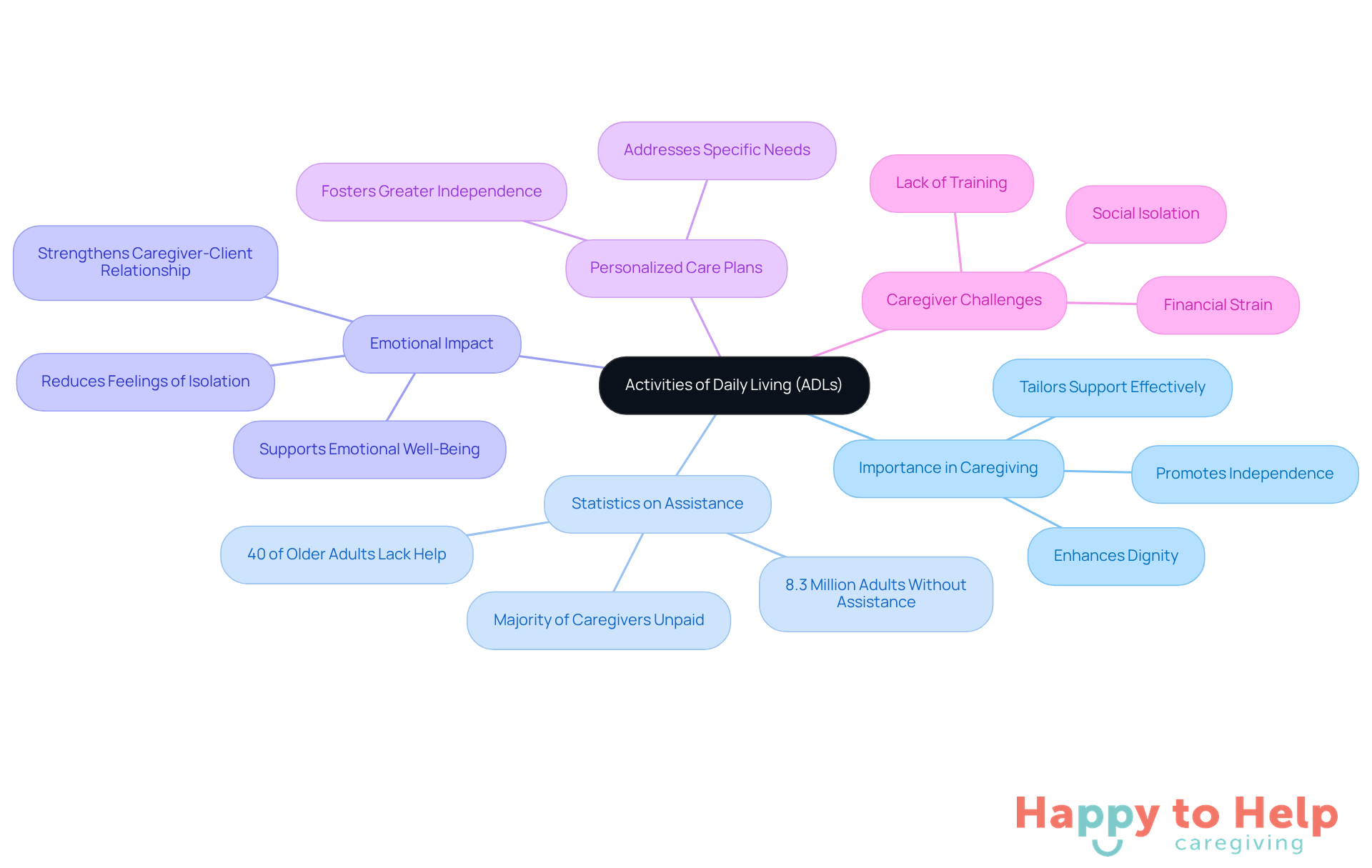
Understanding the six activities of daily living (ADLs) is crucial for caregivers who assist individuals facing challenges due to age, illness, or disability. The inability to perform the six activities of daily living often indicates the need for more comprehensive caregiving services. This knowledge not only aids in assessing care needs but also enhances the provider's ability to tailor support effectively.
Focusing on the six activities of daily living promotes independence and dignity, essential for the emotional and psychological well-being of individuals. By assisting clients with the six activities of daily living, caregivers help them maintain a sense of normalcy and control over their lives. Alarmingly, nearly 40% of older adults struggling with daily tasks do not receive the assistance they need. In 2020, 8.3 million adults, or 42 percent of those facing challenges in daily activities, went without help, highlighting the critical role of support providers in improving quality of life.
Moreover, recognizing the impact of the six activities of daily living on client autonomy can lead to better care strategies for individuals with disabilities. Caregivers who understand the intricacies of the six activities of daily living can create personalized care plans that address specific needs, fostering greater independence. This approach not only reduces feelings of isolation-reported by nearly 1 in 4 caregivers-but also strengthens the caregiver-client relationship, cultivating a supportive environment that nurtures emotional health. It's important to note that most family caregivers are unpaid, which adds to their challenges, underscoring the need for increased support and recognition of their essential contributions.
Assessing Activities of Daily Living: Methods and Tools
Evaluating the six activities of daily living (ADLs) presents a significant challenge for caregivers. Accurately assessing a client's functional skills is crucial for developing effective care plans. Without proper evaluation, caregivers may struggle to understand the specific needs of those they care for, potentially hindering the client's independence.
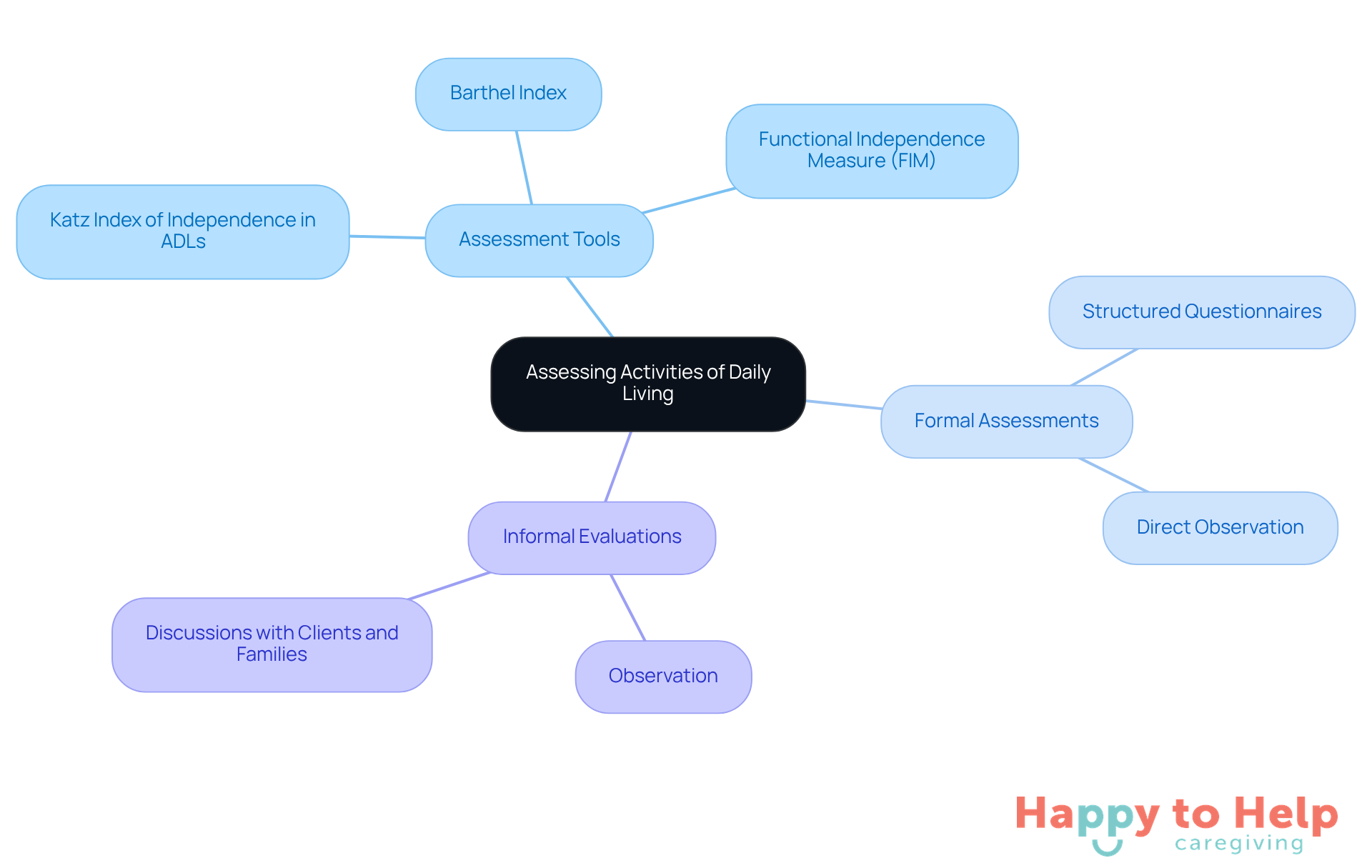
To address this issue, caregivers can utilize various assessment tools:
- Katz Index of Independence in Activities of Daily Living: Measures independence in six basic ADLs, providing a score that indicates the level of assistance needed.
- Barthel Index: Evaluates a person's capacity to carry out daily activities, often used in rehabilitation settings.
- Functional Independence Measure (FIM): Assesses a person's level of disability and indicates how much assistance they require.
In addition to formal assessments, caregivers can conduct informal evaluations through observation and discussions with clients and their families. By understanding a client's capabilities and limitations regarding the six activities of daily living, caregivers can create tailored care plans that promote independence and meet specific needs.
Making the Right Choice
Understanding the six essential activities of daily living (ADLs) is crucial for caregivers who wish to support their clients effectively. These fundamental tasks - bathing, dressing, eating, toileting, transferring, and managing continence - are not merely routine actions; they are vital for maintaining independence and enhancing the quality of life for those in need. Recognizing the significance of these activities enables caregivers to provide tailored support that promotes autonomy and dignity.
However, many older adults face significant challenges in performing these ADLs. With nearly 20 million adults aged 55 and above struggling with one or more ADLs, the emotional toll on caregivers can be overwhelming. This situation not only affects the clients but also places a burden on caregivers, who must navigate the complexities of providing care while managing their own emotional well-being.
To address these challenges, caregivers can implement structured routines, encourage independence, and utilize assessment tools. By doing so, they can effectively meet the specific needs of their clients, fostering a supportive environment that nurtures emotional well-being.
Ultimately, the importance of understanding and assisting with ADLs cannot be overstated. Caregivers should prioritize these activities to enhance the quality of life for those they care for and to mitigate their own emotional burdens. By embracing the role of a knowledgeable and compassionate caregiver, individuals can make a profound difference in the lives of their clients, ensuring they maintain their independence and dignity throughout their daily lives.
https://iframe.tely.ai/cta/eyJhcnRpY2xlX2lkIjogIjY5MjBmZDYzNzJkZTk4NjA5OWQwYjBlMCIsICJjb21wYW55X2lkIjogIjY4ZWU1ZGNhNzMxNzYyNTU3ZjNjOTVjMSIsICJpbmRleCI6IG51bGwsICJ0eXBlIjogImFydGljbGUifQ==Frequently Asked Questions
What are Activities of Daily Living (ADLs)?
Activities of Daily Living (ADLs) are essential self-care tasks that individuals perform daily to maintain their health and well-being. The six ADLs include bathing, dressing, eating, toileting, transferring, and managing continence.
Why are ADLs important for individuals?
ADLs are vital for independent living, and difficulties in performing these tasks can significantly impact an individual's autonomy and quality of life.
What is the prevalence of ADL disability among older adults?
In 2018, the overall prevalence of ADL disability was 16.5%, with nearly 20 million adults aged 55 and above facing challenges with one or more ADLs.
What are the potential consequences of difficulties with ADLs?
Older adults who struggle with ADLs are at increased risk of depression and health decline. Additionally, 40% to 70% of family caregivers experience clinically significant symptoms of depression due to the emotional burden of caregiving.
How do caregivers support individuals facing challenges with ADLs?
Caregivers can support individuals by recognizing the significance of ADLs, creating structured routines, encouraging independence in daily tasks, and seeking community resources for additional support.
What role do caregivers play in relation to ADLs?
Caregivers play a crucial role in assisting their loved ones with ADLs, which helps enhance the overall quality of life and maintain the autonomy and dignity of those they care for.
List of Sources
- Define Activities of Daily Living (ADLs)
- U.S. Caregiving System Leaves Significant Unmet Needs Among Aging Adults - The New School SCEPA (https://economicpolicyresearch.org/resource-library/u-s-caregiving-system-leaves-significant-unmet-needs-among-aging-adults)
- CaringBridge (https://caringbridge.org/resources/inspirational-quotes-on-caregiving)
- Caregiver Statistics: Health, Technology, and Caregiving Resources (https://caregiver.org/resource/caregiver-statistics-health-technology-and-caregiving-resources)
- As Family Caregiving Grows, So Does the Need for Reform - Medicare Rights Center (https://medicarerights.org/medicare-watch/2025/08/14/as-family-caregiving-grows-so-does-the-need-for-reform)
- Prevalence and Trends of Basic Activities of Daily Living Limitations in Middle-Aged and Older Adults in the United States - PMC (https://pmc.ncbi.nlm.nih.gov/articles/PMC10660458)
- Explore the Six Key Activities of Daily Living
- As Family Caregiving Grows, So Does the Need for Reform - Medicare Rights Center (https://medicarerights.org/medicare-watch/2025/08/14/as-family-caregiving-grows-so-does-the-need-for-reform)
- Family Caregiver Support, Education Needs Growing (https://hospicenews.com/2025/11/11/family-caregiver-support-education-needs-growing)
- The number of family caregivers is surging (https://19thnews.org/2025/07/family-caregivers-surging-aarp)
- Caregiving in the US 2025: A Comprehensive Overview (https://retirementlivingsourcebook.com/proagingnews/caregiving-in-the-us-2025-a-comprehensive-overview)
- Caregiving in the US 2025: Caring Across States (https://aarp.org/pri/topics/ltss/family-caregiving/caregiving-in-the-us-2025-caring-across-states)
- Understand the Importance of ADLs in Caregiving
- New Report Reveals Crisis Point for America’s 63 million Family Caregivers (https://states.aarp.org/maryland/caregiving-report)
- New data detail which older adults are more likely to need help with ADLs (https://mcknightsseniorliving.com/news/new-data-detail-which-older-adults-are-more-likely-to-need-help-with-adls)
- U.S. Caregiving System Leaves Significant Unmet Needs Among Aging Adults - The New School SCEPA (https://economicpolicyresearch.org/resource-library/u-s-caregiving-system-leaves-significant-unmet-needs-among-aging-adults)
- Caregiving in the US 2025: A Comprehensive Overview (https://retirementlivingsourcebook.com/proagingnews/caregiving-in-the-us-2025-a-comprehensive-overview)
- Prevalence and Trends of Basic Activities of Daily Living Limitations in Middle-Aged and Older Adults in the United States - PMC (https://pmc.ncbi.nlm.nih.gov/articles/PMC10660458)
- Assessing Activities of Daily Living: Methods and Tools
- Top 51 Quotes About the Beauty of Aging (https://7dayhomecare.com/top-51-quotes-about-the-beauty-of-aging)
- Cross-Sectional Study Comparing Activities of Daily Living Using Barthel Index Within a Geriatric Population Having Non-Communicable Diseases - PMC (https://pmc.ncbi.nlm.nih.gov/articles/PMC11335172)
- New Alzheimer’s Association Report: Americans Want Early Diagnosis, Treatment and Are Open to Risk-Taking to Slow Disease Progression (https://alz.org/news/2025/facts-figures-report-alzheimers-treatment)
- Barthel Index (https://sralab.org/rehabilitation-measures/barthel-index)
- Activities of Daily Living - StatPearls - NCBI Bookshelf (https://ncbi.nlm.nih.gov/books/NBK470404)