
The Importance of Launch Your In Home Care Business
Starting an in-home care business presents a unique opportunity to make a meaningful difference in people's lives. However, it also comes with significant challenges. Aspiring entrepreneurs face a complex landscape filled with market dynamics, operational strategies, and compliance requirements that are crucial for success in this rapidly growing sector.
The path to establishing a thriving agency is fraught with questions:
- How can one effectively navigate the complexities of market research?
- How can adequate financing be secured?
- What steps are necessary to ensure compliance with state regulations?
These challenges can feel overwhelming, but they are not insurmountable.
This guide delves into the essential steps necessary to launch a successful in-home care business. By providing a clear roadmap, it aims to equip those ready to embark on this rewarding journey with the insights and strategies needed to overcome obstacles and thrive in this vital industry.
Conduct Market Research
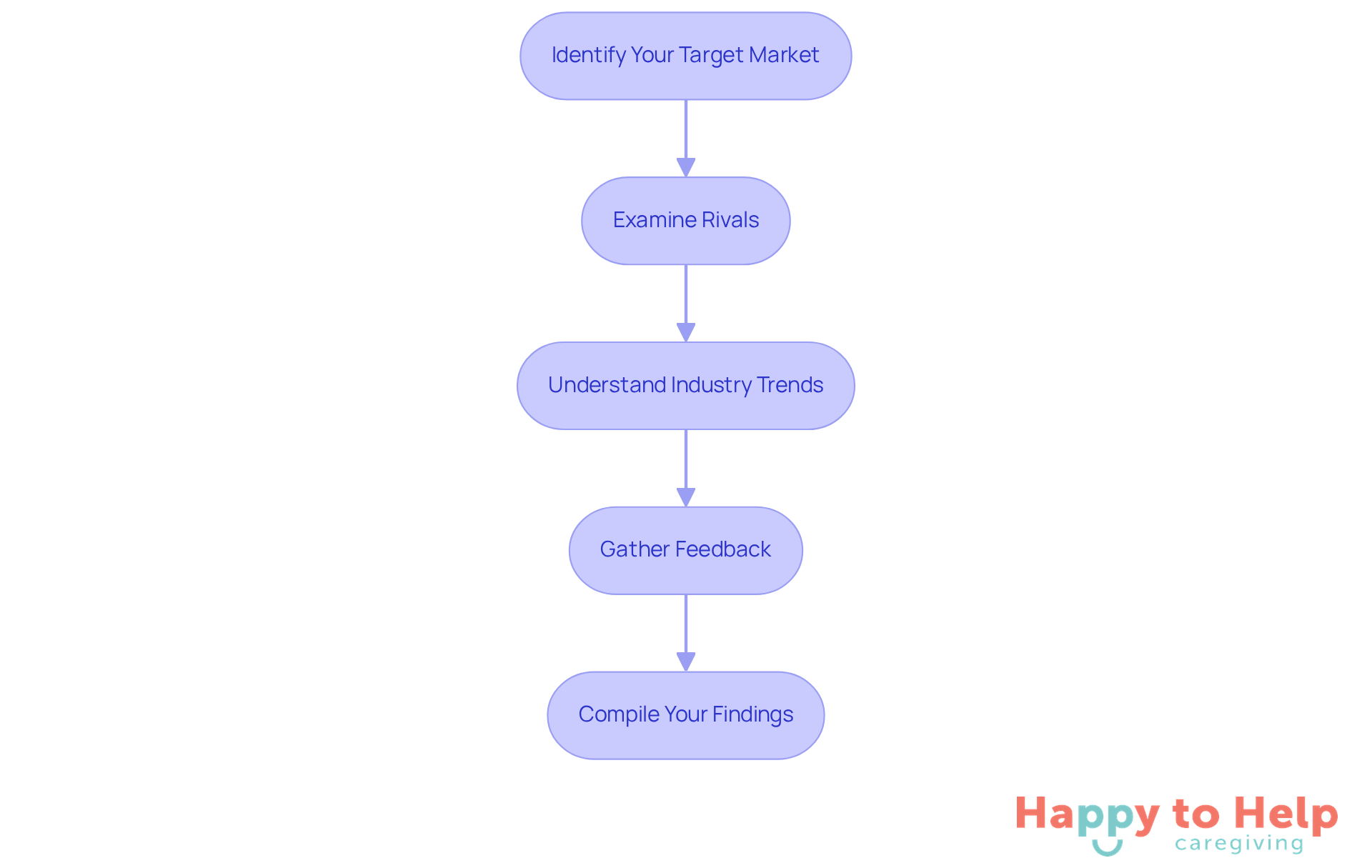
Identify Your Target Market: Caregivers often struggle to connect with their potential clients. Understanding the demographics - such as age, health conditions, and geographic location - can be a game changer. Surveys, interviews, and focus groups are effective tools to gather this crucial data.
Examine Rivals: The competition in residential assistance can be fierce. Investigating current agencies in your area allows you to assess their offerings, pricing, and customer feedback. This analysis helps pinpoint market opportunities that your business can uniquely address.
Understand Industry Trends: Staying informed about home care industry trends is vital. Technological advancements and changing regulations can significantly impact your business. Resources like industry reports and trade publications provide valuable insights to keep you ahead of the curve.
Gather Feedback: Engaging with potential clients and their families is essential. Understanding their needs and preferences can guide you in defining your offerings and marketing strategies effectively.
Compile Your Findings: Finally, create a comprehensive report summarizing your research findings. This document will serve as a valuable reference for your business plan and strategy, ensuring you’re well-prepared to meet the needs of your clients.
Develop a Business Plan
-
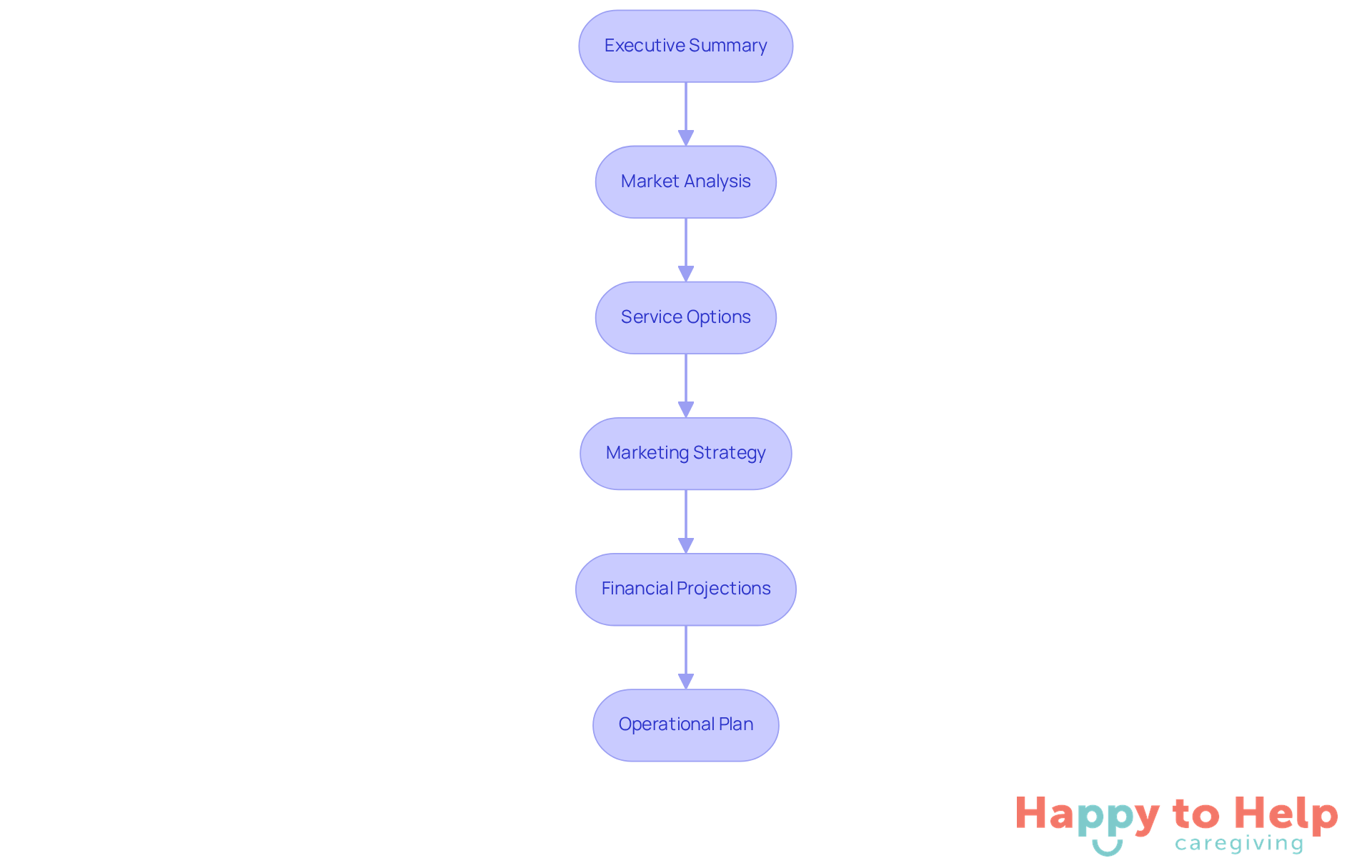
Executive Summary: Start with a concise overview of your business that captures your mission statement, the services you offer, and your target market. This section should clearly convey your organization's unique value proposition, setting the tone for the rest of the plan. Incorporating SMART goals can provide a clear roadmap for your agency's growth.
-
Market Analysis: Present your market research findings, highlighting the increasing demand for services in the in-home care business. The U.S. residential healthcare market is projected to grow significantly, making it essential to understand your competitive advantage. For instance, the anticipated 21% growth rate for health aides from 2023 to 2033 underscores the rising need for quality assistance. Staying informed about local market trends and competitors' offerings is crucial for effectively addressing competition in the home support sector.
-
Service Options: Clearly outline the services your organization will provide, such as companionship support, post-hospital recovery assistance, respite support, and palliative aid. Tailoring these offerings to meet the unique needs of your clientele will enhance your agency's appeal.
-
Marketing Strategy: Detail your approach to attracting clients, which may include digital marketing, community outreach, and partnerships with healthcare providers. Utilizing platforms like Nextdoor can help build community trust and connect with potential clients effectively.
-
Financial Projections: Include detailed financial forecasts that cover startup costs, revenue projections, and break-even analysis. Given that personal assistance typically costs around $25 per hour, estimating your income based on client numbers is vital for securing funding and ensuring sustainable success. For example, if you expect to have 20 clients receiving 20 hours of support per week at $25 per hour, your estimated annual revenue would be $520,000. Additionally, consider ongoing expenses such as wages, insurance, and operational costs to provide a comprehensive view of financial considerations.
-
Operational Plan: Describe the daily operations of your business, focusing on staffing, training, and client management processes. A well-structured operational strategy is essential for maintaining service quality and ensuring compliance with local regulations in the home care business, especially as the demand for residential assistance services grows. Furthermore, consider discussing common business structures for domestic support providers, such as LLC or sole proprietorship, to aid readers in their planning process.
Secure Financing
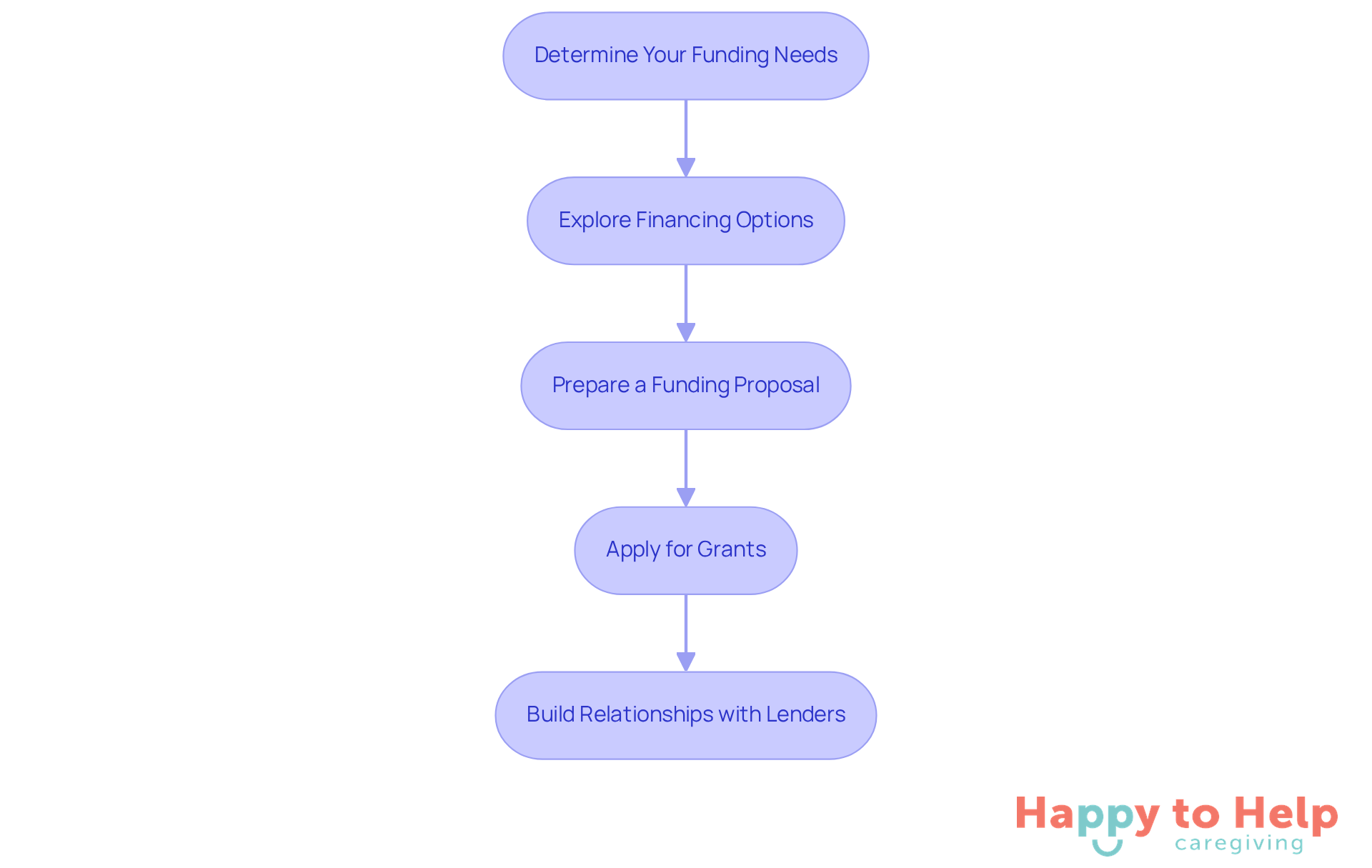
Determine Your Funding Needs: Many caregivers struggle with securing the necessary capital to start their businesses. It's crucial to calculate the total amount required, which includes costs for licenses, equipment, marketing, and initial operating expenses.
Explore Financing Options: Without adequate funding, caregivers may find it challenging to launch their services. Investigate various funding sources, such as personal savings, bank loans, SBA loans, and grants specifically designed for residential assistance enterprises.
Prepare a Funding Proposal: A well-crafted funding proposal can make a significant difference. Create a compelling document that outlines your business plan, market research, and financial projections to present to potential lenders or investors.
Apply for Grants: Many caregivers miss out on valuable funding opportunities. Research accessible grants for residential support organizations, as numerous local and federal programs offer financial assistance to support new businesses in the healthcare sector.
Build Relationships with Lenders: Establishing connections with banks and financial institutions that specialize in healthcare financing can be beneficial. A strong relationship can facilitate smoother loan applications, making the funding process less daunting.
Obtain Licenses and Certifications
Problem: Navigating State Regulations
Each state has distinct licensing criteria for home support services, which can be overwhelming. For instance, Colorado requires a Class B Home Care Provider license, while California mandates 5 hours of initial training for caregivers. Understanding these regulations is crucial for compliance and avoiding potential legal issues.
Agitate: The Implications of Non-Compliance
Failing to adhere to state regulations can lead to severe consequences, including fines and the inability to operate legally. This not only jeopardizes your agency's reputation but also affects the quality of care provided to clients. For example, Indiana requires renewal applications to be submitted at least 60 days prior to license expiration, highlighting the importance of staying informed.
Solution: Actionable Steps for Compliance
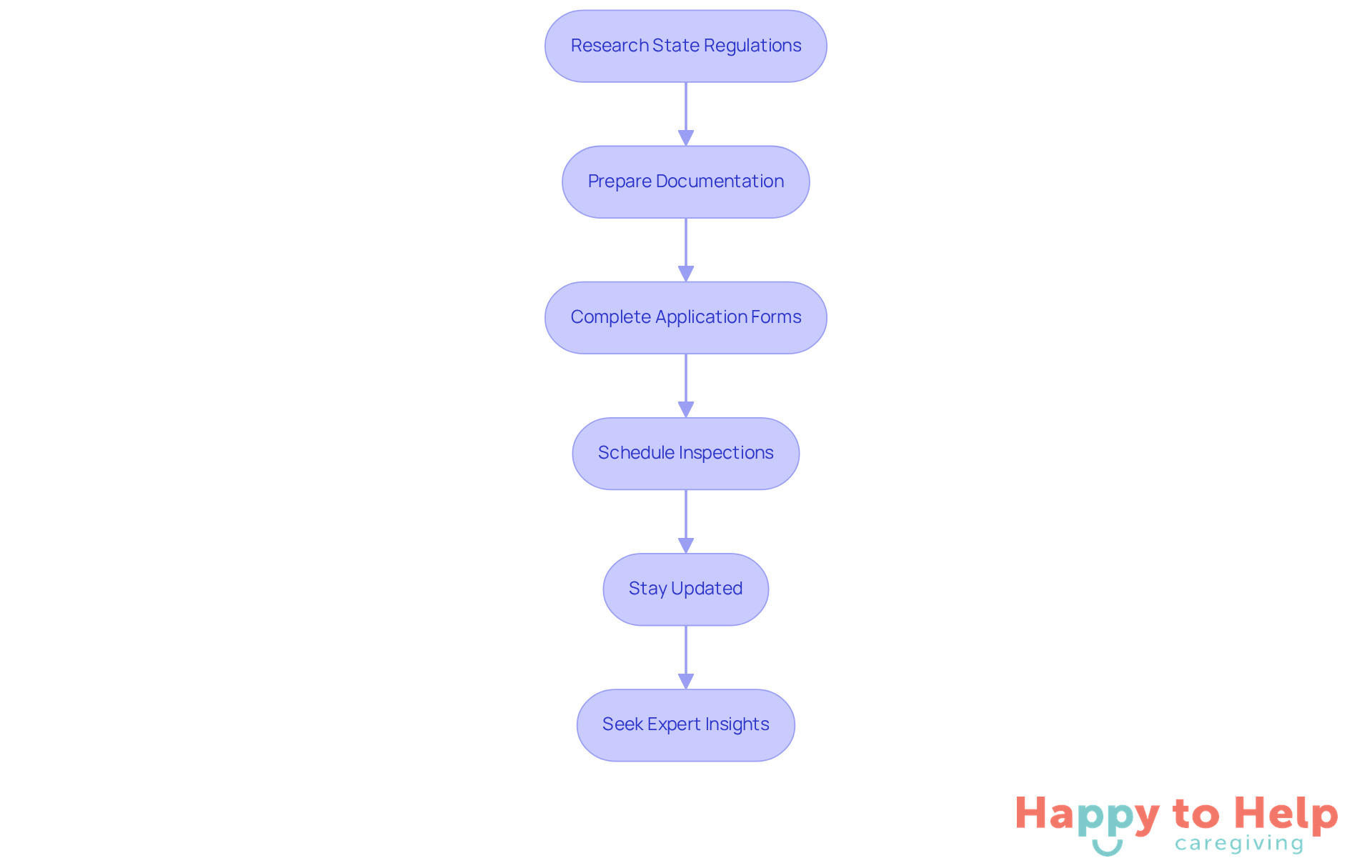
- Research State Regulations: Visit your state’s health department website to familiarize yourself with specific regulations and necessary steps for compliance.
- Prepare Documentation: Compile essential documents, such as proof of business registration, financial statements, and caregiver background checks. Ensure you have the necessary insurance coverage, like General Liability and Professional Liability Insurance, to protect against potential claims.
- Complete Application Forms: Fill out the required application forms accurately and submit them with the necessary fees. Attention to detail can prevent delays in the approval process.
- Schedule Inspections: Many states require an inspection of your business premises to ensure compliance with health and safety standards. Prepare your facility accordingly, as passing the inspection is critical for obtaining your license.
- Stay Updated: Regularly monitor changes in licensing regulations to ensure ongoing compliance. This vigilance is essential for maintaining your license and adapting to evolving industry standards.
- Seek Expert Insights: Engaging with industry experts can provide valuable guidance on navigating the licensing process. Their insights can help streamline your application and ensure that you meet all necessary criteria for certification. Continuous training and assistance for caregivers are crucial for upholding quality service and adhering to state regulations. Statistics indicate that 89% of patients were satisfied with residential healthcare services, underscoring the importance of adhering to these standards.
Set Up Operational Infrastructure
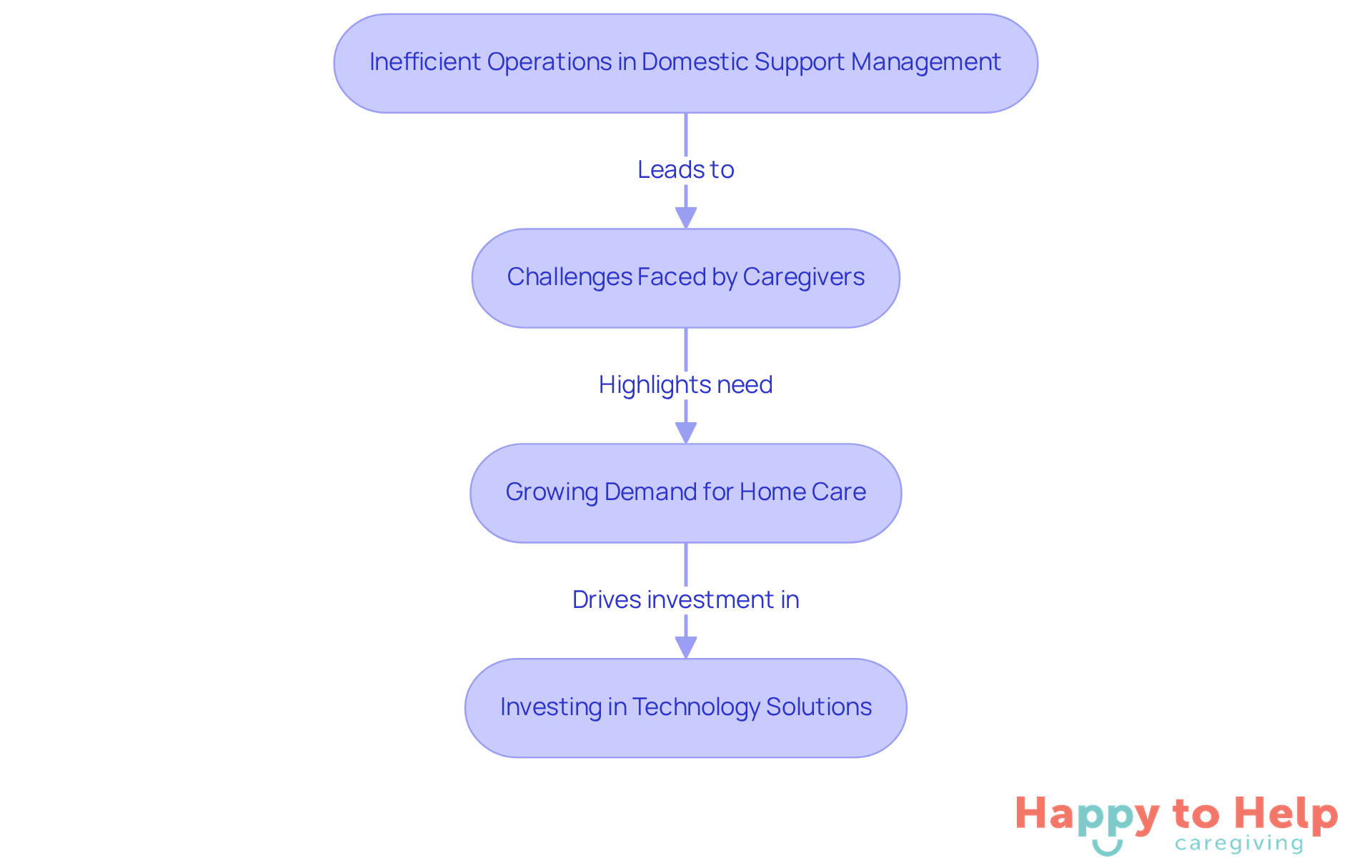
Problem: Inefficient operations in domestic support management can hinder the quality of care provided to seniors. As the demand for assistance in the in-home care business grows, caregivers face challenges in scheduling, billing, and client management, which can lead to communication breakdowns and decreased efficiency.
Agitate: This issue is particularly pressing given that by 2025, over 68% of Medicare-certified health organizations are expected to adopt telemonitoring or virtual assistance. The U.S. domestic support sector is projected to generate over $107 billion in revenue, driven by an aging population-17.5% of whom are aged 65 or older-who prefer assistance in the home care business. Without embracing technology, organizations risk falling behind in a rapidly evolving market.
Solution: Investing in advanced technology solutions is essential. Software for scheduling, billing, and client management can significantly enhance communication and operational efficiency. Agencies that implement AI-powered tools for automating these processes often see improved caregiver retention and client satisfaction. Additionally, incorporating telehealth solutions is crucial, especially as 90% of seniors express a desire to age in their own homes. Notably, 88% of individuals aged 50 and above wish to remain in their residences for as long as possible.
Furthermore, the proposed Medicare expansion aims to broaden the range of options in the home care business for senior support, potentially allowing 5.7 million more seniors to qualify for subsidized home assistance. This shift highlights the critical role of technology in adapting to new reimbursement models and enhancing service delivery. By prioritizing technology solutions, caregiving organizations can position themselves for success in this dynamic landscape.
Recruit and Train Caregivers
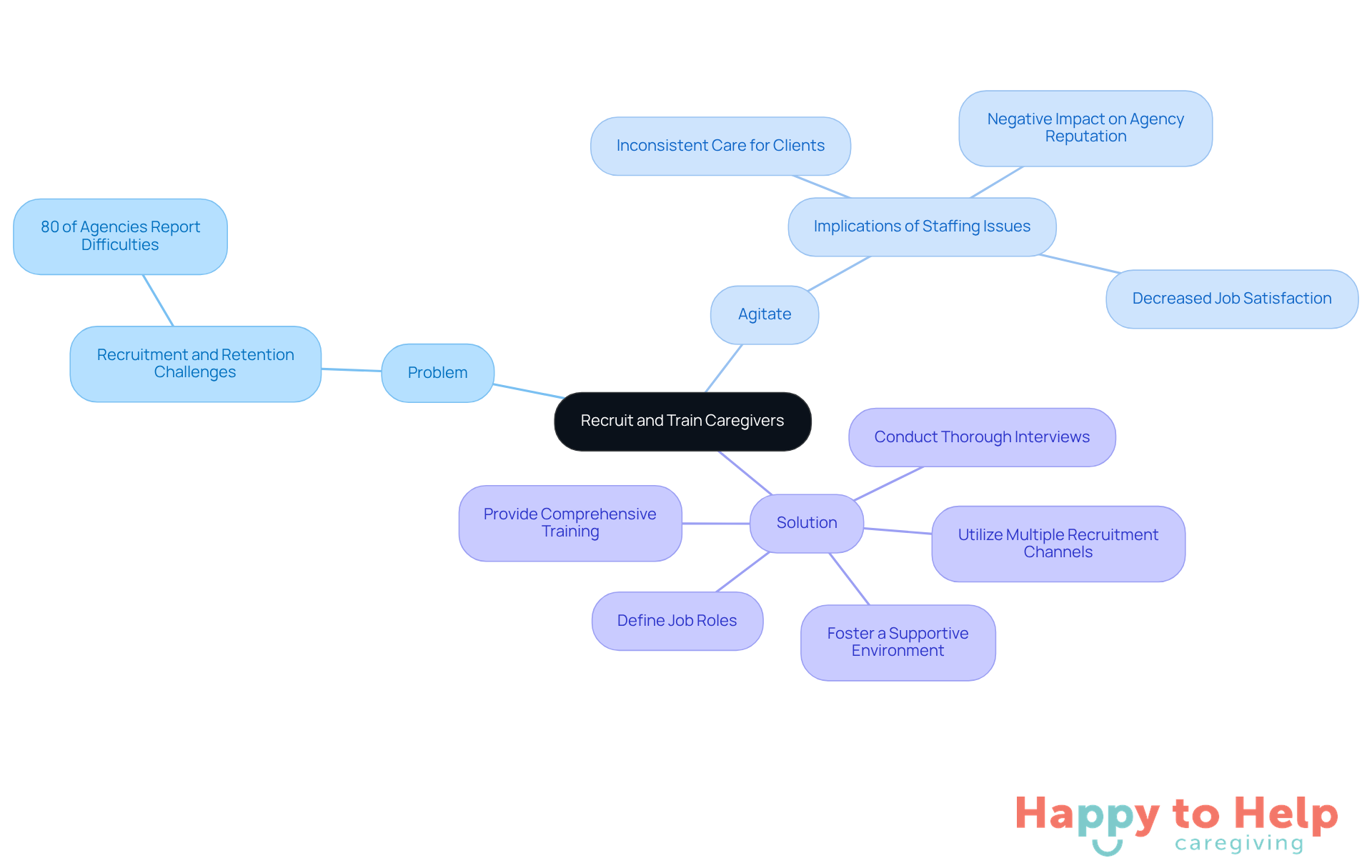
Problem: Recruitment and Retention Challenges
In the caregiving industry, attracting and retaining quality staff is a significant challenge. A staggering 80% of agencies report difficulties in finding and keeping skilled caregivers. This issue not only affects service quality but also places additional strain on existing staff, leading to burnout and high turnover rates.
Agitate: Implications of Staffing Issues
When agencies struggle with staffing, the consequences ripple throughout the organization. High turnover can lead to inconsistent care for clients, decreased job satisfaction among remaining staff, and ultimately, a negative impact on the agency's reputation. Caregivers who feel unsupported or overwhelmed are less likely to stay, creating a cycle that is hard to break.
Solution: Effective Strategies for Improvement
- Define Job Roles: Clearly outline the responsibilities and qualifications for each caregiver position. This clarity attracts suitable candidates and establishes expectations that align with your organization's mission.
- Utilize Multiple Recruitment Channels: Expand your reach by posting job openings across various platforms, including job boards, social media, and local community centers. This multi-channel approach can significantly increase the visibility of your vacancies, tapping into a diverse talent pool. Communicate your agency's values and benefits clearly to attract applicants.
- Conduct Thorough Interviews: Implement a structured interview process that evaluates both skills and cultural fit. This ensures candidates not only have the required qualifications but also align with your organization's values, promoting a unified team atmosphere.
- Provide Comprehensive Training: Develop a robust training program that encompasses essential caregiving skills, safety protocols, and client interaction techniques. Effective training is crucial; studies show that organizations investing in caregiver training experience better job satisfaction and retention rates, ultimately improving the quality of care given. For instance, the 2025 Activated Insights Benchmarking Report emphasizes the relationship between training hours and organizational revenue.
- Foster a Supportive Environment: Cultivate a positive workplace culture that prioritizes ongoing education, feedback, and recognition. A supportive environment boosts caregiver morale and reduces turnover, which is vital in an industry facing significant staffing challenges. Agencies that actively engage their caregivers report higher satisfaction levels and better client outcomes.
Your Path Forward
Launching a successful in-home care business presents significant challenges. Caregivers often face hurdles such as navigating market demands, securing financing, and ensuring compliance with regulations. These obstacles can hinder their ability to provide quality home assistance, which is increasingly sought after by an aging population.
To address these challenges, caregivers must engage in thorough market research and comprehensive business planning. Understanding the unique needs of their target market and the competitive landscape is crucial. This foundational knowledge allows them to develop a robust business plan that clearly outlines their value proposition, service offerings, and marketing strategies.
Key steps to ensure operational efficiency include:
- Securing financing
- Obtaining necessary licenses
- Establishing a solid operational infrastructure
Additionally, recruiting and training skilled caregivers is vital for maintaining high service standards and fostering a positive workplace culture. By focusing on these elements, aspiring home care providers can effectively navigate the complexities of the industry.
The in-home care sector offers substantial growth opportunities, driven by an increasing preference for at-home assistance. Embracing technology and innovative practices will enhance service delivery and help agencies remain competitive in a rapidly evolving market. By taking these actionable steps, caregivers can successfully launch their businesses and positively impact the lives of those they serve.
https://iframe.tely.ai/cta/eyJhcnRpY2xlX2lkIjogIjY5M2Y1MDhhYjk3NTAxMmE2YWRmZmQxMyIsICJjb21wYW55X2lkIjogIjY4ZWU1ZGNhNzMxNzYyNTU3ZjNjOTVjMSIsICJpbmRleCI6IG51bGwsICJ0eXBlIjogImFydGljbGUifQ==Frequently Asked Questions
Why is market research important for caregivers?
Market research helps caregivers understand their target market, including demographics, health conditions, and geographic location, which can significantly enhance their ability to connect with potential clients.
What methods can be used to conduct market research?
Effective methods for conducting market research include surveys, interviews, and focus groups to gather crucial data about potential clients.
How can examining rivals benefit a caregiver's business?
Investigating current agencies allows caregivers to assess their competitors' offerings, pricing, and customer feedback, helping to identify market opportunities that their business can uniquely address.
What industry trends should caregivers stay informed about?
Caregivers should stay updated on technological advancements and changing regulations in the home care industry, as these can significantly impact their business.
Why is gathering feedback from potential clients important?
Engaging with potential clients and their families helps caregivers understand their needs and preferences, guiding the development of offerings and marketing strategies.
What should be included in a comprehensive report of research findings?
The report should summarize all research findings and serve as a valuable reference for the business plan and strategy to ensure preparedness to meet client needs.
What is the purpose of an executive summary in a business plan?
The executive summary provides a concise overview of the business, including the mission statement, services offered, and target market, clearly conveying the organization's unique value proposition.
How should market analysis be presented in a business plan?
Market analysis should highlight research findings, including the increasing demand for in-home care services and the competitive advantages of the business, supported by relevant growth statistics.
What types of services should be outlined in a caregiver's business plan?
Services may include companionship support, post-hospital recovery assistance, respite support, and palliative aid, tailored to meet the unique needs of clients.
What marketing strategies can caregivers use to attract clients?
Caregivers can utilize digital marketing, community outreach, and partnerships with healthcare providers, along with platforms like Nextdoor to build community trust.
What financial information should be included in a business plan?
Financial projections should cover startup costs, revenue projections, and break-even analysis, including estimates based on expected client numbers and service rates.
What should an operational plan describe?
The operational plan should detail daily business operations, including staffing, training, and client management processes, ensuring service quality and compliance with regulations.
List of Sources
- Conduct Market Research
- 2025 Home Care Statistics: Trends & Insights To Know (https://premierhcinc.com/blog/home-care-statistics)
- United States Home Healthcare Market Analysis Report 2025-2033 Featuring 3M Healthcare, Apple, Arkray, B. Braun Melsungen, BD And Co, F. Hoffmann-La Roche, Fresenius, and Hollister (https://finance.yahoo.com/news/united-states-home-healthcare-market-104300747.html)
- Health Care Industry Trends to Watch in 2025 - Cornell Brooks Public Policy (https://publicpolicy.cornell.edu/masters-blog/health-care-industry-trends-to-watch-in-2025)
- Top 3 Trends in Homecare for 2025 (https://homecaremag.com/top-trends-in-homecare)
- 52 Eye-Opening Home Health Statistics: Insights for 2025 (https://boosthomehealth.com/home-health-statistics)
- Develop a Business Plan
- How to Create a Winning Home Care Business Plan (https://123consultingsolutions.com/how-to-create-a-winning-home-care-business-plan)
- 10 Must-Know U.S. Home Care Industry Stats for 2025 - North American Community Hub (https://nchstats.com/us-home-care-industry-stats)
- How to craft a successful home care business plan (https://business.nextdoor.com/en-us/blog/how-to-craft-a-successful-home-care-business-plan)
- Writing a Home Care Services Business Plan: What to Include (https://alwaysbestcare.com/franchise/home-care-services-business-plan)
- 2025 Home Care Statistics: Trends & Insights To Know (https://premierhcinc.com/blog/home-care-statistics)
- Secure Financing
- Home Care Business Growth Statistics | Aaniie Formerly Smartcare Software (https://aaniie.com/resources/home-care-business-growth-statistics)
- 10 Must-Know U.S. Home Care Industry Stats for 2025 - North American Community Hub (https://nchstats.com/us-home-care-industry-stats)
- FastStats (https://cdc.gov/nchs/fastats/home-health-care.htm)
- 52 Eye-Opening Home Health Statistics: Insights for 2025 (https://boosthomehealth.com/home-health-statistics)
- 4 Quotes Illuminating At-Home Care CEOs' 2025 Strategies (https://homehealthcarenews.com/2025/06/4-quotes-illuminating-at-home-care-ceos-2025-strategies)
- Obtain Licenses and Certifications
- Another State Faces The Pros, Cons Of Standardizing Home Care (https://homehealthcarenews.com/2024/12/another-state-faces-the-pros-cons-of-standardizing-home-care)
- Home Care Statistics In 2025: Key Insights In Home Care (https://sagapixel.com/marketing/home-care-statistics)
- How to Start a Home Care Agency in the United States: 2025 Guide | ShiftCare (https://shiftcare.com/us/blog/how-to-start-a-home-care-agency-in-the-united-states-2025-guide)
- State Medicaid home health licensing and certification - PubMed (https://pubmed.ncbi.nlm.nih.gov/11216440)
- FastStats (https://cdc.gov/nchs/fastats/home-health-care.htm)
- Set Up Operational Infrastructure
- Homecare 2025 Trends to Watch (https://rockawayhc.com/homecare-2025-trends-to-watch)
- 10 Must-Know U.S. Home Care Industry Stats for 2025 - North American Community Hub (https://nchstats.com/us-home-care-industry-stats)
- Disruption Redefines Home-Based Care: Providers Confront Challenges, Seize New Opportunities (https://homehealthcarenews.com/2025/10/disruption-redefines-home-based-care-providers-confront-challenges-seize-new-opportunities)
- Home Health Accessibility Among Medicare Fee-for-Service (FFS) Beneficiaries (https://trellahealth.com/resource-center/report/home-health-accessibility-among-medicare-fee-for-service-ffs-beneficiaries)
- FastStats (https://cdc.gov/nchs/fastats/home-health-care.htm)
- Recruit and Train Caregivers
- Caregiver Statistics: Work and Caregiving (https://caregiver.org/resource/caregiver-statistics-work-and-caregiving)
- Home Health and Personal Care Aides (https://bls.gov/ooh/healthcare/home-health-aides-and-personal-care-aides.htm)
- Recruiting & Retaining Caregivers in 2025 | HHAeXchange (https://hhaexchange.com/blog/recruiting-and-retaining-caregivers)
- Winning at Caregiver Recruitment For Homecare Agencies - Alora Health (https://alorahealth.com/blog-winning-at-caregiver-recruitment-for-homecare-agencies)
- Home caregivers receive training through local center to help fill IHSS gap (https://spectrumlocalnews.com/product-pages/nyc/health/2025/11/27/home-caregivers-receive-training-through-local-center-to-help-fill-ihss-gap)