9 Essential Tips for Choosing Private Sitters for Elderly Care

For families in our service areas
For families in our service areas, this guide explains caregiving and how non-medical in-home caregiving can support care planning in East Idaho, Treasure Valley & Magic Valley, Northern Wasatch, North Central West Virginia, and Northeast Ohio.
The Importance of Tips for Choosing Private Sitters for
Navigating the world of elderly care can feel overwhelming for families striving to find the right support for their loved ones. The increasing demands on family caregivers, who often dedicate countless hours to providing assistance, highlight a pressing problem: the need for reliable private sitters has never been more pronounced.
This situation can lead to stress and uncertainty, making it difficult for families to ensure their loved ones receive the best care possible. How can families confidently choose caregivers who will not only meet their loved ones' needs but also foster a sense of security and companionship?
In this article, we delve into essential tips that simplify the selection process. These tips ensure that the chosen caregivers are equipped to enhance the quality of life for seniors, providing families with peace of mind.
Happy to Help Caregiving: Personalized In-Home Care Solutions
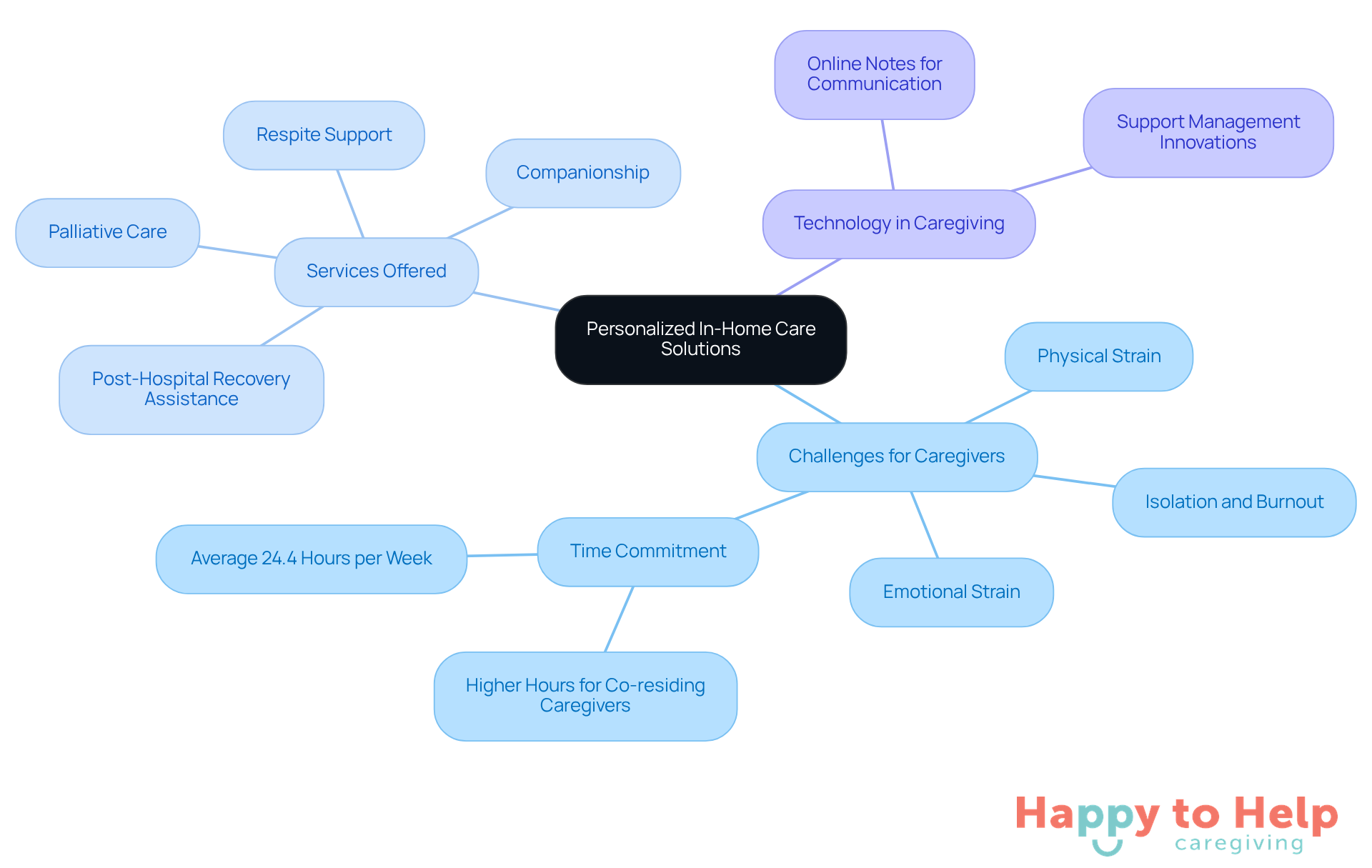
Caregiving can be a demanding role, often leading to emotional and physical strain for family caregivers. Research shows that they typically dedicate an average of 24.4 hours per week to providing assistance, which can lead to feelings of isolation and burnout. This highlights the urgent need for effective support systems, including private sitters for elderly individuals, that can ease their burden and enhance the well-being of those they care for.
The implications of inadequate support are significant. Without the help of private sitters for elderly individuals, they may experience a decline in both physical health and emotional stability. This is where Happy to Help Caregiving steps in, offering tailored in-home services designed to meet the unique needs of each client. Their offerings include:
- Companionship
- Post-hospital recovery assistance
- Respite support
- Palliative care
All aimed at promoting independence and improving quality of life.
Incorporating technology into caregiving practices is another vital solution. For example, using online notes for family members can streamline communication and ensure everyone is informed about the care being provided. Happy to Help Caregiving embraces these innovations, enhancing the caregiving experience through effective support management.
As Jeanette Weinz, Brand President of Executive Home Care, aptly puts it, "Family supporters give so much of themselves-physically, emotionally, and financially." By prioritizing individualized support, Happy to Help Caregiving empowers clients to thrive in their own homes with the assistance of private sitters for elderly, fostering a sense of security and ease that is essential for their overall happiness and health.
Verify Credentials and Experience of Potential Sitters
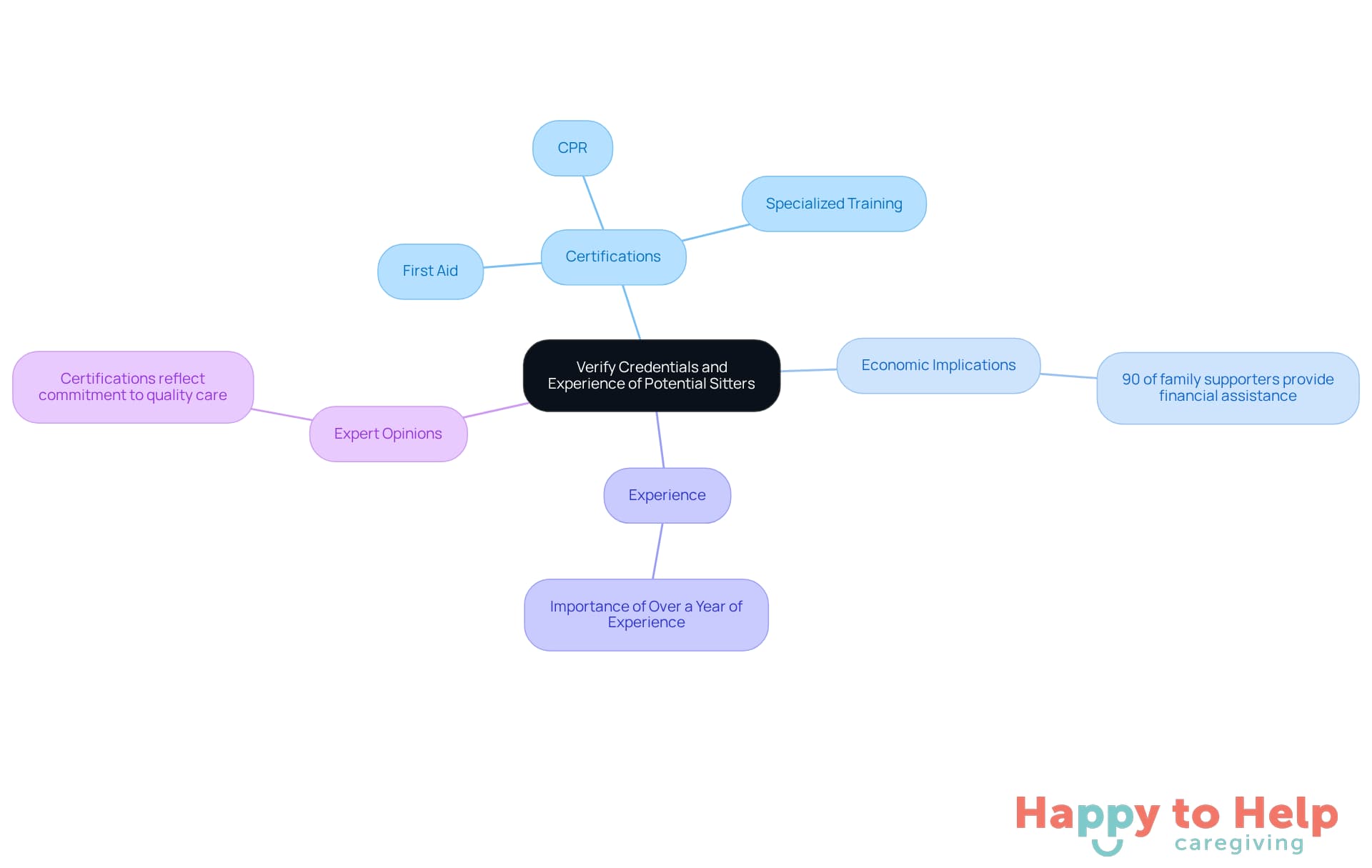
When selecting private sitters for elderly assistance, the challenge is ensuring that the caregiver is adequately qualified. Without proper certifications in caregiving, CPR, and first aid, families may face significant risks regarding their loved one's safety and well-being. These certifications are essential; they demonstrate a provider's readiness to manage emergencies effectively. For instance, caregivers trained in CPR and first aid are better equipped to respond in critical situations, which can greatly influence the safety of your loved one.
Moreover, the economic implications of choosing qualified supporters cannot be overlooked. According to the National Alliance for Caregiving, 90% of family supporters provide some type of financial assistance to their loved one's care. This statistic underscores the importance of investing in qualified caregivers who can deliver quality support.
Experience is another critical factor. Families should inquire about the provider's history in elderly assistance, especially concerning specific conditions that their loved one may have. Research shows that caregivers with over a year of experience are more adept at handling the unique challenges of elderly care. Successful certification programs, like those from the Center for Caregiver Advancement, highlight the importance of specialized training in complex health needs, ensuring that providers are well-prepared for their roles.
Experts emphasize that certifications not only enhance a support worker's skills but also provide reassurance to families. As one expert noted, "Certifications in caregiving are crucial; they reflect a commitment to quality care and the safety of those we serve." By prioritizing verified credentials and relevant experience, families can confidently choose private sitters for elderly who are not only qualified but also capable of addressing their loved one's specific needs.
Conduct Thorough Background Checks for Safety
Conducting thorough background checks is crucial in the hiring process for private sitters for elderly clients, as it directly impacts their safety and well-being. Without these checks, families face significant risks. Research indicates that in about 9 cases over the last 6 years, individuals with police records were endorsed on Care.com, underscoring the need for caution in recruitment practices.
Safety specialists emphasize that comprehensive background investigations help identify potential dangers and foster trust between households and support providers. As industry professionals note, "Thorough background checks are crucial for ensuring the safety of vulnerable populations."
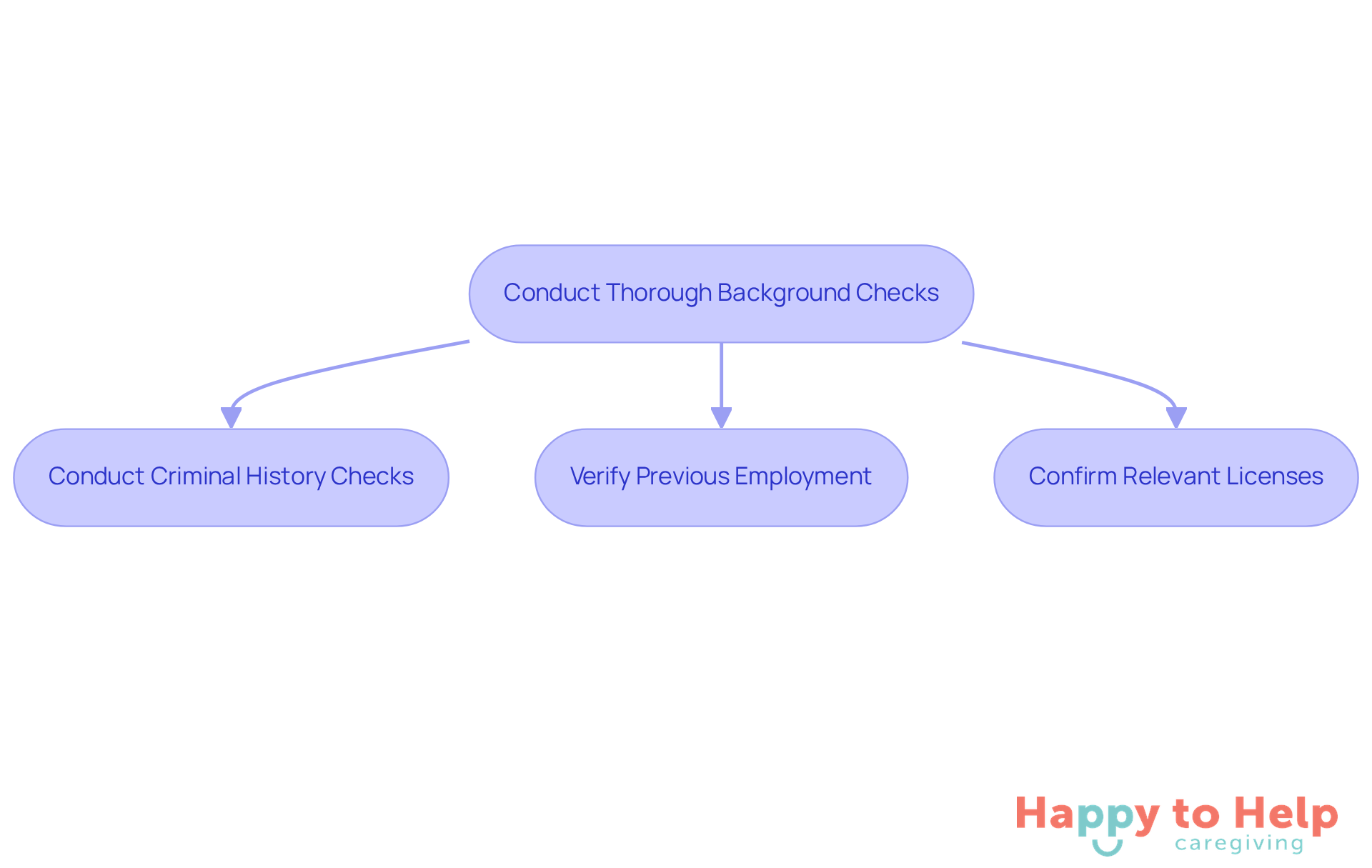
To address this issue, families should implement a robust background check process. This includes:
- Conducting criminal history checks
- Verifying previous employment
- Confirming relevant licenses
Employing reputable agencies or online services can simplify this process, ensuring compliance with legal standards and helping you hire a reliable individual who prioritizes your loved one's safety. By taking these steps, families can feel more confident in their caregiving choices, ultimately enhancing the quality of care provided.
Seek References and Reviews from Previous Clients
Choosing a provider can be daunting, especially when it comes to ensuring the right fit for your family. The problem lies in the difficulty of assessing a provider's reliability and professionalism. Without proper references, families may struggle to gauge whether a caregiver can truly meet their needs.
Engaging directly with past clients can provide invaluable insights into a provider's ability to foster meaningful connections. Online evaluations also serve as a crucial resource, offering a broader perspective on the provider's reputation and the quality of assistance they deliver. Positive testimonials can significantly influence household satisfaction, reflecting the experiences of others who have utilized the provider's services. In fact, providers with strong reputations often see increased demand, as families prioritize those who demonstrate consistent, compassionate support.
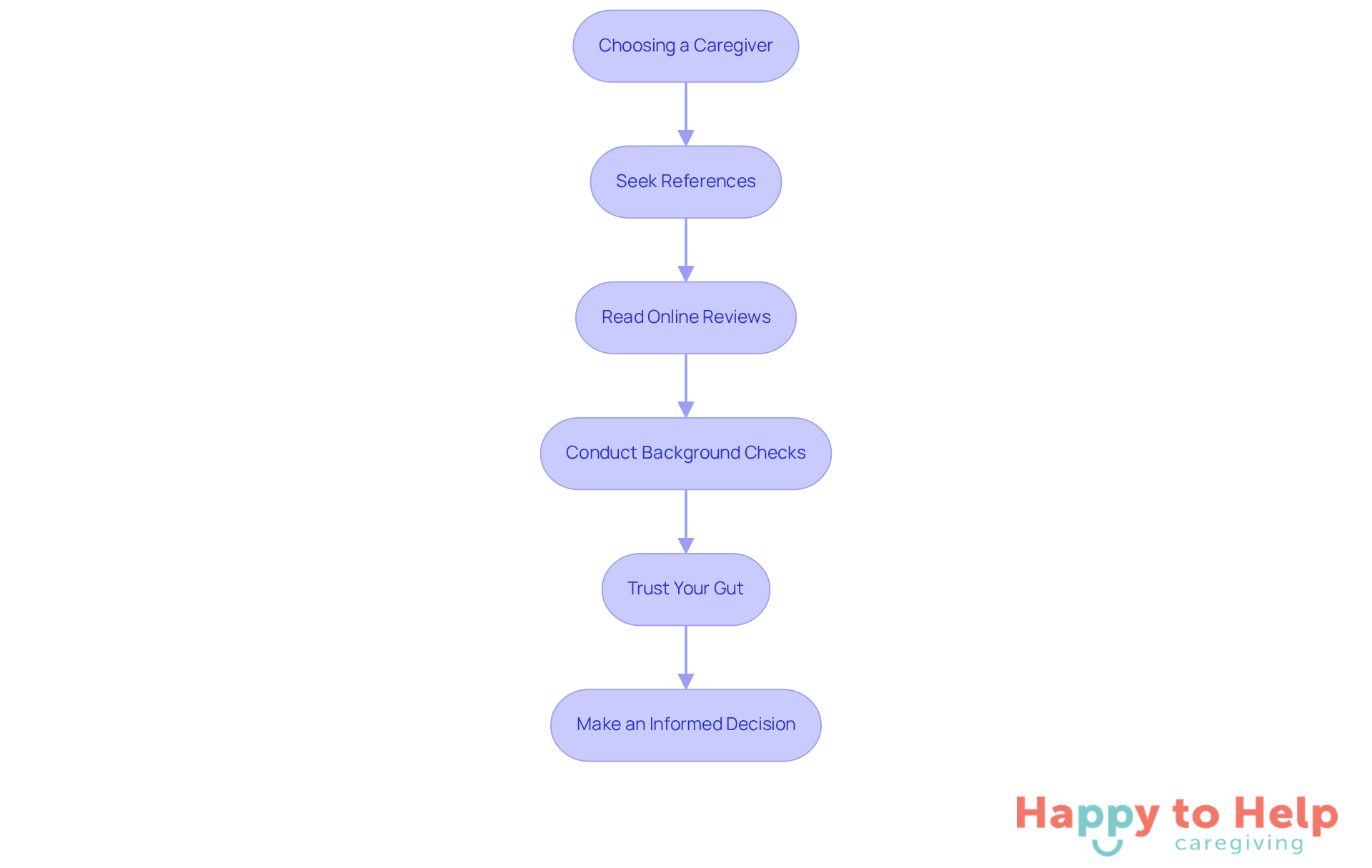
To make an informed decision, consult both personal references and online reviews. This approach not only enhances the likelihood of a successful caregiver-client relationship but also builds confidence in your choice. Additionally, conducting thorough background checks is essential to ensure the reliability and safety of caregivers, especially considering the current turnover rate of care staff, which hovers around 80%.
As Betsy Gold, co-founder of LeanOnWe, wisely advises, "Trust your gut" when evaluating potential providers. By adopting this holistic method for selecting support providers, families can feel more assured in their decisions.
Assess Communication Skills of Caregivers
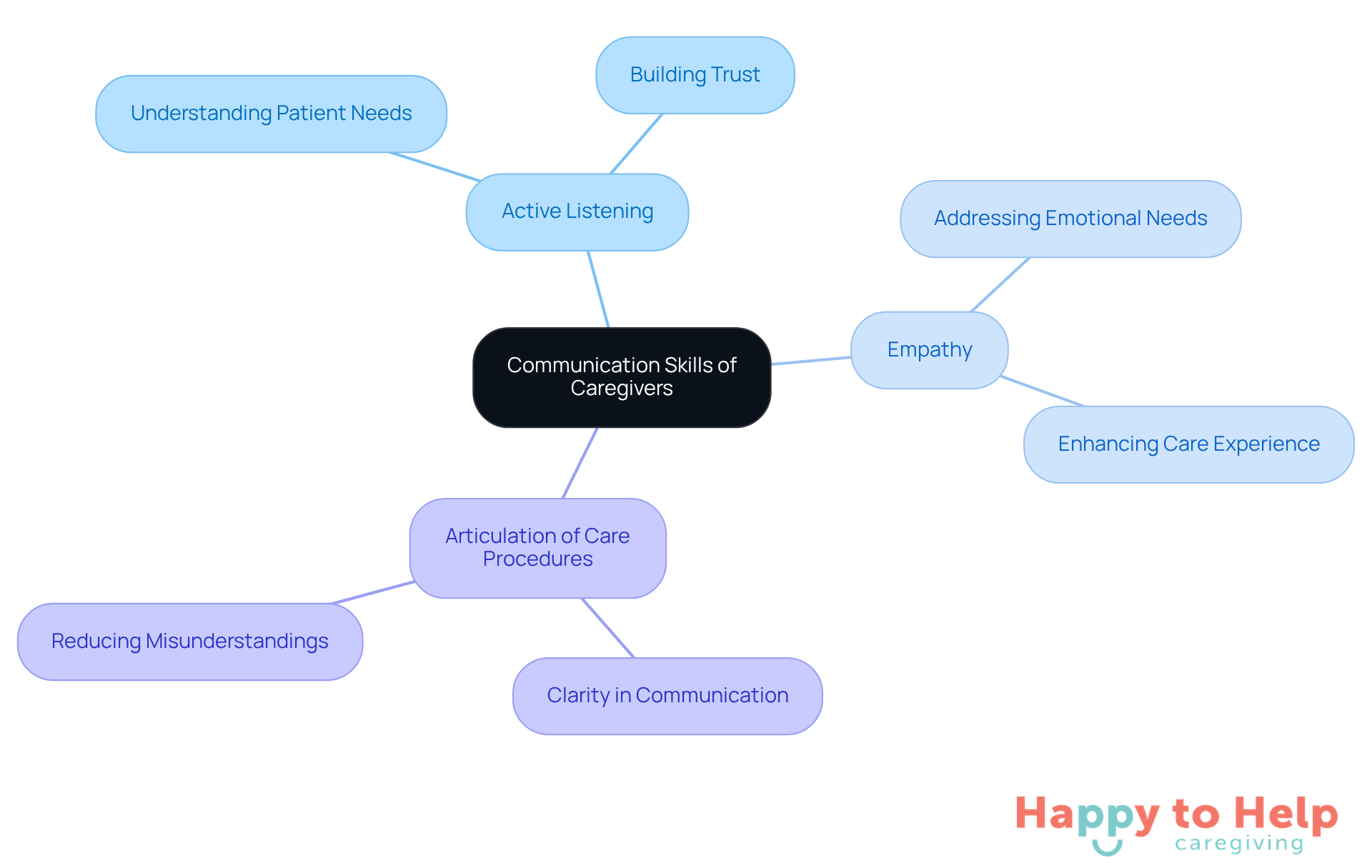
Assessing the communication abilities of prospective support providers during the interview process is crucial. Poor communication can lead to misunderstandings and a lack of trust, which ultimately affects the quality of care provided.
To address this issue, seek individuals who exhibit:
- Active listening
- Empathy
- The capability to articulate care procedures clearly
These qualities not only foster a trusting bond but also ensure that the provider can efficiently respond to the requirements and concerns of the client and their family.
By prioritizing effective communication skills in your hiring process, you can enhance the overall caregiving experience for both clients and their families.
Look for Flexible Scheduling Options
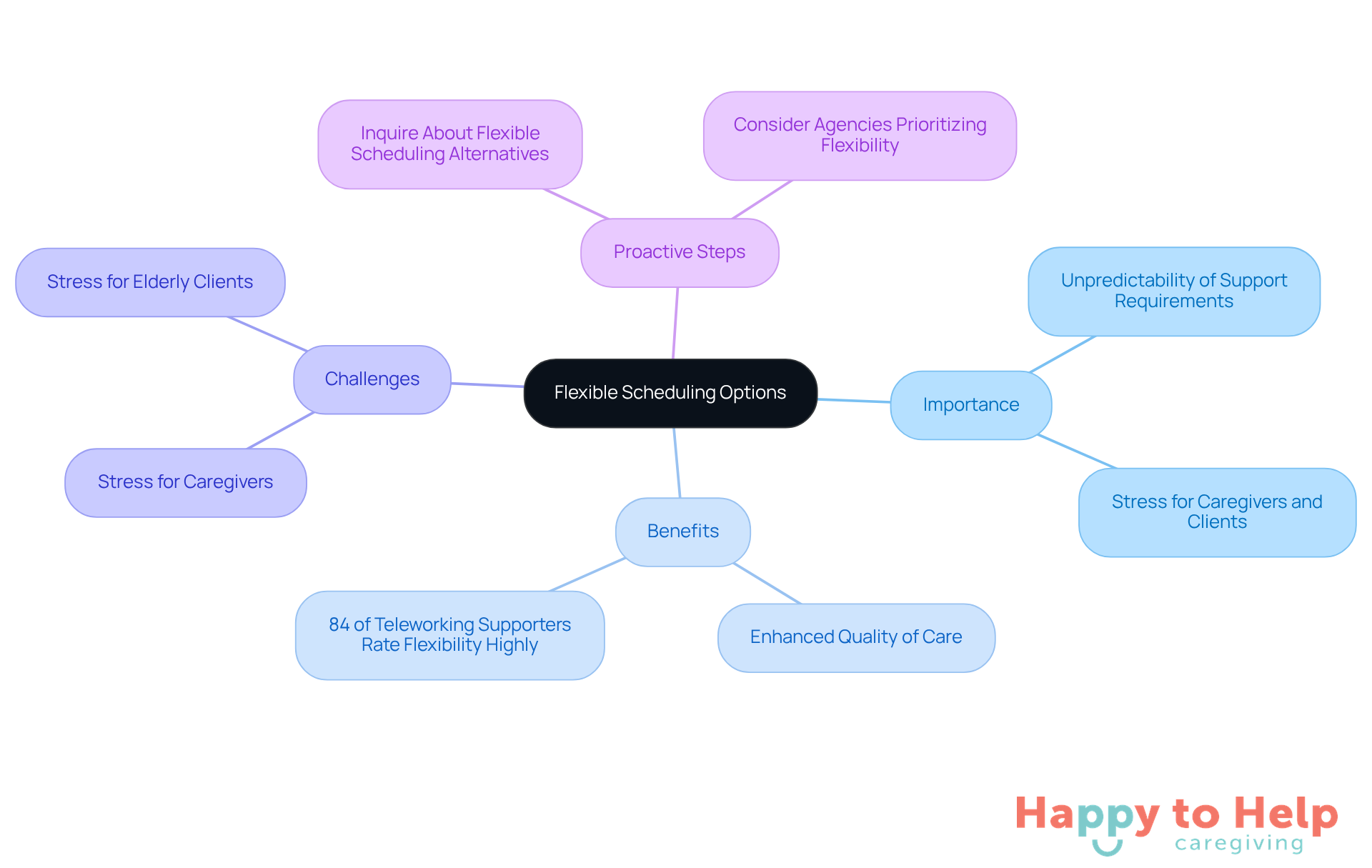
When selecting a provider, caregivers face a significant challenge: the unpredictability of support requirements. These needs can change unexpectedly, making it crucial to have a provider who can adapt to these alterations.
This lack of flexibility can lead to stress for both the caregiver and the elderly client. Without someone who can adjust their schedule, families may struggle to ensure their loved ones receive the essential assistance they need when they need it most.
To address this issue, look for providers who offer flexible hours, including evenings and weekends. This adaptability not only enhances the quality of care but also contributes significantly to the overall satisfaction of elderly clients and their families. In fact, a survey found that 84% of teleworking supporters rate their flexible schedules highly, highlighting how adaptability can lead to a more positive experience for both the provider and the recipient.
Caregiving experts emphasize that a provider's ability to modify their schedule fosters a sense of security and comfort in the home setting. To find private sitters for elderly with adaptable availability, consider agencies that prioritize flexibility in their hiring practices and offer a variety of scheduling options tailored to personal needs.
Additionally, families should inquire about specific flexible scheduling alternatives when choosing private sitters for elderly care. This proactive approach ensures that their loved one's support requirements are met efficiently.
Prioritize Personalized Care for Enhanced Well-Being
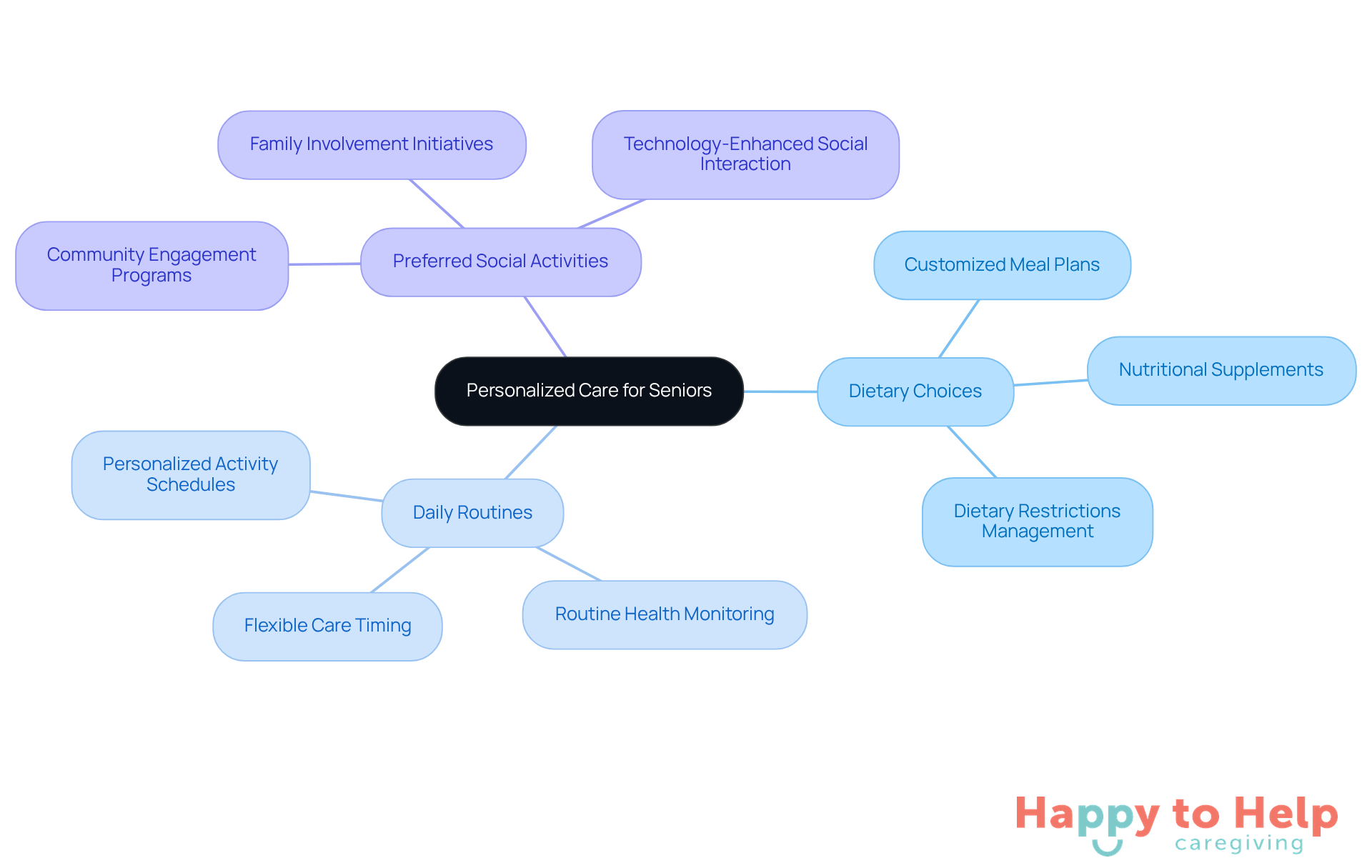
Choosing caregivers who are committed to developing customized support strategies is essential for meeting the unique needs and preferences of your loved one. The challenge lies in ensuring that these strategies encompass:
- Dietary choices
- Daily routines
- Preferred social activities
Without tailored support, seniors may struggle with their quality of life, independence, and dignity.
As geriatric support specialists highlight, individualized assistance is vital for fostering a sense of autonomy. This allows seniors to thrive in their familiar environments. By prioritizing personalized support, families can significantly enhance their loved ones' overall well-being and satisfaction.
Moreover, research shows that social involvement helps older individuals feel younger and can even extend their lifespan. This underscores the importance of personalized support in their lives. To further improve individualized care, integrating technology, such as AI tools for proactive fall risk evaluations, can ensure that seniors receive the assistance they need to maintain their independence.
Ensure Care in a Familiar Environment
When selecting a provider, it's crucial to recognize the challenges seniors face in unfamiliar environments. Many seniors feel insecure and uncomfortable outside their homes, which can negatively impact their emotional and mental health.
To address this issue, consider the benefits of using private sitters for elderly home-based care. When seniors receive assistance in a familiar setting from private sitters for elderly, they often experience better emotional well-being. This not only enhances their comfort but also contributes to improved overall health outcomes.
Therefore, ensure that the private sitters for elderly you choose are experienced in delivering care within a home environment. This expertise can significantly enhance the support experience, making it more effective and reassuring for seniors.
Emphasize Companionship and Emotional Support
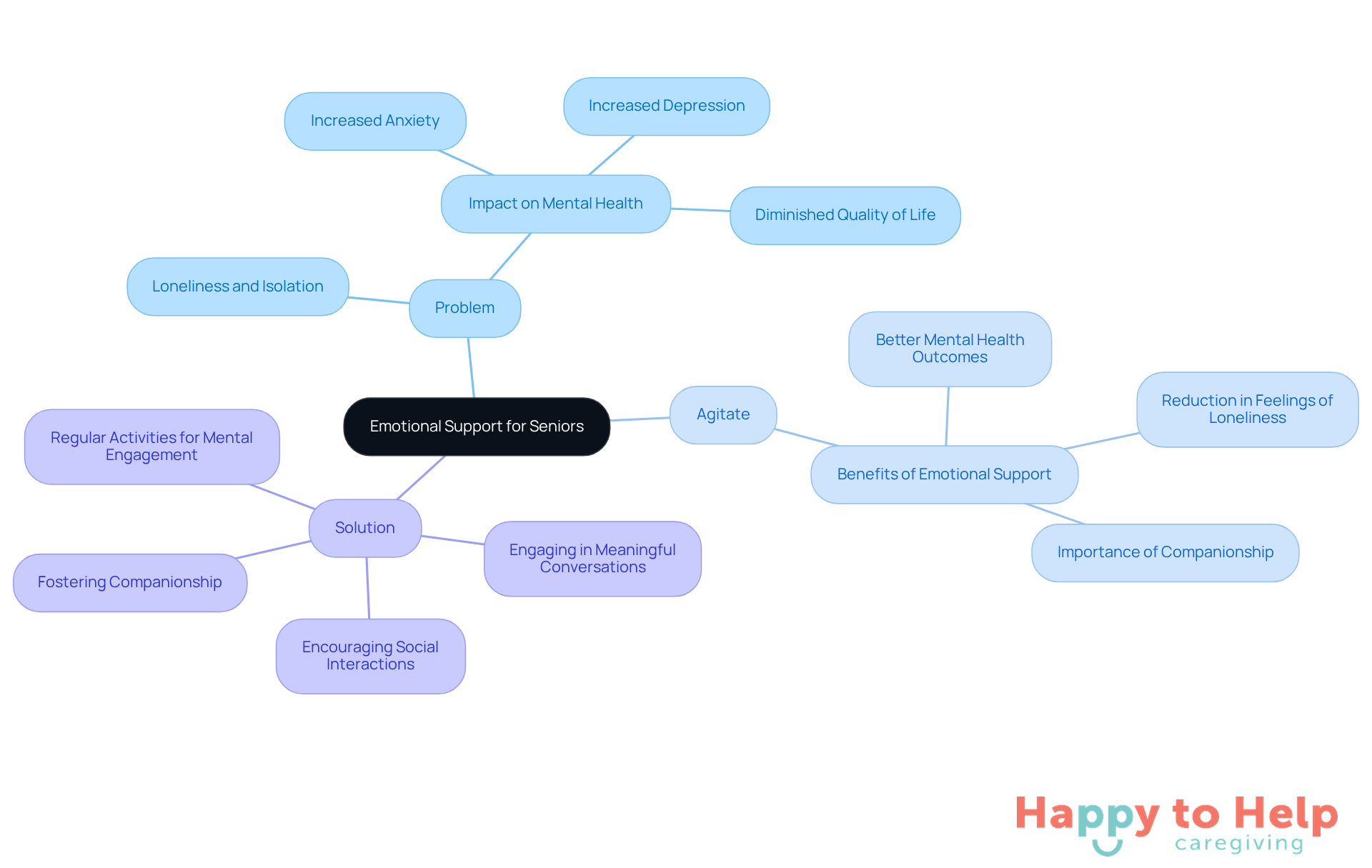
Problem: Many seniors face feelings of loneliness and isolation, which can significantly impact their mental and physical health. Without adequate emotional support, they may experience increased anxiety and depression, leading to a diminished quality of life.
Agitate: Research shows that seniors with strong emotional support systems report better mental health outcomes. The absence of companionship can exacerbate feelings of loneliness, making it crucial for caregivers to recognize the vital role they play in providing emotional support.
Solution: Caregivers should prioritize fostering companionship and emotional connections with seniors. This can be achieved by involving clients in meaningful conversations and encouraging social interactions. Regular engagement in activities that stimulate mental engagement not only alleviates feelings of isolation but also promotes overall well-being.
By creating a nurturing environment, support providers empower seniors to maintain their independence and embrace their daily lives. Encourage regular social interactions and meaningful conversations to strengthen these emotional connections.
Utilize Online Resources and Local Directories for Your Search
Finding qualified caregivers can be a daunting task for families. Many caregivers spend an average of 13 hours each month researching support services and managing financial concerns. This highlights the importance of utilizing online resources and local directories to ease the burden of this search.
Websites like Care.com and AARP offer extensive directories of qualified individuals tailored to your region. Additionally, community resources such as senior centers and local health departments can provide valuable referrals and assistance. As experts note, "Family supporters are essential to our care-delivery system," underscoring the need to connect with local agencies.
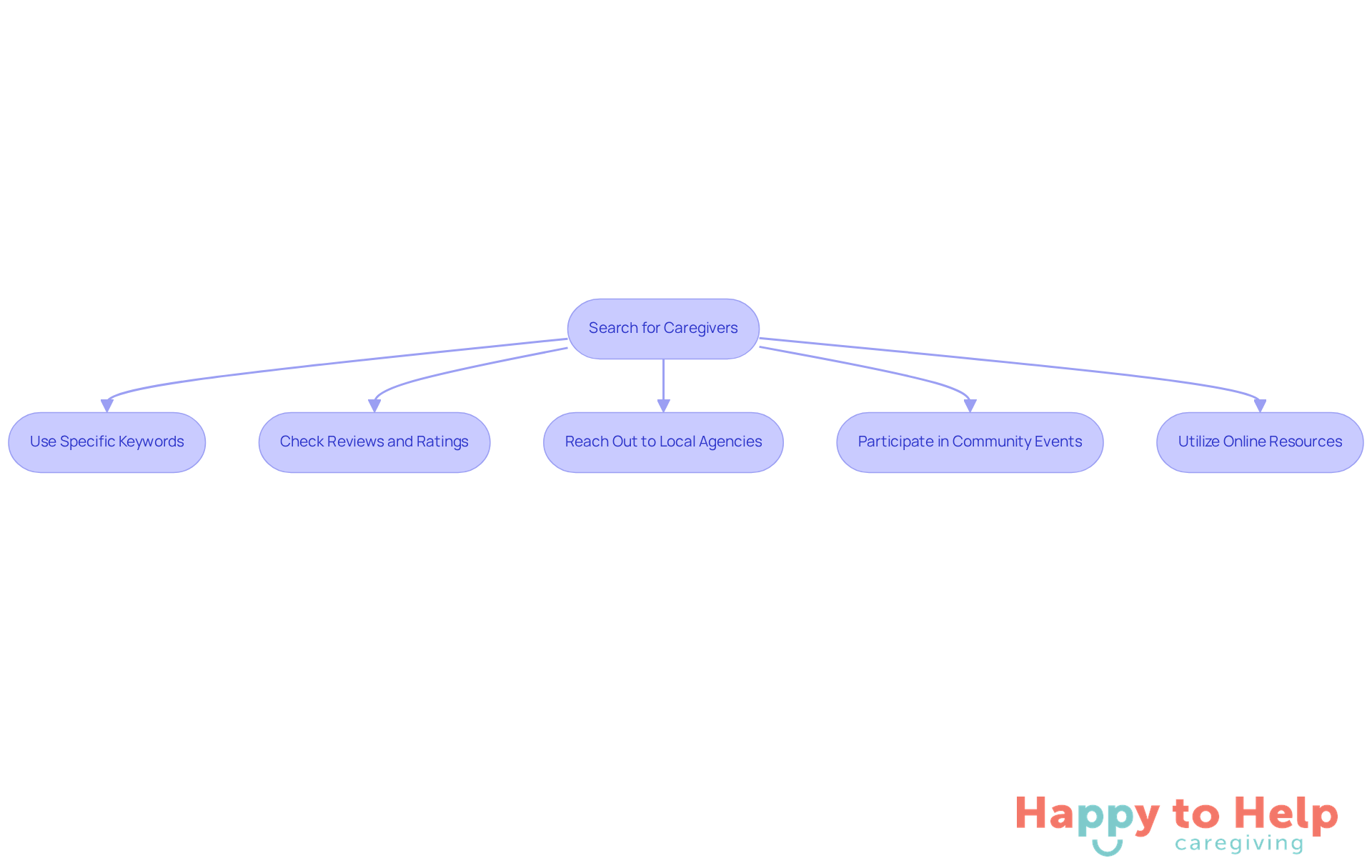
To streamline your search for the right caregiver, consider these actionable strategies:
- Use specific keywords related to your needs when searching online.
- Check reviews and ratings of providers listed on these platforms.
- Reach out to local agencies for personalized recommendations.
- Participate in community events or workshops organized by senior centers to engage directly with caregivers.
By tapping into these resources, you can effectively find a caregiver who meets your family's unique needs.
Making the Right Choice
Choosing the right private sitter for elderly care presents a significant challenge that can greatly affect the quality of life for seniors and their families. This decision is not just about finding someone to help; it’s about ensuring that the caregiver meets the unique needs of the elderly while enhancing their overall well-being.
Families often face the daunting task of verifying credentials and conducting thorough background checks. Without these essential steps, the risk of inadequate care increases, potentially compromising the safety and happiness of their loved ones. Therefore, it’s crucial to assess communication skills, seek references, and ensure flexible scheduling options. These factors are vital in creating a supportive environment where seniors can thrive.
Fortunately, there are effective solutions to these challenges. By prioritizing personalized care and utilizing technology to streamline communication and care management, families can significantly improve the caregiving experience. Engaging in a thorough selection process and leveraging available resources can lead to finding qualified, compassionate, and adaptable caregivers.
Ultimately, this thoughtful approach not only safeguards the health and safety of elderly loved ones but also enriches their lives with companionship and personalized care. By taking the time to make informed decisions, families can foster an atmosphere that promotes independence and emotional support, ensuring a better quality of life for everyone involved.
https://iframe.tely.ai/cta/eyJhcnRpY2xlX2lkIjogIjY5MjBmZDQzN2I4YTJhOGJkNzc1MGJjMSIsICJjb21wYW55X2lkIjogIjY4ZWU1ZGNhNzMxNzYyNTU3ZjNjOTVjMSIsICJpbmRleCI6IG51bGwsICJ0eXBlIjogImFydGljbGUifQ==Frequently Asked Questions
What challenges do family caregivers face?
Family caregivers often experience emotional and physical strain, dedicating an average of 24.4 hours per week to caregiving, which can lead to feelings of isolation and burnout.
What services does Happy to Help Caregiving provide?
Happy to Help Caregiving offers personalized in-home care solutions, including companionship, post-hospital recovery assistance, respite support, and palliative care, all aimed at promoting independence and improving quality of life.
How does technology play a role in caregiving at Happy to Help Caregiving?
Happy to Help Caregiving incorporates technology by using online notes for family members, which streamlines communication and ensures everyone is informed about the care being provided.
Why is it important to verify the credentials of private sitters for elderly assistance?
Verifying credentials is crucial to ensure that caregivers are adequately qualified, with certifications in caregiving, CPR, and first aid, which demonstrate their readiness to manage emergencies effectively and influence the safety of loved ones.
What is the significance of experience in selecting caregivers?
Experience is critical as caregivers with over a year of experience are generally more adept at handling the unique challenges of elderly care, particularly concerning specific health conditions.
What should families do to ensure the safety of their loved ones when hiring private sitters?
Families should conduct thorough background checks, which include criminal history checks, verifying previous employment, and confirming relevant licenses, to ensure the safety and reliability of caregivers.
What are the economic implications of investing in qualified caregivers?
Investing in qualified caregivers can lead to better quality support, which is important since 90% of family supporters provide some type of financial assistance to their loved one’s care, highlighting the need for quality care.
How can families simplify the background check process for hiring caregivers?
Families can simplify the background check process by employing reputable agencies or online services that ensure compliance with legal standards and help hire reliable individuals who prioritize the safety of their loved ones.
List of Sources
- Happy to Help Caregiving: Personalized In-Home Care Solutions
- FastStats (https://cdc.gov/nchs/fastats/home-health-care.htm)
- Expensive and exhausting: Why caregivers need to care for themselves, too : Consider This from NPR (https://npr.org/2025/11/20/nx-s1-5615163/expensive-and-exhausting-why-caregivers-need-to-care-for-themselves-too)
- Caregiver Statistics: Demographics (https://caregiver.org/resource/caregiver-statistics-demographics)
- Executive Home Care Honors Family Caregivers During National Family Caregivers Month (https://mytwintiers.com/business/press-releases/cision/20251117LA25356/executive-home-care-honors-family-caregivers-during-national-family-caregivers-month)
- home care | Latest News | New York Post (https://nypost.com/tag/home-care)
- Verify Credentials and Experience of Potential Sitters
- Caregiver Statistics: Health, Technology, and Caregiving Resources (https://caregiver.org/resource/caregiver-statistics-health-technology-and-caregiving-resources)
- US News & World Report Highlights CCA's Caregiver Training (https://advancecaregivers.org/report-us-news-world-report-highlights-ccas-caregiver-training)
- The Case For Stronger Caregiver Vetting In Home Care (https://homehealthcarenews.com/2024/10/the-case-for-stronger-caregiver-vetting-in-home-care)
- Caregiver Statistics: Demographics (https://caregiver.org/resource/caregiver-statistics-demographics)
- The Caregiving Landscape: Data & Insights on the Caregiver Experience in the U.S. (https://caregiveraction.org/caregiver-statistics)
- Conduct Thorough Background Checks for Safety
- The Importance of Proper Caregiver Background Checks - Private Eyes Background Checks (https://privateeyesbackgroundchecks.com/the-importance-of-proper-caregiver-background-checks)
- DISA | Caregiver Screening for Safe Home Healthcare (https://disa.com/news/caregiver-background-check-best-practices)
- Care.com Nailed for Shallow Due-Diligence - Mintz Group (https://mintzgroup.com/care-com-nailed-for-shallow-due-diligence)
- The Case For Stronger Caregiver Vetting In Home Care (https://homehealthcarenews.com/2024/10/the-case-for-stronger-caregiver-vetting-in-home-care)
- Seek References and Reviews from Previous Clients
- The Power of Client Testimonials and Case Studies for Home Care Agencies (https://seniorcaremarketingmax.com/blogs/the-power-of-client-testimonials-and-case-studies-for-home-care-agencies)
- Did You Find the Right Caregiver? Tips for Choosing Before You Hire< | LeanOnWe (https://leanonwe.com/blog/did-you-find-the-right-caregiver-tips-for-choosing-before-you-hire)
- Homecare Satisfaction: Data-Driven Strategies | HHAeXchange (https://hhaexchange.com/blog/boost-homecare-client-satisfaction-with-data-driven-strategies)
- Home Care Clients Like Their Caregivers More Than Their Provider, Data Shows (https://homehealthcarenews.com/2024/08/home-care-clients-like-their-caregivers-more-than-their-provider-data-shows)
- Client & Caregiver Testimonials | Family Resource Home Care (https://familyresourcehomecare.com/about/awards-reviews-testimonials/testimonials)
- Assess Communication Skills of Caregivers
- Family Caregivers Report Weak Coordination With Medical Professionals | AJMC (https://ajmc.com/view/family-caregivers-report-weak-coordination-with-medical-professionals)
- Inspiring Caregiver Quotes for Everyday Heroes (https://humancareny.com/blog/inspiring-caregiver-quotes-for-everyday-heroes)
- The Importance of Communication in Home Health Care Relationships (https://h2hhc.com/blog/the-importance-of-communication-in-home-health-care-relationships)
- Effective Communication as a Caregiver | Always Caring of CT (https://alwayscaringct.com/news/effective-communication-as-a-caregiver)
- Look for Flexible Scheduling Options
- Helping Caregivers Thrive With Caregiver Leave, Flexible Work and More (https://adp.com/spark/articles/2025/03/helping-caregivers-thrive-with-caregiver-leave-flexible-work-and-more.aspx)
- Caregiver Statistics: Work and Caregiving (https://caregiver.org/resource/caregiver-statistics-work-and-caregiving)
- 9 Ways to Find Caregivers With Flexible Scheduling Options - MedCity News (https://medcitynews.com/2025/05/9-ways-to-find-caregivers-with-flexible-scheduling-options)
- The Future of Flexibility: Supporting Caregivers in Deskless Roles (https://shrm.org/enterprise-solutions/insights/future-of-flexibility-supporting-caregivers-deskless-roles)
- Caregiving While Working Calls for Workplace Flexibility (https://aarp.org/pri/topics/work-finances-retirement/employers-workforce/employer-caregiving-survey)
- Prioritize Personalized Care for Enhanced Well-Being
- AI must optimize home care, continuity, and early detection for older adults (https://news-medical.net/news/20251007/AI-must-optimize-home-care-continuity-and-early-detection-for-older-adults.aspx)
- ‘We’re Back, Baby’: 6 Senior Living Leaders Predict Memory Care’s Future (https://seniorhousingnews.com/2025/10/17/were-back-baby-6-senior-living-leaders-predict-memory-cares-future)
- Older adults prioritize social activities, inclusiveness in massive survey assessing what matters most to them (https://mcknights.com/news/older-adults-prioritize-social-activities-inclusiveness-in-massive-survey-assessing-what-matters-most-to-them)
- Warning From Older Adults: Care for Aging in America Needs Urgent Rethinking (https://johnahartford.org/newsroom/view/warning-from-older-adults-care-for-aging-in-america-needs-urgent-rethinking)
- Ensure Care in a Familiar Environment
- Your Home Advantage: Research Shows Why Familiar Settings Accelerate Progress - Stern at Home Therapy (https://sternathometherapy.com/shows-why-familiar-settings-accelerate-progress)
- Boosting Emotional Health: The Impact of Home Care Services | Home Care agency in New York (https://angelcareny.com/boosting-emotional-health-the-impact-of-home-care-services)
- (https://belleviecare.co.uk/support-advice/60-elderly-care-quotes-to-lift-your-spirits)
- 70+ Inspirational Caregiver Quotes (https://h2hhc.com/blog/inspirational-caregiver-quotes)
- 20 Inspirational Senior Care Quotes (https://1plus1cares.com/20-inspirational-senior-care-quotes)
- Emphasize Companionship and Emotional Support
- Why Emotional Support Matters When Helping Seniors Stay Independent - WorldHealth.net (https://worldhealth.net/news/emotional-support-matters-seniors-independent)
- Some Important Statistics and In-Home Companion Care (https://americareinfo.com/beach-cities/articles/in-home-companion-care-some-important-facts-on-aging-to-consider)
- Friendships Are Especially Powerful Late in Life, Poll Says (https://usnews.com/news/health-news/articles/2024-12-16/friendships-are-especially-powerful-late-in-life-poll-says)
- Why Home Care Providers Are Increasingly Offering Companion Care Services for Seniors | Aaniie, formerly Smartcare Software (https://aaniie.com/news/why-home-care-providers-are-increasingly-offering-companion-care-services-for-seniors)
- Older adults find support through health care companions (https://news-medical.net/news/20250924/Older-adults-find-support-through-health-care-companions.aspx)
- Utilize Online Resources and Local Directories for Your Search
- Caregiver Statistics: Health, Technology, and Caregiving Resources (https://caregiver.org/resource/caregiver-statistics-health-technology-and-caregiving-resources)
- Caregiver Statistics: Demographics (https://caregiver.org/resource/caregiver-statistics-demographics)
- 42 inspirational quotes for caregivers (https://care.com/c/40-inspirational-caregiver-quotes)
- Celebrating National Family Caregivers Month with BLS Data : U.S. Bureau of Labor Statistics (https://bls.gov/blog/2023/celebrating-national-family-caregivers-month-with-bls-data.htm)
- Number of Family Caregivers Supporting Older Adults Increased Nearly One-Third Between 2011 and 2022 | Johns Hopkins Bloomberg School of Public Health (https://publichealth.jhu.edu/2025/number-of-family-caregivers-supporting-older-adults-increased-nearly-one-third-between-2011-and-2022)