

For families in our service areas
For families in our service areas, this guide explains caregiver support and how non-medical in-home caregiving can support care planning in East Idaho, Treasure Valley & Magic Valley, Northern Wasatch, North Central West Virginia, and Northeast Ohio.
Understanding Factors That Affect Caregiver Hourly
Navigating the landscape of caregiver compensation presents a significant challenge for families. With the demand for personalized in-home care services on the rise, understanding the factors that influence hourly rates is crucial. Families often find themselves overwhelmed by the complexities of caregiver pay, which can vary widely based on several elements.
This article explores nine key factors that shape caregiver compensation, including:
- Geographic location
- Experience
- Certifications
- Shift hours
By delving into these elements, families can better understand the financial implications of caregiving. How can families make informed decisions in this fluctuating market? The answer lies in recognizing the importance of fair compensation for quality care and being proactive in their approach to caregiver wages.
Happy to Help Caregiving: Personalized In-Home Care Services
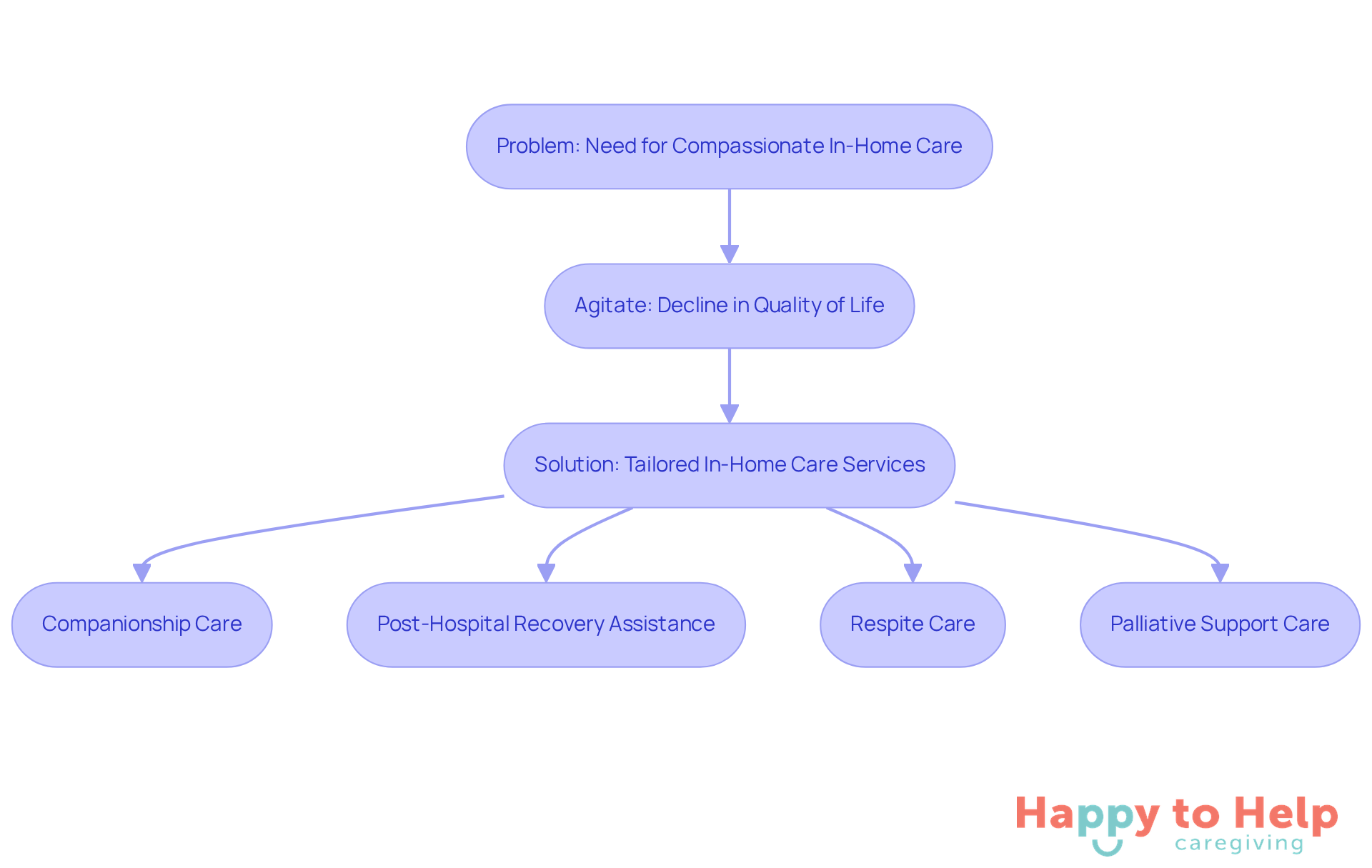
Problem: Many individuals require in-home assistance that is not only functional but also compassionate and tailored to their unique needs.
Agitate: Without proper support, clients may experience a decline in their quality of life. This situation is further complicated by the fact that caregivers often need specialized skills and emotional support to effectively assist their clients. This necessity can also influence the caregiver hourly rate, making it essential to address these challenges.
Solution: Happy to Help Caregiving focuses on delivering compassionate in-home assistance customized to the individual requirements of each client. Their services include:
- Companionship care
- Post-hospital recovery assistance
- Respite care
- Palliative support care
This tailored method not only improves the quality of life for clients but also ensures that caregivers are equipped to meet the diverse needs of those they serve.
Geographic Location: How Area Affects Caregiver Pay
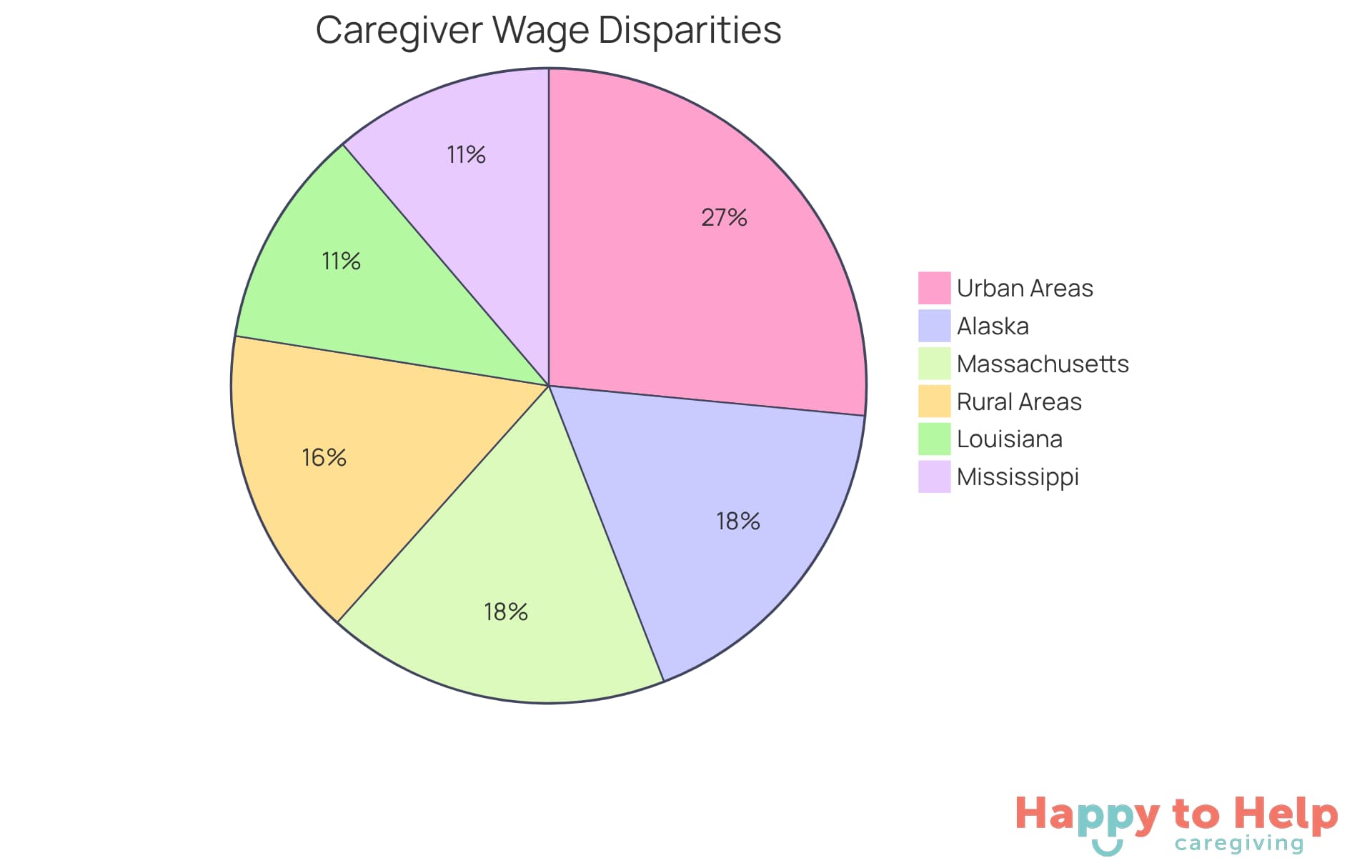
Caregiver compensation presents a significant challenge, heavily influenced by geographic location. Urban areas typically offer higher wages, with the caregiver hourly rate ranging from $20 to $30 per hour due to the increased cost of living and higher demand for services. In contrast, rural providers often see a caregiver hourly rate between $13 and $18, highlighting a notable wage gap that affects financial sustainability.
This disparity is not just a reflection of local economic conditions; it also underscores the availability of resources and support systems for caregivers. For example, states like Massachusetts and Alaska lead in compensation, with average rates around $16.52 and $16.57 per hour, respectively. Conversely, Louisiana and Mississippi report significantly lower averages, with Louisiana having the lowest support worker wages at approximately $10.60 per hour, ranking 4th in affordability for long-term assistance.
Understanding these regional variations is crucial for families and supporters, as they directly influence the caregiver hourly rate and the quality of care provided. Furthermore, the national median expense for nonmedical in-home assistance in 2025 is projected to be $33 per hour. The demand for support providers is expected to rise, particularly in urban areas, necessitating a closer examination of how location impacts salaries, job security, and advancement opportunities in the caregiving profession.
Experience and Reputation: The Value of Caregiver Expertise
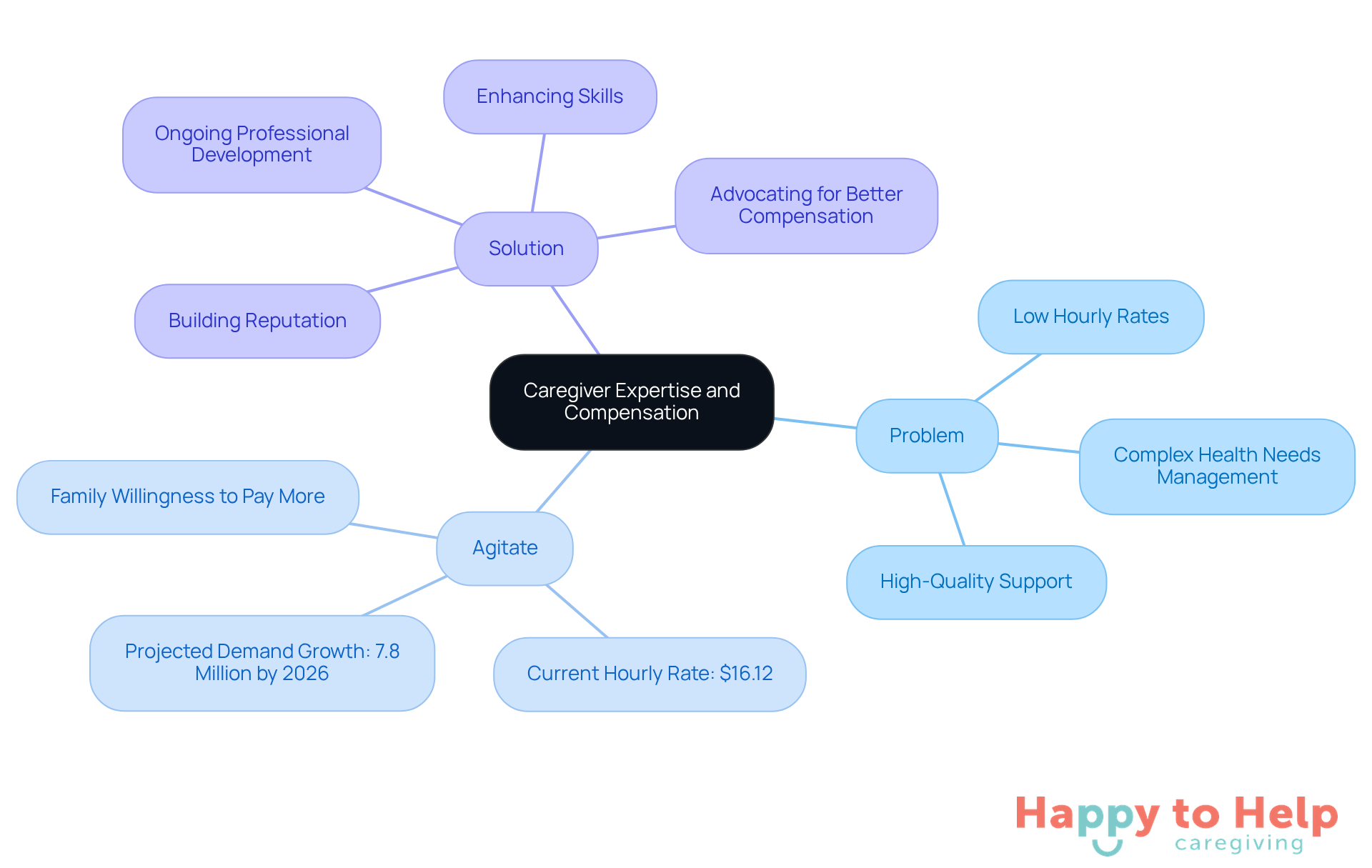
Caregivers with extensive experience and a strong reputation often encounter the challenge of receiving a low caregiver hourly rate. Despite their capabilities in delivering high-quality support and managing complex health needs, many caregivers struggle to receive a fair caregiver hourly rate for their efforts.
Agitate: Families are willing to pay more for providers who can build trusting relationships and demonstrate their expertise. However, the caregiver hourly rate for home health and personal support aides in 2023 was only $16.12 per hour. This figure reflects the financial realities of caregiving positions, which can lead to burnout and dissatisfaction among caregivers. As the demand for skilled attendants is projected to grow by 7.8 million by 2026, those without a strong reputation may find it increasingly difficult to secure adequate compensation.
Solution: Establishing a favorable reputation through quality support and ongoing professional development is crucial. Caregivers should focus on enhancing their skills and building relationships within the community. Additionally, many family members who assist in caregiving advocate for better compensation, recognizing that they often provide higher quality support. Addressing the emotional and physical demands of caregiving is essential; ensuring a fair caregiver hourly rate is necessary to allow caregivers to continue providing the best care possible. By prioritizing reputation and professional growth, caregivers can improve their marketability and ultimately benefit both themselves and the families they serve.
Certifications: The Impact of Professional Credentials on Rates
Professional certifications, such as Certified Nursing Assistant (CNA) or specialized training in dementia support, present a significant challenge for caregivers: low pay rates. Many caregivers struggle to earn a living wage, often due to the low caregiver hourly rate, which can lead to high turnover and instability in care environments.
The implications of this issue are profound. Caregivers without certifications often earn less, which can affect their job satisfaction and the quality of care they provide. On average, the caregiver hourly rate for individuals with certifications can be $2 to $5 more per hour than for their non-certified counterparts. Furthermore, workers with professional certification earn 4.8% more weekly than those without, highlighting how certification can positively affect the caregiver hourly rate in the caregiving profession.
Investing in professional growth through certification not only enhances earnings but also equips caregivers to meet the diverse needs of their clients. This investment cultivates a more supportive and effective care environment. As Linda Leekley, chief clinical officer, states, "the knowledge that an upskilled caregiver can bring will really impact the outcome that that client experiences from the care."
However, it is crucial to recognize that barriers to certification may exist for certain demographic groups, limiting access to these valuable credentials. Addressing these barriers is essential for ensuring that all caregivers can benefit from the advantages of certification.
Shift Hours: How Scheduling Influences Caregiver Compensation
Caregivers who work unconventional schedules, such as overnight or weekend shifts, face unique challenges. These shifts can be inconvenient and demanding, impacting their work-life balance. To address this issue, many employers offer a higher caregiver hourly rate, known as shift differentials, to compensate for the difficulties associated with these hours.
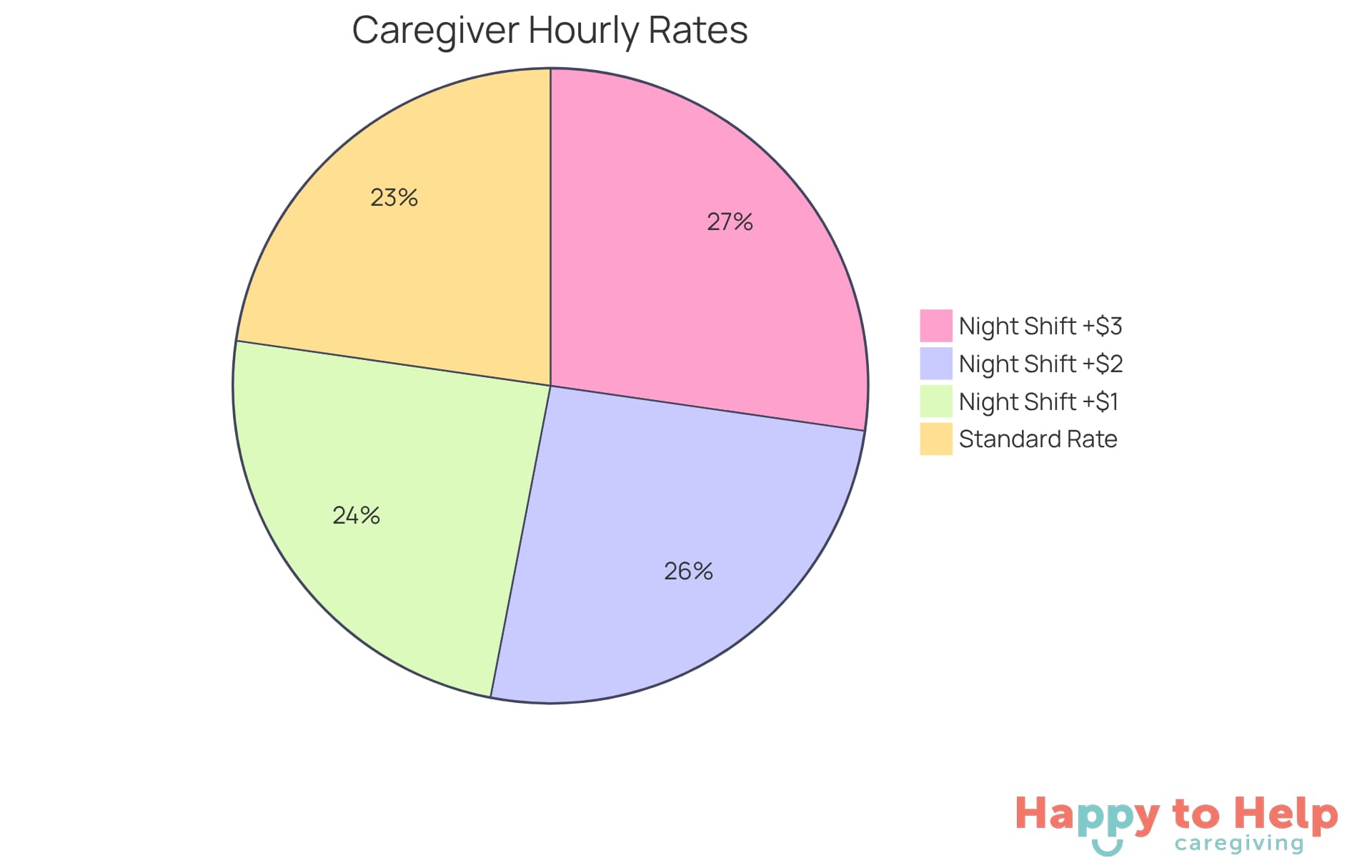
For instance, attendants may receive an extra $1 to $3 per hour for night shifts. This additional compensation reflects the increased need for assistance during these less desirable times, thereby influencing the caregiver hourly rate and providing caregivers with a financial incentive to take on these challenging roles. By understanding and leveraging these pay differentials, caregivers can better navigate the complexities of their schedules.
Type of Care: Understanding Different Services and Their Costs
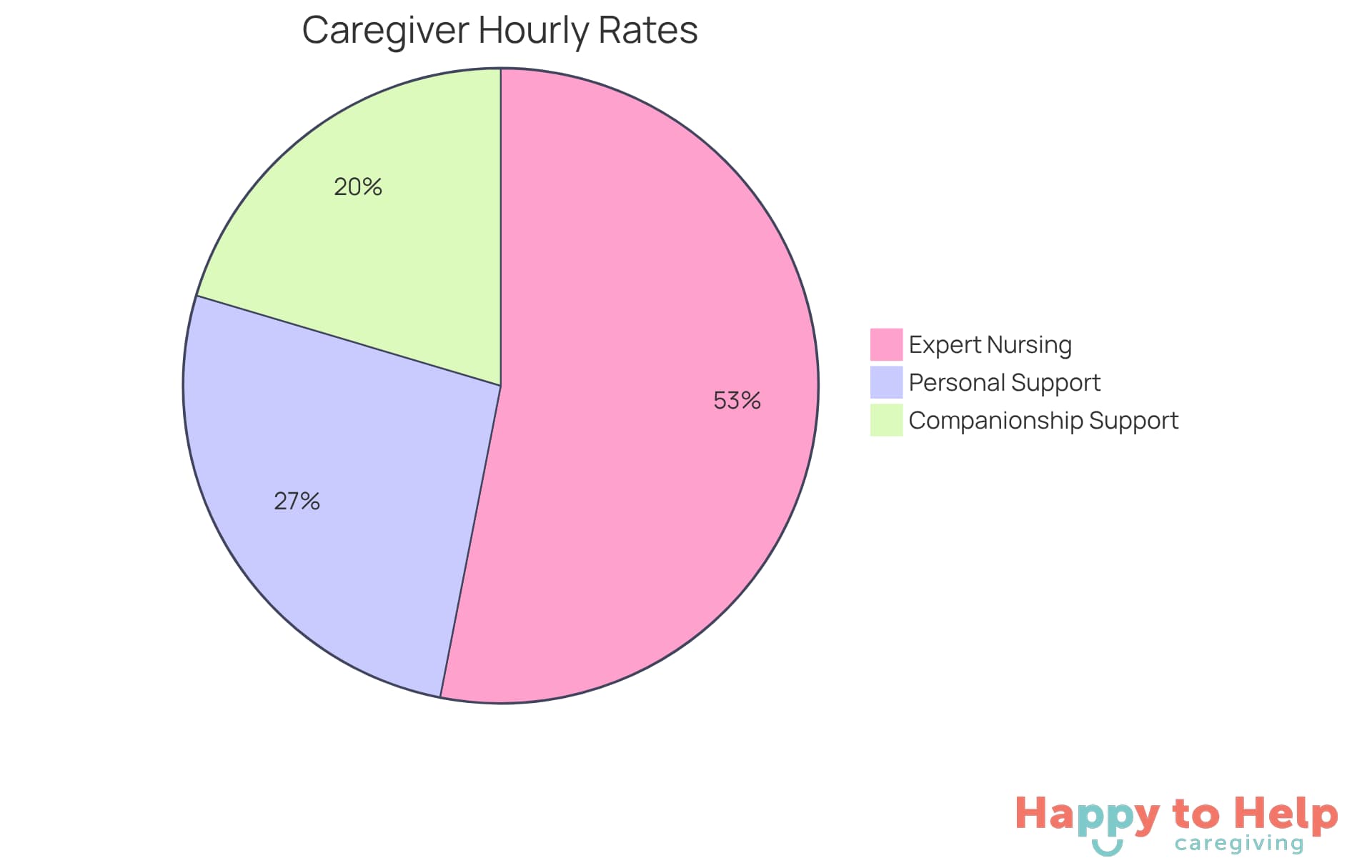
Understanding the caregiver hourly rate associated with caregiving is essential for families planning for support. The kind of assistance needed plays a crucial role in determining the caregiver hourly rate. For example, companionship support typically ranges from $20 to $30 per hour, providing vital social backing and help with everyday tasks. In contrast, personal support assistance, which may include help with bathing and dressing, usually costs between $25 and $40 per hour. Expert nursing assistance, involving medical duties performed by qualified practitioners, demands significantly higher fees, typically ranging from $50 to $80 per hour.
The caregiver hourly rate can vary based on several factors, including location and caregiver qualifications. Urban areas generally have higher costs compared to rural regions. Families should carefully evaluate the specific requirements of their loved ones when planning for support, as these differences can significantly affect the caregiver hourly rate and overall costs. Understanding these cost variations, especially the caregiver hourly rate, is crucial for effective financial planning in caregiving.
As industry specialist Lindsay notes, "The expense of elderly assistance in California will rely on factors such as the kind of support needed, the frequency of services, and the location." Additionally, with projections indicating that costs for in-home care could rise significantly by 2040, families must plan accordingly. By being informed about these factors, families can make better decisions and prepare for the future.
Overtime Pay: Understanding Additional Compensation for Caregivers
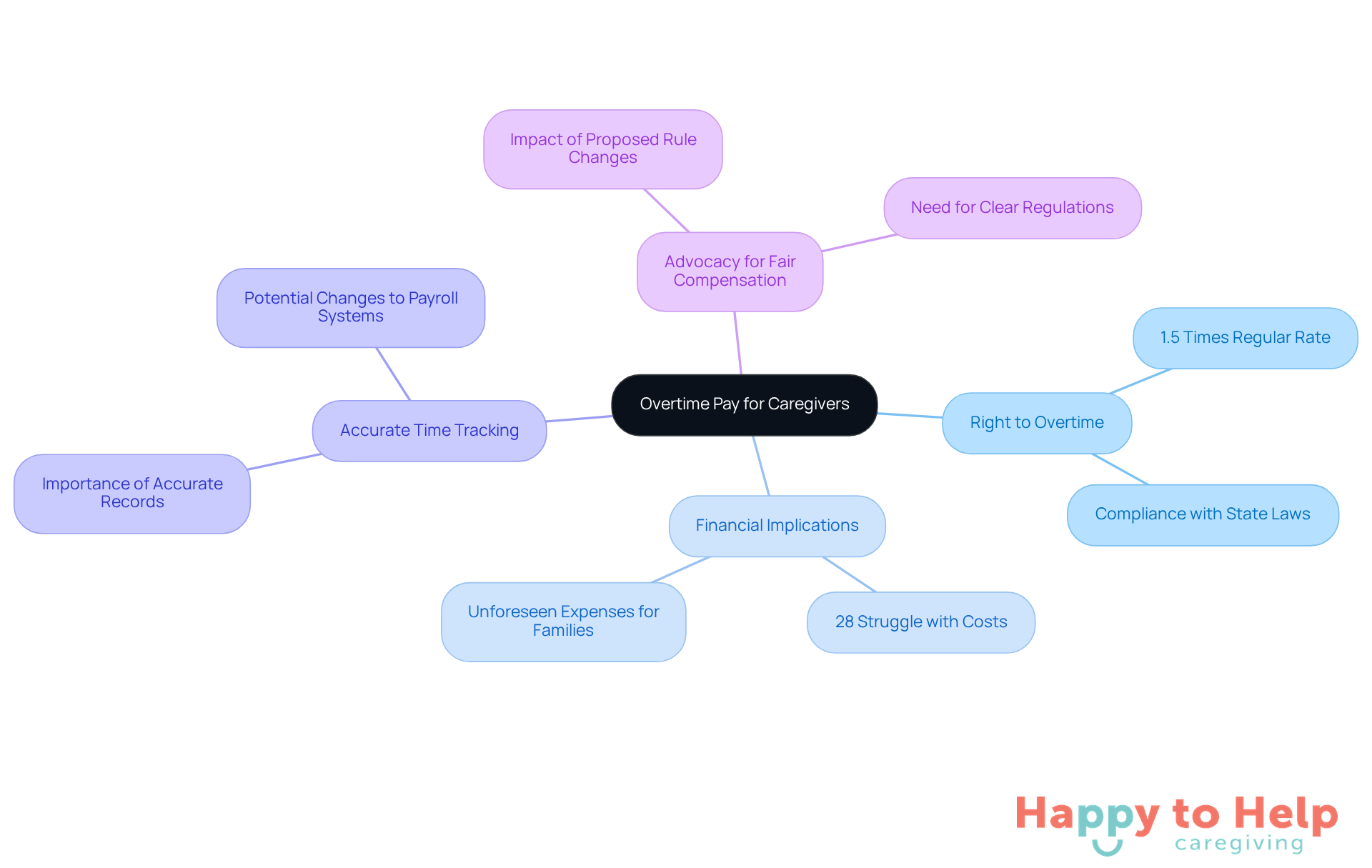
Caregivers face a significant challenge: the right to overtime payment for hours worked beyond the standard 40-hour workweek is often overlooked. This extra compensation, typically calculated at 1.5 times the regular rate, can lead to unforeseen expenses for families. Many may not realize the financial implications of overtime, especially since nearly 28% of unpaid family supporters struggle to find affordable home health aides due to budget constraints and availability issues.
To navigate these challenges, families must ensure accurate time tracking and compensation to comply with state laws. Staying informed about ongoing discussions regarding compensation regulations is crucial, as proposed rule changes could greatly impact financial planning and access to care services. As labor specialist Chris Burks notes, "Compensating support staff fairly helps draw highly skilled individuals who feel secure in their positions and are less likely to leave."
By understanding these regulations and advocating for fair compensation, families can better manage their caregiving responsibilities and avoid unexpected costs.
Rate Setting: Can Caregivers Determine Their Own Pay?
Many caregivers encounter challenges with their compensation, particularly concerning the caregiver hourly rate set by agencies. In contrast, independent workers have the flexibility to negotiate their own pay, but several factors can significantly influence these negotiations. Experience, specialization, and local demand for caregiving services all play a role. For instance:
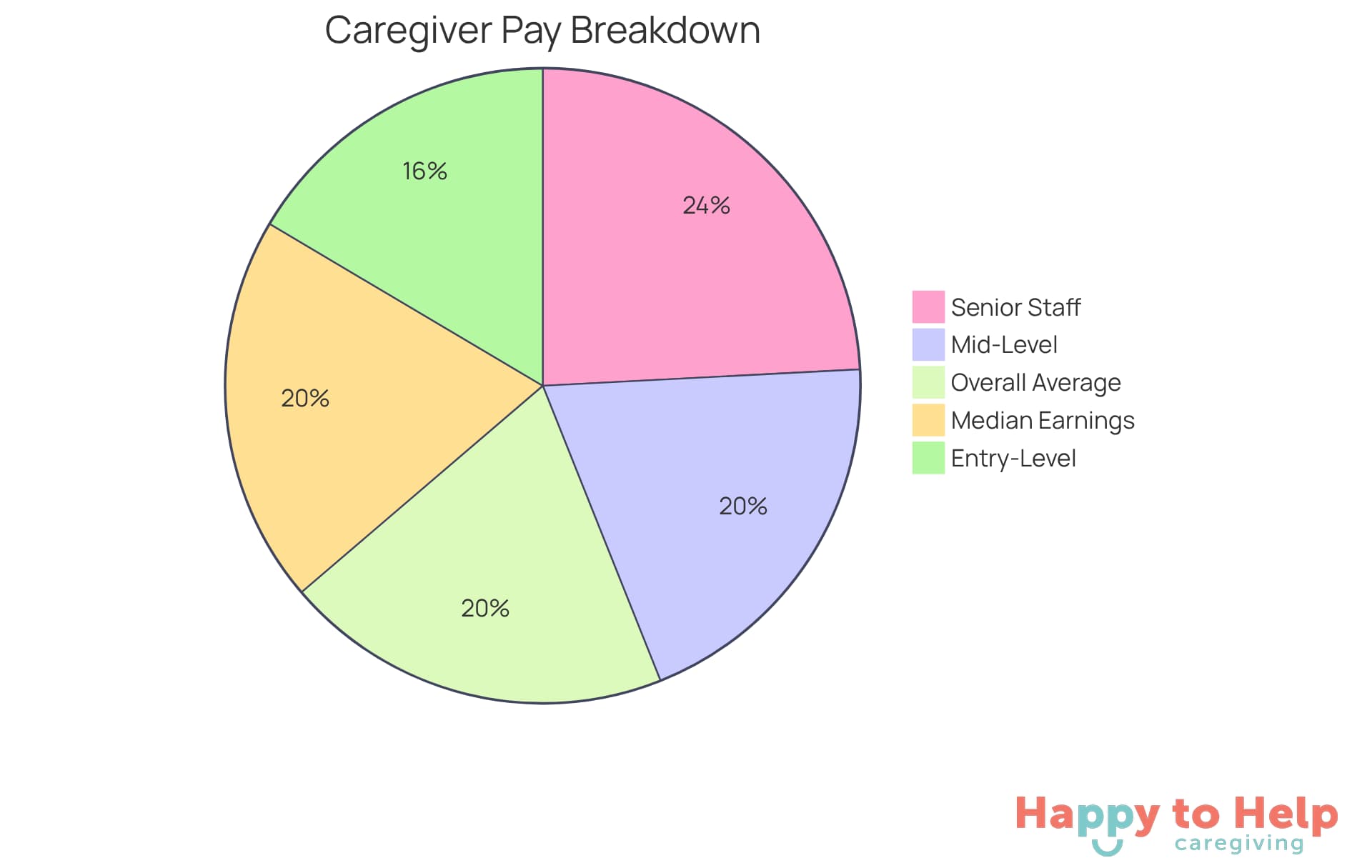
- Entry-level support workers typically earn between $14 and $16 per hour.
- Those with mid-level experience can command $17 to $19.
- Senior staff, particularly in complex support roles, may earn between $20 and $24 per hour.
On average, support workers see hourly compensation ranging from $14 to $22, with median earnings around $17.50.
Families need to engage in pay discussions with a clear understanding of the caregiver hourly rate in their area, as these rates can vary widely based on geographic location and the complexity of care required. In high-demand regions, support providers might find opportunities to negotiate better pay, especially as the need for home care services is projected to rise by 23% through 2032.
Recent trends show that caregivers are increasingly advocating for a caregiver hourly rate that accurately reflects their skills and the demands of their roles. For example, those providing In Home Support Services (IHSS) are currently pushing for a pay increase to $20 per hour to remain competitive with other industries, such as fast food, which are also raising salaries. This highlights the growing recognition of the support role in policy discussions and the urgent need for equitable compensation.
As families engage in these conversations, understanding the nuances of support worker compensation can lead to better financial outcomes. Utilizing resources like Paid.care can simplify the process of securing fair pay for family support providers. This platform guides users through eligibility assessments, application filing, and funding coordination, helping individuals navigate the complexities of caregiver compensation.
Hiring Process: How Families Find and Pay for Caregivers
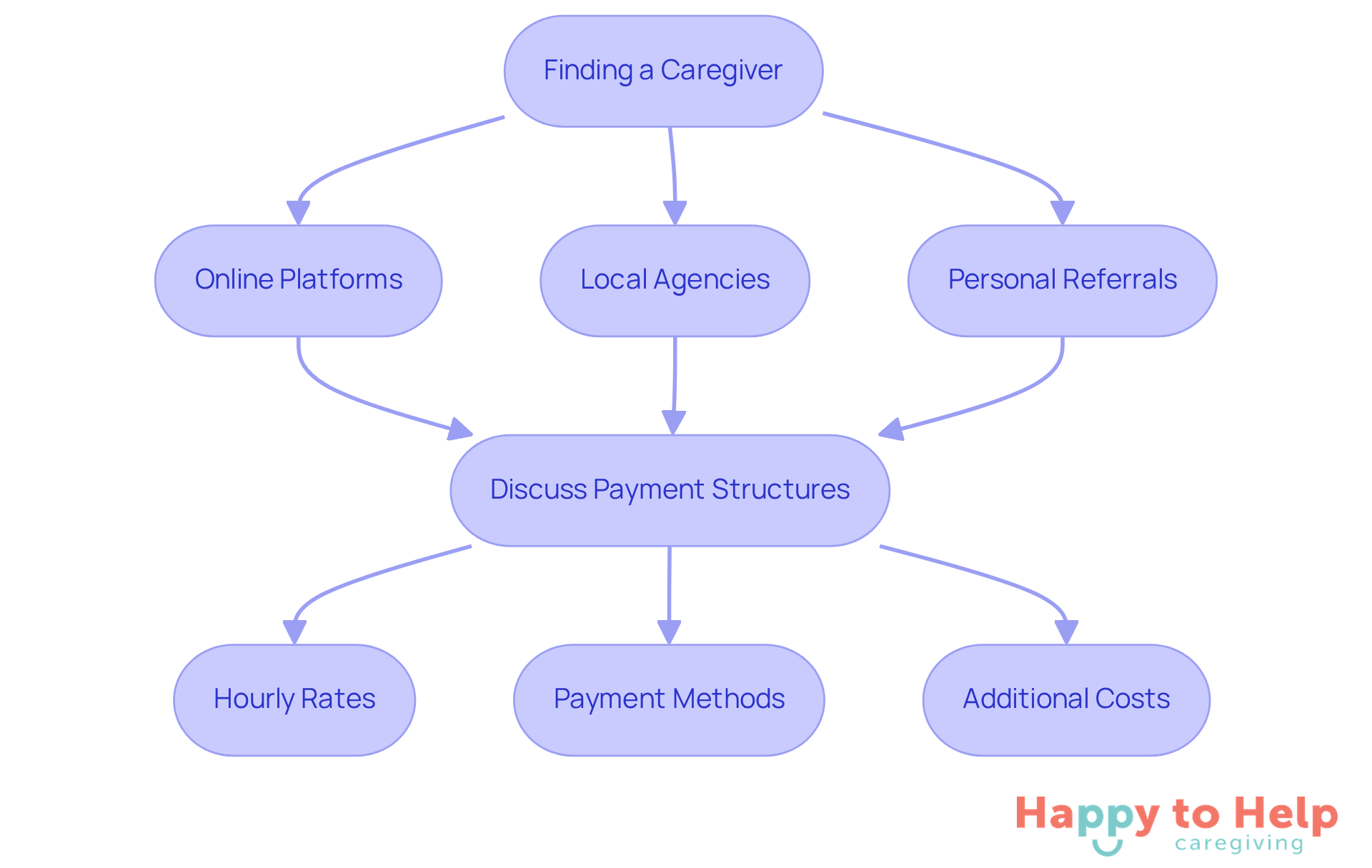
Finding and hiring a support worker can be challenging. Families often struggle with evaluating their specific assistance needs and identifying suitable candidates. This process can lead to frustration and uncertainty, especially when it comes to ensuring the right fit for care.
To tackle these challenges, families can explore various avenues for locating caregivers:
- Online platforms
- Local agencies
- Personal referrals
It's crucial to discuss payment structures upfront, including:
- Hourly rates
- Payment methods
- Any additional costs associated with care
This transparency not only clarifies expectations but also helps establish a positive working relationship from the outset.
By taking these steps, families can streamline the process of finding a support worker, ensuring they meet their needs effectively.
Taking the Next Steps
Understanding the factors that influence caregiver hourly rates is crucial for families seeking in-home care services. The problem lies in the complexities of caregiver compensation, which can significantly impact both the financial aspect and the quality of care provided. Geographic location, experience, certifications, shift hours, and the type of care needed all play significant roles in determining compensation.
Families face challenges as urban areas typically offer higher wages due to increased demand and cost of living. However, experienced caregivers often struggle to receive fair compensation despite their expertise. This disparity can lead to a lack of quality care, as caregivers may feel undervalued. Additionally, while professional certifications can enhance earnings, unconventional shift hours may provide financial incentives for caregivers, complicating the landscape further.
To address these issues, families must engage in open discussions about compensation and understand the nuances of caregiver pay. Here are some actionable tips:
- Research local caregiver rates to understand the market.
- Advocate for fair pay by discussing compensation openly with caregivers.
- Consider the benefits of hiring certified caregivers who may command higher wages but provide better care.
By being informed and proactive, families can ensure that caregivers are fairly compensated. This not only supports caregivers but ultimately leads to better care outcomes for those they serve. Addressing these factors is essential for fostering a supportive caregiving environment.
https://iframe.tely.ai/cta/eyJhcnRpY2xlX2lkIjogIjY5MjRmMWRhZWM0Y2FiOGU3NGVjMDBkNCIsICJjb21wYW55X2lkIjogIjY4ZWU1ZGNhNzMxNzYyNTU3ZjNjOTVjMSIsICJpbmRleCI6IG51bGwsICJ0eXBlIjogImFydGljbGUifQ==Frequently Asked Questions
What services does Happy to Help Caregiving provide?
Happy to Help Caregiving offers personalized in-home assistance services, including companionship care, post-hospital recovery assistance, respite care, and palliative support care.
Why is personalized in-home care important?
Personalized in-home care is important because it not only provides functional assistance but also ensures that the care is compassionate and tailored to the unique needs of each client, which can significantly improve their quality of life.
How does geographic location affect caregiver pay?
Geographic location heavily influences caregiver compensation, with urban areas typically offering higher wages (ranging from $20 to $30 per hour) due to higher living costs and demand for services, while rural areas often see rates between $13 and $18 per hour.
Which states offer the highest caregiver compensation?
States like Massachusetts and Alaska lead in caregiver compensation, with average hourly rates around $16.52 and $16.57, respectively.
What is the projected national median expense for nonmedical in-home assistance in 2025?
The projected national median expense for nonmedical in-home assistance in 2025 is $33 per hour.
What challenges do experienced caregivers face regarding compensation?
Experienced caregivers often face the challenge of receiving a low caregiver hourly rate despite their expertise and ability to manage complex health needs, with the average rate for home health and personal support aides in 2023 being only $16.12 per hour.
How can caregivers improve their compensation and marketability?
Caregivers can improve their compensation and marketability by establishing a strong reputation through quality support, ongoing professional development, and building relationships within the community, as well as advocating for better compensation.
List of Sources
- Happy to Help Caregiving: Personalized In-Home Care Services
- Tech-enabled caregiving can help dementia patients stay at home — perhaps for too long (https://statnews.com/2025/11/24/dementia-caregiving-technology-assistance)
- The Evolution of Home Care Services: Trends in the USA - Cottage Home Care (https://cottagehomecare.com/blog/trends-in-home-care-new-york)
- Top key trends shaping the future of caregiving (https://learn2care.us/blog/caregiving-future-trends)
- 13 Home Care Trends To Watch For in 2024 (And Thoughts From 11 Experts) | CareAcademy (https://careacademy.com/blog/home-care-trends)
- Home-Based Care Companies Improve Outcomes By Training Family Caregivers (https://homehealthcarenews.com/2025/10/home-based-care-companies-improve-outcomes-by-training-family-caregivers)
- Geographic Location: How Area Affects Caregiver Pay
- Geography Matters: Location plays key role in long-term care cost (https://insurancenewsnet.com/innarticle/geography-matters-location-plays-key-role-in-long-term-care-cost)
- What States Pay Caregivers the Most? - At Peace Health (https://atpeacehealth.com/what-states-pay-caregivers-the-most)
- Nationwide Caregiver Shortage | Best & Worst States Ranked (https://asbestos.com/support/caregivers/shortage-by-state)
- New Study Finds Family Caregivers Would Earn Six Figures If Paid A Salary | Otsuka US (https://otsuka-us.com/news/new-study-finds-family-caregivers-would-earn-six-figures-if-paid-salary)
- Home Care Costs in 2025: A State-by-State Guide (https://aplaceformom.com/caregiver-resources/articles/in-home-care-costs)
- Experience and Reputation: The Value of Caregiver Expertise
- The Impact of Caregiver Hourly Rates on Retention (https://axiscare.com/blog/rising-caregiver-wages)
- Experiences of Direct Care Workers and Family Caregivers of Home- and Community-Based Services (HCBS) | KFF (https://kff.org/medicaid/experiences-of-direct-care-workers-and-family-caregivers-of-home-and-community-based-services-hcbs)
- Home Health and Personal Care Aides (https://bls.gov/oes/2023/may/oes311120.htm)
- Report: Higher Pay For Caregivers - SEIU 775 (https://seiu775.org/hazardpayreport)
- Caregiving Crisis: Nearly 1 in 4 US adults serve as caregivers for relatives with complex needs (https://investigatetv.com/2025/11/04/caregiving-crisis-nearly-1-4-us-adults-serve-caregivers-relatives-with-complex-needs)
- Certifications: The Impact of Professional Credentials on Rates
- Why Skill-Based Billing Is Growing In Home Care – And Why Some Say No (https://homehealthcarenews.com/2025/09/why-skill-based-billing-is-growing-in-home-care-and-why-some-say-no)
- Caregiver Certification: Is It Worth My Time & Money? (https://trualta.com/resources/blog/caregiver-certification-is-it-worth-my-time-money)
- Certified Caregiver Hourly Pay in 2025 | PayScale (https://payscale.com/research/US/Job=Certified\_Caregiver/Hourly\_Rate)
- Professional certification and earnings of health care workers in low social closure occupations - PMC (https://pmc.ncbi.nlm.nih.gov/articles/PMC10156129)
- ARRT Centennial Staff Quotes - ARRT (https://arrt.org/pages/arrt-staff-quotes)
- Shift Hours: How Scheduling Influences Caregiver Compensation
- Demand for California caregivers is rising, but their pay isn’t. Lawmakers hope to change that. (https://calmatters.org/california-divide/2023/07/california-caregivers)
- A New Labor Rule Could Push Caregivers to the Breaking Point | ACLU (https://aclu.org/news/womens-rights/a-new-labor-rule-could-push-caregivers-to-the-breaking-point)
- 2025–2026 Nursing Home Report Reveals Lower Turnover (https://ahcancal.org/News-and-Communications/Blog/Pages/2025–2026-Nursing-Home-Report-Reveals-Lower-Turnover.aspx)
- Caregiving Bills in the California 2023 Legislative Cycle-Wins and Disappointments (https://caregiver.org/news/caregiving-bills-in-the-california-2023-legislative-cycle-wins-and-disappointments)
- Type of Care: Understanding Different Services and Their Costs
- Cost of In-Home Care for Elderly in California 2025 (https://findinghomecare.net/cost-of-in-home-care-for-elderly-in-california)
- Cost of In-Home Care in California (2025) + 11 Ways to Pay (https://lovinghomecareinc.com/blog/cost-of-in-home-care-california)
- Home Care Costs in 2025: A State-by-State Guide (https://aplaceformom.com/caregiver-resources/articles/in-home-care-costs)
- Long-Term Care Costs Increase in California, Exceeding National Costs (https://investor.genworth.com/news-events/press-releases/detail/996/long-term-care-costs-increase-in-california-exceeding)
- 24/7 In-Home Care Costs in 2025 - Assisted Living Magazine (https://assistedlivingmagazine.com/24-7-in-home-care-costs-in-2025)
- Overtime Pay: Understanding Additional Compensation for Caregivers
- Labor Department Wants To Remove Pay, Overtime Protections For Disability Caregivers (https://disabilityscoop.com/2025/08/21/labor-department-wants-to-remove-pay-overtime-protections-for-disability-caregivers/31591)
- A New Labor Rule Could Push Caregivers to the Breaking Point | ACLU (https://aclu.org/news/womens-rights/a-new-labor-rule-could-push-caregivers-to-the-breaking-point)
- Labor Department Proposes Rule to Change Pay and Overtime Protections for Disability Caregivers < Southeast ADA Center (https://adasoutheast.org/labor-department-proposes-rule-to-change-pay-and-overtime-protections-for-disability-caregivers)
- Pay, Job Protections for Home Care Aides at Risk Under Proposed Federal Rule (https://aarp.org/advocacy/job-protections-home-care-workers)
- News & Commentary: July 1, 2025 ✦ OnLabor (https://onlabor.org/july-1-2025)
- Rate Setting: Can Caregivers Determine Their Own Pay?
- Caregivers asking for $20 an hour (https://kzyx.org/2024-01-12/caregivers-asking-for-20-an-hour)
- What Are the Average Caregiver Pay Rates in 2025? — Paid.Care (https://paid.care/guides/what-are-the-average-caregiver-pay-rates-in-2025)
- Payment Rates for Medicaid Home Care: States’ Responses to Workforce Challenges | KFF (https://kff.org/medicaid/payment-rates-for-medicaid-home-care-states-responses-to-workforce-challenges)
- Hiring Process: How Families Find and Pay for Caregivers
- The Strategies At-Home Care Providers Use To Attract, Retain The Next Generation Of Workers (https://homehealthcarenews.com/2025/05/the-strategies-at-home-care-providers-use-to-attract-retain-the-next-generation-of-workers)
- Families Prefer In-Home Care To Senior Living – Yet Struggle To Identify Needed Support (https://homehealthcarenews.com/2025/11/families-prefer-in-home-care-to-senior-living-yet-struggle-to-identify-needed-support)
- Caregiver Recruitment Strategies That Work | Rellevate (https://rellevate.com/news/caregiver-recruitment-strategies)
- How to Hire In-Home Caregivers: 5 Essential Steps for Families - Happy To Help (https://happytohelpcaregiving.com/how-to-hire-in-home-caregivers-5-essential-steps-for-families)
- Caregiver Statistics: Work and Caregiving (https://caregiver.org/resource/caregiver-statistics-work-and-caregiving)