Why Aged Home Care Services vs. Nursing Matters
Choosing the right care option for elderly loved ones presents a significant challenge for many families. This decision often carries emotional and financial implications that can weigh heavily on caregivers. With more seniors opting for in-home assistance, the differences between aged home care services and traditional nursing homes are becoming increasingly clear.
In-home care offers personalized support and the comfort of familiar surroundings, allowing seniors to maintain their independence. On the other hand, nursing homes provide comprehensive medical care and opportunities for social engagement. This contrast raises an important question: how can families navigate these complex choices to ensure the best quality of life for their aging relatives?
To tackle this issue, families should first assess their loved ones' specific needs. Consider factors such as:
- Medical requirements
- Social preferences
- Financial resources
Engaging with healthcare professionals can provide valuable insights into the best care options available. Additionally, exploring local resources and support groups can help families make informed decisions that prioritize their loved ones' well-being.
Defining Aged Home Care Services and Traditional Nursing Homes
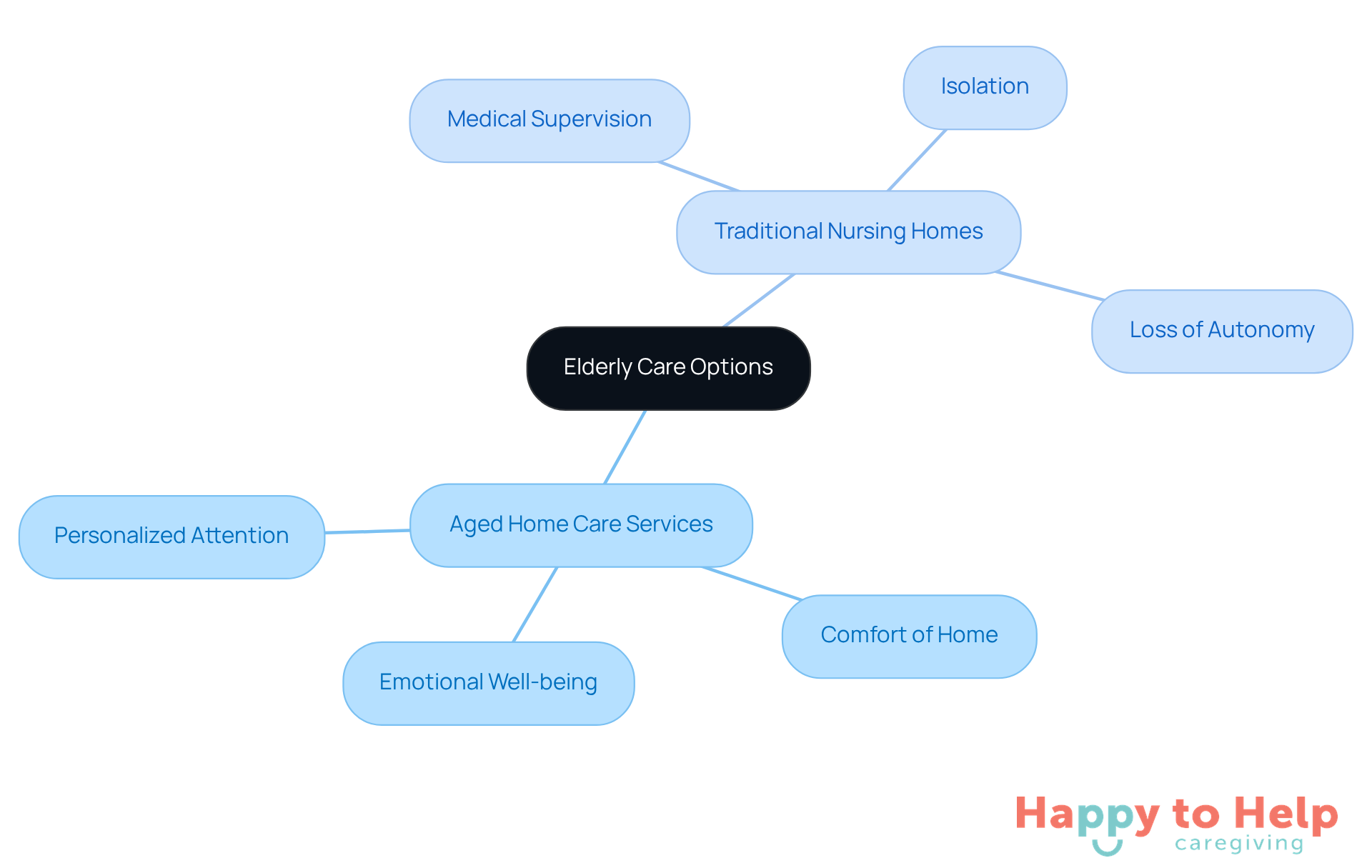
Elderly individuals often face the challenge of needing assistance as they age, which can significantly impact their quality of life. Traditional nursing facilities, while providing essential medical supervision, can create feelings of isolation and loss of autonomy. This institutional setting may not cater to the emotional and social needs of seniors, leaving them feeling disconnected from their communities.
As of 2025, around 12% of seniors are receiving home assistance services, highlighting a growing preference for in-home support. Many elderly individuals desire to age in place, maintaining their independence while receiving necessary help. Healthcare professionals emphasize that in-home support not only meets medical needs but also addresses emotional and social well-being, fostering a sense of community and belonging.
The benefits of in-home care services for seniors are substantial. They offer personalized attention tailored to individual preferences, the comfort of familiar surroundings, and opportunities for meaningful engagement. In contrast to nursing facilities, in-home support allows seniors to thrive in their own environments, making it an appealing choice for families seeking assistance options for their loved ones.
In summary, in-home care presents a viable solution for seniors needing support. By prioritizing autonomy and emotional well-being, these services can significantly enhance the quality of life for elderly individuals.
Exploring the Benefits of Aged Home Care Services and Nursing Homes
Problem: Caregivers often face significant challenges when choosing the right support for seniors. The emotional toll of caregiving can lead to feelings of isolation and stress.
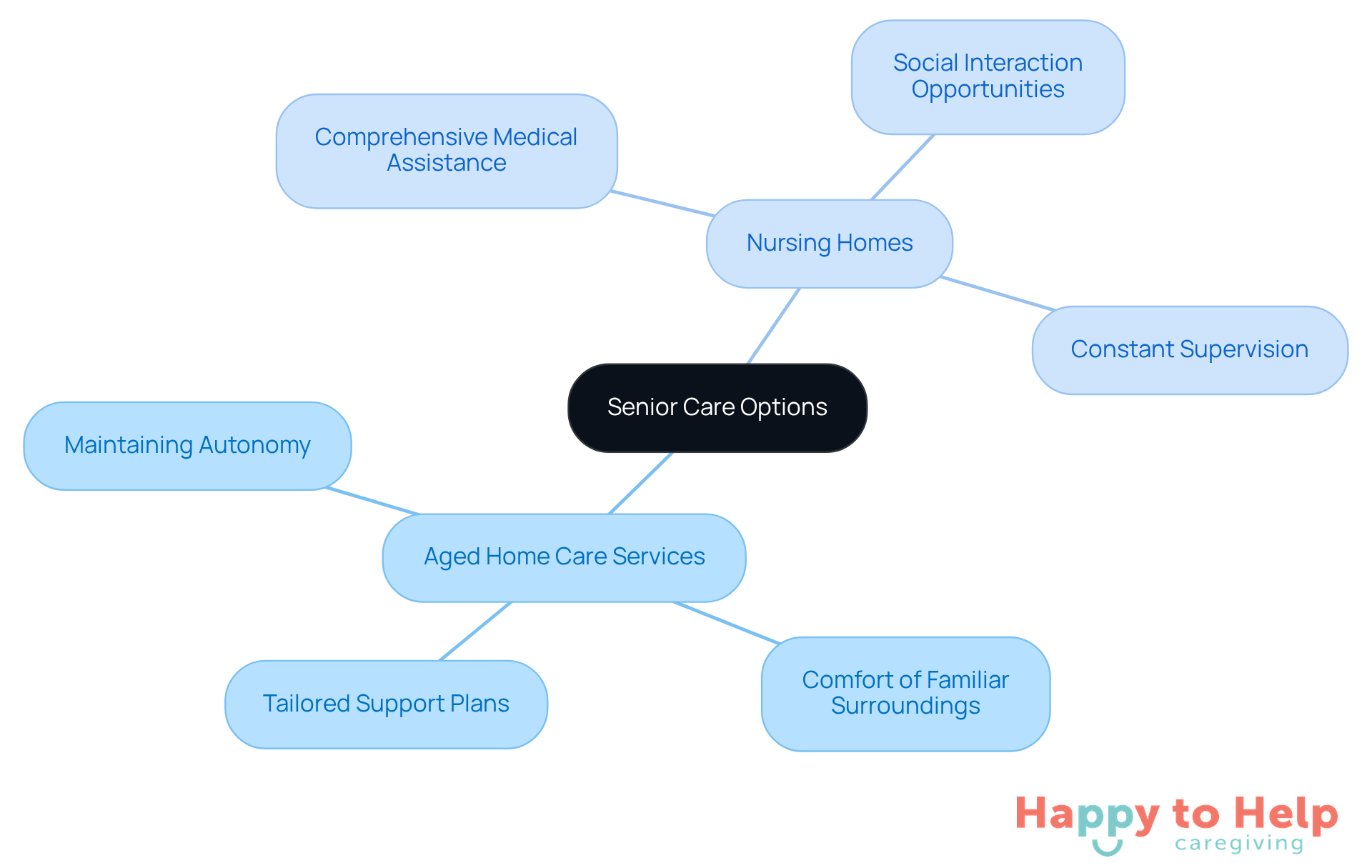
Agitate: Many caregivers struggle with the decision between senior assistance options and nursing facilities. While aged home care services provide customized support plans and the comfort of familiar environments, they may not offer the extensive medical care some seniors require. This can leave caregivers feeling overwhelmed and uncertain about the best choice for their loved ones.
Aged home care services provide several advantages, including:
- Tailored support plans that cater to individual needs
- The comfort of familiar surroundings
- The ability to maintain autonomy
Clients frequently report reduced feelings of loneliness and enhanced emotional well-being. On the other hand, nursing facilities offer:
- Comprehensive medical assistance
- Social interaction opportunities
- Constant supervision
This makes them suitable for those with significant health challenges. The structured environment of nursing facilities can foster a sense of community and support among residents, providing caregivers with peace of mind.
Assessing the Drawbacks of Aged Home Care Services and Nursing Homes
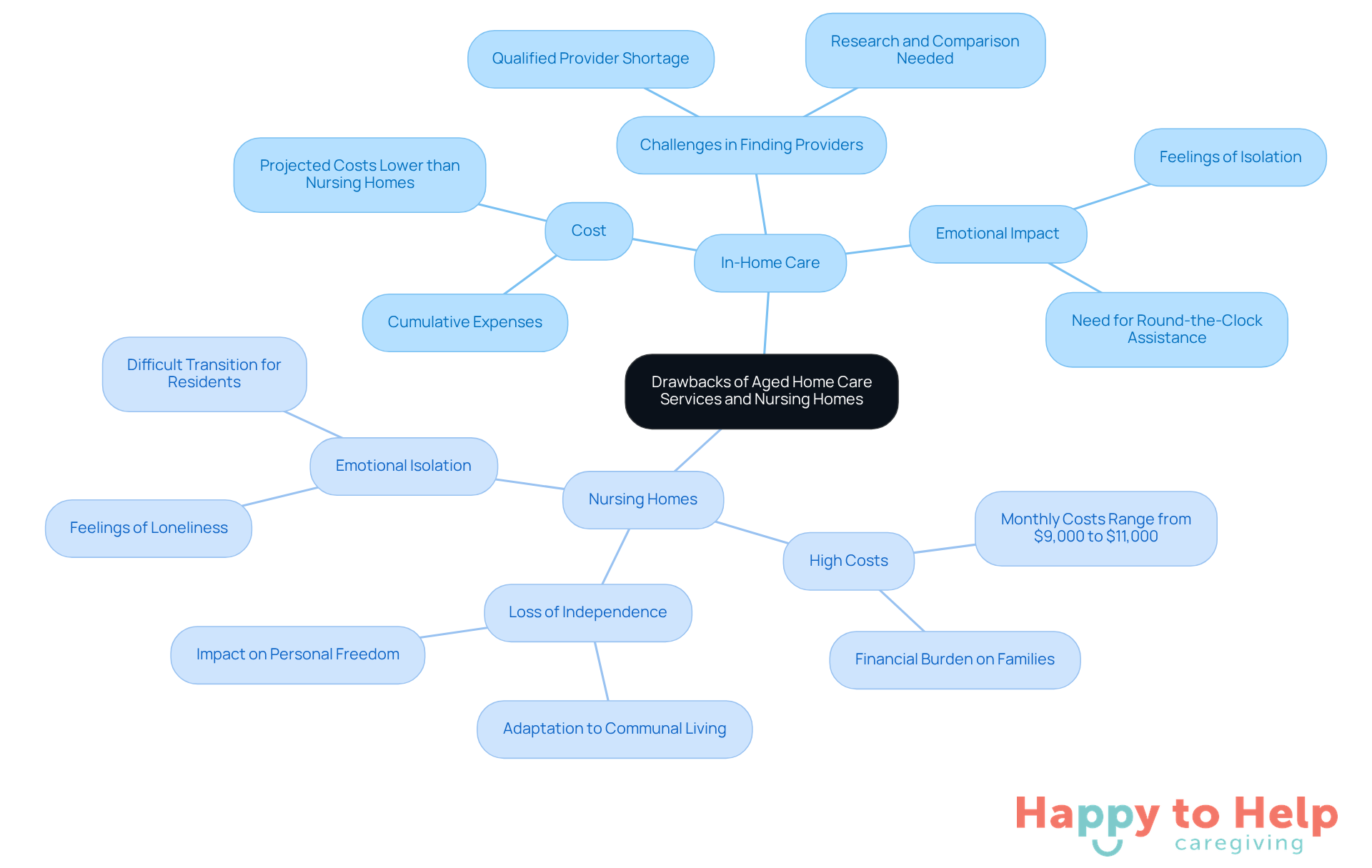
Finding qualified in-home care providers is a significant challenge for families, especially as the demand for such services continues to rise. In 2025, the average cost of in-home care is projected to be considerably lower than nursing facilities, which can range from $9,000 to $11,000 per month. However, the cumulative expenses of extensive in-home services can quickly add up, particularly for families needing round-the-clock assistance.
Nursing homes, while providing immediate medical support, come with their own set of challenges. The high monthly costs can place a heavy burden on family finances. Additionally, residents often face a loss of independence, as adapting to communal living can be difficult. This transition may lead to feelings of isolation, even with staff and other residents around. The emotional impact of such changes can be profound, making it essential for families to understand these dynamics as the elderly population grows.
To navigate these challenges, families should consider the following actionable solutions:
- Research and compare in-home care providers to find qualified options that fit their needs and budget.
- Explore financial assistance programs that may help offset the costs of in-home care.
- Engage in open discussions with elderly family members about their preferences and concerns regarding care options.
By understanding the complexities of in-home care and nursing facilities, families can make informed decisions that prioritize the well-being and independence of their loved ones.
Determining Suitability: When to Choose Aged Home Care vs. Nursing Homes
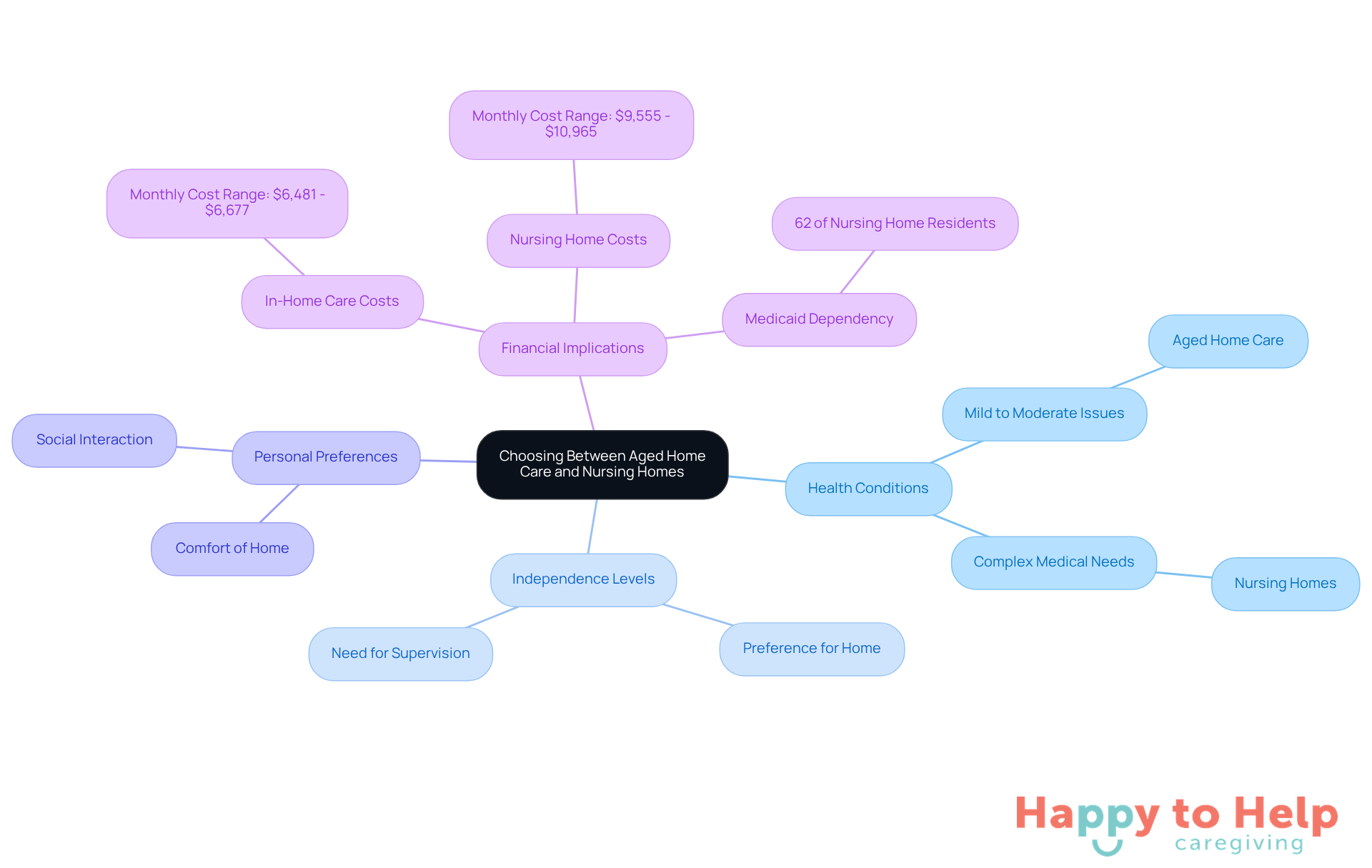
Choosing between senior support services and nursing facilities presents a significant challenge for families. The decision hinges on various factors, including health conditions, independence levels, and personal preferences. Families often grapple with the emotional and physical needs of their loved ones while considering the financial implications of each option.
Aged home care services are especially beneficial for seniors who require assistance with daily tasks yet prefer to stay in their familiar surroundings. This choice is ideal for those with mild to moderate health issues, as it allows them to maintain autonomy and comfort through aged home care services. Conversely, nursing facilities cater to individuals with complex medical needs that require continuous oversight and specialized care.
The financial aspect cannot be overlooked. In 2025, the average monthly cost for in-home assistance ranges from $6,481 to $6,677, while nursing home services can exceed $9,555 for a semi-private room and reach $10,965 for a private room. This stark cost difference often leads families to consider in-home options, especially when their loved ones can safely age in place.
Experts emphasize the importance of thoroughly evaluating support needs. Elderly support specialists recommend assessing the level of medical assistance required and the individual's preferences. When selecting aged care services, consider the following:
- Caregiver qualifications
- Service flexibility
- Customization of care plans
Additionally, it's noteworthy that approximately 62 percent of nursing home residents depend on Medicaid, which can significantly influence financial decisions. By understanding these elements, families can make informed choices that prioritize the well-being and happiness of their loved ones.
Your Path Forward
Navigating the landscape of elderly care options presents a significant problem: the choice between aged home care services and traditional nursing homes. This decision carries distinct advantages and challenges that can greatly impact the well-being and quality of life for seniors. Understanding these differences is crucial for caregivers, as it allows them to make informed decisions that align with the unique needs and preferences of their loved ones.
The implications of this choice are profound. In-home care services offer personalized support, the comfort of familiar surroundings, and the preservation of autonomy. Conversely, nursing homes provide essential medical care and social interaction, but they can also lead to feelings of isolation and a loss of independence. Financial considerations further complicate the decision, as families must weigh the costs of in-home assistance against the often higher expenses associated with nursing facilities.
To address these challenges, families should prioritize the emotional, physical, and financial well-being of seniors. Engaging in open discussions about their loved ones' preferences is essential. By considering all available resources and support options, families can ensure that their choices reflect not only the immediate needs of the elderly but also their long-term happiness and sense of belonging.
In summary, the decision between aged home care and nursing homes requires careful consideration. By understanding the benefits and challenges of each option, caregivers can make choices that truly enhance the quality of life for seniors.
https://iframe.tely.ai/cta/eyJhcnRpY2xlX2lkIjogIjY5NDBhMjE0NGFiMmI4OGM4M2NiZjU5NiIsICJjb21wYW55X2lkIjogIjY4ZWU1ZGNhNzMxNzYyNTU3ZjNjOTVjMSIsICJpbmRleCI6IG51bGwsICJ0eXBlIjogImFydGljbGUifQ==Frequently Asked Questions
What are aged home care services?
Aged home care services provide assistance to elderly individuals in their own homes, focusing on both medical needs and emotional and social well-being, allowing seniors to maintain their independence while receiving necessary help.
How do traditional nursing homes differ from aged home care services?
Traditional nursing homes offer essential medical supervision but can create feelings of isolation and loss of autonomy for seniors, whereas aged home care services allow individuals to receive support in familiar surroundings, fostering a sense of community and belonging.
What is the current trend regarding elderly care preferences?
As of 2025, around 12% of seniors are receiving home assistance services, indicating a growing preference for in-home support as many elderly individuals desire to age in place.
What are the benefits of in-home care services for seniors?
In-home care services offer personalized attention tailored to individual preferences, the comfort of familiar surroundings, and opportunities for meaningful engagement, allowing seniors to thrive in their own environments.
Why is in-home care considered a viable solution for seniors needing support?
In-home care prioritizes autonomy and emotional well-being, significantly enhancing the quality of life for elderly individuals compared to traditional nursing facilities.
List of Sources
- Defining Aged Home Care Services and Traditional Nursing Homes
- ‘Existential crisis’: Nursing homes, elderly care to suffer under so-called ‘One Big Beautiful Bill’ - Mississippi Today (https://mississippitoday.org/2025/11/11/elderly-care-to-suffer)
- New Yorkers want to age in place. A fragmented healthcare system is preventing that, say experts (https://crainsnewyork.com/crains-content-studio/new-yorkers-want-age-place-fragmented-healthcare-system-preventing-say)
- The business of caring for older Americans is in a deepening crisis (https://washingtonpost.com/business/2025/12/04/elder-care-home-health-shortage)
- Exploring the Benefits of Aged Home Care Services and Nursing Homes
- Families Prefer In-Home Care To Senior Living – Yet Struggle To Identify Needed Support (https://homehealthcarenews.com/2025/11/families-prefer-in-home-care-to-senior-living-yet-struggle-to-identify-needed-support)
- Home Care Industry Trends to Watch in 2025 (https://firstlighthomecare.com/blog/home-care-industry-trends)
- 5 Benefits of Senior In-Home Care in 2025 | Valley Home Care (https://valleyhca.com/the-top-5-benefits-of-in-home-senior-care-for-aging-loved-ones-in-2025)
- Senior Care in Philadelphia, PA: Key Trends for 2025 and Beyond - AmeriBest Home Care (https://ameribesthomecare.com/recent-news/senior-care-in-philadelphia-pa-key-trends-for-2025-and-beyond)
- Assessing the Drawbacks of Aged Home Care Services and Nursing Homes
- How cutting Medicaid could upend long-term care for many older Americans (https://pbs.org/newshour/nation/what-republicans-possible-medicaid-cuts-could-mean-for-nursing-homes)
- Pros & Cons of Long-Term Health Care | Planning Ahead (https://benedictineliving.org/resources/news/navigating-the-pros-and-cons-of-long-term-health-care)
- The care crisis: Eldercare collides with childcare (https://kpmg.com/us/en/articles/2025/february-2024-the-care-crisis-eldercare.html)
- The business of caring for older Americans is in a deepening crisis (https://washingtonpost.com/business/2025/12/04/elder-care-home-health-shortage)
- Determining Suitability: When to Choose Aged Home Care vs. Nursing Homes
- Home Care vs. Nursing Homes (https://aplaceformom.com/caregiver-resources/articles/home-care-vs-nursing-homes)
- Nursing Homes vs Home Care Comparison (https://seniorliving.org/compare/nursing-home-vs-home-care)
- In-Home Care vs. Nursing Homes | Village Caregiving (https://villagecaregiving.com/blog/in-home-care-vs-nursing-home)
- ‘Future Of Medicine’: SNF-at-Home Gains Traction as Alternative to Nursing Homes Amid Access Crisis (https://skillednursingnews.com/2025/03/future-of-medicine-snf-at-home-gains-traction-as-alternative-to-nursing-homes-amid-access-crisis)
- The Future of Aging: Is In-Home Care the New Standard? - WorldHealth.net (https://worldhealth.net/news/future-of-aging-is-in-home-care-new-standard)