Aging in Place Communities vs. Traditional Senior Living:
For families in our service areas
For families in our service areas, this guide explains caregiving and how non-medical in-home caregiving can support care planning in East Idaho, Treasure Valley & Magic Valley, Northern Wasatch, North Central West Virginia & Southwestern Pennsylvania, and Northeast Ohio.
Understanding Aging in Place Communities vs.
Choosing between aging in place communities and traditional senior living options presents a significant challenge for families navigating elder care. Many older adults wish to maintain their independence while still having access to essential support services. This desire creates a complex decision-making process that families must face.
The implications of this choice are profound. Families need to consider how each living arrangement impacts their loved ones' autonomy, emotional well-being, and social engagement. Understanding the unique benefits and challenges of both options is crucial for making an informed decision.
So, how do these two approaches compare? Aging in place can foster greater independence and comfort, while traditional facilities may offer more structured support. This exploration will delve into the nuances of each option, providing insights that can help families prioritize their loved ones' quality of life.
Understanding Aging in Place Communities
Aging in situ presents a significant challenge for older adults who wish to remain in their homes and neighborhoods as they age. Without the necessary support and services, maintaining autonomy can become increasingly difficult. This situation can lead to feelings of isolation and decreased quality of life, as familiar surroundings are crucial for emotional well-being.
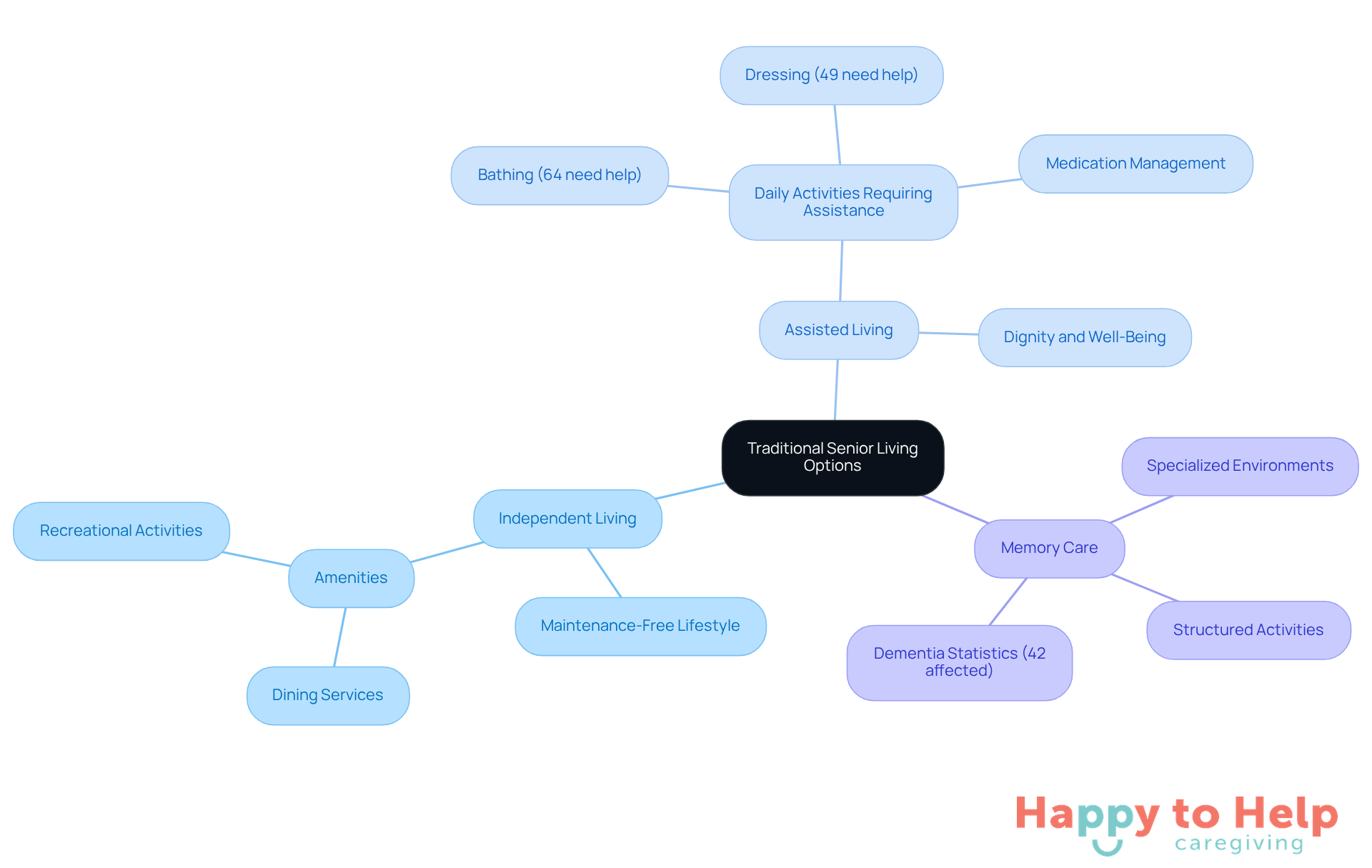
To address these challenges, aging in place communities can provide a network of essential services. These may include:
- Home adjustments
- In-home assistance
- Access to local resources that support daily activities
By prioritizing safety, accessibility, and social engagement, aging in place communities help older adults stay connected with their neighborhoods and loved ones.
Implementing personalized care plans that adapt to changing needs over time is vital. Caregivers can facilitate this process by exploring available resources and services tailored to individual requirements. This flexibility not only enhances the quality of life for older adults but also empowers them to maintain their independence.
Exploring Traditional Senior Living Options
Navigating senior living options can be a daunting task for families. The emotional impact of leaving a familiar home and the financial implications of care can weigh heavily on caregivers. As the population of adults aged 85 and over is projected to double by 2036, understanding these dynamics is increasingly vital.
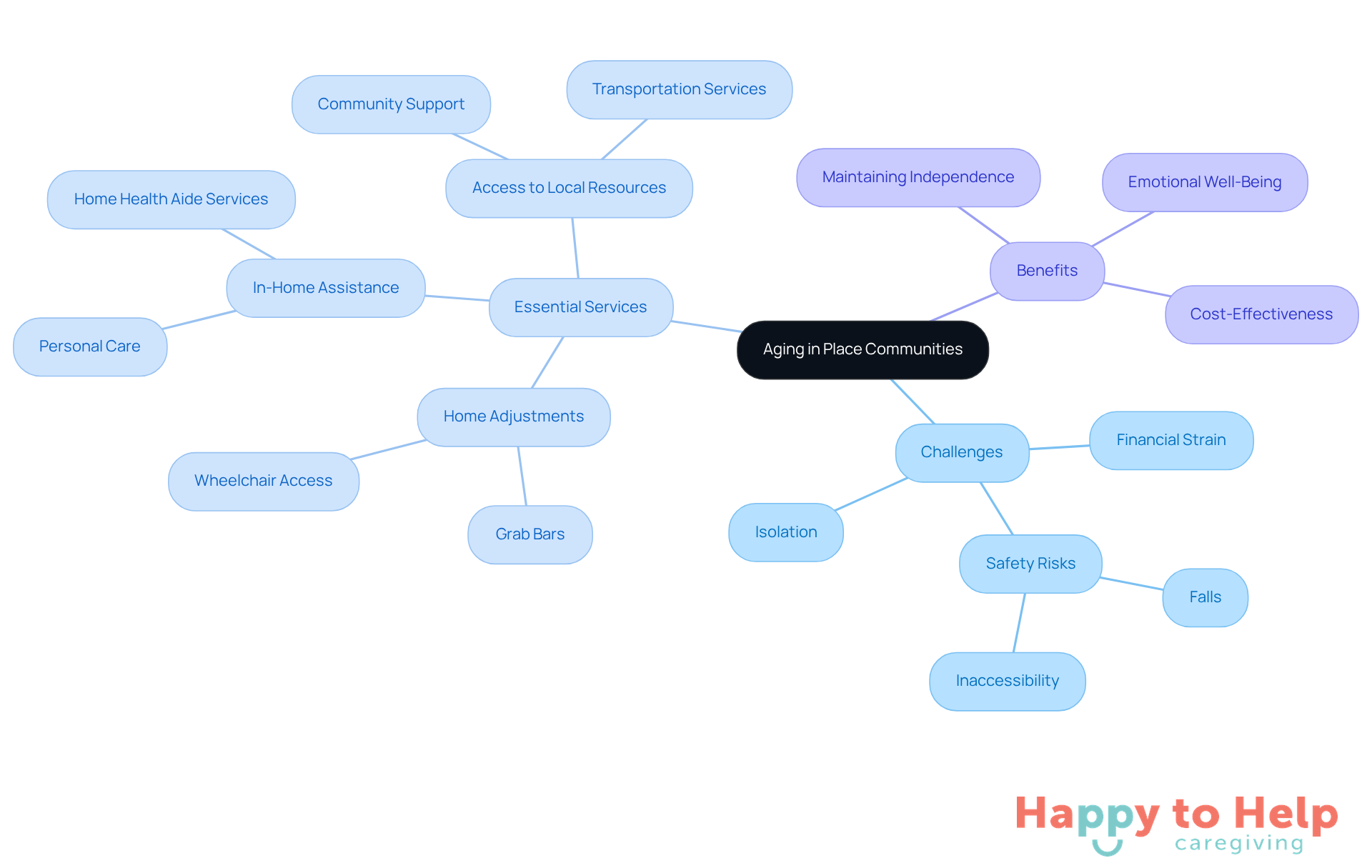
Traditional senior living options encompass a diverse array of facilities tailored to meet the unique needs of older adults.
- Independent living facilities offer a maintenance-free lifestyle, featuring amenities like dining services and recreational activities, fostering a lively atmosphere.
- Assisted living facilities provide essential support for daily activities, including bathing (64% of residents require assistance), dressing (49%), and medication management, ensuring residents maintain their dignity and well-being.
- For those facing cognitive challenges, memory care units create specialized environments designed for individuals with Alzheimer's or other forms of dementia. These units feature structured activities and trained staff, promoting safety and engagement among residents, with 42% of assisted living residents affected by dementia.
Each type of community presents distinct advantages, such as enhanced social interaction, access to healthcare services, and a reassuring sense of security.
However, families must also consider potential challenges. The risk of diminished independence is a significant concern, as about 60% of residents move to skilled nursing centers following a median duration of 22 months. Additionally, by 2033, the monthly median cost of assisted living is expected to rise to $7,190, highlighting the financial implications for families.
To navigate these options effectively, families should prioritize open communication with their loved ones about their needs and preferences. Researching various facilities and visiting them can also provide valuable insights. By understanding the available options and their implications, caregivers can make informed decisions that best support their loved ones.
Comparing Independence and Care Services
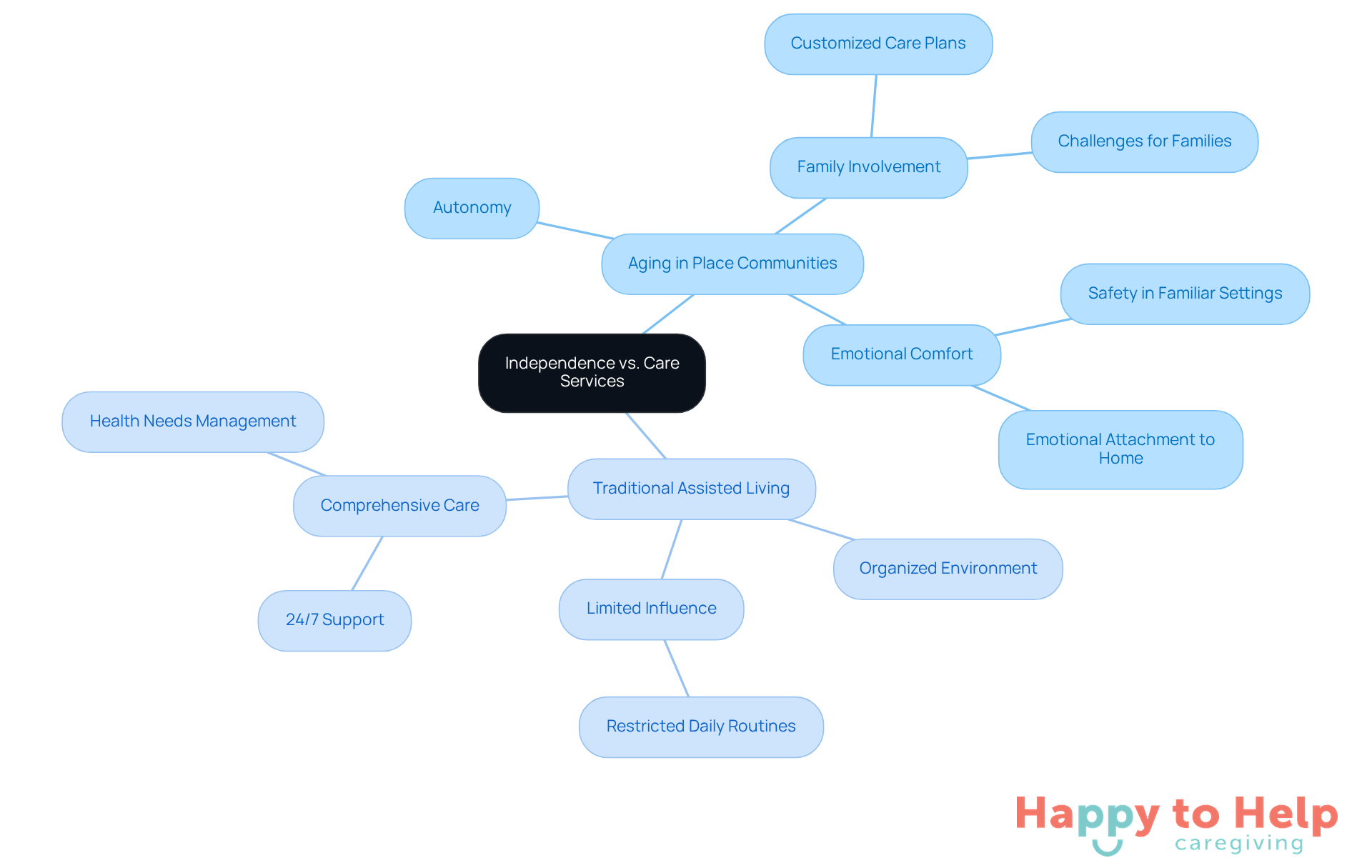
Independence is a significant concern for older adults when deciding between aging in place communities and traditional assisted living. Aging in place communities foster autonomy, allowing seniors to maintain control over their daily lives. They can establish routines, keep personal belongings, and interact with their surroundings on their own terms. In fact, over 80% of older adults feel safer in their homes than anywhere else, underscoring the emotional comfort that familiar settings provide.
However, traditional elder living facilities often present organized environments where residents may have limited influence over their daily routines. While these communities offer comprehensive care services, including 24/7 support, which is essential for those with significant health needs, they can also restrict personal freedom.
Aging in place communities can be tailored to individual preferences, but they often require family involvement or external services to ensure adequate care. This can create challenges for families juggling multiple responsibilities. Customized care plans, like those from Happy to Help Caregiving, can bridge this gap by addressing specific needs and preferences. This approach ensures that older adults receive the necessary support while preserving their independence.
Evaluating Emotional and Social Well-Being
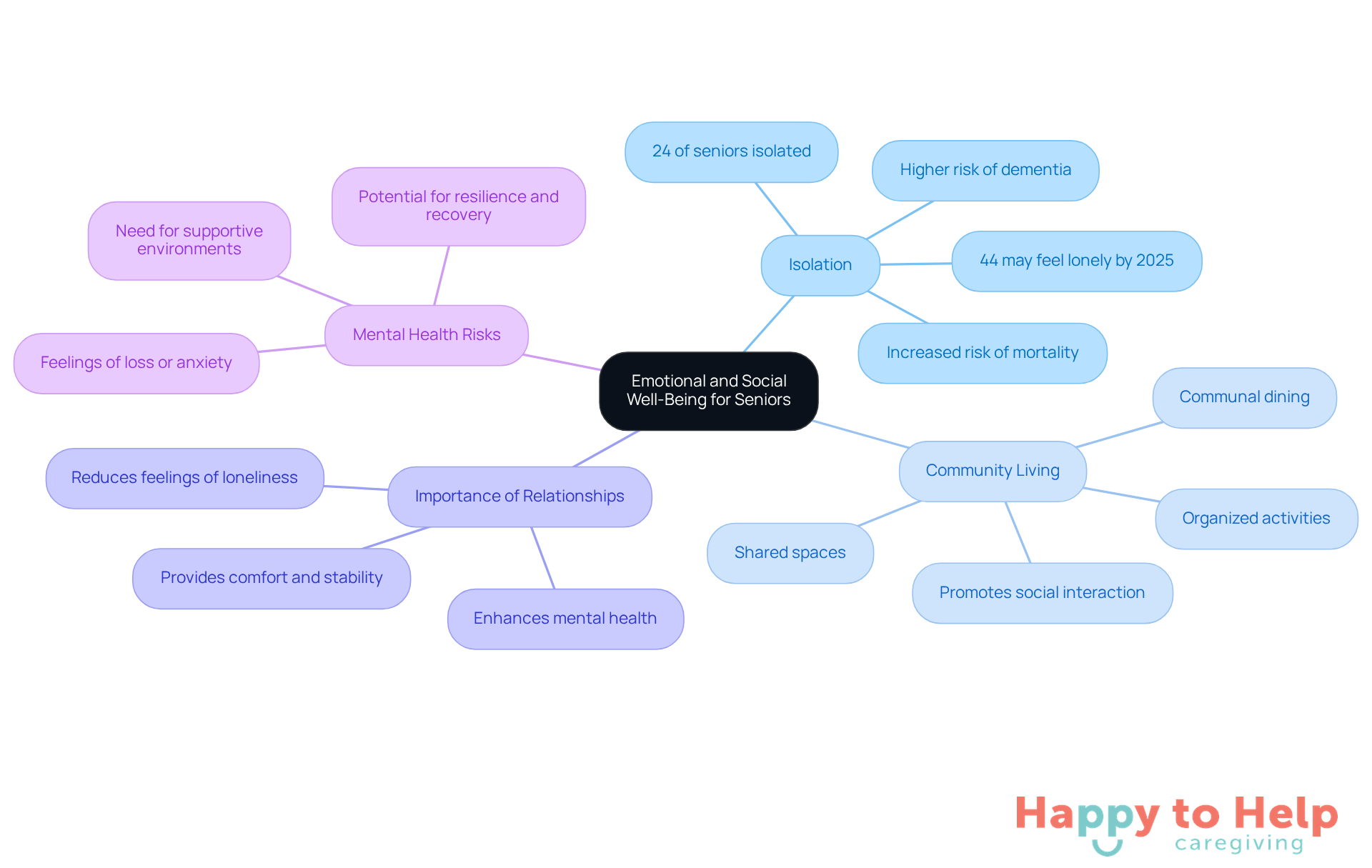
Emotional and interpersonal well-being are vital for seniors seeking a fulfilling life. The problem of isolation is significant; 24 percent of community-dwelling Americans aged 65 and older are considered isolated. This highlights the importance of maintaining relationships and connections, which can greatly reduce feelings of loneliness. Familiar environments provide comfort and stability, contributing positively to mental health.
However, traditional elder living communities offer a different approach. They promote social interaction through organized activities, communal dining, and shared spaces, enhancing social engagement and fostering new friendships. Yet, the transition to a new environment can be daunting for some older adults, leading to feelings of loss or anxiety. In fact, research indicates that by 2025, 44% of older individuals may report feeling lonely 'sometimes or often.' This underscores the ongoing challenge of isolation among the elderly.
To address these issues, the decision between aging in place and conventional senior living must consider individual community needs and emotional well-being. Ensuring that seniors have the necessary support to thrive is crucial. As Dr. Esme Fuller-Thomson states, "Cultivating strong interpersonal connections is an essential component of overall well-being."
Moreover, social isolation is linked to a significantly increased risk of premature mortality and an approximately 50 percent higher risk of developing dementia. This emphasizes the critical role of social connections in maintaining mental health. By understanding these dynamics, caregivers can better support seniors in making informed choices about their living situations.
Taking the Next Steps
Choosing between aging in place communities and traditional senior living facilities presents a significant challenge for families. Each option caters to different needs and preferences, making it essential to understand the implications of this decision. Aging in place allows seniors to stay in familiar environments, promoting independence and emotional well-being. In contrast, traditional senior living offers structured care and opportunities for social engagement, which can alleviate feelings of isolation.
The implications of these choices are profound. Many seniors face the risk of isolation, which can negatively impact their emotional health. Families must consider the importance of personalized care in aging in place communities versus the organized support provided by traditional facilities. By comparing services, costs, and social dynamics, caregivers can make informed decisions that prioritize their loved ones' well-being.
To navigate this complex landscape, families should engage in open discussions about preferences and explore various options thoroughly. This proactive approach ensures that older adults receive the support they need to thrive. By prioritizing individual needs and circumstances, families can enhance their loved ones' quality of life and foster a sense of belonging in their chosen communities.
https://iframe.tely.ai/cta/eyJhcnRpY2xlX2lkIjogIjY5NDBhMjQ4OTc5ZjhiMGM0MmQzYjU4YyIsICJjb21wYW55X2lkIjogIjY4ZWU1ZGNhNzMxNzYyNTU3ZjNjOTVjMSIsICJpbmRleCI6IG51bGwsICJ0eXBlIjogImFydGljbGUifQ==Frequently Asked Questions
What is the main challenge faced by older adults who wish to age in place?
The main challenge is the lack of necessary support and services, which can make it difficult for them to maintain autonomy and can lead to feelings of isolation and decreased quality of life.
What are aging in place communities?
Aging in place communities provide a network of essential services that help older adults remain in their homes and neighborhoods as they age.
What types of services do aging in place communities offer?
Services offered may include home adjustments, in-home assistance, and access to local resources that support daily activities.
How do aging in place communities enhance the quality of life for older adults?
They prioritize safety, accessibility, and social engagement, helping older adults stay connected with their neighborhoods and loved ones.
Why is it important to implement personalized care plans in aging in place communities?
Personalized care plans are vital as they adapt to the changing needs of older adults over time, enhancing their quality of life and empowering them to maintain their independence.
How can caregivers assist older adults in aging in place?
Caregivers can facilitate the process by exploring available resources and services tailored to individual requirements, ensuring that the support meets the specific needs of older adults.
List of Sources
- Understanding Aging in Place Communities
- New AARP Report: Majority of Adults 50-plus Want to Age in Place, But Policies and Communities Must Catch Up (https://press.aarp.org/2024-12-10-New-AARP-Report-Majority-Adults-50-plus-Age-Place-Policies-Communities-Catch-Up)
- Families caring for older adults at home say aging in place should not be taken lightly, but may be worth it (https://cbsnews.com/newyork/news/aging-in-place-home-remodeling-cost-of-caregiving)
- 2024 Aging in Place Statistics: A Lucrative Opportunity for the Home Care Industry - People Care (https://peoplecare.com/2024-aging-in-place-statistics-a-lucrative-opportunity-for-the-home-care-industry)
- Home sweet home: A majority of Americans want to age in place (https://empower.com/the-currency/life/home-sweet-home-americans-age-place-news)
- Seniors see aging in place as greatest health risk in 2025: survey (https://housingwire.com/articles/seniors-see-aging-in-place-as-greatest-health-risk-in-2025-survey)
- Exploring Traditional Senior Living Options
- 61 Assisted Living Statistics Operators Should Know | Aline (https://alineops.com/blog/assisted-living-statistics)
- Senior Living: Real Estate and Aging (https://nytimes.com/spotlight/real-estate-news-seniors)
- 6 Senior Living Leaders Weigh in On Future Development Outlook (https://seniorhousingnews.com/2025/09/11/6-senior-living-leaders-weigh-in-on-future-development-outlook)
- Diversification a growing trend among senior living developers (https://mcknightsseniorliving.com/news/diversification-a-growing-trend-among-senior-living-developers)
- The Shifting Senior Living Landscape: Adapting to Policy, Financial, and Competitive Pressures | JD Supra (https://jdsupra.com/legalnews/the-shifting-senior-living-landscape-2451642)
- Comparing Independence and Care Services
- New AARP Report: Majority of Adults 50-plus Want to Age in Place, But Policies and Communities Must Catch Up (https://press.aarp.org/2024-12-10-New-AARP-Report-Majority-Adults-50-plus-Age-Place-Policies-Communities-Catch-Up)
- New Study Explores the Need for Expanded Long-Term Care Services to Support Aging-in-Place | Johns Hopkins Bloomberg School of Public Health (https://publichealth.jhu.edu/2025/new-study-explores-the-need-for-expanded-long-term-care-services-to-support-aging-in-place)
- The senior population is booming. Caregiving is struggling to keep up (https://cnbc.com/2025/11/21/senior-caregiving-labor.html)
- 2024 Aging in Place Statistics: A Lucrative Opportunity for the Home Care Industry - People Care (https://peoplecare.com/2024-aging-in-place-statistics-a-lucrative-opportunity-for-the-home-care-industry)
- Aging in Place: Statistics + How to Prepare in 2025 (https://choicemutual.com/blog/aging-in-place-statistics)
- Evaluating Emotional and Social Well-Being
- It’s never too late: How older adults can restore optimal well-being, according to experts | CNN (https://cnn.com/2025/10/05/health/emotional-well-being-older-adults-wellness)
- Senior Living Operators Take Aim at Resident Loneliness With New Tech, Tools (https://seniorhousingnews.com/2025/07/09/senior-living-operators-take-aim-at-resident-loneliness-with-new-tech-tools)
- Residential Care Increases Social Participation But Gaps Remain (https://news.cuanschutz.edu/news-stories/residential-care-increases-social-participation-but-gaps-remain)
- Summary - Social Isolation and Loneliness in Older Adults - NCBI Bookshelf (https://ncbi.nlm.nih.gov/books/NBK557972)
- Social engagement helps older adults feel younger, live longer: study (https://mcknightsseniorliving.com/news/social-engagement-helps-older-adults-feel-younger-live-longer-study)