Best Practices for In Home Caregiver Pay You Need to Know

For families in our service areas
For families in our service areas, this guide explains in-home care and how non-medical in-home caregiving can support care planning in East Idaho, Treasure Valley & Magic Valley, Northern Wasatch, North Central West Virginia & Southwestern Pennsylvania, and Northeast Ohio.
Understanding Best Practices for In Home Caregiver Pay
Understanding the complexities of in-home caregiver pay presents a significant challenge for families seeking support and caregivers navigating their compensation. Disparities in wages arise from various factors, including geographic location, experience, and the complexity of care provided. These differences can lead to confusion and frustration for both parties.
Families often struggle to offer competitive rates while recognizing the specialized skills of their caregivers. This situation not only affects caregiver satisfaction but also impacts retention rates in this vital sector. So, how can families ensure they are compensating caregivers fairly?
To address these challenges, it’s essential to establish fair and transparent pay structures. Conducting effective market research can help families understand the going rates in their area. Additionally, incorporating caregiver feedback can enhance satisfaction and retention. By implementing these best practices, families can create a supportive environment that values the expertise of caregivers.
Understand Factors Influencing Caregiver Pay
The issues surrounding in-home caregiver pay are a significant concern influenced by several key factors that can create challenges for both caregivers and families seeking support.
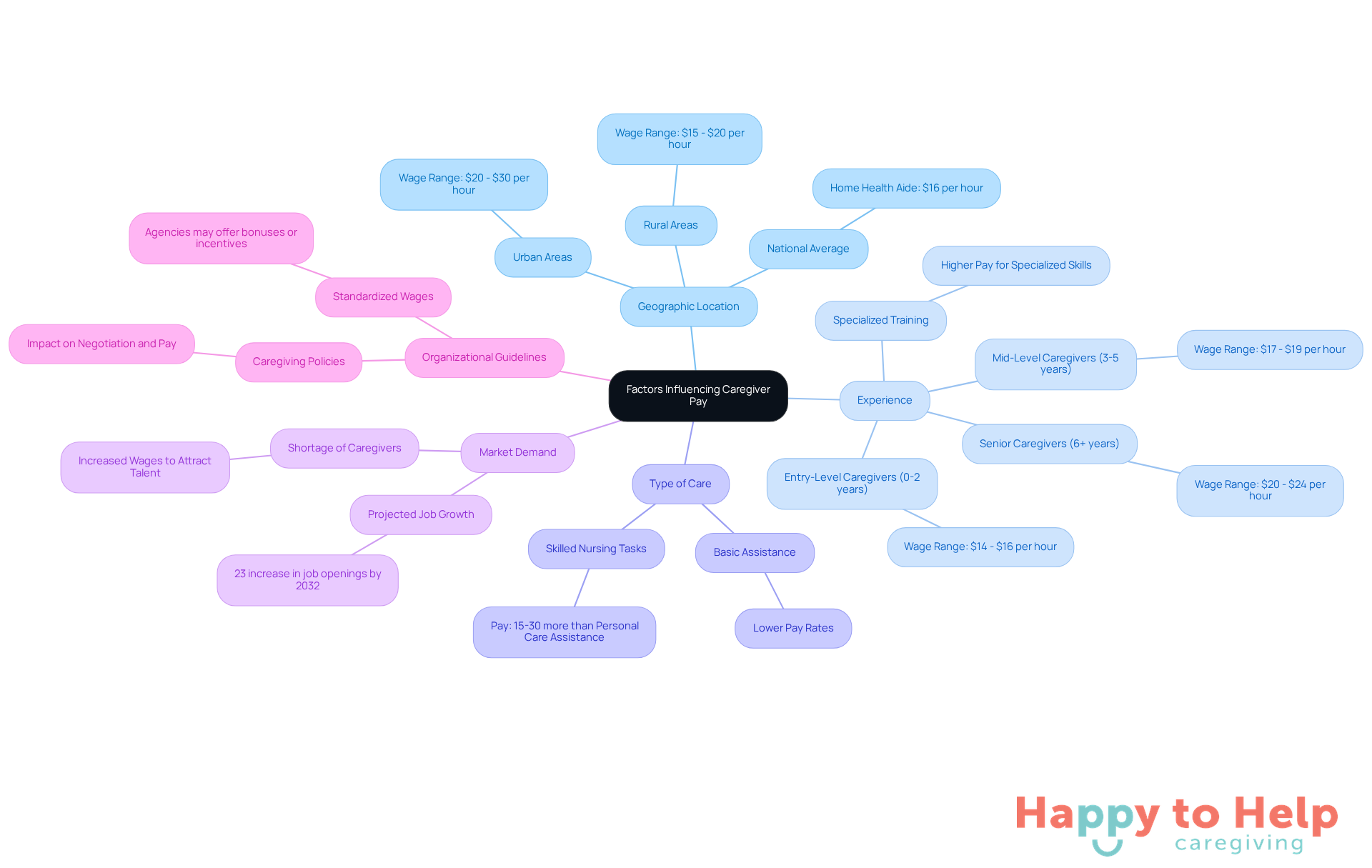
Problem: One major issue is the variability in caregiver wages, which can lead to confusion and frustration. For instance, geographic location plays a crucial role; urban areas typically offer higher wages due to the increased cost of living and demand for services. Caregivers in urban settings may earn between $20 to $30 per hour, while those in rural regions might see rates closer to $15 to $20. The national average wage for a home health aide in the U.S. is approximately $16 per hour, which serves as a useful benchmark for families considering in-home caregiver pay.
Agitate: This disparity in home caregiver pay can create challenges for caregivers, particularly those with specialized training or certifications. For example, a caregiver with a nursing assistant certification often earns significantly more than one without. Entry-level caregivers typically earn between $14 to $16 per hour, while those with mid-level experience can earn $17 to $19 per hour. This tiered structure underscores the importance of experience and specialized skills in determining remuneration, which can be frustrating for those entering the field.
Solution: Understanding the level of care required is essential. The complexity of care significantly impacts pay rates; caregivers providing specialized medical care or support for individuals with severe disabilities may receive higher compensation compared to those offering companionship or basic assistance. Skilled nursing tasks can pay 15-30% more than personal care assistance, reflecting the additional training and responsibility involved.
Moreover, market demand plays a crucial role. In areas facing a shortage of support providers, wages may rise to attract talent. The support worker sector is expected to expand considerably, with a 23% rise in job openings for home care aides anticipated through 2032, further influencing wage dynamics.
Lastly, caregivers should be aware of the caregiving guidelines set by various organizations, which can differ based on funding and operational expenses. Understanding these policies can help support providers negotiate better in-home caregiver pay. Agencies often standardize wages but may also offer bonuses or incentives to retain staff, especially in competitive markets.
By acknowledging these factors, caregivers and organizations can navigate the payment landscape more effectively, ensuring equitable and competitive remuneration. This understanding is vital for families looking to hire support staff, enabling informed decisions regarding compensation and care quality. Additionally, the typical expense of round-the-clock in-home assistance is roughly $17,280 each month, providing context for the financial considerations of employing support staff.
Conduct Market Research for Competitive Rates
To ensure competitive in home caregiver pay, agencies face a significant challenge: staying informed about market trends. Without effective strategies, they risk falling behind in attracting and retaining skilled professionals.
-
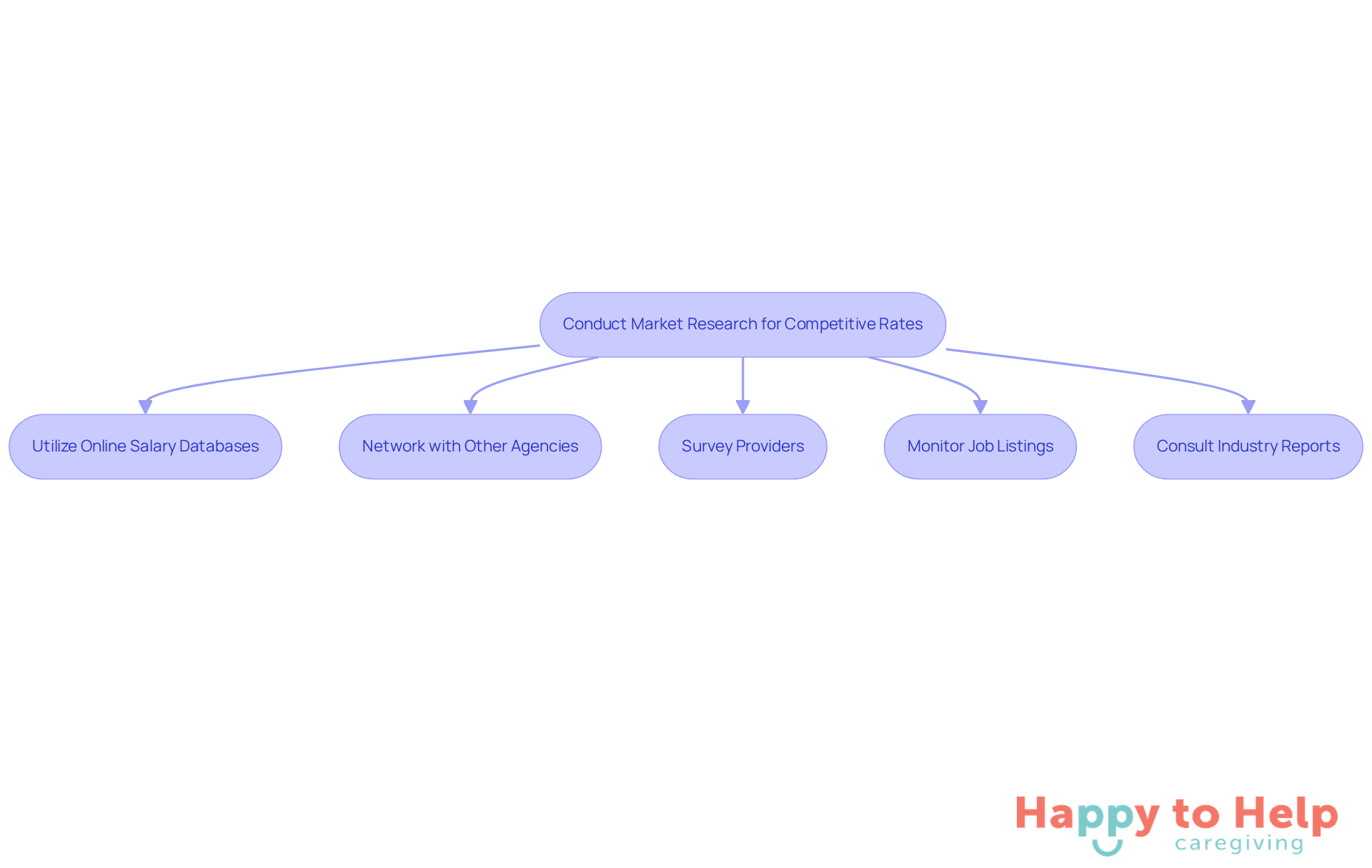
Utilize Online Salary Databases: Platforms like PayScale, Glassdoor, and ZipRecruiter provide essential insights into average caregiver salaries, tailored by location, experience, and job type. Regularly consulting these resources helps organizations stay aware of changing salary trends. For instance, as of September 1, 2025, the base wage for personal attendants in Texas has increased to $13.00/hour, necessitating adjustments in pay structures.
-
Network with Other Agencies: Establishing connections with local caregiving agencies fosters discussions about pay rates and compensation packages. This collaboration can uncover competitive practices and clarify the local market landscape.
-
Survey Providers: Gathering feedback from current providers through surveys reveals their pay expectations and experiences. This information is invaluable for making informed adjustments to pay structures and identifying areas needing improvement. Notably, turnover rates for Home Care Aides/CNAs decreased from 36.31% in 2024 to 34.17% in 2025, underscoring the positive impact of competitive pay on staff retention.
-
Monitor Job Listings: Keeping an eye on job postings for support roles in the area is crucial. Observing the remuneration offered and the qualifications required helps agencies align their pay practices with market demands.
-
Consult Industry Reports: Engaging with reports from industry associations or research organizations that analyze compensation trends for caretakers provides comprehensive data. These insights are instrumental in shaping a competitive compensation strategy. As Elena, a sector specialist, noted, "Savvy business owners should begin allocating funds for increased worker compensation now," highlighting the urgency of addressing staff wages.
By conducting thorough market analysis, organizations can effectively attract and retain skilled professionals, ensuring they remain competitive in a rapidly evolving industry. For example, agencies that have successfully utilized online salary databases report improved recruitment outcomes and heightened staff satisfaction.
Establish Transparent Pay Structures
Many caregiving agencies struggle with unclear pay structures, resulting in confusion and dissatisfaction among staff regarding in home caregiver pay. Without a transparent system, caregivers may feel undervalued and uncertain about their career progression in home caregiver pay.
Agitate: This lack of clarity can result in high turnover rates, decreased morale, and ultimately, poorer care for clients. When caregivers are uncertain about in home caregiver pay and advancement opportunities, it affects their motivation and commitment to the organization.
Solution: To address these challenges, agencies can implement a transparent pay structure by following these essential steps:
-
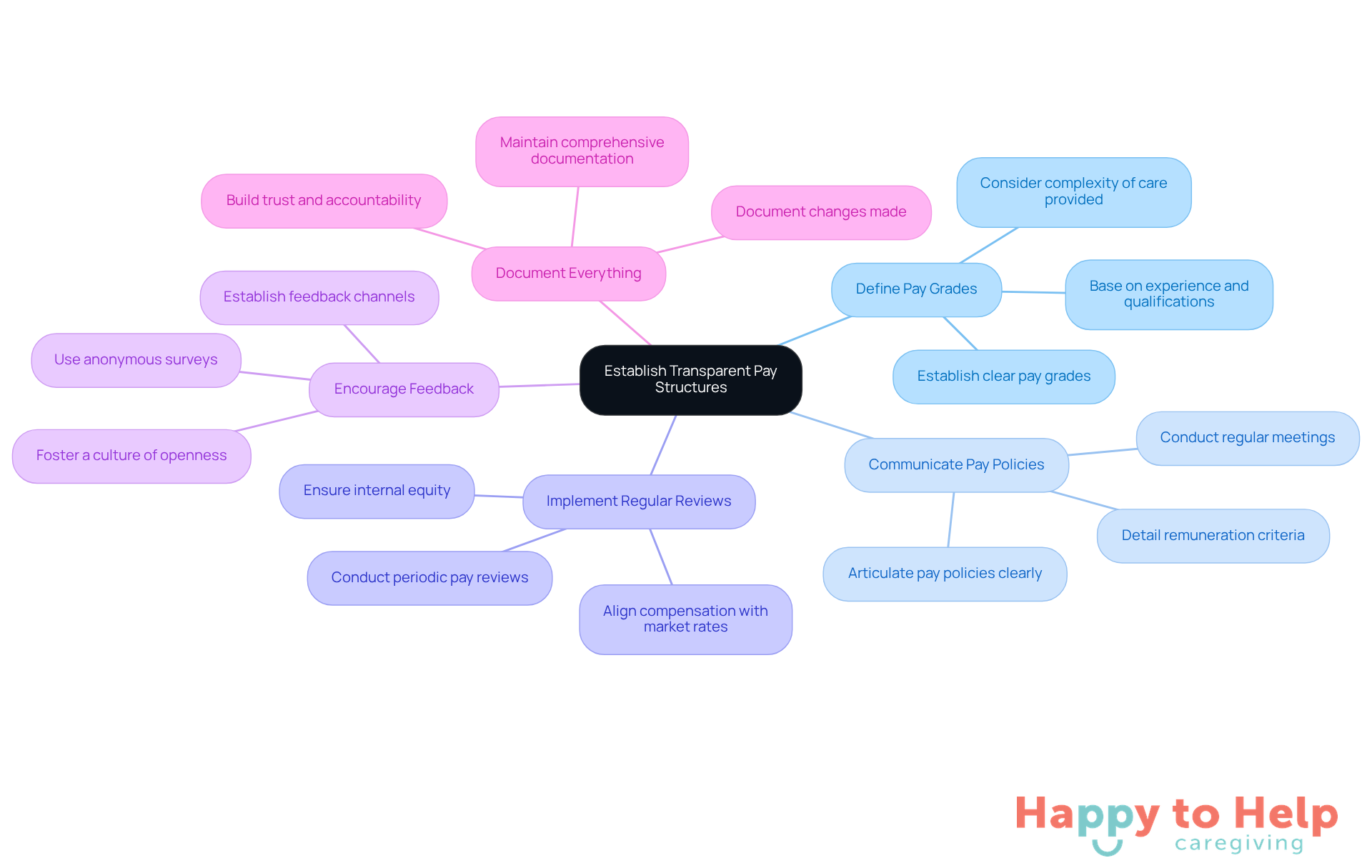
Define Pay Grades: Establish clear pay grades based on experience, qualifications, and the complexity of care provided. This clarity helps caregivers understand their role within the pay structure and the milestones needed for advancement.
-
Communicate Pay Policies: Clearly articulate pay policies to all staff, detailing how remuneration is determined, the criteria for raises, and any available bonuses or incentives. Regular meetings and written guidelines can enhance this communication, ensuring everyone is informed.
-
Implement Regular Reviews: Conduct periodic pay reviews to ensure staff compensation aligns with market rates and maintains internal equity. This practice not only ensures competitiveness but also reinforces a commitment to fair in home caregiver pay.
-
Encourage Feedback: Establish channels for individuals to provide feedback on pay structures, such as anonymous surveys or open forums. This approach enables caregivers to express their concerns and suggestions, fostering a culture of openness.
-
Document Everything: Maintain comprehensive documentation of pay structures, policies, and any changes made. This transparency builds trust and accountability within the caregiving team.
By implementing these transparent pay structures, agencies can significantly enhance worker satisfaction and retention, ultimately leading to improved care for clients.
Incorporate Caregiver Feedback in Pay Practices
To effectively incorporate caregiver feedback into in home caregiver pay practices, organizations face a significant challenge: understanding the needs and concerns of caregivers regarding in home caregiver pay. This issue can lead to dissatisfaction and high turnover rates, ultimately affecting the quality of care provided.
To address this, consider the following actionable strategies:
-
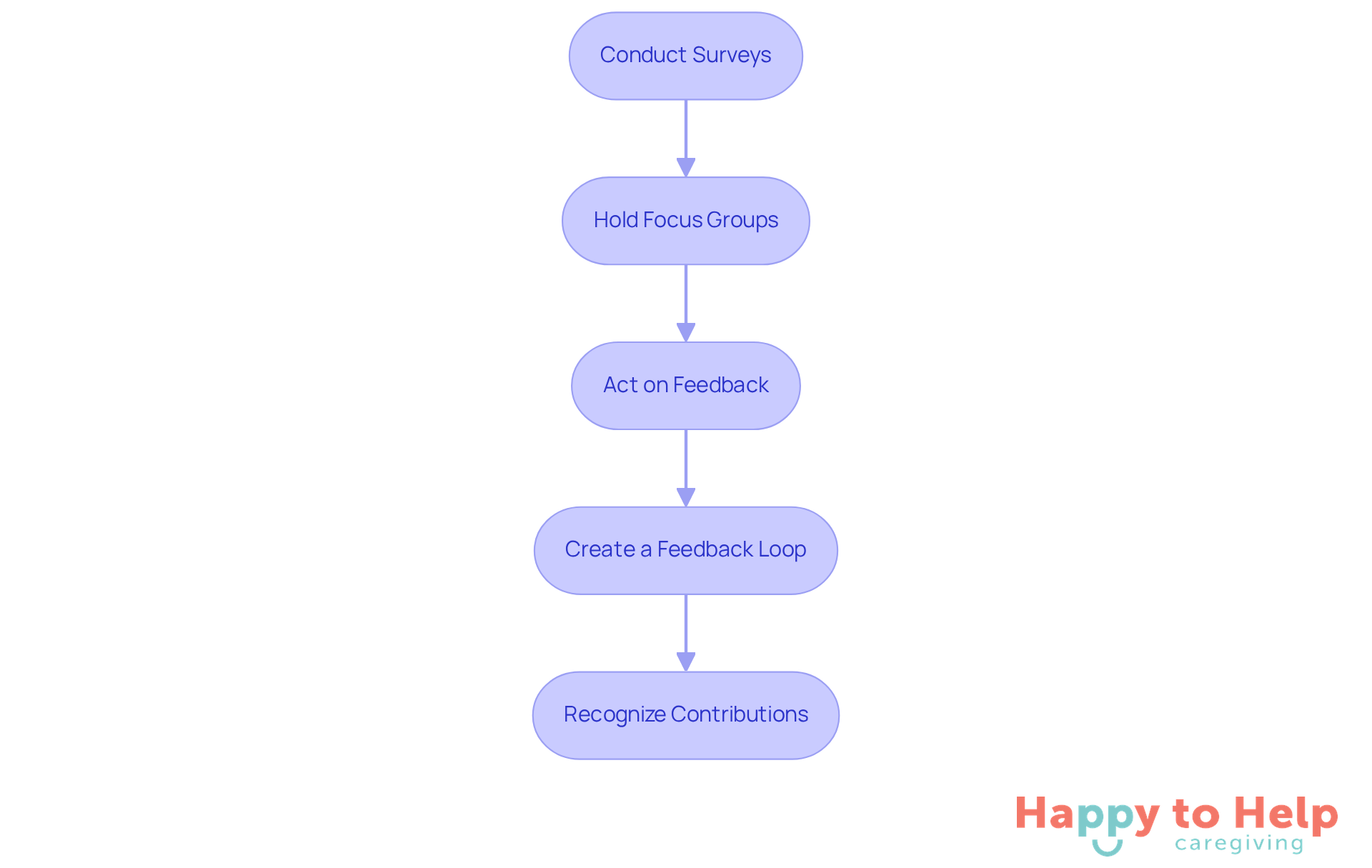
Conducting regular surveys is essential for gathering opinions from caregivers on in home caregiver pay and benefits. This method not only offers valuable insights into their satisfaction but also highlights areas needing improvement. Agencies that utilize effective feedback tools have reported a 30% increase in satisfaction among providers. However, it’s crucial to avoid survey fatigue by keeping questions concise and relevant.
-
Hold Focus Groups: Organizing focus groups with caregivers allows for open discussions about pay practices and qualitative feedback. This approach promotes conversation and can uncover deeper insights into provider needs and expectations, which are vital for customizing strategies related to in home caregiver pay. For instance, nearly 50% of caregivers report financial difficulties, making their contributions essential for developing supportive compensation systems.
-
Act on Feedback: It’s vital to demonstrate that caregiver feedback is valued by taking actionable steps based on the insights gathered. Modifying pay rates or improving benefits, especially in home caregiver pay, can significantly enhance morale and retention, as staff are more likely to stay when they feel acknowledged. According to the National Alliance for Caregiving, individuals who see their feedback result in tangible changes are more engaged and satisfied.
-
Create a Feedback Loop: Establishing a continuous feedback system allows caregivers to regularly share their opinions on in home caregiver pay practices. This could involve suggestion boxes, scheduled check-ins, or dedicated meetings focused on compensation discussions, ensuring that staff feel heard and valued. However, agencies should be cautious of overly complex questions that may hinder effective feedback collection.
-
Recognize Contributions: Acknowledging those who provide valuable feedback enhances engagement and encourages ongoing participation in the feedback process. Recognition can take various forms, from public acknowledgment to small rewards, reinforcing the significance of caregiver input in shaping pay practices.
By incorporating caregiver feedback into compensation practices, organizations can foster a more supportive and responsive work environment. This approach not only leads to better caregiver retention but also improves client care. Additionally, sharing success stories from agencies that have effectively implemented these strategies can further illustrate their impact and encourage others to adopt similar practices.
Your Path Forward
Understanding the complexities of in-home caregiver pay presents a significant challenge for both caregivers and families seeking quality support. Various factors, such as geographic location, experience, and the complexity of care provided, significantly influence caregiver wages. This complexity can lead to misunderstandings and inequities in compensation, making it crucial to address these issues head-on.
To navigate these challenges, conducting thorough market research is essential. Utilizing online salary databases, networking with other agencies, and incorporating caregiver feedback are effective strategies for establishing fair pay structures. Moreover, fostering transparency in pay policies not only enhances caregiver satisfaction but also improves retention rates, ultimately leading to better quality care for clients.
As the caregiving sector continues to grow, agencies must adapt and implement best practices for caregiver pay. By prioritizing competitive rates, transparent structures, and caregiver input, organizations can create a supportive environment that values caregivers. Embracing these practices is vital for the sustainability and effectiveness of in-home caregiving services, ensuring that caregivers receive equitable pay for their invaluable contributions.
https://iframe.tely.ai/cta/eyJhcnRpY2xlX2lkIjogIjY5M2Y1MGFhYzVjNjk0NTk3NDczMjcwYSIsICJjb21wYW55X2lkIjogIjY4ZWU1ZGNhNzMxNzYyNTU3ZjNjOTVjMSIsICJpbmRleCI6IG51bGwsICJ0eXBlIjogImFydGljbGUifQ==Frequently Asked Questions
What factors influence caregiver pay?
Caregiver pay is influenced by geographic location, level of care required, caregiver experience and training, market demand, and caregiving guidelines set by various organizations.
How do geographic locations affect caregiver wages?
Urban areas typically offer higher wages due to a higher cost of living and greater demand for services, with caregivers earning between $20 to $30 per hour, while rural caregivers may earn between $15 to $20 per hour.
What is the national average wage for home health aides in the U.S.?
The national average wage for a home health aide in the U.S. is approximately $16 per hour.
How does caregiver experience impact pay rates?
Caregivers with specialized training or certifications, such as nursing assistant certification, tend to earn more. Entry-level caregivers typically earn between $14 to $16 per hour, while those with mid-level experience can earn $17 to $19 per hour.
What types of care result in higher pay for caregivers?
Caregivers providing specialized medical care or support for individuals with severe disabilities may receive higher compensation, as skilled nursing tasks can pay 15-30% more than personal care assistance.
How does market demand affect caregiver wages?
In areas facing a shortage of support providers, wages may increase to attract talent. The job openings for home care aides are expected to rise by 23% through 2032, influencing wage dynamics.
What should caregivers know about caregiving guidelines?
Caregivers should be aware that caregiving guidelines set by various organizations can differ based on funding and operational expenses, which can help them negotiate better pay.
What is the typical cost of round-the-clock in-home assistance?
The typical expense for round-the-clock in-home assistance is roughly $17,280 each month, which provides context for the financial considerations of employing support staff.
List of Sources
- Understand Factors Influencing Caregiver Pay
- How Much Do Caregivers Make in 2025? | The Senior List (https://theseniorlist.com/caregiving/caregiver-pay)
- What States Pay Caregivers the Most? - At Peace Health (https://atpeacehealth.com/what-states-pay-caregivers-the-most)
- At Home Care Pricing: Essential Industry Statistics for 2025 - Assisting Hands Rockford (https://assistinghands.com/100/illinois/rockford/blog/at-home-care-pricing-essential-industry-statistics-for-2025)
- What Are the Average Caregiver Pay Rates in 2025? — Paid.Care (https://paid.care/guides/what-are-the-average-caregiver-pay-rates-in-2025)
- Conduct Market Research for Competitive Rates
- Home Health Worker Retention Improves As Wages, Bonuses Increase In 2025 (https://homehealthcarenews.com/2025/11/home-health-worker-retention-improves-as-wages-bonuses-increase-in-2025)
- Home Care Aides Receive 4.93% Pay Increase in 2025 (https://leadingage.org/home-care-aides-receive-4-93-pay-increase-in-2025)
- HB 2938 Explained: What Texas Home Care Agencies Must Know (https://caresmartz360.com/blog/news-events/hb-2938-for-texas-home-care-agencies)
- Caregiver Pay in 2025: Average Salary by State & Role (https://goinstacare.com/blogs/caregiver-salaries-2025-role-state-guide)
- Establish Transparent Pay Structures
- The need for caregiving benefits may have reached a fever pitch (https://hrdive.com/news/sandwich-generation-needs-caregiving-benefits/802864)
- How pay transparency laws can promote fair wages in health care (https://aafp.org/pubs/fpm/blogs/inpractice/entry/pay-transparency.html)
- Pay Transparency Best Practices for HR Leaders in 2025 (https://hrmorning.com/articles/pay-transparency-best-practices)
- HCS Home Care/Hospice Salary & Benefits Studies Underway (https://ahcancal.org/News-and-Communications/Blog/Pages/HCS-Home-CareHospice-Salary-&-Benefits-Studies-Underway-.aspx)
- Incorporate Caregiver Feedback in Pay Practices
- How caregiver feedback tools improve satisfaction, retention, and engagement in home care How caregiver feedback tools improve satisfaction, retention, and engagement in home care (https://alayacare.com/caregiver-feedback-tools-home-care-retention)
- Caregiving in the US 2025: A Comprehensive Overview (https://retirementlivingsourcebook.com/proagingnews/caregiving-in-the-us-2025-a-comprehensive-overview)
- 5 Ways To Increase Caregiver Retention | Rellevate (https://rellevate.com/news/ways-to-increase-caregiver-retention)
- National Alliance for Caregiving: Caregiving in the US 2025 Report (https://johnahartford.org/resources/view/national-alliance-for-caregiving-caregiving-in-the-us-2025-report)
- Caregiving Statistics US 2025: Insights for Family Caregivers (https://zencaregiving.org/caregiving-statistics-us-2025)