

For families in our service areas
For families in our service areas, this guide explains in-home care and how non-medical in-home caregiving can support care planning in East Idaho, Treasure Valley & Magic Valley, Northern Wasatch, North Central West Virginia, and Northeast Ohio.
What You Need to Know About Best Senior Homes vs. In-Home Care:
Families navigating the complexities of elder care often find themselves at a crossroads, faced with a pressing question: should they choose senior homes or in-home care? This decision is not just logistical; it profoundly impacts the independence and emotional well-being of their loved ones.
The challenge lies in understanding the advantages and challenges of both options. As the trend shifts toward at-home support, families must consider various factors to ensure their decisions align with their loved ones' needs and preferences.
To make informed choices, families should evaluate the specific requirements of their elderly relatives, including:
- Health conditions
- Social needs
- Personal preferences
Engaging in open conversations with loved ones can also provide valuable insights into their desires for care.
Understanding Senior Living Options: Senior Homes vs. In-Home Care
When it comes to options for older adults, families often face a significant dilemma: should they choose residences for the elderly or at-home support services? This decision can be overwhelming, as it directly impacts the well-being and independence of their loved ones.
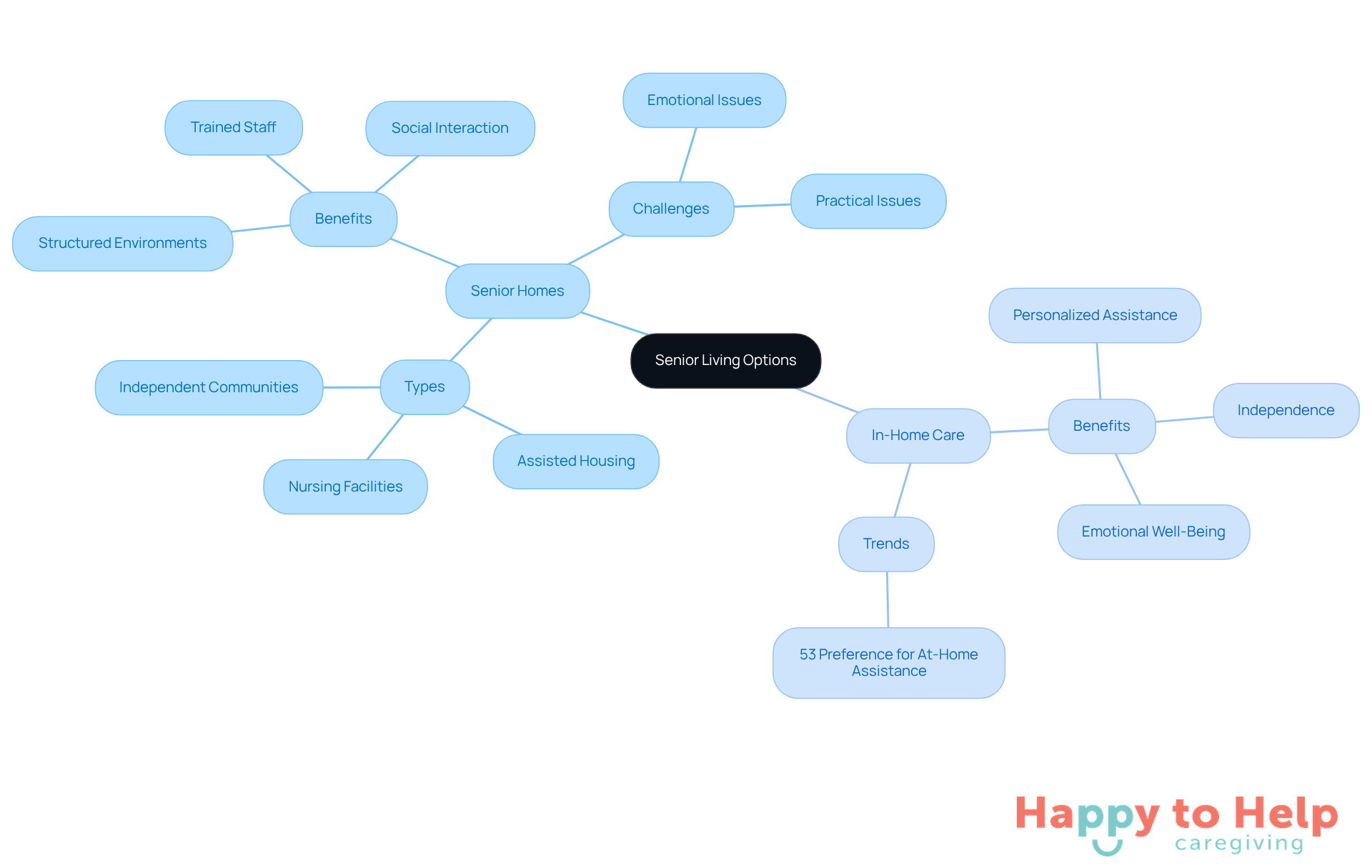
The best senior homes, such as assisted housing, nursing facilities, and independent communities, provide structured environments where residents benefit from trained staff, shared arrangements, meals, and various activities that promote social interaction. However, many families are increasingly recognizing the emotional and practical challenges associated with these options.
At-home support services present a compelling alternative. They allow older adults to remain in the comfort of their own homes while receiving personalized assistance tailored to their specific needs. This approach not only fosters independence but also enhances emotional well-being. Caregivers can provide support for daily activities, companionship, and medical assistance in a familiar setting, which can be crucial for maintaining quality of life.
Current trends reveal a growing preference for at-home assistance, with 53% of families choosing the best senior homes instead of traditional elderly living establishments. Real-life examples illustrate how families are prioritizing at-home support to ensure their loved ones retain their autonomy and comfort.
Experts in geriatric support emphasize that in-home assistance significantly enhances quality of life. It enables elderly individuals to engage in their preferred routines and activities while receiving essential help. Understanding these distinctions is vital for families navigating the complexities of elder support, ensuring that their choices align with their loved ones' preferences and needs.
Evaluating Senior Homes: Benefits and Challenges
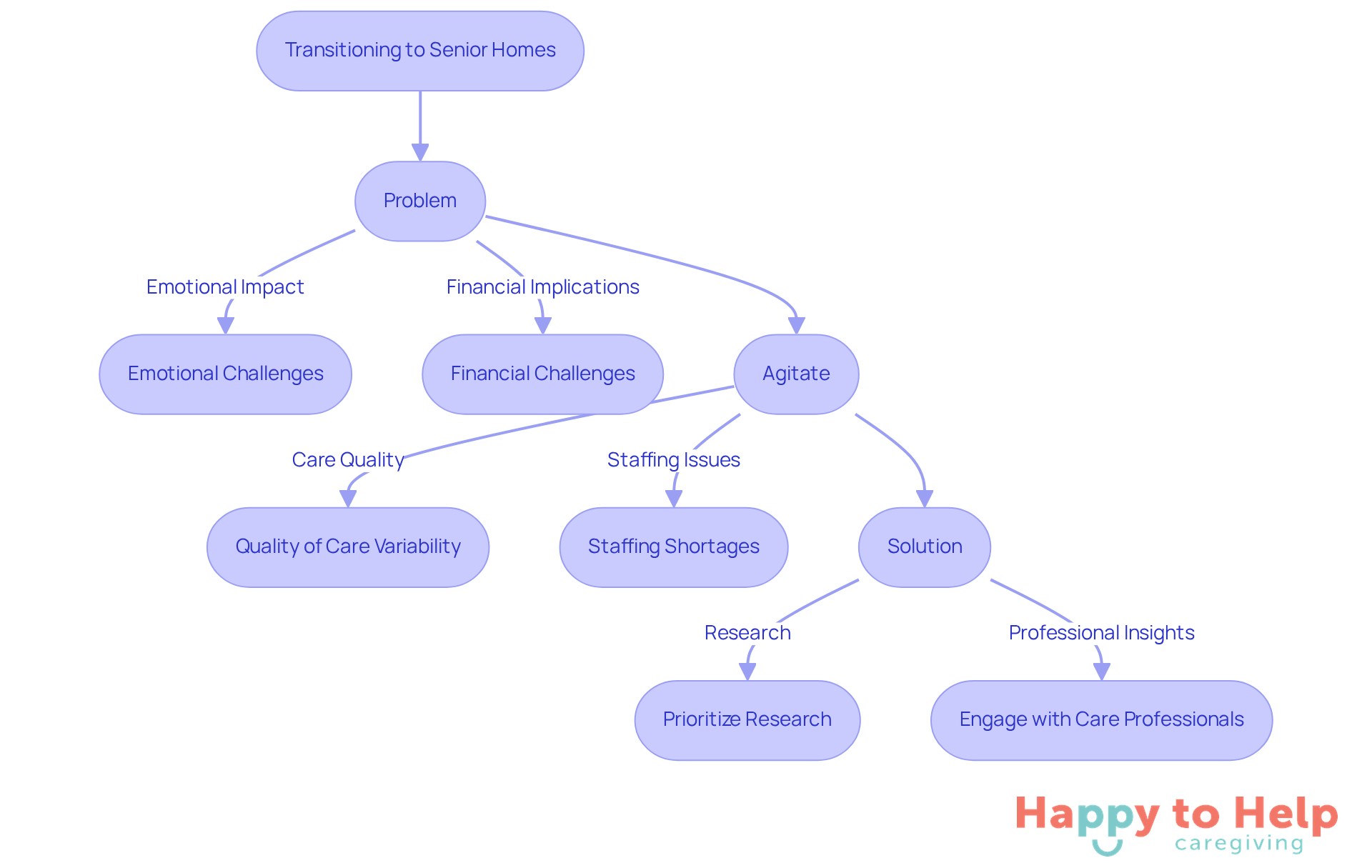
Problem: Transitioning to senior homes can be a daunting experience for families, presenting several challenges. The emotional impact of leaving familiar surroundings often leads to feelings of loss or anxiety. Additionally, financial implications are significant, with average expenses for assisted care reaching approximately $5,511 per month.
Agitate: Families must also contend with the variability in the quality of care among facilities. This inconsistency necessitates thorough research to ensure that a chosen home meets the desired standards. In 2025, the landscape is further complicated by staffing shortages, with 99% of nursing homes having job openings and 89% actively hiring registered nurses. Evolving regulatory requirements can also affect the level of individualized attention residents receive.
Solution: To navigate these challenges effectively, families should prioritize research on the best senior homes, paying special attention to their staffing levels and care quality. Engaging with care professionals can provide valuable insights into what to look for in a residential facility. By recognizing these factors, families can better evaluate whether a senior home meets their loved one's needs and preferences, ultimately enabling a smoother transition.
Exploring In-Home Care: Advantages and Limitations
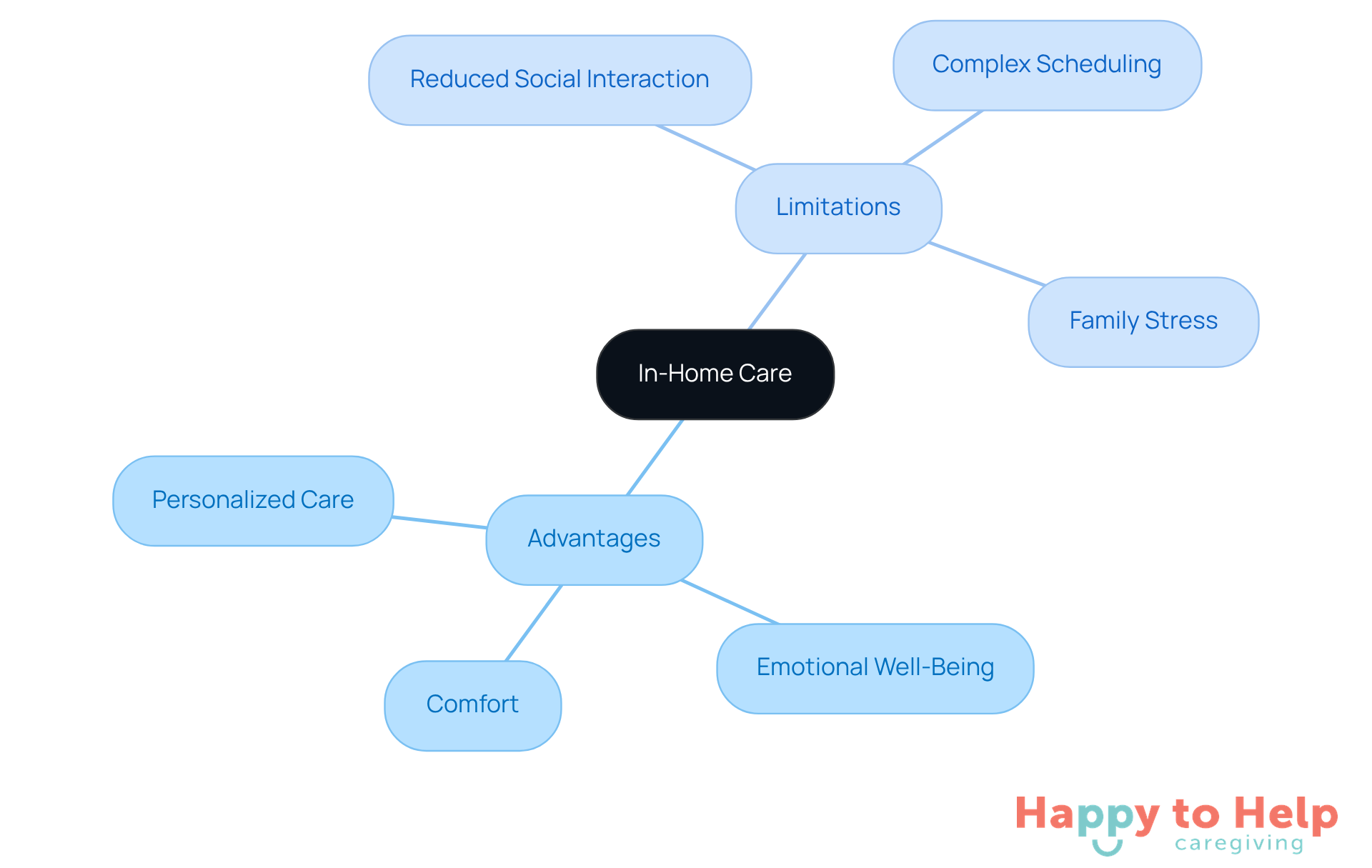
In-home assistance offers significant benefits, allowing seniors to remain in familiar environments, which enhances their comfort and emotional well-being. However, families often face challenges in managing this support. One major issue is the potential for reduced social interaction compared to the best senior homes, where residents can engage with peers and participate in organized activities. Additionally, organizing caregiver schedules can be complex and time-consuming, leading to stress for families.
These challenges can have serious implications. Many families report feeling overwhelmed, with as many as 88% indicating a need for more guidance in navigating elder support options. This highlights the importance of understanding both the advantages and difficulties of at-home assistance.
Fortunately, tailored in-home support can address these issues effectively. Families have observed significant improvements in their loved ones' emotional health and overall quality of life when receiving personalized care at home. This underscores the vital role that at-home caregivers play in enhancing the well-being of elderly individuals, enabling them to thrive in their own surroundings while receiving the necessary support.
Making the Right Choice: Factors to Consider for Your Family
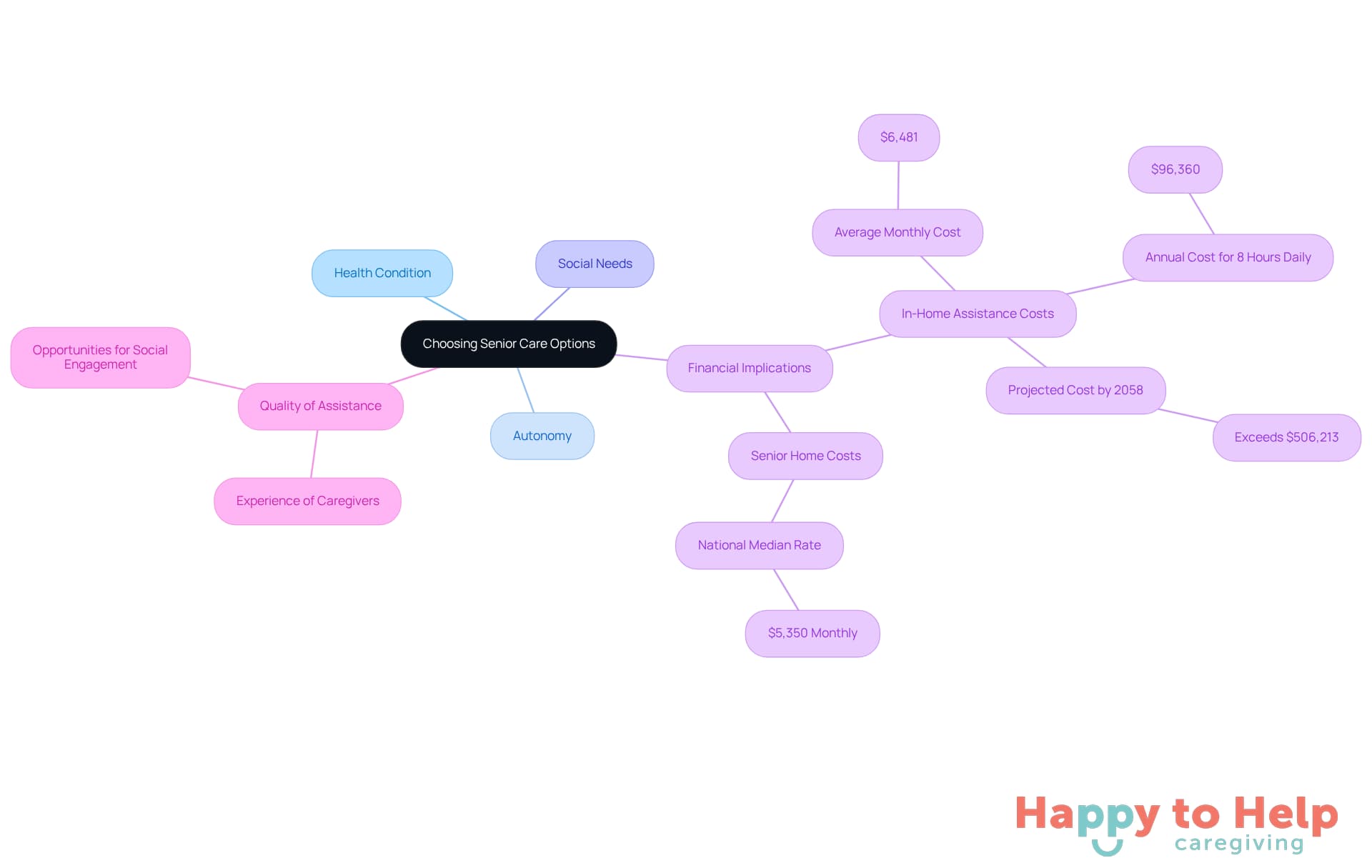
Deciding between residential assistance and the best senior homes is a significant challenge for families. The elder's health condition, autonomy, and social needs must be carefully evaluated. Financial implications are crucial in this decision-making process. In 2025, the average cost of in-home assistance services is approximately $6,481 monthly for comprehensive support, leading to an annual expense of about $96,360 for a home health aide providing 8 hours of support daily. Conversely, the best senior homes, including assisted living facilities, may offer a more economical option for full-time support, with national median rates around $5,350 monthly.
Families must also consider the quality of assistance provided, the experience of caregivers, and opportunities for social engagement. These factors significantly influence seniors' overall well-being. A considerable majority of Americans (74%) express a preference for receiving long-term support at home, highlighting the desire to age in place. However, the financial burden of in-home assistance can escalate. Projections suggest that costs could exceed $506,213 annually by 2058 if current trends persist. Additionally, 61% of U.S. adults anticipate facing a long-term support event, underscoring the importance of proactive financial planning.
As Brad Wilson, CEO of Care.com, notes, "Senior support is in a crisis," reflecting the growing demand for solutions in this area. Ultimately, the decision regarding the best senior homes should align with the senior's preferences and lifestyle, ensuring they receive the necessary support while maintaining their dignity and independence. Engaging in open discussions about care options and evaluating both financial and emotional aspects can lead to more informed and satisfactory choices for families navigating these complex decisions.
Making the Right Choice
Navigating the choice between the best senior homes and in-home care presents a significant problem for families. This decision requires careful consideration, as each option carries unique benefits and challenges that directly impact the well-being and independence of elderly loved ones. Families must grapple with emotional and financial implications, alongside the variability in care quality among facilities.
The implications of this choice can be profound. Senior homes offer a structured environment with trained staff and social engagement, while in-home care provides personalized assistance and emotional comfort. As the trend toward at-home support grows, families must evaluate the specific needs and circumstances of their elderly relatives, as well as the financial aspects involved in each option.
To address these challenges, families should prioritize the dignity and autonomy of seniors. Engaging in open discussions and conducting thorough research can empower caregivers to make informed choices that enhance the quality of life for their loved ones. As the landscape of elder care continues to evolve, staying informed about the best senior homes and in-home care options will be crucial for families seeking suitable solutions in 2025 and beyond.
https://iframe.tely.ai/cta/eyJhcnRpY2xlX2lkIjogIjY5M2Y1MDlhMmI4ODNiM2YwNWZiOTk3ZCIsICJjb21wYW55X2lkIjogIjY4ZWU1ZGNhNzMxNzYyNTU3ZjNjOTVjMSIsICJpbmRleCI6IG51bGwsICJ0eXBlIjogImFydGljbGUifQ==Frequently Asked Questions
What are the main options for senior living?
The main options for senior living include senior homes, such as assisted housing, nursing facilities, and independent communities, as well as in-home care services.
What are the benefits of senior homes?
Senior homes provide structured environments with trained staff, shared arrangements, meals, and various activities that promote social interaction.
What challenges are associated with senior homes?
Families often recognize emotional and practical challenges when considering senior homes for their loved ones.
What advantages do at-home support services offer?
At-home support services allow older adults to remain in their own homes while receiving personalized assistance, fostering independence and enhancing emotional well-being.
How do caregivers contribute to at-home support?
Caregivers provide support for daily activities, companionship, and medical assistance, all in a familiar setting that helps maintain the quality of life for elderly individuals.
What is the current trend regarding senior living preferences?
Current trends show that 53% of families prefer at-home assistance over traditional elderly living establishments.
How does in-home assistance impact the quality of life for elderly individuals?
In-home assistance significantly enhances quality of life by allowing elderly individuals to engage in their preferred routines and activities while receiving essential help.
Why is it important for families to understand the distinctions between senior homes and in-home care?
Understanding these distinctions is vital for families to navigate the complexities of elder support and ensure their choices align with their loved ones' preferences and needs.
List of Sources
- Understanding Senior Living Options: Senior Homes vs. In-Home Care
- Families Prefer In-Home Care To Senior Living – Yet Struggle To Identify Needed Support (https://homehealthcarenews.com/2025/11/families-prefer-in-home-care-to-senior-living-yet-struggle-to-identify-needed-support)
- Facts & Figures (https://ahcancal.org/Assisted-Living/Facts-and-Figures/Pages/default.aspx)
- 2025 Senior Living Statistics | SeniorLiving.org (https://seniorliving.org/companies/statistics)
- Family caregivers prefer in-home care over senior living, new industry report finds (https://mcknightshomecare.com/news/family-caregivers-prefer-in-home-care-over-senior-living-new-industry-report-finds)
- Evaluating Senior Homes: Benefits and Challenges
- Seven Trends In Senior Living For 2025 ...And Beyond (https://forbes.com/sites/sarazeffgeber/2025/01/23/seven-trends-in-senior-living-for-2025-and-beyond)
- The senior living market can't keep up with demand as boomers age (https://cnbc.com/2025/08/19/senior-living-housing-market-cant-keep-up-with-demand.html)
- Satisfaction with senior living up despite increasing rates, 2025 J.D. Power study finds (https://mcknightsseniorliving.com/news/satisfaction-with-senior-living-up-despite-increasing-rates-2025-j-d-power-study-finds)
- Staffing shortages create challenges for senior living facilities - Agency Forward® - Nationwide (https://agentblog.nationwide.com/commercial-lines/commercial-industry-trends/senior-living/staffing-shortages-create-challenges-for-senior-living-facilities)
- New NIC-NORC Study Shows Wellness, Health Benefits of Senior Living (https://seniorhousingnews.com/2025/09/09/new-nic-norc-study-shows-wellness-health-benefits-of-senior-living)
- Exploring In-Home Care: Advantages and Limitations
- Staying Home, Staying Well: The Advantages of Home Care for Older Adults (https://ltcnews.com/articles/advantages-home-care-older-adults)
- Families Prefer In-Home Care To Senior Living – Yet Struggle To Identify Needed Support (https://homehealthcarenews.com/2025/11/families-prefer-in-home-care-to-senior-living-yet-struggle-to-identify-needed-support)
- 28 Senior Care Statistics: In-Home & Assisted Living | Shortlister (https://myshortlister.com/insights/senior-care-statistics)
- 2025 Home Care Statistics: Trends & Insights To Know (https://premierhcinc.com/blog/home-care-statistics)
- Making the Right Choice: Factors to Consider for Your Family
- Facts & Figures (https://ahcancal.org/Assisted-Living/Facts-and-Figures/Pages/default.aspx)
- The senior population is booming. Caregiving is struggling to keep up (https://cnbc.com/2025/11/21/senior-caregiving-labor.html)
- Most Americans expect to experience a long-term care event, and nearly 3 in 4 want in-home care if it happens to them - according to Northwestern Mutual Planning & Progress Study (https://news.northwesternmutual.com/2025-10-07-Most-Americans-expect-to-experience-a-long-term-care-event,-and-nearly-3-in-4-want-in-home-care-if-it-happens-to-them-according-to-Northwestern-Mutual-Planning-Progress-Study)
- Cost of Assisted Living vs. In-Home Care: Key Considerations (https://carescout.com/resources/cost-of-assisted-living-vs-in-home-care-key-considerations)