
What You Need to Know About Choose the Right In Home Caregiver
In-home caregiving has become an essential service for families facing the challenges of caring for loved ones with diverse needs. The increasing demand for personalized support highlights a significant problem: families often struggle to navigate the complexities of selecting the right caregiver. With numerous options and companies available, how can families ensure they choose a caregiver who will provide the best support for their unique situation?
This guide aims to address this issue by delving into the key criteria for evaluating caregiver companies. By understanding these criteria, families can make informed decisions and find the perfect match for their loved ones’ care needs. Here, we will explore actionable solutions that empower families to confidently select the right caregiver.
Understand In-Home Caregiving Services
In-home caregiving offerings address a significant problem: the diverse support needs of individuals requiring assistance. As the demand for personal supporters rises, caregivers face the challenge of ensuring their loved ones receive the right type of care. According to AARP, "This increase highlights the rising need for personal supporters who offer vital assistance to individuals with chronic, disabling, or serious health issues."
To tackle this issue, various support options are available:
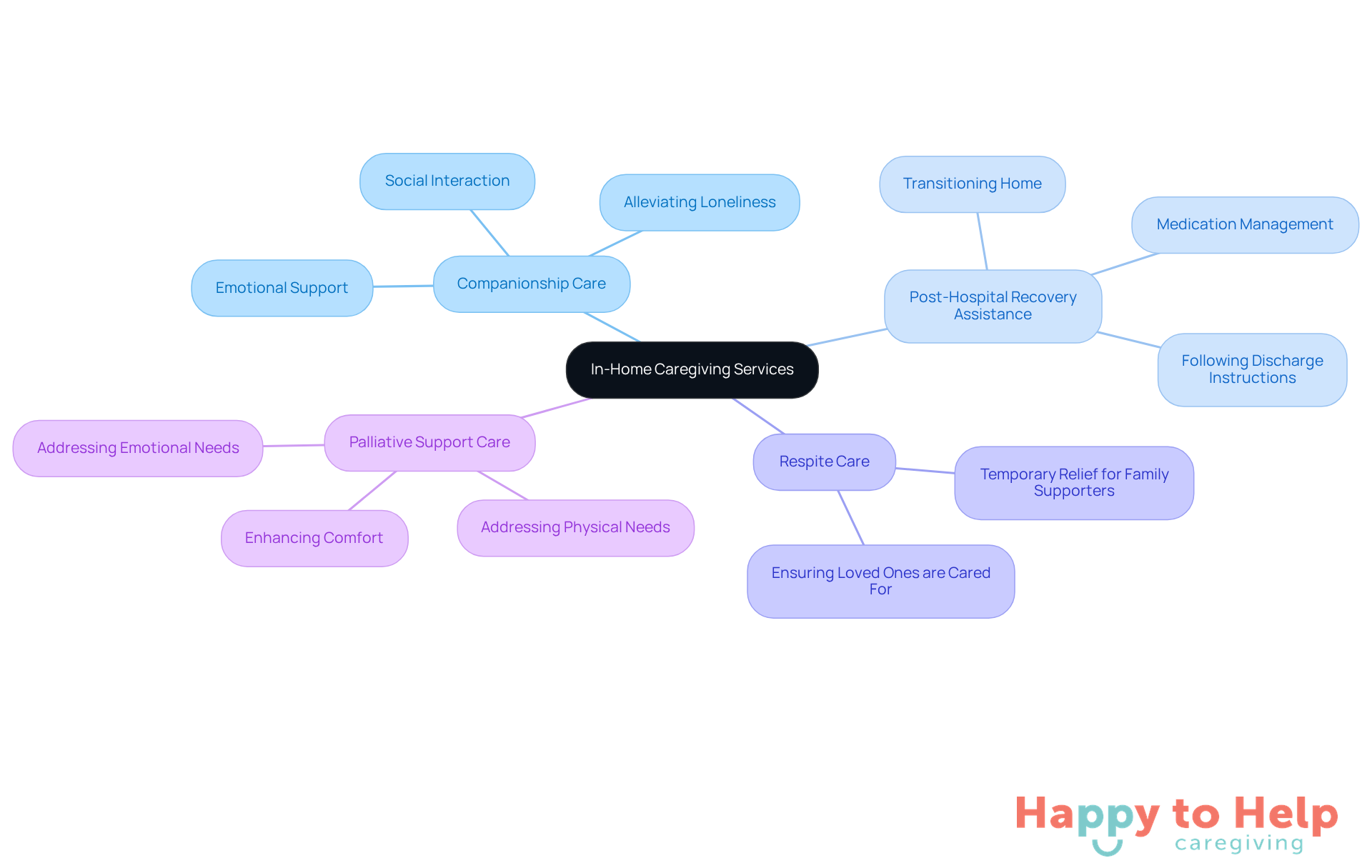
- Companionship Care: This service provides emotional support and social interaction, helping to alleviate loneliness.
- Post-Hospital Recovery Assistance: This option aids individuals in transitioning back home after a hospital stay, ensuring they follow discharge instructions and manage medications effectively.
- Respite Care: Temporary relief for family supporters is crucial, allowing them to take necessary breaks while ensuring their loved ones are well cared for.
- Palliative Support Care: This service focuses on enhancing comfort and quality of life for individuals with serious illnesses, addressing both physical and emotional needs.
Understanding these offerings is the first step in identifying the necessary support for your loved one. Successful case studies show that seniors receiving companionship care report higher levels of happiness and satisfaction, underscoring the importance of this support. Additionally, Happy to Help Caregiving stands out with features like 24/7 availability and personalized care plans, ensuring clients receive tailored support that aligns with their lifestyle and preferences.
Identify Key Criteria for Selecting Caregiver Companies
Selecting in home caregiver companies can be a daunting task, especially when you want the best for your loved one. The challenge lies in ensuring that the chosen service meets their specific needs. Here are some key criteria to consider:
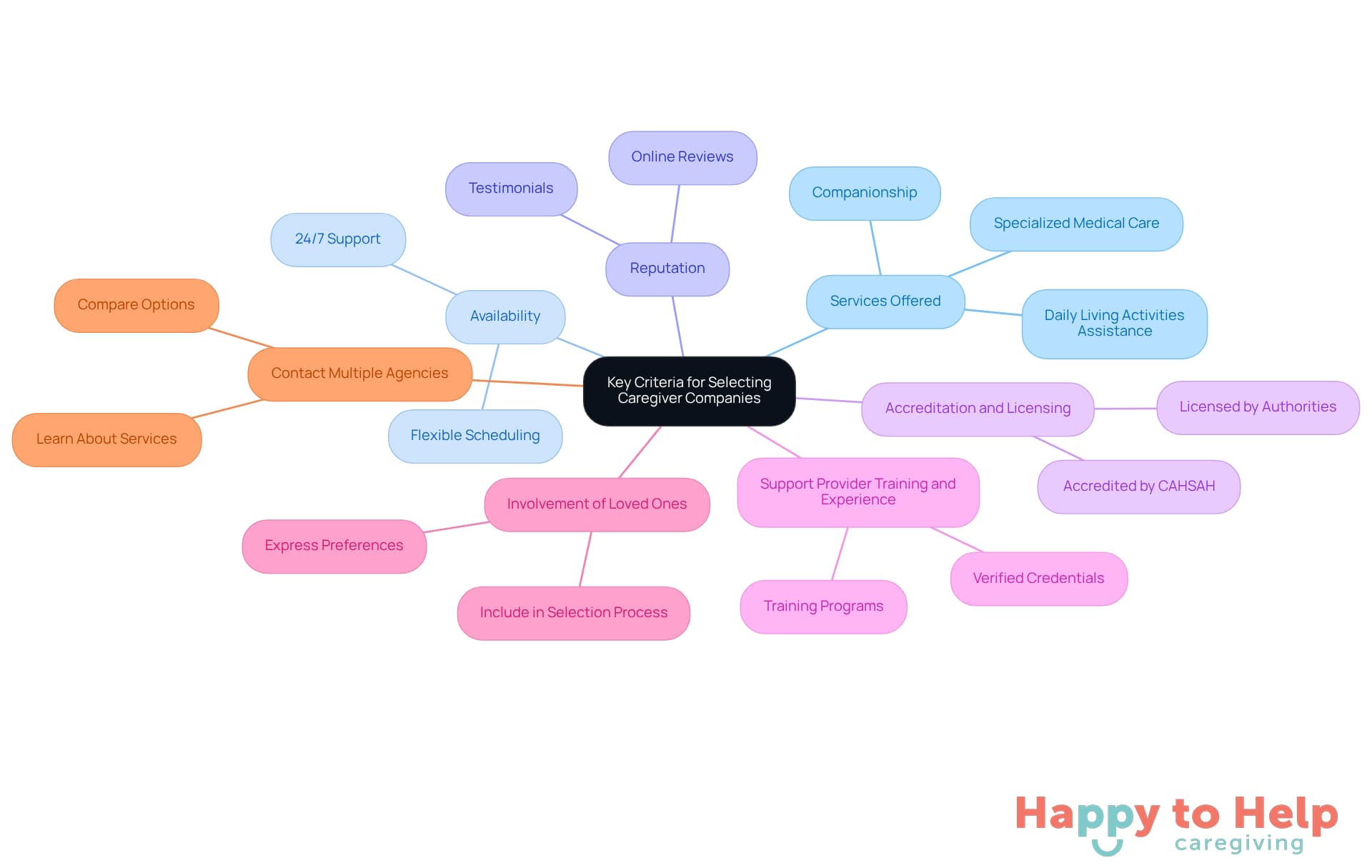
- Services Offered: Make sure the company provides the necessary services, whether it’s companionship, assistance with daily living activities, or specialized medical care. Tailored services not only enhance the quality of care but also promote independence. Remember, genuine companionship from caregivers is vital for emotional support and overall well-being.
- Availability: Look for companies that offer flexible scheduling and 24/7 support. This ensures that help is available whenever it’s needed, significantly easing the transition to in-home care.
- Reputation: Research online reviews and testimonials to gauge the experiences of other families. A strong reputation often indicates quality care and reliable caregivers, which are essential for peace of mind.
- Accreditation and Licensing: Confirm that the company is licensed and accredited by recognized authorities, such as CAHSAH or the American Board of Home Care. This compliance with industry standards enhances trust in the services provided.
- Support Provider Training and Experience: Ask about the training programs support providers undergo and their levels of experience. Well-trained providers are better equipped to deliver compassionate and effective assistance, crucial for your loved one’s well-being. Ensure that caregivers have verified credentials to guarantee their qualifications.
- Involvement of Loved Ones: Involve your loved one in the selection process. Include them in meetings with potential caregiver services to express their preferences and concerns, ensuring their needs are prioritized.
- Contact Multiple Agencies: Reach out to several home care agencies to learn about their services and organizational culture. This will help you compare options in home caregiver companies and identify the best fit for your household’s care needs.
By setting these standards, families can take a targeted approach to finding the right service provider, leading to a more favorable caregiving experience.
Evaluate Caregiver Qualifications and Company Reputation
To ensure the safety and quality of care provided by caregivers, households face the challenge of evaluating caregiver qualifications and company reputation. Without proper verification, families risk entrusting their loved ones to unqualified individuals, which can lead to inadequate care and safety concerns.
To address this issue, consider the following actionable steps:
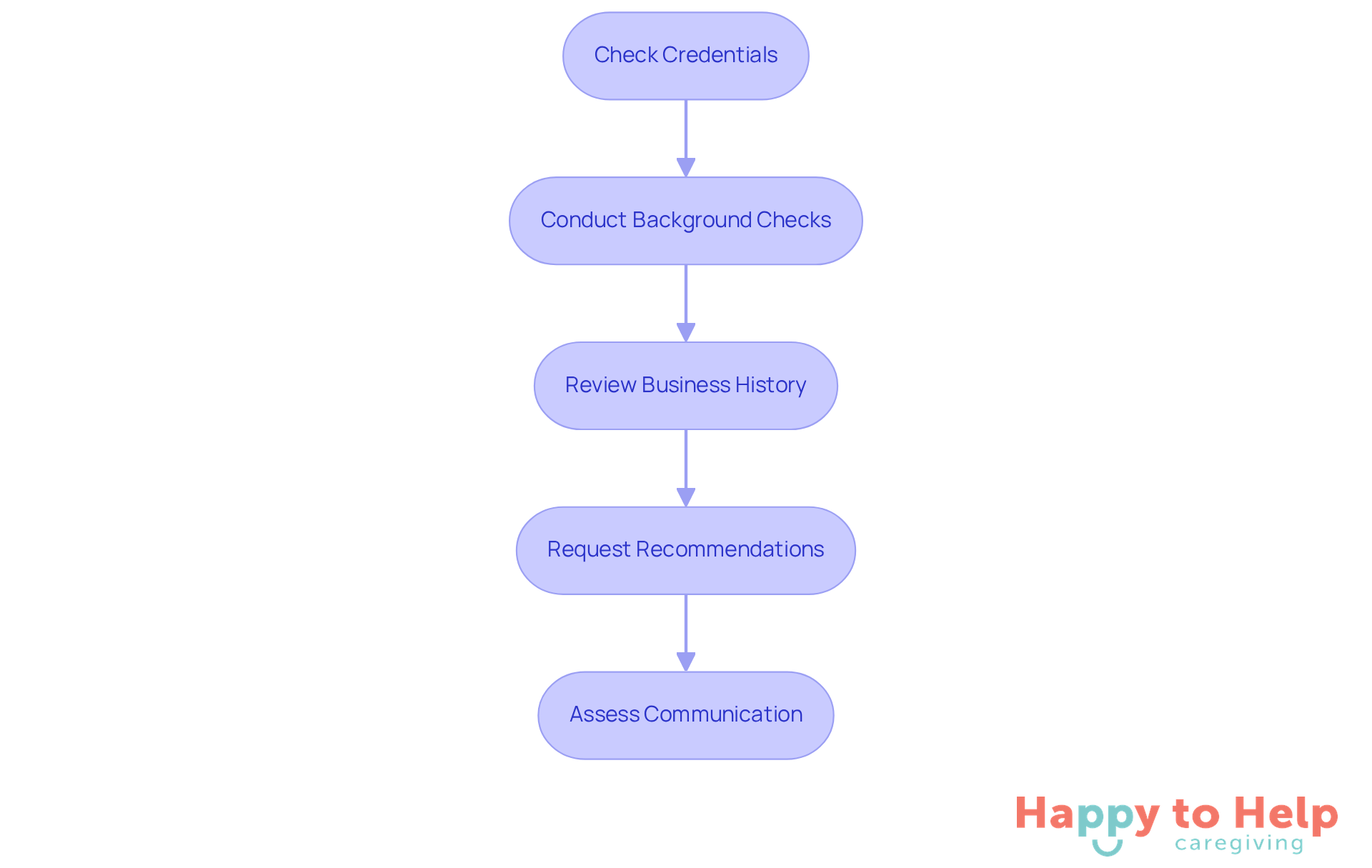
- Check Credentials: Verify that providers have the necessary certifications, such as Certified Nursing Assistant (CNA) or Home Health Aide (HHA) certifications.
- Conduct Background Checks: Ensure the organization performs thorough background checks on their caregivers to guarantee safety.
- Review Business History: Look into how long the organization has been operating and its track record in providing quality care.
- Request Recommendations: Inquire for referrals from other households who have utilized the assistance to obtain insights into their experiences.
- Assess Communication: Evaluate how the organization interacts with households and addresses inquiries, as this reflects their dedication to customer service.
By meticulously evaluating these factors, households can confidently select a trustworthy caregiver service with qualified personnel.
Make an Informed Decision and Finalize Your Choice
Choosing the right caregiver in home caregiver companies can be a daunting task for families. With so many options available, it’s crucial to make an informed decision to ensure your loved one receives the best care possible. Here’s how to navigate this process effectively:
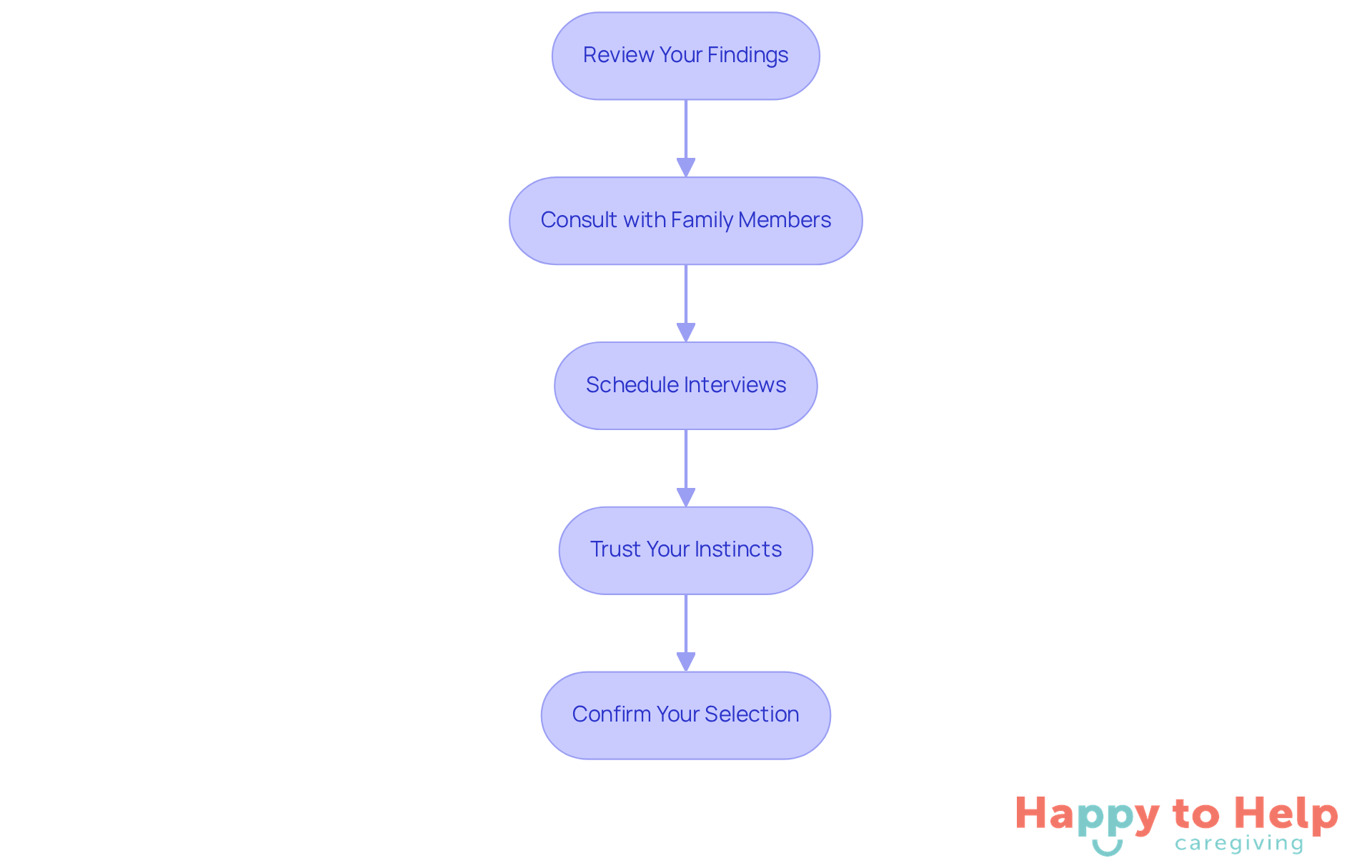
- Review Your Findings: Start by going over the notes and evaluations from your research. Compare the strengths and weaknesses of each organization to understand your options better.
- Consult with Family Members: Engage in discussions with family members about your findings. Gathering their input ensures that everyone is aligned and comfortable with the decision.
- Schedule Interviews: Organize meetings with the top firms. This is your chance to ask any remaining questions and gauge their responsiveness and professionalism.
- Trust Your Instincts: Pay attention to your gut feelings about the providers. Comfort and trust are vital in caregiving relationships, so don’t overlook your instincts.
- Confirm Your Selection: Once you feel confident, choose the support service that best meets your loved one’s needs and complete any necessary documentation.
By following these steps, families can confidently select the right in home caregiver companies, ensuring their loved ones receive the highest quality of care.
Your Path Forward
Choosing the right in-home caregiver company is a significant decision that can greatly affect the well-being of your loved ones. Families often face the challenge of navigating various caregiving services and understanding the essential criteria for selecting a provider. This decision is not just about finding someone to assist physically; it’s about ensuring emotional support that enhances the overall quality of life for those receiving care.
Evaluating service offerings, availability, reputation, and caregiver qualifications is crucial. Families should involve their loved ones in the selection process to prioritize their preferences and concerns. Conducting thorough research, including checking credentials and performing background checks, is vital for establishing trust and ensuring safety in the caregiving relationship.
To tackle the complexities of choosing an in-home caregiver, families must approach the process with care and diligence. Taking the time to assess options, consulting with each other, and trusting instincts can lead to finding a caregiver who meets practical needs while providing compassionate support. Investing in the right in-home care service is a commitment to quality of life, making this decision profoundly significant for families navigating this journey.
https://iframe.tely.ai/cta/eyJhcnRpY2xlX2lkIjogIjY5MjRmMjEwZWM0Y2FiOGU3NGVjMDExNyIsICJjb21wYW55X2lkIjogIjY4ZWU1ZGNhNzMxNzYyNTU3ZjNjOTVjMSIsICJpbmRleCI6IG51bGwsICJ0eXBlIjogImFydGljbGUifQ==Frequently Asked Questions
What is the purpose of in-home caregiving services?
In-home caregiving services address the diverse support needs of individuals requiring assistance, particularly as the demand for personal supporters increases for those with chronic, disabling, or serious health issues.
What types of in-home caregiving services are available?
The available in-home caregiving services include: - Companionship Care: Provides emotional support and social interaction. - Post-Hospital Recovery Assistance: Helps individuals transition home after a hospital stay. - Respite Care: Offers temporary relief for family supporters. - Palliative Support Care: Enhances comfort and quality of life for individuals with serious illnesses.
How does companionship care benefit seniors?
Companionship care helps alleviate loneliness and has been shown through successful case studies to result in higher levels of happiness and satisfaction among seniors.
What is the role of post-hospital recovery assistance?
Post-hospital recovery assistance aids individuals in managing their transition back home, ensuring they follow discharge instructions and manage medications effectively.
Why is respite care important for family supporters?
Respite care is crucial as it provides temporary relief for family supporters, allowing them to take necessary breaks while ensuring their loved ones are well cared for.
What does palliative support care focus on?
Palliative support care focuses on enhancing comfort and quality of life for individuals with serious illnesses, addressing both their physical and emotional needs.
What features does Happy to Help Caregiving offer?
Happy to Help Caregiving offers features such as 24/7 availability and personalized care plans, ensuring clients receive tailored support that aligns with their lifestyle and preferences.
List of Sources
- Understand In-Home Caregiving Services
- Home Care Industry Trends to Watch in 2025 (https://firstlighthomecare.com/blog/home-care-industry-trends)
- State of home care in 2025 (https://mcknightshomecare.com/state-of-home-care-in-2025)
- What’s Next For Home Health As The Industry Faces Its Biggest Test Yet (https://homehealthcarenews.com/2025/10/whats-next-for-home-health-as-the-industry-faces-its-biggest-test-yet)
- Caregiving in the US 2025 (https://aarp.org/pri/topics/ltss/family-caregiving/caregiving-in-the-us-2025)
- The Top 4 Trends Affecting the Home Health Care Industry in 2025 | JM Search (https://jmsearch.com/blog/the-top-4-trends-affecting-the-home-health-care-industry-in-2025)
- Identify Key Criteria for Selecting Caregiver Companies
- How to Choose a Home Care Agency (https://aplaceformom.com/caregiver-resources/articles/how-to-choose-a-home-care-agency)
- 5 Factors to Consider When Choosing Home Care Services – Care Partners (https://carepartners.us/5-factors-to-consider-when-choosing-home-care-services)
- How to Choose the Right In-Home Care Provider for Your Loved One | Luxe Homecare (https://luxehomecare.com/how-to-choose-the-right-in-home-care-provider-for-your-loved-one)
- Choosing a Provider (https://hcaoa.org/choosing-a-provider.html)
- Tips for Choosing a Senior In-Home Care Agency: 10 Things to Consider - Mary Ann Morse Home Care (https://maryannmorse.org/2023/07/28/tips-for-choosing-a-senior-in-home-care-agency-ten-things-to-consider)
- Evaluate Caregiver Qualifications and Company Reputation
- The Case For Stronger Caregiver Vetting In Home Care (https://homehealthcarenews.com/2024/10/the-case-for-stronger-caregiver-vetting-in-home-care)
- US News & World Report Highlights CCA's Caregiver Training (https://advancecaregivers.org/report-us-news-world-report-highlights-ccas-caregiver-training)
- The Importance of Background Checks in Homecare Hiring | Gotham Companies (https://gothamcompanies.com/2024/08/21/the-importance-of-comprehensive-background-checks-in-homecare-hiring)
- DISA | Caregiver Screening for Safe Home Healthcare (https://disa.com/news/caregiver-background-check-best-practices)
- The Importance of Background Checks for Nursing Home Staff | Long Island Personal Injury Lawyers & Medical Malpractice Attorneys (https://fightforvictims.com/nursing-home-abuse/the-importance-of-background-checks-for-nursing-home-staff)
- Make an Informed Decision and Finalize Your Choice
- When to Have "The Talk": Why Family Care Planning Meetings Matter - The Alden Network (https://alden.com/when-to-have-the-talk-why-family-care-planning-meetings-matter)
- Family caregivers want support from senior living professionals, report reveals (https://mcknightsseniorliving.com/news/family-caregivers-want-support-from-senior-living-professionals-report-reveals)
- Families Prefer In-Home Care To Senior Living – Yet Struggle To Identify Needed Support (https://homehealthcarenews.com/2025/11/families-prefer-in-home-care-to-senior-living-yet-struggle-to-identify-needed-support)
- Caregiving Crisis: 45% Increase in Americans Providing Care (https://aarp.org/caregiving/basics/caregiving-in-us-survey-2025)
- Caregiver Statistics: Demographics (https://caregiver.org/resource/caregiver-statistics-demographics)